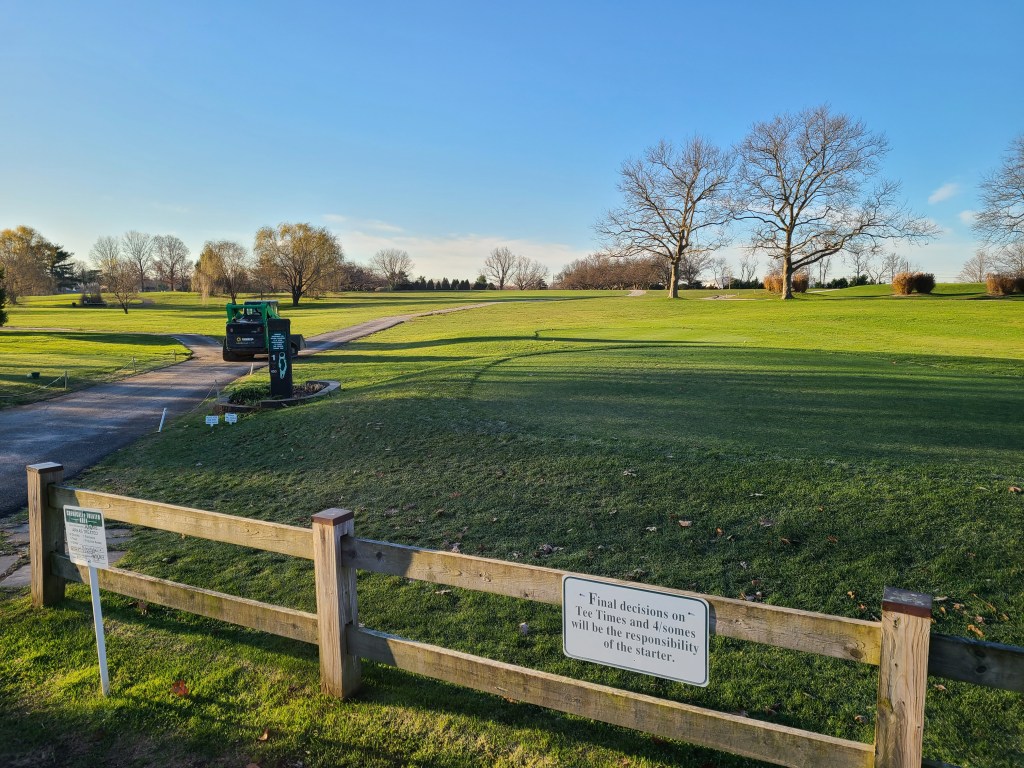
Number 109 (Knob Hill Golf Club)

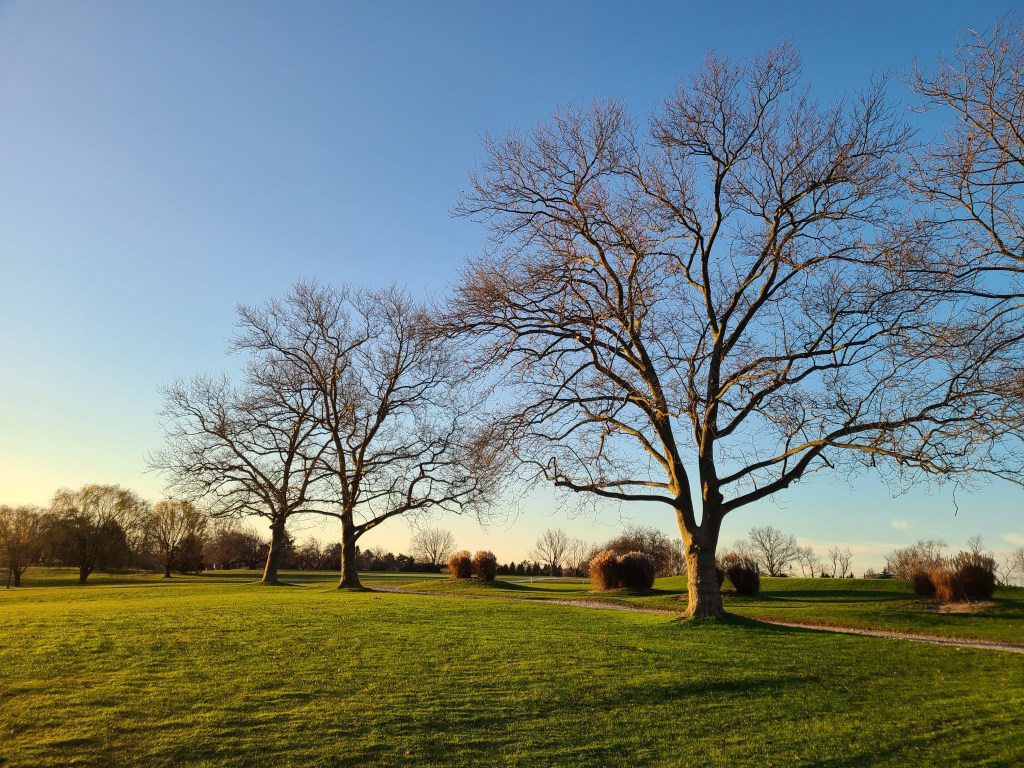
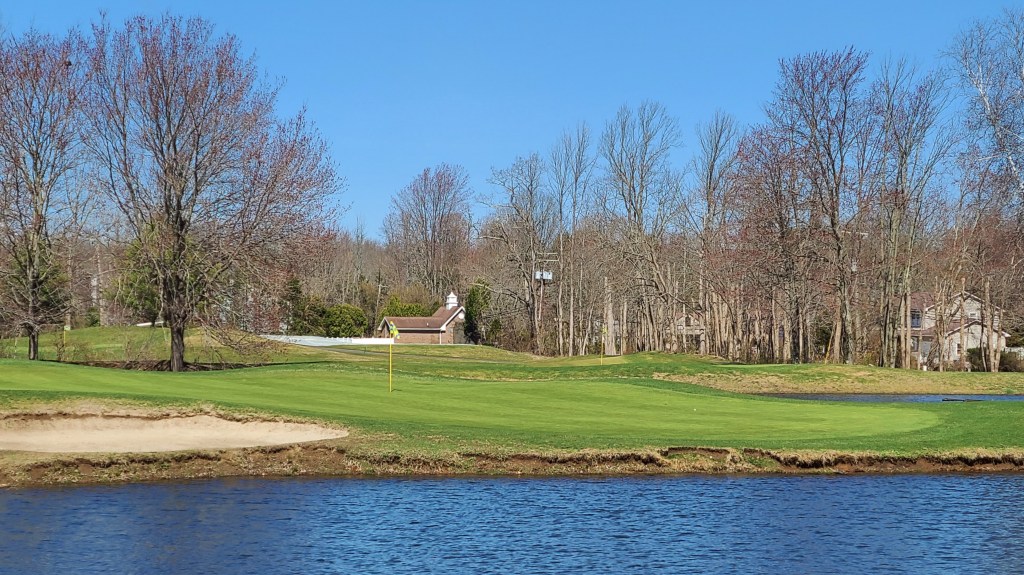
A group of trees off to the side of 6 green.

Date played: 3/29/2021

My friend Matt and I wanted to get a round of golf in before an outing on Good Friday. We decided to take the Monday of that week off from work and head to Monmouth County to play Knob Hill.

A semi-private course situated on the westbound side of Route 33 in Manalapan, Knob Hill actually teases travelers with a peek at its 15th hole, which has its green placed just a partial wedge shot from the road. The course is a wonderful option for the golfing public, and I’ll try to cover some of its memorable features in a bit. But the story of my time at Knob Hill is really about its 7th hole.

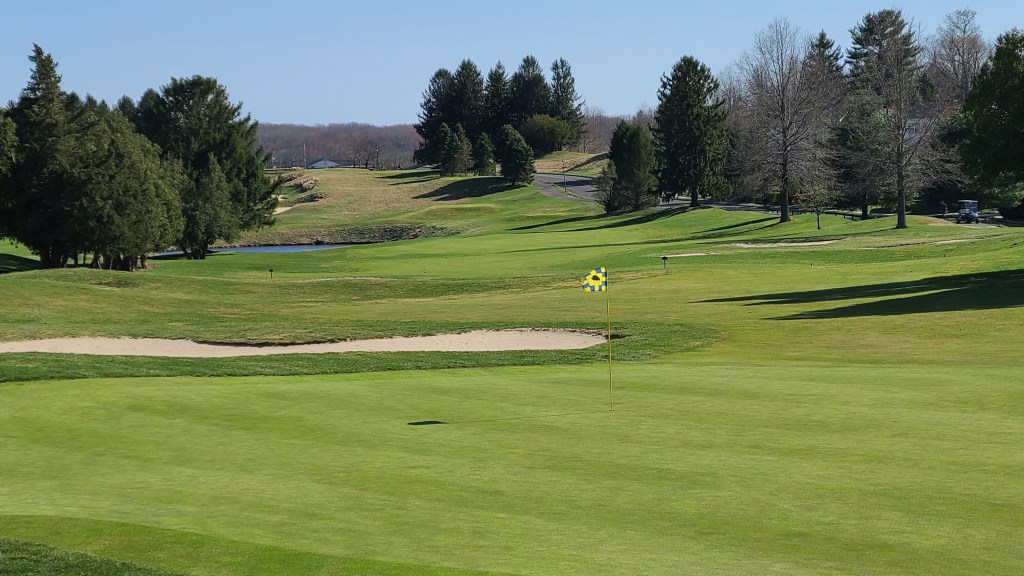
It is a straightaway par 5 that plays with a good deal of width for about 300 yards. A good drive put me in the fairway and about 175 yards from the green with the wind blowing in and across a bit. I took a 5-iron for some extra club, and though the ball started on a good line left of the flag, it seemed to quickly fail in the wind. I honestly thought it would die short in the water.

Nevertheless, it carried, landed, and stopped safely on the lower tier on the front right side of the green. I was on in two.
The pre-eagle has landed.

Having never made an eagle before, I really wanted this putt to sink. At the same time, it was such a difficult putt that part of me just wanted to park it close for a birdie. I notoriously leave lag putts short, and at just over 30 feet, I was psychologically in lag putt territory. I didn’t want to be struggling for a three-putt par.

I was left with a 33-foot putt that moved right to left, with probably five feet of break. It was also a couple feet uphill. I had a putt on a preceding hole the rolled out almost 40 feet on a much more level green. Given the uphill lie, I decided that same putting stroke should be just about right for 33 feet on this green. With my speed decision made, I took a couple looks at the break again, put my head down over the ball and made as good of a putting stroke as I could to at least ensure that I started it on the line I saw.

The ball made its way onto the upper tier, and started banking left quickly. I started to doubt my line and speed, worried that it would miss on the low side. But about five feet from the hole, it seemed to maintain its pace and definitely had a chance. I shouted “go in!”

It went in! The ball rolled in perfectly! After 20 years of playing golf, I finally had my first eagle!

Elated, we moved on to the 8th hole, where I immediately gave those strokes back. I struggled with the water-surrounded green, and would make double bogey. That’s golf.
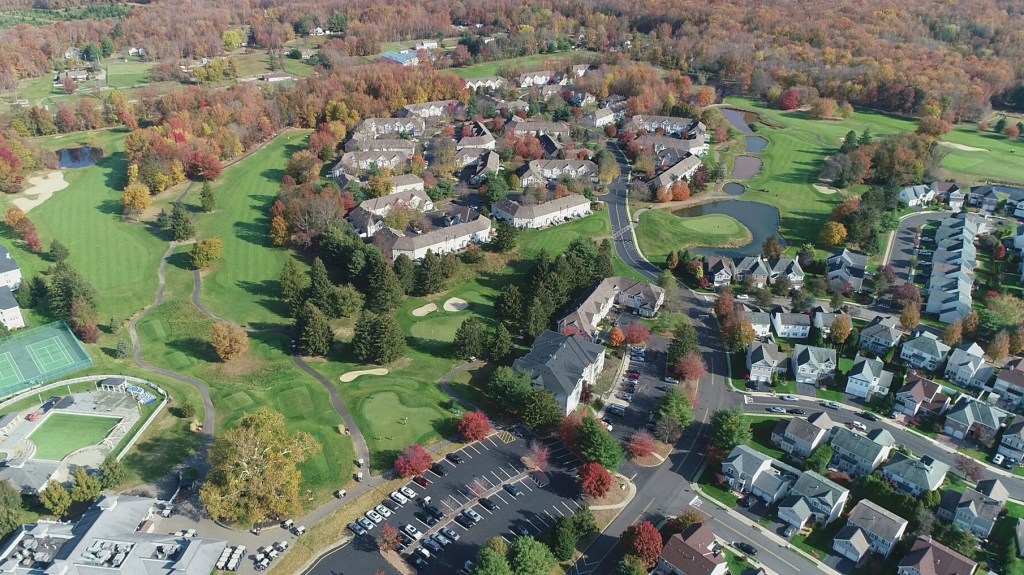
From left to right: 10, 1, 9, 8, 7, 6

As its name implies, Knob Hill plays with a good deal of elevation change on a number of holes. The clubhouse is the highest point on the course, and whether you start your round on 1 or 10, your tee shots into either of these par-4 dog-legs will play to a pretty severe drop.
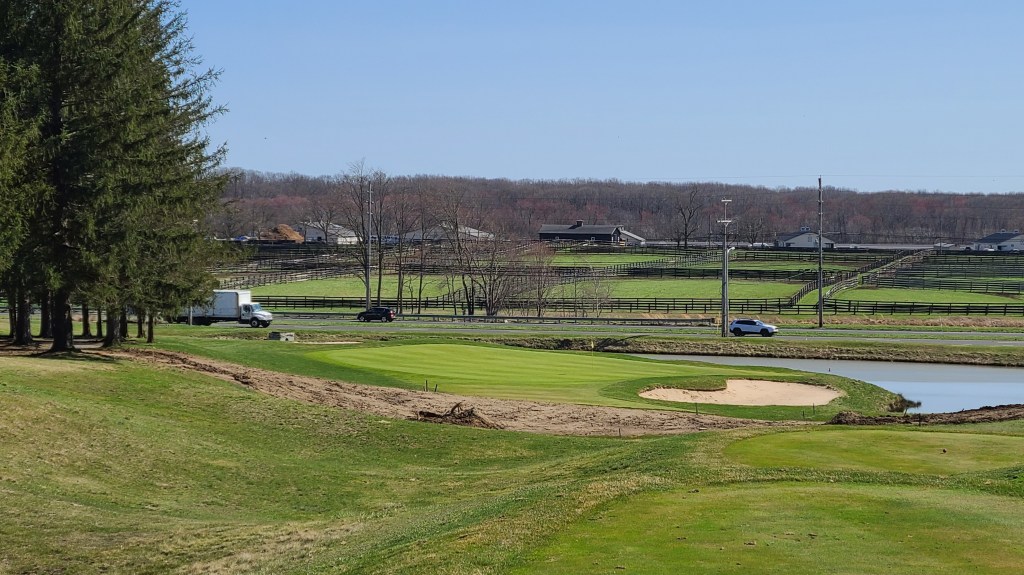
15, under some repair at the time. Route 33 in the distance beyond the green.

Other downhill holes include 15 and 17. The 15th is a downhill par 3 where over-clubbing coupled with a tailwind might put your tee shot into the passenger seat of a passing car. The 17th is a picturesque, drivable par 4, playing with some width, unless you choose to drive the green.
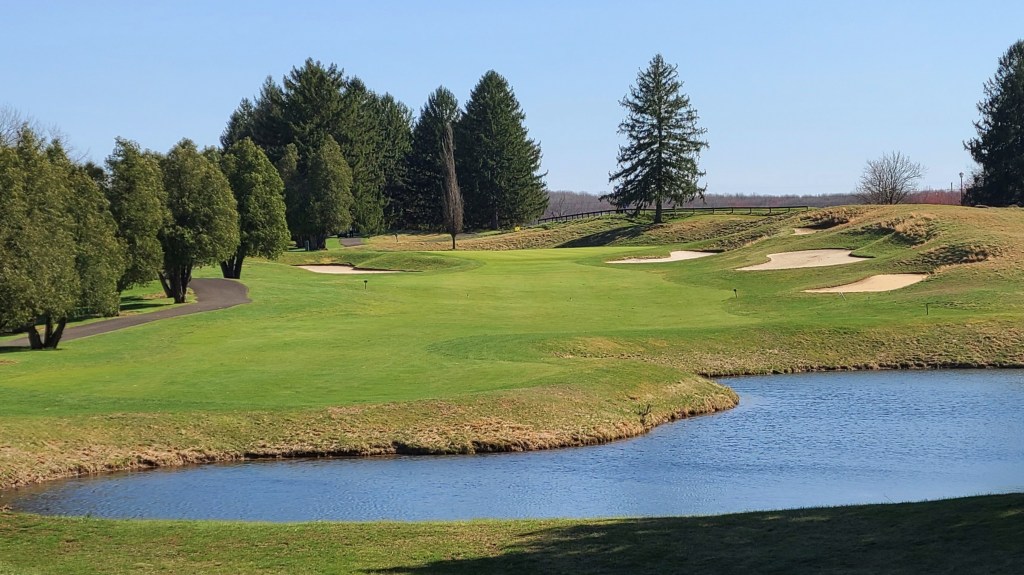
The 17th green is inviting.

The 12th is a very short par 3 – only 125 yards from the back tees – but plays about 20 feet uphill. Also playing uphill is Knob Hill’s closing hole. Though it tees off from elevated boxes, the 18th plays into a valley and back up the hill towards the clubhouse.

I would leave the undulating terrain of Knob Hill with a couple notches in my golf belt – another course played on my journey, and my first eagle.
Looking back from behind 18 green.
The 7th green, perilously surrounded by water. Short, right, and long are all dead.
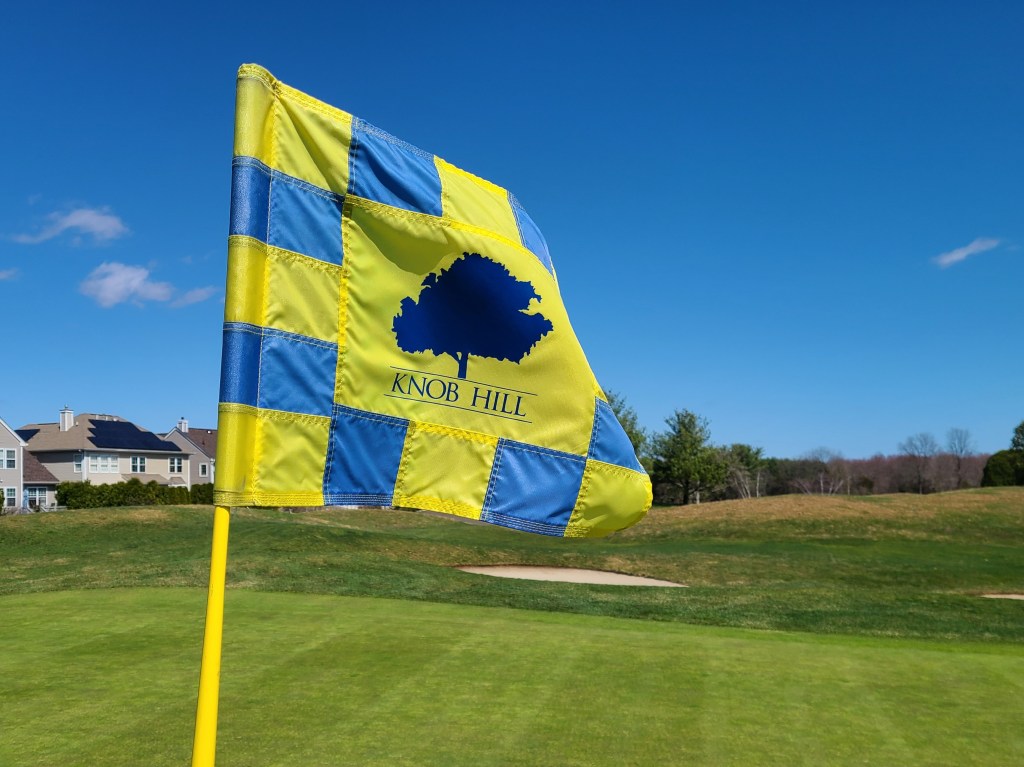
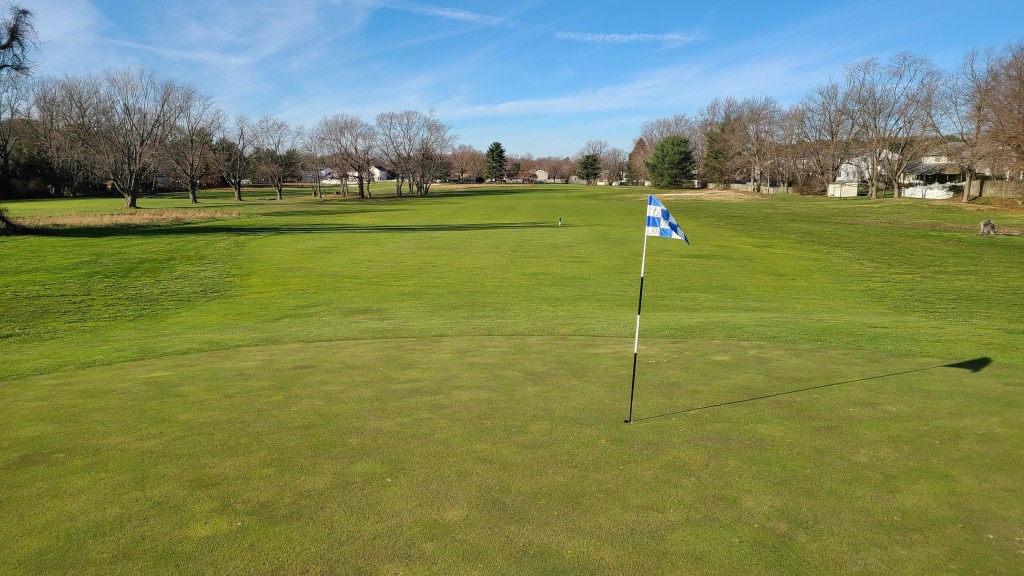
Bright and bold flags at Knob Hill.
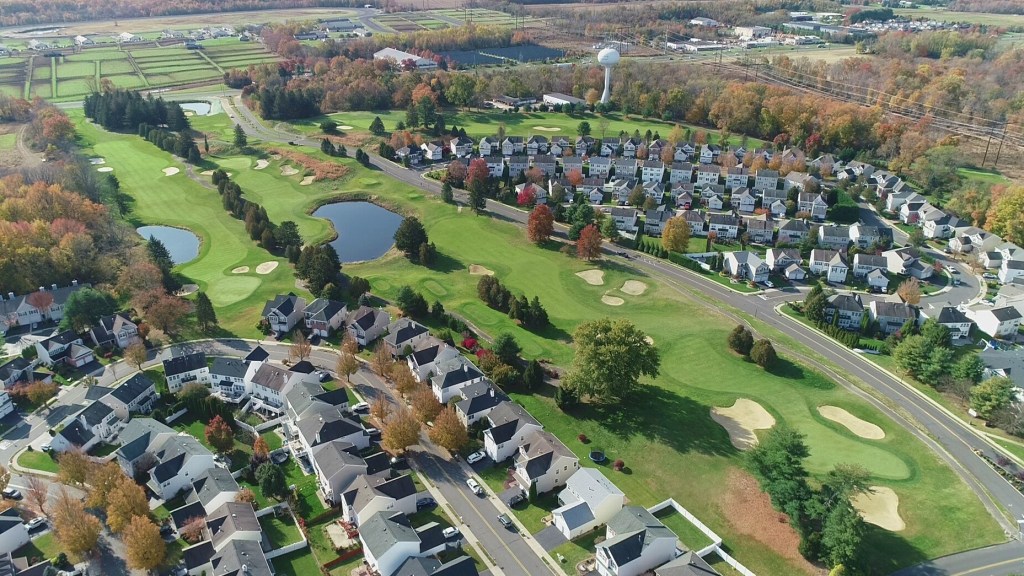
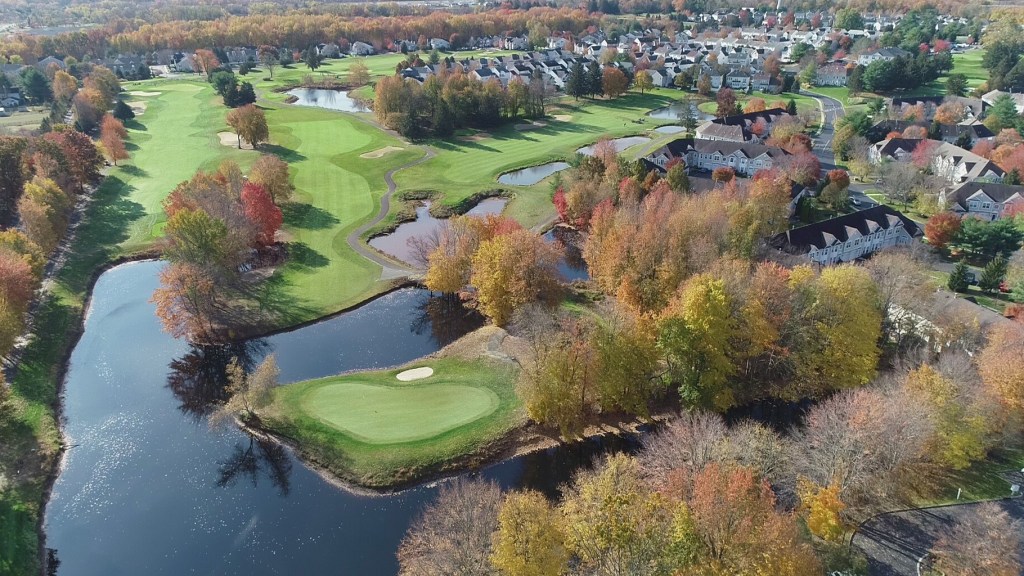
A great closing stretch of holes. Coming in from the top right, the par-5 14th moves left toward the entrance road. On the left side of the frame in the distance is 15, with 16 being the left-most, coming back to the horizontal centerline of the photo. 17 turns back the other way, and then 18 returns to the bottom-right corner.
Number 109 (Knob Hill Golf Club)

Number 108 (Seaview Golf Club – Bay Course)

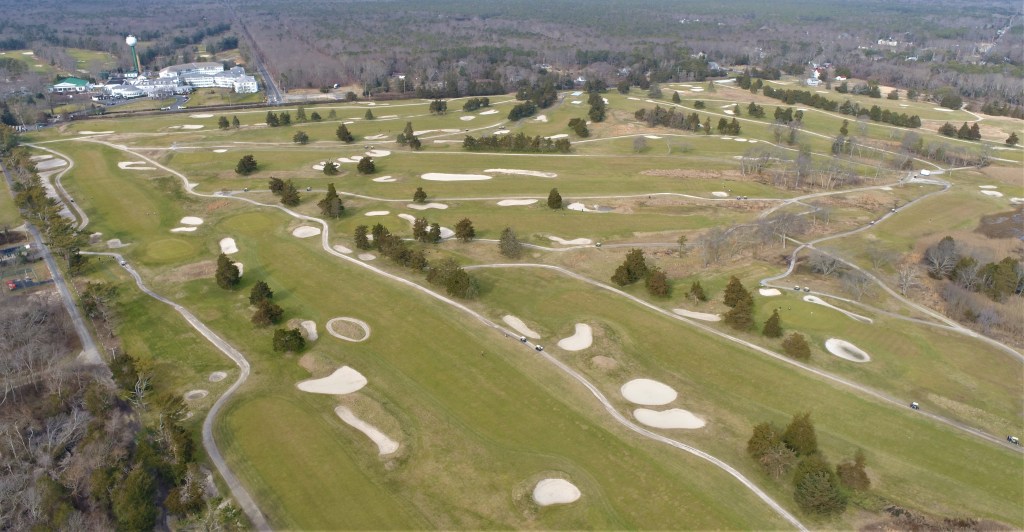
Seaview from the far corner over 2 green. You can see the resort and clubhouse in the background in the upper left.

Date played: 1/15/2021

Having carried over vacation days that I didn’t use during the COVID lockdown of 2020, I took the first forecast of warm weather in 2021 as an opportunity to take the day off and knock another course off the list. Heading to Atlantic County for only the second time on my journey, the Bay course at Seaview Golf Club would be my 108th destination.

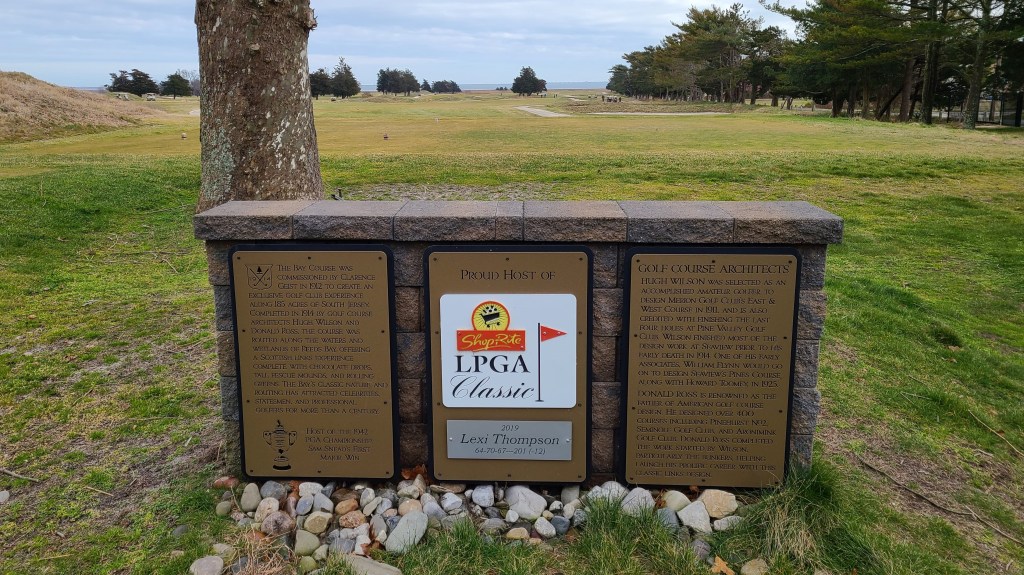
Built in 1914, the Seaview Bay course is known to LPGA fans as the venue for the Shoprite Classic. In 1942, it also provided half the holes – along with some of the resort’s Pines course – for the tournament setup of the PGA Championship, where Sam Snead won his first major. While Donald Ross receives top billing for designing the Bay course, it more accurately credits its design to Hugh Wilson, with only the bunker work being installed by Ross a few years after the course’s completion.

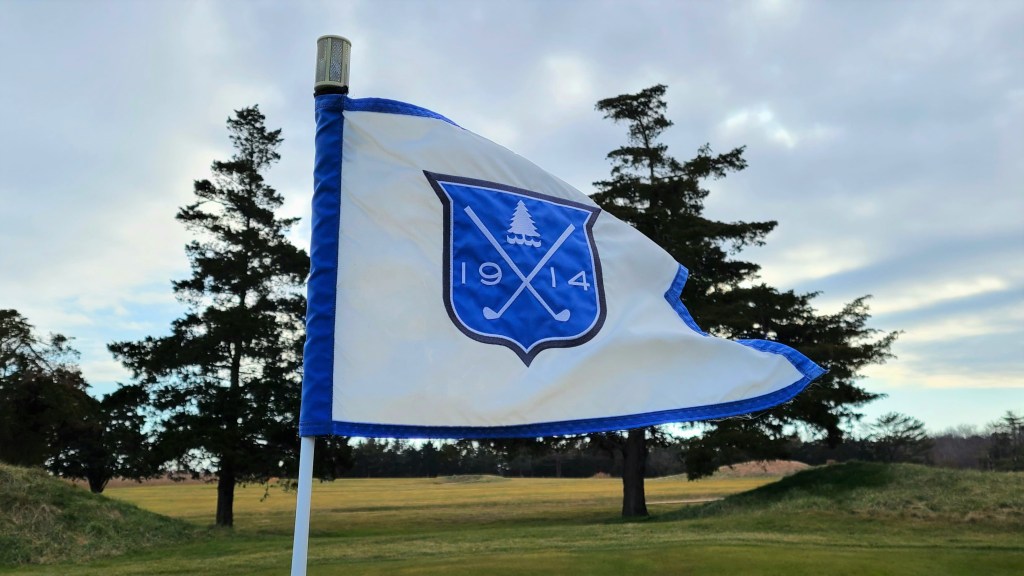
Quality flags reminding you how old this historic course is.

My first round of the new year was an extraordinary one with quite a few highlight memories. I started the round with a birdie and would go on to card the most I’ve ever made in a single round. One of those was a chip-in from 25 yards on the par-4 14th. On 16, after essentially shanking a low bullet off the tee towards OB on the right, I watched it hit a tree and carom left into the first fairway bunker. I successfully scrambled from there to make par. It was just one of those rounds where it felt like not much can go wrong.

I had a great time being paired up with three members, two of which have either worked at or caddied at the course. It was fun to listen to stories of how the Bay Course has changed over the years, having been a private club until the 1980s. It was described by the members as a course that used to be pristine.

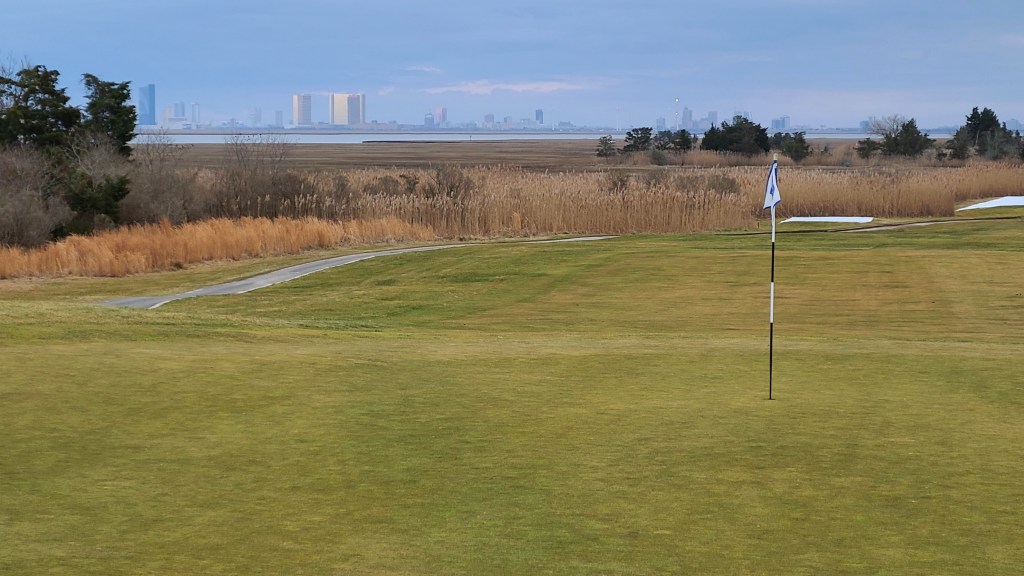
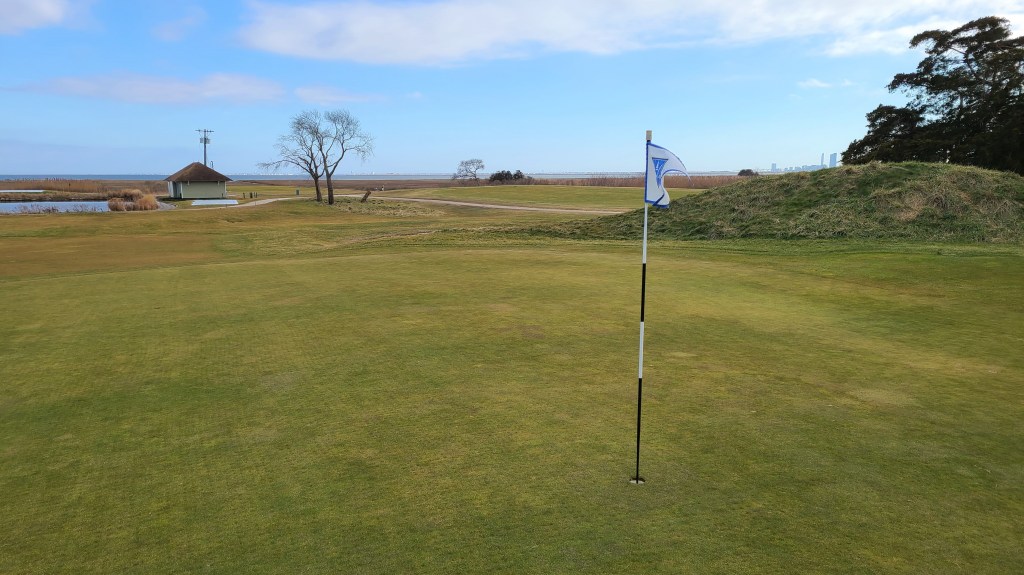
A look across the bay at Atlantic City.

Conditions have changed however, attributed in large part to increased traffic over the years since opening to the public. Among public courses though, it remains a beautiful layout and pretty well conditioned. Interesting views are always a bonus for a golf course, and you’ll get a number of peeks at Atlantic City from the holes just along the marsh area of Reeds Bay.

In trying to find a course to play, I debated whether it would be worth playing Seaview in winter conditions. Greens were recently punched, and – being a links-style course – the native grasses lining the lateral limits of many fairways were cut accommodatingly low. But $39 for a course that costs well north of $100 in prime season was too good to pass up. Overall, it was great value for a winter round and easy to see why this history-laden course should be a “must play” for any public golfer.

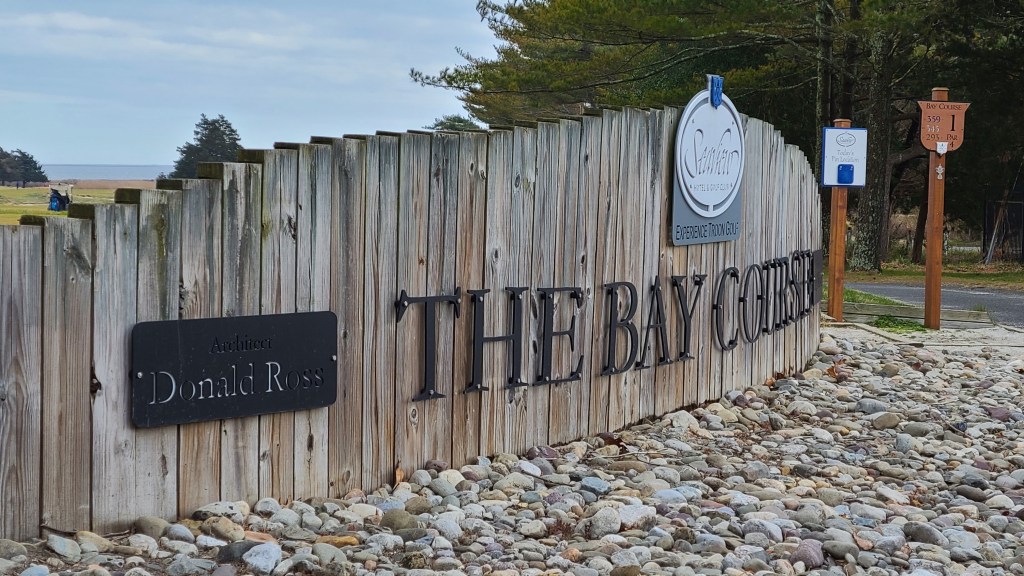
Boldly welcoming you to the Bay Course.
This helpful plaque explains everything.
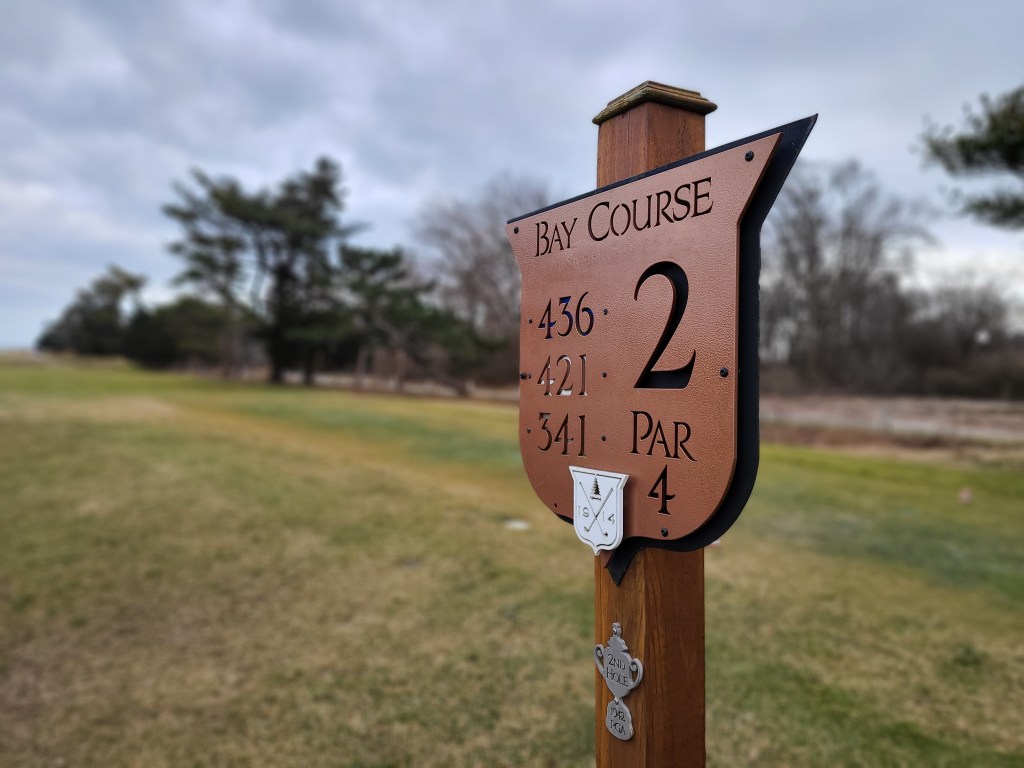
Love everything about the signs here, especially the small plaques indicating whether the hole was a part of the composite layout for the 1942 PGA Championship.
A look back at the first of the par-3s, the 7th. In the background, you can see the teeing grounds tarped off in preparation for the upcoming season.
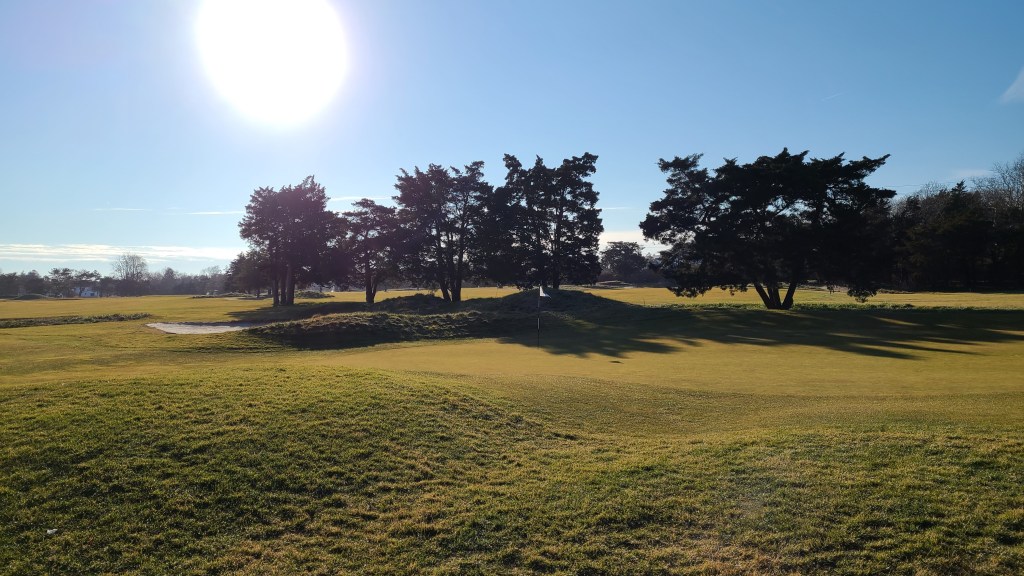
Staring into the sun, you can see the gentle contouring of the green at 10.
Number 108 (Seaview Golf Club – Bay Course)

Number 107 (Wedgwood Country Club)

Date played: 12/3/2020

Having wrapped up at 12:25 at Westwood, I raced over to Wedgwood Country Club to make my 1:00 tee time. I rushed to get my clubs and pushcart out of the trunk, ran into the pro shop to pay for the round, and was able to get onto the course right away. The sun was projected to set at roughly 4:30 that afternoon. While no one else was visible from the first tee, I wanted to make sure I kept good pace, not knowing if I would have enough daylight to finish.

Wide open spaces.

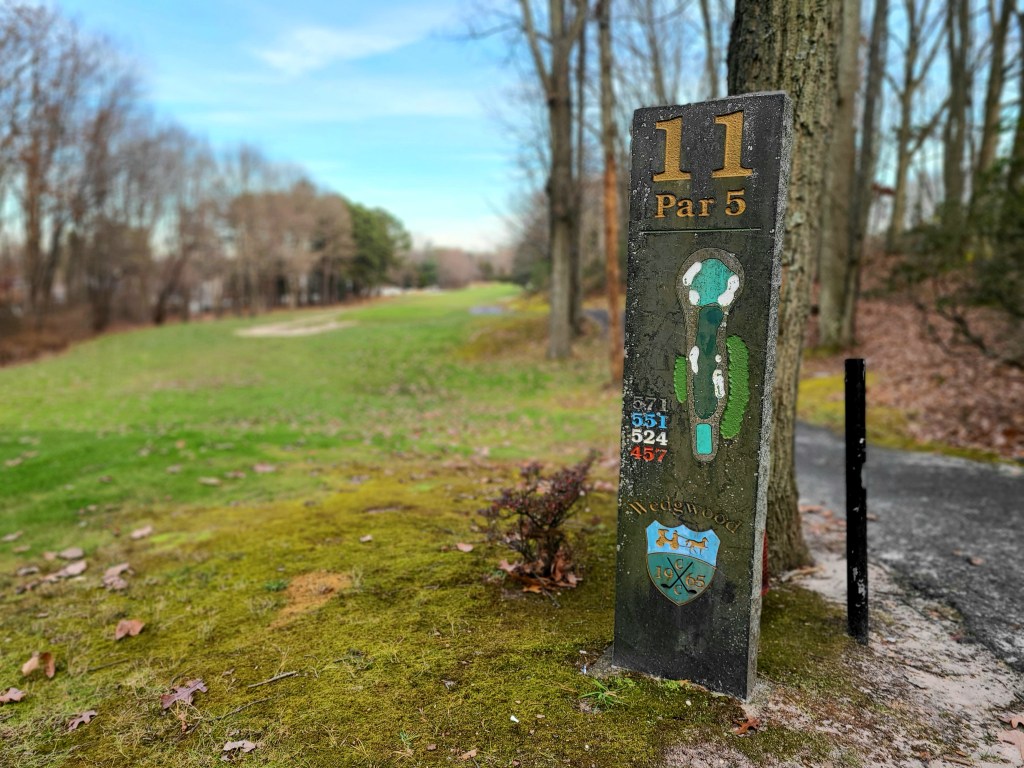
The front nine at Wedgwood plays with a great deal of width. Most tee shots have generous landing areas and there are plenty of places where you can miss wildly and still be in play with a shot at the green. The highlight of the front nine to me is the 3rd hole. Unless you’re playing from the back tees, driver is not necessary on this par 4 and could even be a dangerous choice as water lies 50 yards short of the green all the way up to the front edge.

Is this the tunnel to the 7th at Wedgwood, or the entrance to hell?

The graffiti on the arch of the tunnel on the way to the 7th hole says “Abandon all hope”, but this would’ve been a more appropriate warning at the entrance to the back nine. Where the front plays relatively open, the back nine plays far more tightly with a number of tree-lined holes. There is OB left on 10, 11, 17 and 18, and not much room to miss in that direction.

It’s mostly tight from here on in, but you catch a bit of a break in a bit.

The only semblance of reprieve on the back, apart from the par-3s, are 13 and 14 which do have some width. But even 13 is a beast of its own, a long par 4 with a forced long approach. Playing at 435 yards from the back with water in play from the tee, coming up short to avoid the water altogether will leave an approach shot of about 180 yards. If they could stretch the tee boxes back 75-100 yards, it would be a fun par 5. As it stood, it was another deeply black number on the scorecard.

Being a weekday, there were certainly fewer golfers than normal, even for a winter round. Nevertheless, I only caught up to groups ahead of me a few times, and they quickly kept moving. After being battered by the closing half of Wedgwood, I walked up 18 with enough light to finish. Thirty-six holes of golf completed, and two Gloucester County courses checked off the list.

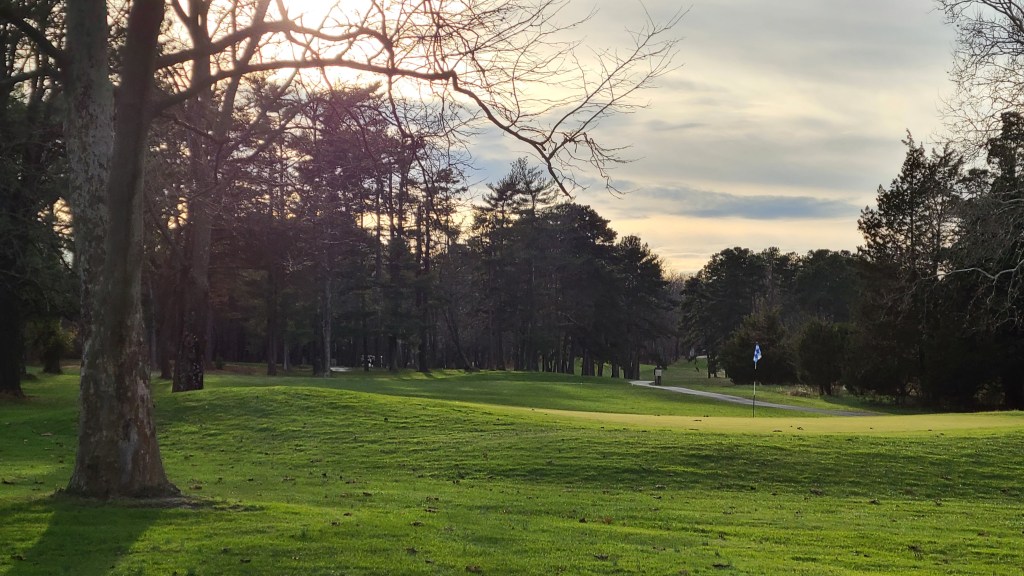
18, into the setting sun.
A look back at 7. Not sure what Dante was worried about. It was pretty tame.
11 green from 13 tee
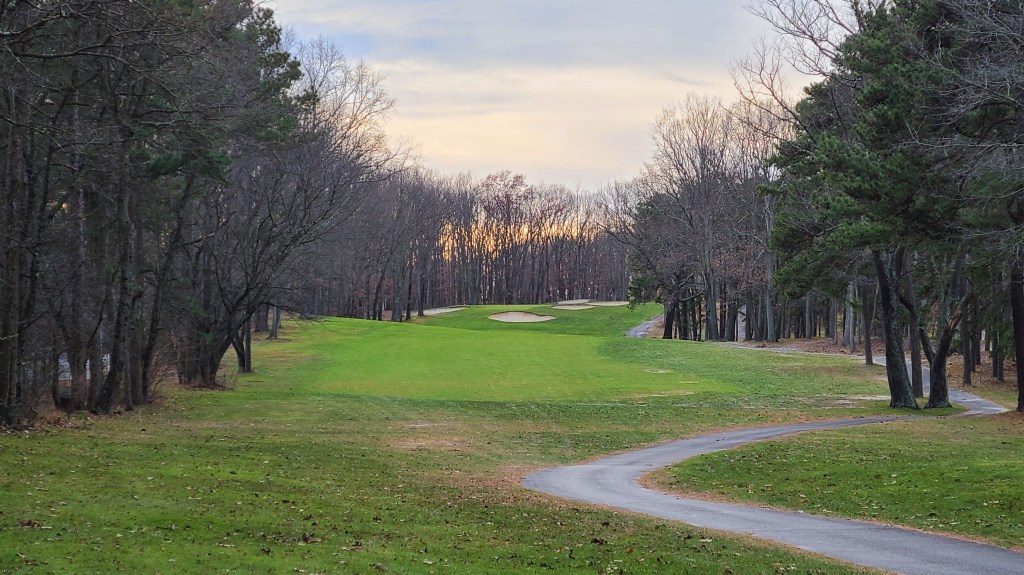
The 17th. Anyone else feeling claustrophobic?
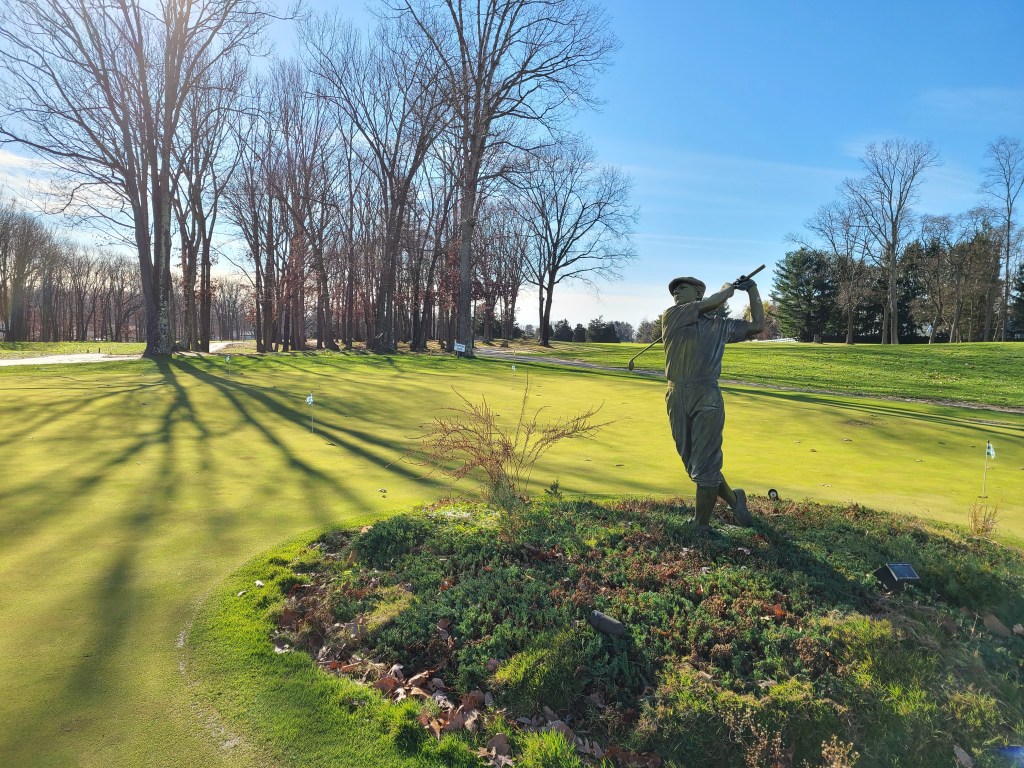
Legend has it the statue refused to move, so they just built the practice green around him.
Number 107 (Wedgwood Country Club)

Number 106 (Westwood Golf Club)

Date played: 12/3/2020

With paid time-off left to burn before the end of the year and a close eye on the weather as we entered December, I spotted a Thursday where it would be around 50° F. I quickly jumped at the opportunity and booked the day. Doing my best to plan for a potential frost delay and limited daylight, I tried to come up with a plan to play two new courses on my list.

With only nine and a half hours of daylight to work with, I knew I needed courses relatively close to one another. I was able to find good candidates in Wedgwood Country Club and Westwood Golf Club, which are only about nine miles apart. With the earlier tee times available at Westwood, that would be my first stop at 7:45 am.

Multiple groups waited at the first tee and there was a buzz about the course in different conversations with the starter. There was talk of plenty of work having been done in recent months, including the removal of trees and the installation of cart paths, something the course apparently had been without in years past.

All quiet into the distance on the first hole, but chatter and buzz were behind the camera.

After about a 40-minute frost delay, I was sent off in a group of three. The first four holes is a fantastic stretch. The round opens with a short par 5 followed by a drivable par 4. The 3rd is a zig-zagging par 5 and although the chicane is subtle, it will likely still demand three shots. The 4th is another drivable par 4, but only if you’re brave enough to take your tee shot over a significant plot of trees that would leave you in jail should you fail to carry them.

The remainder of the course presents its challenges in different ways. The 6th is a beast of a par 4, stretched out to 430 yards with a significantly uphill tee shot. While relatively short overall at roughly 6,200 from the back tees, the 9th, 11th, and 13th are par-3s that all play over 190 yards. The 15th is a short par 4 with a tree in the middle of the landing area that plays a role somewhere between target and nuisance. The greens are a challenge all around the course and the old adage of “stay below the hole” is absolutely true at Westwood.

As we made our way to the 17th tee, I checked the time and saw that it was a few minutes after noon. I had booked a 1:00 tee time at Wedgwood, and I’d have to account for a 20-minute drive and time to get started. Thankfully, pace of play had been great all morning, and we finished the last two holes by 12:25, giving me just enough time to run straight from the 18th green straight to the car and start my 9-mile sprint over to Wedgwood.

Hospitality Note: The gentleman named Matt at the pro shop who checked me in could not have been nicer. He immediately made me feel welcome as a first-timer and made sure I was situated with everything I would need to know. It amazes me that more courses don’t realize how much of a difference this can make in the experience of golfers and Westwood nails it.

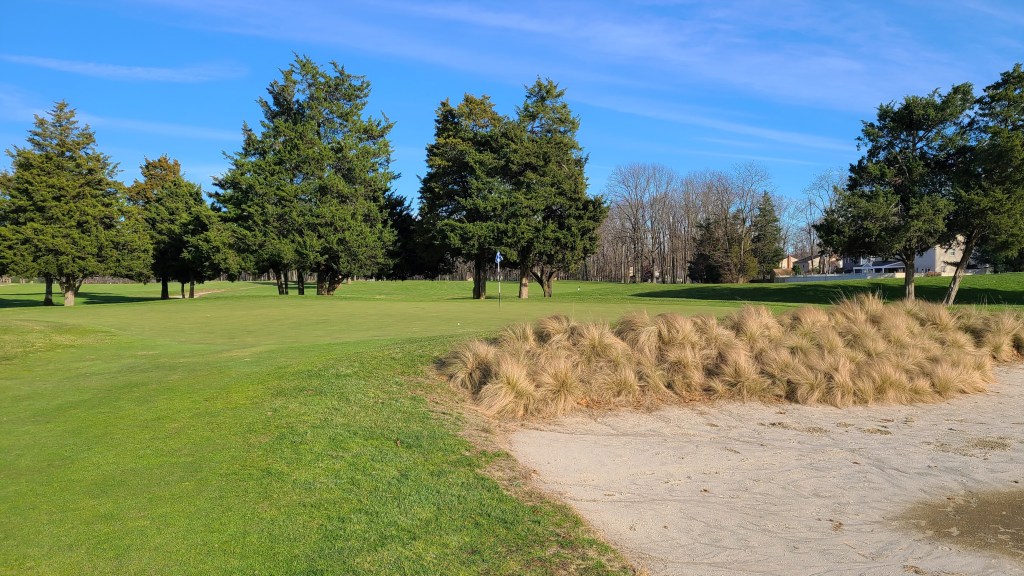
Trees behind 9 green, which is in the background right
The approach at the 90° dog-leg-right 15th. The tree in the foreground left must be considered off the tee.
17 green, with 15 green behind it
Number 106 (Westwood Golf Club)