As the summer closed out in 2021, my good friend Ed and I took a look at our schedules to see when we could meet up to play some golf. Everything lined up for us to get out on the Saturday of Labor Day weekend. We chose Pebble Creek, a Monmouth County course I still hadn’t gotten to.
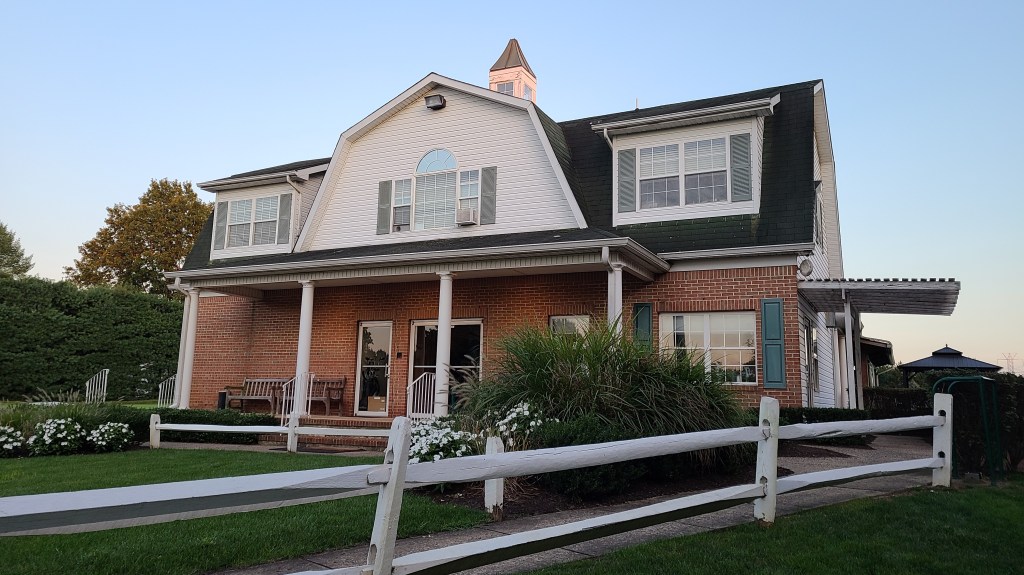
Nice little clubhouse and pro shop. Dutch farmhouse style? I don’t know. I’m a golfer, not an architect.
As I waited for Ed to arrive, I spent time chipping and putting at the practice green. Ed had a long drive and was set to get to the course just in time, so I moved all my stuff onto the cart and queued up. When I saw his car pull in, I drove out to the parking lot and helped him get his bag set up so we could get back to the first tee as soon as possible. Thankfully, we made it without issue.
We teed off at the first, and after I hit a sweet little pull-hook, we were off. Once I played my recovery shot, we both hit our final approaches and made our way to the green. As I stood over my ball to putt, I noticed that something looked off.
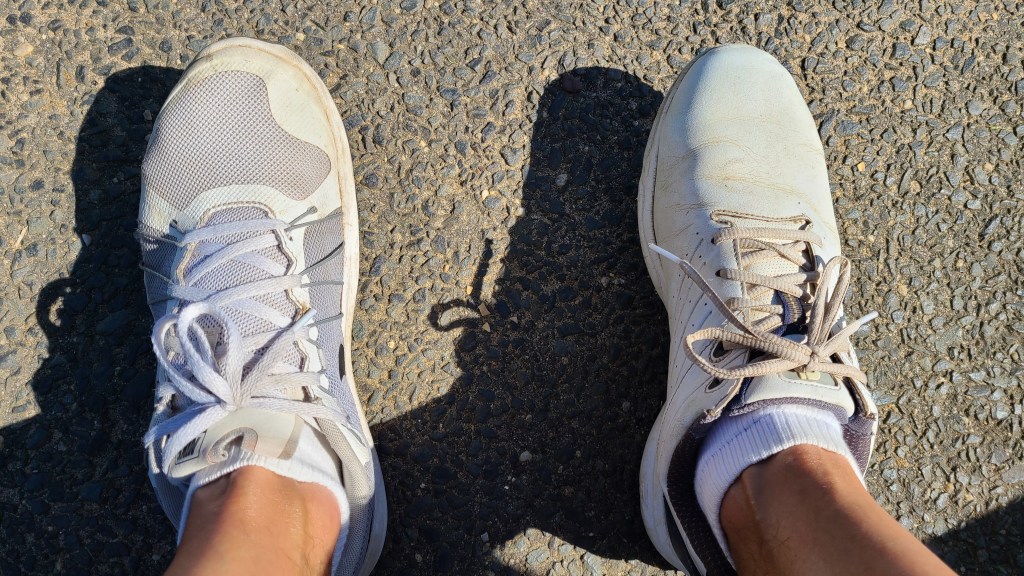
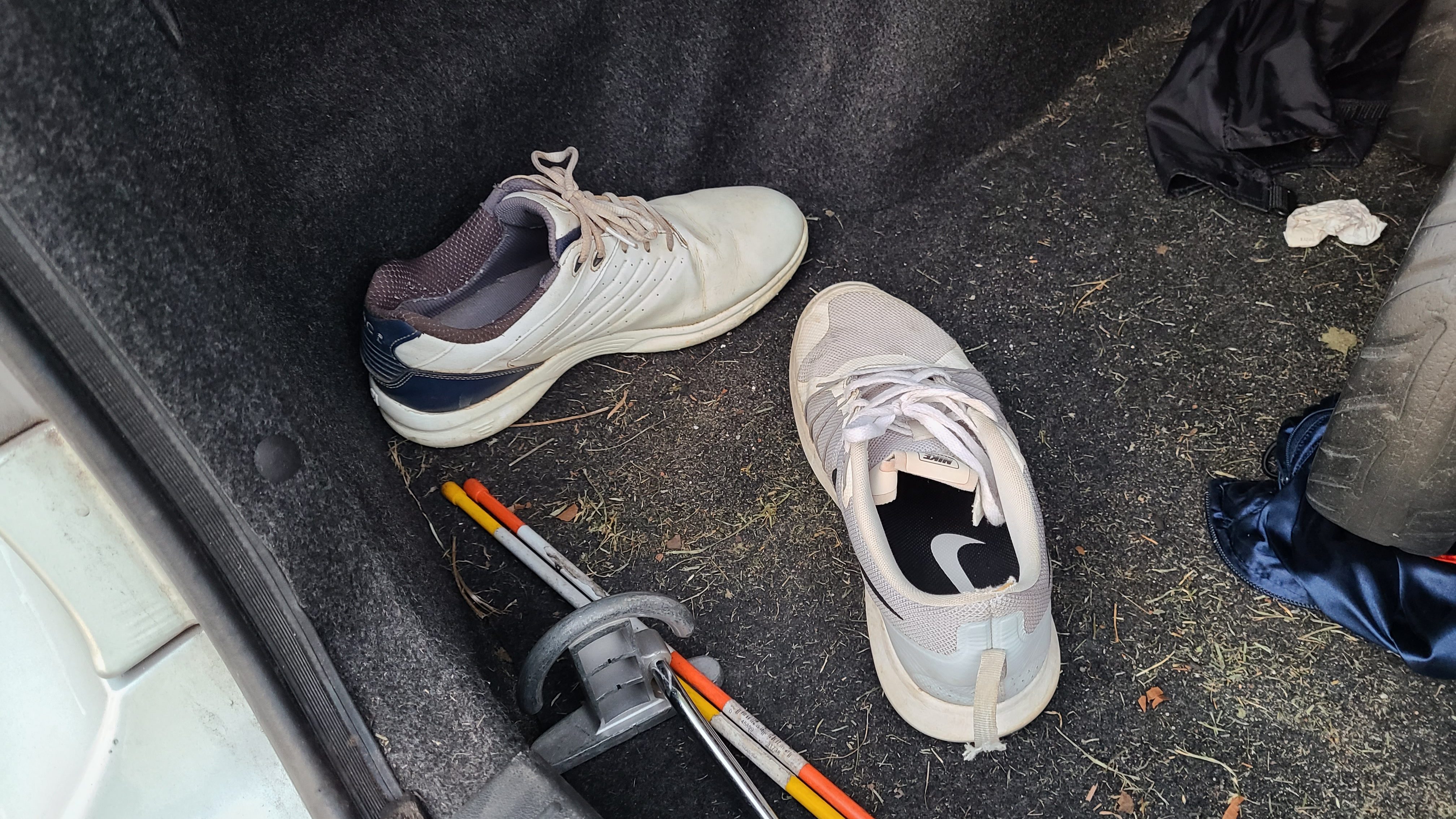
I was only wearing one golf shoe. On my right foot. My left foot still had my sneaker on it. We laughed about it and I rolled my 15-footer to save par. “I might wear one golf shoe all the time!” I joked.
Yep.
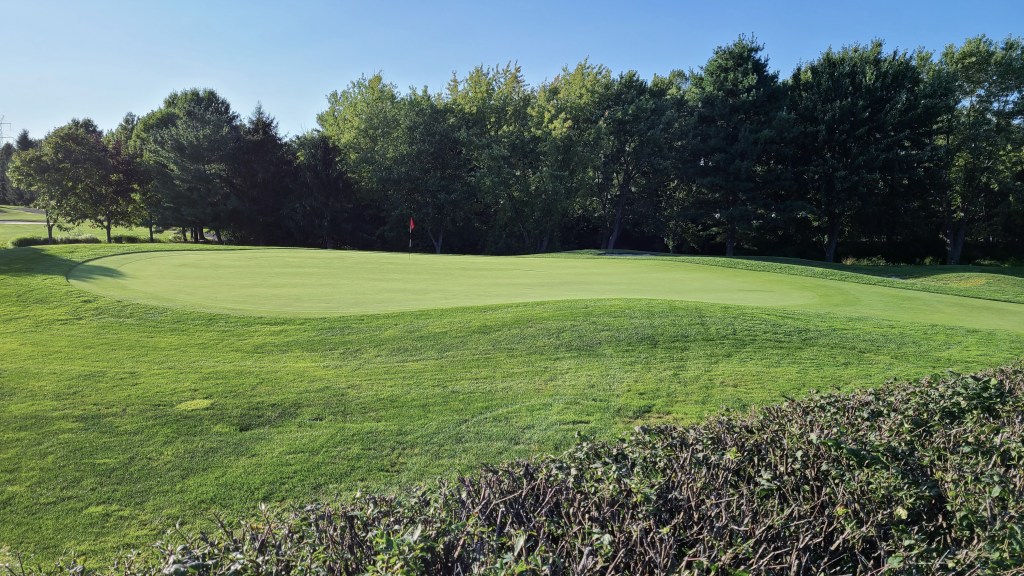
As we continued the round, I was impressed by the value the course offered for the cost. It was $55 to ride for a weekend round. In retrospect, I’m not sure if September marked the end of peak summer pricing for the course, but that is incredible value relative to other public courses in New Jersey. The condition of the greens, in particular, was fantastic at that price point.
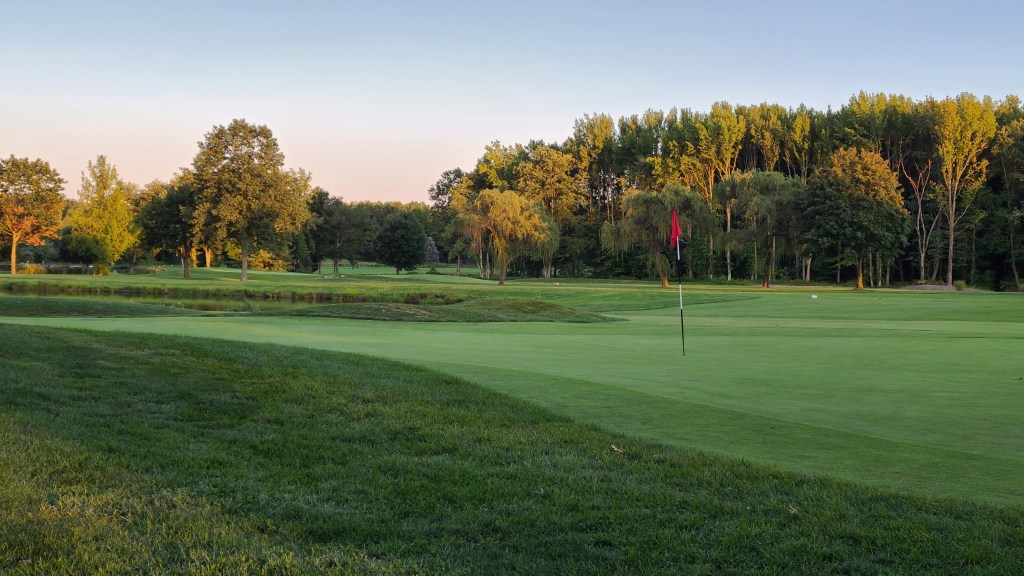
Case in point: Fantastic green.
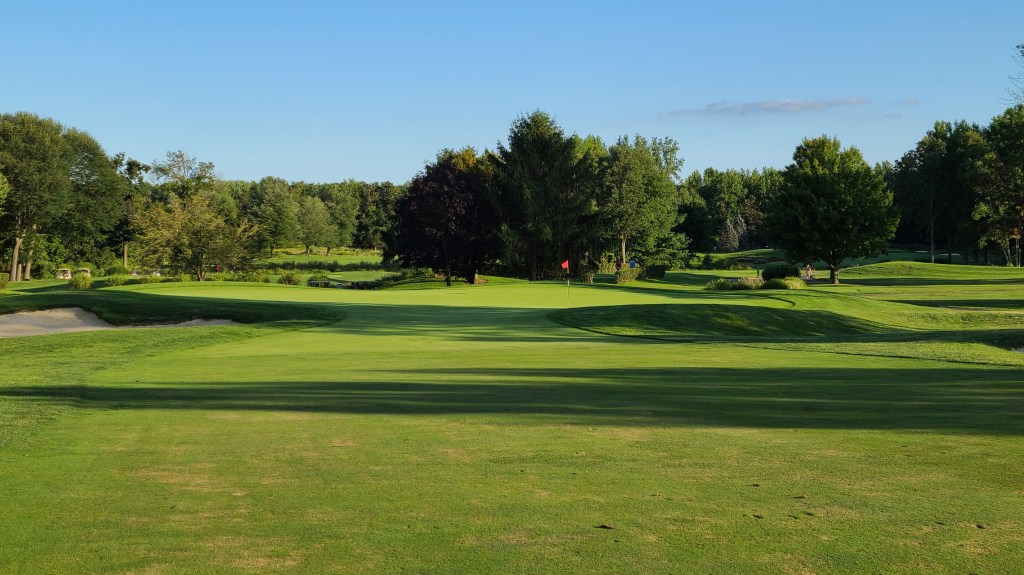
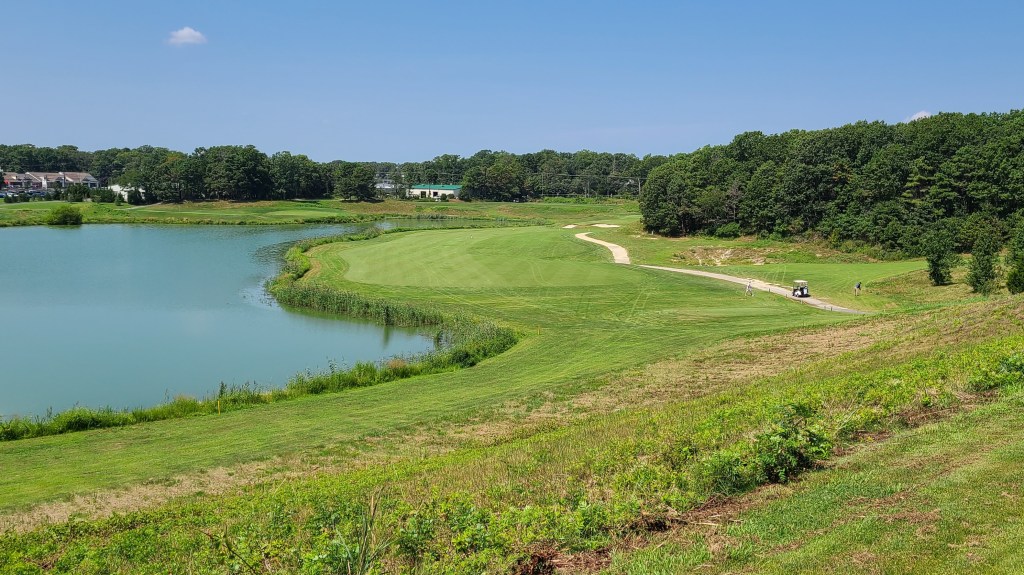
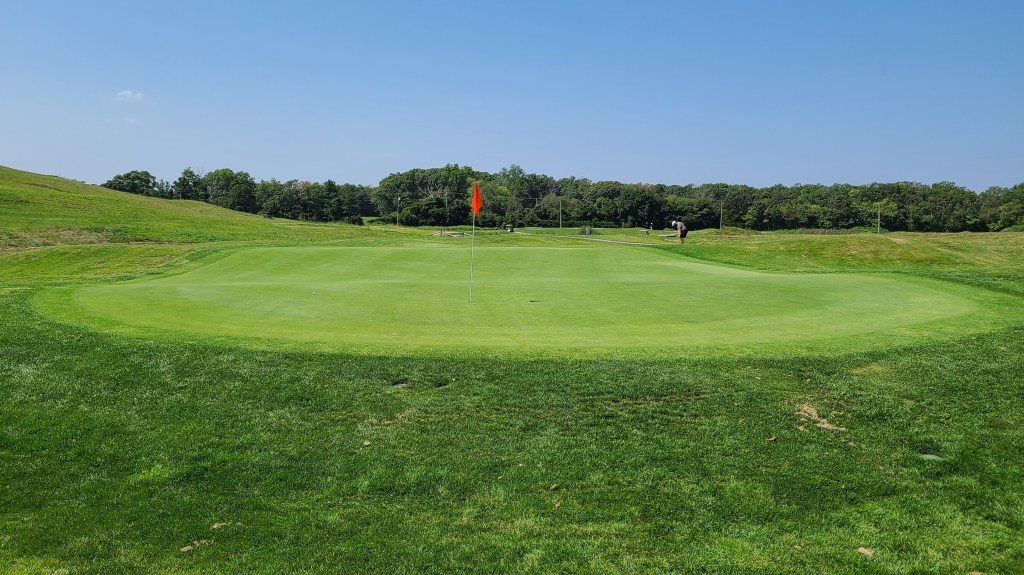
There are a number of memorable holes as well. 7 is a fun, drivable par 4 with a small but wonderfully shaped green. It’s guarded by a few small bunkers, though they’re relatively tame. 14 is a tough par 5, that starts to narrow out as the water encroaches onto the target landing area ahead of you. If you happen to hit a drive past this point, you can take a dangerous diagonal route over the water to reach the green in two. And 16 is another drivable par 4, albeit a 90-degree dog-leg right that would require an almost all-carry-over-water tee shot to get there.
The green at 7.
While not my favorite way to finish, Pebble Creek closes out on a par 3. Not sure what it is about par-3 closers, but it almost feels like an unresolved melody. My feelings about them aside, much like most of the rest of the course, 18 is another quality hole.
Again, I was very impressed by what this Monmouth County course had to offer. I’d probably stop short of a phrase like “hidden gem”, but it’s absolutely a strong competitor in a list of value courses. Definitely worth it if you’re in the area, and it wouldn’t be a bad course to travel to if you’re looking to mix it up.
P.S. BIG shout-out to the group that held onto my 4-iron after I left it at 7. Much appreciated!
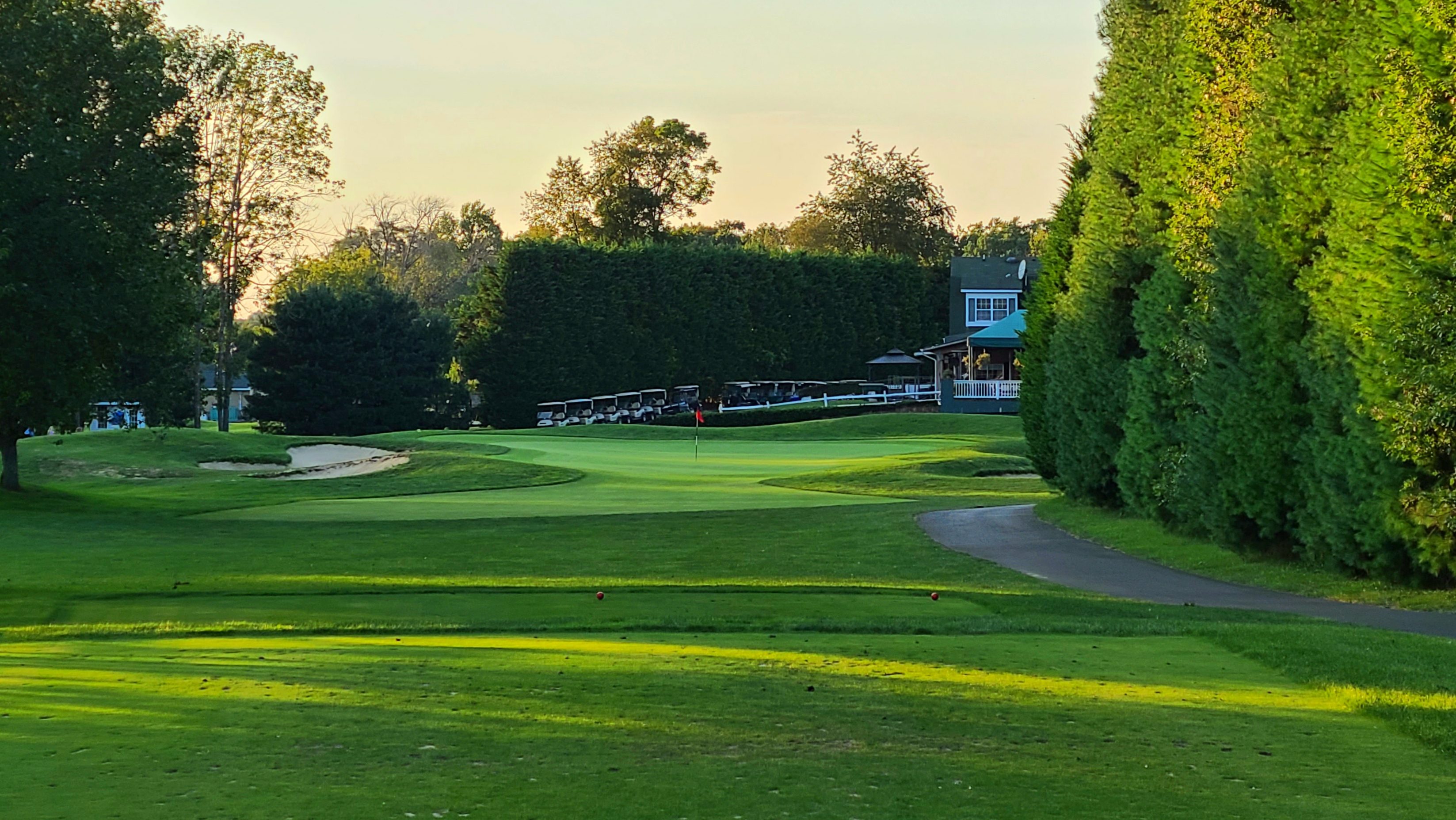
14 green. That dangerous line I was talking about would be coming in from the lower right corner of the photo.Gorgeous, wide green at 15.Looking back at 16 in the fading light. You can just about see the water on the left side of the picture, center of the frame.Pretty sure I snapped this only after we drove back to look for my 4-iron.The par-3 18th.My left golf shoe… right where I left it.
It took a bit of planning and matching up our schedules, but a couple months after said trip, we were able to find a Wednesday in August where we could both take the day off from work to knock out a few courses.
While there were still 50+ courses left to choose from, I knew I wanted to target Atlantic County. At the time, I still had 15 courses there that remained unvisited, and a number of them were relatively close together. There were also a few that I knew had reputations as great or well-liked courses. After a short look at Google Maps, we decided to book times at Twisted Dune and McCullough’s.
Twisted Dune
We arrived at Twisted Dune at 6:00 am, in advance of our 6:30 tee time. A light fog was still sitting over the course, but just from what we could see on our walk to the clubhouse, you could tell the course was special.
This view from the Twisted Dune clubhouse veranda shows some of the wild look you’ll see around the course.
Once you’re on the course, it can seem visually daunting in places. But in truth, there is room to score. Players will likely be psychologically put off by some of the traps, waste areas, and tall grasses, but if you’re playing from the correct tee box for your game, they should be little more than distractions.
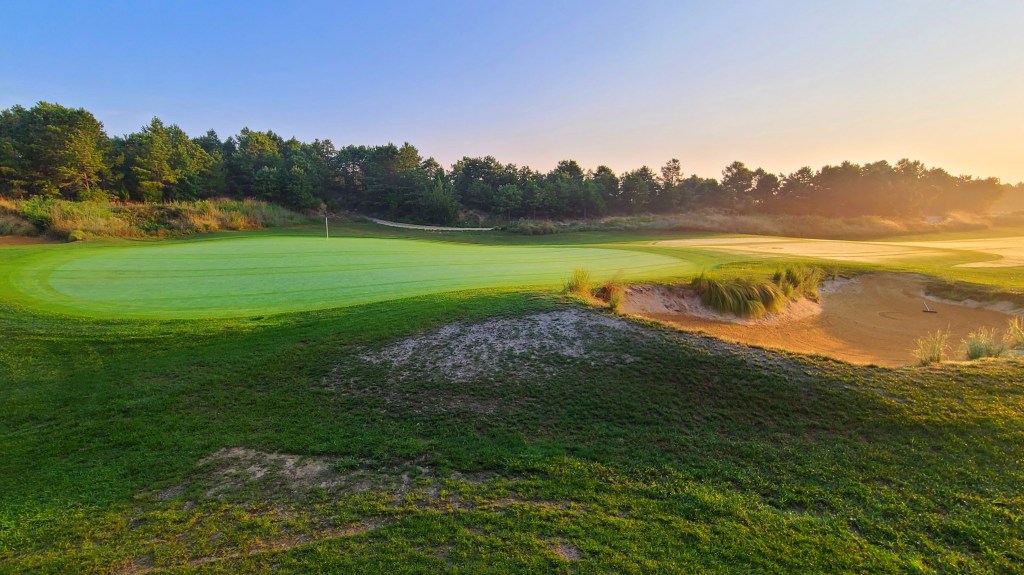
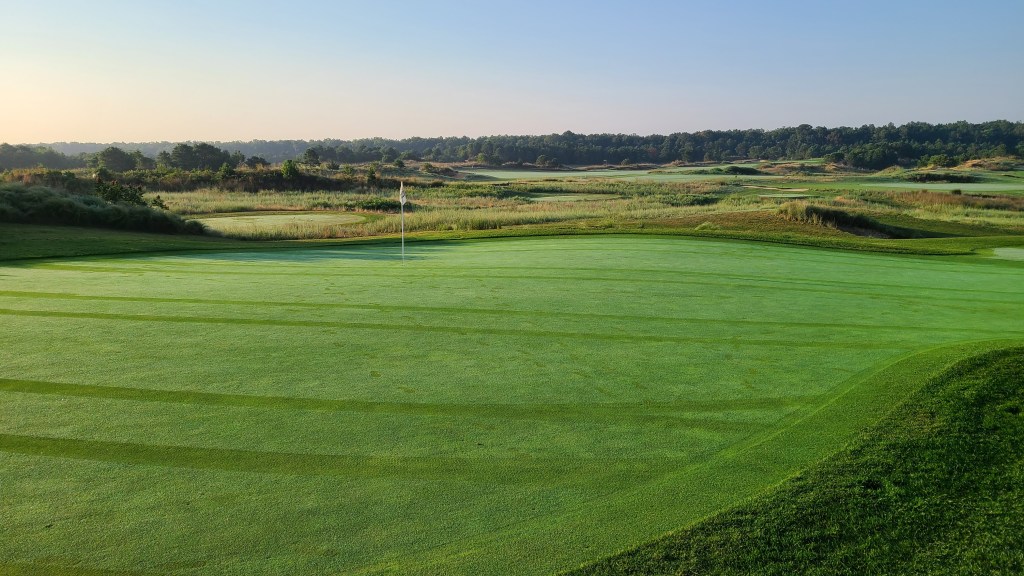
The sun still rising and lighting up the green at 2.
There were a couple things about the course that really hit me in terms of making an impression. The first is that its overall look is (relatively) unique. The second was the almost-disbelief that this was a place in New Jersey.
The green at 4, looking across the tee boxes on 5, onto 6 and 7, whose green is visible in the distance on the right.
When you’ve played 100+ courses in the state, there is a lot of overlap in terms of style and feel. Generally, there are parkland courses and links-style courses. I don’t think Twisted Dune fits into either of those categories. It’s heavier on heathland surroundings, and there’s almost a hint of what Tobacco Road would feel like if it were tamed and had less tall pines around. Not that it should be tamed of course, but that version would be as close as I could come to accurately describing Twisted Dune.
A look at the first few holes at Twisted Dune.
In addition to the sand and overgrown areas that might steal a ball or two, there are water hazards on the course in a couple places. You’ll have to contend it with it on 9 and 10, and then again on 13 and 14.
Looking out onto the par-5 9th at Twisted Dune before the round.
Between the views, the uniqueness, and the playability, Twisted Dune is just a great course overall. I highly recommend it, and I’ve included in my list of must-play public courses in NJ.
McCullough’s Emerald Golf Links
There are a few places in New Jersey in which you could stand anywhere, throw a stone, and hit a golf course. This is probably most true of Atlantic County, where there are 17 public courses, and a number of which are in very close proximity. McCullough’s Emerald Golf Links happens to be 1.3 miles down the road from Twisted Dune.
I have to say that after being thoroughly impressed by our morning venue, McCullough’s did not live up to expectations. There have been a number of places that have been brought to my attention on my journey, and McCullough’s was one of them. Called the “Emerald Golf Links”, it’s a Stephen Kay design that is inspired by holes from a number of famous Irish and Scottish golf venues, like Royal Portrush, Prestwick, and even the Old Course at St. Andrews.
The 8th, which is meant to be a tribute to the 10th at Turnberry. It’s difficult to tell from this shot, but the bunker seen in the distance at the end of the cart path is in the same ring/island bunker style.
It’s not a bad course by any stretch of the imagination, but unless you are deeply familiar with those places, it’s tough to appreciate. This also may be odd, but I think one of my complaints about McCullough’s is that there is so much green color throughout the course. I never thought this would bother me, but visually, everything seemed to just blend together in a lot of places.
Matt chipping on at 2, which is meant to be a Biarritz hole. There is undulation, but I think the swale/valley is too subtle to be called a Biarritz in my opinion.
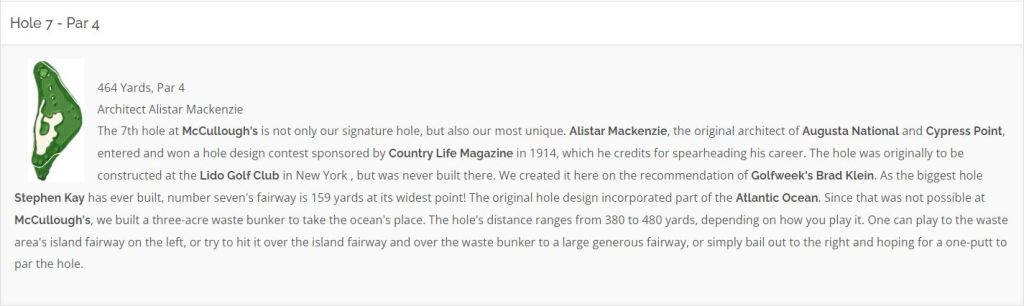
My gripe about the aesthetics aside, the course does play well. It is very open to wind, which can make for some challenging holes around the course. Water will make tee shots a challenge at 8, 13, and 18, and there is some elevation change on 3 and 11. The most notable hole though is the signature 7th, which is inspired by a Mackenzie design that was meant to go in the Lido Club.
From the Course Tour on the McCullough’s site
Again, this is a course that comes up a lot in conversations about golf in Atlantic County, and while I prefer Stephen Kay’s Scotland Run to his design at McCullough’s, it may very well be one that makes your list of favorites.
18 at McCullough’s. What you can’t see here is the sound of bagpipes that are played over a PA system that will definitely be audible from this vantage point.
Hamilton Trails
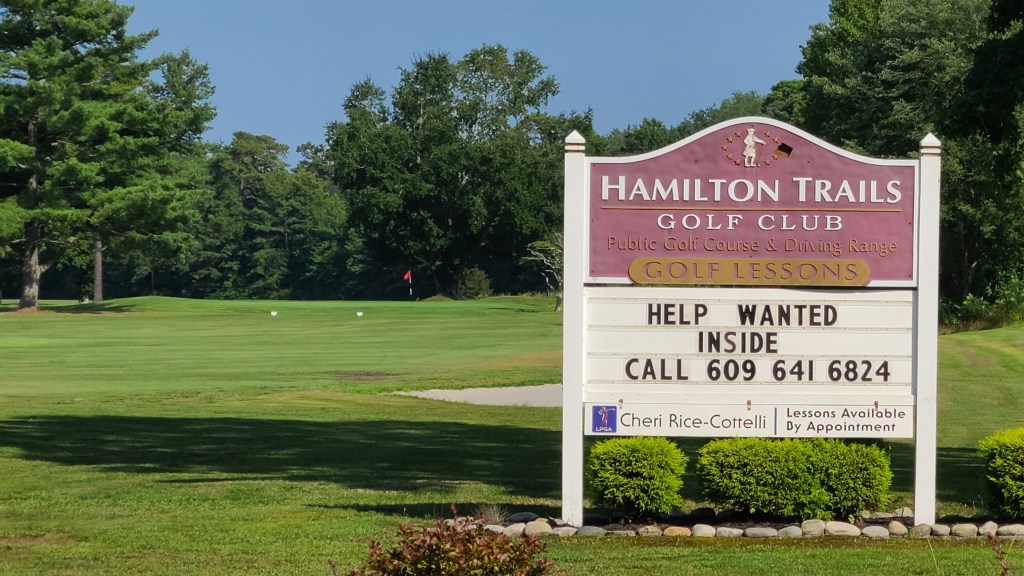
After finishing up at McCullough’s and stopping for something to eat, we played a third and final round at Hamilton Trails. With its logo featuring what appears to be a soldier from the American Revolution in a ring of stars, the course is almost undoubtedly named after Alexander Hamilton. Nevertheless, I can’t find any history on the name and what it means to the area.
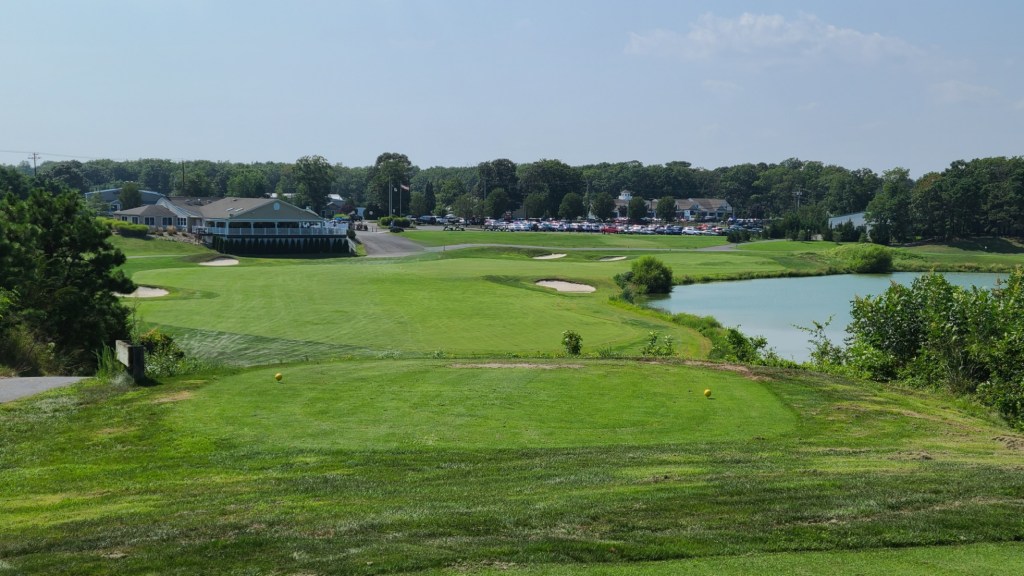
A look at 1 green in the background as you turn the corner onto Harbor Ave.
A 9-hole course that doesn’t seem imposing as you pull into the parking lot, it actually measures 3,265 from the back tees, providing decent length to the average golfer. The course looked almost completely flat, so Matt and I closed out the day walking the round.
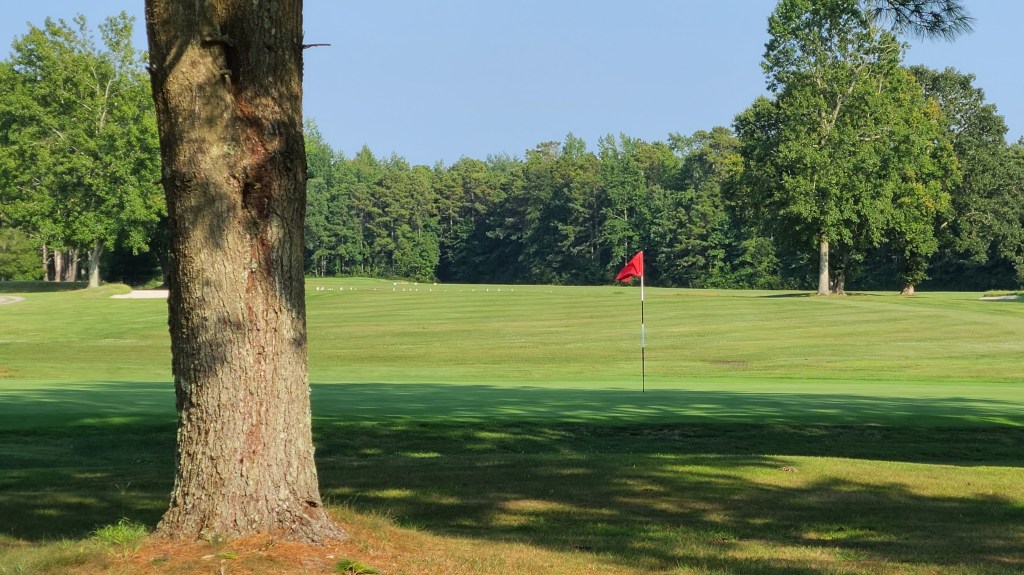
Walking the 1st fairway, you get a peak at the green at 3 coming back in this direction.
The first hole is the most exciting on the property, an almost-90-degree dog-leg left par 4. From there though, it’s relatively plain. There are creeks that cross – or run alongside of – almost every hole, but they likely won’t threaten a mid-handicapper. The biggest hazard that a body of water will pose will be the small pond that is short and left of the par-3 green at the 9th hole.
At $30 to walk nine holes, it’s probably punching above its weight at that price. But, it’s an area of more expensive courses, so it’s relatively in line with the local market. Plus, it was a fine way to end another long day of golf on the journey. Forty-five holes played, and three courses knocked off the list.
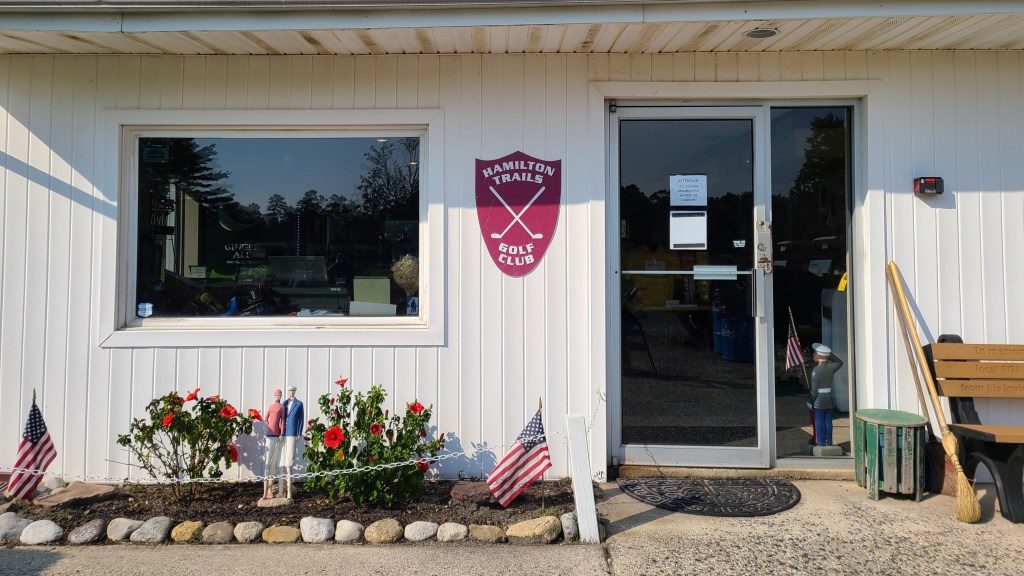
The pro shop at Hamilton Trails, my 119th course on the quest.



 Orson Rosas Golf