Number 101 (Hendricks Field Golf Course)

Date played: 9/22/2020

Do you remember the scene in Forrest Gump where he was running across the country? Red shorts. Sweaty, yellowed shirt. Scraggly beard hanging below hyper-focused eyes. He said he just felt like running. He didn’t explain his purpose. Viewers simply witnessed his inexplicable need to continue running – compelling him and leading him through his journey.

And in some ways, I understand that unrelenting urge to accomplish something. To triumph.

My golf journey hasn’t been as eventful. Nor has it been Oscar-worthy. And there is no way my wife would let that beard happen. But it’s my journey, nonetheless. Call it a bit of wanderlust – an attainable adventure across the Garden State.

I don’t always have something new to say. The grass is green. The ball is white. And the sky is almost always blue. But it’s the little things that keep me going. I meet fellow golfers, play interesting courses, or just experience New Jersey locales that I likely may have never visited otherwise.

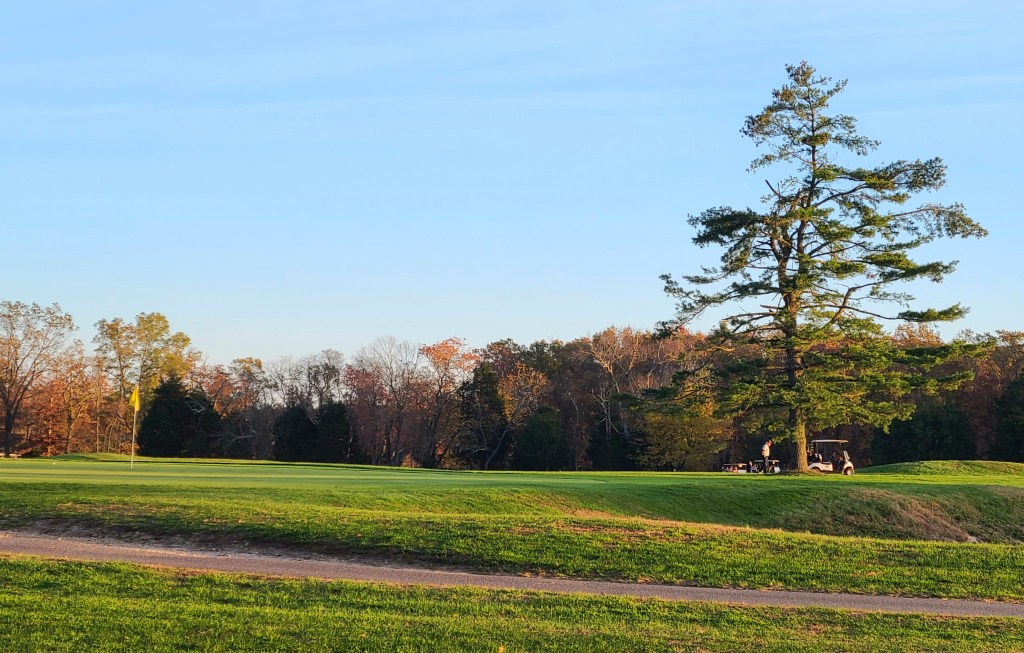
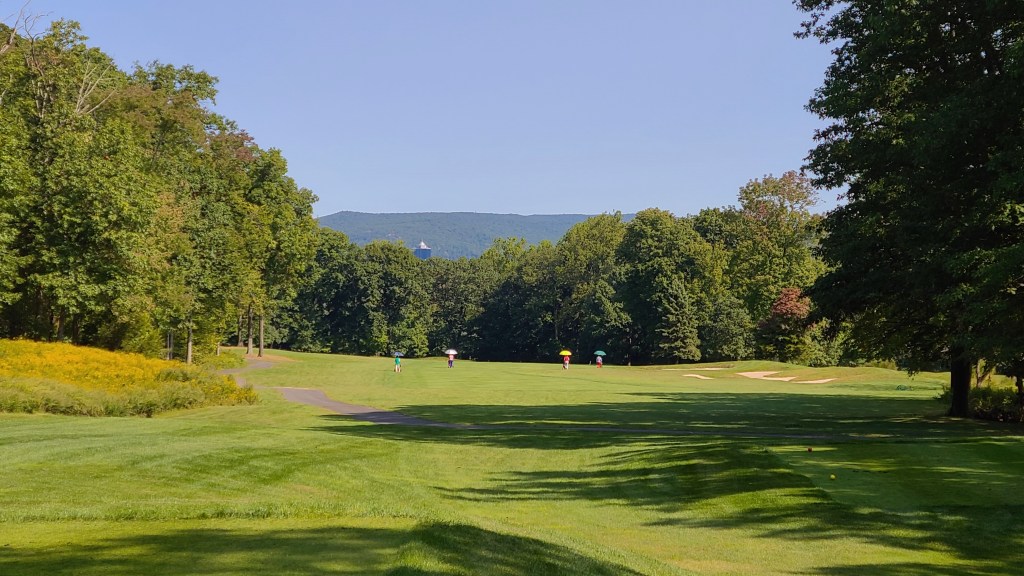
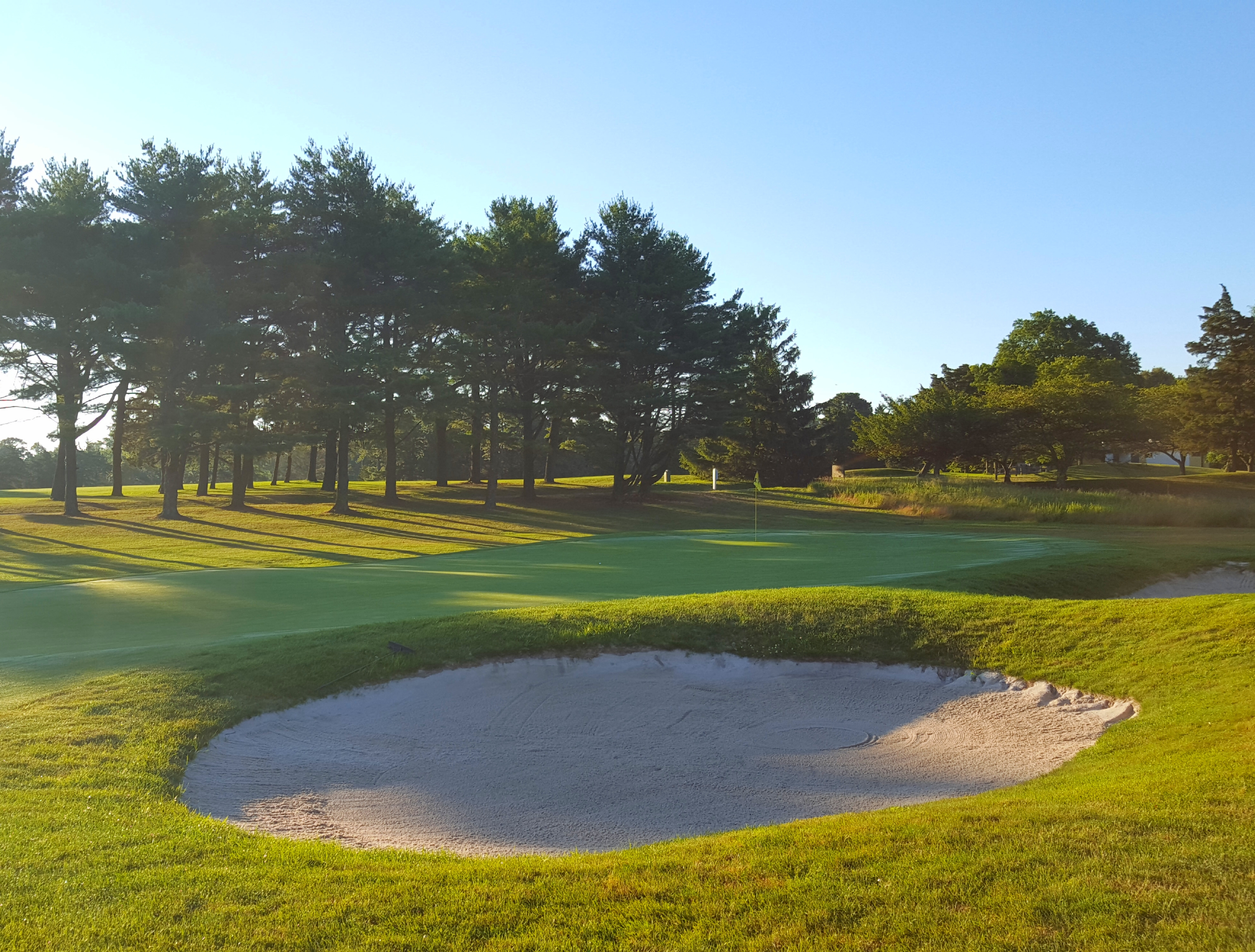
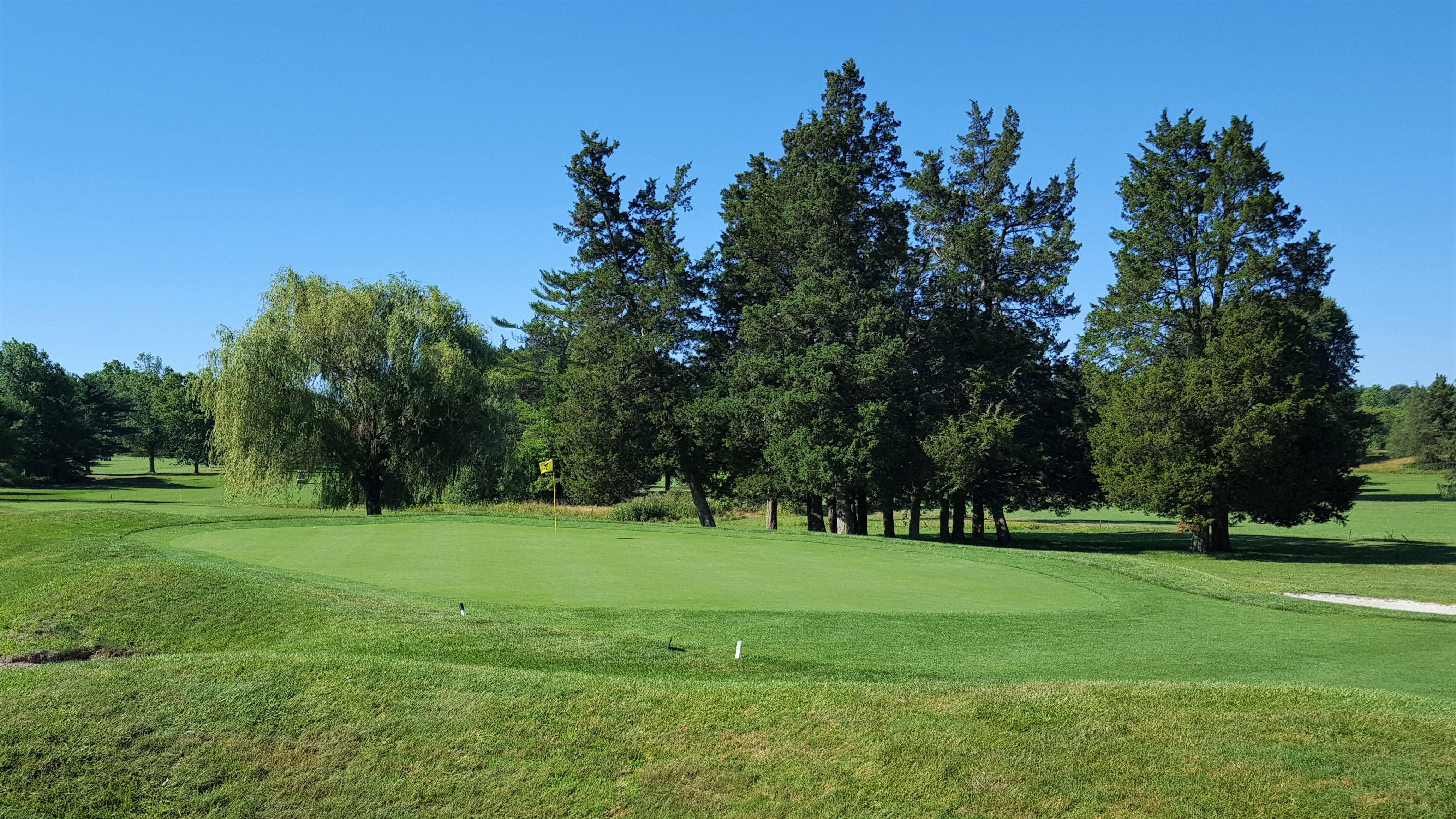
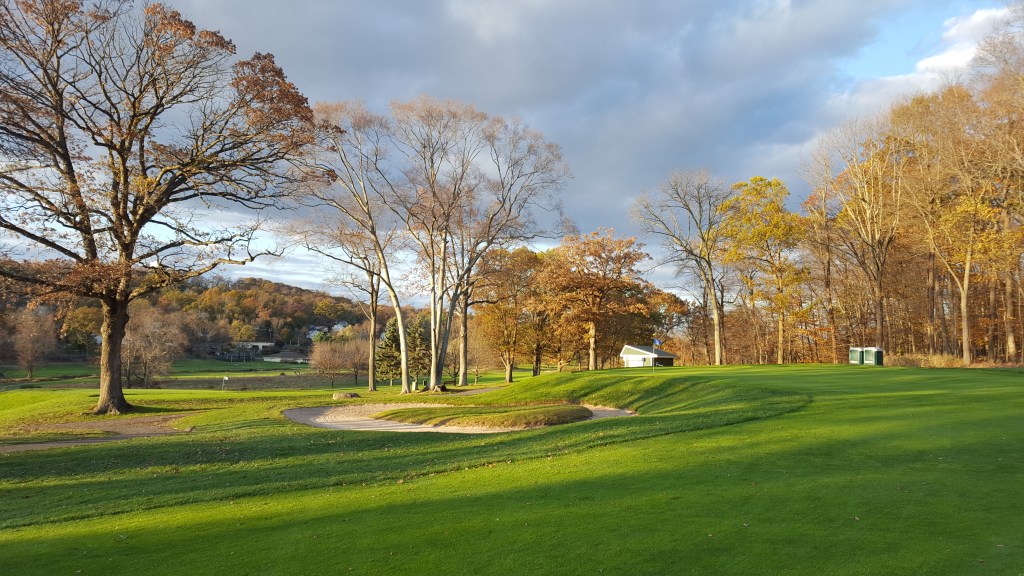
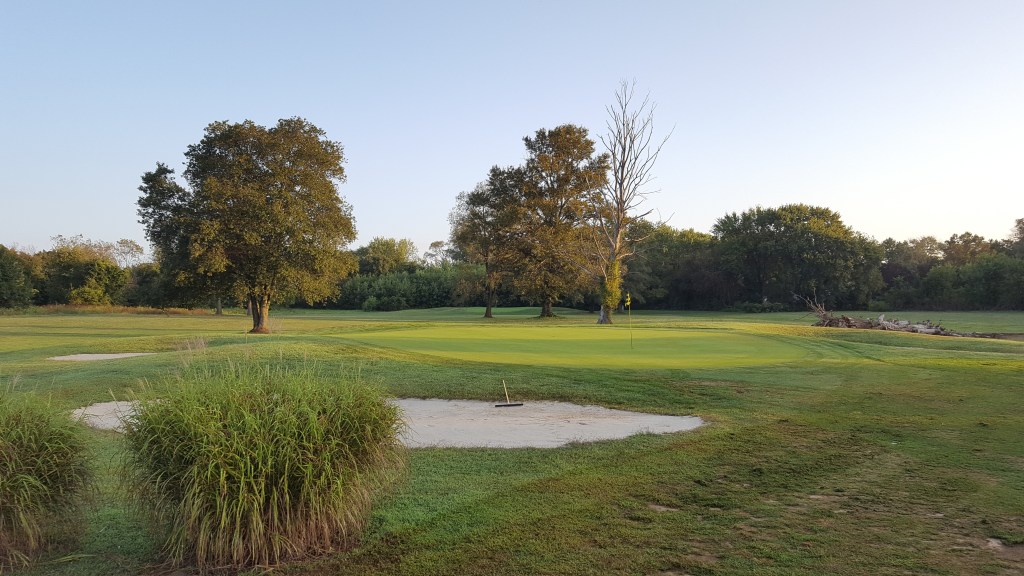
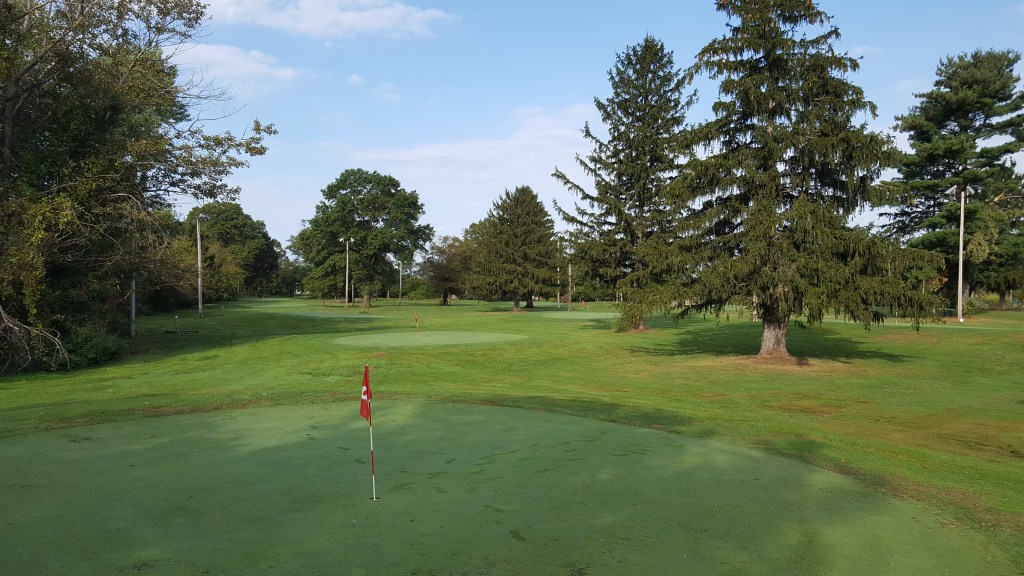
Blue sky over Hendricks Field

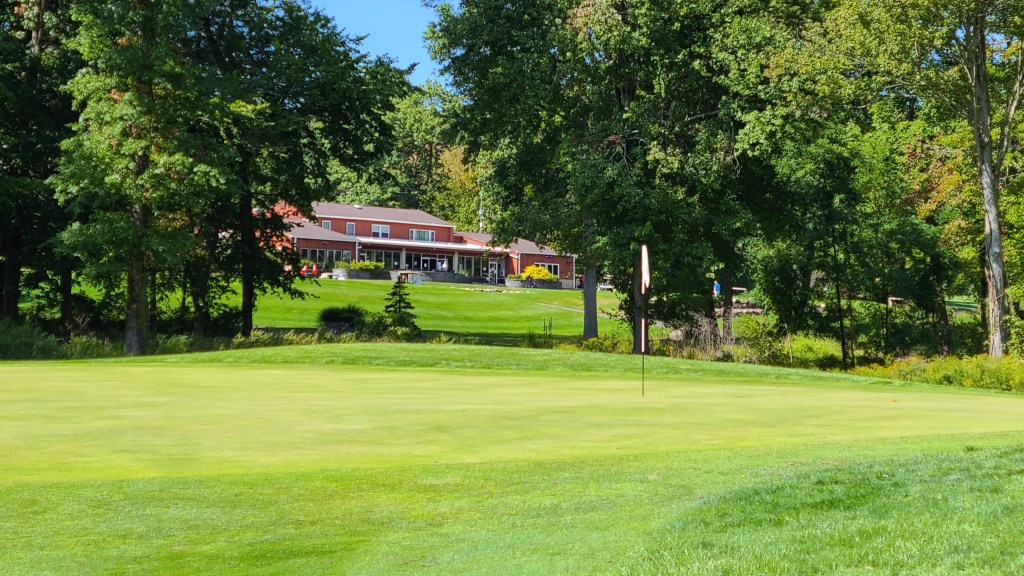
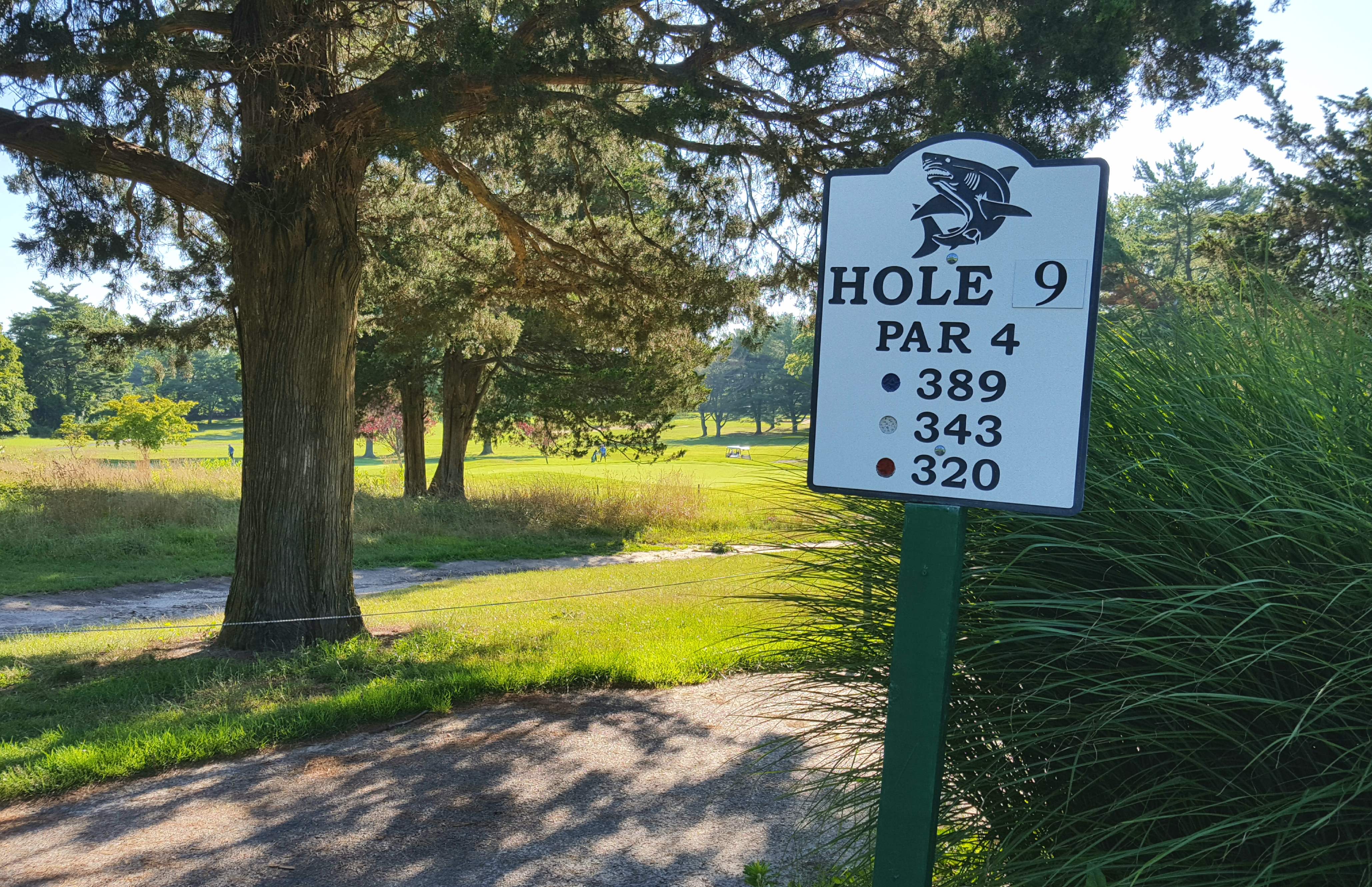
Having finished at Darlington early enough in the afternoon, Brian and I decided to see if Hendricks Field still had available tee times. We hopped in our cars, made the 40-minute drive south to Belleville, picked up lunch along the way and got to Hendricks. Thankfully, after a short wait, we were able to walk on.

Brian and I have played a few times together since connecting over Twitter. Over the past couple of years, I’ve gained several new, regular golf partners. I’ve also met interesting characters, like Kermit, who unknowingly started me on this quest after telling me he was already on it. At Hendricks, we were joined by a single, whose name I unfortunately can’t remember. Some new friends stay, while others are fleeting and sometimes fascinating details in my story.

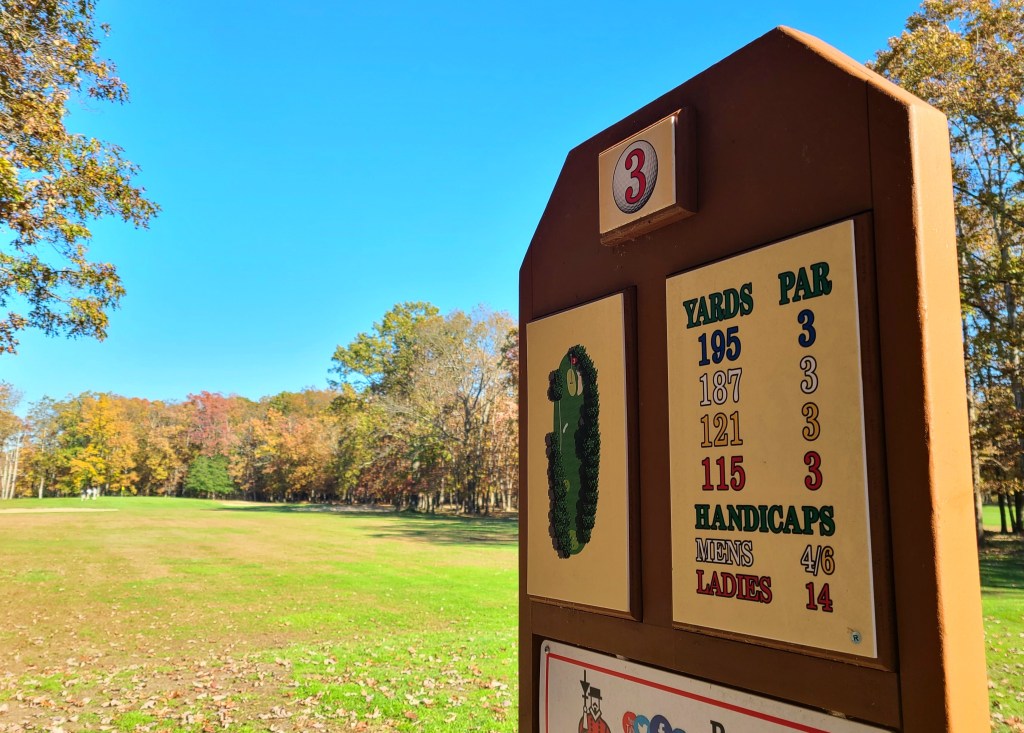
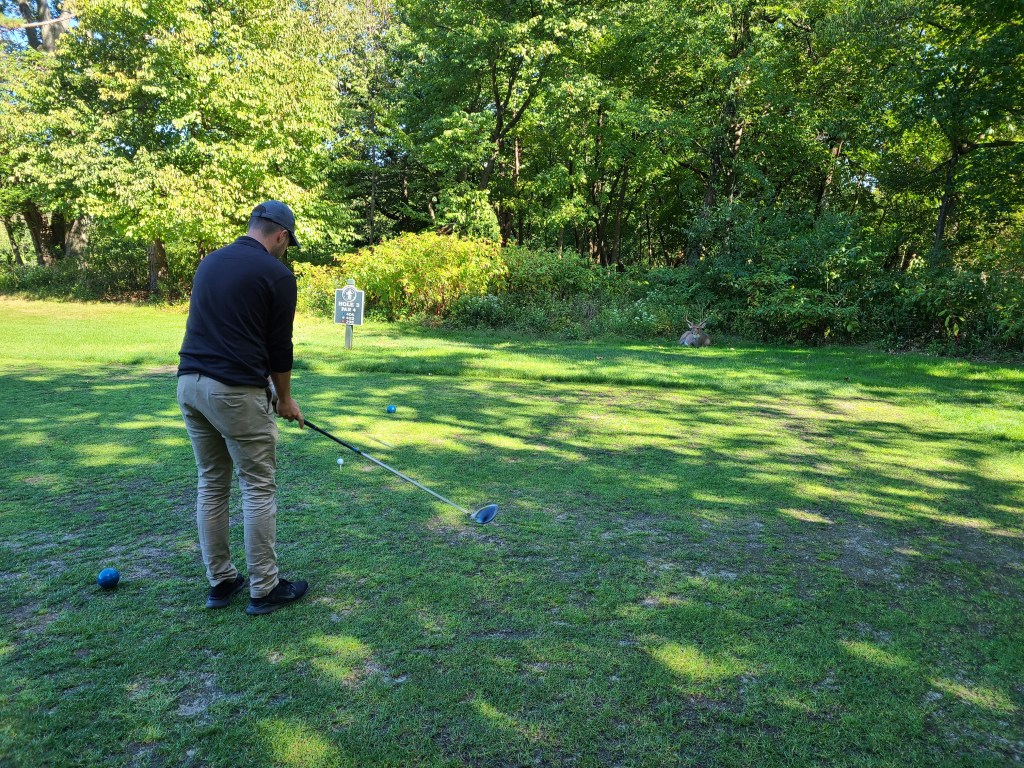
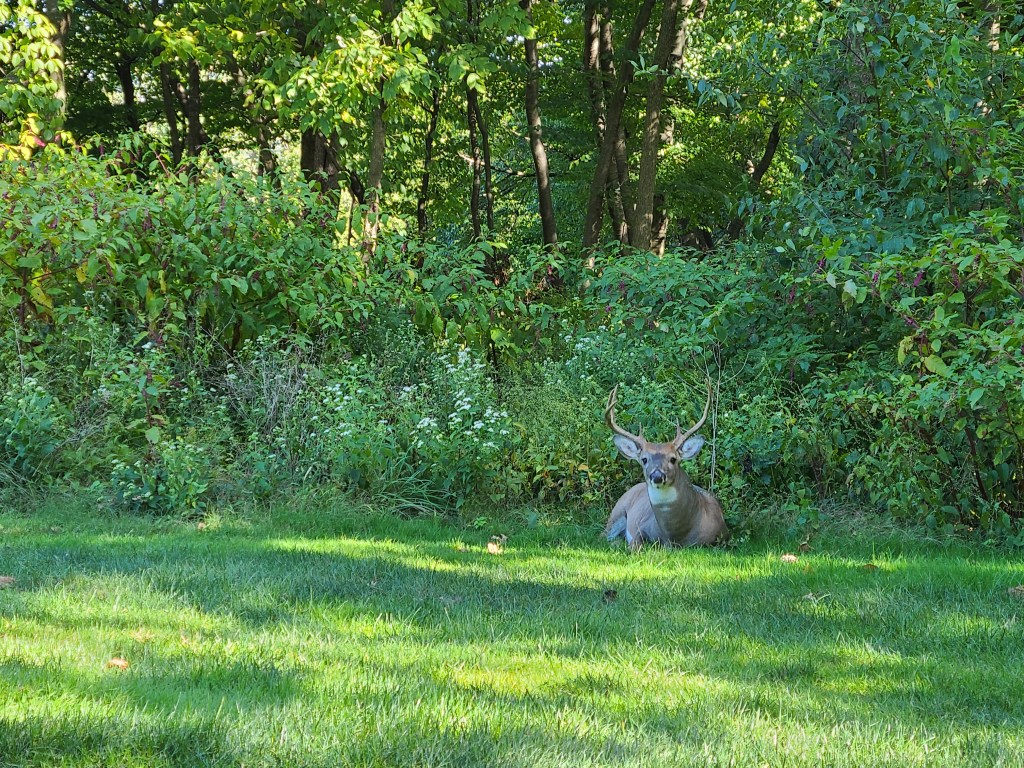
Our unnamed third, teeing off on the 3rd, with a buck just a stone’s throw from the tee box

The courses are all a little different, but it’s nuances of each outing that stick with me the most. Whether it’s the people I play with, the shots I hit (or didn’t), or the intriguing details about the golf in my home state.

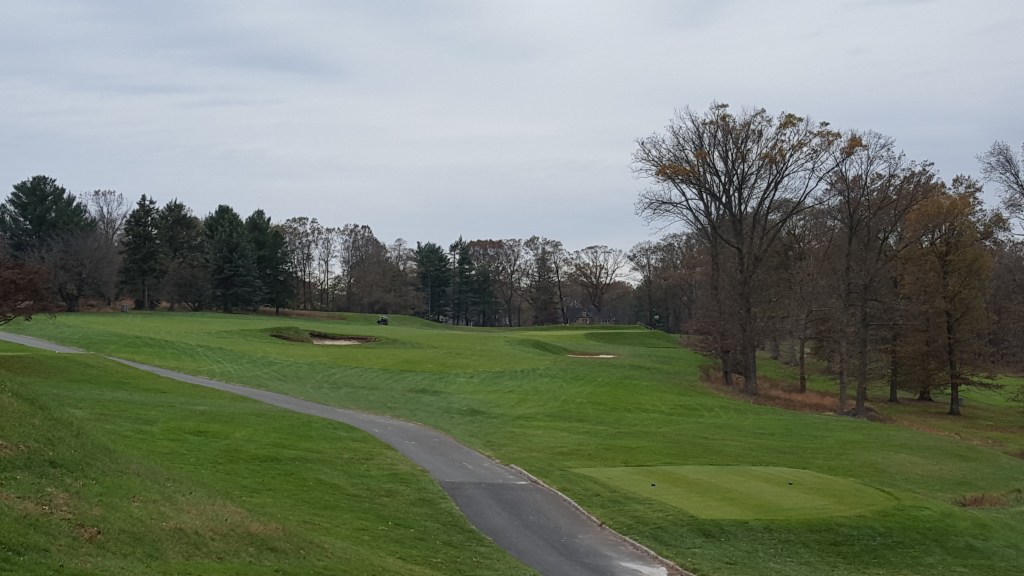
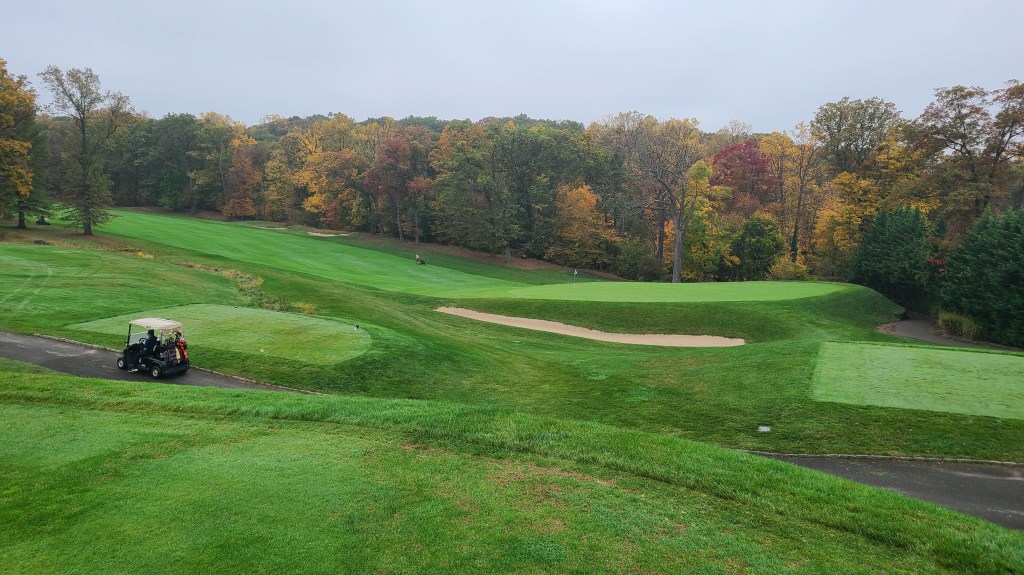
For example, did you know Hendricks Field was originally designed by Charles Banks, one of the prominent architects from America’s “Golden Age” of golf course design? Shortly after we played there, Hendricks underwent a renovation which honored Banks’s legacy of thoughtfully crafted holes, while also incorporating new features to support environmental sustainability (i.e. grass that requires less water and pesticides).

At the time of writing, I am about 75% of the way through my journey. As I close it out, I will see more green, white, and blue along the way. I look forward to what I might learn and who I’ll meet on the next course, each detail adding a little more color to my journey. Subtle moments shading and painting a picture of the New Jersey landscape.
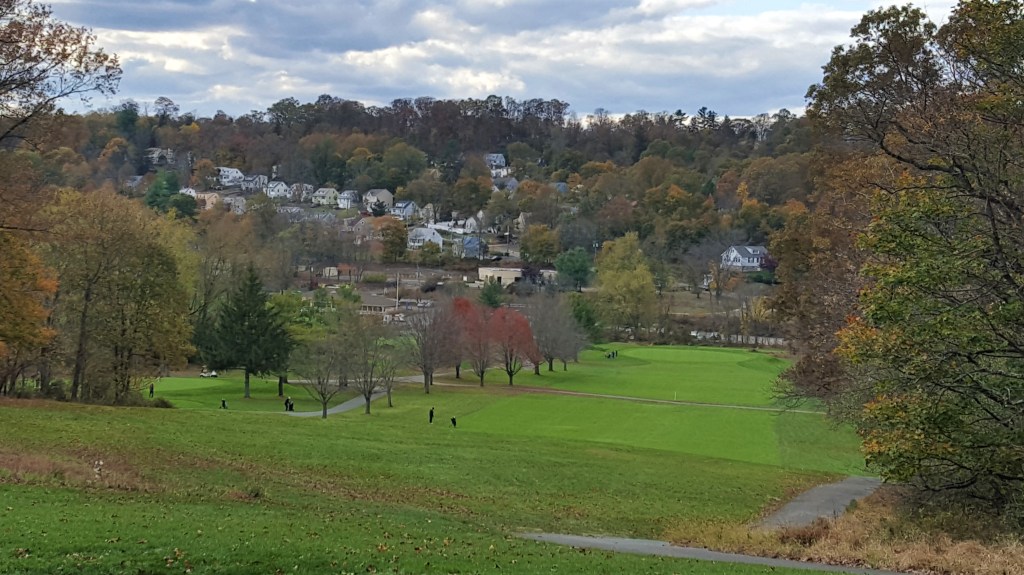
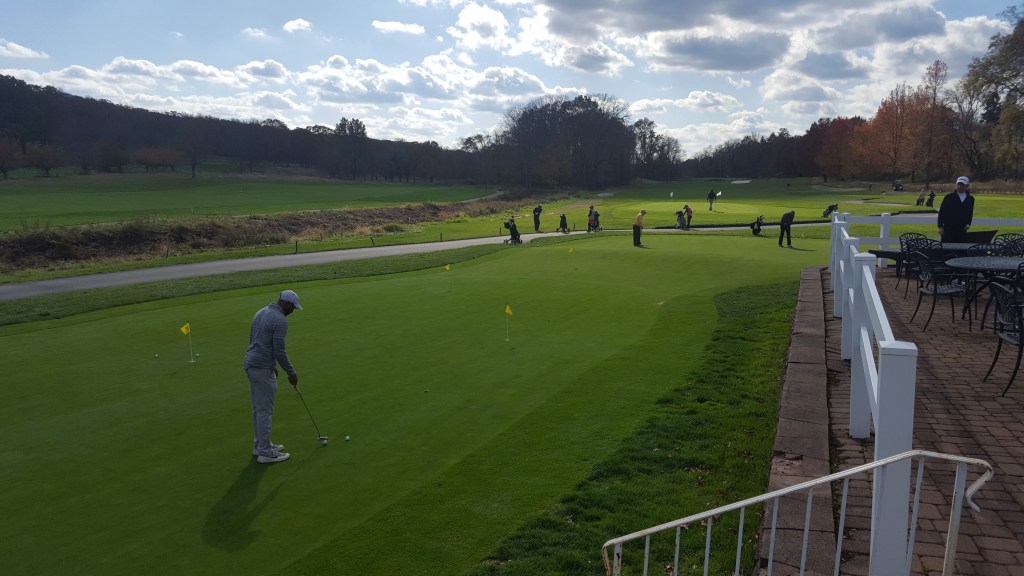
Located in Belleville, Hendricks was the last course I needed to play to complete the Essex County publics. As I move on to courses in other counties with my own hyper-focused eyes and Gump-like determination, I am grateful for the opportunity to do something I love and tell the world about it.

He didn’t hate it, but he was not impressed
Number 101 (Hendricks Field Golf Course)

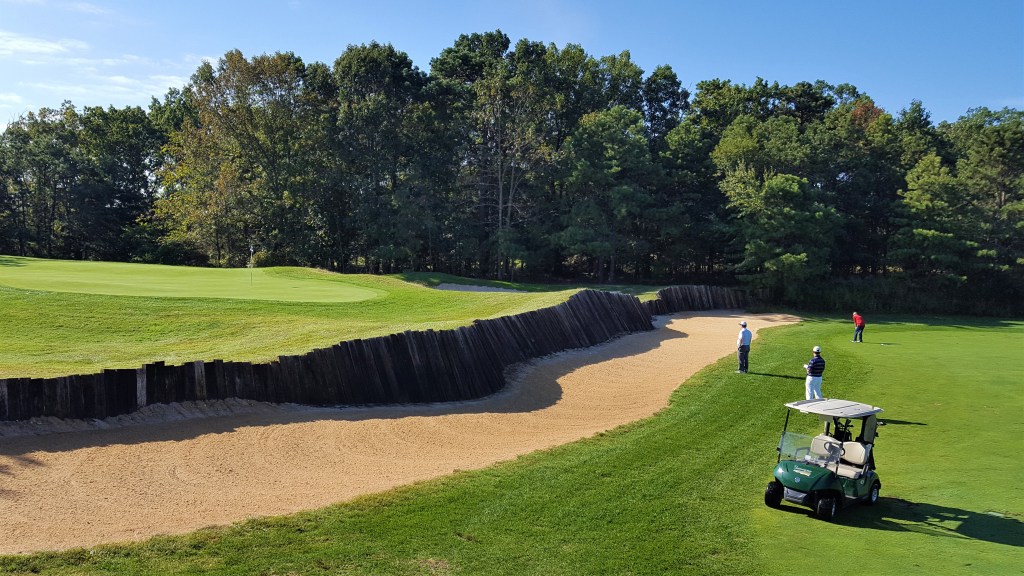
Number 100 (Darlington Golf Course)

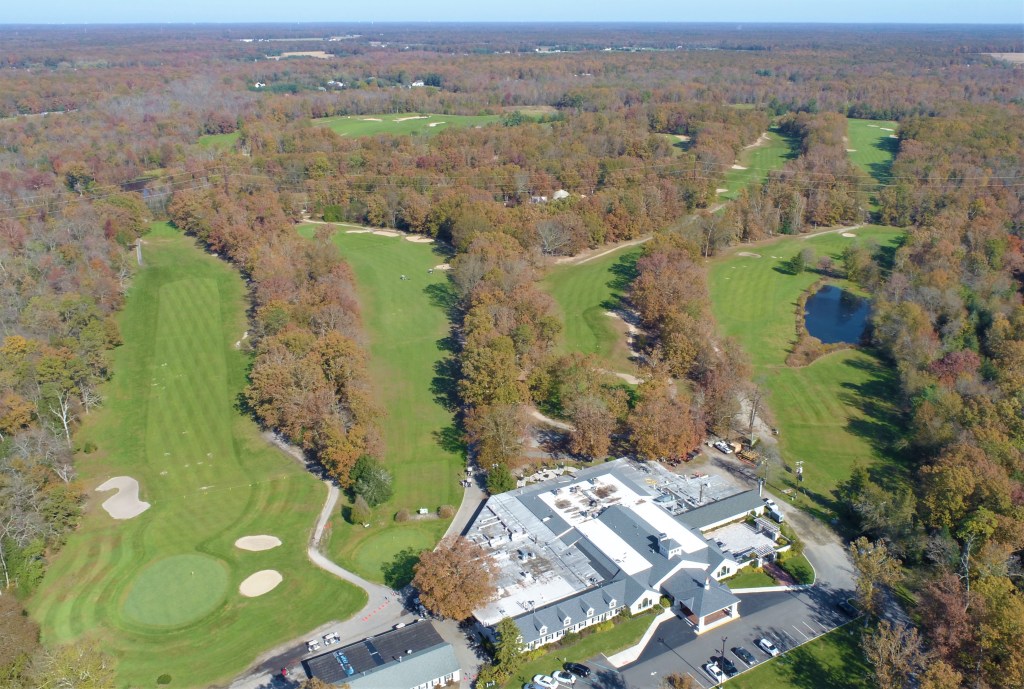
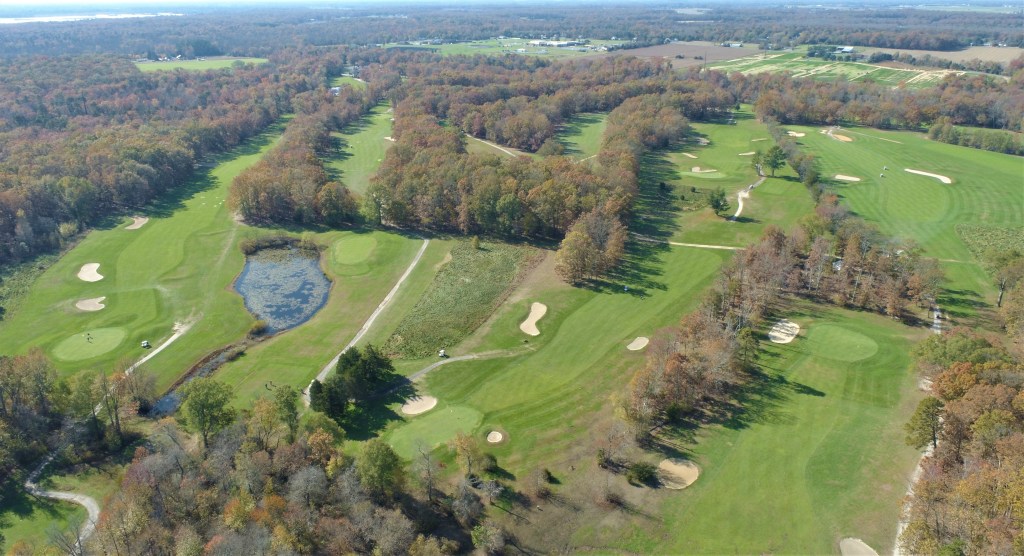
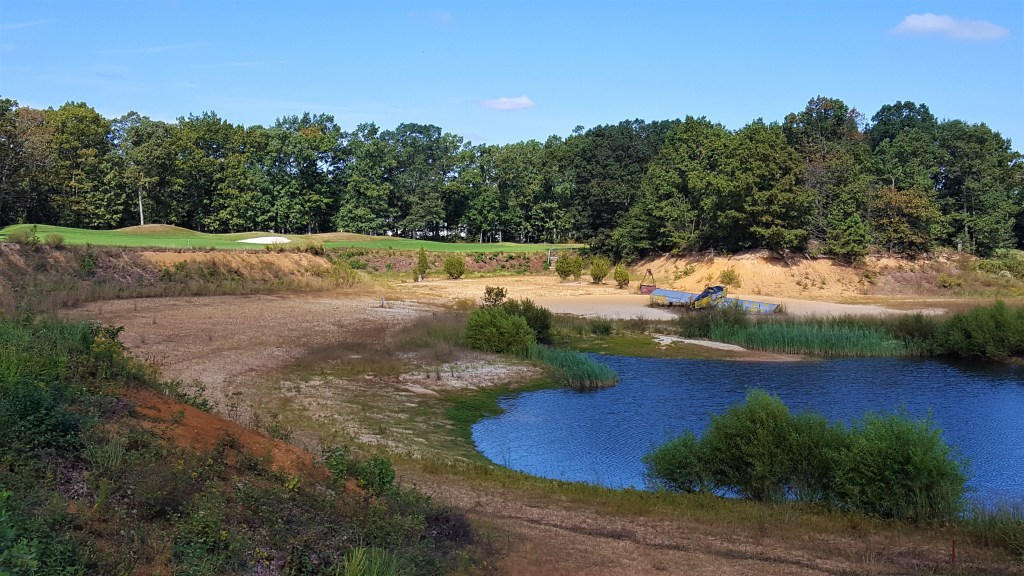
A look at Darlington from above. The center of the frame is the tee box at the 3rd. Bottom of the frame is 17 along the green pond, with 18 up the left.

Date played: 9/22/2020

For the milestone that was the 100th course on my journey, I would meet up with my Twitter golf buddy, Brian, at Darlington Golf Course in Mahwah. Something of some old stomping grounds of mine, I used to work at Stryker just down the road, and had actually been to the driving range at Darlington. It would take another 17 years before I played the course.

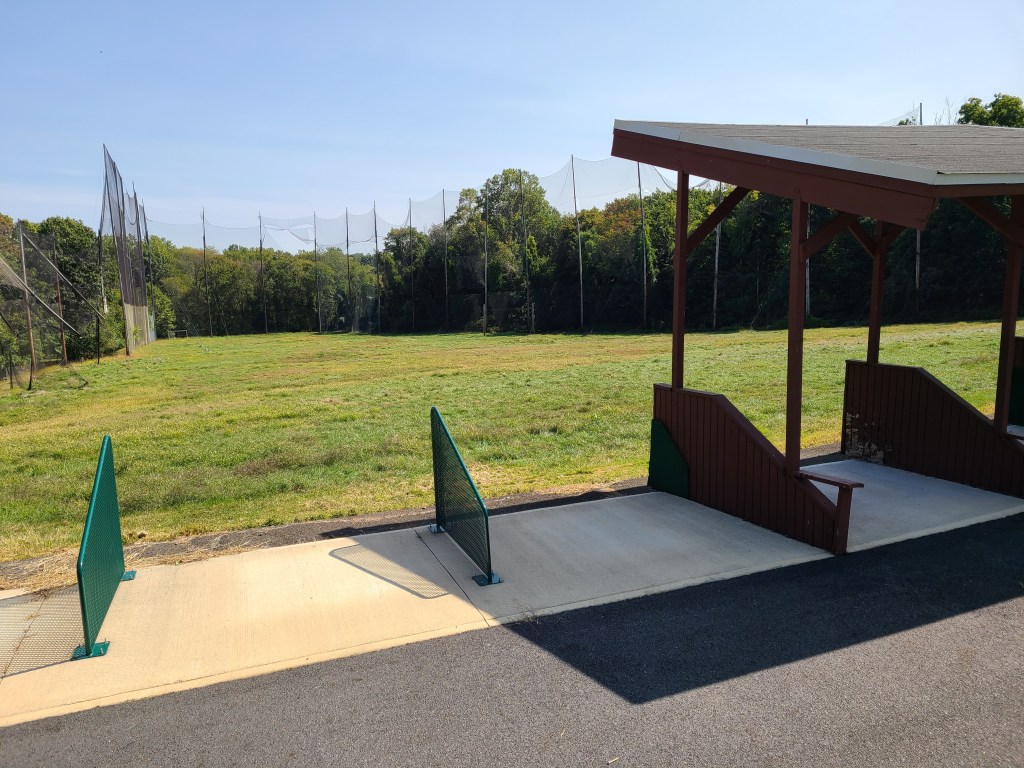
The driving range has seen better days. At the time of playing, it was no longer open.

There are a number of memorable holes, starting with the very first. I don’t play par 5s particularly well, but I love the mere mention of them. Playing downhill and under 500 yards from the White tees, the first at Darlington is a great par 5, and a perfect way to ease you into the round as you walk down to the lowest point of the course’s acreage.

I really enjoyed the middle third of the course, as you start to play towards and around the highest elevation on the property. This stretch starts with the 7th, which plays downhill almost the entire way to the green. There is room to send it for most golfers, but longer hitters may not have enough runway and can opt for something less than driver off the tee. The 8th will play back up the same the hill with plenty of room to miss right, though you could be left with a lie in one of several bunkers.

You’ll make the turn with a straightaway but narrow-feeling par 5 on the 9th, and then it’s back up the hill with a wide open tee shot on 10. The 11th is another terrific three-shot hole, and my favorite on the property.

The view from 11 tee, with the Sheraton Hotel and office complex – another place I’ve worked – in the backdrop in the distance.

Set along the crest of the elevation on the course, it may be reachable for the longest hitters, as the approach would play somewhat downhill. If you choose to get there in three shots, a decision will need to be made about where to send your second. The fairway splits before it reaches the green, so there is a bit of room to spray. A route directly towards it will play to a narrow fairway tract, while the path to the right offers plenty of room to land. If you choose to lay up to avoid the forked fairway altogether, you’ll be left with somewhere in the neighborhood of 110 yards to the green.

The middle third finishes with a relatively mid-to-long range par 3, playing at about 175 yards from the White tees. From there, the final stretch of holes continues to form the perimeter of the course, running downhill to the low point again, with 17 winding around a pond, and 18 playing back up the hill to the clubhouse.

18 green, with a look at the clubhouse.

When I think about it now, it’s a crime that I wasn’t playing the course regularly after work in the summer all those years ago. I was living alone, with no real obligations to anyone but myself. At the time though, I was only a few years into playing golf, and the courses I played were limited to pitch-n-putts, par-threes, and executive courses. I was hesitant to branch out any further for fear of embarrassing myself.

While you may not completely embarrass yourself at Darlington, it can certainly be a trying course. The slope from the White tees we played is 130, and from the back tees at just over 6,800 yards, it’s 135. In retrospect, the slopes are an accurate testament to the test the course offers to the average golfer. There is room to land tee shots, but the framing of the tree lines can make them psychologically daunting. The greens roll fairly but need to be respected.

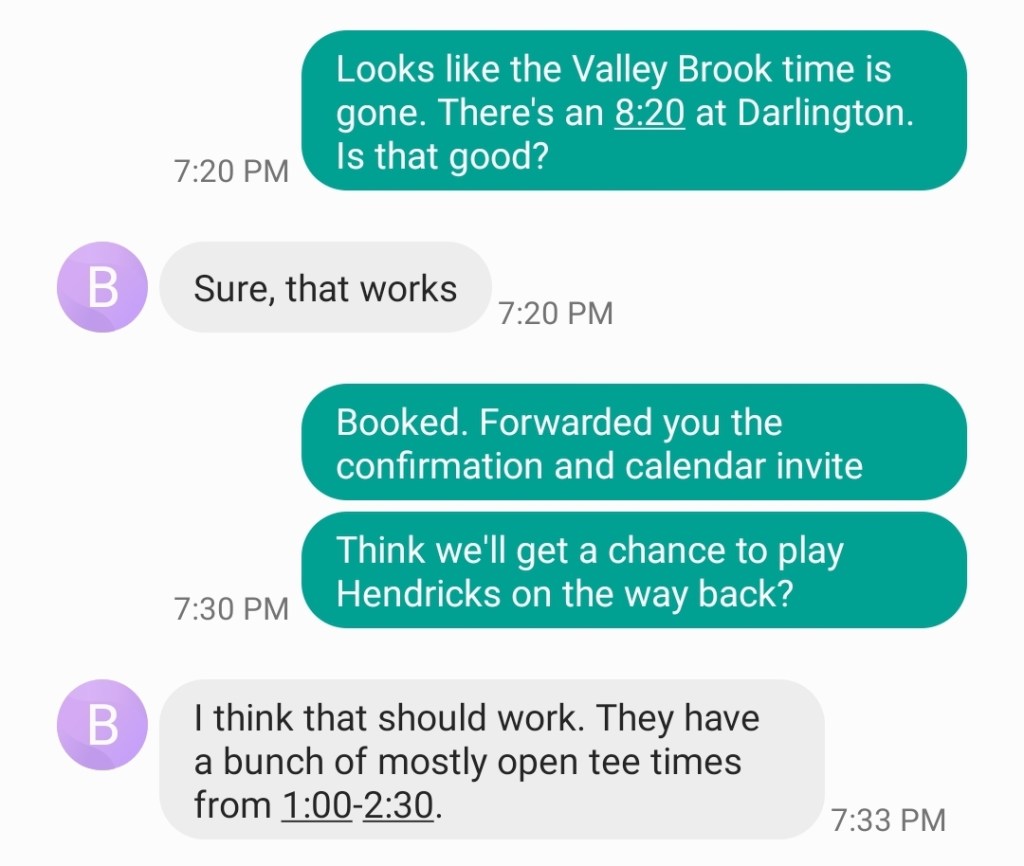
When planning for the round on the night before, I wondered if we’d be able to knock another course off the list. I thought Hendricks Field would be a good option, and when we checked tee times, there was availability that would make an afternoon round possible. We chose not to book anything on the chance that we might not be able to make both rounds happen. As we wrapped up in Bergen County just after 1:00 pm, we decided to make the 35-minute drive south into Essex County with the hope of making the 36-hole day happen.

Will we make it?
Number 100 (Darlington Golf Course)

Number 99 (Shark River)

Date played: 7/12/2020

A month after playing the South course at Charleston Springs, I met up with Walt again at Shark River. Located out in Neptune, the course is a couple miles from the ocean on the eastern edge of Monmouth County. Walt set us up with an early tee time, so I knew the drive would mean an early alarm, but I didn’t think anything of it.

Some people shy away from early morning tee times, but I have no trouble setting an alarm for 4:00 am and making a 2+ hour drive to make the first tee time of the day (like I did at Cape May National). I’ve played 5:30 am and 6:00 am rounds before a day at work. While it’s gotten difficult as I’ve gotten older, I enjoy being out with the dew-sweepers and still having the day ahead of me after a round of golf. So, when it comes to being on time for a round, I’m pretty reliably at the course before I need to be.

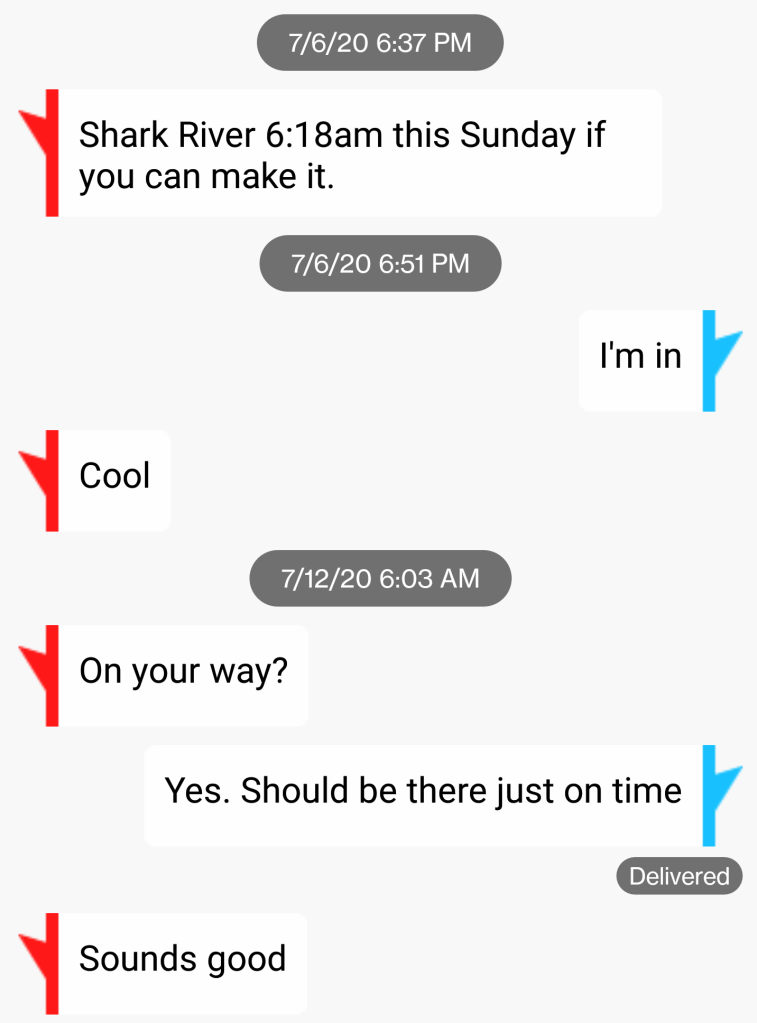
At Shark River, I was anything but on time for our 6:18 am. I would arrive at the course pretty much right at our tee time. I rushed to get the clubs and push cart out of the trunk as fast as I could. I threw on my shoes, and basically ran to the first tee. By the time I got there, everyone else in the group had teed off. I quickly got my driver, ball, and tee out of the bag.

I meant that quite literally.

This was as cold as you could be for the opening tee shot of a round. Nevertheless, not wanting to hold everyone up, I teed the ball up and swung. Somehow, the golf gods spared me embarrassment, and sent a low-flighted ball off the face of my driver and onto the fairway. Most of the round went generally smoothly as well.

Shark River would be my 12th public course played in Monmouth County, which has the most of any county with 19 total. The course is another example of quality golf in the area. I’ve often thought about which county should be deemed to have the best public golf courses, and while I have yet to submit a vote, I can tell you that Monmouth is definitely in the running.

Here are a few shots from our early morning round.

Number 99 (Shark River)

Number 98 (Charleston Springs – South)

Date played: 6/7/2020

It took almost four years, but after playing the North course at Charleston Springs in November 2016, I finally made it back to play the South course. I was invited back by my Twitter golf buddy Walt Blasich who is quickly becoming my tour guide for the best public courses in Monmouth County!

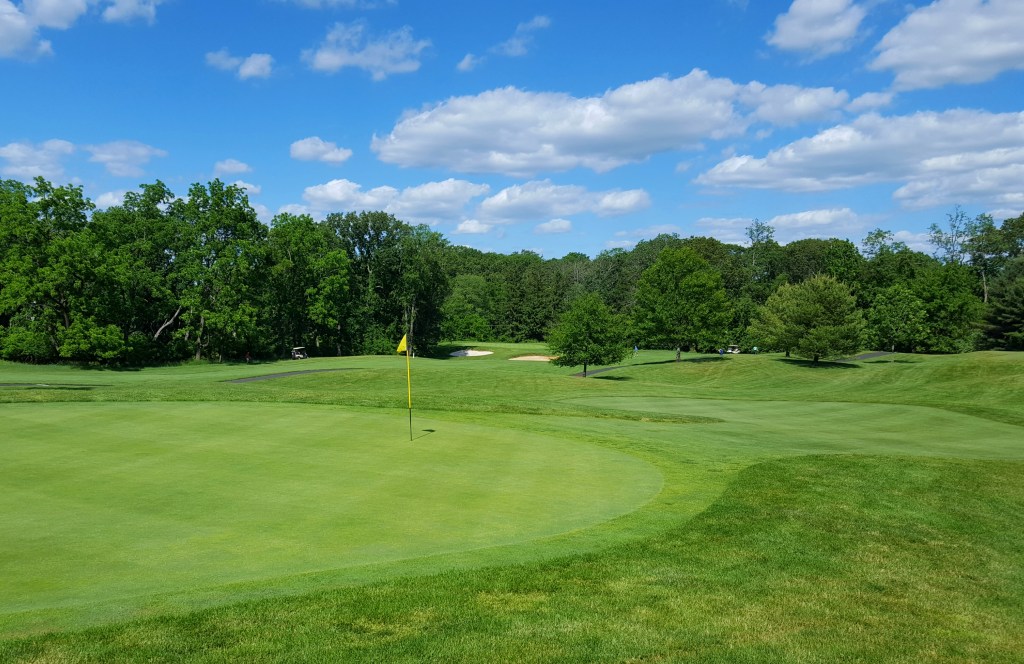
Conditions were beautiful at the North, and the South is no departure. Both layouts are some of the most finely maintained public courses you’ll find in the state. You immediately get a sense of that as you walk off the back steps from the pro shop and look onto the flawless (and massive) putting green.

The putting green is big enough to accommodate all golfers waiting to tee off on both courses

If you love a good golf bridge, you’ll cross one on the long walk to the first tee, a great way opportunity to get your mind in the right place before the round. A short uphill walk through the woods after the bridge, and golfers are emptied out into the clearing that is the South course. Where the North is laid out in links style, forcing golfers to contend with many fescue-lined holes, the South is a sprawling parkland course. Although there are trees to deal with, the fairways are quite generous and there are a number of very open holes.

A walk across the bridge on the way to the 1st tee on the South course

From a design standpoint, the way the 6,377 yards (from the Gold tees) are spread across the 18 holes is done really well. The par 3s play as long as 195, but also as short as 115 on the 11th, something most courses shy away from. Of the twelve par 4s, there are four that play over 400 yards, but then there are also a couple that are drivable for long hitters, like the 294-yd 10th. You might be able to lodge a complaint about the par 5s as three of them are between 499 and 505 yards. But whether it’s differences in the way elevation or direction changes from tee to green, they are each truly unique.

A front pin location on the 11th, with the drivable, par-4 10th in the background

As I mentioned when writing about my time at the North course, Charleston Springs is definitely held in high regard. I don’t know that the South measures up to public resort-type courses (e.g. Ballyowen and Crystal Springs), but I think it would be unfair to put either of the two layouts in that category. Nonetheless, it certainly ranks highly in the very next tier and should be considered a great option for public golfers.

A look back at 18
Number 98 (Charleston Springs – South)

Number 97 (High Point Golf Club)

Date played: 5/15/2020

Golf has a way of presenting you with moments which remind you that you never really have it all figured out. My round at High Point Golf Club would be that moment. While there is no way any of us can see such reminders coming, mine would happen at a time when the world was turned upside-down by something it couldn’t see either.

It was May 2020. The invisible terror that was the COVID-19 pandemic had spent the better part of six months tearing through the world. In New Jersey, the spread seemed to have peaked in early April. After the positive case average remained steady for the month, the numbers were finally dropping in May. Restrictions started to ease, and golf courses in the state began to re-open.

High Point Golf Club was a late addition to my list of courses. Though I started compiling the list in late 2015, I didn’t know High Point existed until sometime in 2019. Though it was surely online somewhere, I forget at this point where exactly I heard about it. Nevertheless, after a bit of research, I confirmed that it was in fact public and made sure to keep track of it. As we came out of the lockdown, it was one of the first courses to make tee times available, and I decided to book a round with my good friend Ed.

Protocols had changed. Out of caution, everything a golf course needed to facilitate public rounds of golf was still being managed outdoors. Golfers checked in with the starter to confirm their tee time and then needed to return to their cars until they were called. After a short wait, we got word that we could head to the first tee.

Hole 1 from the tee. Just waiting for the fairway to clear so I can overdraw one into the water.

The course is situated around a grouping of small lakes, and water features immediately on the opening tee shot. It’s a par 5 where you must land in a fairway area that runs out at about 260 yards. The largest of the lakes runs up the left side, and your approach must cross it to reach the second landing area or the green.

The routing continues from there to wind around and cross over the lakes, and water will realistically be a hazard on holes 4 through 8 on the front, and 10, 14, and 16 through 18 on the back.

The 16th is great drivable par 4. The view from the tee is deceptive, making it seem as though you must go for the green or bust. While the landing area looks perpendicular to the route from tee to green, it actually runs diagonally to provide some room, albeit narrow.

Hole 16, where you decide whether to drive the green, or pump one OB at that house on the right. I know what I’m picking.

The course finishes on two unusual notes and has a couple noteworthy distinctions. The 18th is a par 3 and the course plays to a total par of 73. Both are qualities I don’t remember having seen in other NJ publics to this point in my journey. High Point is also the northernmost public golf course in NJ. Tucked away in the northwest corner of the state in Sussex County, it’s just a couple miles east of the Delaware River and about five miles from the northern border to New York. It is also situated at the highest elevation of any golf course in the state.
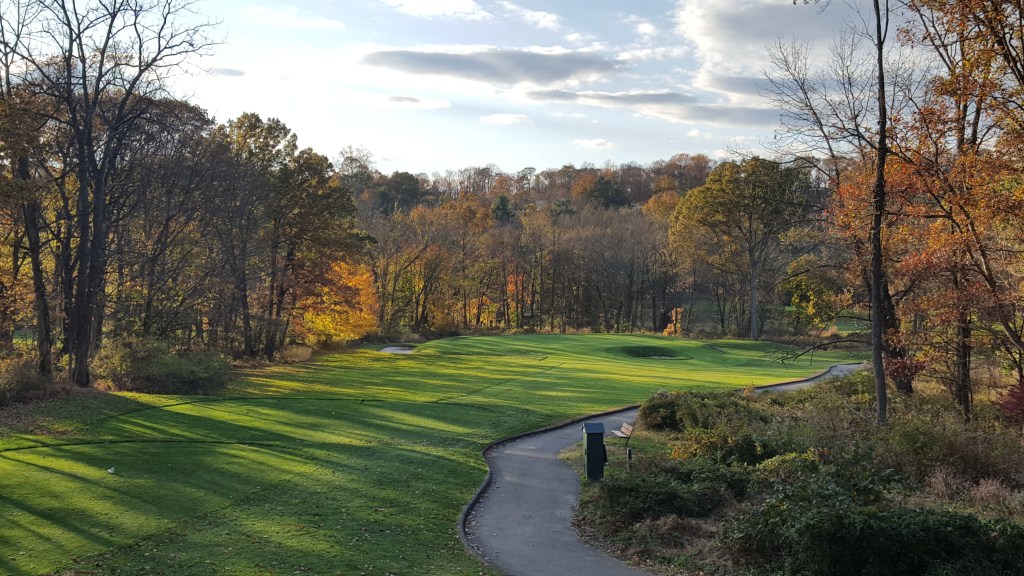
As mentioned, my round at High Point would remind me that despite what I thought up to that point, I had not figured out golf. I would enter the round as a 10 handicap, and yet I would post a 106. I put five balls out of bounds, three in the water, and five times, I found a way to three-putt. It would be my highest score since 9/14/2014. “Golf is hard” is not just a hashtag. At times on this quest, it is a sobering slap in the mouth.

Number 97 (High Point Golf Club)

Number 96 (Rock Spring Golf Club)

Date played: 11/10/2019

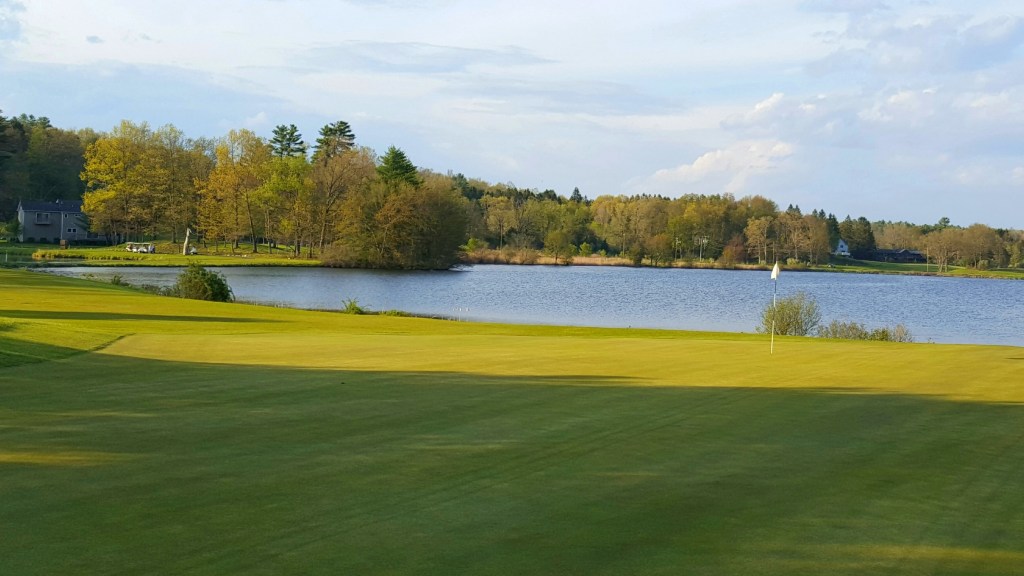
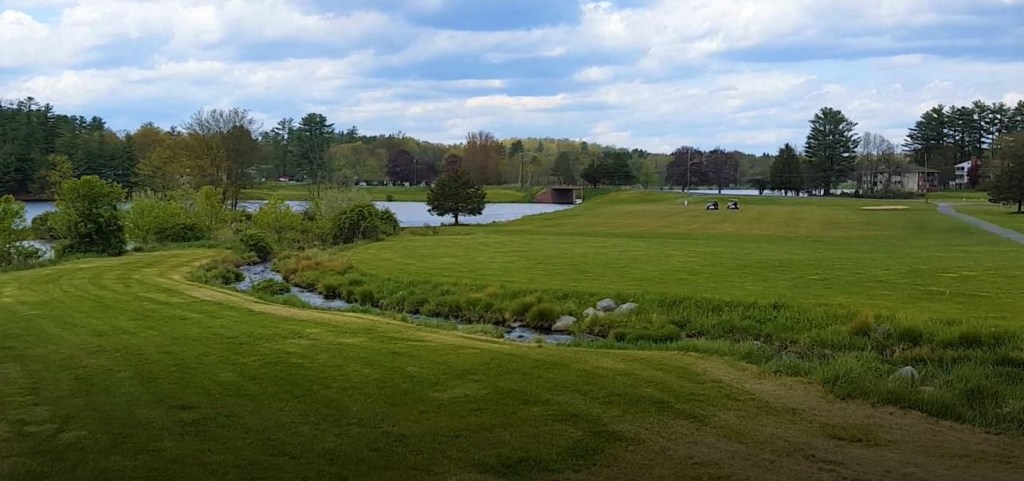
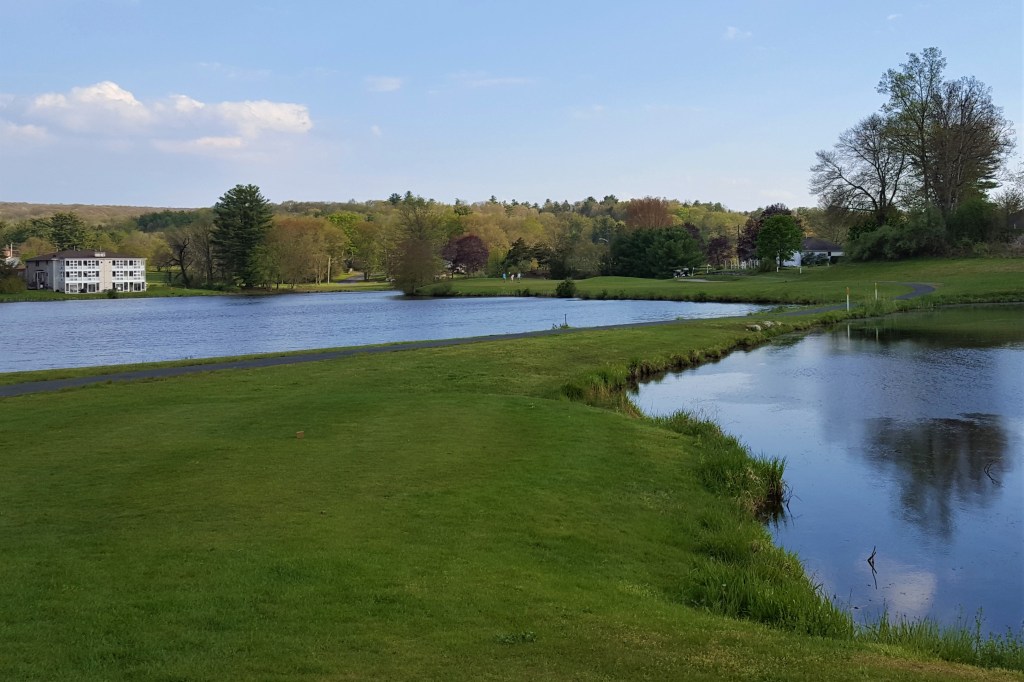
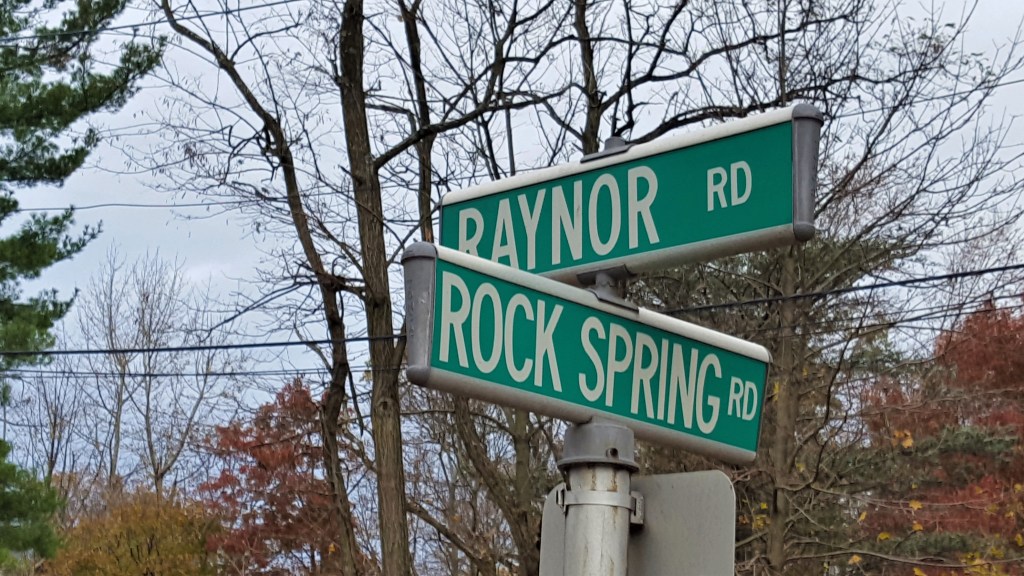
Where Cruz Golf Country Club has its uniqueness in the obscurity of its designer, Rock Spring Golf Club is the complete opposite. Designed by Seth Raynor and Charles Banks in 1927, it was born in in the heralded “golden age” of golf course architecture by very prominent names. Like most Raynor designs in America, Rock Spring was private for most of its existence. A mere 92 years after opening, it opened to the public in May 2019.

Hearing about Rock Spring was my first experience with the grapevine of the golfing world. Other than through social media, I don’t consider myself quite connected to the golf community yet. I don’t have any contacts who work at courses. I’m only just meeting teaching professionals. Given that I’m almost always at new courses, I only play with a couple people “regularly”.

But it seemed like one after another, I started to hear and see the same refrain: “You’ve gotta play Rock Spring”.

Quality flag game, but is it a “must play”?

A big part of this has to be attributed to the suddenly vanished exclusivity. If Pine Valley opened to the public, you can bet you’d hear about it immediately. That story would likely make any and all golf news outlets. So, the question for me was really, do you have to play Rock Spring?

I have to say, it took some time through the round, but it grew on me. At $89 on a weekend in November for a now-public golf course, it had to live up to that price. At that rate, you’re approaching the finest publics in the state (i.e. Neshanic Valley, the Crystal Springs resort courses, etc.). But I started to appreciate the design elements after a while. I began to see what the course would look like in prime conditions, without the leaves all over the place, and it is a quality course.

Hole 12

The greens had good speed, even for the middle of fall in cold conditions, and they are relatively large. There are plenty of changes in elevation from tee to green, and the holes that play along the side of a hill – like 12 and 15 – are actually some of the most striking.

15 green

Managed by Kemper Sports – the same company who oversees the beautiful Skyway Golf Course in Jersey City – Rock Spring is definitely in good hands. As for whether “you’ve gotta play it”, I’d say ‘yes’, but you’ll have to check it out for yourself!

P.S. If you get there early, and the place looks closed, it’s probably because you parked in the overflow lot. There is actually parking around the clubhouse, which is also where the bag drop is.

How I played…

I actually played pretty well, but putt poorly.

Highlights: Meeting up with new golfers in New Jersey! Shout out to John Boylan for joining me on a cold November morning. Also making the highlight reel are two approaches that I knocked to a foot-and-a-half. (Yes, I made the putts.)

Lowlights: Definitely putting. I felt good on the practice green, but it didn’t carry onto the course.

Number 96 (Rock Spring Golf Club)

Number 95 (Francis A. Byrne)

15 green with the sucker pin position

Date played: 11/3/2019

The 95th public course on my quest is 95 years old at the time of writing, and one that is rich with (somewhat verifiable) history. Francis A. Byrne Golf Course was built in 1926, and legendary architect Charles Banks is credited as being its designer. Some sources say the design was started by Raynor, while others leave this mention out entirely. Other information you can find about the course states that the original purpose of the Byrne course was an expansion of the neighboring, still-private Essex County Country Club, the oldest club (and possibly course) in New Jersey.

Whatever the history and origins of Francis A. Byrne truly are, it remains a great public option in northern NJ. Located a few miles from the Parkway and just off Route 280, the Byrne course is set in the rolling hills of Essex County just north of the South Mountain Reservation. The course is kept in great playing condition and has actually undergone several improvements – e.g. restoring a Biarritz green at the 2nd – since I’ve played it.

A look from the elevated tee box at 9 with the homes in the distance depicts how much the hills of Essex County come into play at Byrne

I made my way around Francis Byrne with my good friend, Ed, who likely is in the lead for “most rounds played together,” not just on my journey, but in my golf career overall. Ed and I started playing golf together over twenty years ago, and our golf games have progressed similarly. We both broke 100, 90, and 80 at around roughly the same times, and while we have different strengths – Ed is a longer hitter, I may be a better short-game player, Ed is the better putter – our handicaps remain very close to this day. It’s been great to have a close friend to not only share the game with, but also to encourage progress.

Ed actually warming up on the putting green instead of just taking pictures of it, which may explain why he’s the better putter

There are plenty of golfers who enjoy time on the course with friends, without really worrying about the quality of their collective play. I respect that, and I think that can be a lot of fun. Ed and I both approach the game with an ambition to become better players, and we push each other both directly and through each other’s accomplishments.

Another downhill tee shot to the par-3 14th

Our fall afternoon round at this historic New Jersey public was relatively average for both of us. My poor play off the tee was offset by some very good scrambling and putting. I would putt only 24 times for the round, by far my lowest total. We walked off the 18th green at dusk, content with our rounds, and satisfied in having tackled another NJ course together.

Though a rare feat, I had the additional satisfaction of having outdriven Ed on that last hole.

Number 95 (Francis A. Byrne)

Number 94 (Scotland Run)

Date played: 9/19/2019

My third visit to Gloucester County for golf was courtesy of an invitation to the 2019 Grint Tour Championship by Chuck Wanamaker. The GTC is an outing of users of The Grint – a score-and-stats-tracking and GPS app – held at a South Jersey public course. In 2019, the venue was Scotland Run.

Situated just a couple miles east of Rowan University, Scotland Run is a gorgeous layout set on sandy terrain. While sights from the clubhouse will evoke a links-style feel, the course has a great mix of holes, especially around the perimeter.

Plenty of contoured greens at Scotland Run, like the 9th here.

As we waited to tee off for our early morning round, the sun drenched the clubhouse in gold. Views of the ninth green and the first fairway were equally stunning, the quality of their design and condition highlighted by the sun’s rays. Though the front nine has a number of bright spots, I found the back nine at Scotland Run to be the better half.

The 10th is a wide, straightaway par 5 that can be reached in two. However, those that opt to do so should make sure they can carry their approach to the raised green complex. It’s guarded by wood pilings that will ricochet short shots in unpredictable directions, as well as a “warning track” bunker, both of which span the width of the fairway.

If you’re gonna lay up on 10, make sure you’re laying up. Otherwise, you deal with the warning track.

The 11th is a short par 4 that has a fairway that’s split by a waste area just as you reach the green, which will force a club choice decision on the tee. The 12th and 13th both bring water into play as they round a large pond, with 13 being a medium-length par 3 that is almost all carry. But the real memories of Scotland Run will be made in the finishing stretch, which is one of the best in public golf in New Jersey.

The 16th can easily be called Scotland Run’s signature hole. You’re presented with a tee shot that looks almost perpendicular to the fairway landing area, positioned at the other side of a wide gully to cross. As if your focus isn’t shaken enough by the visuals of the hole, at the bottom of the waste area, you’ll also see a plane. That’s right, an actual plane!

“Look, boss! It’s the 16th at Scotland Run!”

Moving on to the 17th, you’re confronted with a long par 4, playing at 421 yds from the white tees (two up from the back). The finishing hole is an uphill par 5 with water right that threatens your tee shot, and a snaking fairway from there to the green.

I had as many strokes in the last three holes as I did in the 15 that preceded them and wouldn’t fare well in the outing because of the poor finish. Nevertheless, Scotland Run was etched in my memory as a “must play” public in New Jersey and I highly recommend it.

Number 94 (Scotland Run)

Number 93 (Springfield Golf Center)

Date played: 9/14/2019

The 93rd stop on my adventure was the self-proclaimed “Most complete family golf center” in South Jersey. Located in Mount Holly, Springfield Golf Center features a driving range, a miniature golf course, a “chip-and-putt” course (not to be confused with pitch-and-putt, I guess), and a par-68 course. I have to say, if you’re looking to learn the game, it’s difficult to argue with the “complete golf center” billing.  

Strictly speaking, the par-68 is what is actually Number 93 on the quest. Since the scorecard for the chip-and-putt does not have yardages for each hole, it’s not counted on the journey. It’s one of the few arbitrary rules I have about what will count and what won’t, but I have to draw the line somewhere.
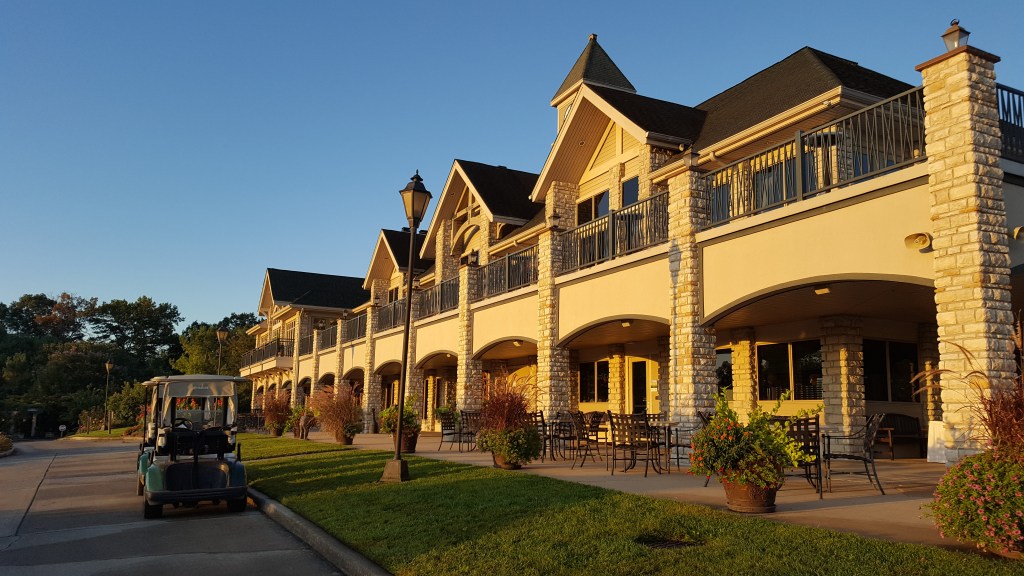
*whistles* Nice greens…

The course only plays about 5,000 yards from the back tees. Most holes are straightaway, with ample room to miss. A serious exception is the par-5 14th which plays to a narrow fairway with unplayable woods on the left and a lateral hazard to the right. The back tees on the par-4 16th are also awkwardly narrow, pinched between the net at the far end of the driving range and a couple trees with some overgrowth on them.

There’s tight, and then there’s the-tee-shot-on-16-at-Springfield-Golf-Center tight

To be somewhat critical, there are some areas of the course where it seems difficult to keep decent grass cover. I believe the aforementioned 14th is the lowest lying area of the course and it looked like it might have drainage issues. The fairway landing area was very sparse when I played, something I felt was out of place for a September round.

Judging the place as a family-friendly learning course, I think it’s a great example of using the maintenance budget appropriately, focusing on keeping well-manicured greens, particularly for the price point. It was $44 (including cart fees) on a weekend, which is probably right where it should be.

Springfield became the seventh Burlington County course I’ve visited, leaving only Indian Spring Country Club to complete the area.

First we chip… then we putt

BONUS: After my round on the executive course, I decided to play the chip-and-putt while I was there. All holes are par-3s less than 50 yards with some probably as close as 25 yards. You can get around with a single wedge of your choosing, but I happened to play both my gap wedge and my 60-degree for practice. The putter was hot, and I made my way around with five birdies and two bogeys, en route to a three-under 51.

If only all of golf was that easy.
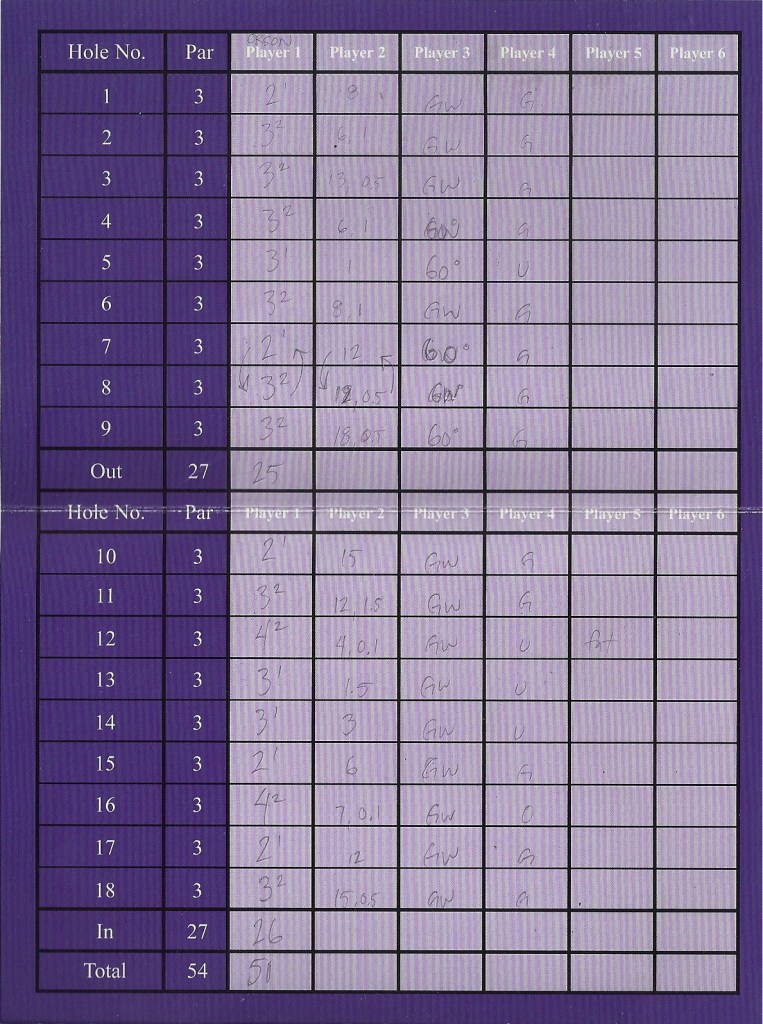
What could’ve been a sub-50 round
Number 93 (Springfield Golf Center)

Number 92 (Harbor Pines Golf Club)

Great old school ball washers at Harbor Pines

Date played: 9/8/2019

My first trip to play a public golf course in Atlantic County required begrudgingly breaking my precious sleep schedule. An early morning tee time at Harbor Pines meant that I’d have to be on the road at 5:00 am.  I don’t mind waking up early – especially to play golf – but waking up before 5:00 is pushing the limit. Nevertheless, the journey called and I was on my way.

The course winds through a dense forest, with almost every hole lined on both sides by trees. With the possible exception of the 1st and the 18th, wayward tee shots won’t have a chance of finding the fairway of a neighboring hole. When a course is mostly a winding tunnel of hole after hole, I find it difficult to appreciate unless there is great variety, and a majority of the holes at Harbor Pines are straightaway.

That’s not to say that there aren’t areas of the course that are noteworthy. The 4th is a long par 4 with a 90-degree elbow. The greens across the course are in great shape, and many have clever undulations that make for great hole locations, with the complex on the 9th being a great example.

Shadows across 9 green

You start the back nine with a tough par 5 that requires a tee shot that needs to avoid water on the left. Water is a factor on multiple holes, but perhaps nowhere else more so than the 12th. It’s a daunting short par 4 where a tee shot needs to carry and navigate water for at least half the carry distance, only to find that water must be avoided to the right of the green on the approach.

At over $80 in prime season for a round with a cart, Harbor Pines measures itself among the nicer public courses in the state. Through that lens, it comes off as somewhat average. Having said that, it’s certainly worth a play and would be a good option in a line-up for a multiple-day trip of golf in Atlantic County.

The par-5 18th
Number 92 (Harbor Pines Golf Club)