Somewhere around the 8th or 9th hole at Brigantine, I realized that I might still have enough daylight after my morning round to knock another one off the list before trekking back home. Over the next couple holes, I pulled up my list of public courses on my phone to see what I could make work.
By then, I knew that I would be able to finish around 1:30 pm. Given that the sun would set just before 5:00 pm, it was unlikely that I would be able to travel anywhere and finish an 18-hole round. That left Pomona Golf and Country Club as the only viable option in the area.
Located in Egg Harbor City, Pomona has a great small-town feel to the whole property and experience, which serves as a charming respite from the bright lights of Atlantic City, the Garden State’s casino mecca just 18 miles away.
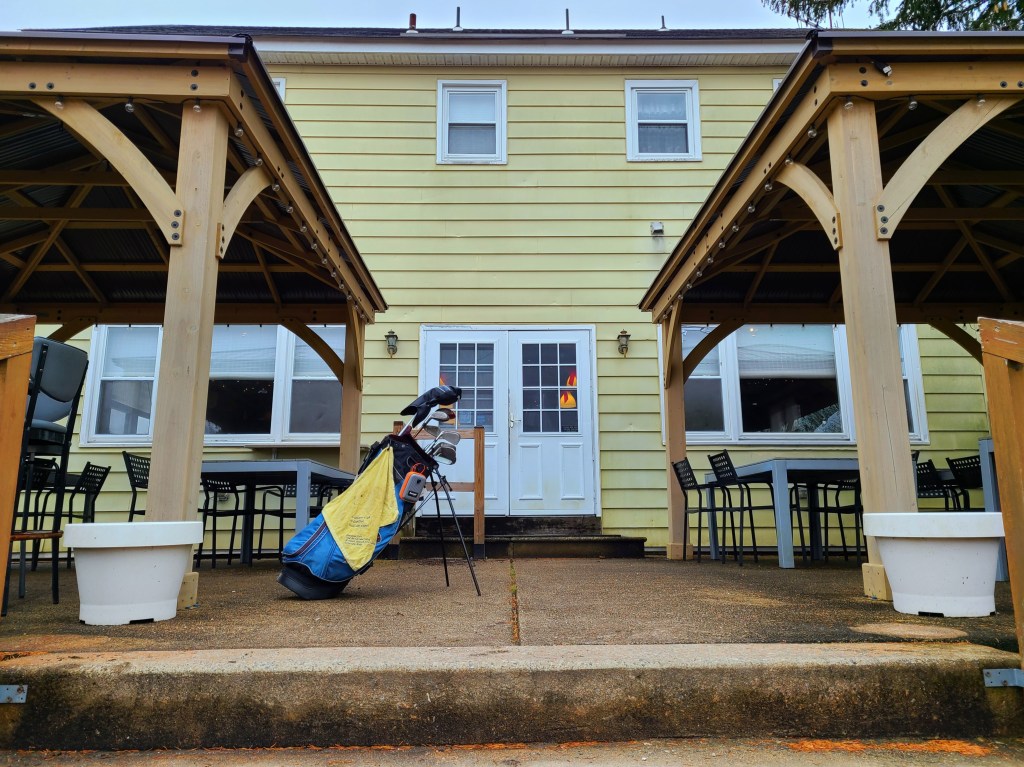
The patio at the clubhouse.
Walking into the clubhouse, the starter was regaling patrons at the bar with his story of surviving a lightning strike (!!!). Though I was a bit early for my 2:00 pm tee time, he checked me in and sent me right out as a single.
Coming off the 2nd green, I pulled my cart up to the single ahead of me, who was also waiting for the group ahead of him to tee off on the 3rd. Pairing up made sense to me, and when I asked if I could join him, the single – who let me know his name was Alex – obliged.
Alex and I finished the round together, talking about some of the golf in the area as well as my journey. He asked about some of my favorites so far, and I did my best to rattle off my “must play” recommendations. He let me know that Vineyard National at the Renault Winery – less than 5 miles from Pomona – was definitely one to look forward to.
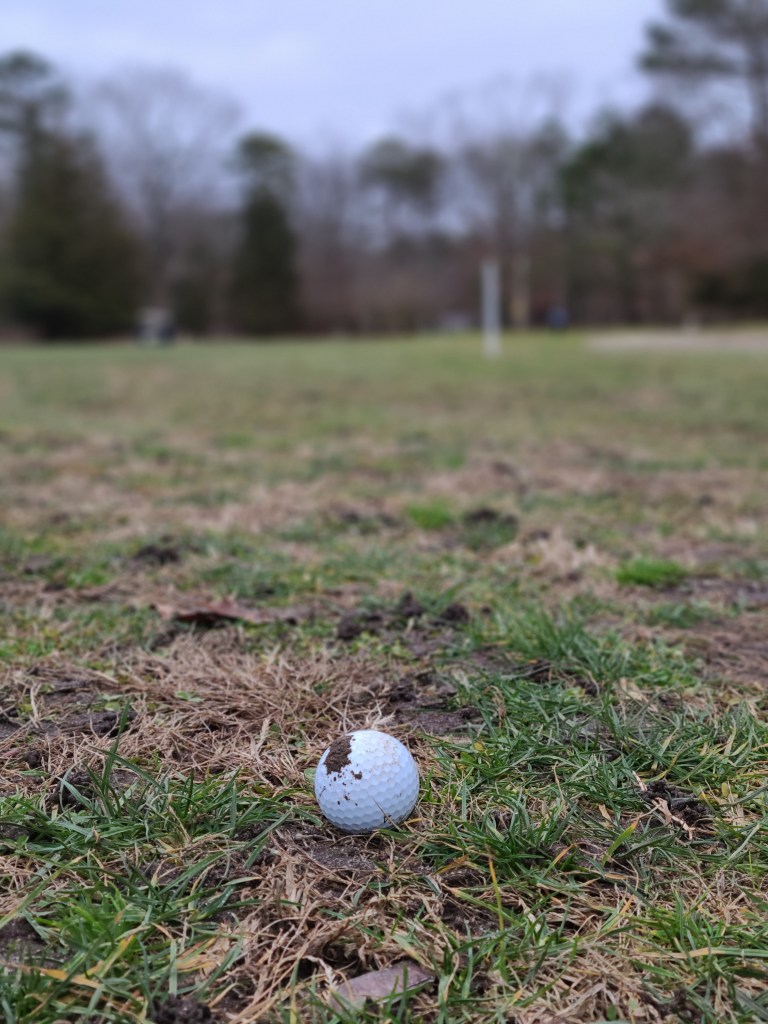
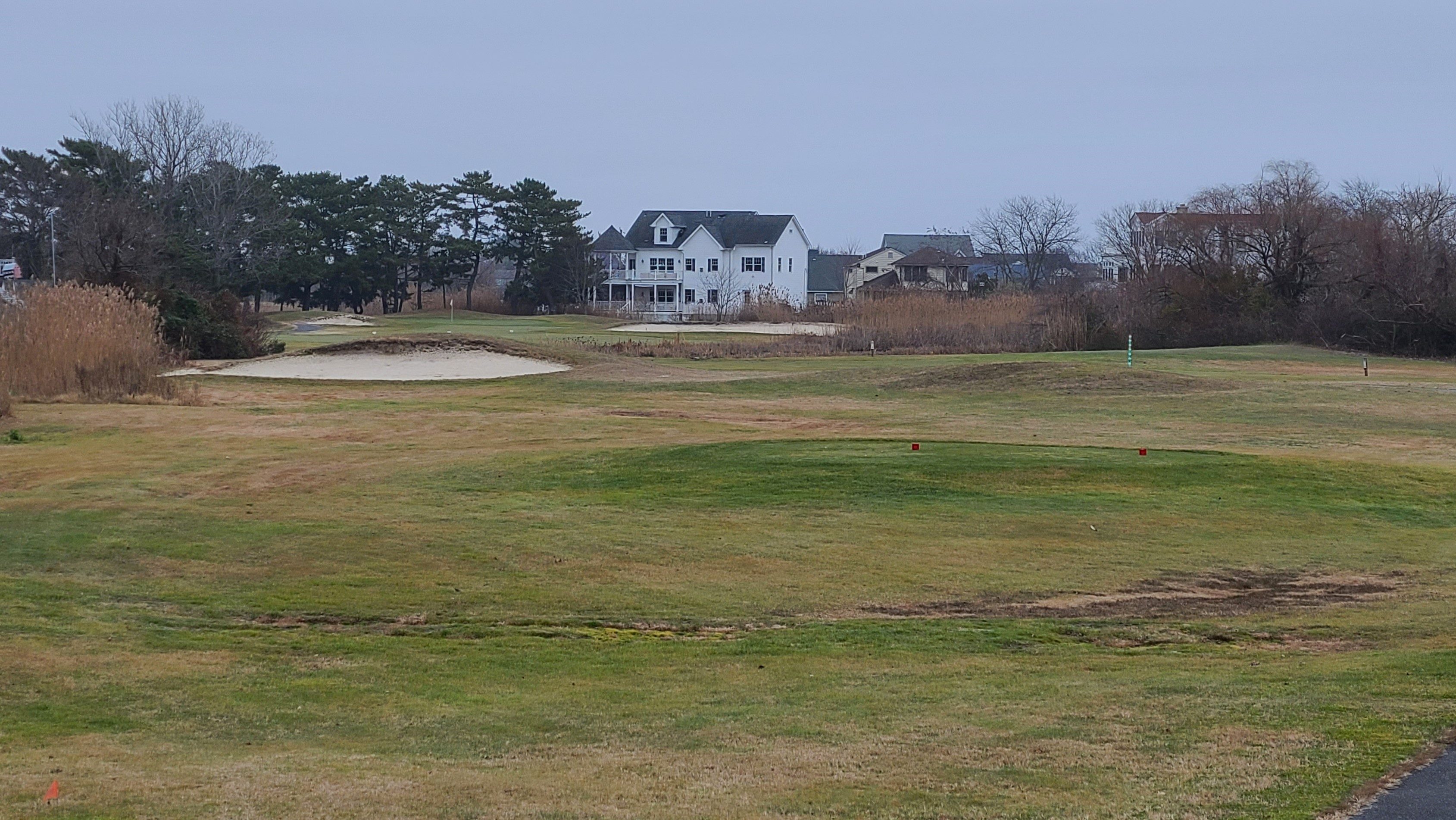
Like Brigantine, the course at Pomona is almost entirely level, but very tight in some places. Tee shots on 2, 5, and 9 will be affected either by overhanging branches, narrowing the target landing areas. Greens are small and will test your accuracy. Once you’re actually on the greens though, your putts will generally have level lies for straight lines to the hole. Fairways were quite muddy on the day, but Alex assured me that was likely due to an extended period of recent rain, and that they are dryer in peak season.
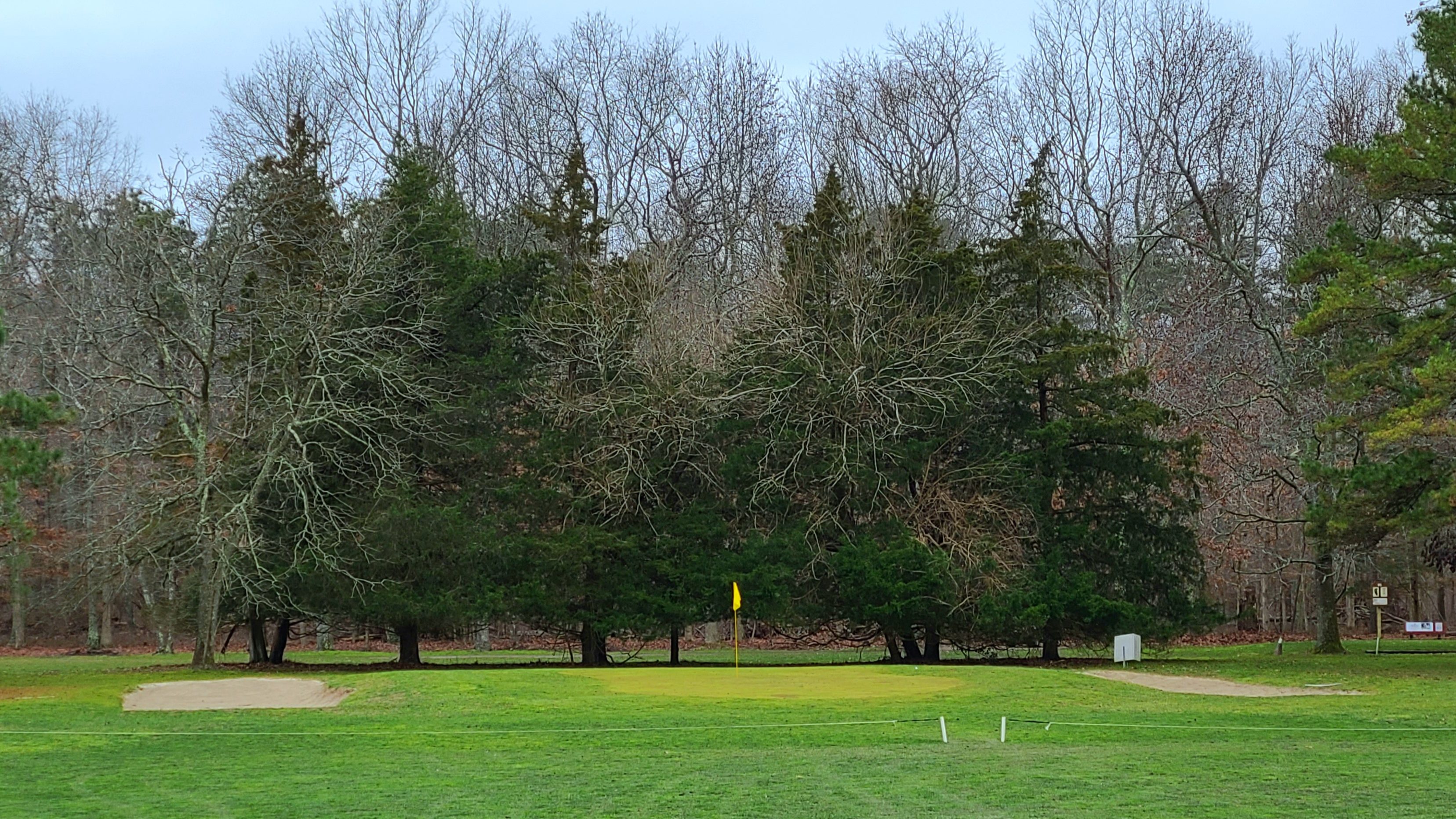
The 1st green at Pomona.
Compared to most of the other publics I’ve played on the journey, conditions at Pomona leave something to be desired. Having said that, there is still a worthy purpose to this short course. At $17 to walk and $23 to ride – for two trips around the 9-hole layout – it’s a great place to practice and bring family to play.
One last note: Pomona is a cash-only facility. So, if you’d like to avoid a $2.10 ATM fee – plus whatever your bank might charge you – make sure you have USD on hand!
Here are a few more shots from the day.
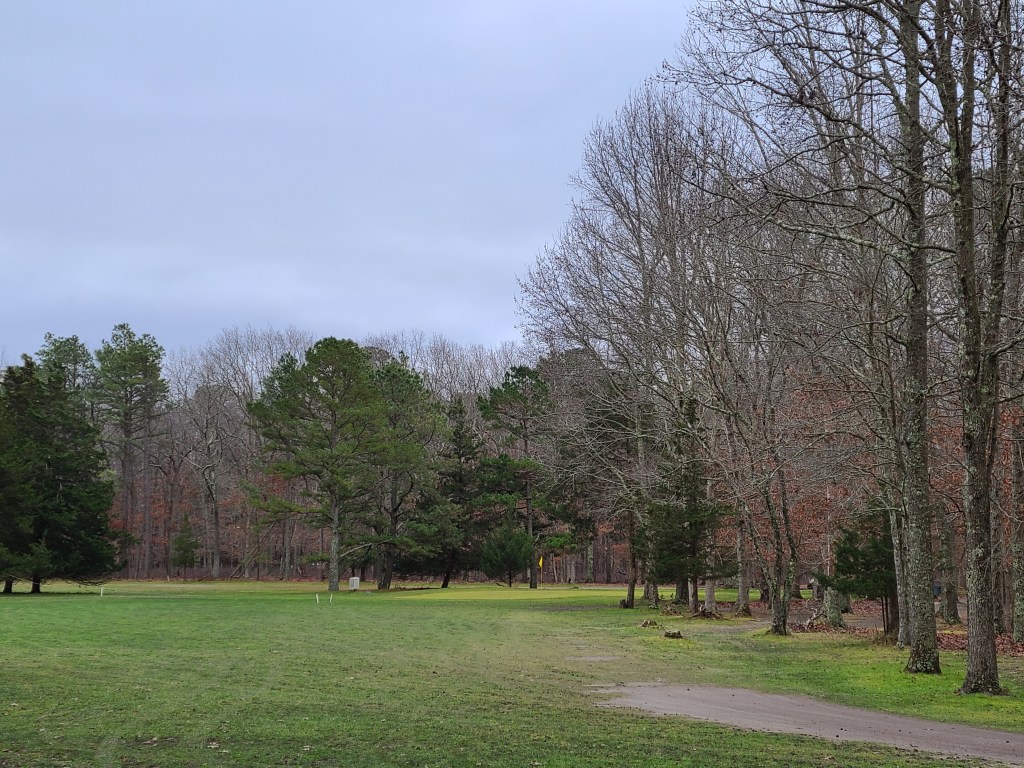
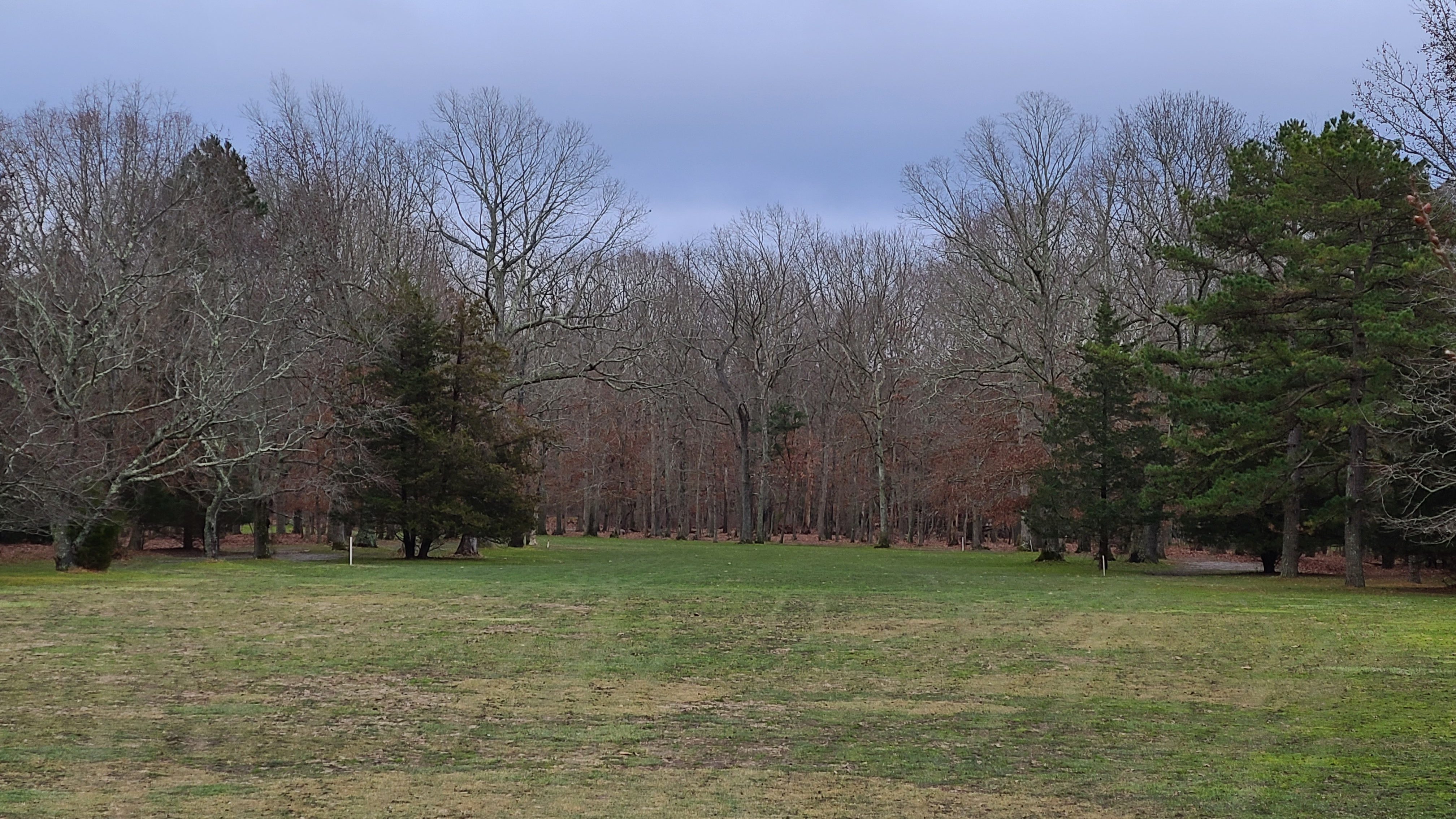
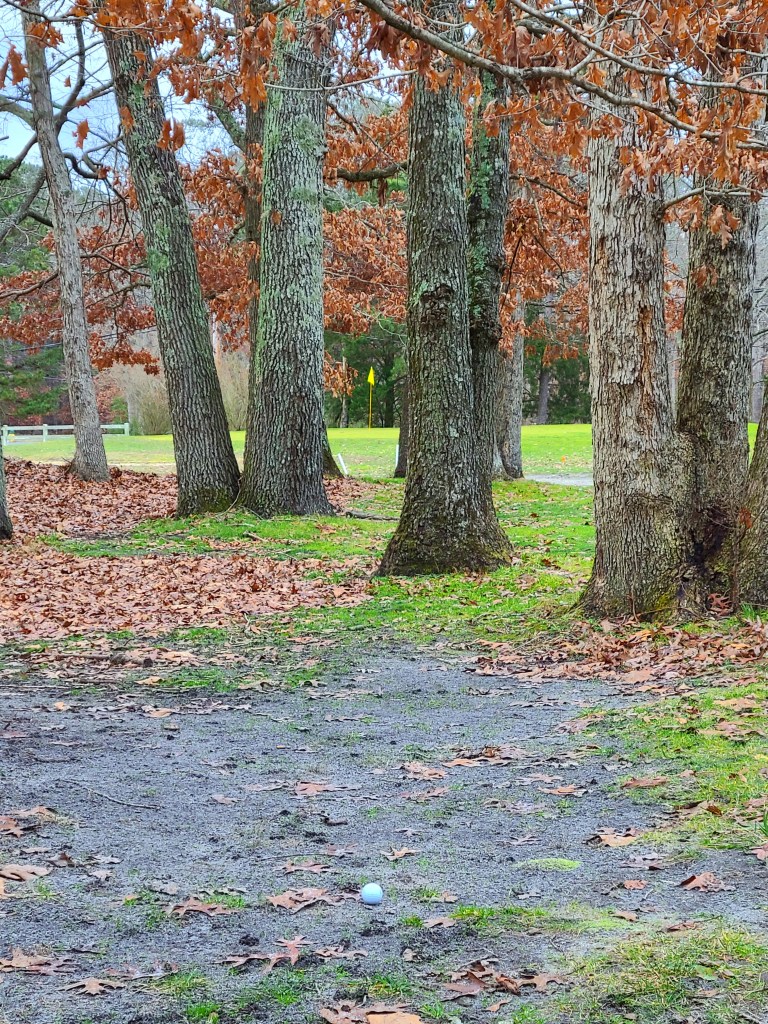
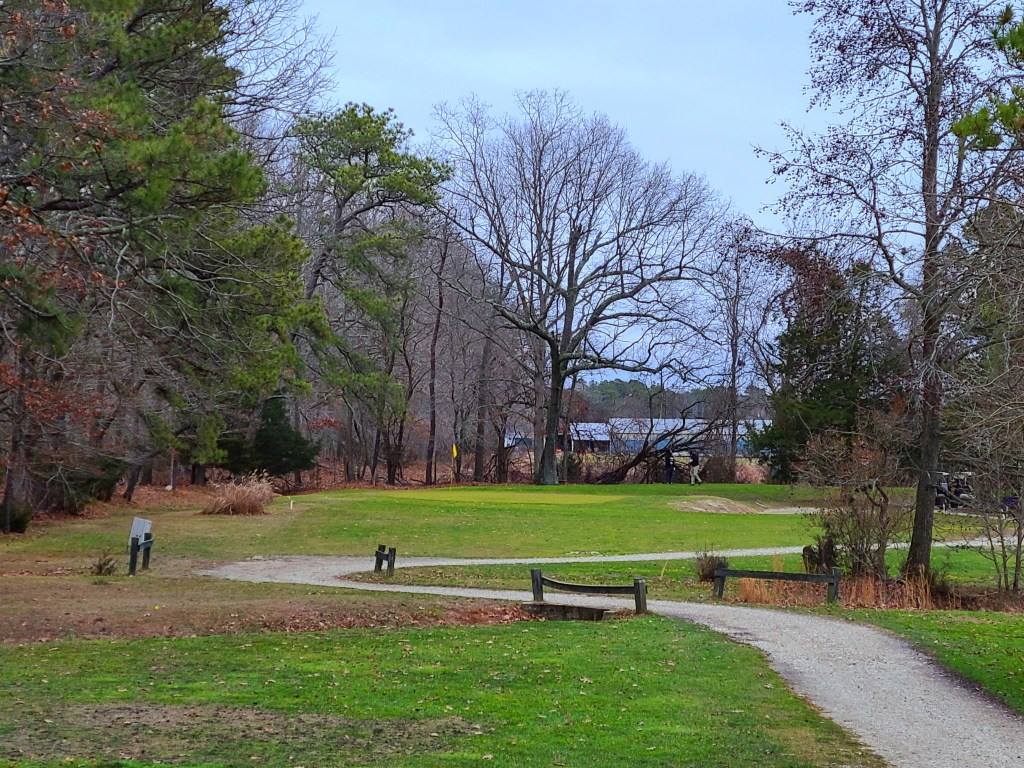
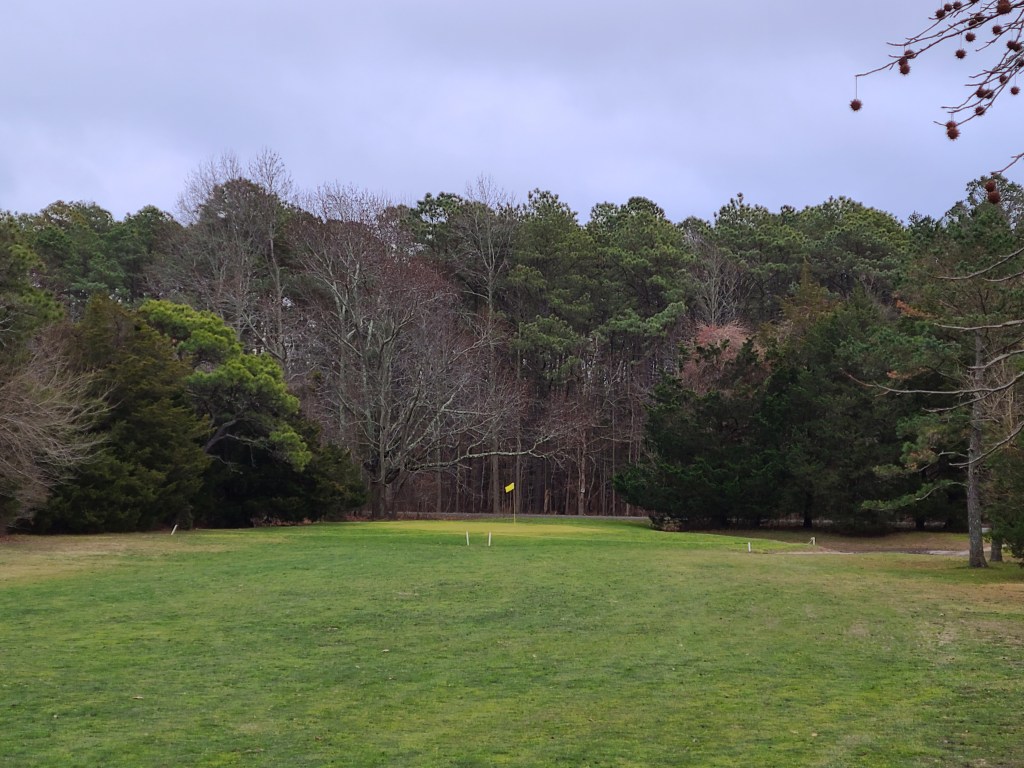
2nd hole. Par 3, 150 yards. The tee shot is very much obstructed by trees on the right side.5th hole, 290-yard dog-leg-left, from the tees. The landing area is the center of the frame, past the flanking, pincering trees.5th hole, from jail, after failing to cut the corner.The par-3 7th, 126 yards.The approach into the green at 8.“Mudball! MUDBALL!” -Bubba Watson
Having been out earlier in the week at Spooky Brook on Tuesday, 12/28, I thought I had played my last round of the calendar year. When I posted about it on Twitter, fellow New Jersey native, John, let me know that I should check the weather for later in the week.
The forecast for New Year’s Eve was in the 50s. Some places were pushing almost 60 degrees.
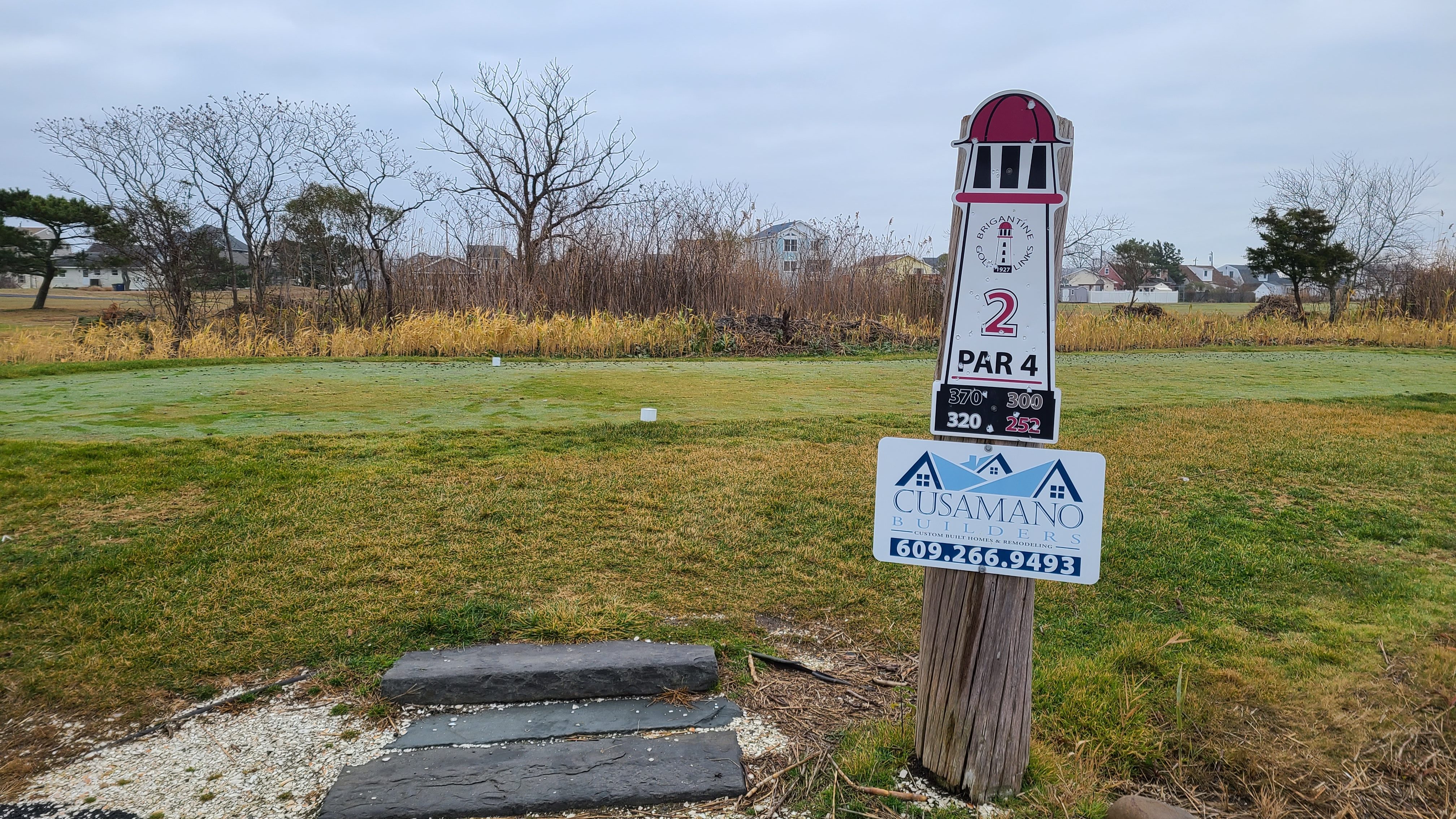
Knowing that I’ve been overcome with a desire to wrap up this journey soon, and having the entire week off of work, I had to play again. I decided to head to Atlantic County, where I still had plenty to play. The choice would be an 8:27 tee time at Brigantine Golf Links.
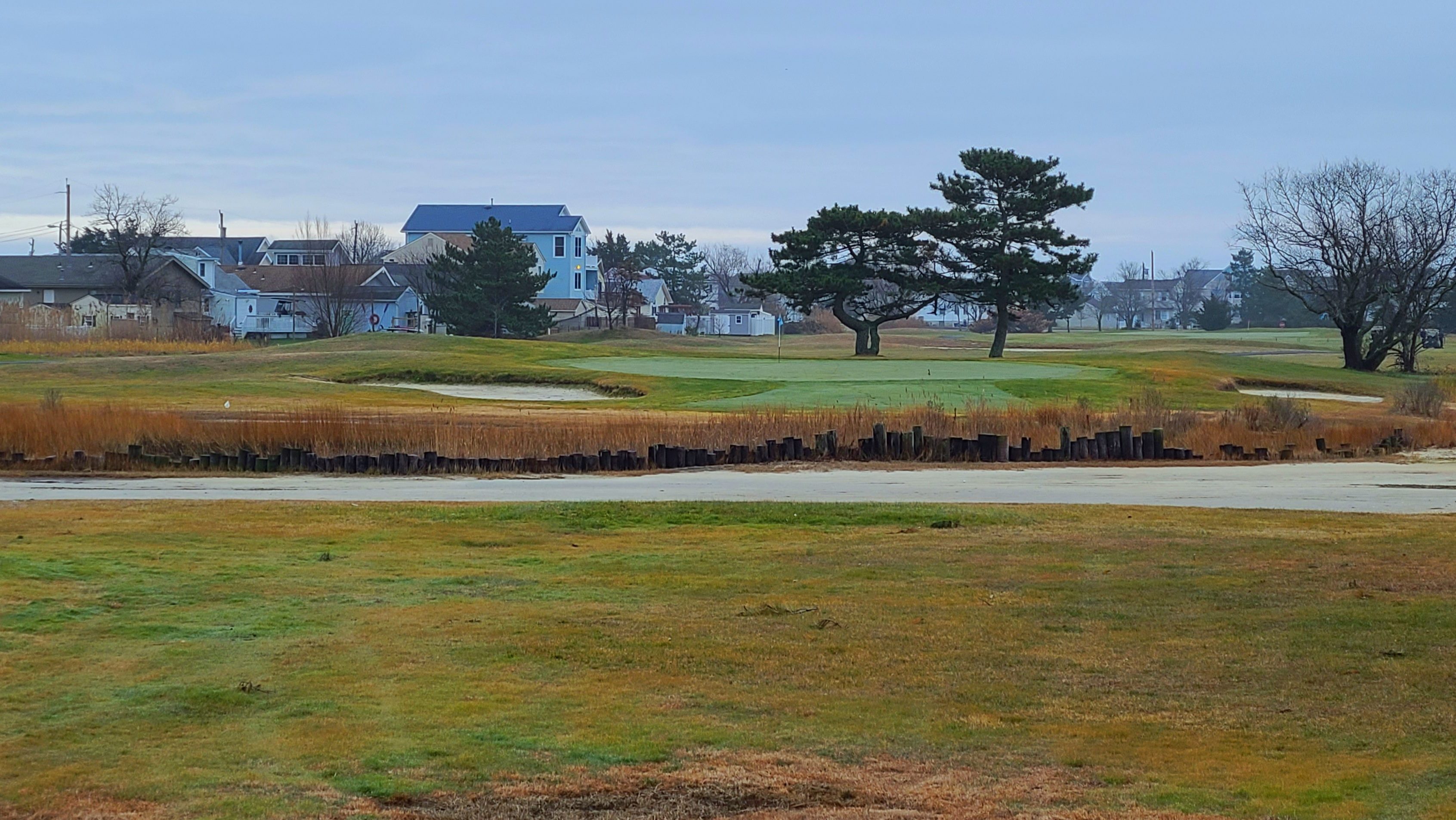
Known formerly as The Links at Brigantine Beach, the course bills itself as New Jersey’s only authentic Scottish style links course. Located almost essentially on the Atlantic Ocean, the course sits on a narrow parcel of land on the bay-side of the beach-town community of Brigantine.
My tee time had me join up with father/daughter pairing Wayne and Megan, who I quickly found to be perfect golf company, which really just amounts to being pleasant and supportive of others in the group. Through our conversation during the round, we even had a “small world” moment when we found out that Megan and I actually work on the same campus (though, for different companies). To top it all off, I had my best round of the year: two birdies, each followed by a bogey, 13 pars, and one triple-bogey totaled a 75 (+3). I don’t break 80 often, and this – although an off-season round – was by far my best differential (3.8).
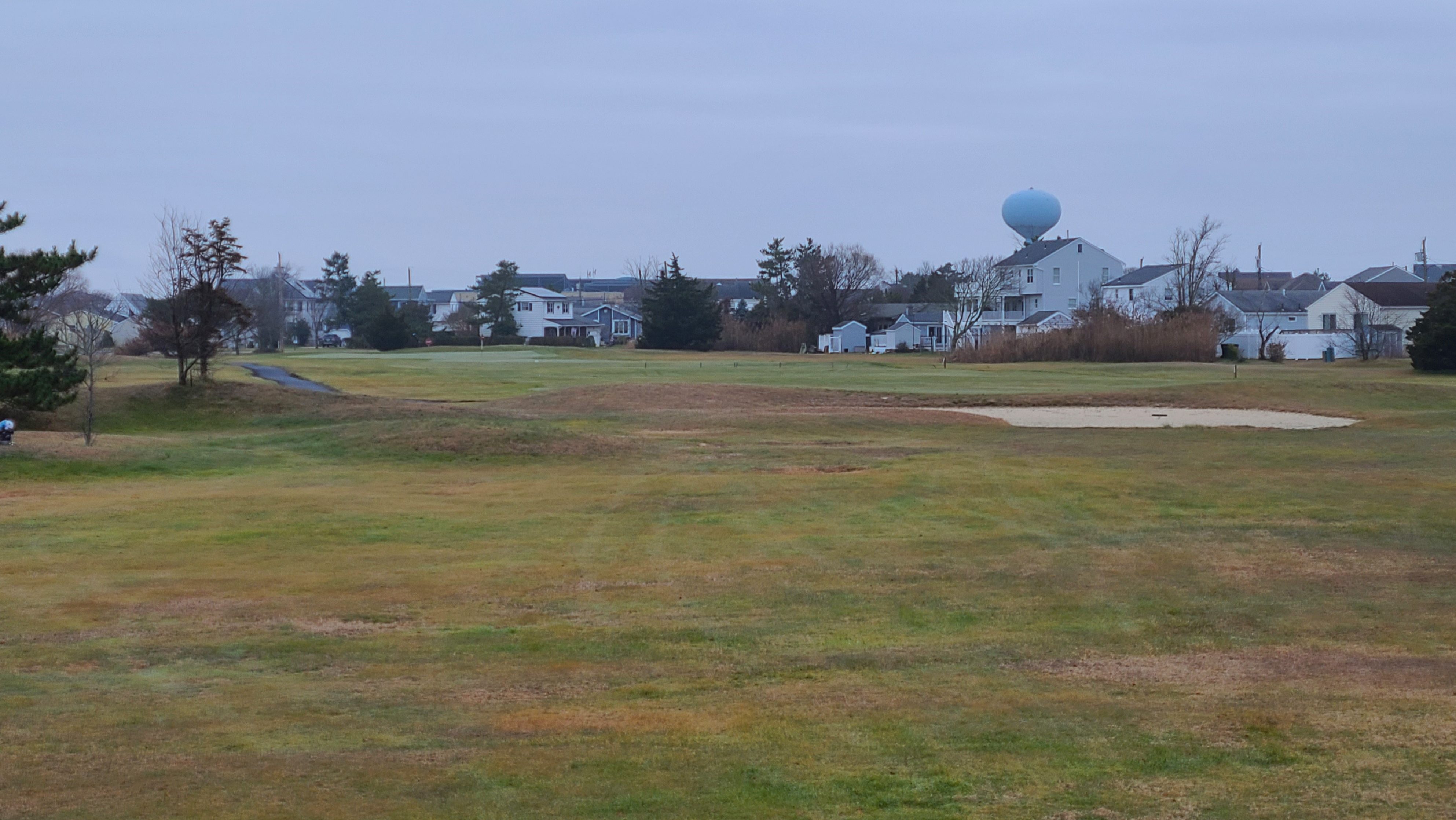
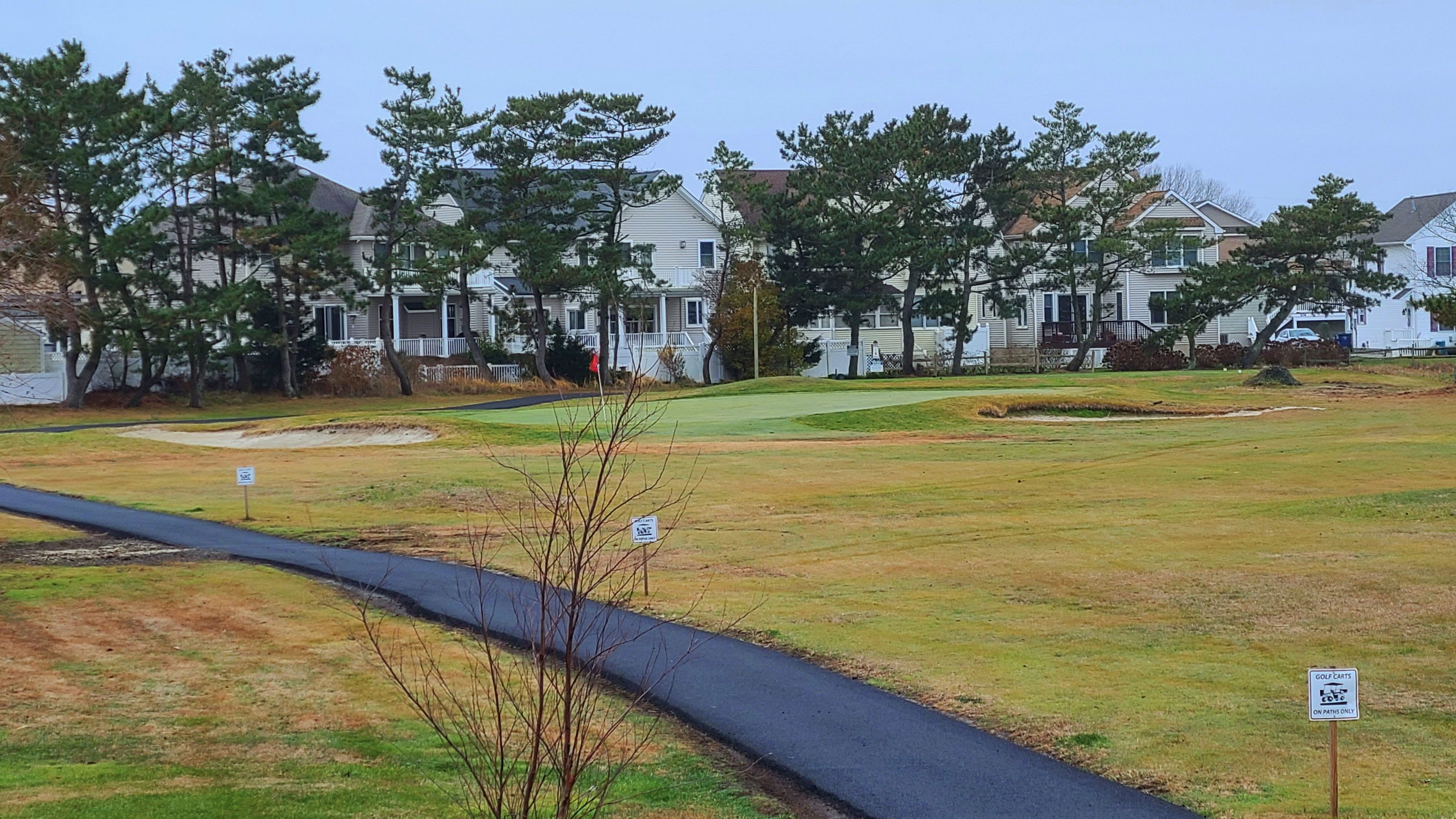
While I’ve never been to Scotland, from what little I know of its golf courses, I would say that calling Brigantine Golf Links “authentic Scottish style links” is quite a stretch. It’s a quaint, almost entirely level routing where you’ll see plenty of neighborhood homes around the course. I’m not sure how the course plays in the summer, but I don’t think it would play all that firm or fast. The best greens on the property are probably the ones on 11, 16, and 18. The remainder are typical public course greens.
Being on the very outskirts of Atlantic County, I don’t know that I would send anyone a great distance to see Brigantine. But, it’s a course whose greens fees won’t break the bank, and if you’re already spending the weekend in say, Atlantic City, then it’s a nice local option for a beach weekend.
It took a bit of planning and matching up our schedules, but a couple months after said trip, we were able to find a Wednesday in August where we could both take the day off from work to knock out a few courses.
While there were still 50+ courses left to choose from, I knew I wanted to target Atlantic County. At the time, I still had 15 courses there that remained unvisited, and a number of them were relatively close together. There were also a few that I knew had reputations as great or well-liked courses. After a short look at Google Maps, we decided to book times at Twisted Dune and McCullough’s.
Twisted Dune
We arrived at Twisted Dune at 6:00 am, in advance of our 6:30 tee time. A light fog was still sitting over the course, but just from what we could see on our walk to the clubhouse, you could tell the course was special.
This view from the Twisted Dune clubhouse veranda shows some of the wild look you’ll see around the course.
Once you’re on the course, it can seem visually daunting in places. But in truth, there is room to score. Players will likely be psychologically put off by some of the traps, waste areas, and tall grasses, but if you’re playing from the correct tee box for your game, they should be little more than distractions.
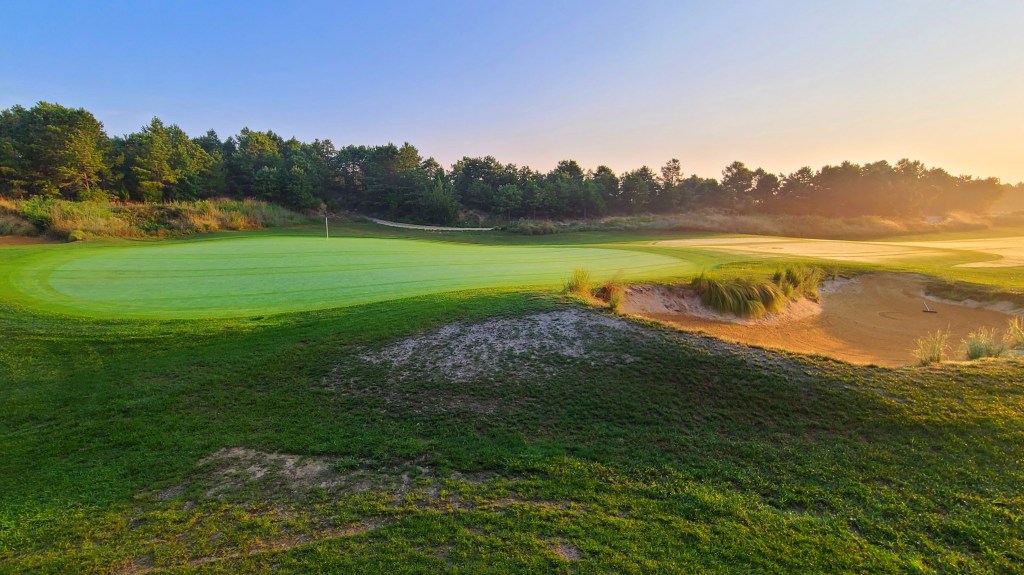
The sun still rising and lighting up the green at 2.
There were a couple things about the course that really hit me in terms of making an impression. The first is that its overall look is (relatively) unique. The second was the almost-disbelief that this was a place in New Jersey.
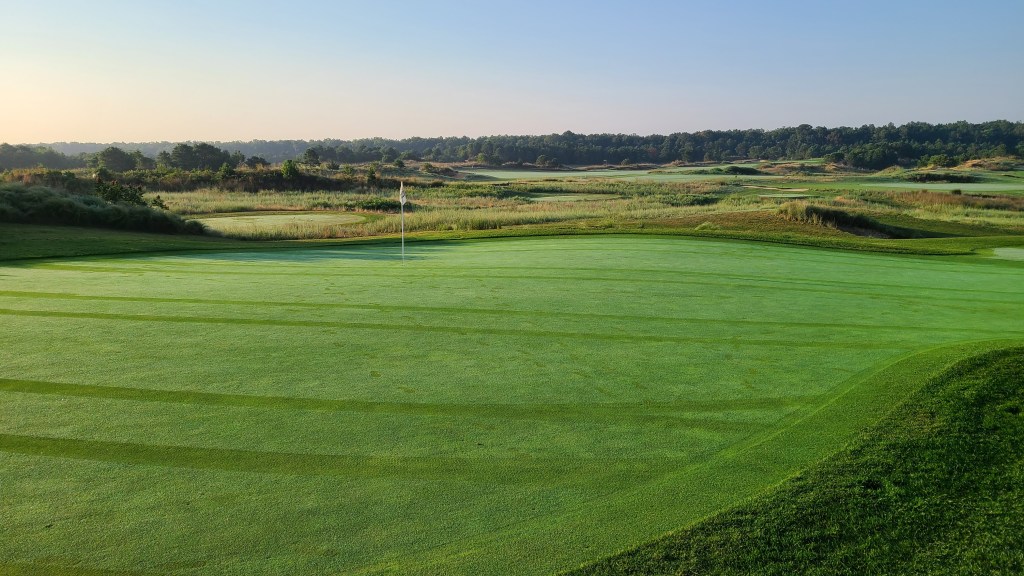
The green at 4, looking across the tee boxes on 5, onto 6 and 7, whose green is visible in the distance on the right.
When you’ve played 100+ courses in the state, there is a lot of overlap in terms of style and feel. Generally, there are parkland courses and links-style courses. I don’t think Twisted Dune fits into either of those categories. It’s heavier on heathland surroundings, and there’s almost a hint of what Tobacco Road would feel like if it were tamed and had less tall pines around. Not that it should be tamed of course, but that version would be as close as I could come to accurately describing Twisted Dune.
A look at the first few holes at Twisted Dune.
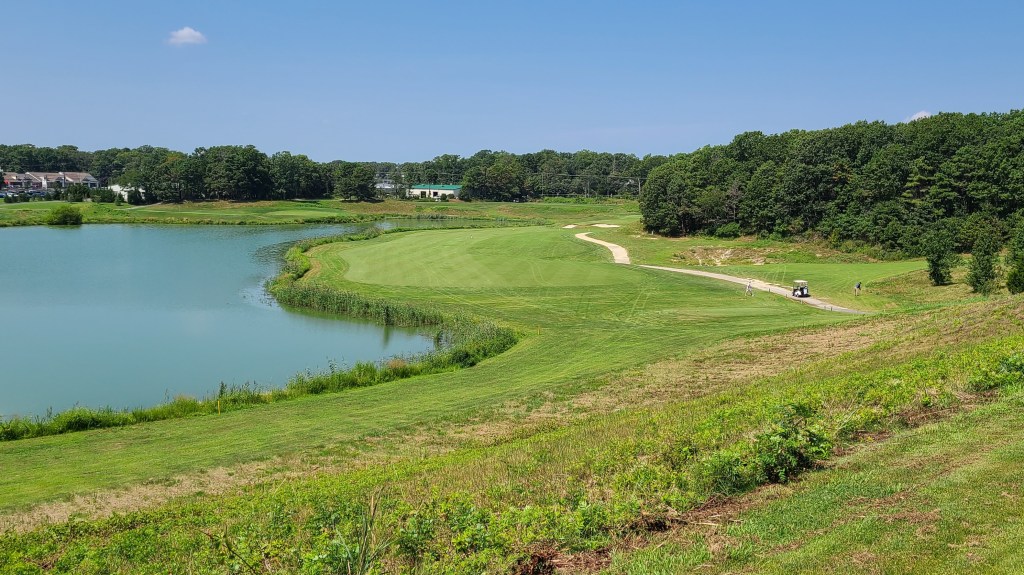
In addition to the sand and overgrown areas that might steal a ball or two, there are water hazards on the course in a couple places. You’ll have to contend it with it on 9 and 10, and then again on 13 and 14.
Looking out onto the par-5 9th at Twisted Dune before the round.
Between the views, the uniqueness, and the playability, Twisted Dune is just a great course overall. I highly recommend it, and I’ve included in my list of must-play public courses in NJ.
McCullough’s Emerald Golf Links
There are a few places in New Jersey in which you could stand anywhere, throw a stone, and hit a golf course. This is probably most true of Atlantic County, where there are 17 public courses, and a number of which are in very close proximity. McCullough’s Emerald Golf Links happens to be 1.3 miles down the road from Twisted Dune.
I have to say that after being thoroughly impressed by our morning venue, McCullough’s did not live up to expectations. There have been a number of places that have been brought to my attention on my journey, and McCullough’s was one of them. Called the “Emerald Golf Links”, it’s a Stephen Kay design that is inspired by holes from a number of famous Irish and Scottish golf venues, like Royal Portrush, Prestwick, and even the Old Course at St. Andrews.
The 8th, which is meant to be a tribute to the 10th at Turnberry. It’s difficult to tell from this shot, but the bunker seen in the distance at the end of the cart path is in the same ring/island bunker style.
It’s not a bad course by any stretch of the imagination, but unless you are deeply familiar with those places, it’s tough to appreciate. This also may be odd, but I think one of my complaints about McCullough’s is that there is so much green color throughout the course. I never thought this would bother me, but visually, everything seemed to just blend together in a lot of places.
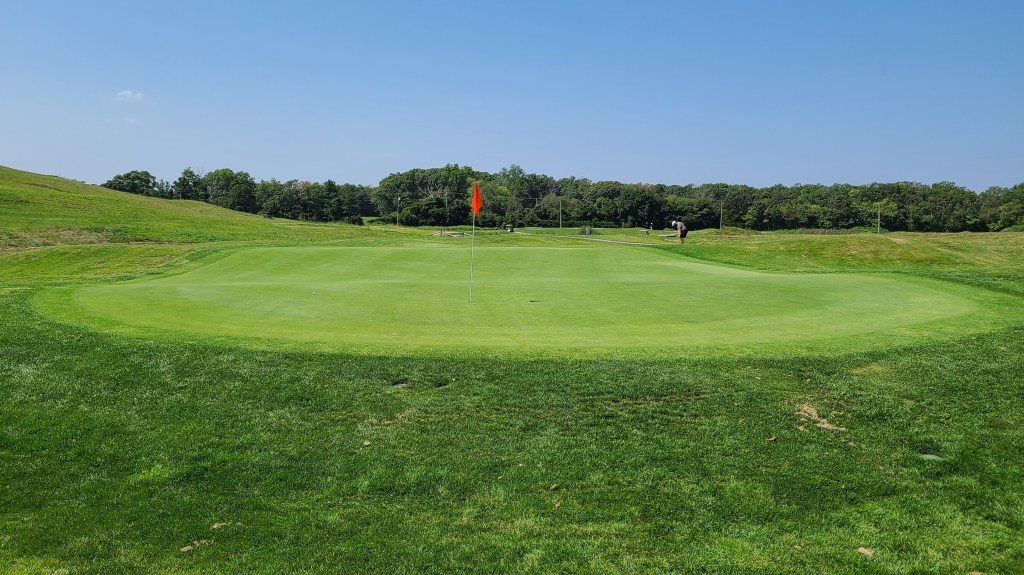
Matt chipping on at 2, which is meant to be a Biarritz hole. There is undulation, but I think the swale/valley is too subtle to be called a Biarritz in my opinion.
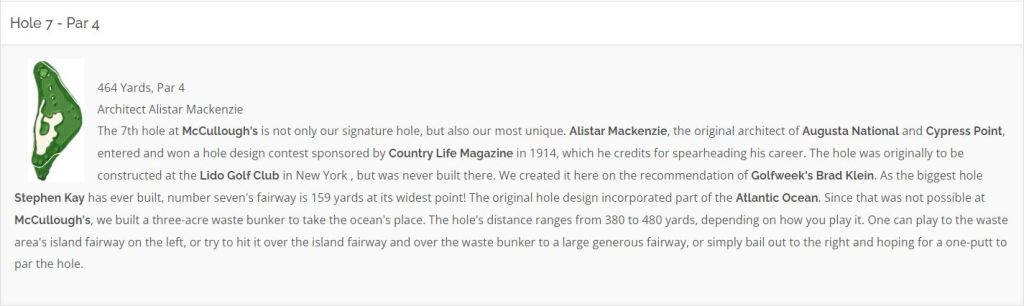
My gripe about the aesthetics aside, the course does play well. It is very open to wind, which can make for some challenging holes around the course. Water will make tee shots a challenge at 8, 13, and 18, and there is some elevation change on 3 and 11. The most notable hole though is the signature 7th, which is inspired by a Mackenzie design that was meant to go in the Lido Club.
From the Course Tour on the McCullough’s site
Again, this is a course that comes up a lot in conversations about golf in Atlantic County, and while I prefer Stephen Kay’s Scotland Run to his design at McCullough’s, it may very well be one that makes your list of favorites.
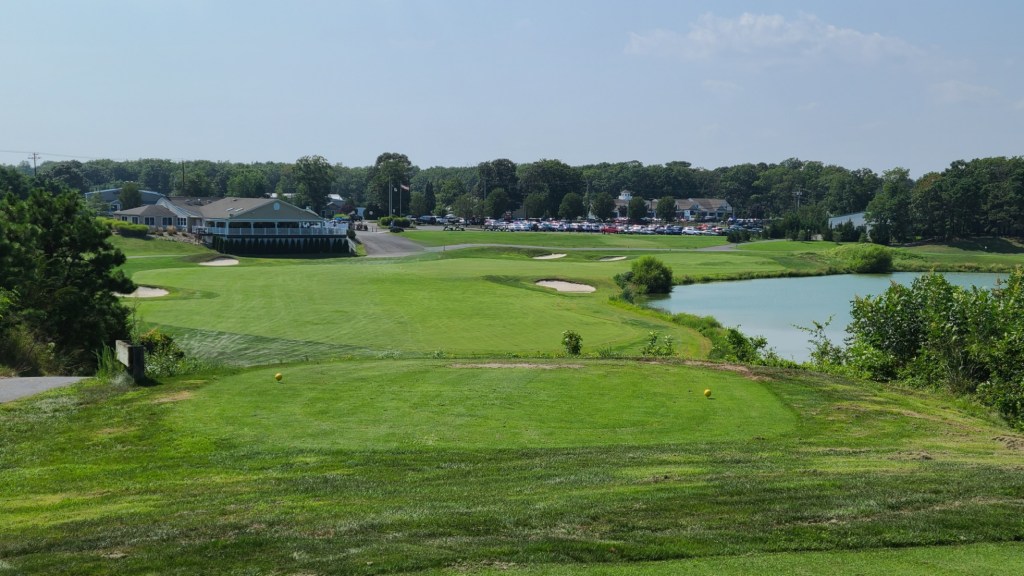
18 at McCullough’s. What you can’t see here is the sound of bagpipes that are played over a PA system that will definitely be audible from this vantage point.
Hamilton Trails
After finishing up at McCullough’s and stopping for something to eat, we played a third and final round at Hamilton Trails. With its logo featuring what appears to be a soldier from the American Revolution in a ring of stars, the course is almost undoubtedly named after Alexander Hamilton. Nevertheless, I can’t find any history on the name and what it means to the area.
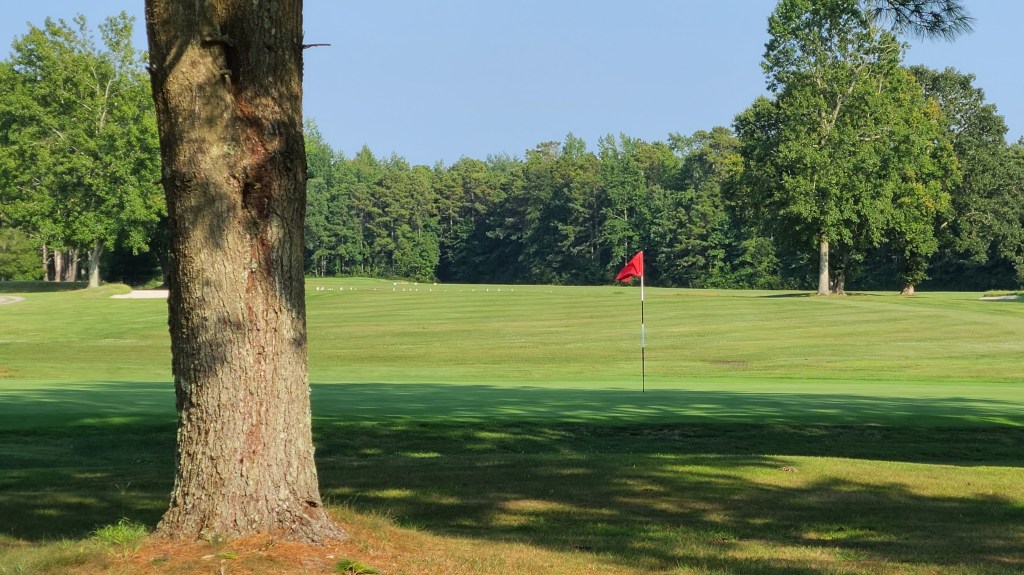
A look at 1 green in the background as you turn the corner onto Harbor Ave.
A 9-hole course that doesn’t seem imposing as you pull into the parking lot, it actually measures 3,265 from the back tees, providing decent length to the average golfer. The course looked almost completely flat, so Matt and I closed out the day walking the round.
Walking the 1st fairway, you get a peak at the green at 3 coming back in this direction.
The first hole is the most exciting on the property, an almost-90-degree dog-leg left par 4. From there though, it’s relatively plain. There are creeks that cross – or run alongside of – almost every hole, but they likely won’t threaten a mid-handicapper. The biggest hazard that a body of water will pose will be the small pond that is short and left of the par-3 green at the 9th hole.
At $30 to walk nine holes, it’s probably punching above its weight at that price. But, it’s an area of more expensive courses, so it’s relatively in line with the local market. Plus, it was a fine way to end another long day of golf on the journey. Forty-five holes played, and three courses knocked off the list.
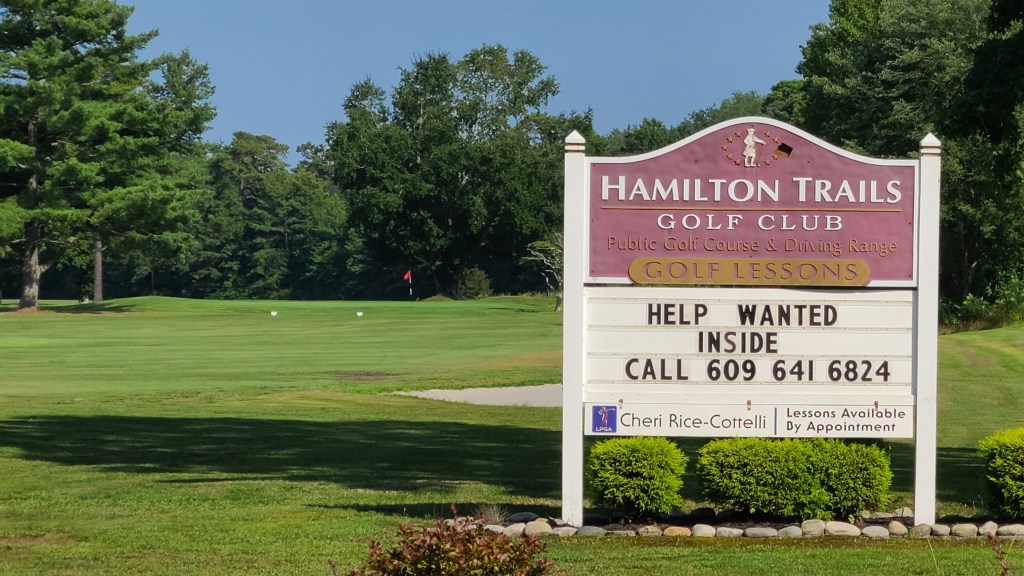
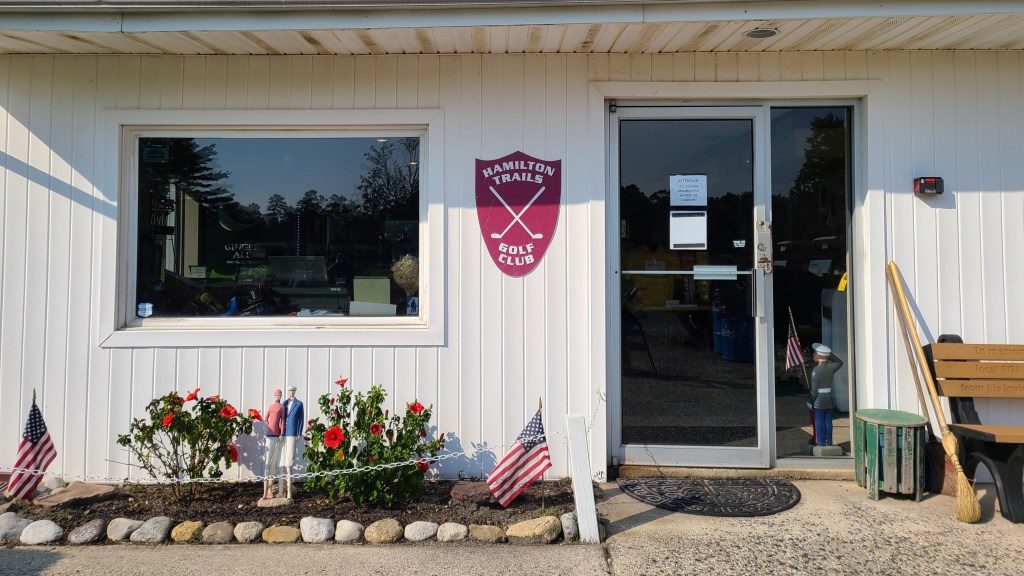
The pro shop at Hamilton Trails, my 119th course on the quest.
My first trip to play a public golf course in Atlantic County required begrudgingly breaking my precious sleep schedule. An early morning tee time at Harbor Pines meant that I’d have to be on the road at 5:00 am. I don’t mind waking up early – especially to play golf – but waking up before 5:00 is pushing the limit. Nevertheless, the journey called and I was on my way.
The course winds through a dense forest, with almost every hole lined on both sides by trees. With the possible exception of the 1st and the 18th, wayward tee shots won’t have a chance of finding the fairway of a neighboring hole. When a course is mostly a winding tunnel of hole after hole, I find it difficult to appreciate unless there is great variety, and a majority of the holes at Harbor Pines are straightaway.
That’s not to say that there aren’t areas of the course that are noteworthy. The 4th is a long par 4 with a 90-degree elbow. The greens across the course are in great shape, and many have clever undulations that make for great hole locations, with the complex on the 9th being a great example.
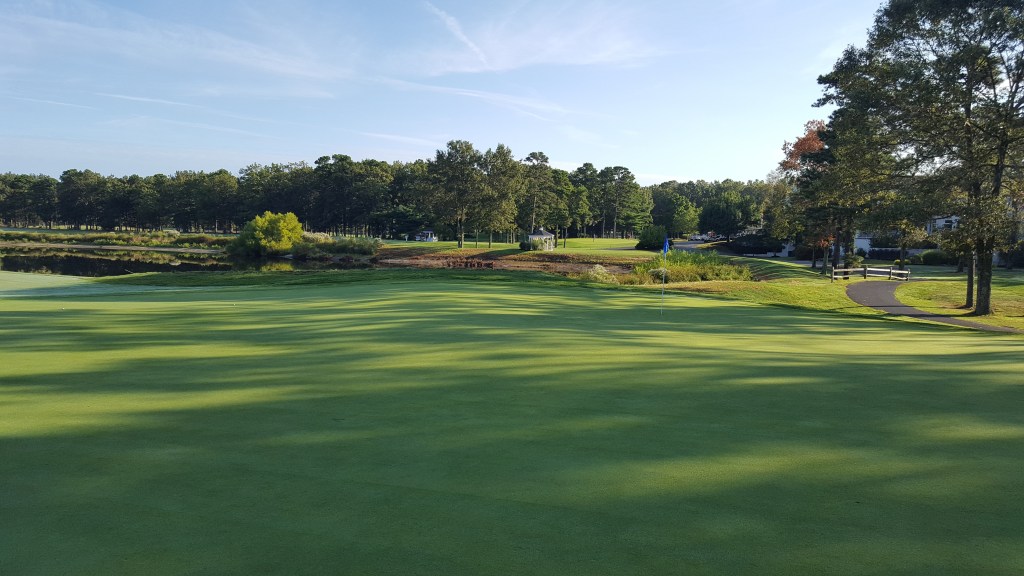
Shadows across 9 green
You start the back nine with a tough par 5 that requires a tee shot that needs to avoid water on the left. Water is a factor on multiple holes, but perhaps nowhere else more so than the 12th. It’s a daunting short par 4 where a tee shot needs to carry and navigate water for at least half the carry distance, only to find that water must be avoided to the right of the green on the approach.
At over $80 in prime season for a round with a cart, Harbor Pines measures itself among the nicer public courses in the state. Through that lens, it comes off as somewhat average. Having said that, it’s certainly worth a play and would be a good option in a line-up for a multiple-day trip of golf in Atlantic County.






 Orson Rosas Golf