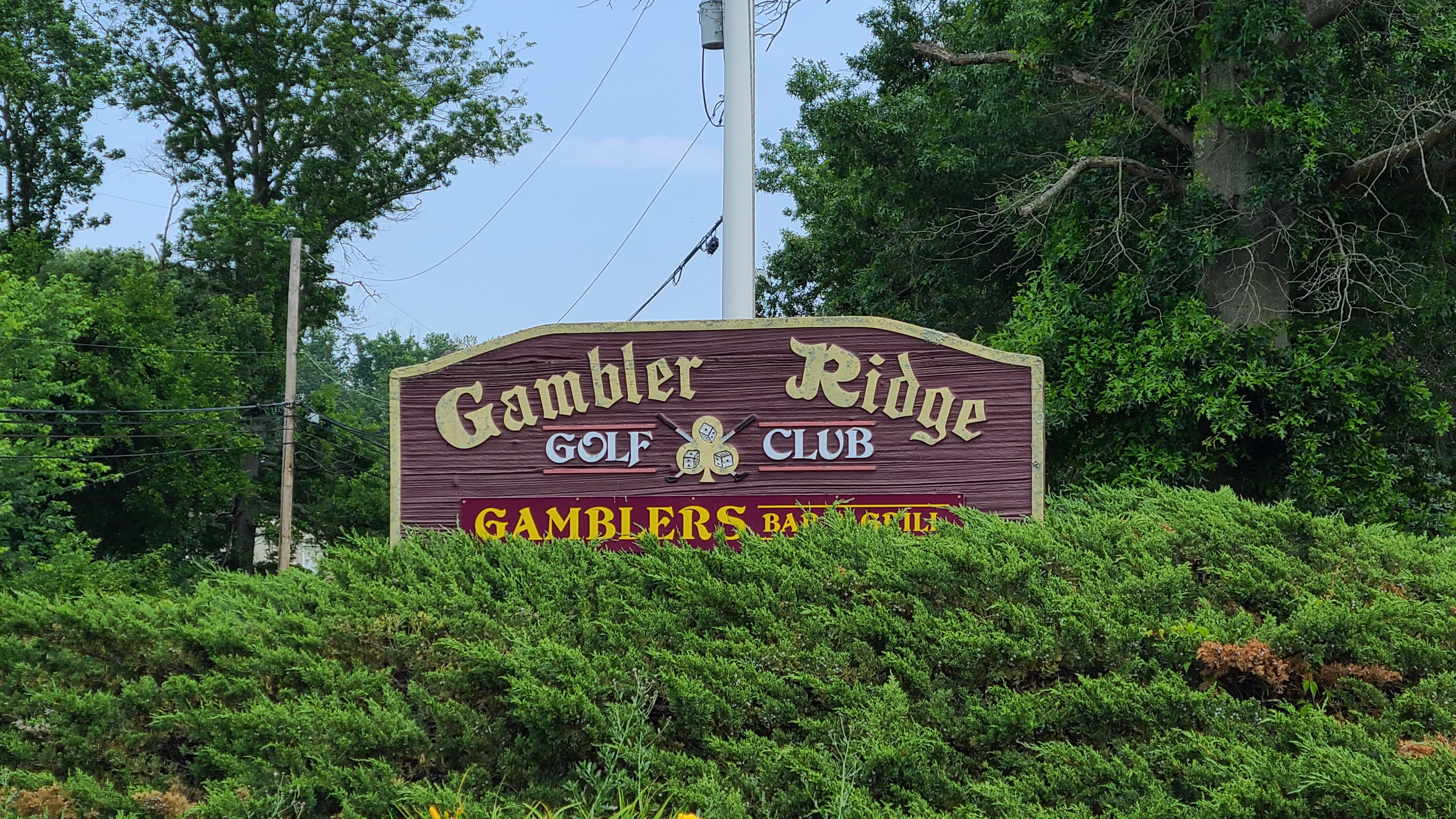
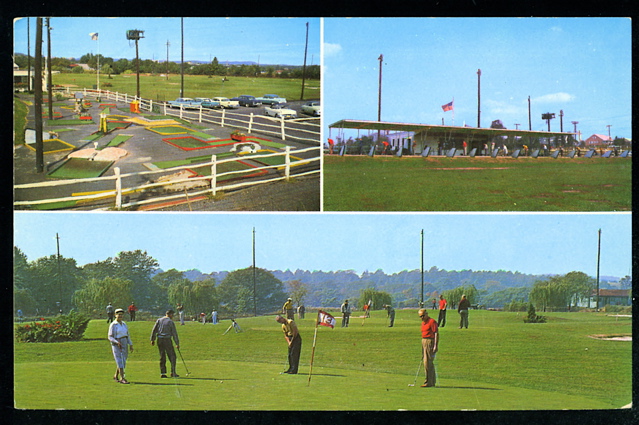
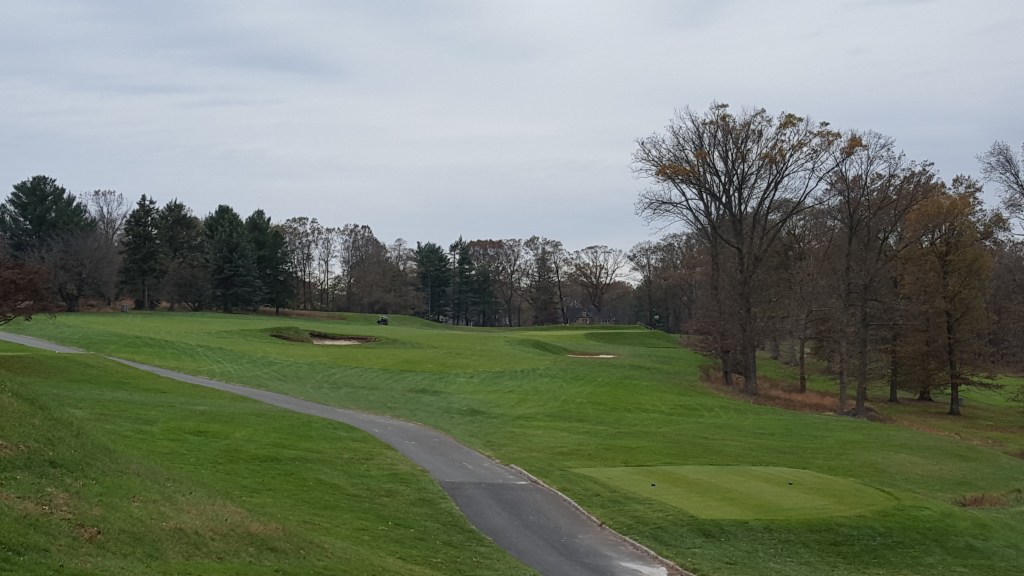
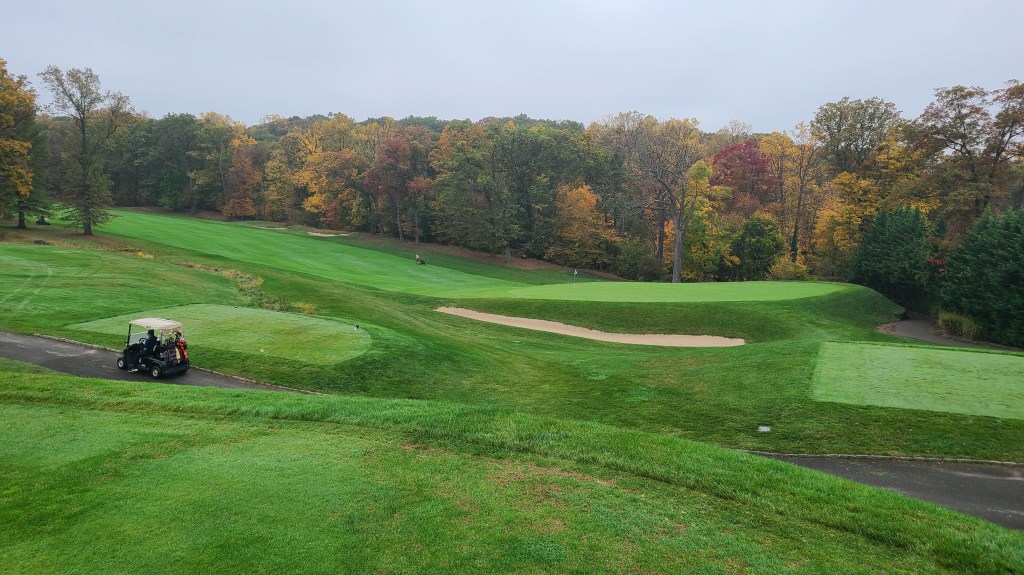
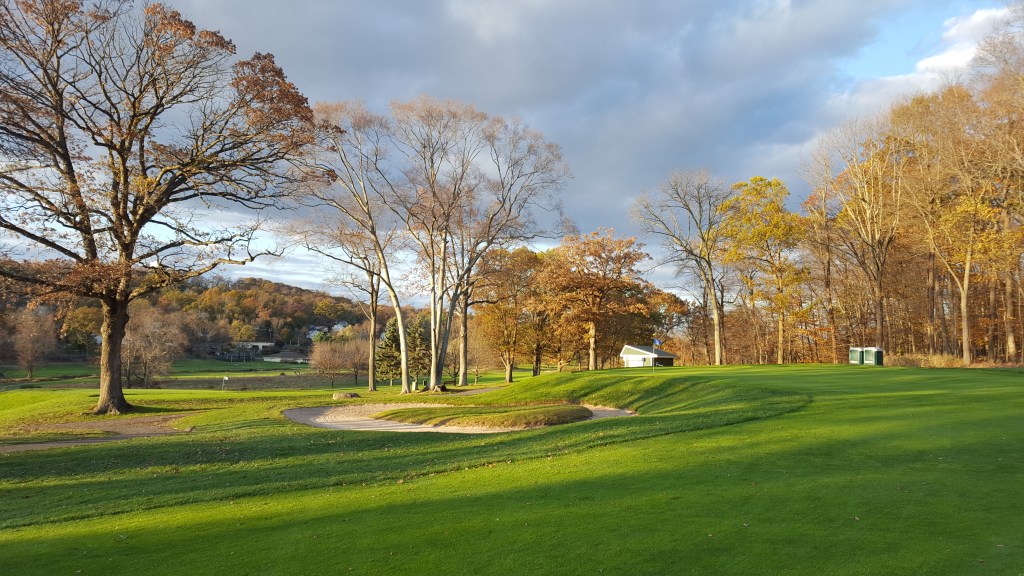
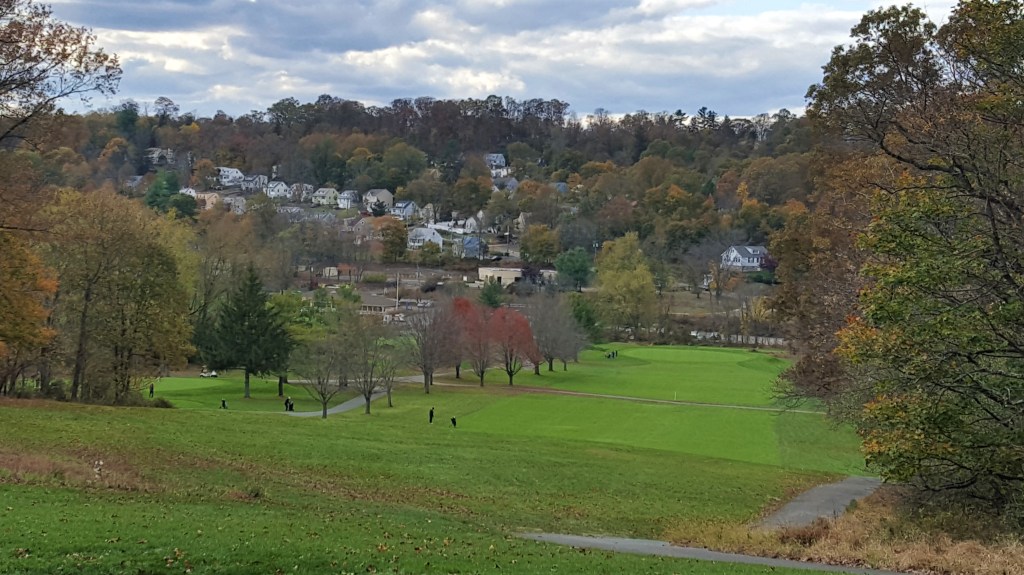
Numbers 6 through 9 (Heron Glen, Cream Ridge, Gambler Ridge, and Stonybrook)

The next four courses on my journey were all played with friends I met at work. Most of us were not serious golfers at the time, but we were all more than happy to find a course to play and socialize outside of the workplace. It’s interesting now to think about how today – outside of my family relationships – golf defines a large part of who I am. At the time I played these courses, though, it was just something I wanted to do occasionally.

Heron Glen

Date: Undated, sometime in 2010

I switched jobs in 2008, and my wife and I moved to Somerset County shortly thereafter. Having made friends with a few coworkers a couple years into the new job, we eventually began to chat golf and planned to get out for a round together. Someone suggested that we play Heron Glen after work one day.

Located in Ringoes – which features some of the “wine country” of New Jersey – Heron Glen plays over 7,000 yards from the tips (but not from the tees we played) and is typically in pristine condition in season. While I have a soft spot for High Bridge Hills, Heron Glen is touted by many as the best public course of the three in Hunterdon County, and one of the best in the state. These posts from Erik Matuszewski show why.

Cream Ridge
Date: Undated, also sometime in 2010

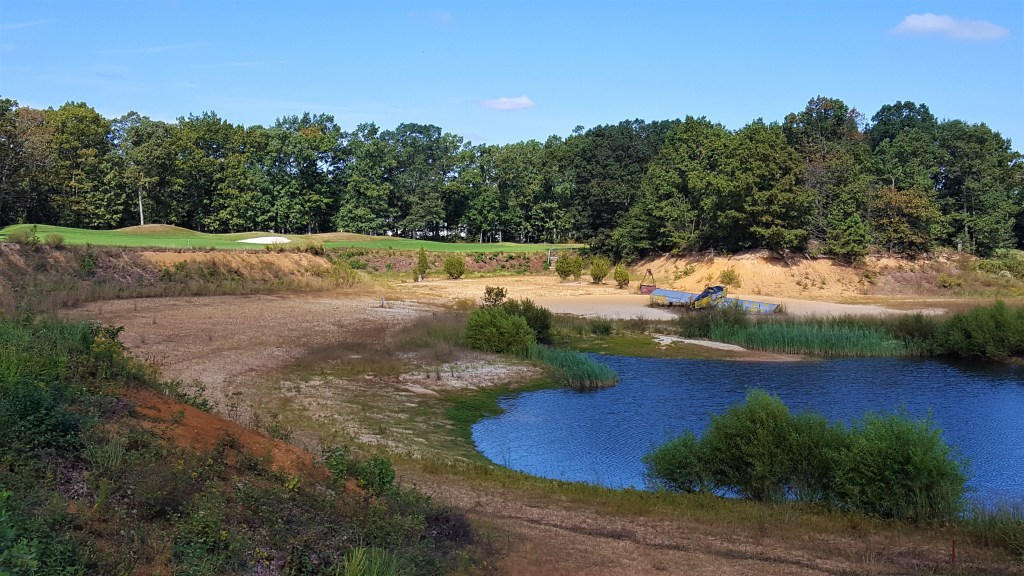
Moving from wine country to horse country, Cream Ridge is your average public course, situated in western Monmouth County. The final minutes of the drive to Cream Ridge will likely feature multiple plots of farmland and stables, regardless of which direction you’re coming from. My first round there was with one of said coworkers who, despite having left the company and the area, remains one of my very best friends to this day.

The course features water in a few places, a few interesting tee shots, but overall is relatively run-of-the-mill. I like the approaches into the greens at 3 (across a widened area of a creek at the bottom of this downhill par-4), 4 (really the par-3 tee shot), 8 (a well-mounded green), and 18, which is a par-5 that is reachable in two, but very dangerous as water guards the right side of the last leg of the hole.

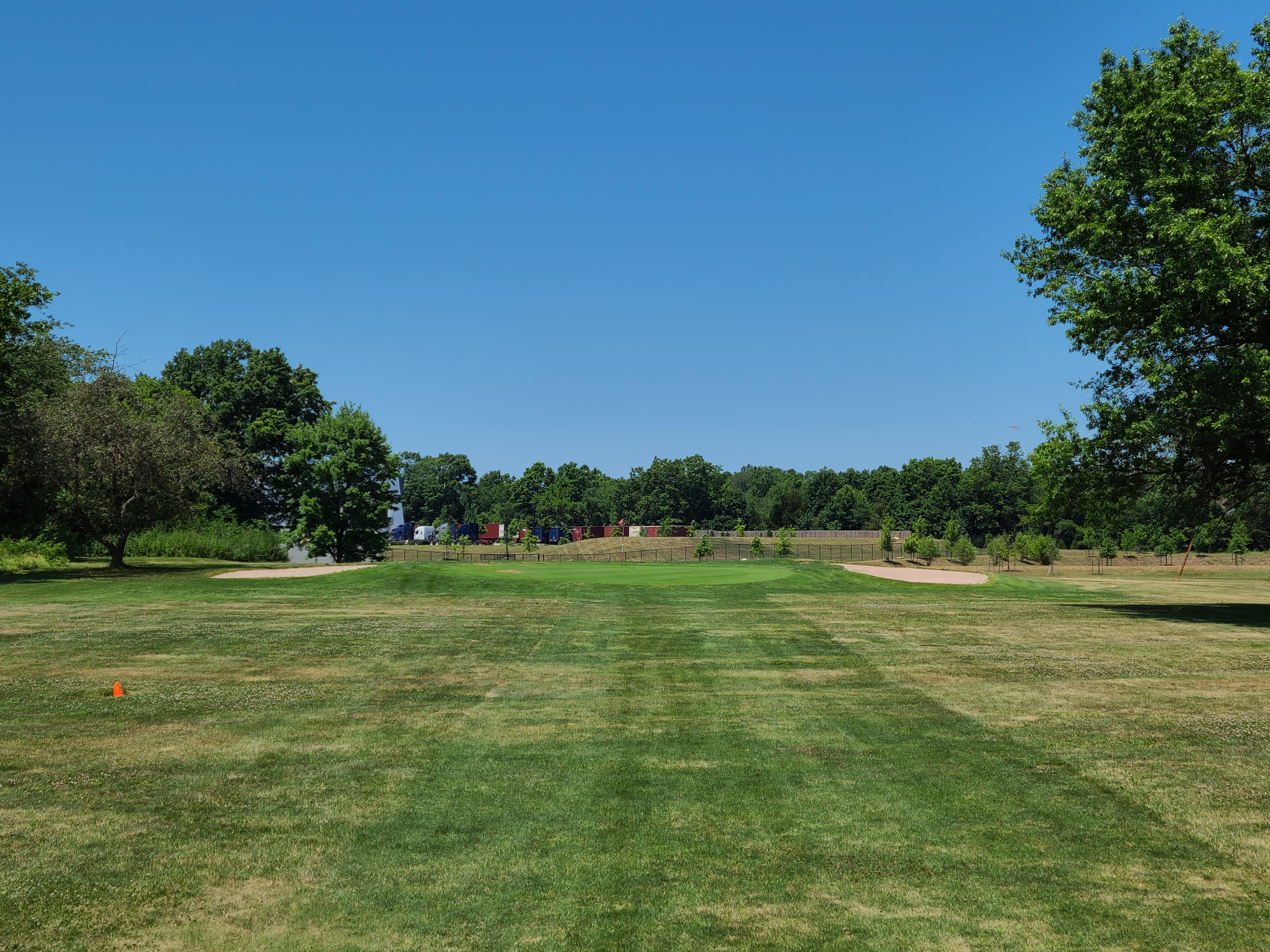
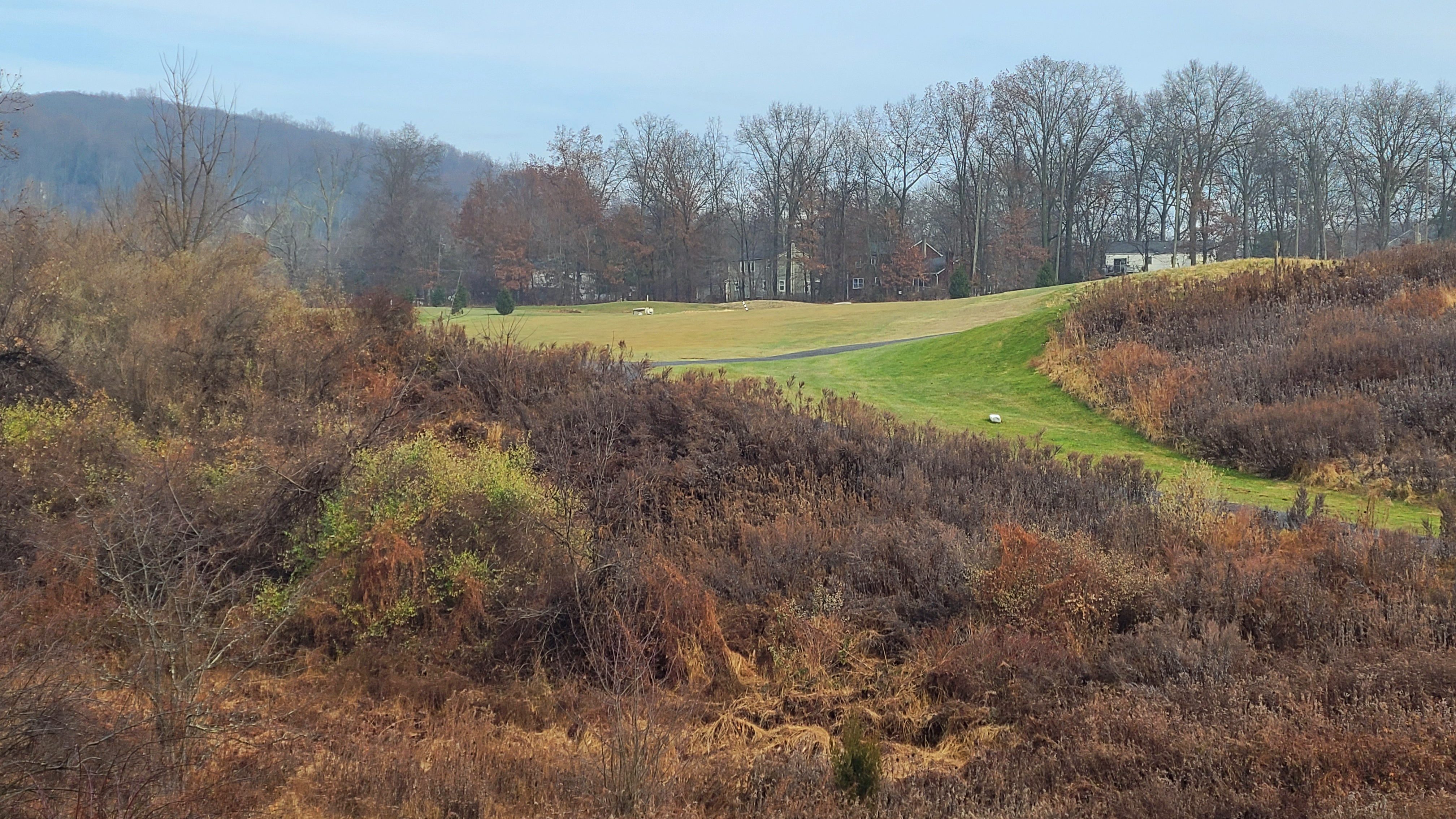
A shot from a 2016 round of the green at 18, looking back at the fairway.

Gambler Ridge

Date: 3/29/2013 (finally, a dated scorecard)

Three years later, a coworker was getting the word out about a Good Friday golf outing he was hosting at Gambler Ridge. Needless to say, I was excited to join.

Just down the road from Cream Ridge Golf Course – and still in the town of Cream Ridge, NJ – Gambler Ridge is your everyman’s golf course. This is not a place you play to be wowed by layout or conditions. You play Gambler Ridge to knock it around with friends, have a few beers (if that’s your thing), and get a hot dog at the turn (which a friend of mine affectionately refers to as a Gambler Dog). Noteworthy features at Gambler Ridge are three drivable par-4 holes in 5, 6, and 13 (though attempting it at 6 and 13 is treacherous as water is significantly in play) and a double green for holes 15 and 17.

That first round at the outing was one of 16 to date (May 9, 2024) making Gambler Ridge far and away the course I’ve played the most. I’ve broken 80 a handful of times there, though the course does play easier than most and the tees are rated and sloped accordingly. My best round there – a 75 from the 6,294-yard “tips” for a differential of 6.2 – featured one of the craziest things that’s happened to me.

Coming up to the tee box at 10, with the group ahead of us very visibly still in the fairway, the starter asked why we weren’t teeing off. Pointing to the very visible group of people in the fairway, I said, “I don’t want to hit them.” The starter replies, “you’re not gonna hit them,” but he said it in a tone that said, “Given where THEY are in the fairway – and [possibly] considering the caliber of players I watch here on a daily basis – I don’t think YOU are capable of hitting it far enough to hit them.”

So, I indulged the starter.

I muttered something about waiving any potential liability to him (that’s not how it works, for anyone interested), teed my ball up, addressed it, and hit my drive. It was well struck, and we all watched as it drew off the right-side of the fairway, dangerously on a path towards the cart in the fairway. The ball came down, thankfully missing the group, but landing 5-10 yards left of the cart (well within the range of possibly hitting them) and bounded off into the left rough. They looked back at us, we looked back at the starter, and he was silent. Since he was concerned about pace of play, I put my driver back in my push cart, and jogged off to my ball.

It’s probably the one of the dumber things I’ve done on the golf course. It’s also probably one of the more irresponsible things that starter has done. Thankfully, no one was hurt.
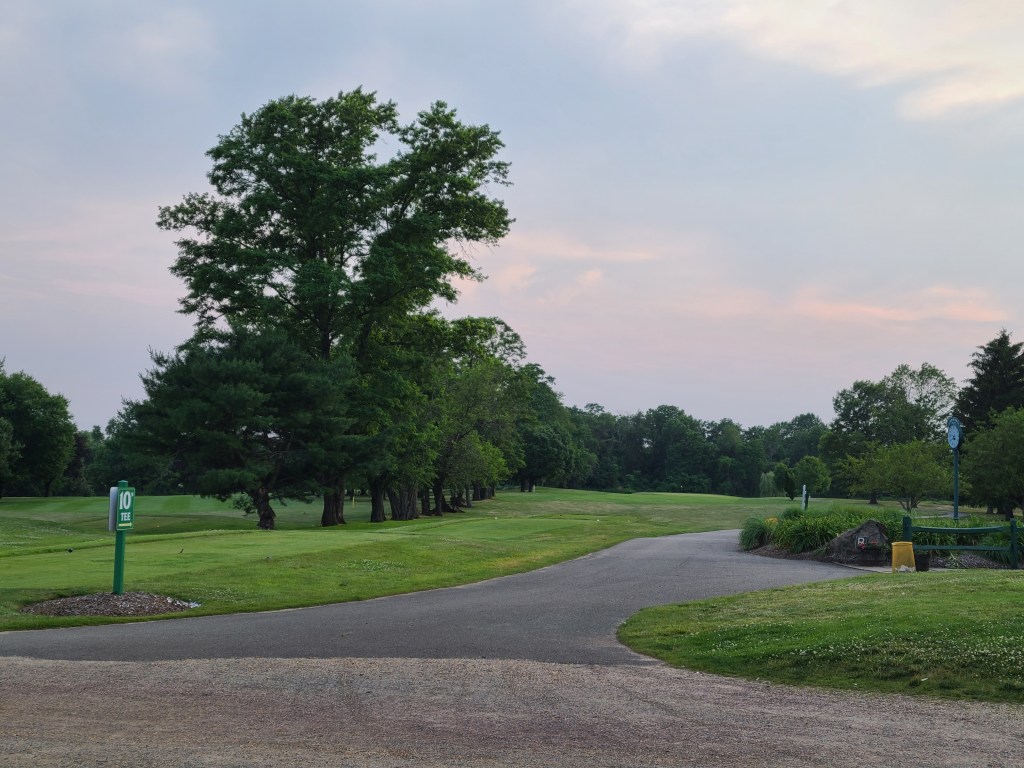
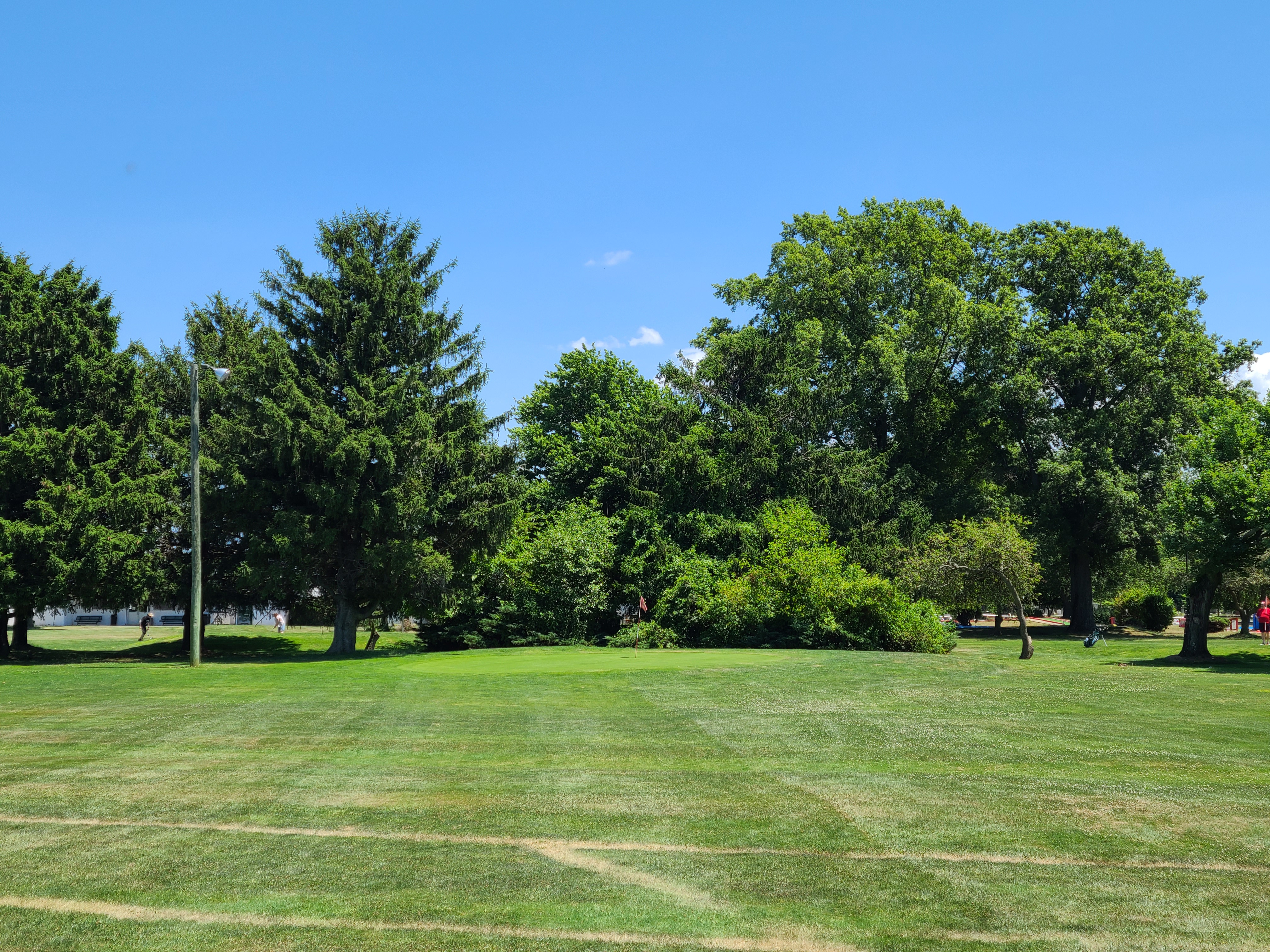
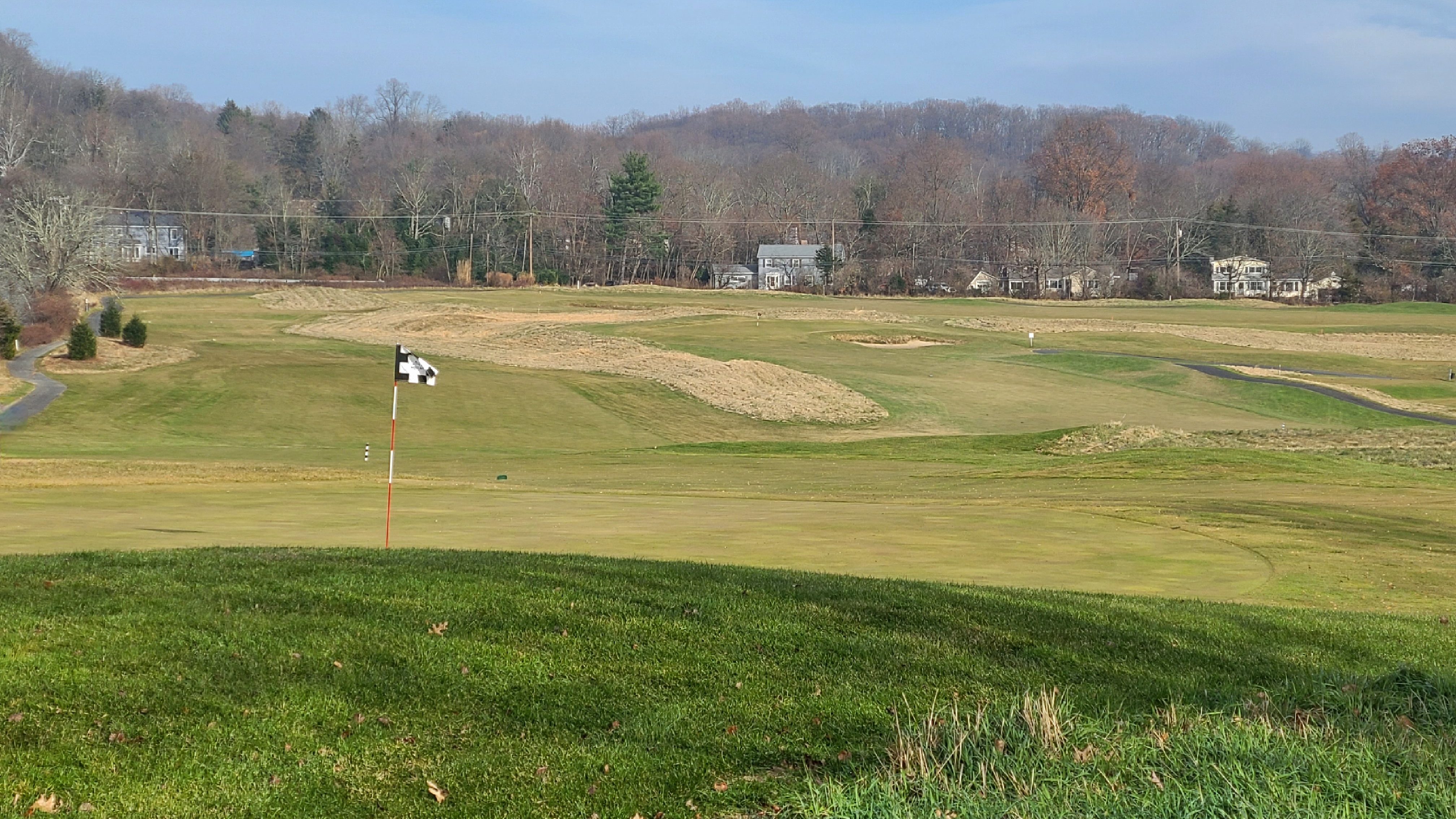
The 10th at Gambler Ridge. 385 yards from our tees, I had about 105 into the green from the left rough.

Stonybrook Golf Club

Date: 4/15/2013

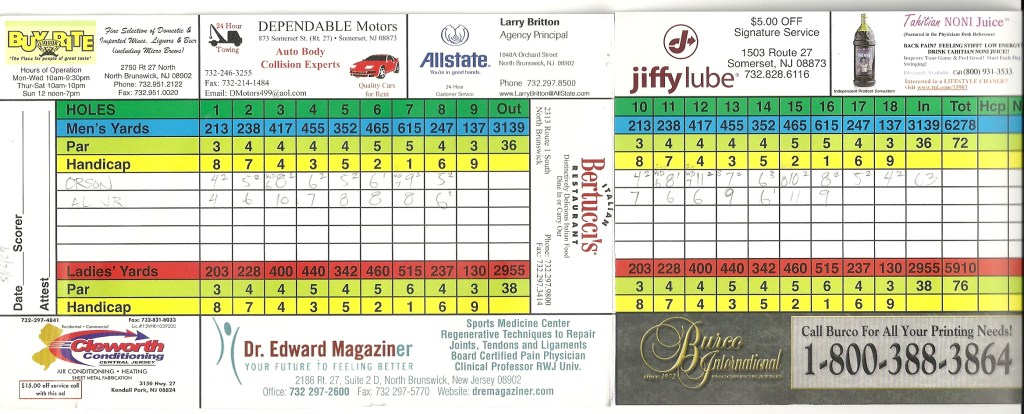
Finally, the 9th course played on my journey is the now-defunct Stonybrook Golf Club. A 3,514-yard par-62 executive course with four par-4s and two par-5s, it had the interesting scorecard feature of having the same sequence of par for both the front and back nines (4,3,3,4,3,5,3,3,3).
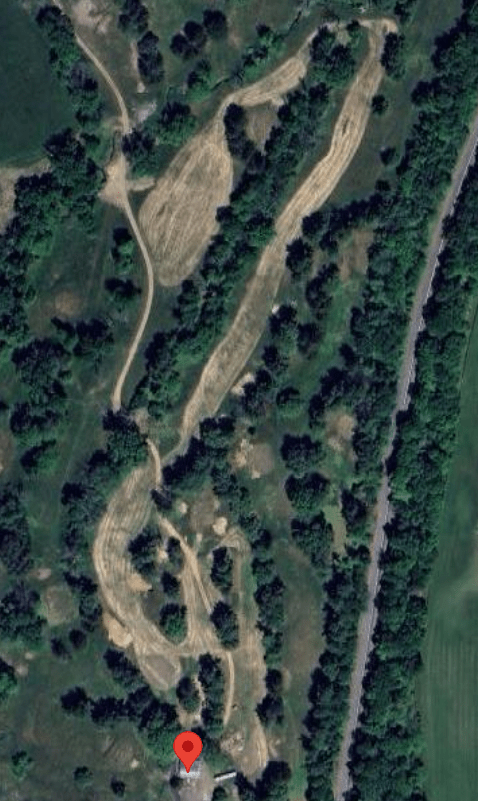
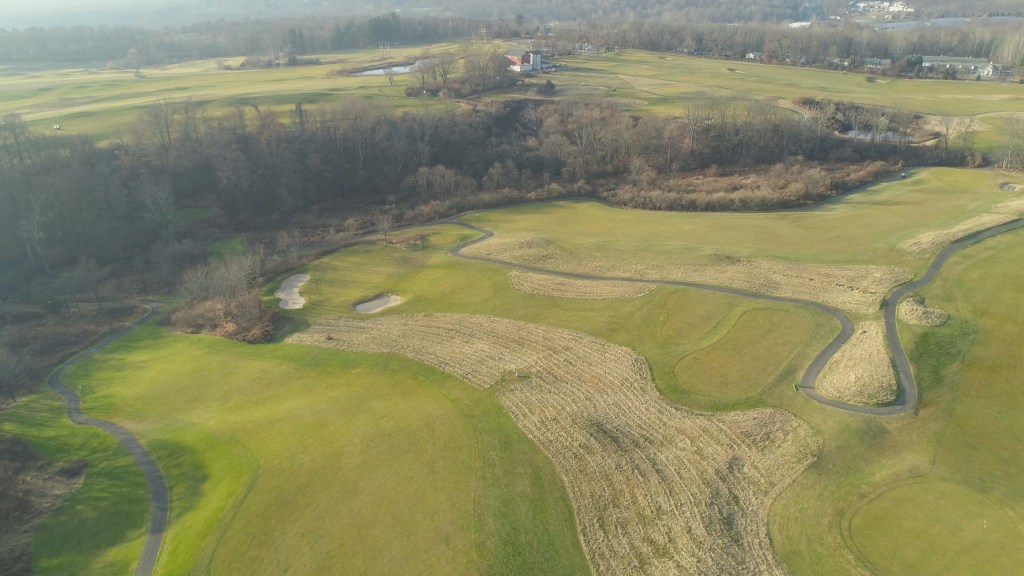
A satellite image showing the ghost of Stonybrook.

I barely have a recollection of the course. I remember almost being able to reach the green at the “par-4” 1st hole with a 3-iron (only 226 from the back tees). I’m relatively certain that the par-5 15th finished with a hard left into the green. Other than that, I see a few moments here and there from my round with my coworkers, one of which would be with me at Hyatt Hills later that year when I discovered I would be taking on this quest to play all the publics. But I would only play Stonybrook three times, and much like the course, any other recollection is now gone.

Numbers 6 through 9 (Heron Glen, Cream Ridge, Gambler Ridge, and Stonybrook)

Numbers 4, 5, and… 152 and 14?

Continuing the theme of my last post, I’ve got more, out-of-order courses to tell you about. As I mentioned, the first three courses I played were all at points before and up to June 2006. Very shortly after that, my wife and I had just gotten an apartment together in Middlesex County. From there, I would play an additional four courses over the next few years.

Number 4 (Raritan Landing)

Date played: 7/22/2006

While he’s better known for his design at Scotland Run, Stephen Kay also helmed the creation of the par-58 Raritan Landing Golf Course in Piscataway, NJ. Though I have an undated scorecard that likely preceded it, this Middlesex County executive course counts officially as the 4th NJ public I played based on a July 2006 round.

As a Rutgers alumnus, this is another place I wish I had visited more while I was on campus, literally just minutes away from the course. With four par-4s and 14 par-3s, this would’ve been a perfect place to play while I was still in my novice-golfer shell.

The greens at Raritan Landing have enough undulation in them to set them apart from most other executive or par-3 courses and they are bunkered enough to challenge the beginner. However, in my experience, the greens are usually kept at a speed that might be a bit slow for those looking to be challenged on the putting surface. (I’m not one of those people, so win-win for me.)

It’s only $40 to walk on the weekend, but an additional $20 if you want to ride. Given the course is a par-58, $60 to play a short course is a bit steep. I would recommend the very manageable walk if you made your way out there.

Number 5 (Tara Greens – 9-hole)

Date played: 5/16/2009

The nine-hole course at Tara Greens Golf Center was my first Somerset County course played. Closed sometime between 2014 and 2020, the first time I played it was in a round with one of my cousins in May 2009. The course featured two par-3s (one long, one short), five par-4s, and two of the wildest par-5s in the state of New Jersey.

Scores of 6 and 10 on the 6th, and 9 and 8 on the 7th… yikes.

Hole 6 was a 465-yard par 5 that presented itself as a 90-degree dog-leg-left from the tee box. You could cut the corner over some trees, but your landing area was narrow and it was completely blind. For all intents and purposes, it was a three-shot hole. That was immediately followed by the 7th, which was listed on the scorecard as 615 yards. I don’t know if actually stretched that long, but I can tell you that in the few times I played it, I never even came close to making par.

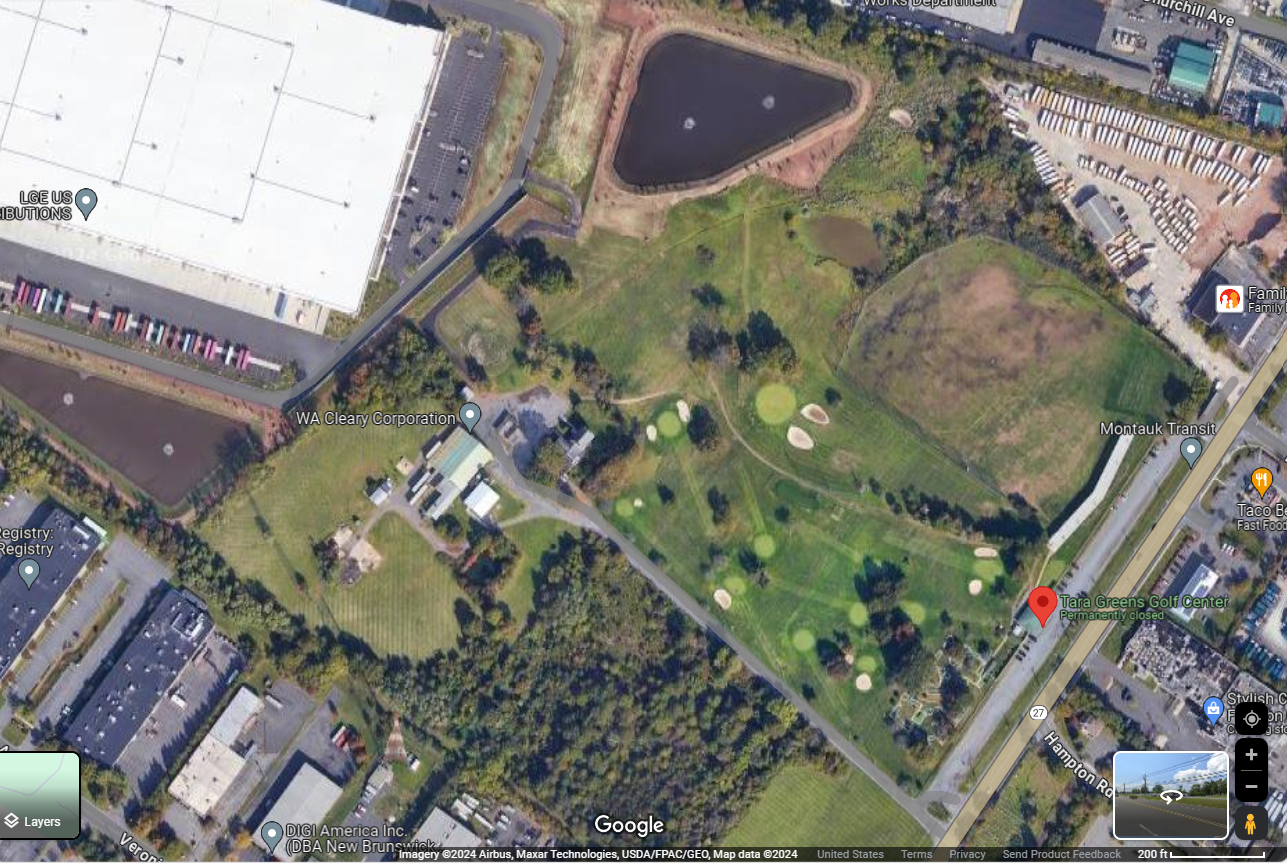
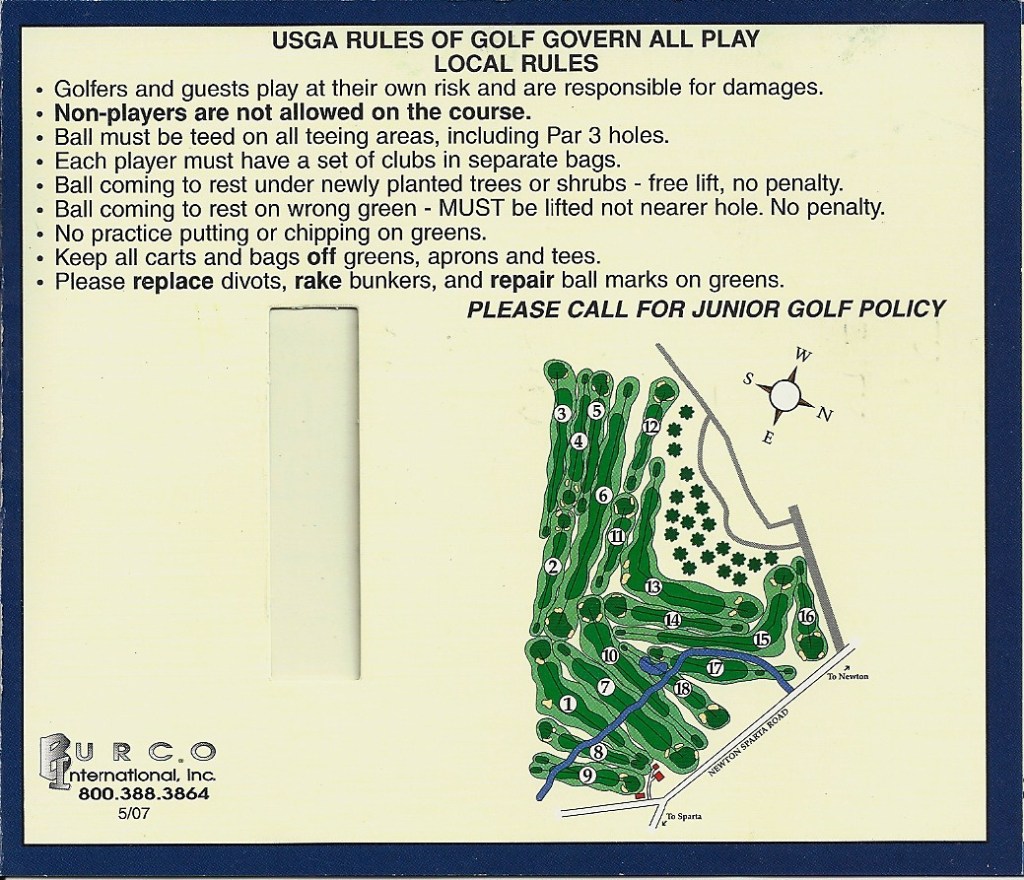
Looking at the scorecard map, the shape of the 6th is portrayed accurately, but my recollection of the 7th is that it was much more of a dog-leg-right. Either way, you can see that image below, alongside a satellite image of the course. A majority of the acreage for those two holes sat where the large, white-roofed distribution center is now, and you can actually see remnants of the 7th green, bit left of center, north of the building marked “WA Cleary Corporation”.

(Side note: roughly 15 years later, almost none of the businesses that advertised on the back of that scorecard are still around today!)

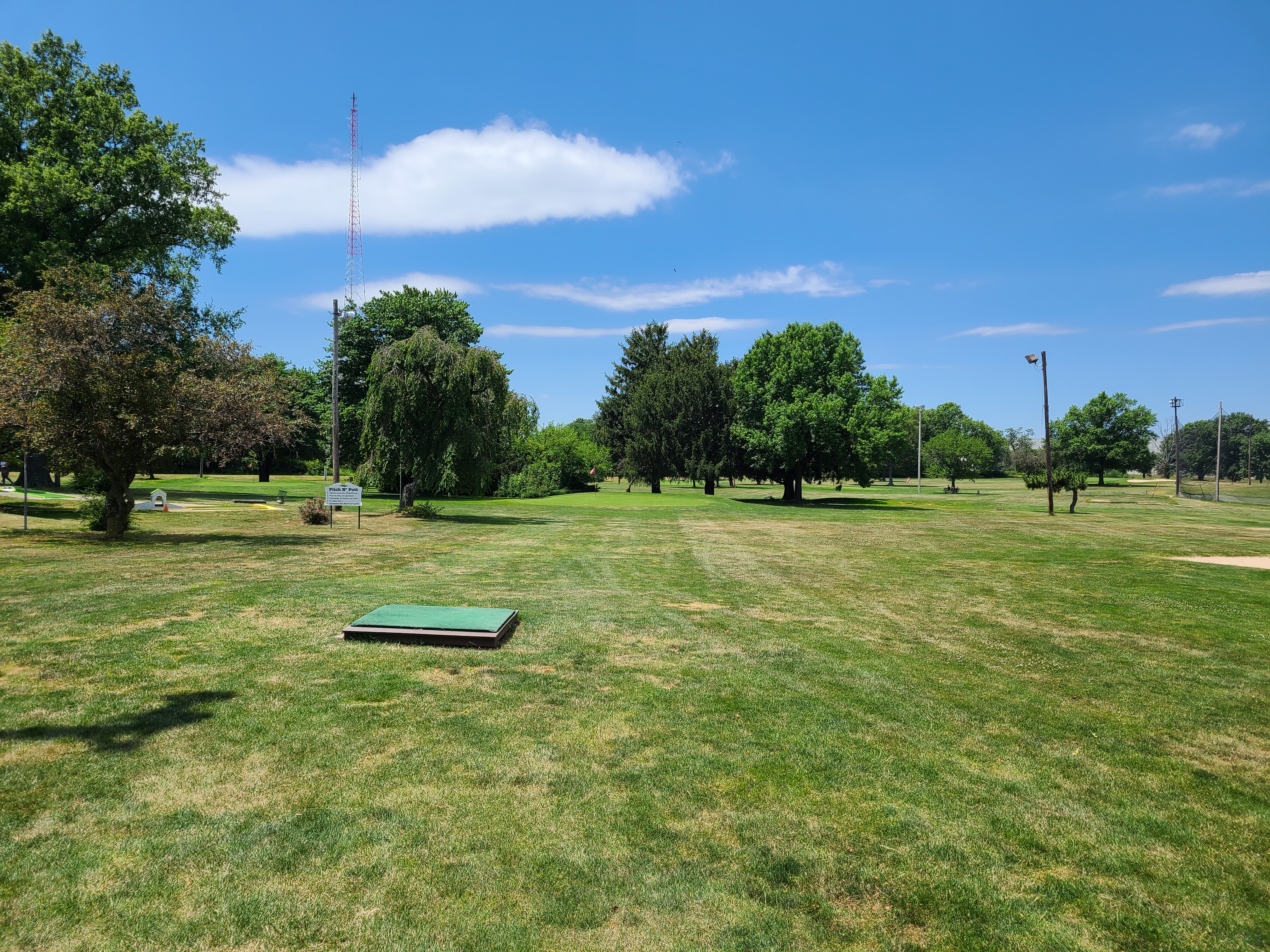
Number 152 (Tara Greens – Pitch-n-putt)

Date played: 7/3/2022

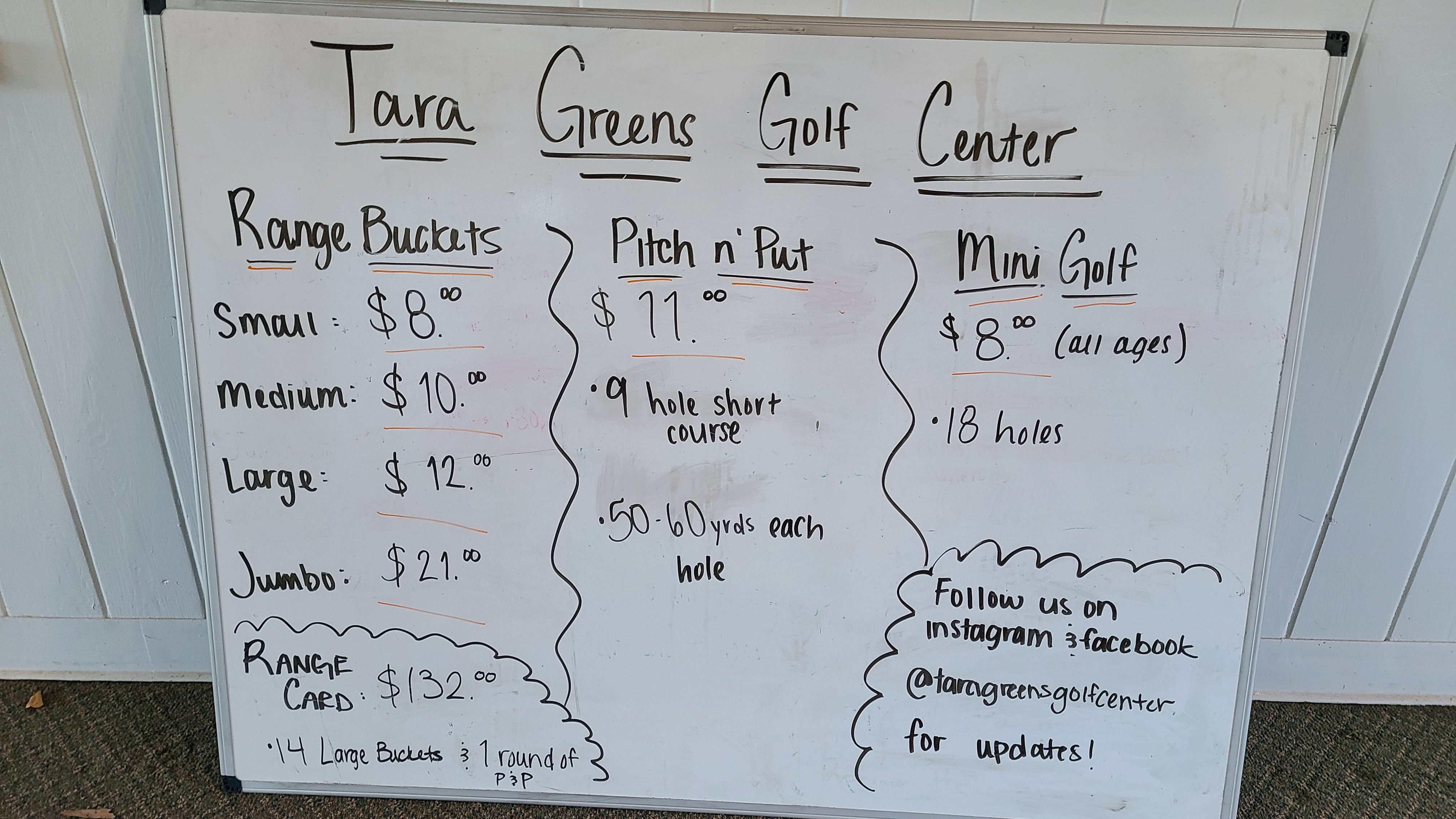
The rates at Tara Greens on 7/3/2022.

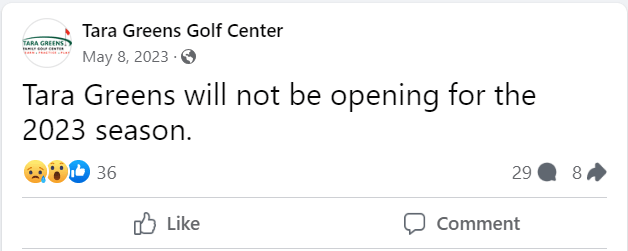
As part of the “golf center” experience of Tara Greens, in addition to the nine-hole course and driving range, the facility also offered a nine-hole pitch-n-putt course. I say “offered” in the past tense, because I recently discovered that in May 2023, Tara Greens announced that it would “not be opening for the 2023 season.”

It wasn’t me, but I feel that deflated teary emoji.

While that language leaves open the possibility of opening for the 2024 season (or any future season) it is probably highly unlikely. Given the sale of land to the distribution center years ago and the current real estate market (land isn’t cheap) the facility owners would have done well for themselves selling the remainder of the land to the highest bidder.

While I have one undated scorecard that I believe is from the time I lived in Middlesex County, and a few others from 2016 to 2020, I did not originally include the pitch-n-putt course in my list of NJ publics. After realizing that it met my criteria – it’s open to the public and offers a scorecard with yardages for each hole – I decided to avoid renumbering my entire journey and just slot the course in as my 152nd played.

If it doesn’t return – and again, it probably won’t – it will be sad to see it go. Here are a few pics from that day.

Number 14 (Rolling Greens Golf Club)

Date played: 8/31/2013

My final, out-of-order course for this post is a trip to Sussex County.

While I have an undated scorecard of a round with someone I worked with from 2006 to 2008, I counted Rolling Greens Golf Club in Newton as the 14th I had played based on a round played with two of my best friends in August 2013.

A par 65 from just under 5,200 yards, Rolling Greens was a tight test on a number of holes, particularly the par-4s. I can’t quite remember if it was the par-5 13th or par-4 15th, but even though they offered a bit of space on the approach, one of those extreme dog-leg-left holes also had a very difficult tee shot to navigate into a narrow landing area in the elbow of the hole.

Holes packed together like a microscope image of reproducing bacteria.

In 2021, I learned that Rolling Greens had closed sometime in 2019. Over time, a number of courses have been removed from my list, some of which I played, others which I hadn’t. There’s a bit of a missed-opportunity sting to learn about a course that I never played which no longer exists. But like many of the courses gone from the early part of my journey, there’s a deeper pain of an erased personal history when I see a course I played get relegated out of reality and into history books.

Here is a satellite image of Rolling Greens which still shows much of the shape of the layout.

Another one bites the dust 😔
Numbers 4, 5, and… 152 and 14?

Numbers 1 through 3

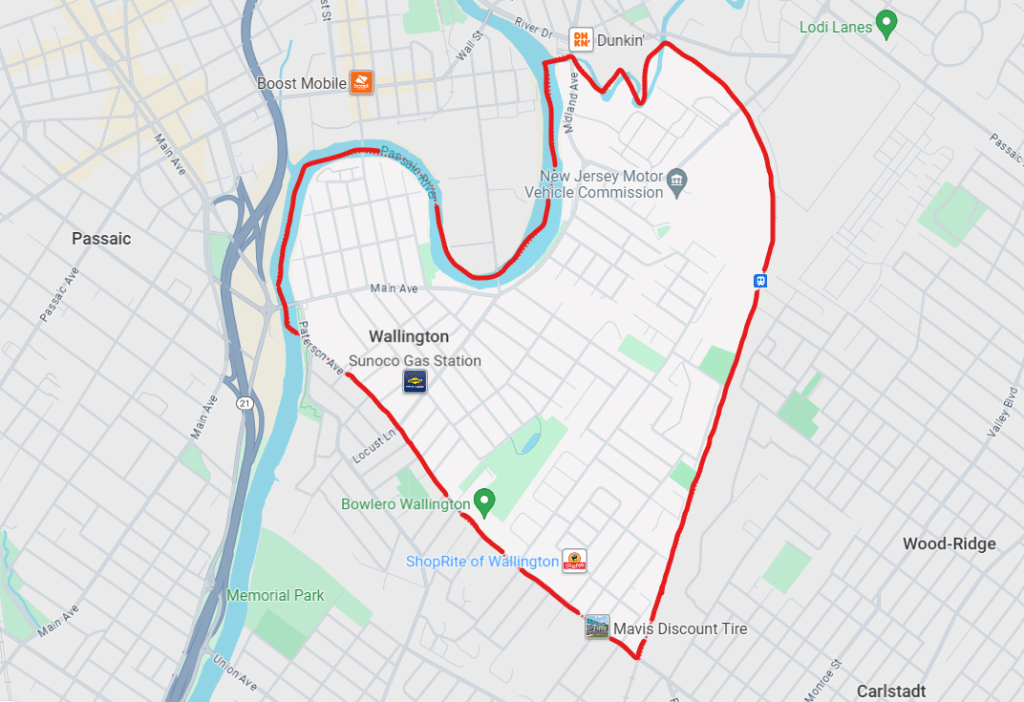
The first three courses I have listed as being played on my journey were all completed when I was still based in the town I grew up in: Wallington. As with most small towns, you can be forgiven for never having heard of Wallington. It’s a one-square-mile, heart-shaped borough in southern Bergen County, located 3.5 miles from MetLife Stadium, and about 12 miles from Times Square across the Hudson River. It’s most known for its concentration of people with Polish heritage (about half of the town’s population at the turn of the century) and the urban legend that it may have at one point held a record for having the most bars in a square mile (or something like that).

From Wallington, my first three trips around the state would be to courses in Morris, Middlesex, and Hunterdon Counties.

Wallington, NJ, my hometown.

Now, when I eventually started to chronicle my quest around New Jersey, I was meticulous in documenting when I had visited a new course. However, I officially began my journey after having already played a number of different public courses in the state. Among those, there are a few where I unfortunately did not maintain an exact date of when I visited them for the first time.

Number 3 (Rutgers University Golf Course)

Date played: 6/4/2006

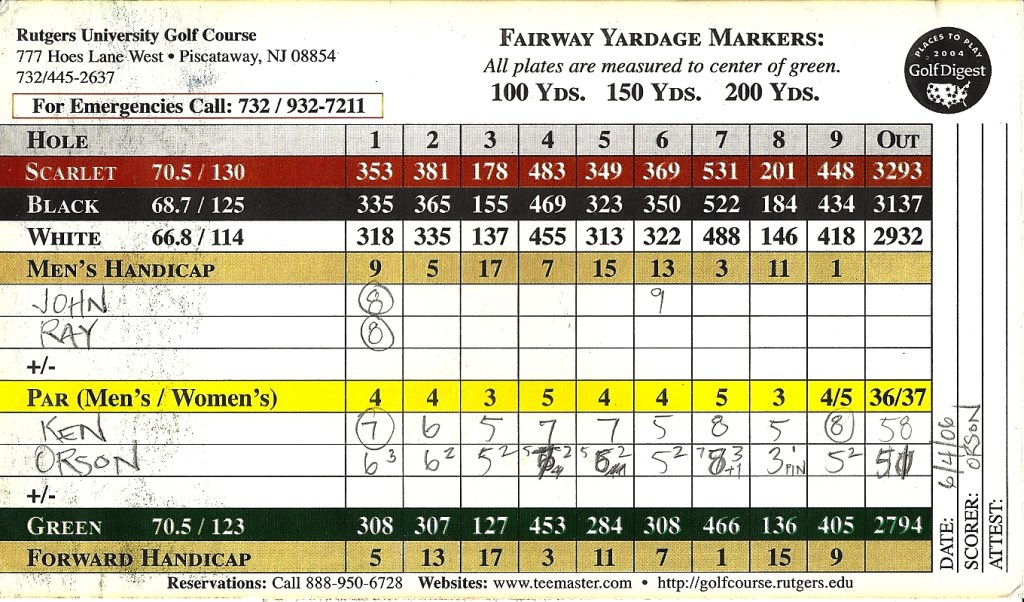
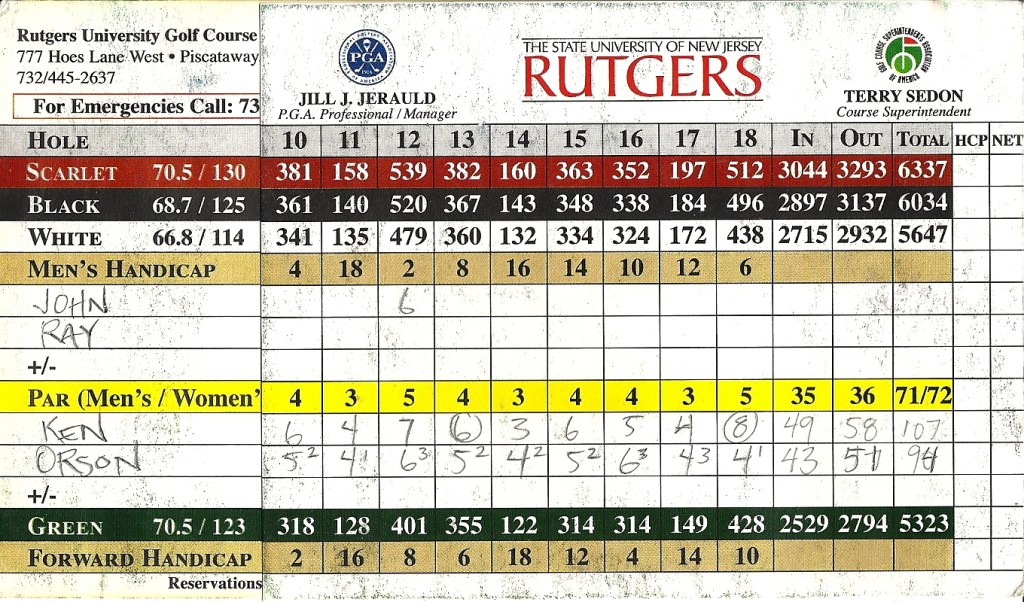
The third course I played was (sort of) one of them. On June 4, 2006, I played Rutgers University Golf Course. Rutgers is my alma mater, and on that day, I convinced three friends – who I had actually met while at Rutgers – to play the course with me. None of us were playing golf regularly, and two in the group didn’t really keep score. At this point, I don’t have any specific recollection of the day, but the meta-data of the memory (if I can call it that) is that 1) I was just glad to have convinced some friends to get out to a golf course with me, and 2) we had a good time.

The front nine of our round. I have no idea why I circled a 7 and three 8s.
Some more random circling on the back nine. In other news, 43 coming in was probably about the very best I could do at the time. That’s just above an average nine-hole score for me today.

But I had actually been to the Rutgers course previously – almost a year earlier, in fact, in September of 2005. However, it was only to play the front nine, and by the time I was trying to determine how to catalog all of the courses I played, I felt it was only fair to count an 18-hole course if I played all 18 holes.

It’s interesting to think about how different my life was at the time. Originally having gone to Rutgers in the fall of 1998, I eventually took time off to help my family, which involved moving to North Carolina for a while. I returned to New Jersey in 2004 and decided to finish my degree in 2005. While I can’t remember for certain, I’m guessing I played that original 9-hole round with a student discount. It’s crazy to think that I didn’t take advantage of that benefit when I had been on campus 6-7 years earlier, something I really regret. The truth, though, is that – having only played pitch-n-putt golf – I was just scared to get on a par-70+ course.

I would graduate after the 2005 fall semester, but not before a big (non-golf) life-changing event: I met the woman that would become my wife!

The first time I played at the Rutgers course, though not the round that would count towards my journey. It’s also probably around the time I first locked eyes with the future Mrs. Rosas.

Number 2 (Twin Willows Par 3)

Date played: 5/13/2006

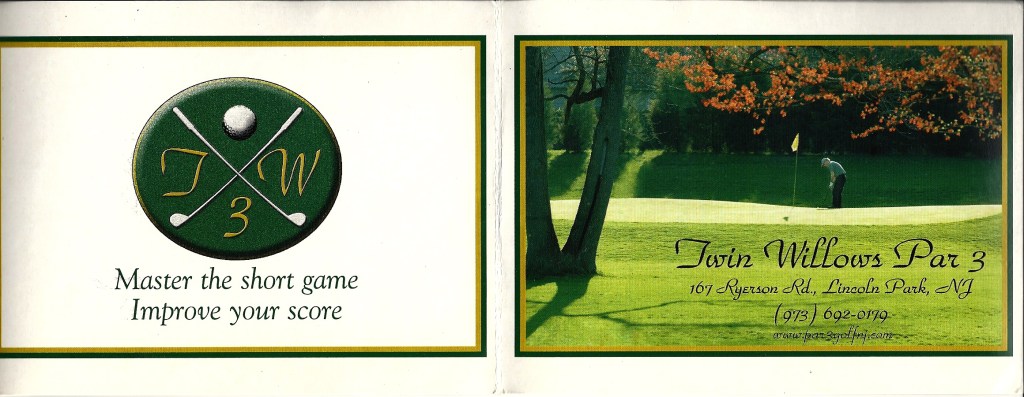
From a scorecard I have dated 5/13/2006 – with the friends who joined me at Rutgers – the Twin Willows Par 3 course is listed as the second course I played on my quest. I only have one other scorecard saved, and while it’s not dated, it may be within a year of either side of that 5/13/2006 round. But I’m certain that I played this course much earlier.

After my high school friends and I started playing pitch-n-putt golf at Hillman’s Golf Land, too timid to play bigger courses, we went searching all over the place for other par 3 venues. Our travels would even take us into New York, to the Executive Golf Course at Rockland Lake State Park and all the way up to Orange County to play a par-57 called Winding Hills. So, without a doubt, I was playing at Twin Willows with that same group of friends likely as early as 2000 or even 1999.

But when chronicling my list, I wanted to avoid guessing a date wherever I could. (Though, spoiler alert, I did end up having to do that.) Therefore, even though Twin Willows would have slotted in at the number one spot if I had dated (and kept) all of my earliest scorecards, it goes into the order officially at Number 2 with the May 2006 round.

The only dated scorecard I kept from Twin Willows.

I am definitely long overdue a trip back to this par-3 course, especially because the course now has a 10th hole available to play!

The “10th” hole that was added since I played last is the one with the waste area at the bottom of the frame and plays as the 1st. What I knew as holes 1-9 are now actually holes 2-10.

Number 1 (High Bridge Hills Golf Club)

Date played: 8/13/2005

Given my lack of accurate documentation for Twin Willows, Hunterdon County’s High Bridge Hills Golf Club slots in as the first public course I played in New Jersey. Back in August of 2005, my friends and I used a website called “EZLinks” (which later became the current TeeOff.com) to book a round at High Bridge Hills. Only, we didn’t just book a tee time: we used a “Name Your Price” feature, much like Priceline.com offered (until 2016).

You would effectively bid on a tee time and the service would let you know if your bid was accepted. You could potentially get significantly discounted rates on your round, and we were fortunate enough to do just that. At a time when rates for a Saturday tee time were likely above $60 to ride – a guess, given that at the time of writing, an off-season January 2024 weekend round is $86 – we only paid $25 per person.

Another internet glitch! A remnant of the old EZLinks site is still findable on Google. The look and feel were a bit more modern by the time we used it in 2005, but it’s cool to see relics of golf history like this.

It’s difficult for me to describe the impression that this course instantly made. The context, as I’ve been writing about in this post and the last, is that I had really only played par-3 holes up to that point. This was my first foray into what others would probably describe as “real” golf. I had only played three different par-4 holes before stepping onto the first tee at High Bridge Hills, which happens to be a par-5, something I had never seen.

The most striking thing about the course – relative to other publics around the state – is the land movement. Situated on the southern outskirts of the New Jersey Highlands, I’m pretty confident that no matter how often you play High Bridge Hills, the number of uneven lies you have in a round will outnumber the level ones. While I don’t enjoy being punched in the face by a course, I think this is a challenge I welcome, and its rarity makes me hold HBH in high regard because of it.

The 1st tee at High Bridge Hills.

There is a tremendous variety of shots you’ll have to play, from forced carries to semi-blind, to completely blind. The elevation changes only rest for brief moments, like holes 6 and 17. The rest of the course is a roller coaster, and I mean that in the best way. Ultimately, when I started this site almost 11 years after playing at High Bridge Hills, I would create a page for courses that I consider “must-play” publics in NJ, and I included HBH in that list.

Most of that decision was based on the nostalgia of how incredible that round felt, but I recently went back in December 2023, and I can say that I still hold it in the company of the best public courses in the state. It was difficult to tell if the December conditions were indicative of what conditions would be in prime season, but it didn’t matter – the layout, the green complexes, the views, all make High Bridge Hills a place that all New Jersey golfers should visit at least once in their playing lives.

The scorecard from the first official round on my journey. A 56.5-foot birdie followed by a five-putt triple bogey. That’s how you close out a round!

Here are some photos from my December 2023 round, as well as some drone shots I quickly took before heading back home.

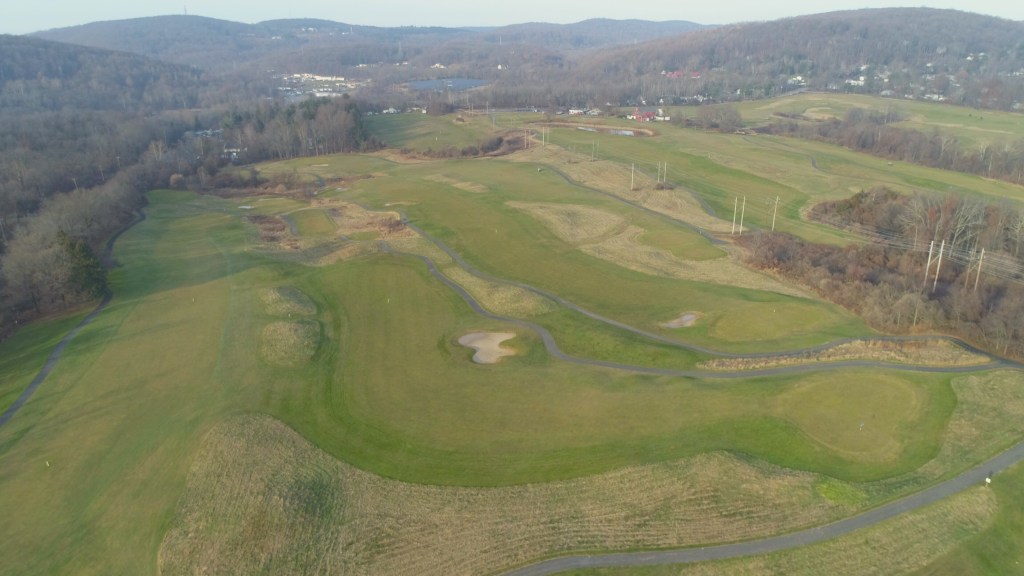
High Bridge Hills from above. With the cart barn and maintenance shed in the center of the frame, the 9th and 1st holes straddle the pond to the right. To the left and above it is most of the back nine.
The one-shot 4th hole, with a view almost (in the smallest way) reminiscent of 16 at Sleepy Hollow with the reservoir in the background.
Above the 4th hole, a look back most of the first six holes.
The par-3 8th hole, with elevated, terraced tee boxes on the right and the green near the lower left.
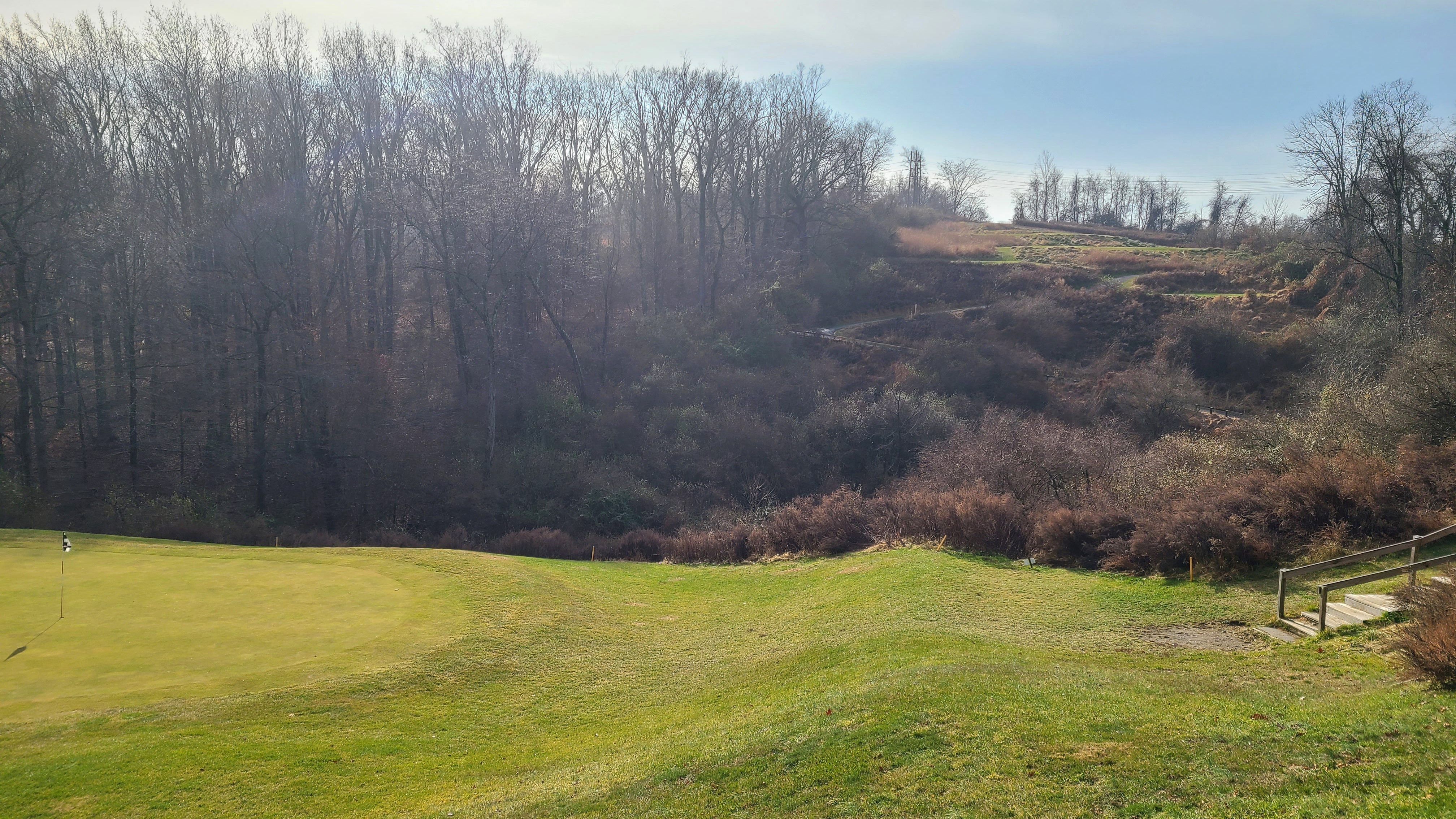
Behind the 8th green, looking up at the tees.
Over the back nine, looking at 12 and 13.
The forced carry on 13 tee.
18 green, with 10 playing alongside it on the right into the distance.
Numbers 1 through 3

Number 0 (Where it all started)

When I started this blog, I let you know that you would be joining me “in medias res“. At the time, I had already played 34 courses that I would count against my journey to play all the public golf courses in New Jersey. Before I continue on writing about the remainder of my journey, I figured having wrapped up 2021 was as good a place as any to go all the way back to the beginning. Sort of like a Christopher Nolan movie… only way slower.

Date: Exact date unknown, but either summer of 1997 or summer of 1998 (we’ll go with summer of 1998)

It’s the summer of 1998. It’s been just over a year since Tiger Woods recorded his first major victory at the 1997 Masters and golf was becoming a bit more mainstream. The Broncos won the Super Bowl, the Yankees are about to become unstoppable for a few years, and Michael Jordan just led the Chicago Bulls to his 6th and final NBA Championship. On the radio, bands like The Offspring, Third Eye Blind, and Our Lady Peace are in heavy rotation. The one hit wonders of the era include Chumbawamba’s “Tubthumping”, “Your Woman” by White Town, and The Verve’s “Bitter Sweet Symphony”.

Here are some other songs you may have been hearing at the time, the top 10 of the Billboard Hot 100, June 13, 1998. I can’t say I remember all of these.

My friends and I have just graduated high school and are gainfully employed (at least part-time). We can’t stand the heat of our newfound income burning holes in our pockets, so we search for ways to get rid of it. Movie theaters, billiards halls, Dave & Busters, diners, and fast-food restaurants are all adequate outlets that would help unburden us of our money. Then my friend Eddie suggests a new way to spend it.

The driving range.

Hillman's Golf Land. Professional instructor John Falat Sr. with understudy Tony Fiore Jr.   Elmwood Park - East Paterson, New Jersey. Photo by Jack Falat 1978
This was the place, but in 1978, not 1998. From the Flickr page of Jack Falat.

In the 18 years of my life that preceded that summer, I had never swung a golf club. The closest I had been to the game was likely miniature golf, and I genuinely have no memories of even doing that. I had almost zero contact with golf, and that includes seeing it on television. I have one vague memory of a golf broadcast being on at a family friend’s house, and I don’t think they were all that interested in it either.

Nevertheless, I instantly loved hitting golf balls at the range. Mainly, it was a cheap way to spend time with friends. We could all pool a few dollars, get the largest bucket of balls on offer, and all slice balls into the right-side netting for the next hour or two. Golfers talk about the one shot that hooked them for life. The shot the contact of which was so pure, and the flight of which was so perfect, that it caused them to vow never to leave the game, in sickness and in health, till death do them part.

I don’t think I ever had such a moment. If I did, that memory was quickly forgotten and is now long gone. But hitting golf balls at the range was such a great way to hang out with friends that I had no intention of ever leaving the game. Perfect shot or no perfect shot, I was hooked. Twenty-five years later, that still holds true.

All of this took place some 17 years before I knew I would go about my quest, at a facility called Hillman’s Golf Land, what I’m calling my course “Number 0”. While it no longer exists, Hillman’s was located along the Passaic River in Elmwood Park, New Jersey, featuring a driving range, miniature golf, and a pitch-n-putt course.

A 2023 satellite view of the land where Hillman’s was located. It would’ve been situated in the lower half of the land west of River Drive, closer to Route 46.

The scorecard said it was an “18 hole par 3 short course,” but in 1998, there were only nine holes ranging from 35 to 55 yards. However, it only cost $10 to go around twice for an 18-hole round, and wedges and golf balls were provided to anyone who paid the fee and needed them. The course was lit for night play, something that is a rare find today, and that’s when my friends and I played most of the time. In fact, I can’t recall a round that we played in daylight.

The front and back cover of the scorecard of the pitch-n-putt course at Hillman’s from one of my rounds there, dated 8/29/1998. You gotta love the e-mail being listed simply as the “HILLMANS.COM” domain. An early internet-era mistake.

I have 12 scorecards saved, with the names of ten different friends and family members written in them, but unfortunately, no pictures of the course itself. Unlike today, where everyone always has a camera with them in their cell phones, in 1998, the only technology my friends and I were carrying were our pagers. Even if we were to have cell phones – which did exist at the time – they wouldn’t have had cameras.

The lack of pictures has left me with very faint memories of how the course was actually laid out. There are some things I am relatively certain about. The first hole played towards the river, with your back to River Drive, to a flat green. The tees for the second hole were separated from the first green by a tall section of chain link fence, like the backstop of a baseball field in a public park. The second hole was situated at roughly a 90-degree angle to the right (relative to the first hole) and played to a green that was a bit raised and sloped away from players.

The only images I have of the course are scans of these 12 scorecards, seven of which unfortunately don’t have a date on them.

Beyond that, everything is kind of a blur. I want to say that the 3rd and 4th holes continued to play in the same direction as the 2nd, and that the 4th green was the furthest point from the start. I have a faded picture in my mind of what the parking lot looked like under the night lights while standing on the course.

Scouring the internet for pictures yielded the same couple over and over again, and both were also from an era well before I had played it.

In the top half of this split image, the grounds of the pitch-n-putt course can be seen, with the driving range and Route 46 in the distance at the top border of the frame.
Another shot of the course, this time in the bottom half of the image. Between the mention of an “18 hole par 3 short course” on the scorecard cover, and the number 13 on the flag in the foreground of this shot, it leads me to believe that perhaps there were in fact 18 greens on the property at one time, perhaps further north on the land, closer to Route 80.

Whether I have pictures or not, it doesn’t change the fact that Hillman’s is indeed gone. And though the memories are faint, faded, and blurry, it will always be the place that spawned my love for golf. After that summer, my friends and I would soon go on to search for any other pitch-n-putt or short courses in our area, and eventually, I’d make my way onto rated and sloped courses. And some years after that, I’d run into a man named Kermit at the course Hyatt Hills Golf Complex, sending me on the quest that I blog about here.

Bonus time-travel content!

GOOGLE MAPS TIME MACHINE! This is a video screen capture of the Google Maps Street View of River Drive, where Hillman’s was located. It starts at roughly where the end of the driving range would have been and works north up the street towards where the pitch-n-putt course would have been in view. At 42 seconds, you can see that for whatever reason, the picture used in that frame of the Street View is from a date much earlier than the rest, and you can see the undeveloped land on the left side of the frame. That was the pitch-n-putt course. That photo was likely taken at a point after Hillman’s was closed, but before all of the land was developed. Eerie, right?
Number 0 (Where it all started)

Number 102 (Centerton Golf Club)

Date played: 11/6/2020

My 102nd course came about as another great instance of what social media has added to my journey. Tim Casale is a south Jersey resident who initially reached out on Twitter to ask which courses I had yet to play down his way. I let him know that I still had many to go in a number of southern counties and cited some of the specifics in the counties closest to him.

A couple months later, Tim mentioned that he’d be taking a weekday off to play some golf and asked if I wanted to join and check another course off my list. It was a no-brainer for me, and with time-off-work to burn in the calendar year, I confirmed I would join. Tim looked to find tee times at some courses. We thought we might have something at Indian Spring and then Pitman, but both fell through.

After an exercise in synchronized booking through GolfNow, we were set for a Friday round. Eventually, we landed on a round at Centerton.

Seven years into my journey, this would be only my second trip to Salem County, and three years after the first, which was a 2017 impromptu stop at Town and Country Golf Links. Located in Pittsgrove, it’s only about 20 miles from the Delaware River border at the Turnpike/I-295 crossing. It was a bit of a hike from the middle of the NJ where I’m located, but having played just about everything in the middle third of the state, most of the remaining courses are.

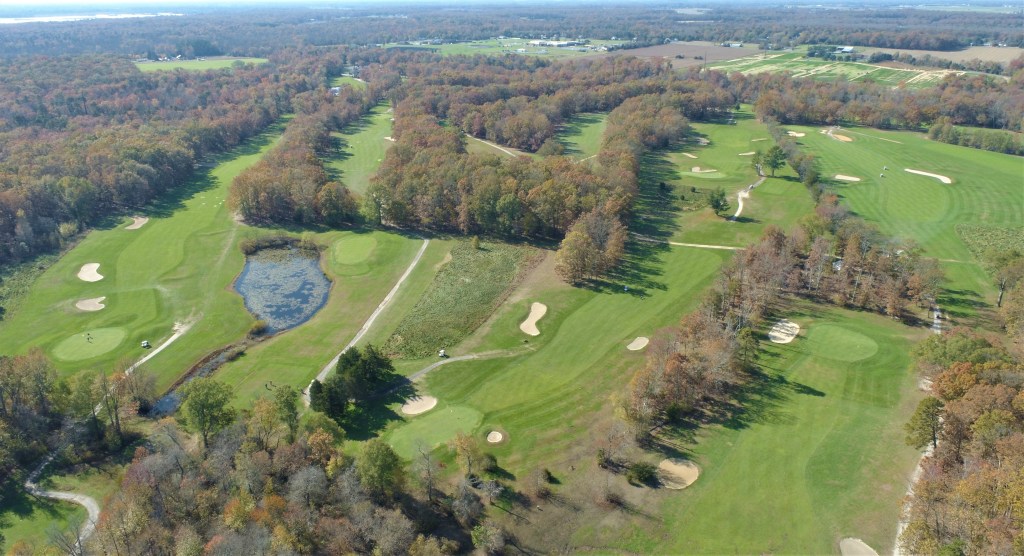
From left to right, 18, 1, 9, and 10 at Centerton

We arrived at the course and made our acquaintances. Tim’s brother and father would also join us, and it was nice to meet them and feel like I was part of a regular group. After chipping and putting on the practice green for a bit, we made our way to the first tee.

While I could not have started the first hole any better – piping my drive down the center of the fairway and making a routine par – it was pretty shaky from there on. I snap-hooked and pulled my tee shots on 2 and 3 respectively, and though I recovered well from 4 through 7, I fought those misses around the remainder of the course.

The first par 3 is a long one. I probably missed this green a cool 30 yards left.

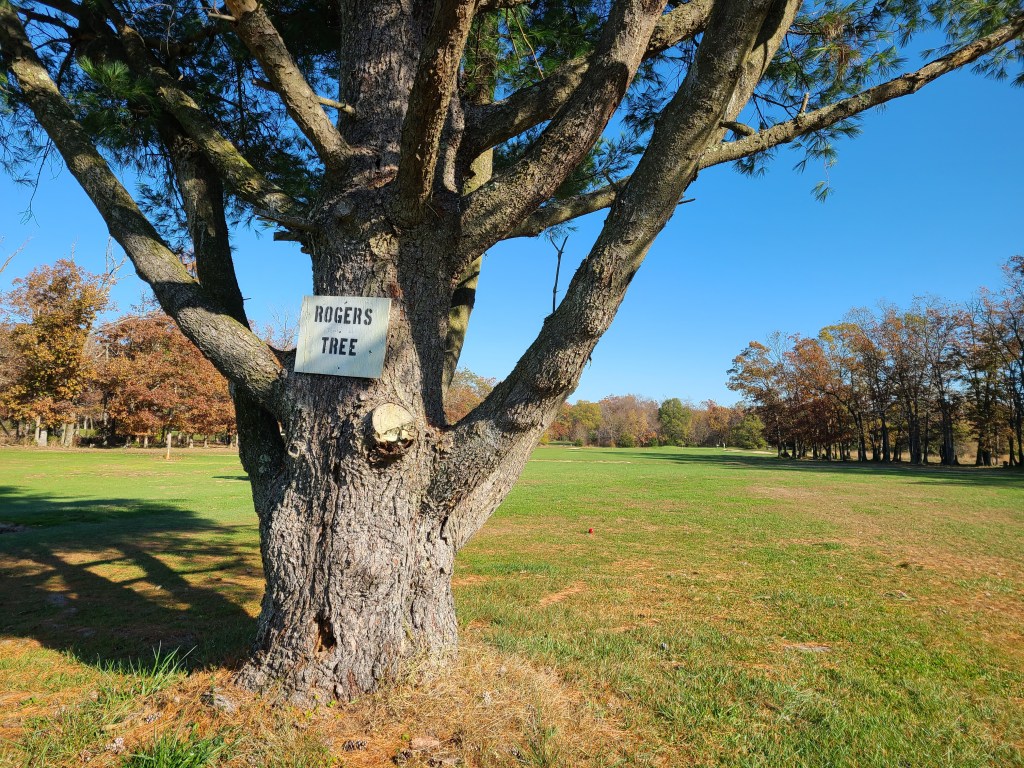
The course is very flat and walkable. There is room to miss, but I wouldn’t necessarily call it a second-shot course. Some tee shots do require attention, like the drives on 2 (which is narrower than most) and 10 (which is a dog-leg right that will require a placement decision). Then, there is the 6th, where a poorly struck tee shot may have you stuck behind Roger’s Tree.

Depending on the tees you play, Roger’s Tree is located anywhere between 80 to 110 yards from the teeing grounds on this straightaway par 4. (OK… so it would have to be a really bad tee shot.) I don’t know why, but I was intrigued by the idea of such a tree.

Roger’s Tree. Or is it The Rogers Tree?

Presumably, it’s a memorial. I’ve seen benches and in-ground plaques that are tributes to those who have passed away or even just member donors. But this one has a relatively crudely thrown together piece of plywood, painted white, with “ROGERS TREE” in black lettering. I’d love to know the story behind it. Who is/was Roger? Did he plant the tree? Was he always hitting it off the tee? If so, did his buddies put the sign up as a joke?

Whatever its history is, I’m glad to have avoided it. I’m also glad to have met up with Tim and his family as I continued my journey.

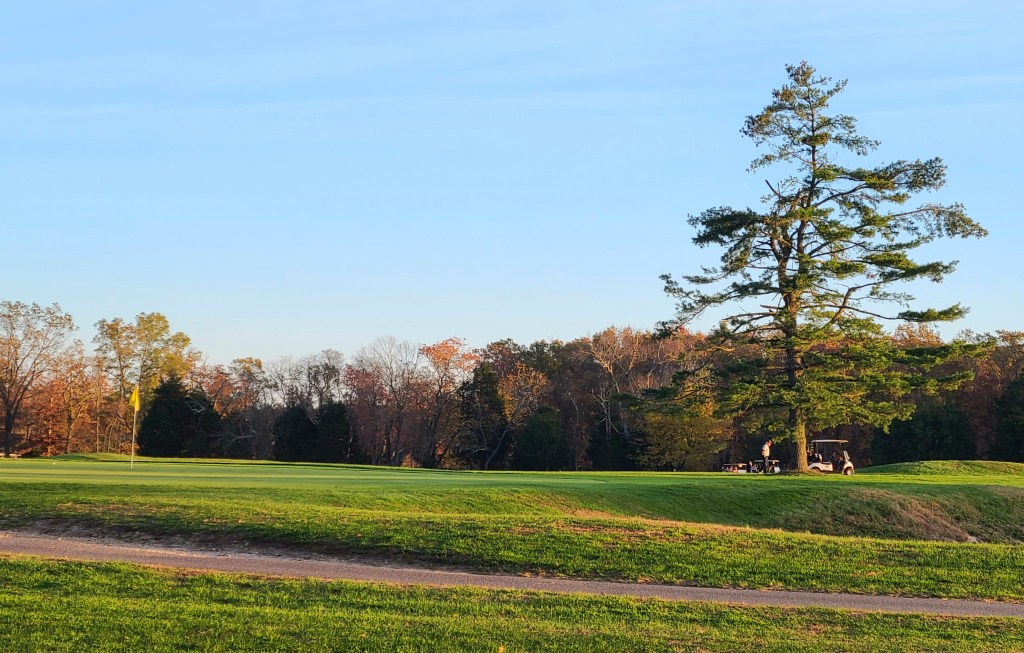
15 green, watched over by a tree that is not Roger’s
Can you spot Roger’s Tree on the 6th?
Number 102 (Centerton Golf Club)

Number 98 (Charleston Springs – South)

Date played: 6/7/2020

It took almost four years, but after playing the North course at Charleston Springs in November 2016, I finally made it back to play the South course. I was invited back by my Twitter golf buddy Walt Blasich who is quickly becoming my tour guide for the best public courses in Monmouth County!

Conditions were beautiful at the North, and the South is no departure. Both layouts are some of the most finely maintained public courses you’ll find in the state. You immediately get a sense of that as you walk off the back steps from the pro shop and look onto the flawless (and massive) putting green.

The putting green is big enough to accommodate all golfers waiting to tee off on both courses

If you love a good golf bridge, you’ll cross one on the long walk to the first tee, a great way opportunity to get your mind in the right place before the round. A short uphill walk through the woods after the bridge, and golfers are emptied out into the clearing that is the South course. Where the North is laid out in links style, forcing golfers to contend with many fescue-lined holes, the South is a sprawling parkland course. Although there are trees to deal with, the fairways are quite generous and there are a number of very open holes.

A walk across the bridge on the way to the 1st tee on the South course

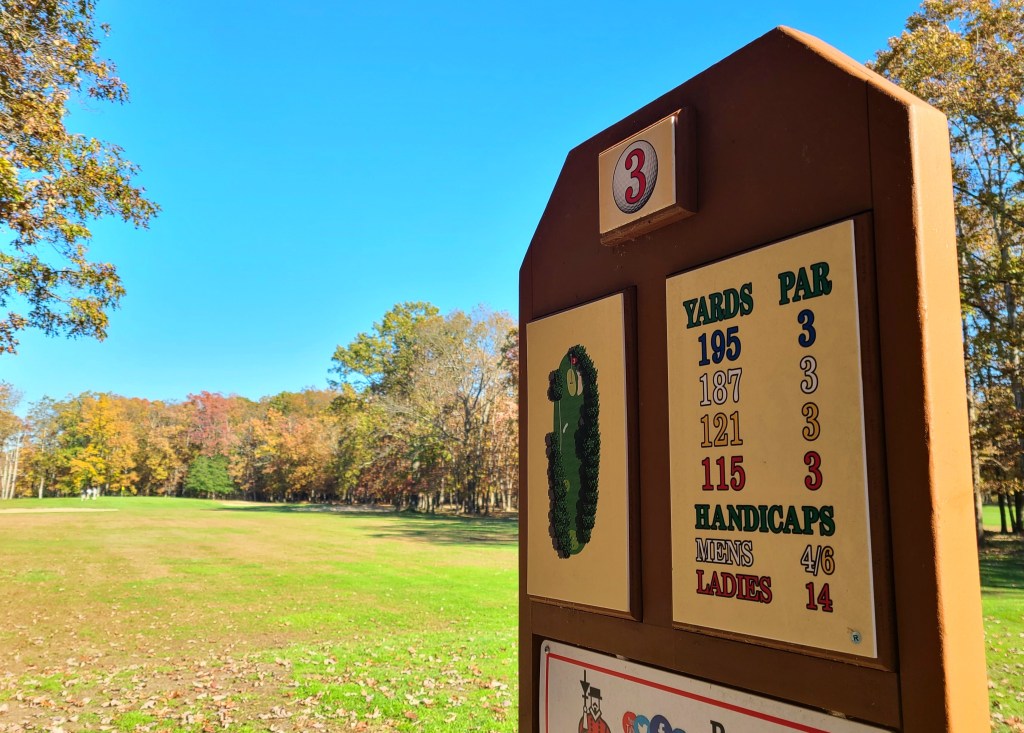
From a design standpoint, the way the 6,377 yards (from the Gold tees) are spread across the 18 holes is done really well. The par 3s play as long as 195, but also as short as 115 on the 11th, something most courses shy away from. Of the twelve par 4s, there are four that play over 400 yards, but then there are also a couple that are drivable for long hitters, like the 294-yd 10th. You might be able to lodge a complaint about the par 5s as three of them are between 499 and 505 yards. But whether it’s differences in the way elevation or direction changes from tee to green, they are each truly unique.

A front pin location on the 11th, with the drivable, par-4 10th in the background

As I mentioned when writing about my time at the North course, Charleston Springs is definitely held in high regard. I don’t know that the South measures up to public resort-type courses (e.g. Ballyowen and Crystal Springs), but I think it would be unfair to put either of the two layouts in that category. Nonetheless, it certainly ranks highly in the very next tier and should be considered a great option for public golfers.

A look back at 18
Number 98 (Charleston Springs – South)

Number 97 (High Point Golf Club)

Date played: 5/15/2020

Golf has a way of presenting you with moments which remind you that you never really have it all figured out. My round at High Point Golf Club would be that moment. While there is no way any of us can see such reminders coming, mine would happen at a time when the world was turned upside-down by something it couldn’t see either.

It was May 2020. The invisible terror that was the COVID-19 pandemic had spent the better part of six months tearing through the world. In New Jersey, the spread seemed to have peaked in early April. After the positive case average remained steady for the month, the numbers were finally dropping in May. Restrictions started to ease, and golf courses in the state began to re-open.

High Point Golf Club was a late addition to my list of courses. Though I started compiling the list in late 2015, I didn’t know High Point existed until sometime in 2019. Though it was surely online somewhere, I forget at this point where exactly I heard about it. Nevertheless, after a bit of research, I confirmed that it was in fact public and made sure to keep track of it. As we came out of the lockdown, it was one of the first courses to make tee times available, and I decided to book a round with my good friend Ed.

Protocols had changed. Out of caution, everything a golf course needed to facilitate public rounds of golf was still being managed outdoors. Golfers checked in with the starter to confirm their tee time and then needed to return to their cars until they were called. After a short wait, we got word that we could head to the first tee.

Hole 1 from the tee. Just waiting for the fairway to clear so I can overdraw one into the water.

The course is situated around a grouping of small lakes, and water features immediately on the opening tee shot. It’s a par 5 where you must land in a fairway area that runs out at about 260 yards. The largest of the lakes runs up the left side, and your approach must cross it to reach the second landing area or the green.

The routing continues from there to wind around and cross over the lakes, and water will realistically be a hazard on holes 4 through 8 on the front, and 10, 14, and 16 through 18 on the back.

The 16th is great drivable par 4. The view from the tee is deceptive, making it seem as though you must go for the green or bust. While the landing area looks perpendicular to the route from tee to green, it actually runs diagonally to provide some room, albeit narrow.

Hole 16, where you decide whether to drive the green, or pump one OB at that house on the right. I know what I’m picking.

The course finishes on two unusual notes and has a couple noteworthy distinctions. The 18th is a par 3 and the course plays to a total par of 73. Both are qualities I don’t remember having seen in other NJ publics to this point in my journey. High Point is also the northernmost public golf course in NJ. Tucked away in the northwest corner of the state in Sussex County, it’s just a couple miles east of the Delaware River and about five miles from the northern border to New York. It is also situated at the highest elevation of any golf course in the state.

As mentioned, my round at High Point would remind me that despite what I thought up to that point, I had not figured out golf. I would enter the round as a 10 handicap, and yet I would post a 106. I put five balls out of bounds, three in the water, and five times, I found a way to three-putt. It would be my highest score since 9/14/2014. “Golf is hard” is not just a hashtag. At times on this quest, it is a sobering slap in the mouth.

Number 97 (High Point Golf Club)

Number 96 (Rock Spring Golf Club)

Date played: 11/10/2019

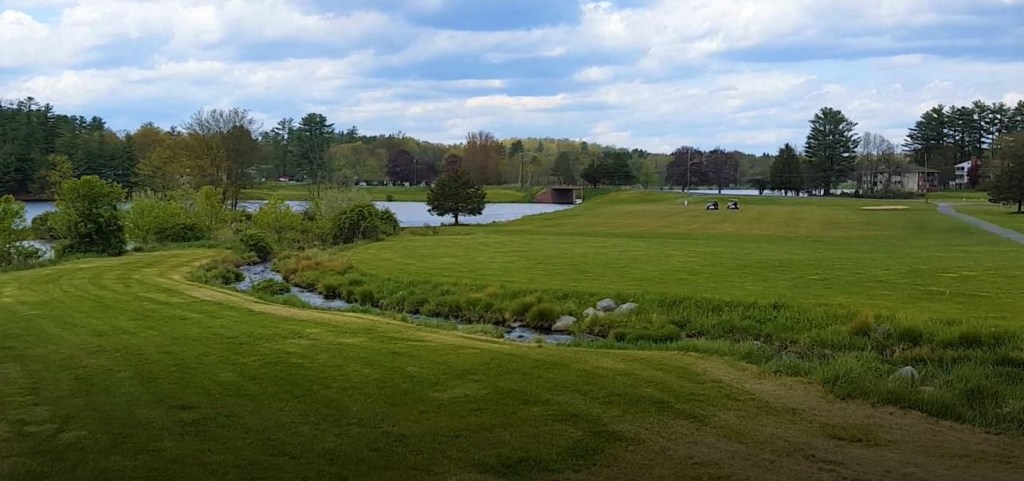
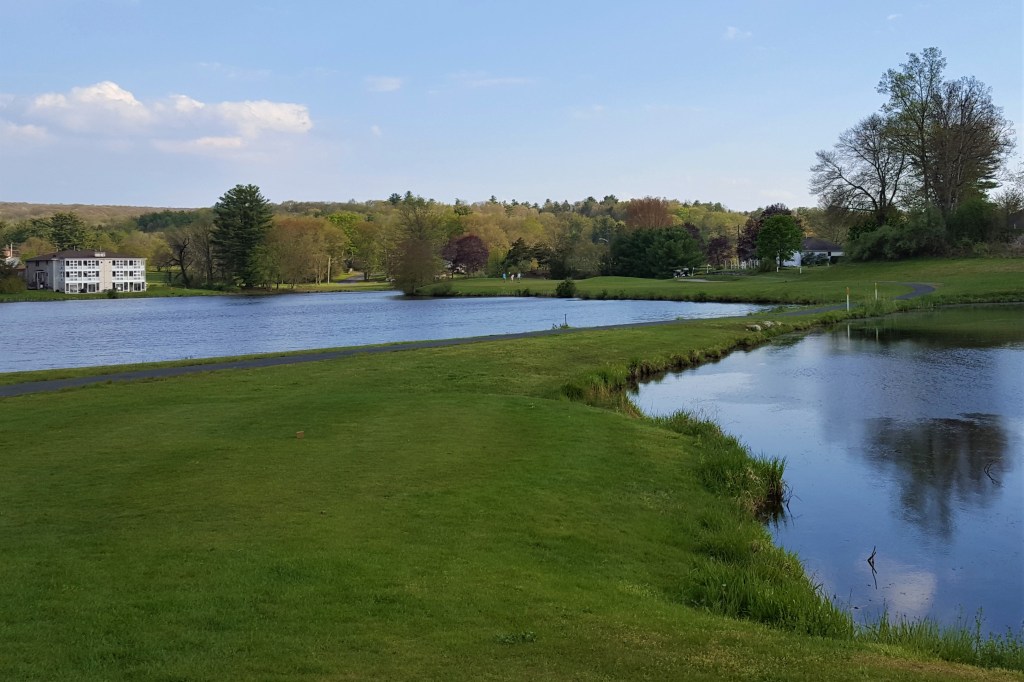
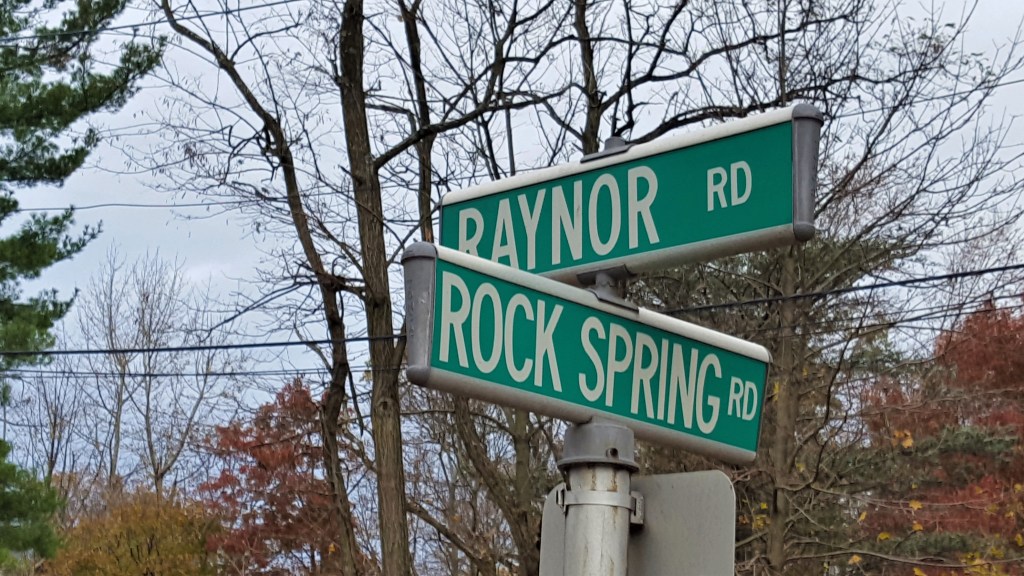
Where Cruz Golf Country Club has its uniqueness in the obscurity of its designer, Rock Spring Golf Club is the complete opposite. Designed by Seth Raynor and Charles Banks in 1927, it was born in in the heralded “golden age” of golf course architecture by very prominent names. Like most Raynor designs in America, Rock Spring was private for most of its existence. A mere 92 years after opening, it opened to the public in May 2019.

Hearing about Rock Spring was my first experience with the grapevine of the golfing world. Other than through social media, I don’t consider myself quite connected to the golf community yet. I don’t have any contacts who work at courses. I’m only just meeting teaching professionals. Given that I’m almost always at new courses, I only play with a couple people “regularly”.

But it seemed like one after another, I started to hear and see the same refrain: “You’ve gotta play Rock Spring”.

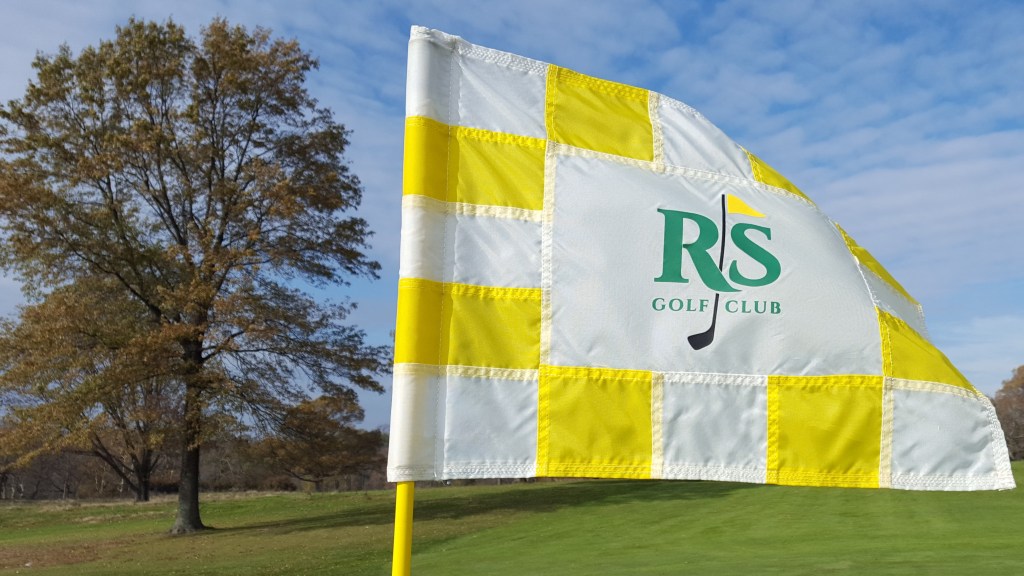
Quality flag game, but is it a “must play”?

A big part of this has to be attributed to the suddenly vanished exclusivity. If Pine Valley opened to the public, you can bet you’d hear about it immediately. That story would likely make any and all golf news outlets. So, the question for me was really, do you have to play Rock Spring?

I have to say, it took some time through the round, but it grew on me. At $89 on a weekend in November for a now-public golf course, it had to live up to that price. At that rate, you’re approaching the finest publics in the state (i.e. Neshanic Valley, the Crystal Springs resort courses, etc.). But I started to appreciate the design elements after a while. I began to see what the course would look like in prime conditions, without the leaves all over the place, and it is a quality course.

Hole 12

The greens had good speed, even for the middle of fall in cold conditions, and they are relatively large. There are plenty of changes in elevation from tee to green, and the holes that play along the side of a hill – like 12 and 15 – are actually some of the most striking.

15 green

Managed by Kemper Sports – the same company who oversees the beautiful Skyway Golf Course in Jersey City – Rock Spring is definitely in good hands. As for whether “you’ve gotta play it”, I’d say ‘yes’, but you’ll have to check it out for yourself!

P.S. If you get there early, and the place looks closed, it’s probably because you parked in the overflow lot. There is actually parking around the clubhouse, which is also where the bag drop is.

How I played…

I actually played pretty well, but putt poorly.

Highlights: Meeting up with new golfers in New Jersey! Shout out to John Boylan for joining me on a cold November morning. Also making the highlight reel are two approaches that I knocked to a foot-and-a-half. (Yes, I made the putts.)

Lowlights: Definitely putting. I felt good on the practice green, but it didn’t carry onto the course.

Number 96 (Rock Spring Golf Club)

Number 95 (Francis A. Byrne)

15 green with the sucker pin position

Date played: 11/3/2019

The 95th public course on my quest is 95 years old at the time of writing, and one that is rich with (somewhat verifiable) history. Francis A. Byrne Golf Course was built in 1926, and legendary architect Charles Banks is credited as being its designer. Some sources say the design was started by Raynor, while others leave this mention out entirely. Other information you can find about the course states that the original purpose of the Byrne course was an expansion of the neighboring, still-private Essex County Country Club, the oldest club (and possibly course) in New Jersey.

Whatever the history and origins of Francis A. Byrne truly are, it remains a great public option in northern NJ. Located a few miles from the Parkway and just off Route 280, the Byrne course is set in the rolling hills of Essex County just north of the South Mountain Reservation. The course is kept in great playing condition and has actually undergone several improvements – e.g. restoring a Biarritz green at the 2nd – since I’ve played it.

A look from the elevated tee box at 9 with the homes in the distance depicts how much the hills of Essex County come into play at Byrne

I made my way around Francis Byrne with my good friend, Ed, who likely is in the lead for “most rounds played together,” not just on my journey, but in my golf career overall. Ed and I started playing golf together over twenty years ago, and our golf games have progressed similarly. We both broke 100, 90, and 80 at around roughly the same times, and while we have different strengths – Ed is a longer hitter, I may be a better short-game player, Ed is the better putter – our handicaps remain very close to this day. It’s been great to have a close friend to not only share the game with, but also to encourage progress.

Ed actually warming up on the putting green instead of just taking pictures of it, which may explain why he’s the better putter

There are plenty of golfers who enjoy time on the course with friends, without really worrying about the quality of their collective play. I respect that, and I think that can be a lot of fun. Ed and I both approach the game with an ambition to become better players, and we push each other both directly and through each other’s accomplishments.

Another downhill tee shot to the par-3 14th

Our fall afternoon round at this historic New Jersey public was relatively average for both of us. My poor play off the tee was offset by some very good scrambling and putting. I would putt only 24 times for the round, by far my lowest total. We walked off the 18th green at dusk, content with our rounds, and satisfied in having tackled another NJ course together.

Though a rare feat, I had the additional satisfaction of having outdriven Ed on that last hole.

Number 95 (Francis A. Byrne)

Number 94 (Scotland Run)

Date played: 9/19/2019

My third visit to Gloucester County for golf was courtesy of an invitation to the 2019 Grint Tour Championship by Chuck Wanamaker. The GTC is an outing of users of The Grint – a score-and-stats-tracking and GPS app – held at a South Jersey public course. In 2019, the venue was Scotland Run.

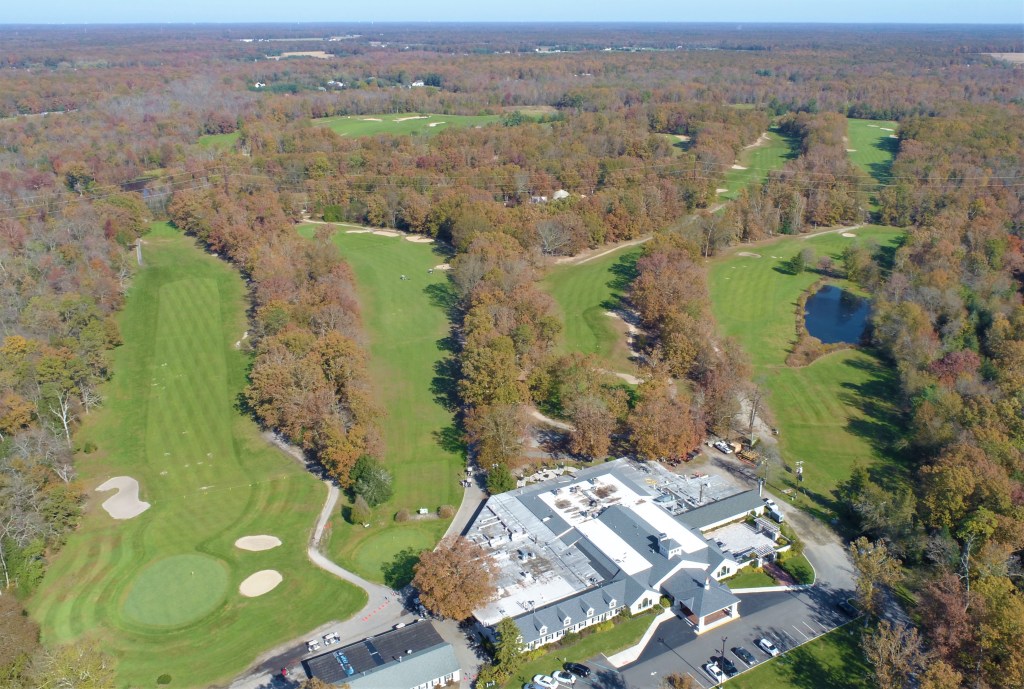
Situated just a couple miles east of Rowan University, Scotland Run is a gorgeous layout set on sandy terrain. While sights from the clubhouse will evoke a links-style feel, the course has a great mix of holes, especially around the perimeter.

Plenty of contoured greens at Scotland Run, like the 9th here.

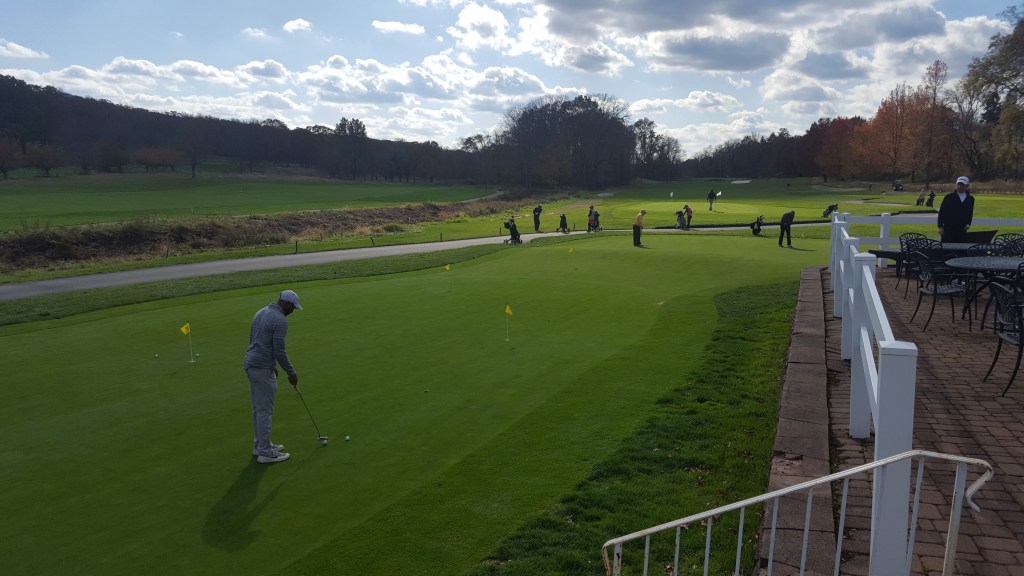
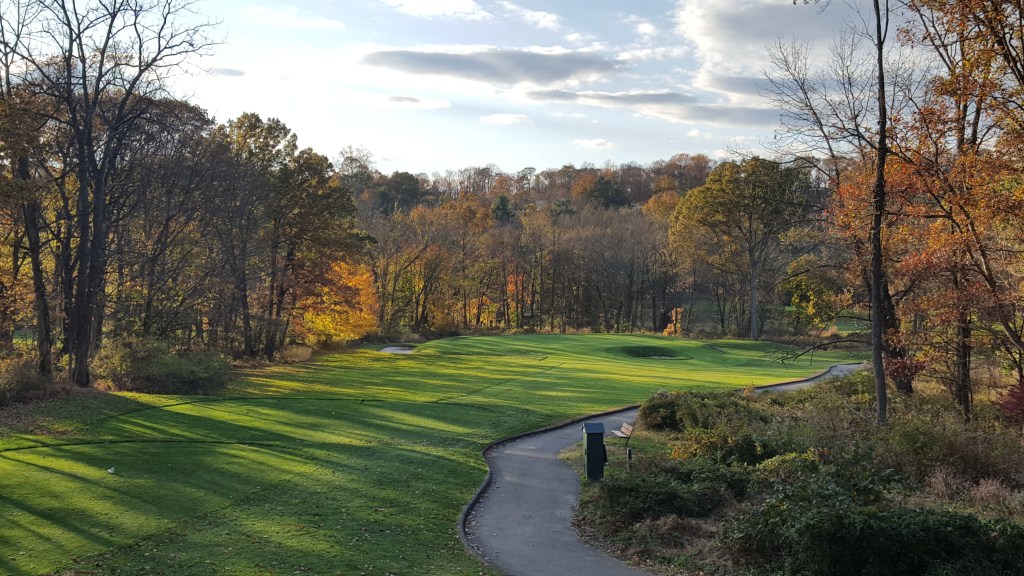
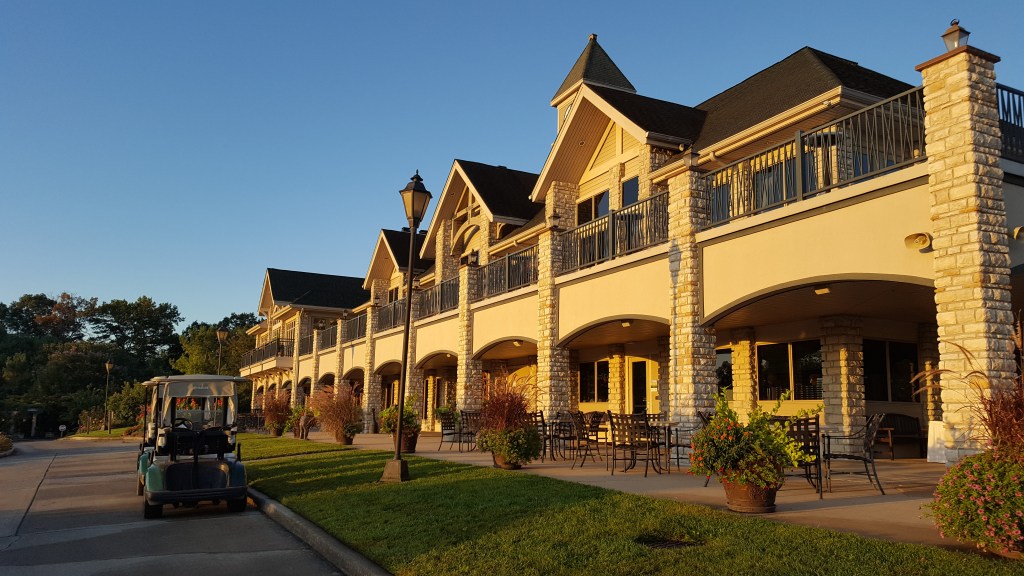
As we waited to tee off for our early morning round, the sun drenched the clubhouse in gold. Views of the ninth green and the first fairway were equally stunning, the quality of their design and condition highlighted by the sun’s rays. Though the front nine has a number of bright spots, I found the back nine at Scotland Run to be the better half.

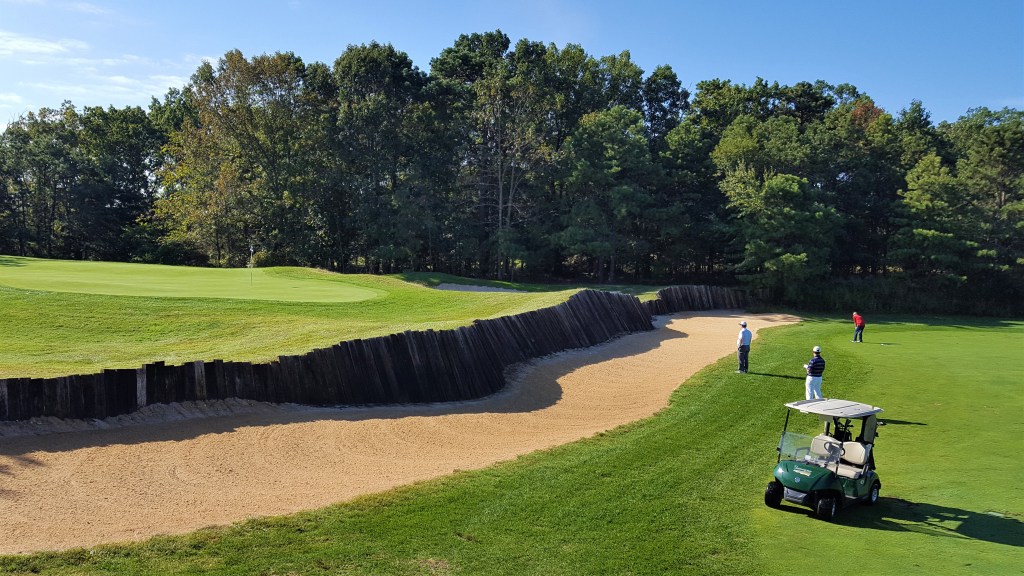
The 10th is a wide, straightaway par 5 that can be reached in two. However, those that opt to do so should make sure they can carry their approach to the raised green complex. It’s guarded by wood pilings that will ricochet short shots in unpredictable directions, as well as a “warning track” bunker, both of which span the width of the fairway.

If you’re gonna lay up on 10, make sure you’re laying up. Otherwise, you deal with the warning track.

The 11th is a short par 4 that has a fairway that’s split by a waste area just as you reach the green, which will force a club choice decision on the tee. The 12th and 13th both bring water into play as they round a large pond, with 13 being a medium-length par 3 that is almost all carry. But the real memories of Scotland Run will be made in the finishing stretch, which is one of the best in public golf in New Jersey.

The 16th can easily be called Scotland Run’s signature hole. You’re presented with a tee shot that looks almost perpendicular to the fairway landing area, positioned at the other side of a wide gully to cross. As if your focus isn’t shaken enough by the visuals of the hole, at the bottom of the waste area, you’ll also see a plane. That’s right, an actual plane!

“Look, boss! It’s the 16th at Scotland Run!”

Moving on to the 17th, you’re confronted with a long par 4, playing at 421 yds from the white tees (two up from the back). The finishing hole is an uphill par 5 with water right that threatens your tee shot, and a snaking fairway from there to the green.
I had as many strokes in the last three holes as I did in the 15 that preceded them and wouldn’t fare well in the outing because of the poor finish. Nevertheless, Scotland Run was etched in my memory as a “must play” public in New Jersey and I highly recommend it.

Number 94 (Scotland Run)