When a golf course uses the ‘CC’ abbreviation in its name, it’s clear that’s short for “Country Club”. When “GC” is used, there can be slight uncertainty as to whether it’s “Golf Course” or “Golf Club”. The 76th course on my journey seems to have a more complex issue with its name.
According to the website (knollgolfclub.com) the facility is named “Knoll Golf Club”, and there is an East Course and a West Course. That is of course, until you click on the East Course info link. Then, it’s “Knoll East Course”… but also “Knoll East Golf Club” approximately two words later. When you pull up to the clubhouse, the sign reads “Knoll Country Club East”. When you get your scorecard, it says “Knoll CC – East Course”. Others may call it “Knoll East Golf Course”, or simply “Knoll East”.
Now that we have that settled…
Knoll East – which is what I’m gonna go with for brevity’s sake – is the public half of the Knoll facility. Located in Parsippany – Troy Hills, the course is a shorter one, tipping out at just over 5,800 yards. What it lacks in distance though, it makes up for in personality.
Bombs away on the 1st!
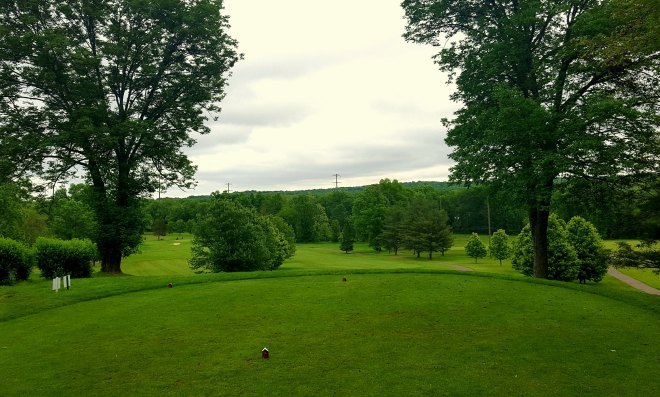
The clubhouse is the highest point on the property, which makes for great elevated tee shots on both the 1st and 10th holes. That also means challenging approaches on the 9th as well as the 18th, where the back-to-front sloped green can end a round on a three-putt low note.
The 5th is a demanding par 5 that requires playing to a distance off the tee and then navigating a chute on the approach shot(s). There are a couple fun short par-4s in the 7th and 11th, and the 12th is a straight-forward par 3 that might instill some doubt with thoughts like “don’t be left OR right”.
The 12th is a scoring hole. Just don’t be left. Or right.
Whatever you decide to call it, Knoll East is nice stop for public golf in Morris County.
How I played…
While there were some birds in a nest on the exterior wall of the pro shop, unfortunately, there were no birdies on the card. That didn’t stop a good time though.
Highlights: Played +3 on an eight-hole stretch from 7 to 14.
Lowlights: You know that three-putt low note on 18 I mentioned? I write from experience. Also, the 5th hole ate me alive.
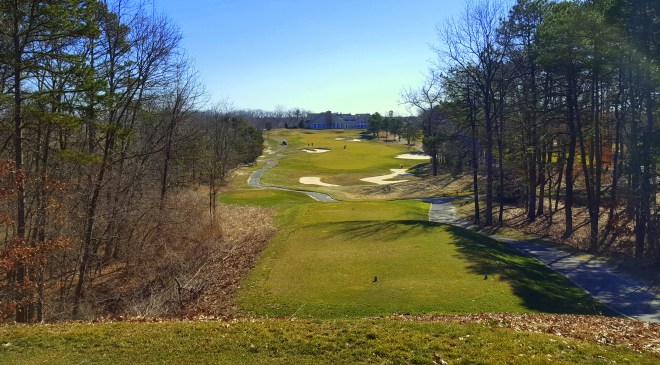
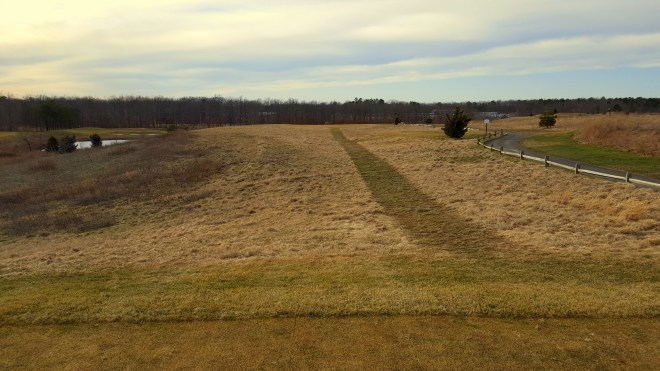
From this vantage point, you are standing on the Links, looking across the Pines, eventually out to the Ridge in the distance
Date played: 3/17/2018
My journey took me to Eagle Ridge Golf Club after one of my best friends invited me to a golf outing. Located in Lakewood, Ocean County, Eagle Ridge is a facility with three distinct nines, named (or at least supposed to be) for their differentiating topographic and architectural features: Ridge, Pines, and Links. Interestingly, while the holes are numbered from 1 to 27 – Ridge 1-9, Pines 10-18, then Links 19-27 – the nines are all handicapped as individual nines. As I mentioned about my time at Flanders Valley, to me, this is a defining characteristic of considering the course as separate nines, as opposed to an 18-hole course and a 9-hole course (or in the case of Flanders, four 9-hole courses as opposed to two 18-hole courses).
The Shamrock Shootout (still the best name for any sporting event on St. Patrick’s Day) was set to be a 2-man scramble with Stableford scoring on the Ridge and Pines nines. If that would hold true, I don’t think I could’ve counted them as complete on my quest. Scrambles are fun, but playing them is not the same as playing your own ball, where you get a sense of the challenge of a course and its setup. Thankfully, we would be playing with some golf buddies of my friend, who were more than amenable to having us all play our own ball and enjoying the round.
The 18th at Eagle Ridge, coming out of the Pines
Pines (73)
The scramble began at 9:00 am with a shotgun start, which meant our round started on the par-3 16th of the Pines nine. Playing a course out of order is always an appealing change in principle – like my time at Beaver Brook – but it definitely leaves you wondering what the experience would be like on the normal routing.
The Pines is named for the trees that line most of the nine, though there are areas that open up, such as the 18th fairway, and an attractive set of approaches for the 12th and 14th greens around a pond. There is a good mix of both tight and wide landing areas, and you will need accuracy to score well here.
The 5th is a dog-leg left par 5, playing to the bottom of the Ridge
Ridge (74)
The Ridge nine plays as something of a ridge-and-basin layout. The “ridge” would be the outskirts of the Pines along the long par-5 7th and the bottom of the “basin” would be the body of water along the green of the par-5 5th. However, the slope across holes is gradual, making it more of a “side-of-a-hill” layout.
In general, the Ridge plays far more open than the Pines and is therefore much more forgiving. I’ve mentioned before that it’s difficult for me not to enjoy or appreciate a layout when I’ve played well, and I played some of my best golf on the Ridge nine. I think of it as something of an ideal course. There is beauty in its elevation changes, there is character in its greens, and it’s almost impossible to be penalized by a good shot.
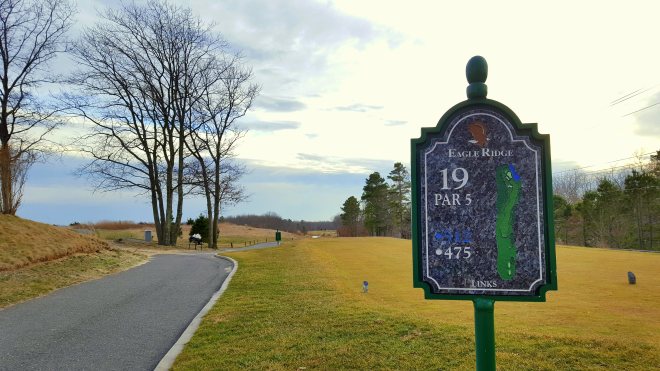
Welcome to the 19th
Links (75)
THERE’S AN ACTUAL 19TH HOLE! As I mentioned earlier, the Links nine are actually marked both on the card and the course as holes 19 through 27. I also alluded to the fact that, while Ridge and Pines are appropriate descriptions for those nines, I don’t think “Links” accurately describes its nine holes. There isn’t much on offer at the Links that you don’t see at the Ridge. The Links nine are spread out over a much larger plot of land, so you do have vast grown-out areas between some holes, but there isn’t anything that really offers a “links” feel.
By far the most interesting hole on the Links is the 25th. A short par 4, the landing area for the tee shot is blind, requiring a stone at the end of a plateau as a target. The fairway is generous, so most tee shots will land safely, but the approach is 90 degrees left, almost entirely over water.
The 25th green is on the left in the distance, but you’ll need to aim over the stone at the end of that walking path
Eagle Ridge as a whole…
Apart from the two-out-of-three-ain’t-bad naming for its nine-hole courses, I rank Eagle Ridge highly among the public courses I’ve played so far. The course’s condition is more than worth the in-season rate of $86. Also, I’m not sure it applies all season, but I was able to get a great replay rate of $25 for playing the extra nine, which would be a great touch for a great course.
How I played…
Pines-Ridge wrap-around: Poorly on the pines, remarkably on the Ridge. The highlight would definitely be the lack of a three-putt hole.
Links: Meh. Pressed for time, I was in a bit of a rush to get done and get home, but that’s no real excuse. I played mediocre golf.
A Tillinghast design brought to life in 1929, Old Orchard Country Club takes its name from the apple orchard it was built on. Located in Monmouth County, the course prides itself on a sense of family and community. While there weren’t many golfers on the course on a cold February day, that’s certainly the feeling I got when listening to conversations at the pro shop.
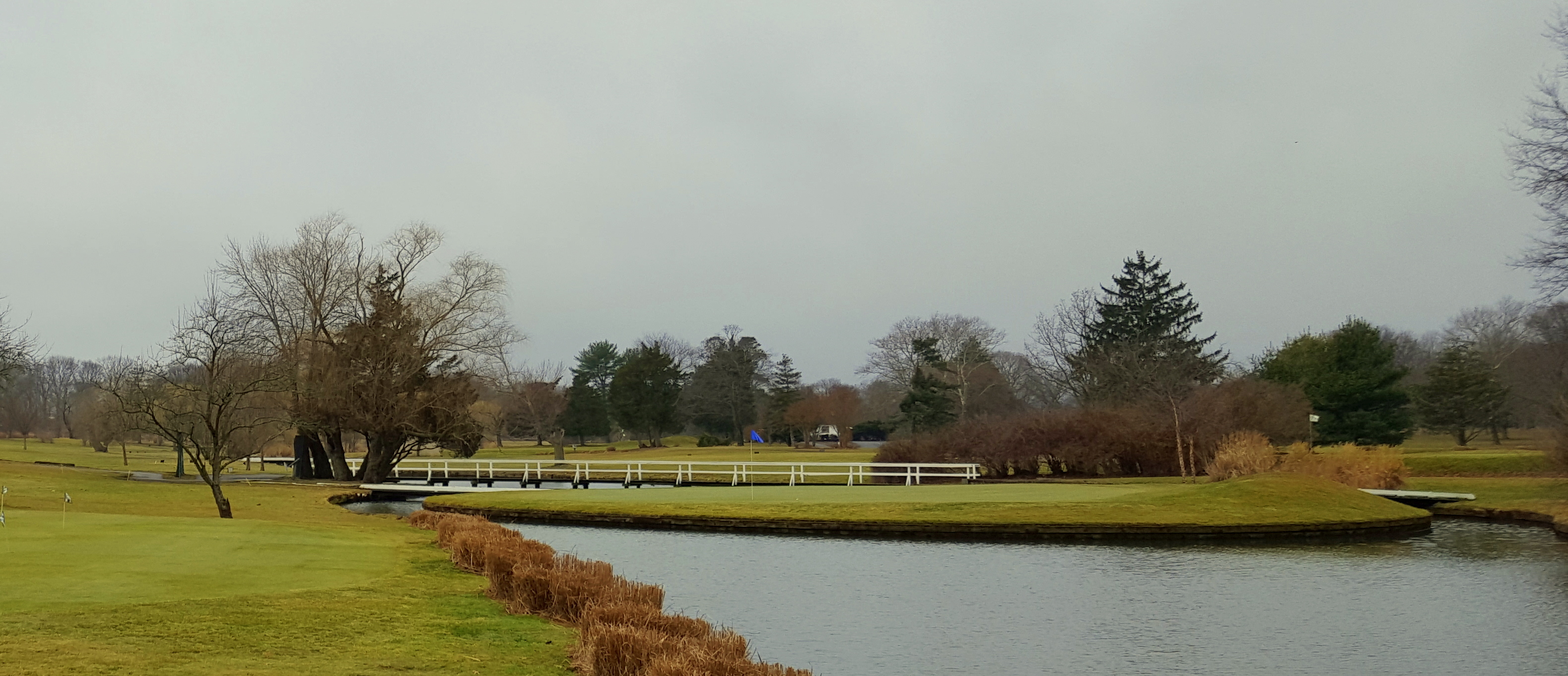
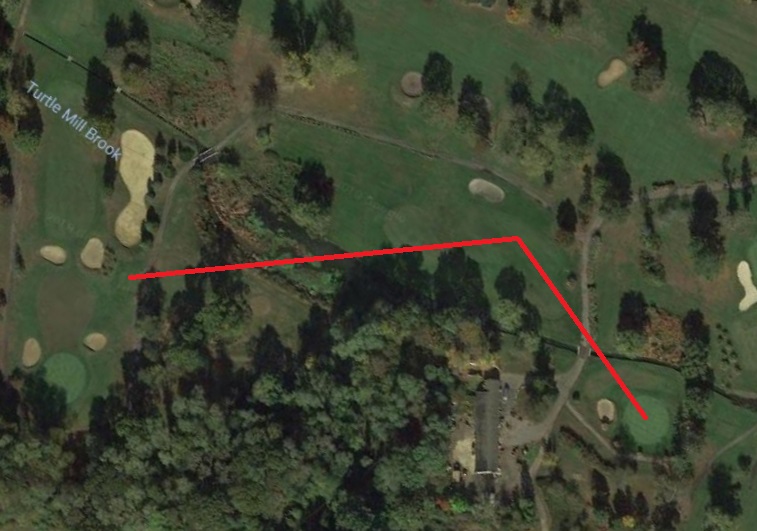
The front and back nines of the course are split in two by Turtle Mill Brook, which widens to surround the island green of the signature par-5 7th hole. The overall layout can be thought of as a butterfly, with the body running along the brook through the 9th fairway, and each nine as its two wings.
The routing traces the outer edges of the wings and then back inward. The front nine takes you around the southern perimeter of the course and back to the clubhouse along the brook. The back nine then runs around the northern edge and back inward again, but not before making an interesting stop at 13.
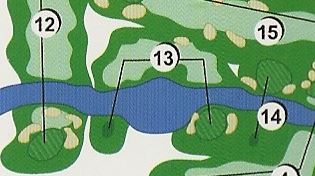
Scorecard artist’s rendition of 13…
On the scorecard layout depiction, even though it’s a par 4, the 13th hole looks as if it plays in three shots like a C-clamp. I’m not sure if tee boxes have been moved since that layout was drawn, but in reality, it’s a relatively easy (14th handicapped) two-shot hole where you can play a mid or long iron off the tee and be left with a scoring club into the green if you find the fairway. The brave can even try to carry the trees right and go for the green off the tee, something one of my playing partners for the day did with decent success.
… 13th hole in reality.
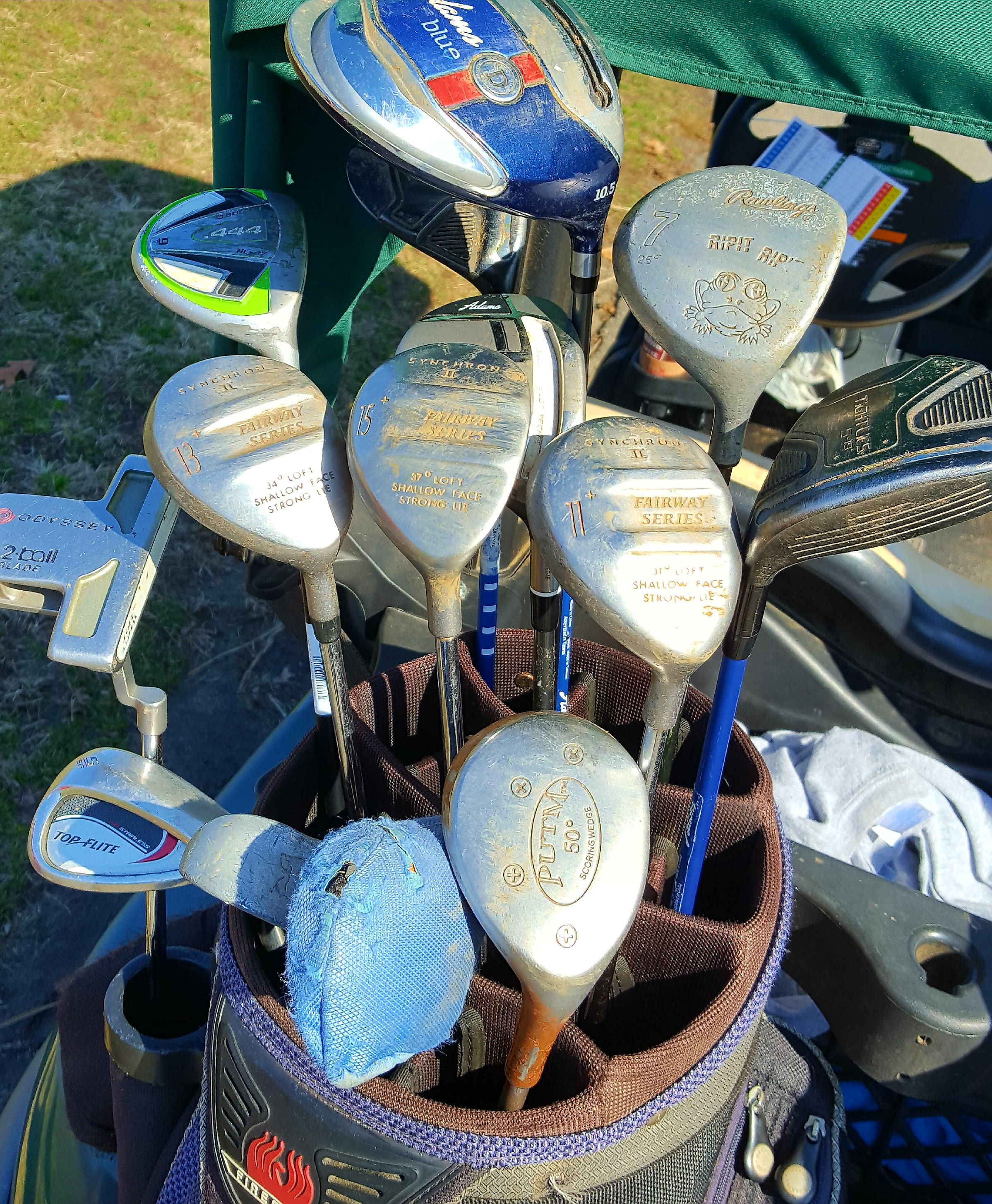
As I’ve mentioned before, part of the fun of this journey is meeting other golfers around the state. At Old Orchard, I joined a threesome of regulars who were great company, one of whom had what was easily the most interesting bag of clubs I had ever seen. There were nine fairway woods! That included an 11w, 13w, 15w, and a 50-degree “scoring wedge” (but definitely a wood).
Best. Bag. Ever.
The story goes that he had a bad bout of the shanks during a golf trip down in Myrtle Beach. He noticed the fairway woods for sale in the pro shop, and the rest is history. Well, at least local golf history among Old Orchard regulars, and in the playing of the 72nd public course on my quest.
How I played…
Pretty ******* terribly. It had been my first round in a month, and while I hit eight fairways, I really didn’t do anything else well. Having hit four GIR, I was 0 for 14 scrambling. Other than good company, it was a round to forget.
Arriving at Ash Brook at 2:40 pm on the winter solstice, daylight was at a premium. Lucky for me, I was only looking to play the pitch-n-putt course to wrap up my three-course day.
Pitch-n-putt golf will always hold a special place in my heart because it’s how I learned to play the game with a group of high school friends. I discovered the Ash Brook pitch-n-putt when I played the regulation course in 2015. It seemed like a sequestered practice area, and I didn’t give it much thought beyond that, but this was also about six months prior to realizing that I would want to play every bit of public golf in New Jersey.
A nine-hole course spanning 673 yards, there is no hole over 100 yards. Depending on a golfer’s ability, there may be a couple holes where you’re taking a full wedge shot – like the uphill, 92-yard 1st – but most holes will be “feel” shots from the tee box.
A look at the 2nd hole. Even though you’ll tee off from mats, you will appreciate the quality of the maintenance on this short course.
Which brings me to the one point of disapproval most golfers will have with the pitch-n-putt course; it plays off mats (the horror!). Personally, I don’t mind. It certainly isn’t good practice for ball striking, but the pitch-n-putt isn’t about that. This is really a place for beginners and younger players to learn the game. And with that in mind, I have yet to play at a better place than the Ash Brook pitch-n-putt.
Beyond the mats for tee boxes, the course is in immaculate shape. The greens are expertly manicured, with clear distinction to the fringe and again to the rough. The rough around some of the holes will be a true test, especially for someone learning to play the game. There is a mix of level holes and a few with elevation changes. It is remarkable what they squeezed into this plot of 700 yards. Again, you would be hard-pressed to find a better pitch-n-putt facility. All of this for a twilight rate of $7 on a December afternoon.
Beginners will learn to hone their tee-shot accuracy as the well-grown rough is a deterrent.
There are some who might argue that this shouldn’t count as a course on my journey. Whether it’s the mats, or the overall lack of yardage and minimal club choices, there are reasons “this isn’t real golf”. That may be true. For me, it’s somewhere the game – or at least some semblance of it – can be played, and it’s open to the public. And for that, it will be counted as Number 71.
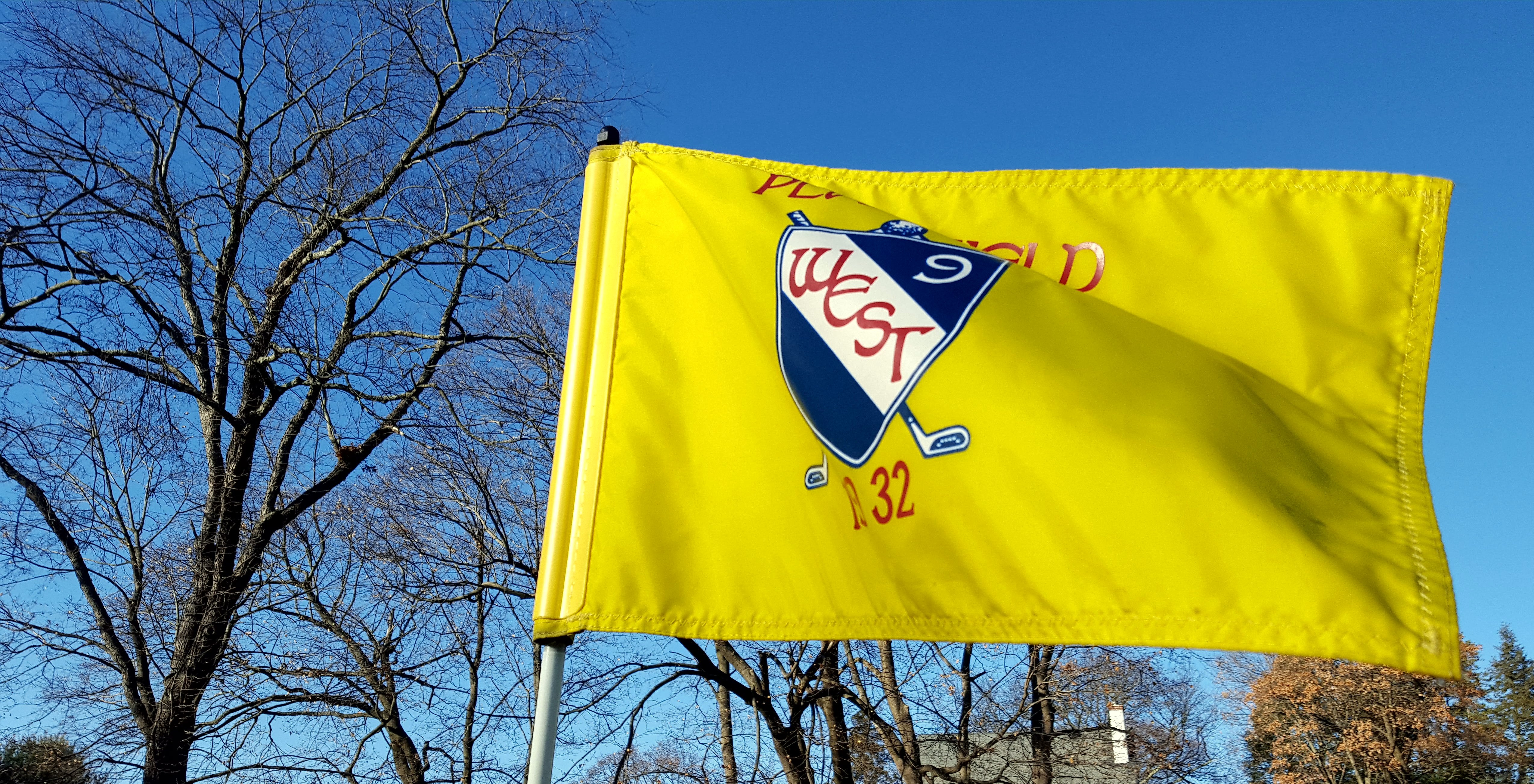
I arrived at Plainfield West 9 from the Galloping Hill Learning Center Nine just after noon. Still cold in the middle of the day – which is no surprise on the winter solstice in New Jersey – I headed into the pro shop to see if I could get on the course. The woman behind the counter was kind enough to let me know that I could save a few bucks if I waited until 12:50, and I obliged.
I didn’t mind waiting, as it gave me a chance to warm up for a bit and charge my phone. While inside, I learned that the “West 9” actually offers a membership that includes the ability to occasionally play the distinguished neighboring Plainfield Country Club. I also heard accounts of how the West 9 course served as something of a practice facility for professionals in the week leading up to The Barclays in 2015, with the players setting up ad hoc holes, teeing off from one hole and playing to another, just to lengthen the course.
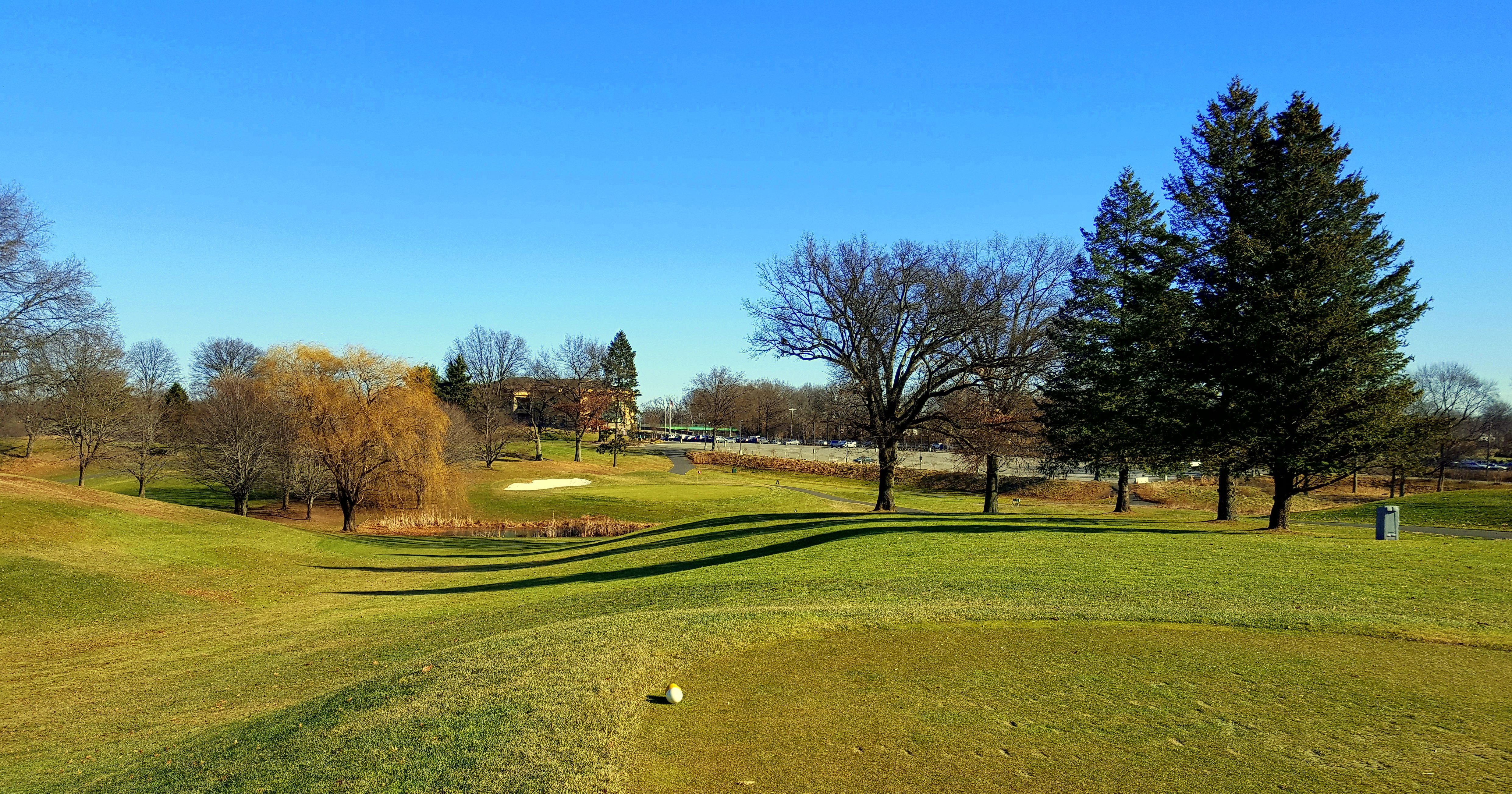
Inspired by the stories of recent history, it was time for me to get to the first tee. The West 9 starts off with two long par-4 holes, the 1st being a slight dog-leg left, and the 2nd a slight dog-leg right. Caution is warranted on the 1st tee in that, if you’re trying to shape your ball right-to-left to accommodate the dog-leg, anything pull-hooked will end up OB on Woodland Avenue. The 2nd is more forgiving, with only a few trees lining either side of the fairway.
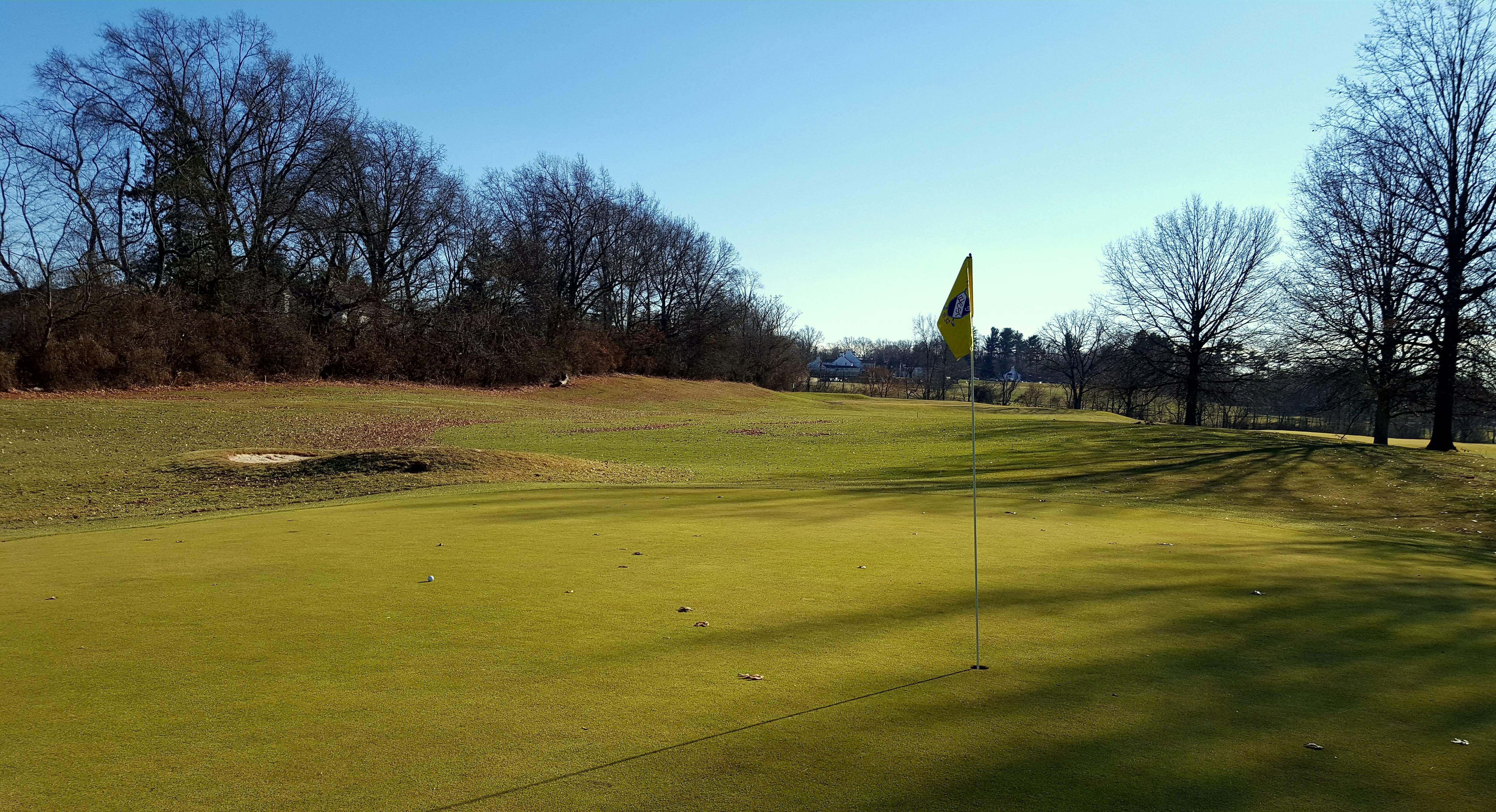
The 3rd hole is the first of three par-3s on the course. Teeing off just beside the club house, it’s the shortest of the par-3s, but it plays a considerable amount uphill, with the green sloping back to front. Anyone moving the ball left-to-right would have to be cautious of the bunker that is front-right, as well as the drop-off to the cart path all along and around the right side of the green mound.
At only 241 yards from the “back” tees, the 4th is a short par-4 and the second-easiest hole of the nine. Its only protection is a bunker front right, but it is deep and does have a lip that rises above green-level which could provide some challenge.
Looking back on the 4th from the green. Though it looks small and unimposing from this angle, the greenside bunker is actually relatively deep.
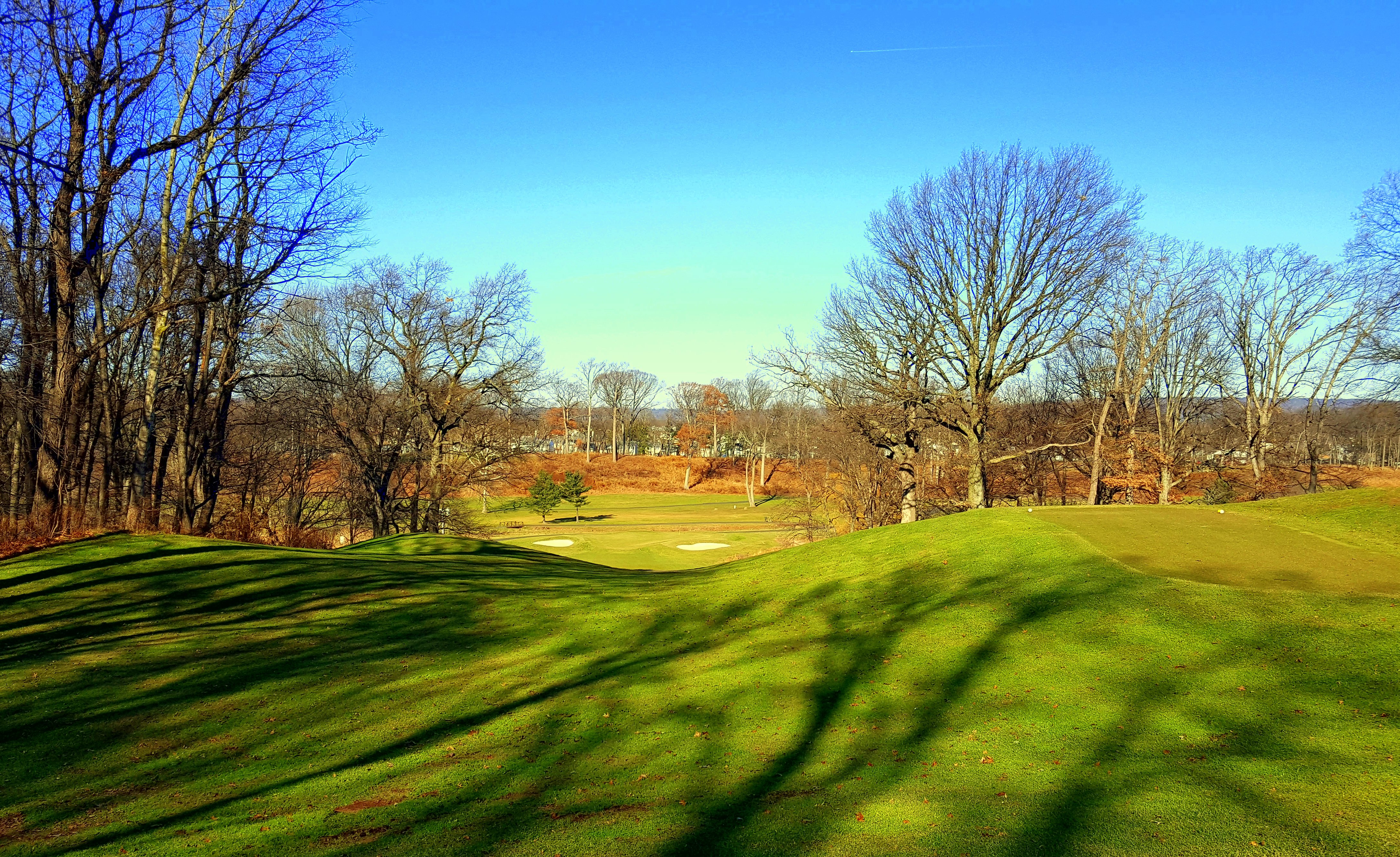
The 5th is a mid-distance par-3, and it has trouble – AKA backyards – to the right. Club selection and shot choice will be keys to playing this hole well. Turning around and heading back the other way, the 6th hole is probably the most interesting of the par-4s, playing blind over a ridge that runs across the fairway at about 200-250 yards from the tees.
If you miss the 6th fairway right, you’ll have to contend with a lone tree that sits atop the ridge. If you miss the fairway left, the left rough slopes right to left and bad bounces could put you at the bottom of this hill, leaving you with a partially blind second shot.
From the 6th green you need to walk back uphill to play the longest of the par-3s, the downhill 7th. While on the card at 189 yards, the drop probably has it playing around 175, with pretty forgiving surroundings. There is a bunker left and short, but you have to miss the green by 10-15 yards to find yourself there.
Coming home, the 8th and 9th are both short par-4s, but the greens on these two holes are like night and day. The 8th green is small, but offers little in the way of contour, whereas the 9th is larger, but easily the toughest green on the course. It sits on a mound, and slopes left to right, dropping off severely as it approaches the right-side fringe.
I played Plainfield West 9 in +6, bogeying everything except the three greens I hit in regulation (4, 8, and 9). Go figure.
Playing the course not only meant the second of my three courses of the day was complete, but also that all seven Middlesex County public courses were checked off the list, joining Hudson, Hunterdon, and Somerset as completed counties on my journey.
A great place to learn the game, I would recommend the Plainfield West 9 to beginners and golf regulars alike. Apart from the holes on the perimeter, the course plays very open with little trouble with which to contend. Its greens are reputed as some of the best in the area, and they were in very good condition even in December. The walking rates are great and there are good deals on afternoon tee times through GolfNow.
This is a perfect course that fits the spirit of the USGA’s “PLAY9” campaign, and if it isn’t already occupied every spring, summer, and fall with people getting in nine holes before or after work, it absolutely should be.
Having finished a day of three courses (Bel-Aire Par 3, Bel-Aire Executive, and Spring Meadow) just a few weeks earlier, I had it in my mind again to get in as many courses as possible. Though cold, the December weather was great for golf and I knew there would be almost no one on the course (well, no one on any course really). I decided to head to the Union County area as there were a few courses in mind that are relatively close to one another. My first stop was The Learning Center Nine at Galloping Hill.
I got to play the regulation course at Galloping Hill earlier in the year, albeit with a busted wrist. It is reputed as one of the nicest courses in the area, with its well-maintained facilities and remodeled clubhouse overlooking the Garden State Parkway. I would say nothing to disagree with this notion. The course does well to maintain this reputation all year long, and it was looking no-less lovely when I showed up on this December morning.
Some may be able to remember that – prior to the renovations that included the building of the Learning Center – there was actually a pitch-n-putt course on that area of the property. The Learning Center Nine starts its routing near the clubhouse, runs along the left (south) side of the front nine of the regulation course, and finishes just alongside the new driving range where the actual Learning Center is.
Your round at the Learning Center Nine starts with a walk up to the top of what presumably is the actual Galloping Hill. The 1st hole plays into a miniature valley with your approach shot coming back uphill, while the 2nd is uphill the whole way, its green being just about the highest point on the property.
The 3rd hole is easily the most fun of the nine. Teeing off from the top of the hill, it’s a short par 4 that must be around a 40-foot drop to the green. Decent players probably won’t need driver for any of the nine holes, and unless you’re trying to putt for eagle, you certainly won’t need it here. If you’re going for the green though, just don’t lose it short right as there is a small pond about 50 yards out.
The tee box on the 3rd. It’s all downhill from here.
After the 3rd, the Nine alternates between par 4 and par 3 holes. Holes of note are the par-4 6th, which is a hard dog-leg right teeing off from the woods, and the finishing par-3 9th, which needs a well-struck tee shot to clear water about 15 yards short of the green.
Much like the courses at Bel-Aire, the Learning Center Nine offers a great way to enter the game of golf or even a place to get in a practice round. At just over 2,300 yards from the back tees, it also plays just shy of 2,000 yards from the forward tees for youngsters who are just picking up the game and are looking for situational practice outside of the driving range. At $20 to walk, you can likely find cheaper places to play, but you get great value for the condition and challenge of the course.
With only one GIR to my name through the nine holes, I was lucky to get away with a 9-over 42. Regardless, it was the start of another all-golf day, and I was eager to continue to my next venue, the Plainfield West 9.
Rounding out a short winter day of golf after taking in the 27 holes at Bel-Aire Golf Course, I decided to see if I could walk on somewhere and finish another 18. Lucky for me, this area of Monmouth County abounds with courses, and Spring Meadow was able to get me out right away.
Less than two miles from Bel-Aire, Spring Meadow Golf Course is a short 18-hole layout, playing just over 6,200 yards from the back tees. Having walked and carried at Bel-Aire in new (uncomfortable) golf shoes, my heels and Achilles tendons were shredded. Lucky for me, one of the guys I got paired up with let me offer him cash to split the cart fee he paid to ride along with him.
Noteworthy features of Spring Meadow include:
The routing. Holes 1 through 4 take you in a counter-clockwise circle back to the clubhouse. After teeing off at the 5th, the furthest point from home are the 10th through 14th holes before making your way back. Reminiscent of places like Beaver Brook where you don’t make the turn at the clubhouse.
Good greens. Even in the winter, they rolled really well. My playing partners for the day assured me that they were definitely faster in the summer months, which would be saying something.
The 15th. A short par 4 from elevated tees, this is just a fun hole with a classic “do I go for it” tee shot dilemma. I imagine that what happens on the first fourteen holes “drives” this decision for most people (see what I did there?).
A look back from the 15th green out to the elevated tee boxes in the woods
While I had an odd, hot-cold putting round – an average 34 putts that included four 3-putts – I hit way more greens than I normally do, allowing me to shoot +10 (+6, +4) from the 5,769 yard white tees. It was great to shoot below my handicap, but much like at the Executive course at Bel-Aire, that is definitely to be expected when the slope/rating is 67.7/117. That +10 amounts to a 13.8 adjusted differential, but that is still great for me at this point.
Forty-five holes done, and with the sun starting to say its goodbyes for the day at just after 4:00 pm, another great day of winter golf was in the books. I thoroughly enjoyed my time at Spring Meadow, and would love to see it in other seasons.
Just coming off a miserable three-putt finish on the 9th of the Par 3 course, I immediately went into the pro shop to pay for a round on the Executive course. Much like the Par 3, the Bel-Aire Executive layout plays very short overall, at only 3,201 yards from the “back” tees. Like most executive courses, the lion’s share of holes is par 3, with six par-4 holes that bring par for the course to 60.
I’ve never started a round as well as I have on the Executive Course. A group had just walked off the first tee, and I was playing solo. They waved to acknowledge that I could play through once I finished the first. I quickly got up to the 1st tee box, hit a ¾ knockdown shot – to stay out of the wind – to a foot from the hole and tapped in for birdie.
The group let me tee up on the 2nd ahead of them, and I proceeded to hit the essentially the same shot, this time to four feet. I felt great about the shot, and unlike MANY times where I’ve missed a putt from that distance, I made it (even with the small audience behind me watching).
Two under through two. I felt absolutely invincible.
Of course, as it often goes in golf, my invincibility was fleeting, and apart from another (more straightforward) birdie on 10, I couldn’t produce any other bits of magic. I would play both nines in +4 each, but to give you a sense of how easy the course plays, my +8 for the round against the 55.9/84 rating/slope translates to a 16.3 adjusted differential.
Unlike the Par 3 course, the Executive seems much flatter overall, with the exception of an interesting routing choice that puts the 17th tee on top of the hill in the middle of the Par 3 course (a bit further back and higher than the 7th hole on the Par 3). Most holes are right in front of you, but the 9th is a slight dog-leg right and the 15th actually has a corner you have to negotiate.
The best hole in my opinion is the driveable par-4 7th, which has the most water you’ll contend with at Bel-Aire. It’s a clever setup because it’s bunkered in front, and for the average player that isn’t trying to drive the green, there are a couple fairway bunkers both left and right that could swallow timid, misplaced tee shots.
There’s water to cover from the tee on the 7th. There’s plenty of room to land, but beginners should also be wary of the fairway bunkers.
As an average golfer, it’s difficult for me not to enjoy a course in retrospect when I’ve played it well. Most of the start of my golfing “career” was playing pitch-n-putt, par-3, and executive courses, so they’ll also always have a special place in my heart. However, I can objectively say that the Executive Course at Bel-Aire is definitely a wonderful place for beginners to ease their way into eventually playing regulation-length golf.
Looking back at pictures from the day, Bel-Aire is an incredibly well-maintained facility of short courses. Part of the Monmouth County Park system, Bel-Aire comprises both a Par 3 course and a Par 60 Executive course. Described on the park system website as “a wonderful place to learn the game of golf in a fun and relaxed setting,” I couldn’t agree with the description more.
Able to get out during the week on a late autumn day, I was looking to play as many courses as I could. I figured I could knock out the two courses at Bel-Aire as quickly as possible, and then see what other local Monmouth course would be available. Arriving to Bel-Aire with only two other cars in the parking lot, I liked my chances.
While a few people were out on the Executive Course, I was able to immediately walk onto the Par 3. It’s difficult to describe – at least to non-golfers – the feeling of having a golf course to yourself. I suppose it needs to start with an appreciation of the outdoors. You can hear every sound for large portions of a mile, and on good weather days, the scenery is usually a picturesque escape from the regularly-scheduled programming you call life.
Over the last three years, I’ve taken to playing in colder weather, simply because it means there’s a greater chance that I might have tens to hundreds of acres of course to myself. Most times, I would take freezing temperatures and an open course over hot/muggy conditions when it’s crowded.
Though it was a great walk in some uncomfortable new golf shoes, my game wasn’t quite there. Two doubles, two pars, and a bunch of bogeys meant I would finish the nine in +9. Notable holes are definitely the 169-yard 1st, which plays to a nicely sloped, slightly-elevated green, and the 158-yard 7th, which plays a touch downhill. All greens are small – probably no more than 10 to 15 paces at their widest – which adds some challenge to make up for the lack of yardage (1,142) overall.
As always, the picture belies the elevation. Nevertheless, the 7th hole plays a bit downhill.
I was really impressed with the Par-3 course at Bel-Aire. For a December round, the course was in great condition, and the greens seemed to roll true and with decent speed. I would highly recommend the course to anyone in the area that’s just learning to play the game, and it’s even a great stop for a quick round if you’re headed into or out of the shore area.
Marking the first course I’ve played in Essex County, the East Orange Golf Course is a bit of golf juxtaposition. Set in the affluent neighborhood of Short Hills, it’s gained a reputation as a course that has fallen apart. I know people who, knowing almost nothing about the course, refuse to play it because its “reputation” precedes it. Getting out of my car in the parking lot, I was greeted by a gentleman who seemed to be stopping there on his way to work. He was surprised that the course was open, and then went on to tell me about how he used to hold outings at the course, “but then it went to hell.”
His words, not mine.
Having said that, when you arrive at the course, there is a sense of revitalization about the place. A construction trailer serves as a makeshift current clubhouse, while across the gravel and mud parking lot you could see them building what will be the future one. Behind the construction trailer is the putting green, with the first tee box just beyond it. On the course, there seemed to be a good mix of old course regulars, casual golfers, and first-timers.
If you had any biases against the course before playing it, I must say, they’re almost justified on the first hole when you notice the power lines that run the length of the fairway, with the second hole to the left. It’s not something you expect to ever see on a golf course, but it looks as out of place as you’d imagine it to be.
However, once you get beyond that, the course is absolutely worth playing. While the fairways could use some TLC, the greens are kept in good shape. The layout is short – only 5,700 yards from the back tees – but there are a couple tight fairways and some nice dog-legs that can make you work. I actually opted to play from the back tees, which I never do, and had myself another Jekyll-and-Hyde round. I played the front nine in +3, but played the back in +11. Overall, I didn’t match my best score over par for a new course, but I was pretty happy with +14.


 Orson Rosas Golf