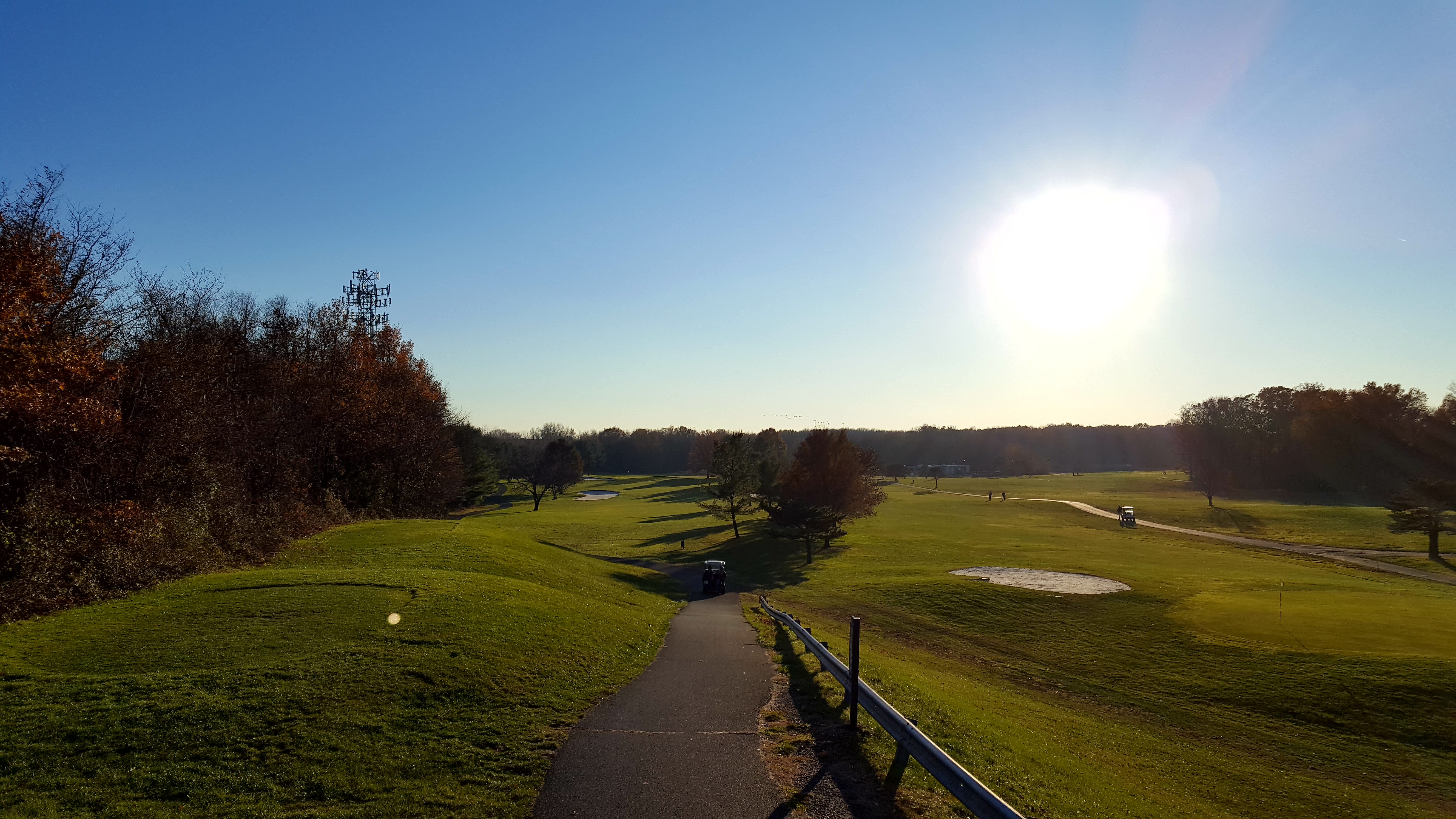
Numbers 4, 5, and… 152 and 14?

Continuing the theme of my last post, I’ve got more, out-of-order courses to tell you about. As I mentioned, the first three courses I played were all at points before and up to June 2006. Very shortly after that, my wife and I had just gotten an apartment together in Middlesex County. From there, I would play an additional four courses over the next few years.

Number 4 (Raritan Landing)

Date played: 7/22/2006

While he’s better known for his design at Scotland Run, Stephen Kay also helmed the creation of the par-58 Raritan Landing Golf Course in Piscataway, NJ. Though I have an undated scorecard that likely preceded it, this Middlesex County executive course counts officially as the 4th NJ public I played based on a July 2006 round.

As a Rutgers alumnus, this is another place I wish I had visited more while I was on campus, literally just minutes away from the course. With four par-4s and 14 par-3s, this would’ve been a perfect place to play while I was still in my novice-golfer shell.

The greens at Raritan Landing have enough undulation in them to set them apart from most other executive or par-3 courses and they are bunkered enough to challenge the beginner. However, in my experience, the greens are usually kept at a speed that might be a bit slow for those looking to be challenged on the putting surface. (I’m not one of those people, so win-win for me.)

It’s only $40 to walk on the weekend, but an additional $20 if you want to ride. Given the course is a par-58, $60 to play a short course is a bit steep. I would recommend the very manageable walk if you made your way out there.

Number 5 (Tara Greens – 9-hole)

Date played: 5/16/2009

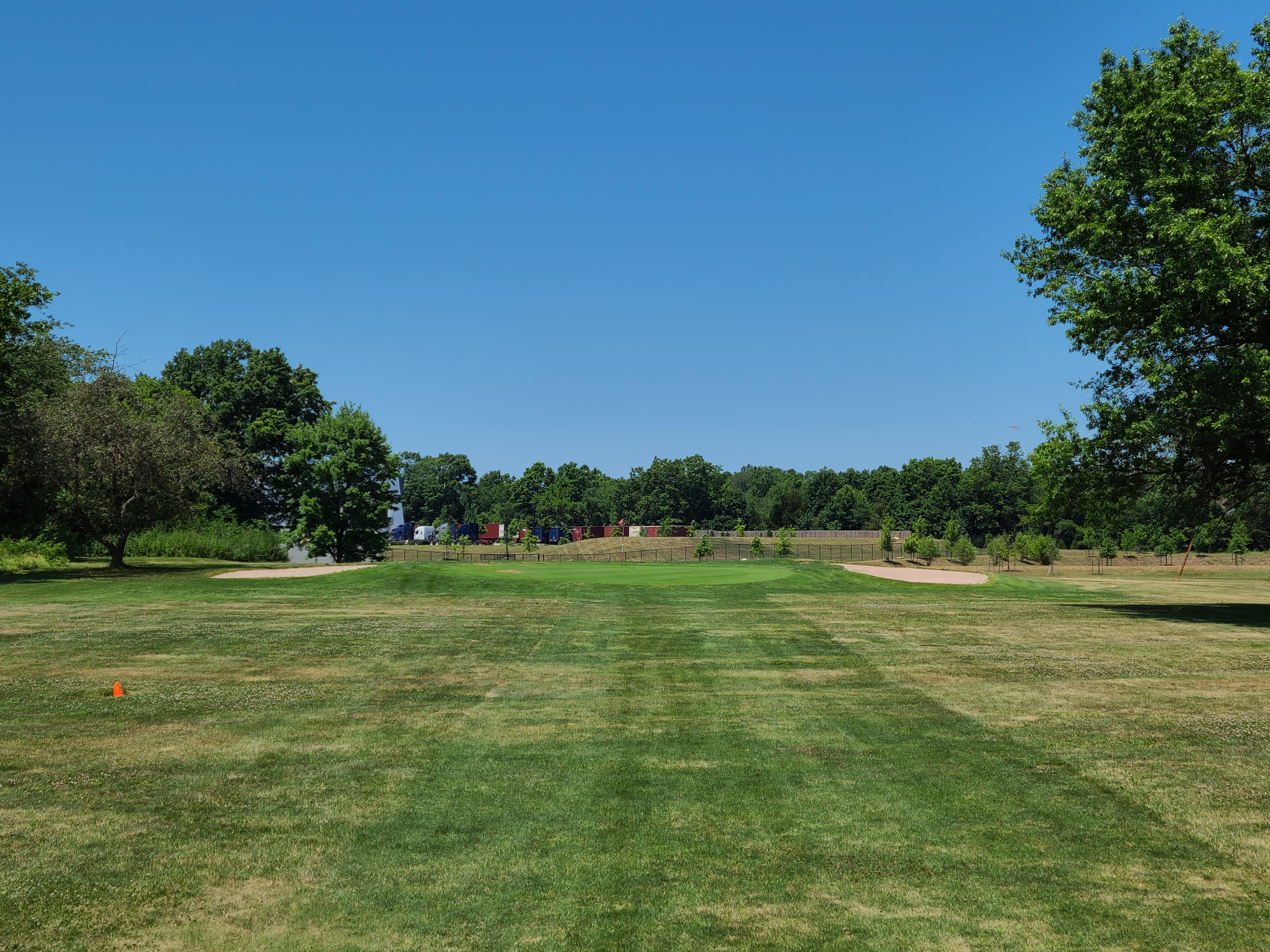
The nine-hole course at Tara Greens Golf Center was my first Somerset County course played. Closed sometime between 2014 and 2020, the first time I played it was in a round with one of my cousins in May 2009. The course featured two par-3s (one long, one short), five par-4s, and two of the wildest par-5s in the state of New Jersey.
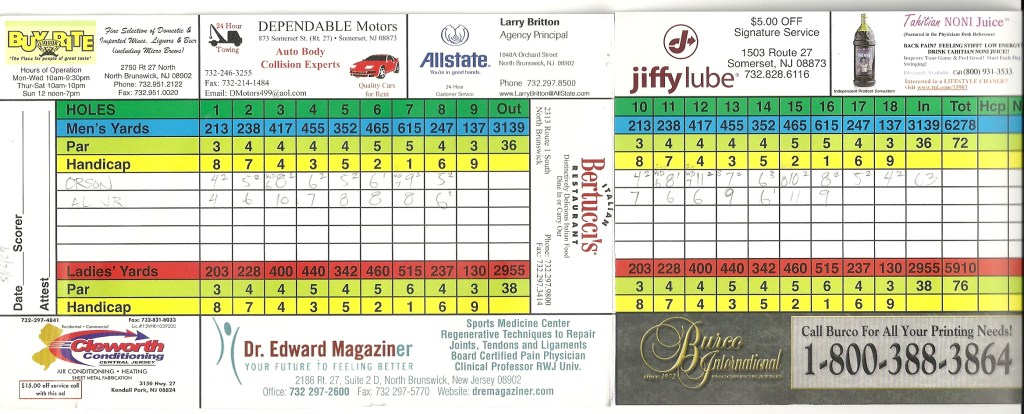
Scores of 6 and 10 on the 6th, and 9 and 8 on the 7th… yikes.

Hole 6 was a 465-yard par 5 that presented itself as a 90-degree dog-leg-left from the tee box. You could cut the corner over some trees, but your landing area was narrow and it was completely blind. For all intents and purposes, it was a three-shot hole. That was immediately followed by the 7th, which was listed on the scorecard as 615 yards. I don’t know if actually stretched that long, but I can tell you that in the few times I played it, I never even came close to making par.

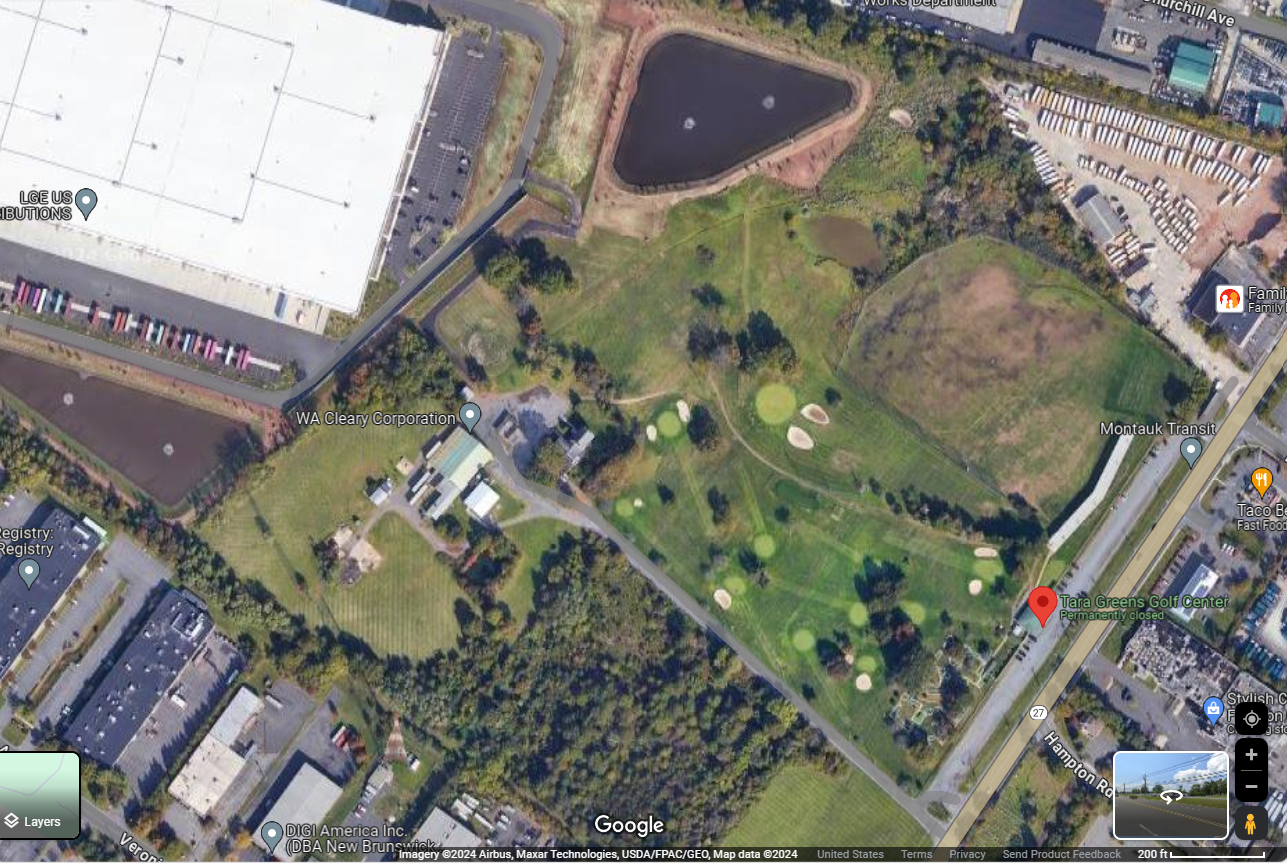
Looking at the scorecard map, the shape of the 6th is portrayed accurately, but my recollection of the 7th is that it was much more of a dog-leg-right. Either way, you can see that image below, alongside a satellite image of the course. A majority of the acreage for those two holes sat where the large, white-roofed distribution center is now, and you can actually see remnants of the 7th green, bit left of center, north of the building marked “WA Cleary Corporation”.

(Side note: roughly 15 years later, almost none of the businesses that advertised on the back of that scorecard are still around today!)

Number 152 (Tara Greens – Pitch-n-putt)

Date played: 7/3/2022
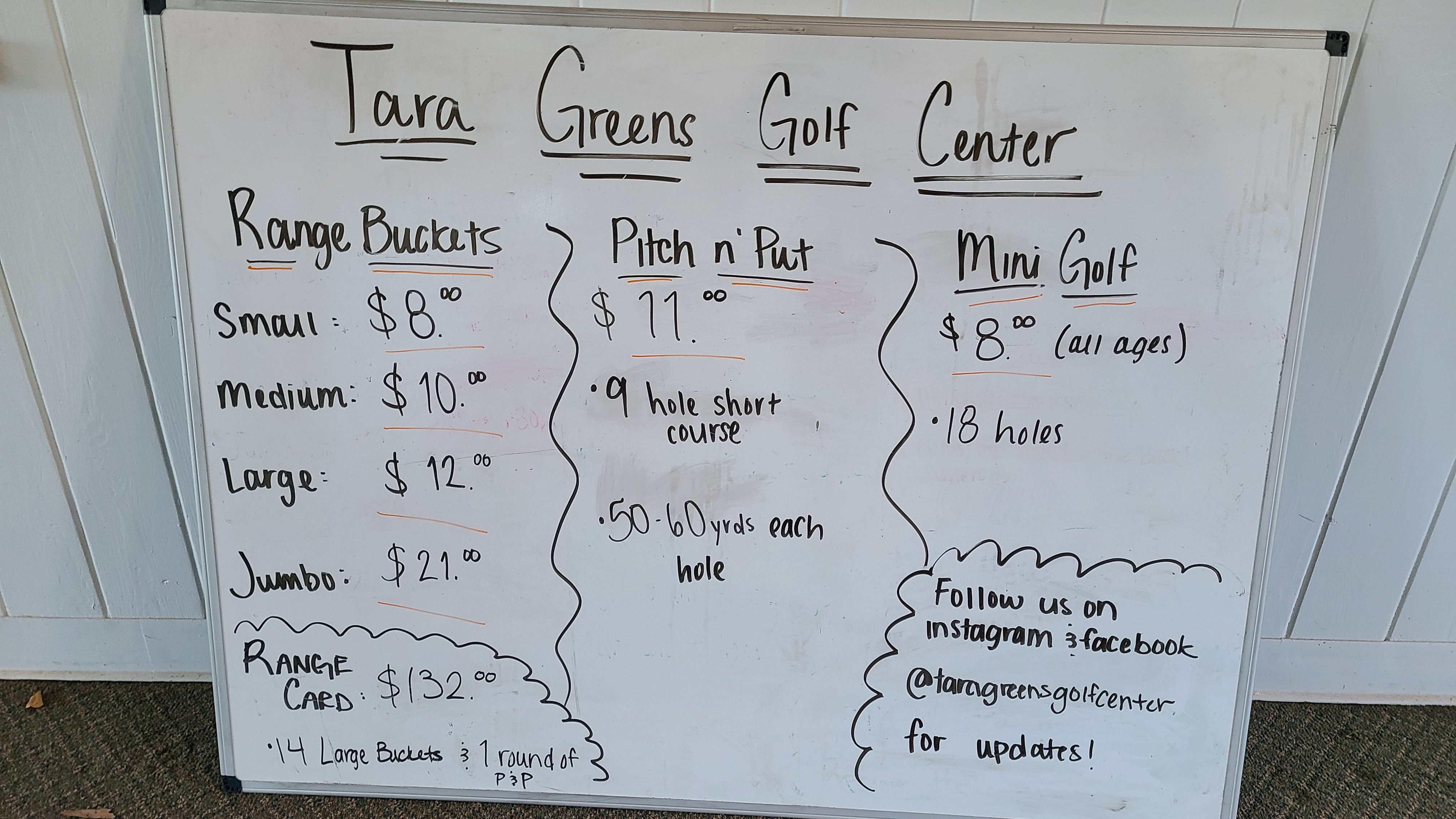
The rates at Tara Greens on 7/3/2022.

As part of the “golf center” experience of Tara Greens, in addition to the nine-hole course and driving range, the facility also offered a nine-hole pitch-n-putt course. I say “offered” in the past tense, because I recently discovered that in May 2023, Tara Greens announced that it would “not be opening for the 2023 season.”
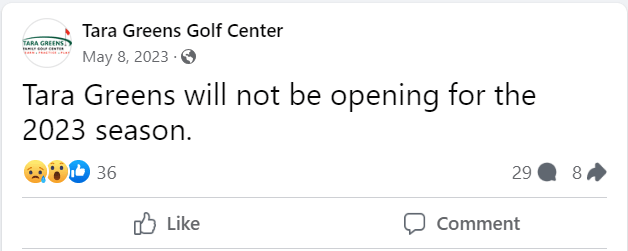
It wasn’t me, but I feel that deflated teary emoji.

While that language leaves open the possibility of opening for the 2024 season (or any future season) it is probably highly unlikely. Given the sale of land to the distribution center years ago and the current real estate market (land isn’t cheap) the facility owners would have done well for themselves selling the remainder of the land to the highest bidder.

While I have one undated scorecard that I believe is from the time I lived in Middlesex County, and a few others from 2016 to 2020, I did not originally include the pitch-n-putt course in my list of NJ publics. After realizing that it met my criteria – it’s open to the public and offers a scorecard with yardages for each hole – I decided to avoid renumbering my entire journey and just slot the course in as my 152nd played.

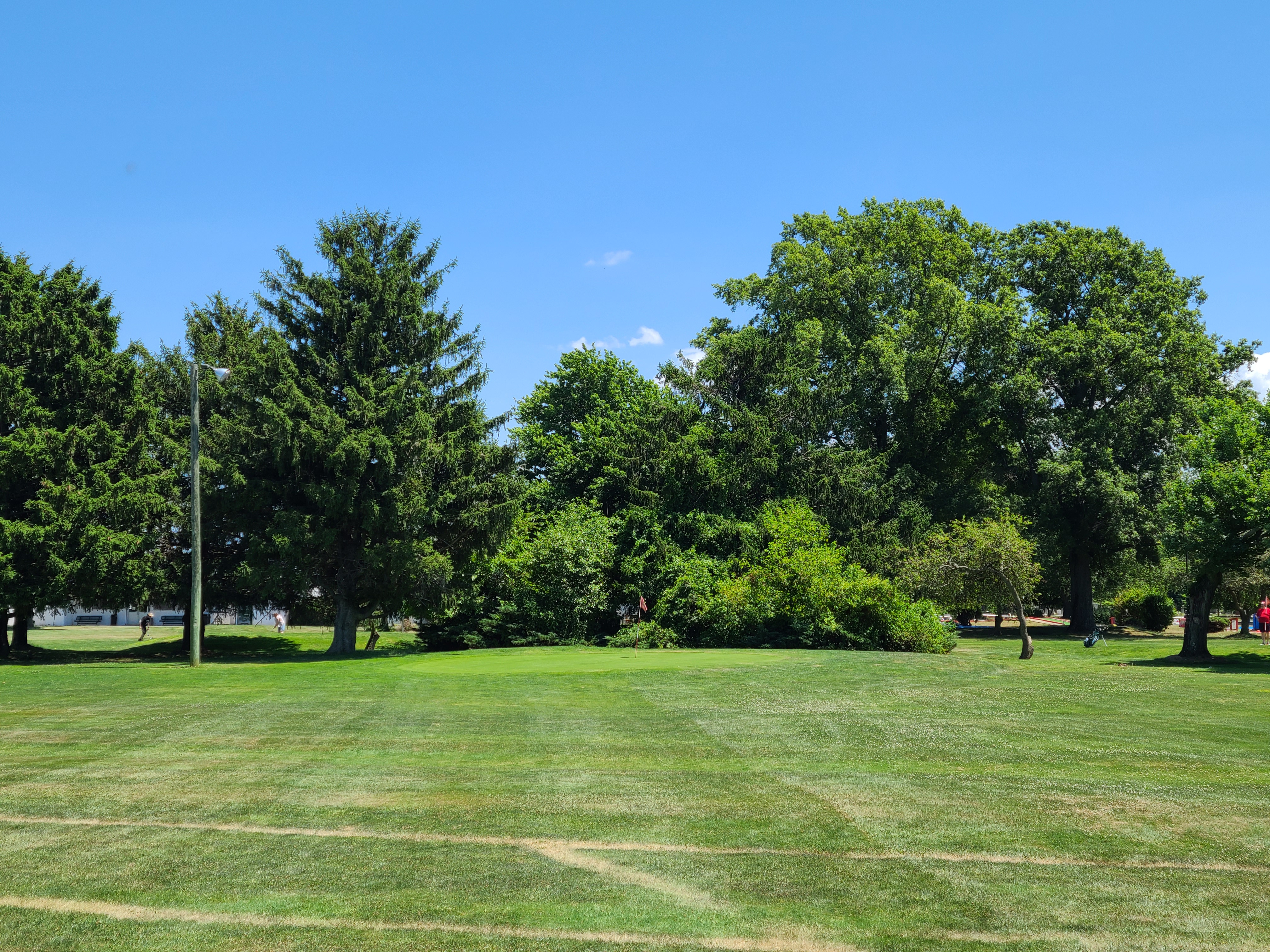
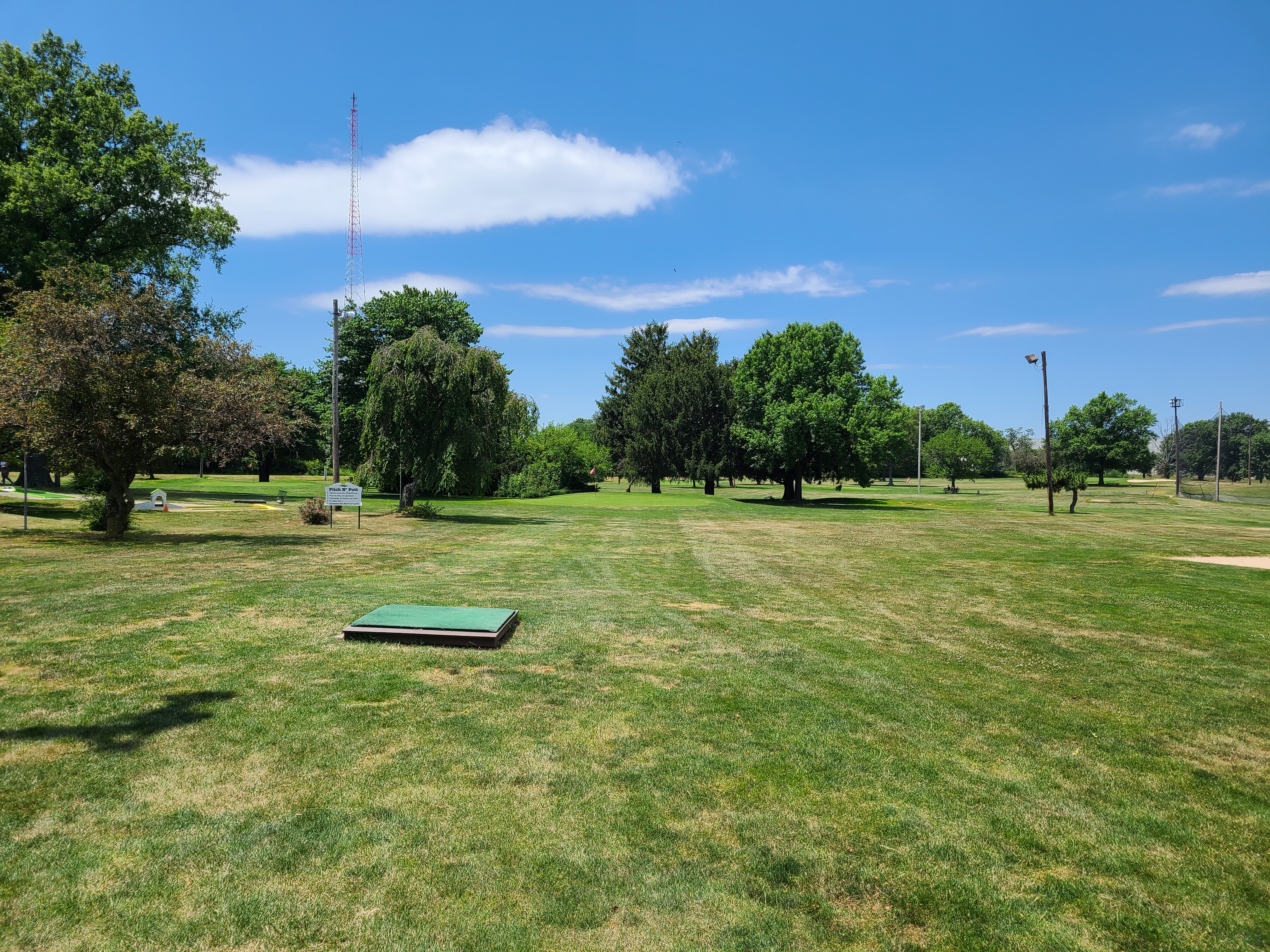
If it doesn’t return – and again, it probably won’t – it will be sad to see it go. Here are a few pics from that day.
Number 14 (Rolling Greens Golf Club)

Date played: 8/31/2013

My final, out-of-order course for this post is a trip to Sussex County.
While I have an undated scorecard of a round with someone I worked with from 2006 to 2008, I counted Rolling Greens Golf Club in Newton as the 14th I had played based on a round played with two of my best friends in August 2013.

A par 65 from just under 5,200 yards, Rolling Greens was a tight test on a number of holes, particularly the par-4s. I can’t quite remember if it was the par-5 13th or par-4 15th, but even though they offered a bit of space on the approach, one of those extreme dog-leg-left holes also had a very difficult tee shot to navigate into a narrow landing area in the elbow of the hole.
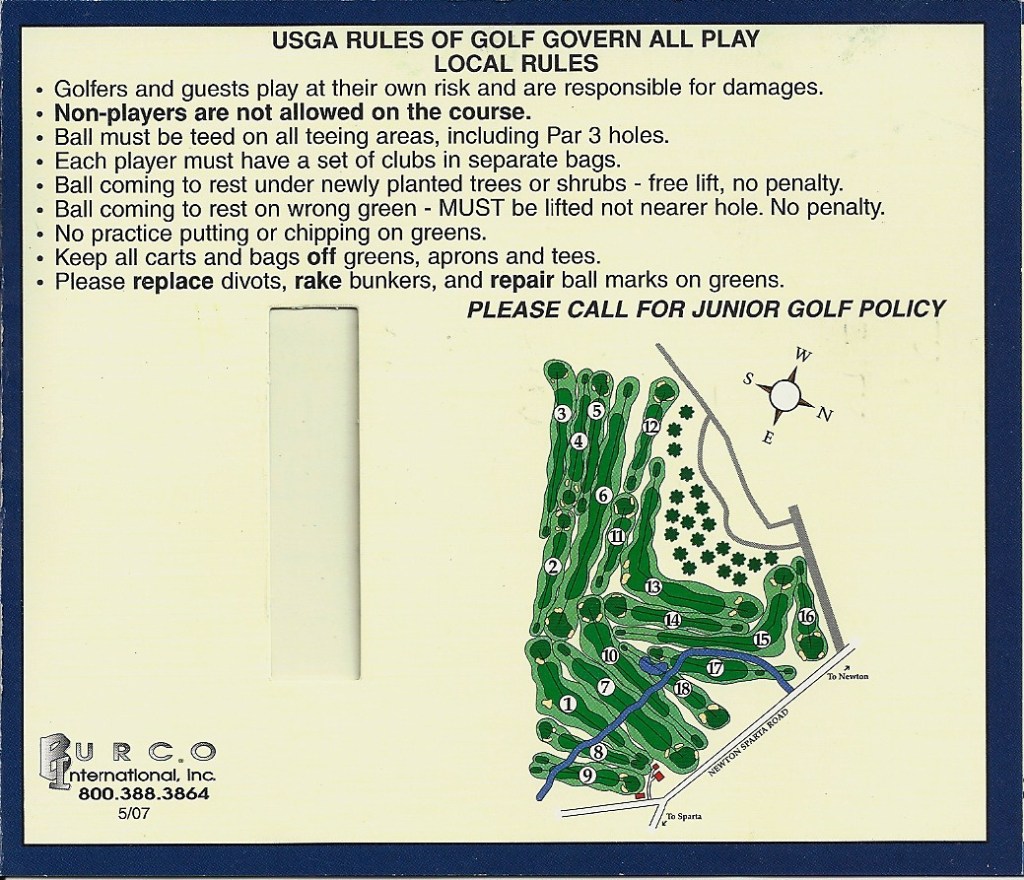
Holes packed together like a microscope image of reproducing bacteria.

In 2021, I learned that Rolling Greens had closed sometime in 2019. Over time, a number of courses have been removed from my list, some of which I played, others which I hadn’t. There’s a bit of a missed-opportunity sting to learn about a course that I never played which no longer exists. But like many of the courses gone from the early part of my journey, there’s a deeper pain of an erased personal history when I see a course I played get relegated out of reality and into history books.

Here is a satellite image of Rolling Greens which still shows much of the shape of the layout.

Another one bites the dust 😔
Numbers 4, 5, and… 152 and 14?

Number 103 (Concordia Golf Club)

Date played: 11/16/2020

At the end of 2017, I thought I had played all of the public courses in Middlesex County after my trip to the Plainfield West 9 course. At the time, that was true.

But, as I’ve written before, this journey is ever-so-slightly amorphous. From the time I began tracking my travels in earnest, the list of public courses in New Jersey has seen some close (see: Beckett Golf Club) and some new ones open (like Skyway). Occasionally, a formerly private course decides to become fully open to public play. That was the case with my 103rd course, Concordia Golf Club.

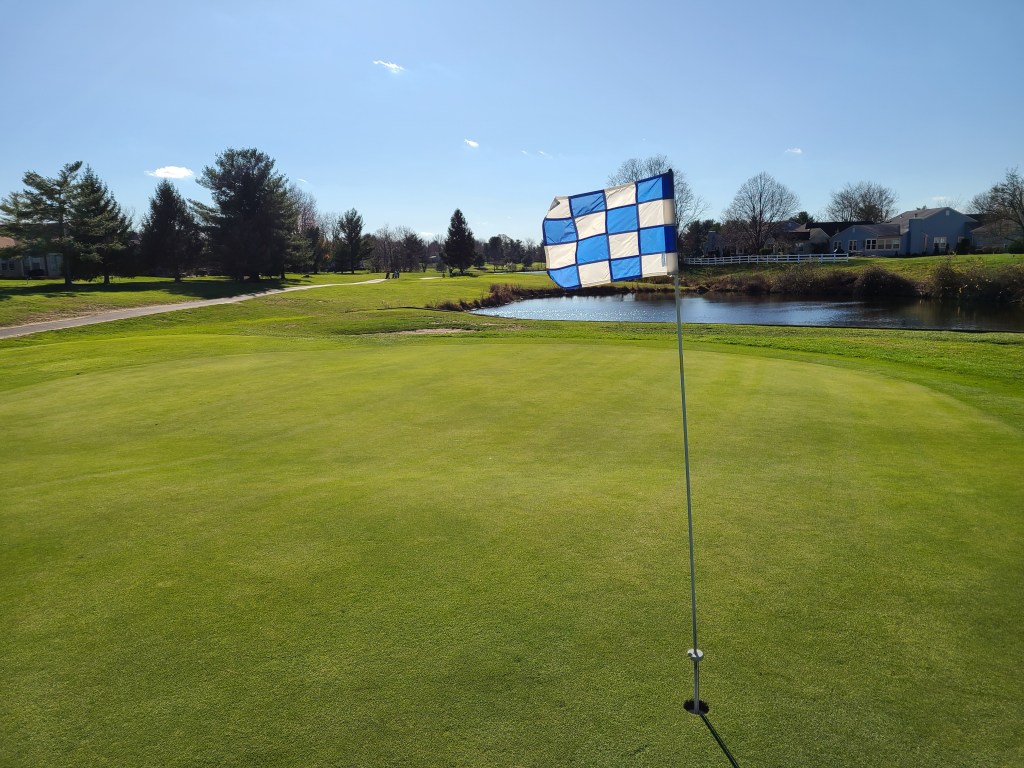
Located in Monroe, the previously private course is set in a senior-living community. While the routing doesn’t quite follow it, the course is laid out in something of a figure-8 around two large portions of the neighborhood, with most holes flanked by homes. Depending on how wayward your shots can be, water is a factor on at least seven holes, which is a nice feature for a community course.

Behind the teeing grounds at 13, the first water-lined hole on the lengthy back nine.

At just under 6,300 yards from the back tees, the course has a deceptive façade of not seeming long on the scorecard. It’s misleading because while the front will play short at under 2,900 yards, the back nine stretches to almost 3,400. I was lulled into a sense of ease by the front nine, not realizing what was in store on the way back in.

There is also a great variety of holes overall. There are drivable par-4s in holes 3, 5, and 10. Some holes play to immensely wide fairways – like 6 and 8 – while many will challenge your driving accuracy with much narrower targets. My only criticism is that the par 3s were all relatively the same yardages from the back tees (186, 194, 194, 176).

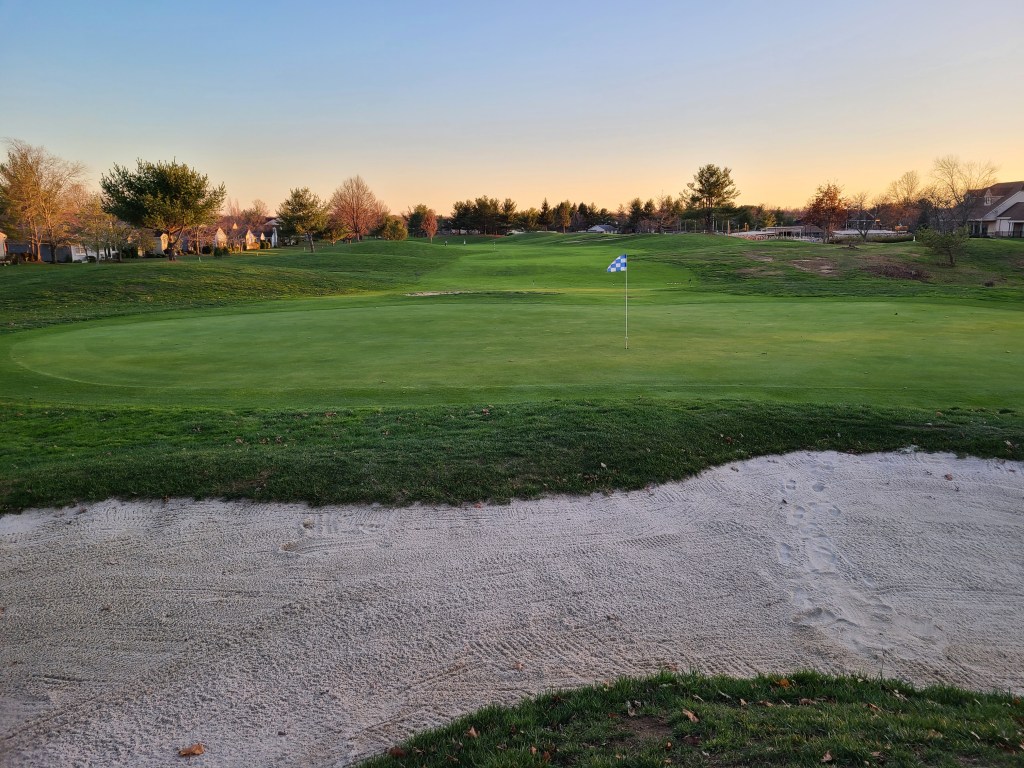
The green at 4, the first of the par 3s. The COVID pins were still in use!

While the conditions of the greens were a bit inconsistent, they were great overall. The fairways could use a little TLC, but the rates are very reasonable (I paid $30 to walk on a weekday). Overall, I really enjoyed my experience here and would recommend it for a first-time visit. I’m glad I got to play it and complete all of the Middlesex County public courses… again.

A look back at my final hole of Middlesex County… again.
Number 103 (Concordia Golf Club)

Number 70 (Plainfield West 9)

20171221_141044 - Copy

Date played: 12/21/2017

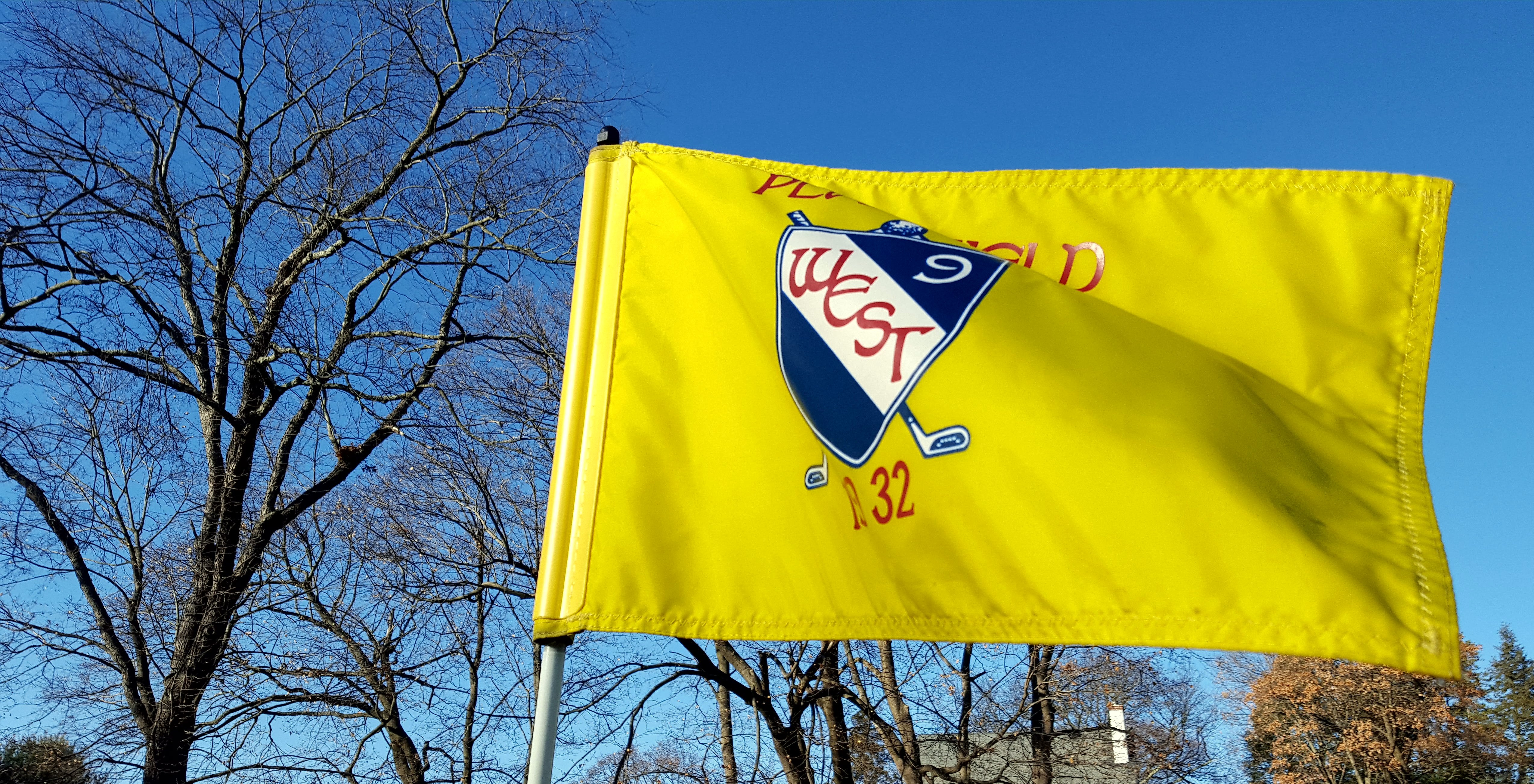
I arrived at Plainfield West 9 from the Galloping Hill Learning Center Nine just after noon. Still cold in the middle of the day – which is no surprise on the winter solstice in New Jersey – I headed into the pro shop to see if I could get on the course. The woman behind the counter was kind enough to let me know that I could save a few bucks if I waited until 12:50, and I obliged.

I didn’t mind waiting, as it gave me a chance to warm up for a bit and charge my phone. While inside, I learned that the “West 9” actually offers a membership that includes the ability to occasionally play the distinguished neighboring Plainfield Country Club. I also heard accounts of how the West 9 course served as something of a practice facility for professionals in the week leading up to The Barclays in 2015, with the players setting up ad hoc holes, teeing off from one hole and playing to another, just to lengthen the course.

Inspired by the stories of recent history, it was time for me to get to the first tee. The West 9 starts off with two long par-4 holes, the 1st being a slight dog-leg left, and the 2nd a slight dog-leg right. Caution is warranted on the 1st tee in that, if you’re trying to shape your ball right-to-left to accommodate the dog-leg, anything pull-hooked will end up OB on Woodland Avenue. The 2nd is more forgiving, with only a few trees lining either side of the fairway.

The 3rd hole is the first of three par-3s on the course. Teeing off just beside the club house, it’s the shortest of the par-3s, but it plays a considerable amount uphill, with the green sloping back to front. Anyone moving the ball left-to-right would have to be cautious of the bunker that is front-right, as well as the drop-off to the cart path all along and around the right side of the green mound.

At only 241 yards from the “back” tees, the 4th is a short par-4 and the second-easiest hole of the nine. Its only protection is a bunker front right, but it is deep and does have a lip that rises above green-level which could provide some challenge.

20171221_133157 - Copy
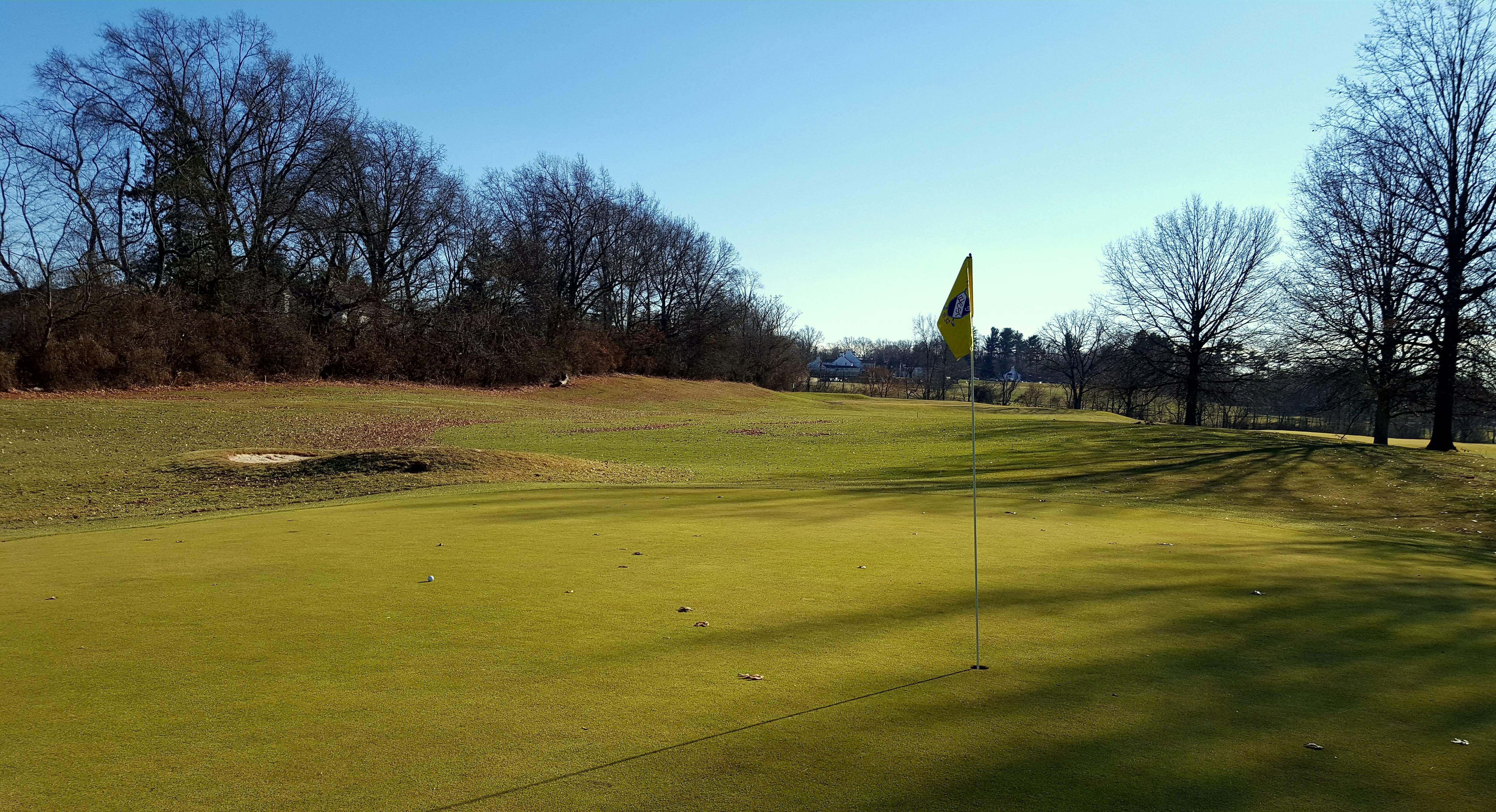
Looking back on the 4th from the green. Though it looks small and unimposing from this angle, the greenside bunker is actually relatively deep.

The 5th is a mid-distance par-3, and it has trouble – AKA backyards – to the right. Club selection and shot choice will be keys to playing this hole well. Turning around and heading back the other way, the 6th hole is probably the most interesting of the par-4s, playing blind over a ridge that runs across the fairway at about 200-250 yards from the tees.

If you miss the 6th fairway right, you’ll have to contend with a lone tree that sits atop the ridge. If you miss the fairway left, the left rough slopes right to left and bad bounces could put you at the bottom of this hill, leaving you with a partially blind second shot.

From the 6th green you need to walk back uphill to play the longest of the par-3s, the downhill 7th. While on the card at 189 yards, the drop probably has it playing around 175, with pretty forgiving surroundings. There is a bunker left and short, but you have to miss the green by 10-15 yards to find yourself there.

Coming home, the 8th and 9th are both short par-4s, but the greens on these two holes are like night and day. The 8th green is small, but offers little in the way of contour, whereas the 9th is larger, but easily the toughest green on the course. It sits on a mound, and slopes left to right, dropping off severely as it approaches the right-side fringe.

I played Plainfield West 9 in +6, bogeying everything except the three greens I hit in regulation (4, 8, and 9). Go figure.

Playing the course not only meant the second of my three courses of the day was complete, but also that all seven Middlesex County public courses were checked off the list, joining Hudson, Hunterdon, and Somerset as completed counties on my journey.

A great place to learn the game, I would recommend the Plainfield West 9 to beginners and golf regulars alike. Apart from the holes on the perimeter, the course plays very open with little trouble with which to contend. Its greens are reputed as some of the best in the area, and they were in very good condition even in December. The walking rates are great and there are good deals on afternoon tee times through GolfNow.

This is a perfect course that fits the spirit of the USGA’s “PLAY9” campaign, and if it isn’t already occupied every spring, summer, and fall with people getting in nine holes before or after work, it absolutely should be.

Number 70 (Plainfield West 9)

Number 65 (Tamarack Golf Course – East)

20171124_152850

Date played: 11/24/2017

Having played the West course at Tamarack in March 2016, I was glad to come back 20 months later to finish the facility by playing the East course. The further along I get in my journey, the further I have to drive to play new courses, since I prioritized getting to as many local courses as possible. Because of that, I now have it in mind to play all layouts at a particular facility in a single visit, whenever possible. My trips to Flanders Valley and Ramblewood CC are great examples. Luckily, Tamarack is relatively local, so going back for a second trip wasn’t difficult.

Of the two layouts, the East is the shorter, but locally known as the more challenging. Holes on the East generally play tighter than the West, and there is much more water to contend with. I didn’t play that well, and that was mostly due to bad decisions and poor putting. The greens had recently been aerated, so they were pretty sandy and not yet healed. But, that didn’t excuse some of the putting misses I had. I also had a number of wayward tee shots and poor club choices that didn’t help.

The course had consolidated all of its tee boxes to the front, with a couple holes playing even shorter than the most forward tees. That meant my +18 round (+7, +11) left much to be desired. As I mentioned in my recap of my round at Wild Turkey, it was unusual for me to be 15 for 15 on putts from six feet and in. At Tamarack East, I putt 38 times, and that included misses from two, three, and four feet.

Playing in late autumn, there were a ton of leaves to deal with when attempting to find your ball. While I didn’t lose any in the leaves, I lost four balls with wayward shots on the 3rd, 14th, and the 18th (two balls).

I was also challenged by the many dog-legs on this fairly short course, which included the 1st, 2nd, 7th, and 10th, which is a cleverly designed left-to-right hole with water right. The last of the dog-legs is the par-5 18th. A very fun finishing hole, big hitters can easily make this green in two. Much like the rest of the course, you have to be accurate off the tee to put you in position to do so.

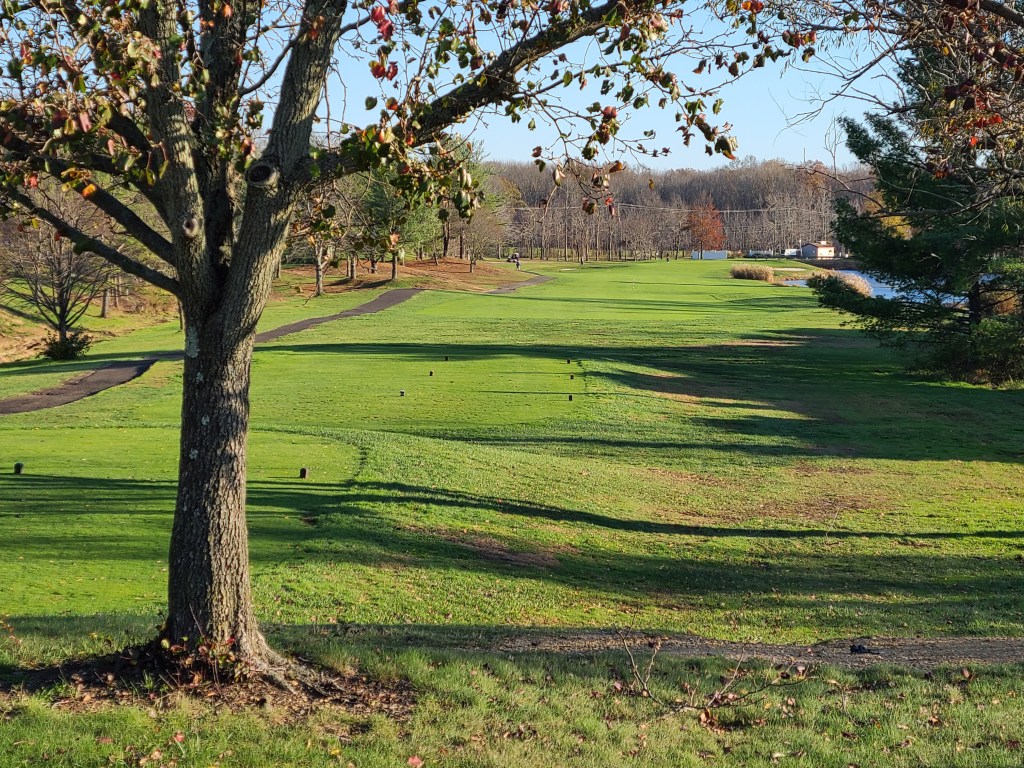
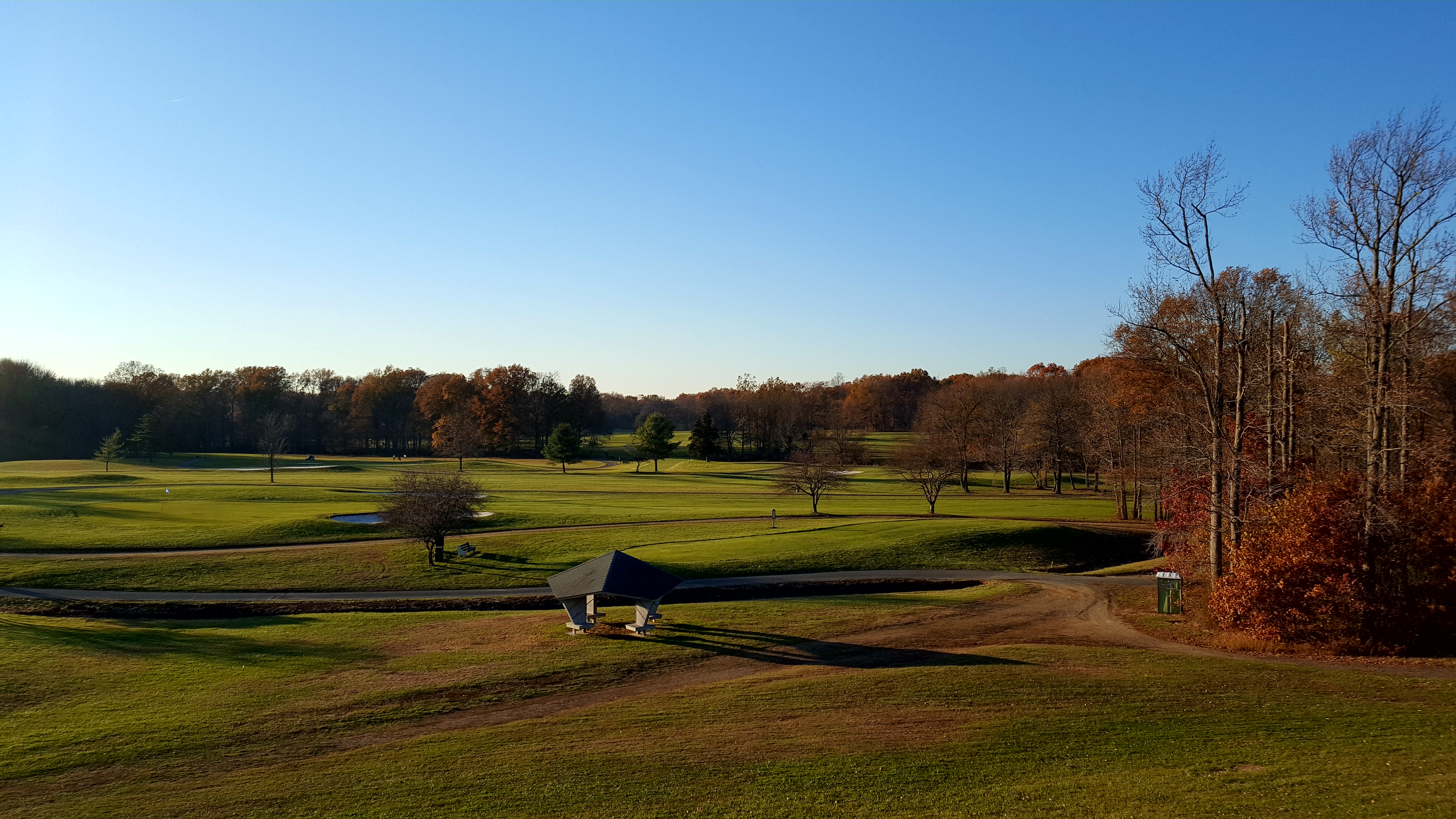
If I had one complaint about the East course at Tamarack it would be the general lack of elevation change. It’s not entirely level, but the changes are very subtle. The highest point on the course with a view is the 14th tee. It made for great pictures on the day, so I leave you with this one, looking out onto the 14th. You can also see the green of the returning 16th in the foreground right, and though not seen in the shot, the NJ Turnpike is just beyond those trees to the left of the 14th fairway.

20171124_152841
14th tee boxes and the 16th green at Tamarack East

Number 65 (Tamarack Golf Course – East)

Number 46 (The Meadows at Middlesex)

Known as Princeton Meadows until 1999, The Meadows at Middlesex is a tight, tree-lined 18-hole layout in Plainsboro (Middlesex County). I made my way over to the course after finishing nine holes at Clearbrook, one of the few times I’ve played more than 18 holes in a day. Just under 6,300 yards from the back tees, I played from the Whites, which were carded at 6,027. With a bit of wind blowing about, and not being able to get much right with my game, I suffered a boringly average round.

I raced my way to the first tee, where an elderly couple was kind enough to let me play ahead of them as opposed to joining. The first is a dog-leg right par 5, and just as I had done at Clearbrook, I blocked myself off to the right, just short of the corner. Forced to just kick out to the fairway, I knocked it to 170 yards, but still took another three strokes to get on. Two putts later, I had a two-over start.

For holes 2, 3, and 4, I carded bogey, triple, triple, putting to bed any ideas of a good round. However, while +9 through four holes, I made the turn at +13. Coming in, I was able to finish the back nine in +6, for a round of +19 on the par 70. Highlights on the back included sticking it to four feet from 148 yards, and one-putting a five-hole stretch from 12 through 16, over which I also scored +3.

Overall, I enjoyed the course. Sometimes it’s tough for me to be objective because it’s difficult for me not to enjoy a day golfing. Having said that, as my journey widens the gamut of types of public courses I’ve seen, from neglected municipals to those that are top-rated, I would have to place this at just below average. As much as I’d come back and play the course again and again, I’d have to admit there were a few greens that are burnt out. The par-3 17th seemed in particularly bad shape.

However, apart from a few bad greens, it was a challenging course on the shorter side that will truly exercise your course management skills. If you haven’t checked it out, you should. Who knows… maybe with a bit more love from golfers, they’ll be able to address the issue with the greens.

Number 46 (The Meadows at Middlesex)