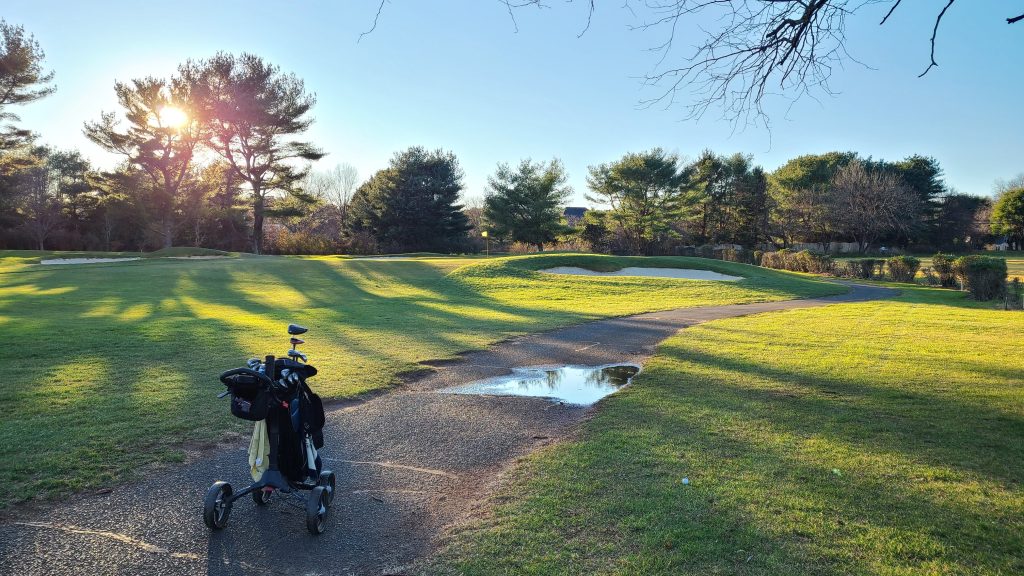
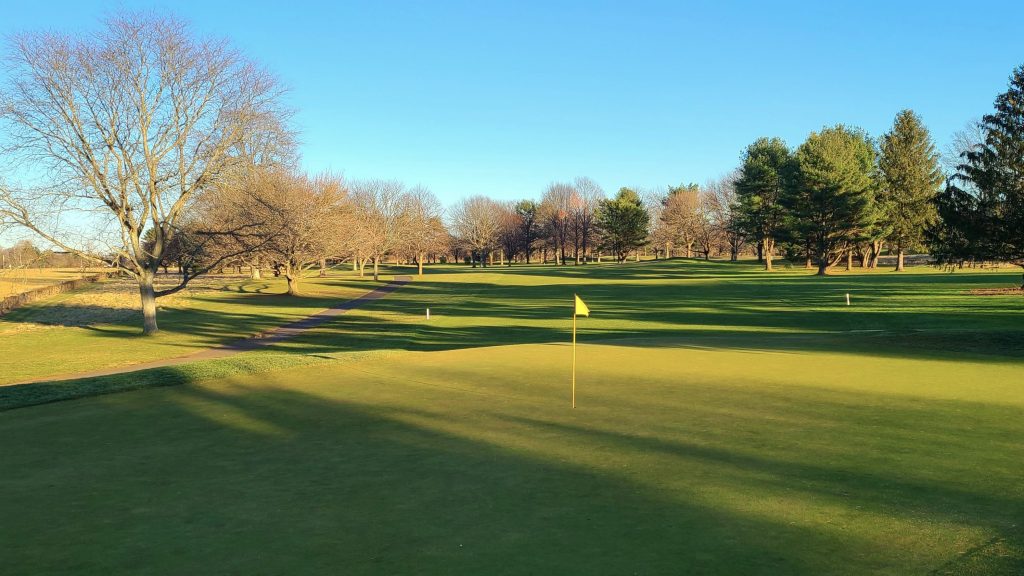
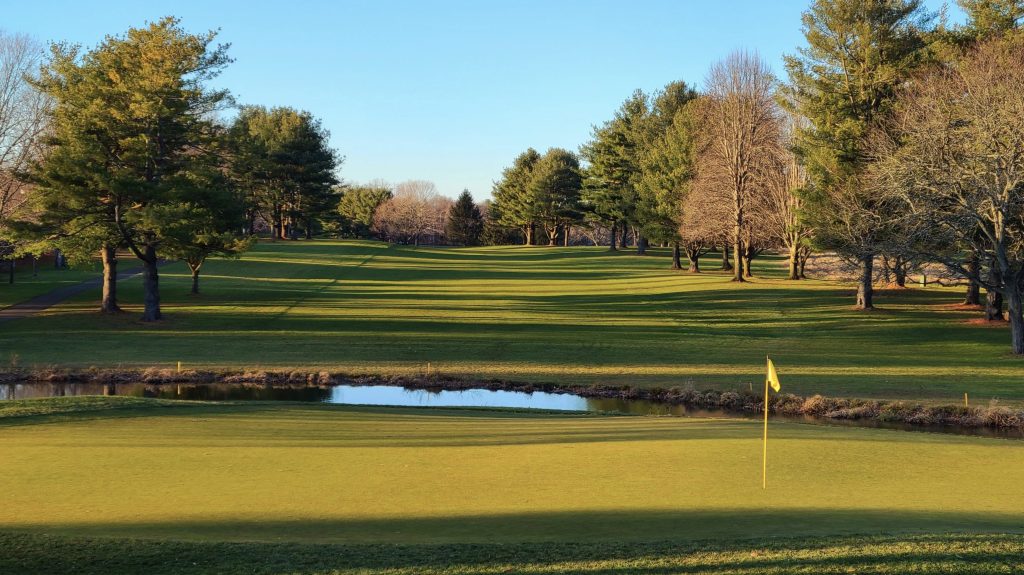
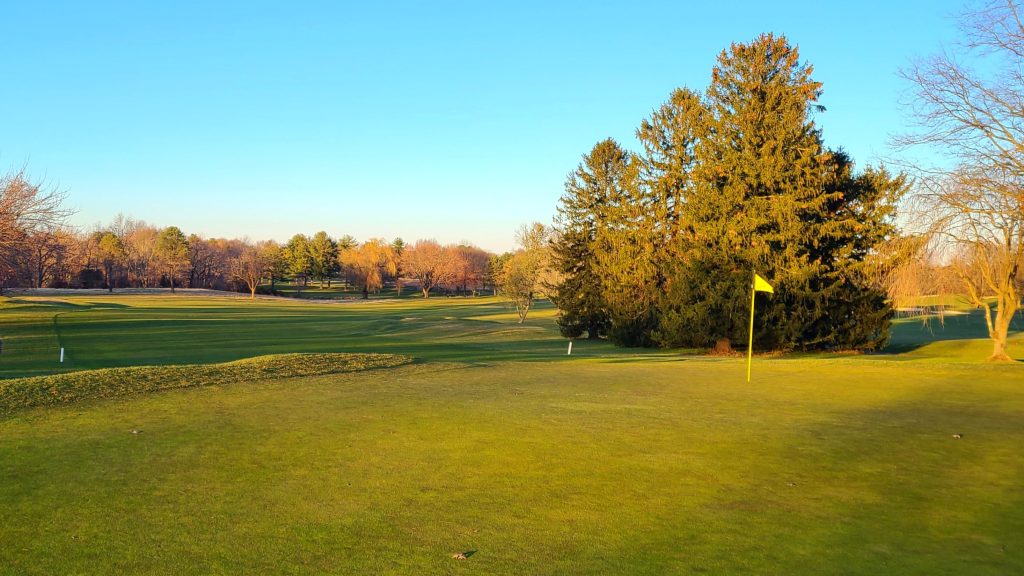
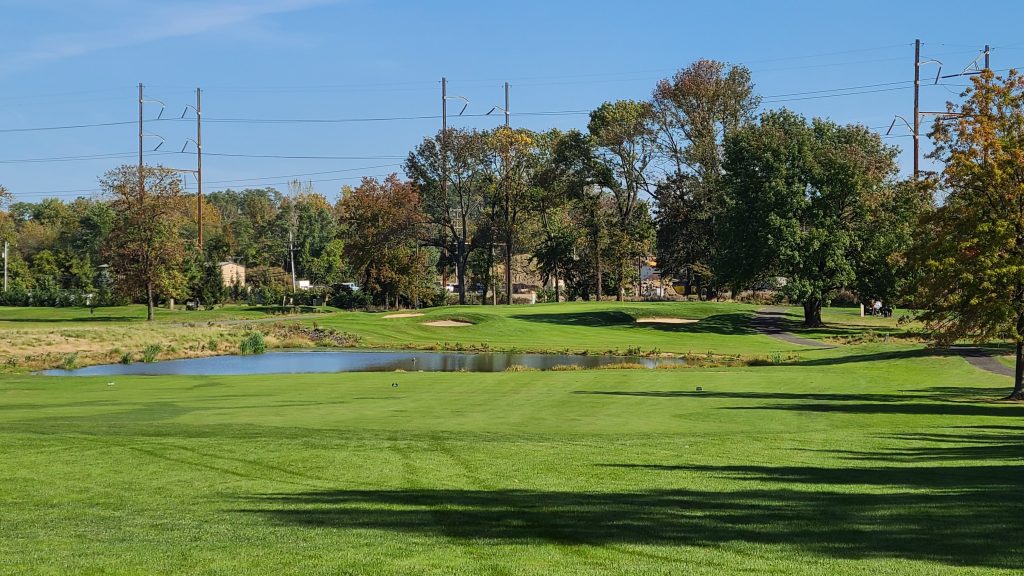
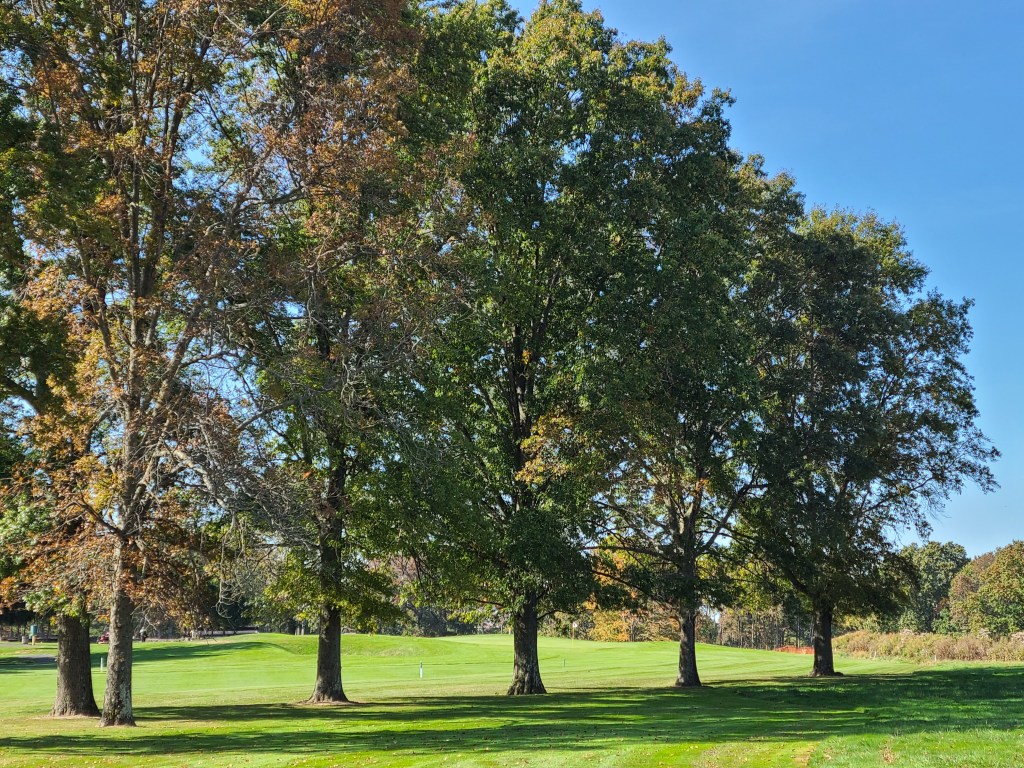
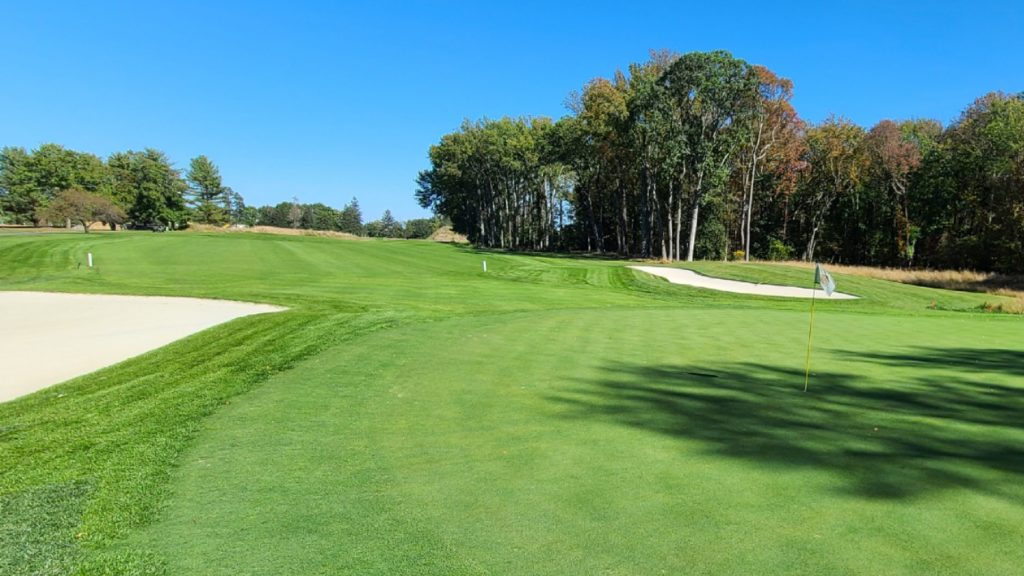
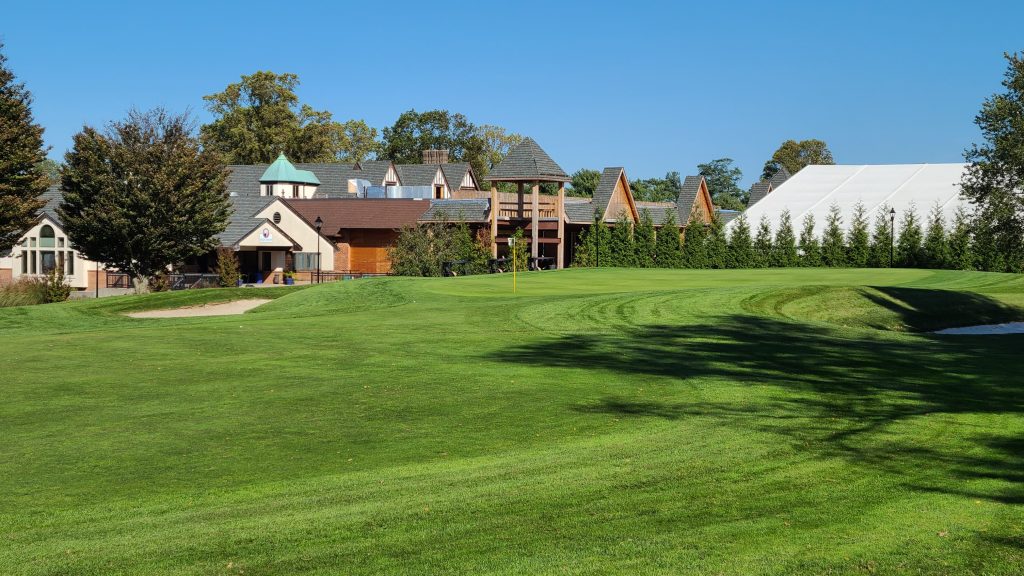
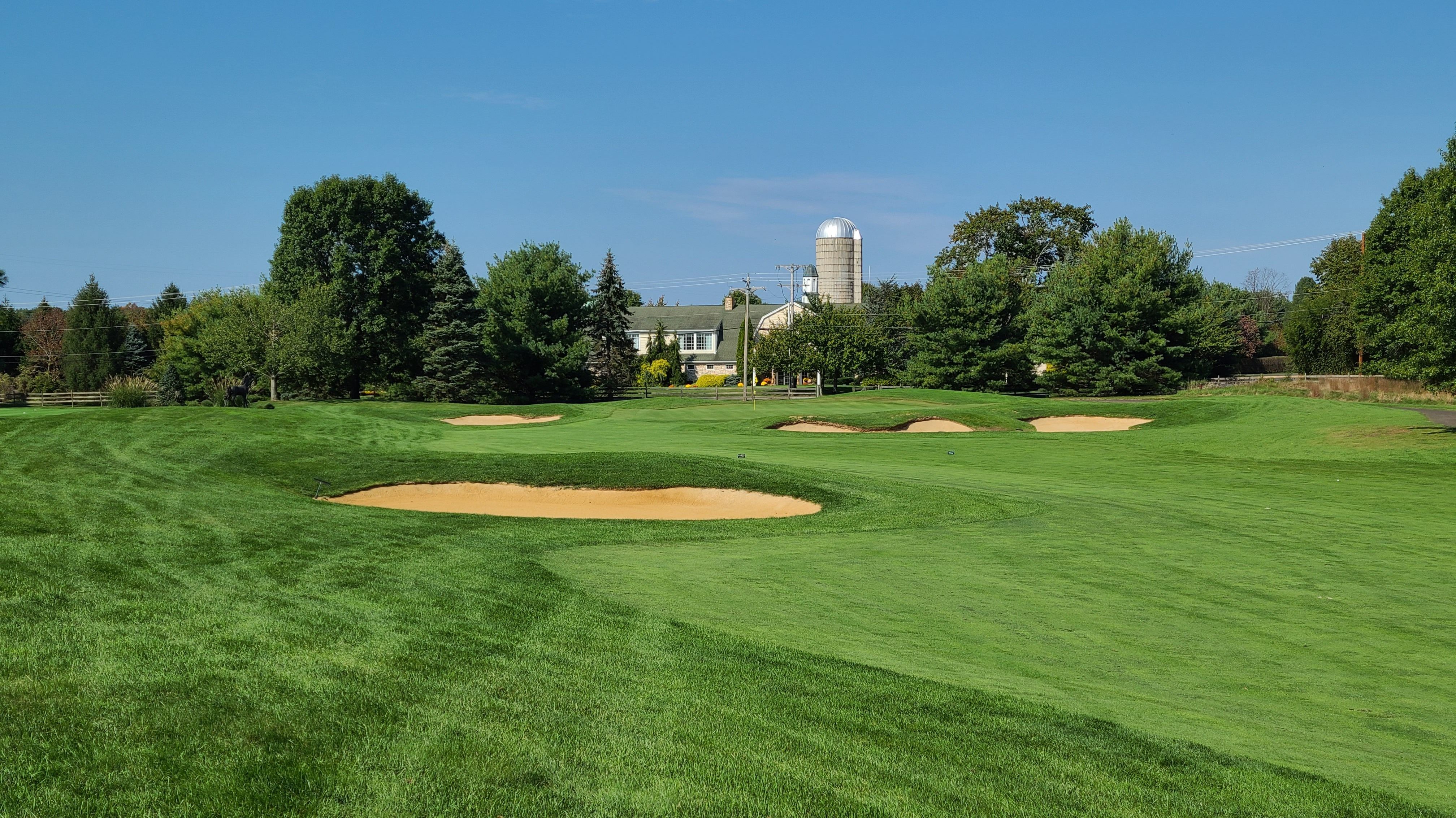
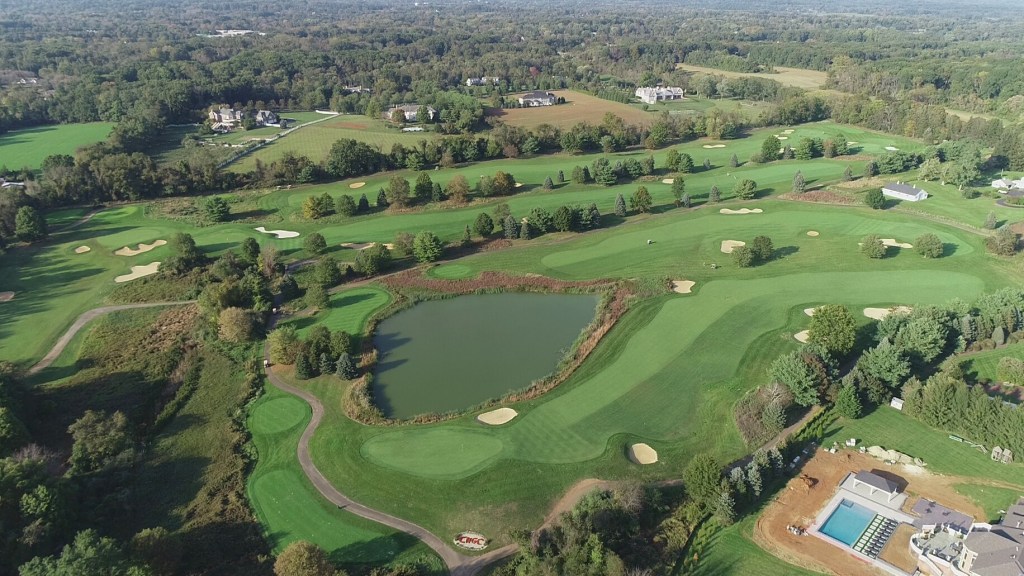
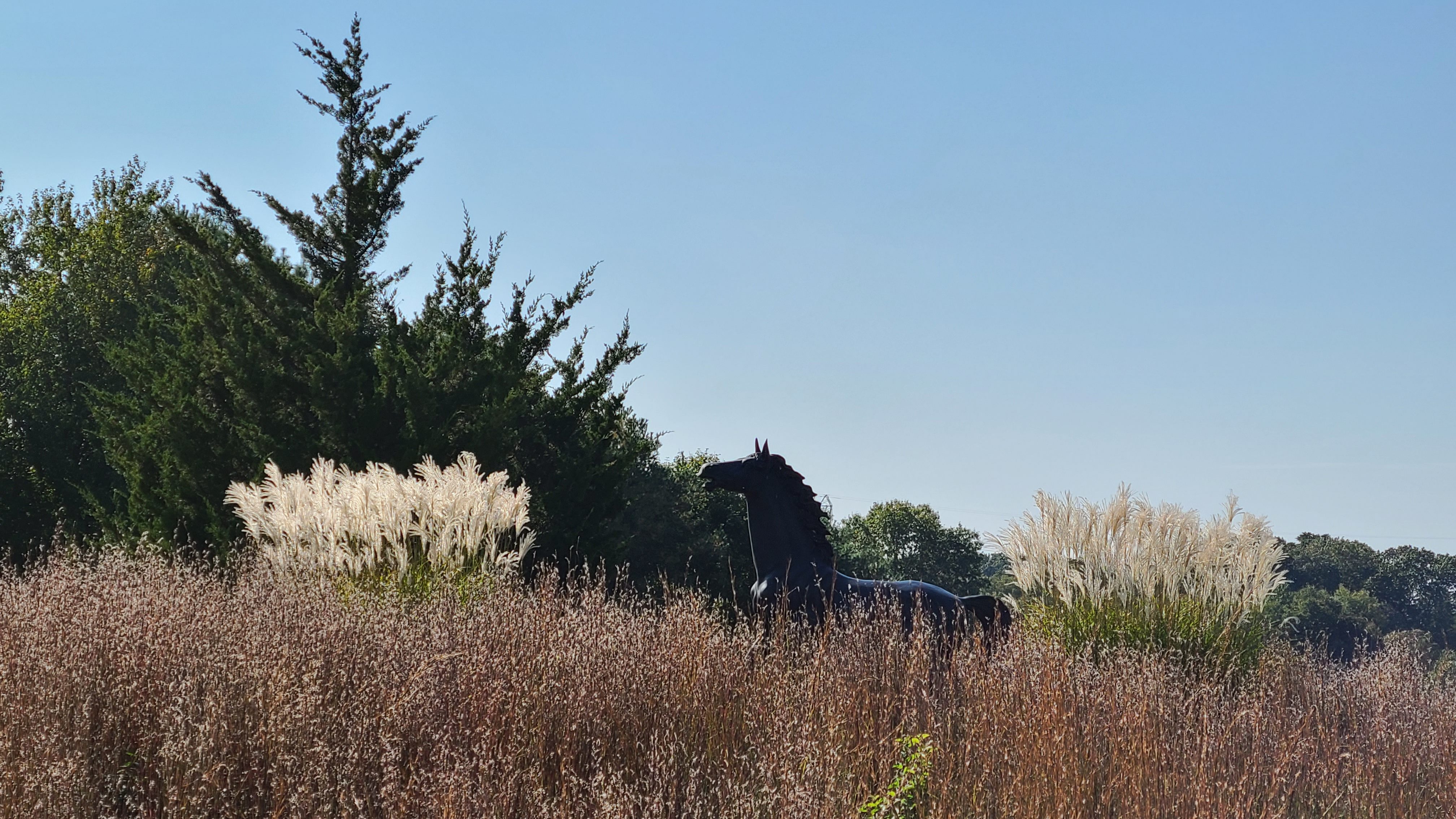
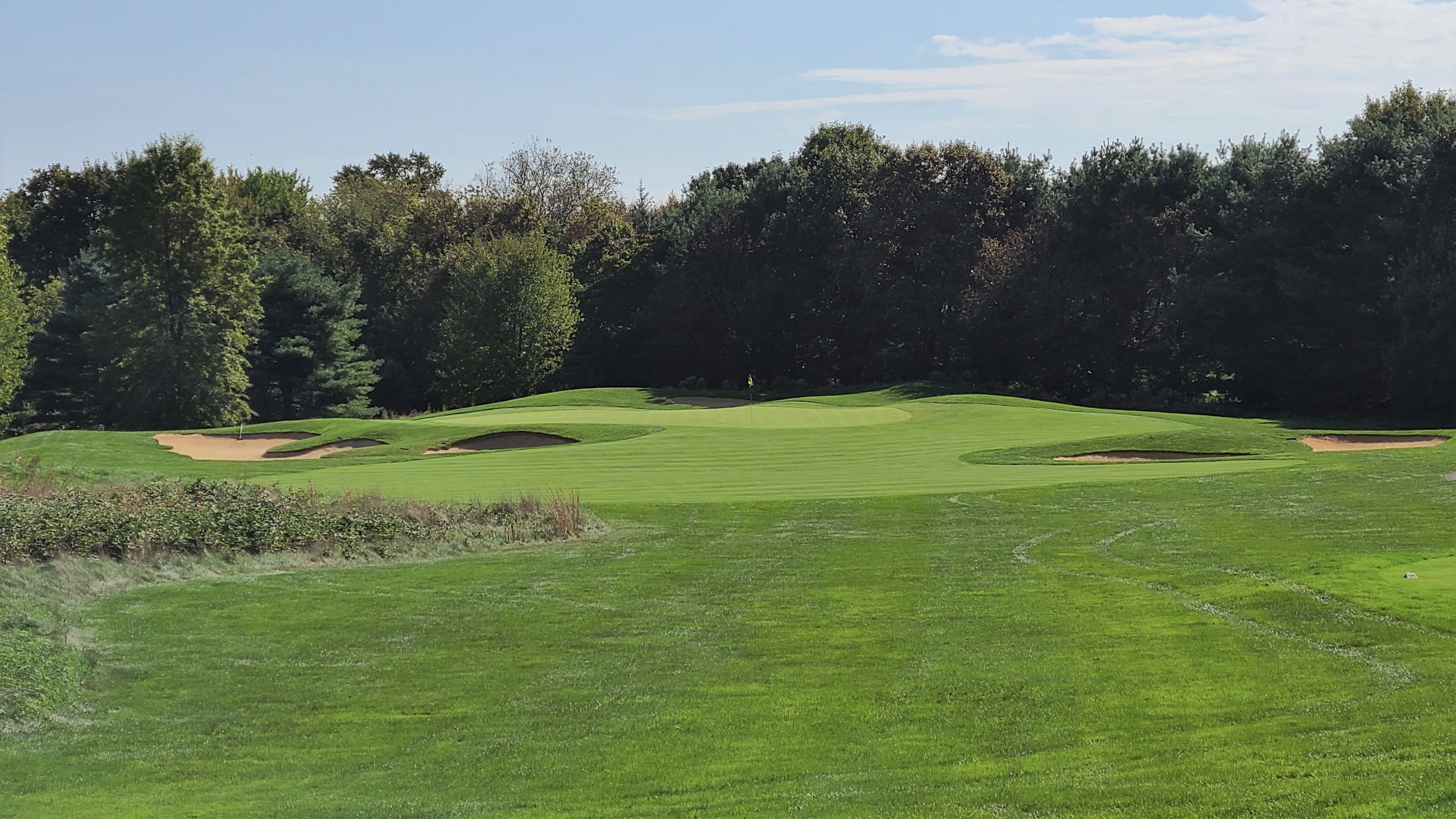
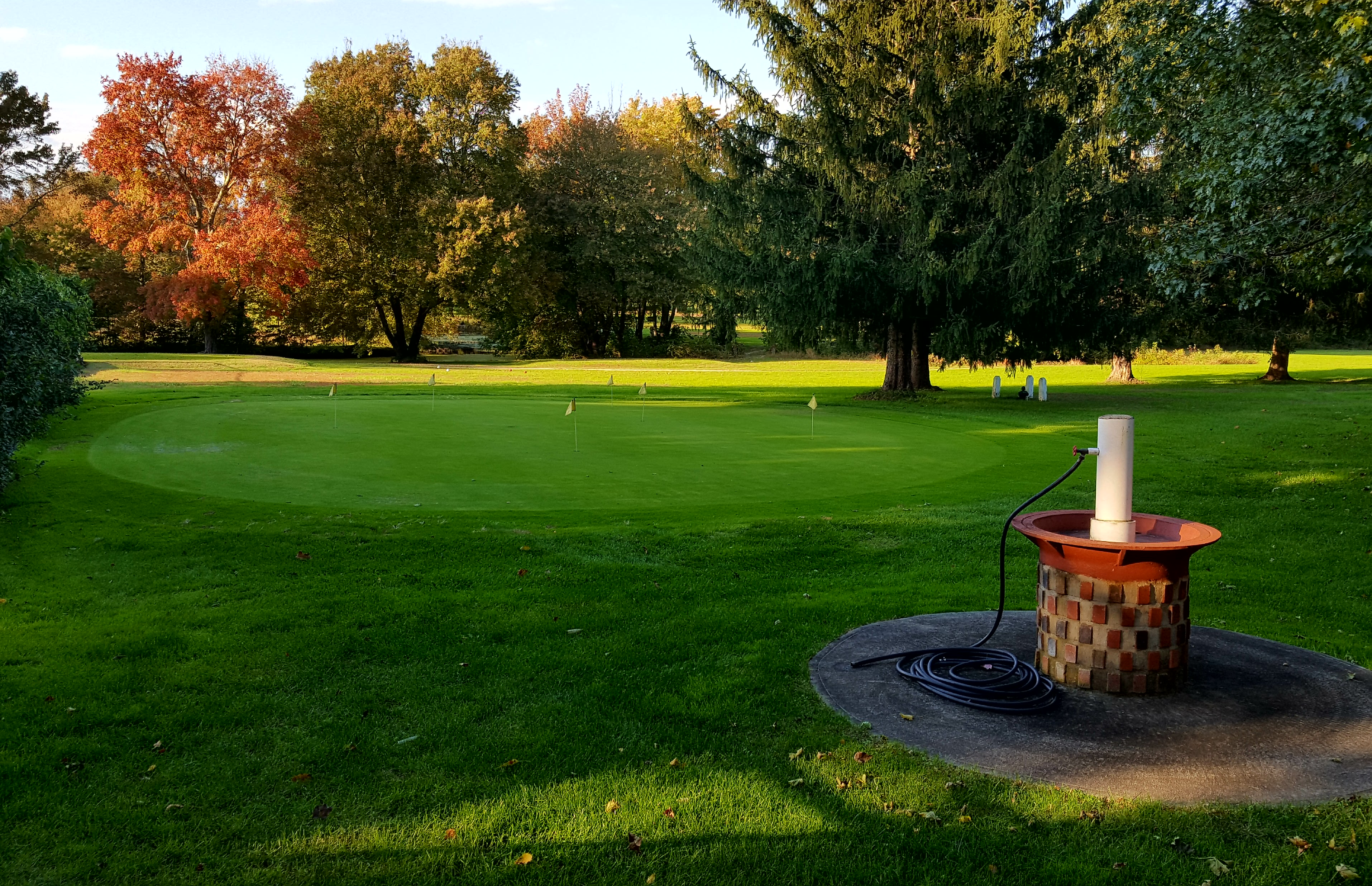
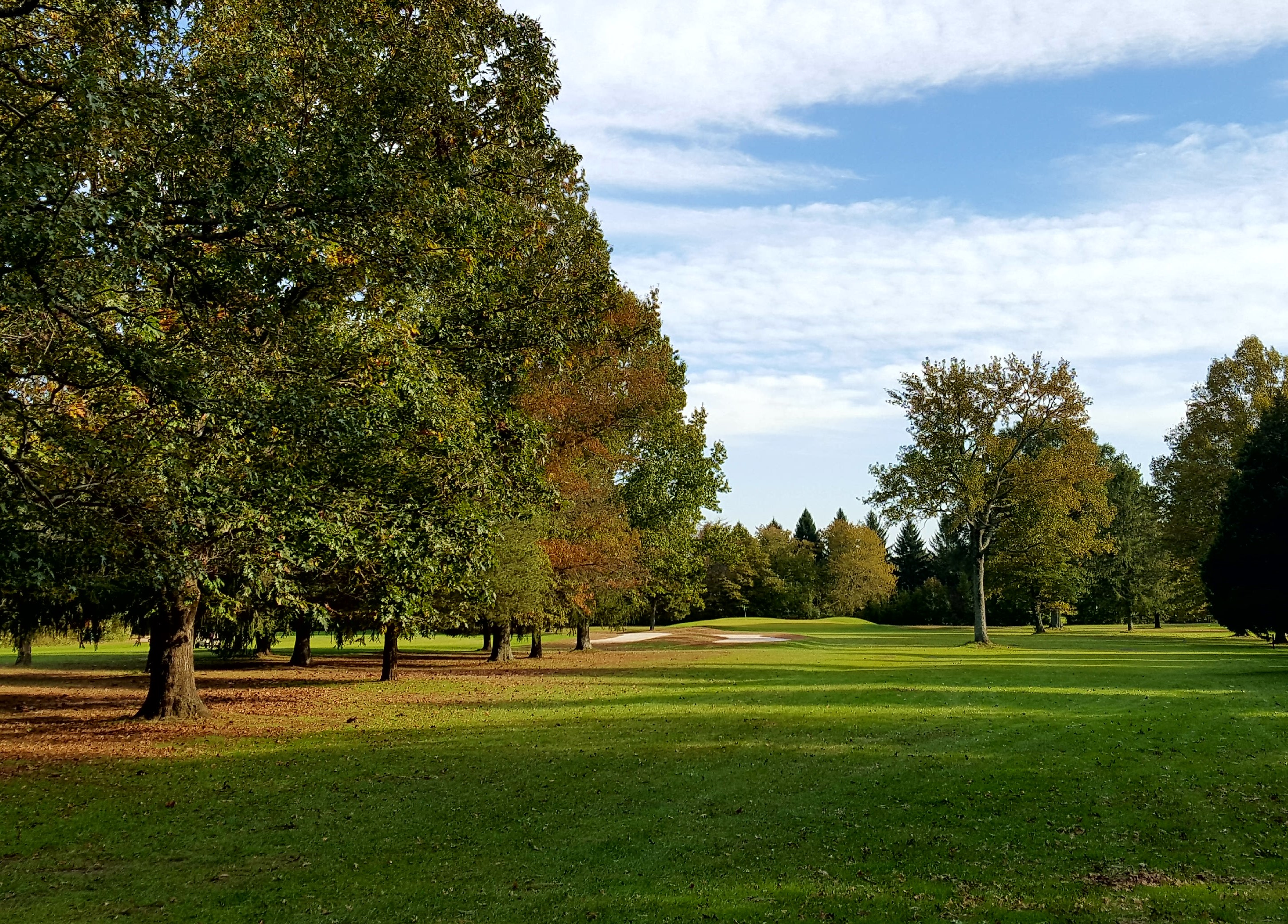
Numbers 6 through 9 (Heron Glen, Cream Ridge, Gambler Ridge, and Stonybrook)

The next four courses on my journey were all played with friends I met at work. Most of us were not serious golfers at the time, but we were all more than happy to find a course to play and socialize outside of the workplace. It’s interesting now to think about how today – outside of my family relationships – golf defines a large part of who I am. At the time I played these courses, though, it was just something I wanted to do occasionally.

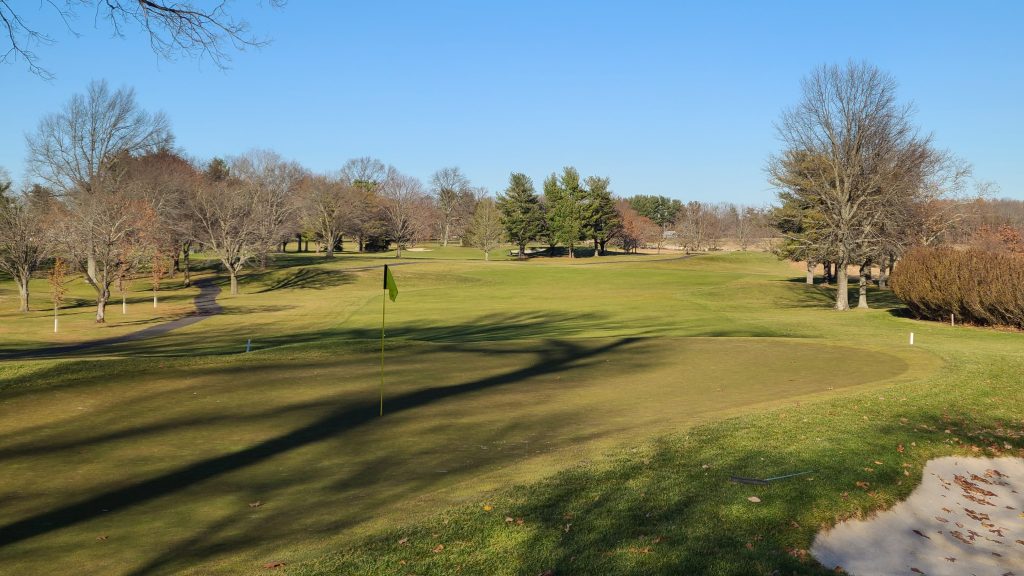
Heron Glen

Date: Undated, sometime in 2010

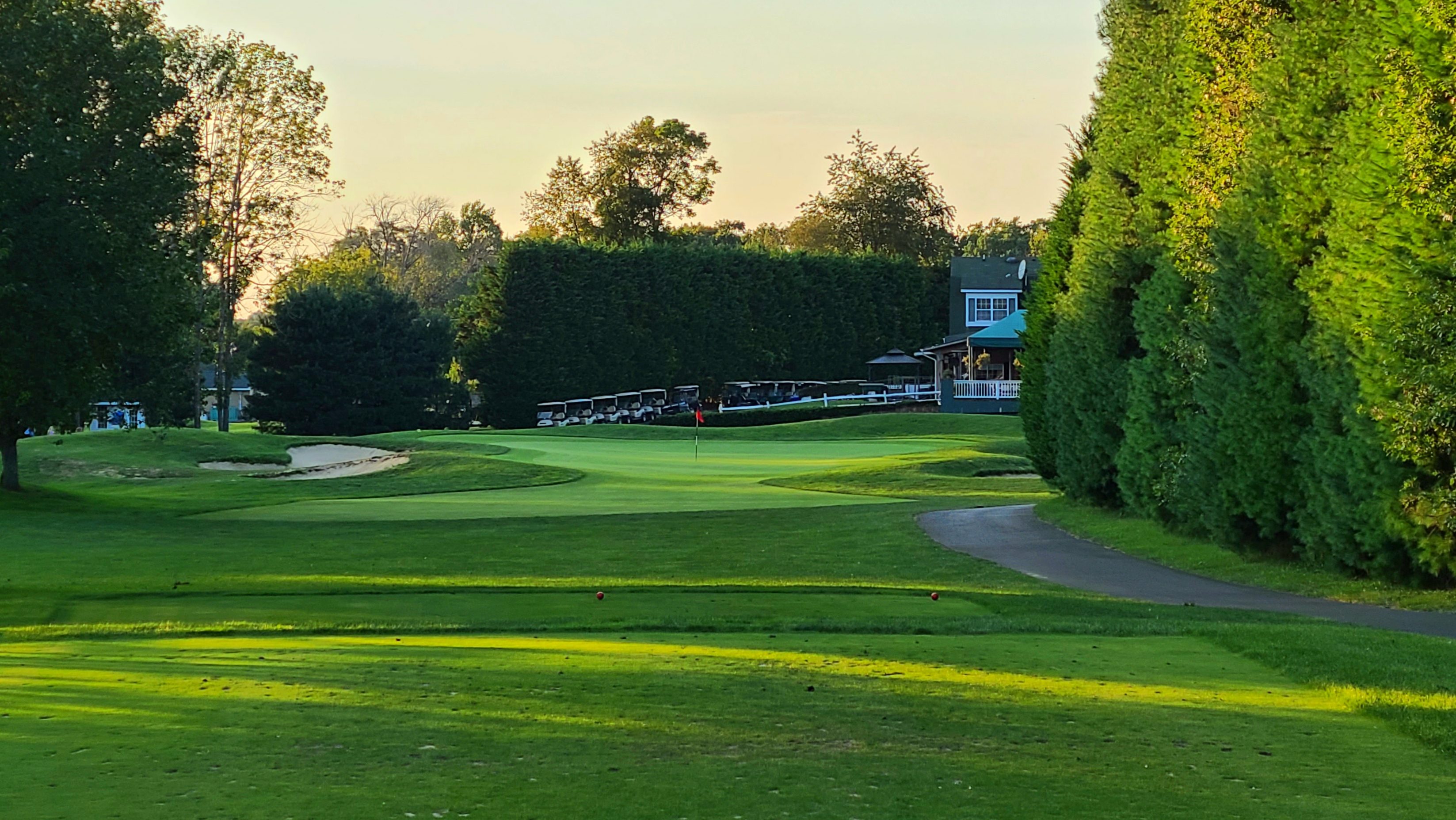
I switched jobs in 2008, and my wife and I moved to Somerset County shortly thereafter. Having made friends with a few coworkers a couple years into the new job, we eventually began to chat golf and planned to get out for a round together. Someone suggested that we play Heron Glen after work one day.

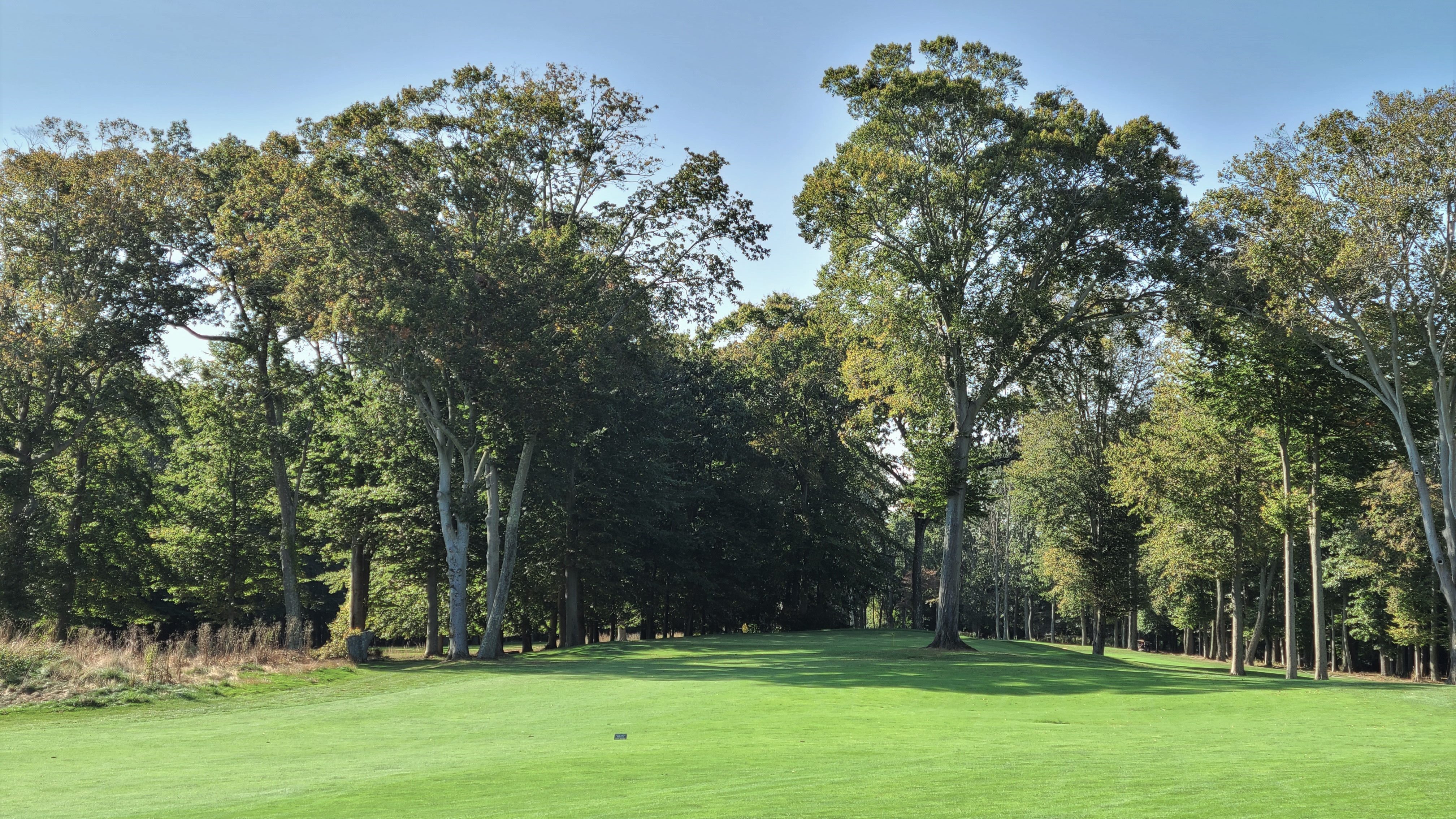
Located in Ringoes – which features some of the “wine country” of New Jersey – Heron Glen plays over 7,000 yards from the tips (but not from the tees we played) and is typically in pristine condition in season. While I have a soft spot for High Bridge Hills, Heron Glen is touted by many as the best public course of the three in Hunterdon County, and one of the best in the state. These posts from Erik Matuszewski show why.

Cream Ridge
Date: Undated, also sometime in 2010

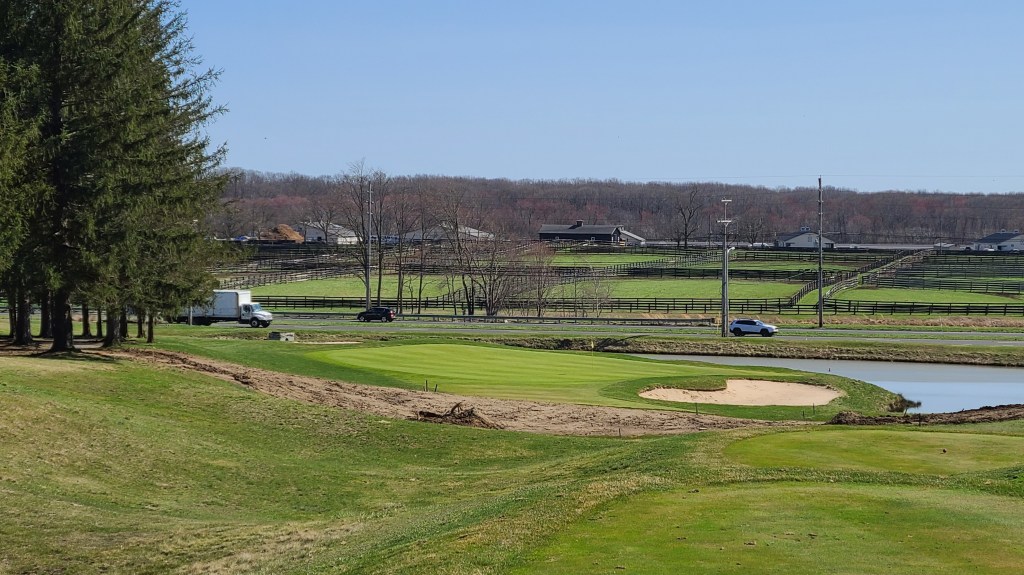
Moving from wine country to horse country, Cream Ridge is your average public course, situated in western Monmouth County. The final minutes of the drive to Cream Ridge will likely feature multiple plots of farmland and stables, regardless of which direction you’re coming from. My first round there was with one of said coworkers who, despite having left the company and the area, remains one of my very best friends to this day.

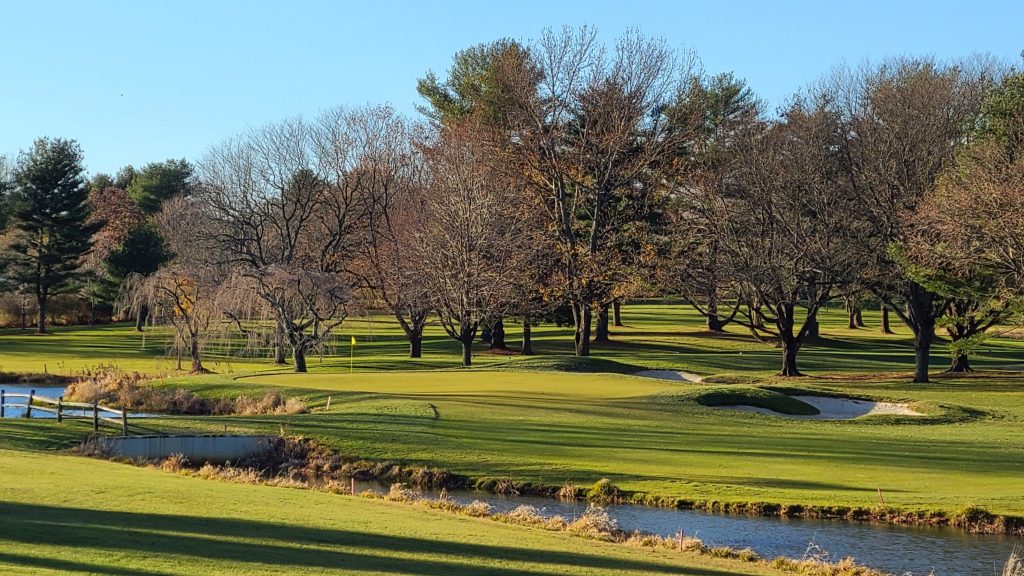
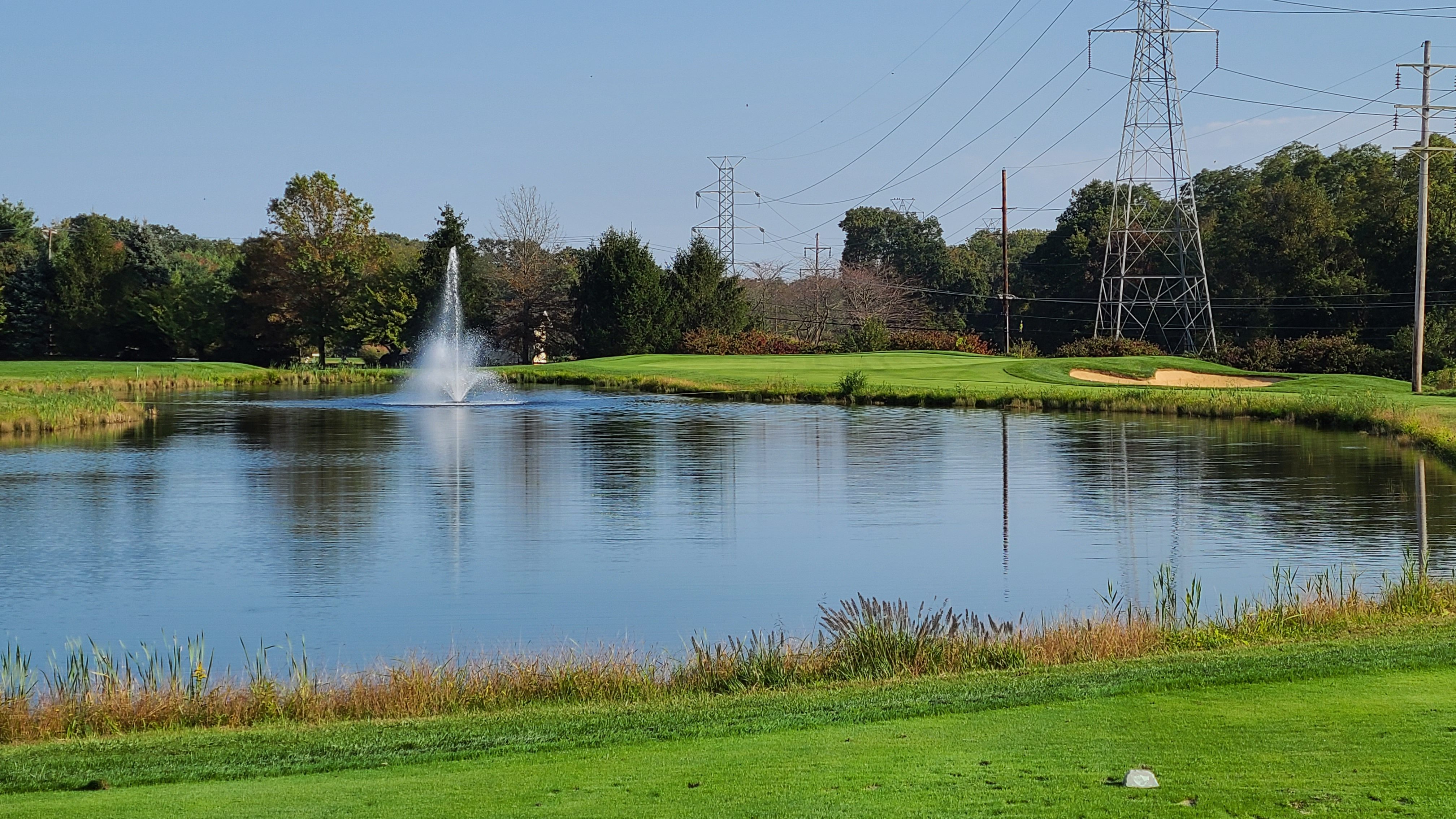
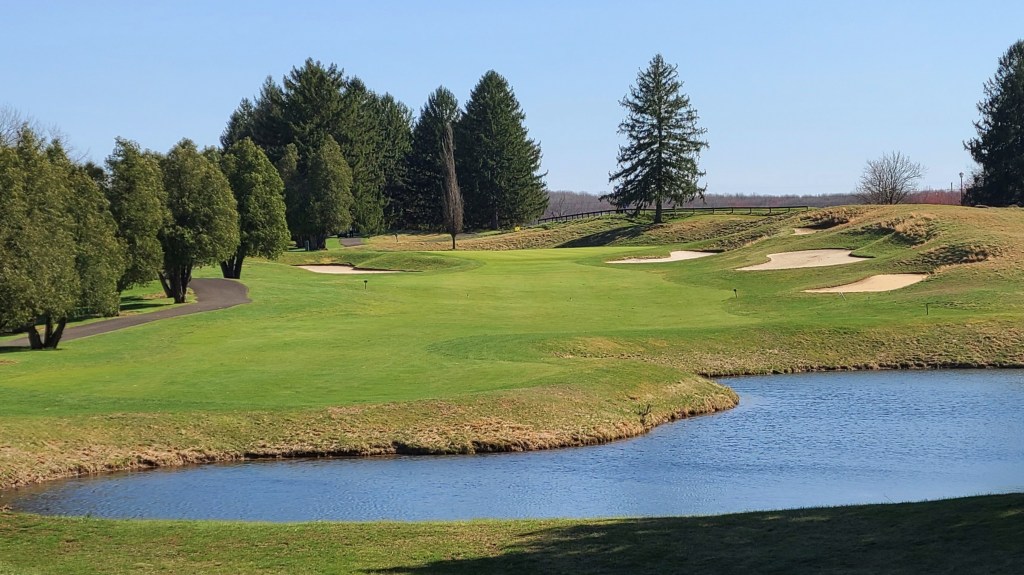
The course features water in a few places, a few interesting tee shots, but overall is relatively run-of-the-mill. I like the approaches into the greens at 3 (across a widened area of a creek at the bottom of this downhill par-4), 4 (really the par-3 tee shot), 8 (a well-mounded green), and 18, which is a par-5 that is reachable in two, but very dangerous as water guards the right side of the last leg of the hole.

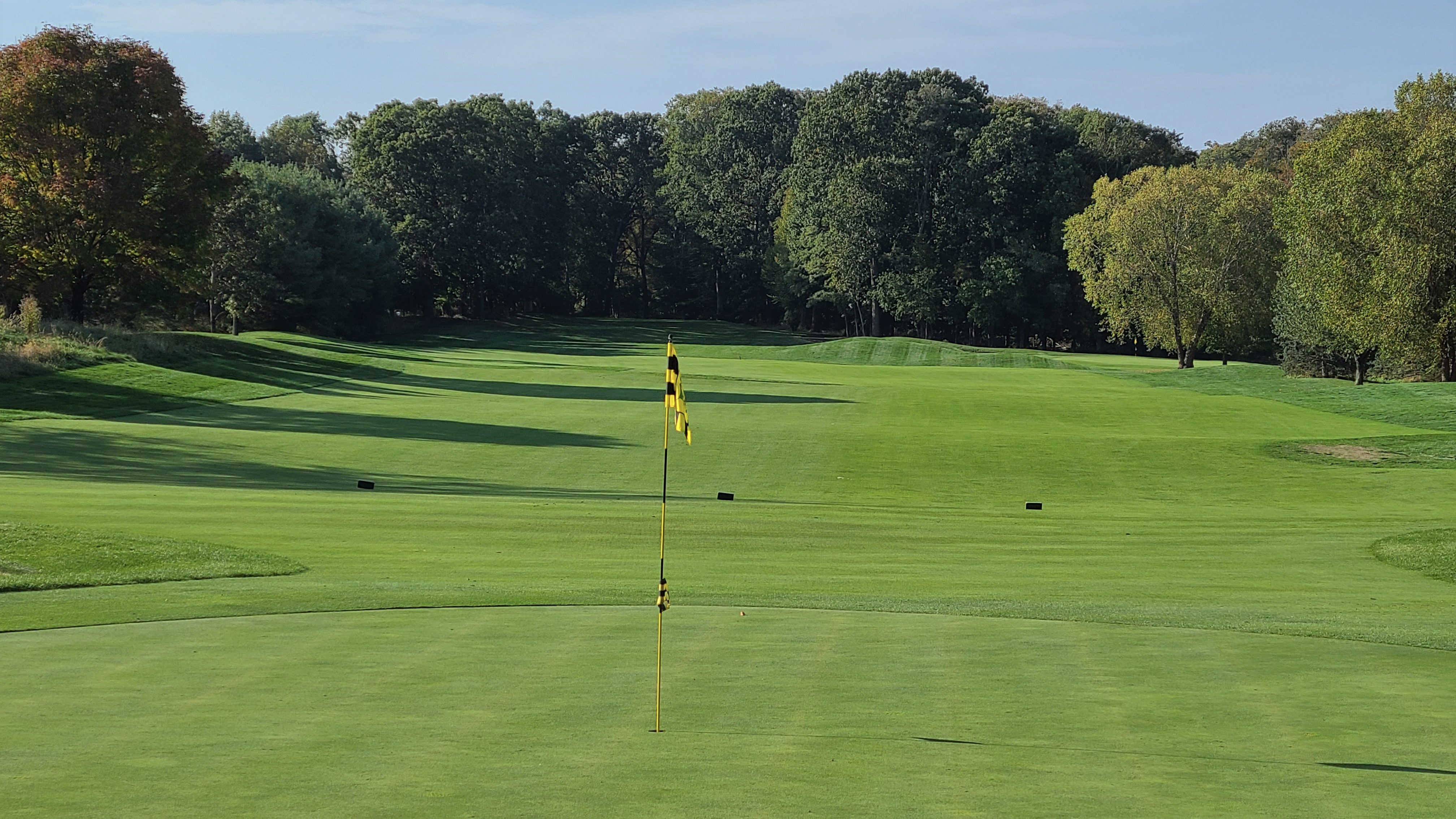
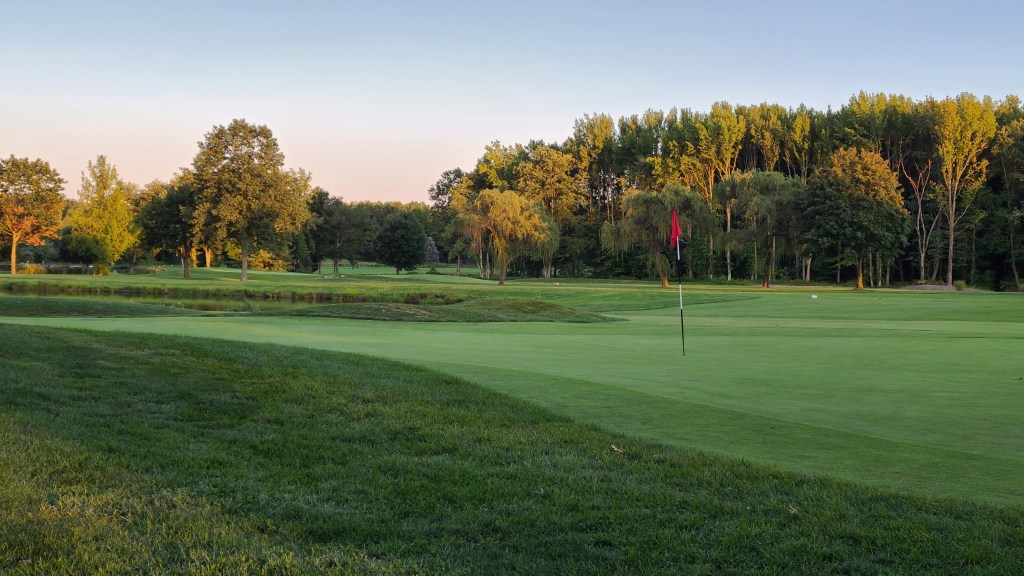
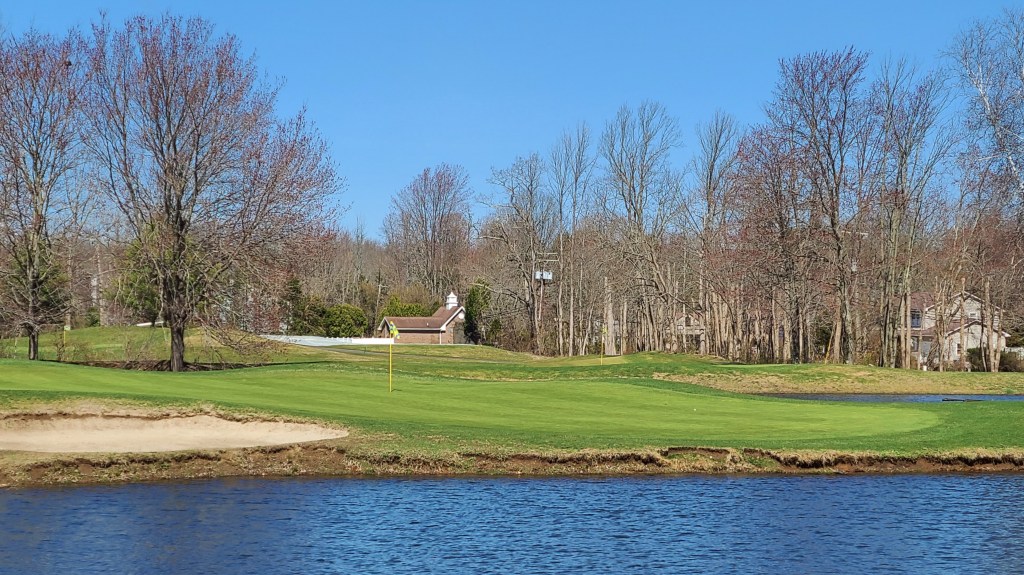
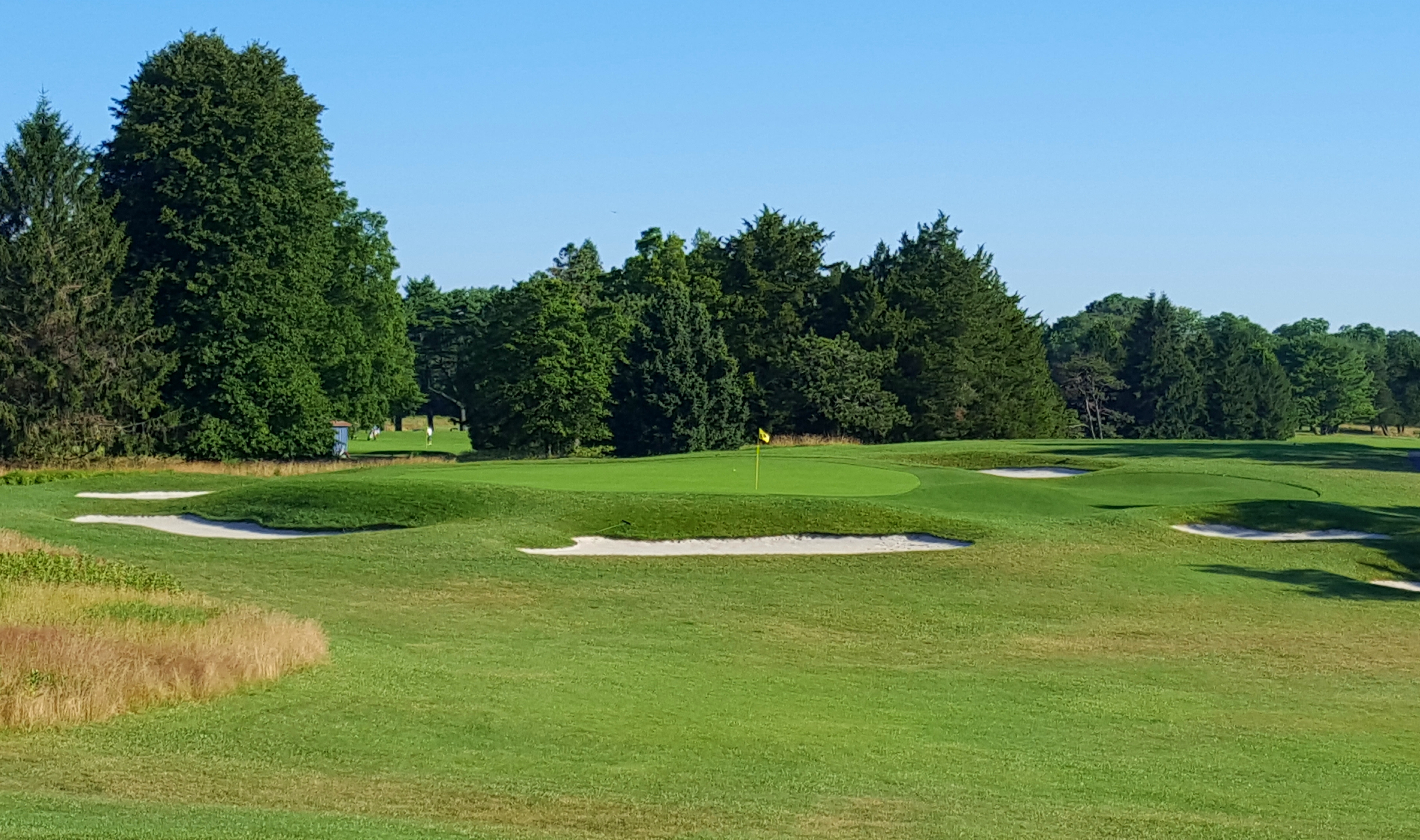
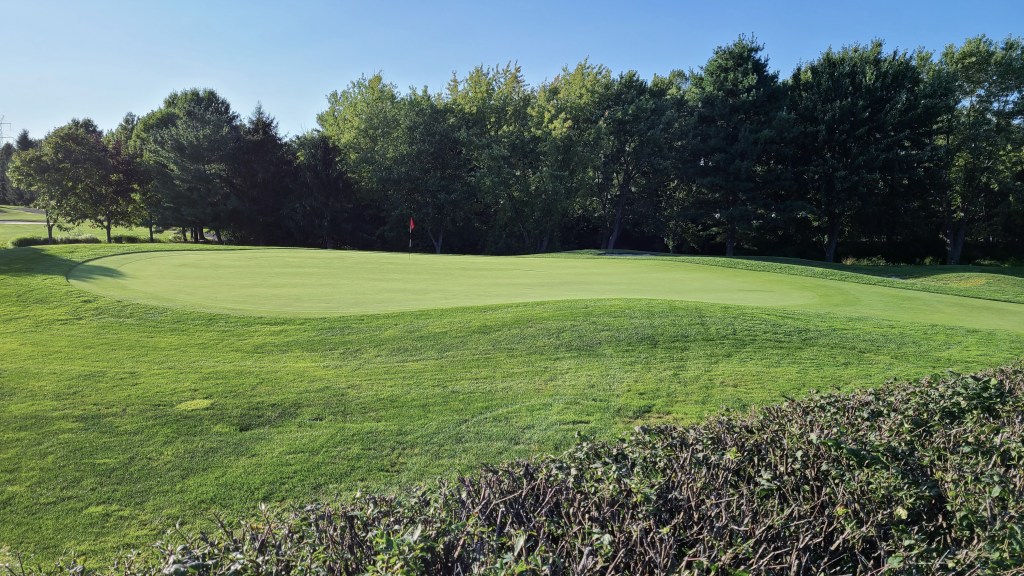
A shot from a 2016 round of the green at 18, looking back at the fairway.

Gambler Ridge

Date: 3/29/2013 (finally, a dated scorecard)

Three years later, a coworker was getting the word out about a Good Friday golf outing he was hosting at Gambler Ridge. Needless to say, I was excited to join.

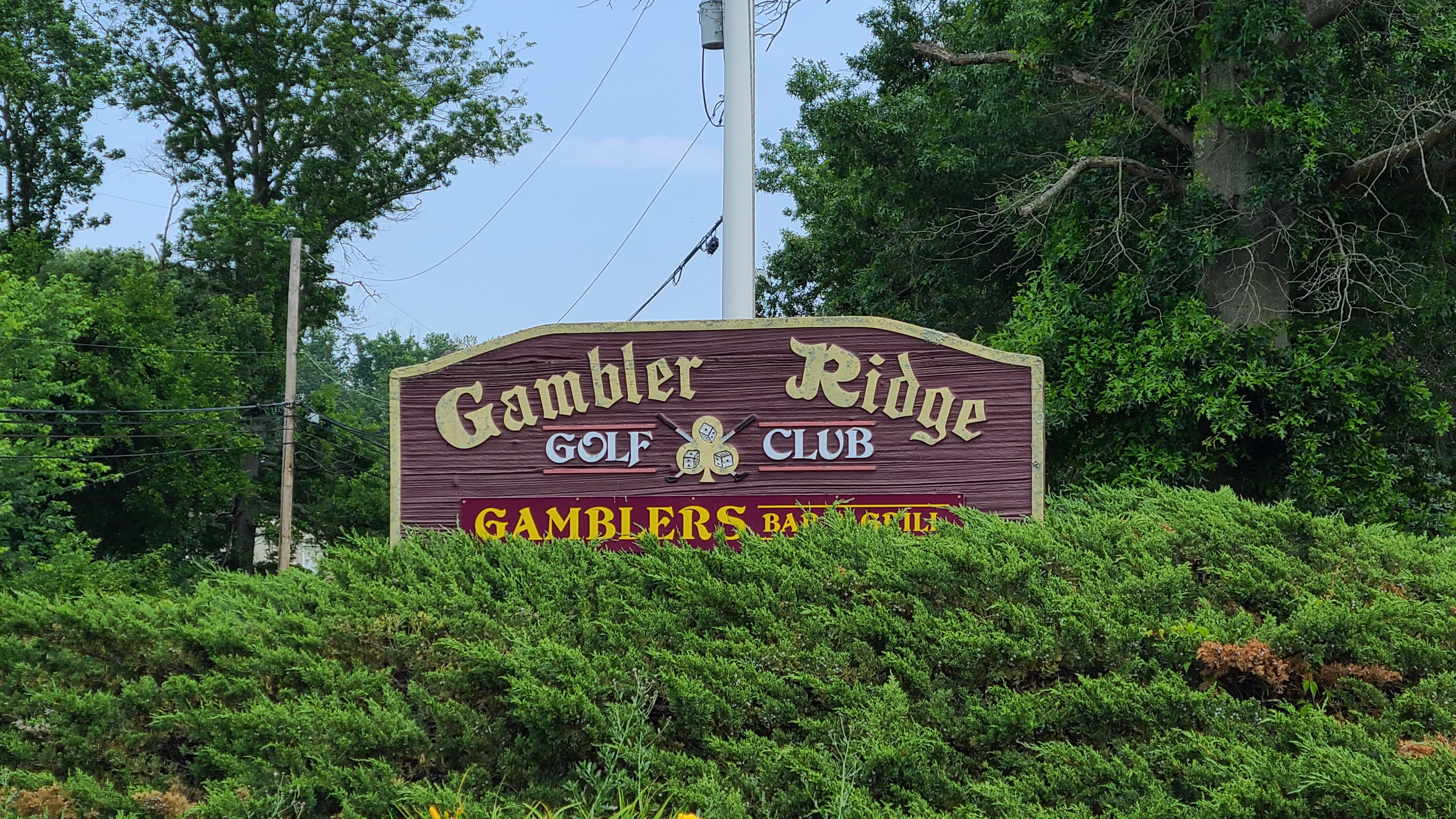
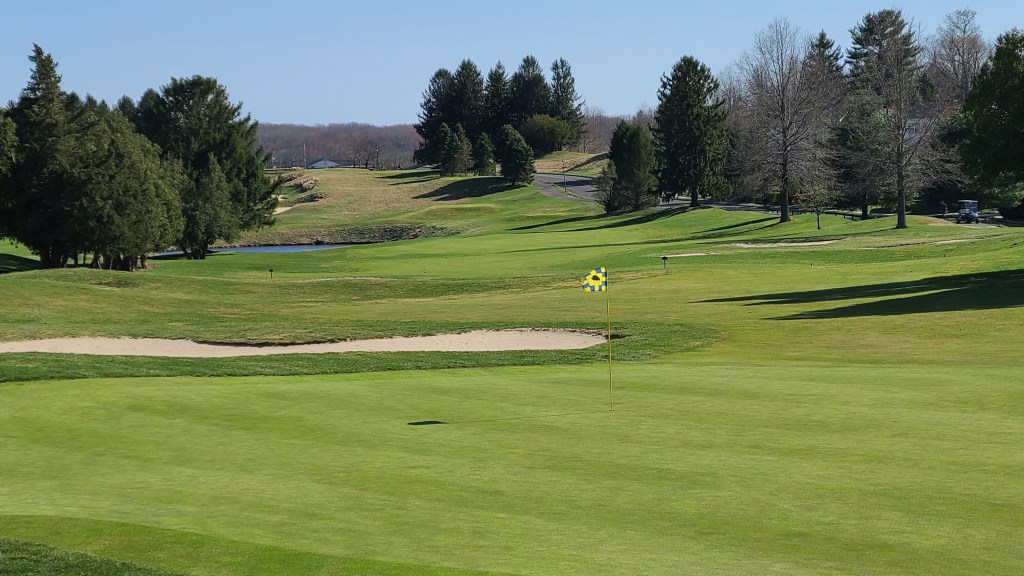
Just down the road from Cream Ridge Golf Course – and still in the town of Cream Ridge, NJ – Gambler Ridge is your everyman’s golf course. This is not a place you play to be wowed by layout or conditions. You play Gambler Ridge to knock it around with friends, have a few beers (if that’s your thing), and get a hot dog at the turn (which a friend of mine affectionately refers to as a Gambler Dog). Noteworthy features at Gambler Ridge are three drivable par-4 holes in 5, 6, and 13 (though attempting it at 6 and 13 is treacherous as water is significantly in play) and a double green for holes 15 and 17.

That first round at the outing was one of 16 to date (May 9, 2024) making Gambler Ridge far and away the course I’ve played the most. I’ve broken 80 a handful of times there, though the course does play easier than most and the tees are rated and sloped accordingly. My best round there – a 75 from the 6,294-yard “tips” for a differential of 6.2 – featured one of the craziest things that’s happened to me.

Coming up to the tee box at 10, with the group ahead of us very visibly still in the fairway, the starter asked why we weren’t teeing off. Pointing to the very visible group of people in the fairway, I said, “I don’t want to hit them.” The starter replies, “you’re not gonna hit them,” but he said it in a tone that said, “Given where THEY are in the fairway – and [possibly] considering the caliber of players I watch here on a daily basis – I don’t think YOU are capable of hitting it far enough to hit them.”

So, I indulged the starter.

I muttered something about waiving any potential liability to him (that’s not how it works, for anyone interested), teed my ball up, addressed it, and hit my drive. It was well struck, and we all watched as it drew off the right-side of the fairway, dangerously on a path towards the cart in the fairway. The ball came down, thankfully missing the group, but landing 5-10 yards left of the cart (well within the range of possibly hitting them) and bounded off into the left rough. They looked back at us, we looked back at the starter, and he was silent. Since he was concerned about pace of play, I put my driver back in my push cart, and jogged off to my ball.

It’s probably the one of the dumber things I’ve done on the golf course. It’s also probably one of the more irresponsible things that starter has done. Thankfully, no one was hurt.
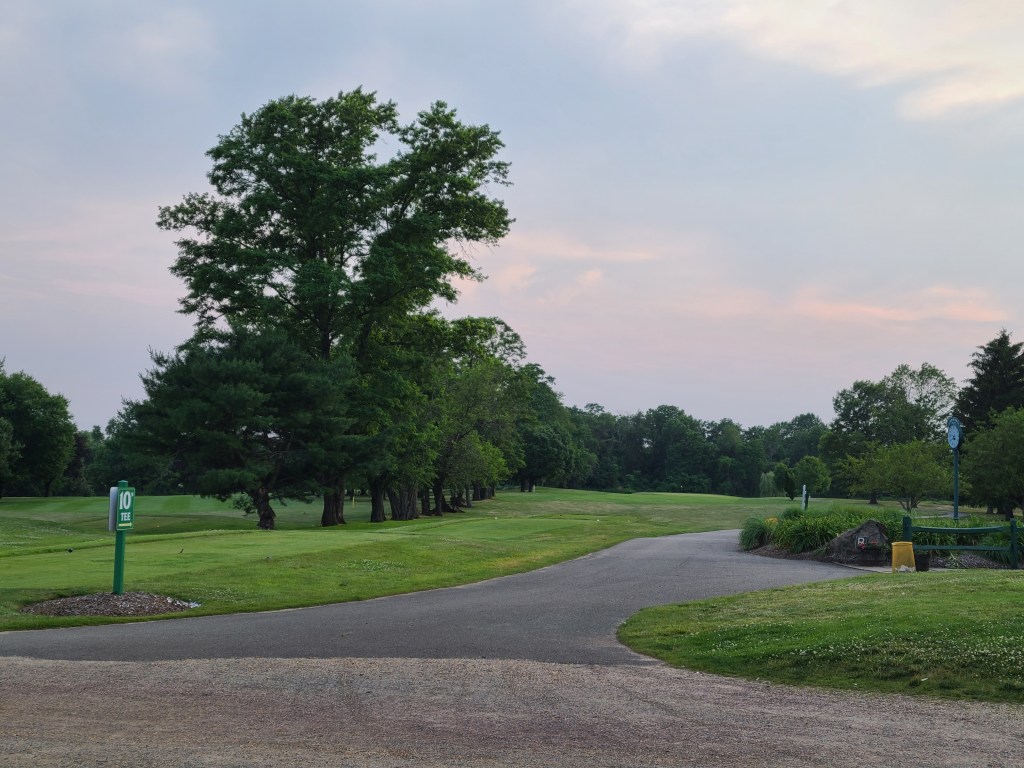
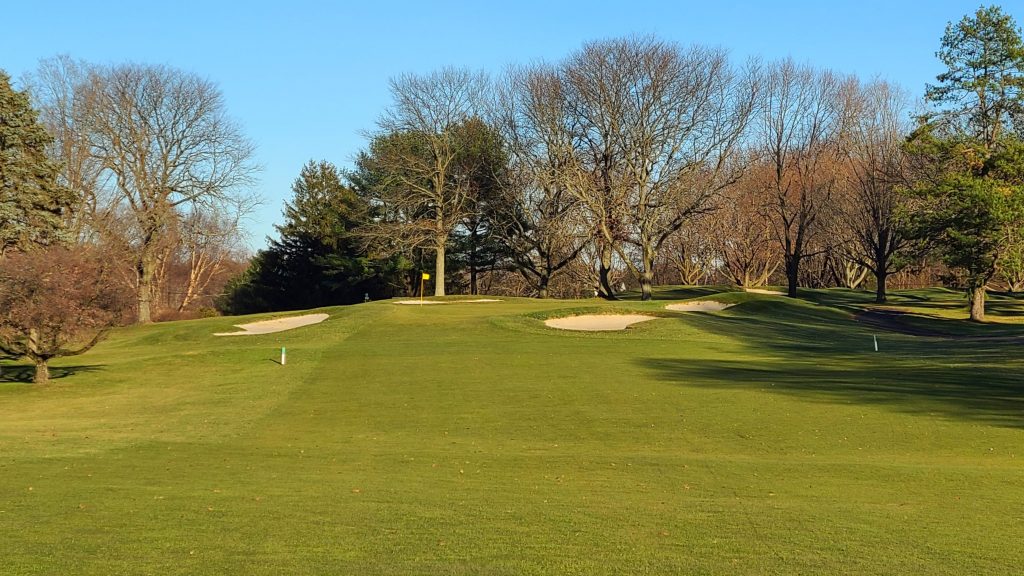
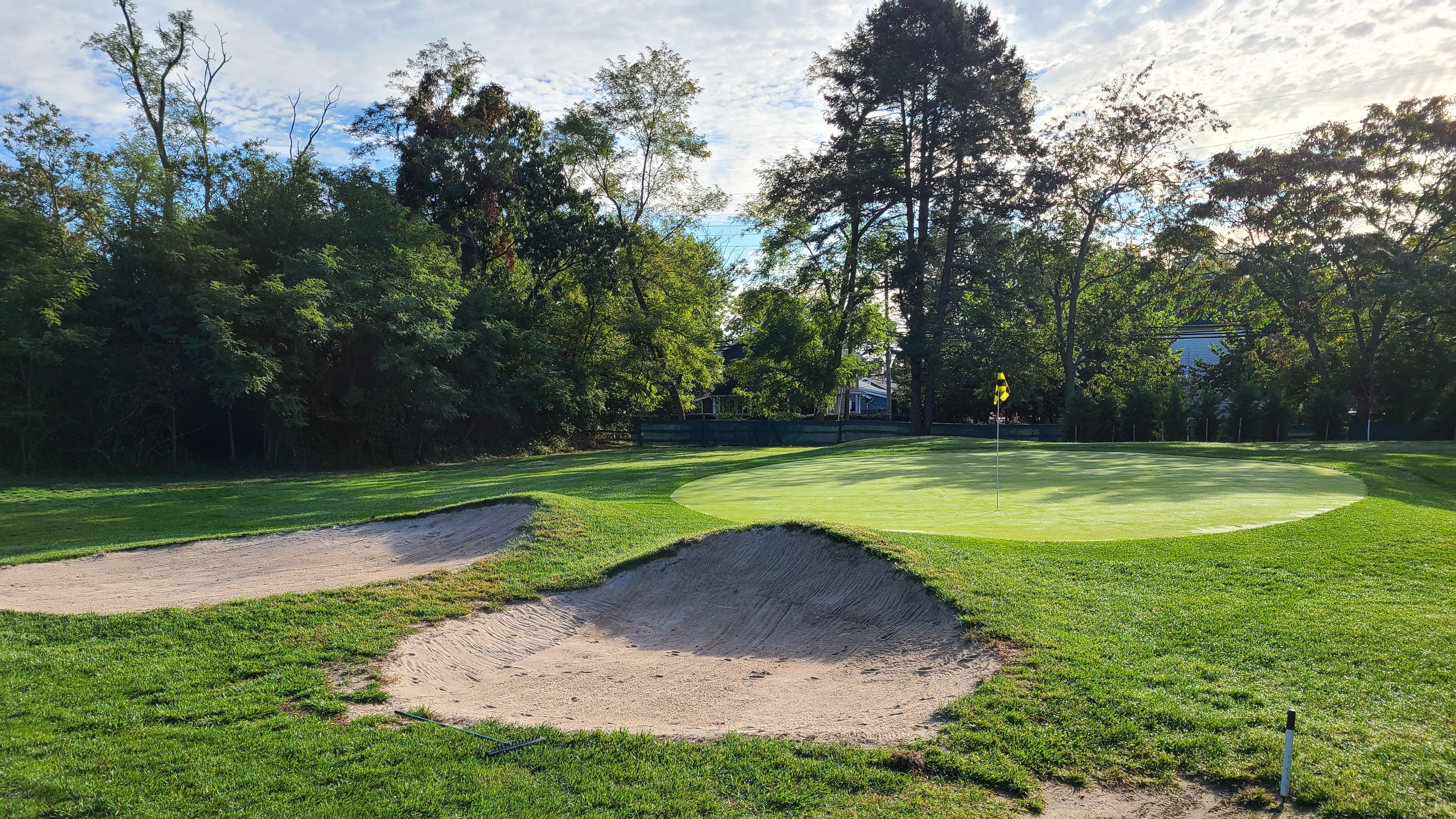
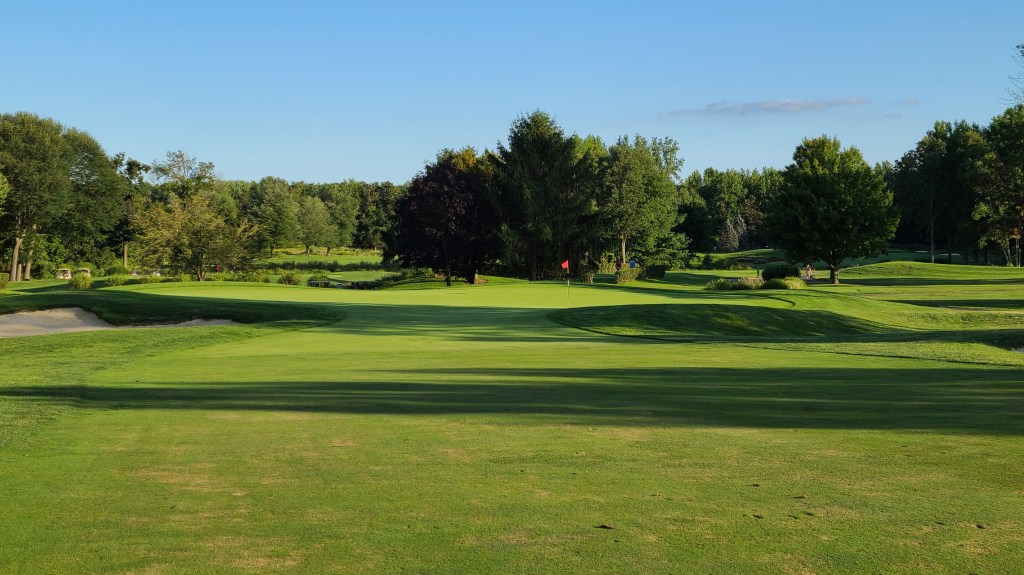
The 10th at Gambler Ridge. 385 yards from our tees, I had about 105 into the green from the left rough.

Stonybrook Golf Club

Date: 4/15/2013

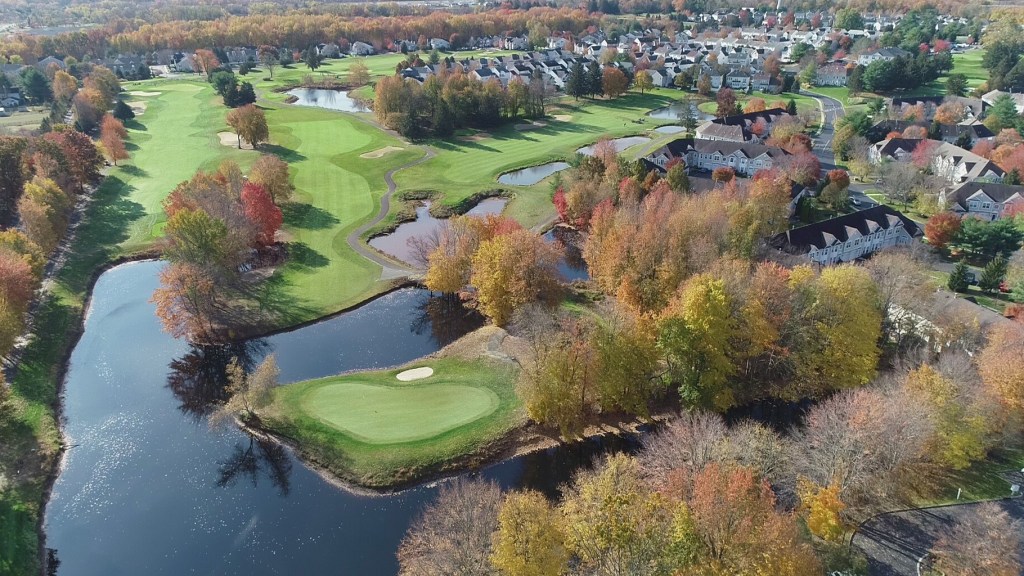
Finally, the 9th course played on my journey is the now-defunct Stonybrook Golf Club. A 3,514-yard par-62 executive course with four par-4s and two par-5s, it had the interesting scorecard feature of having the same sequence of par for both the front and back nines (4,3,3,4,3,5,3,3,3).
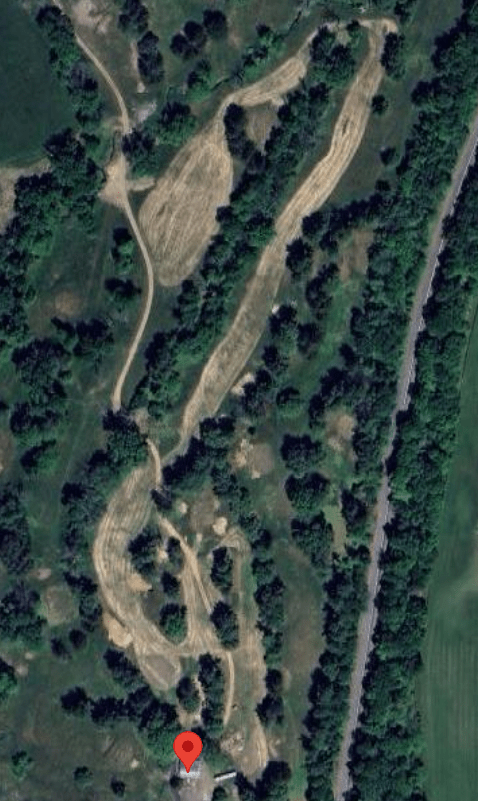
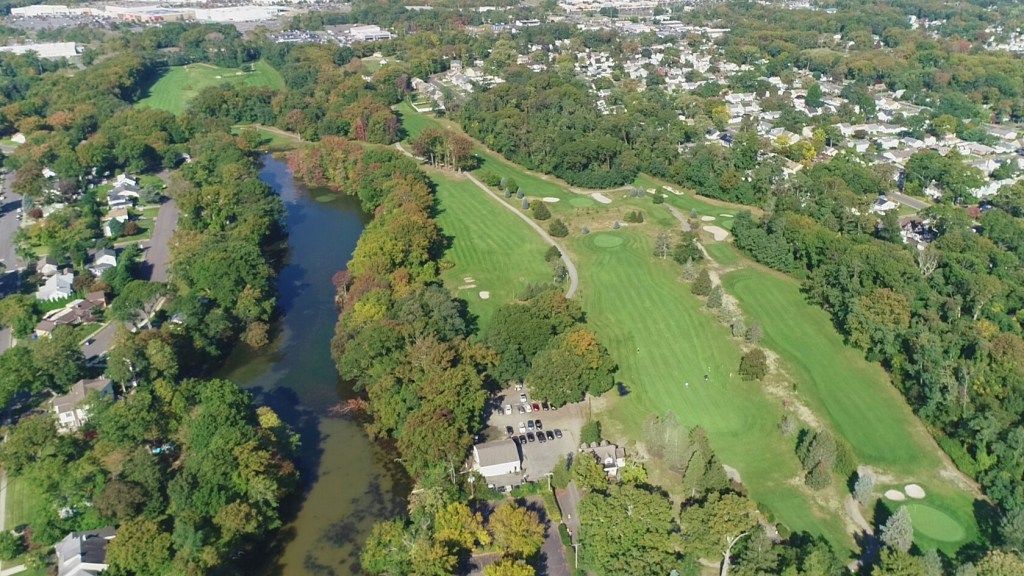
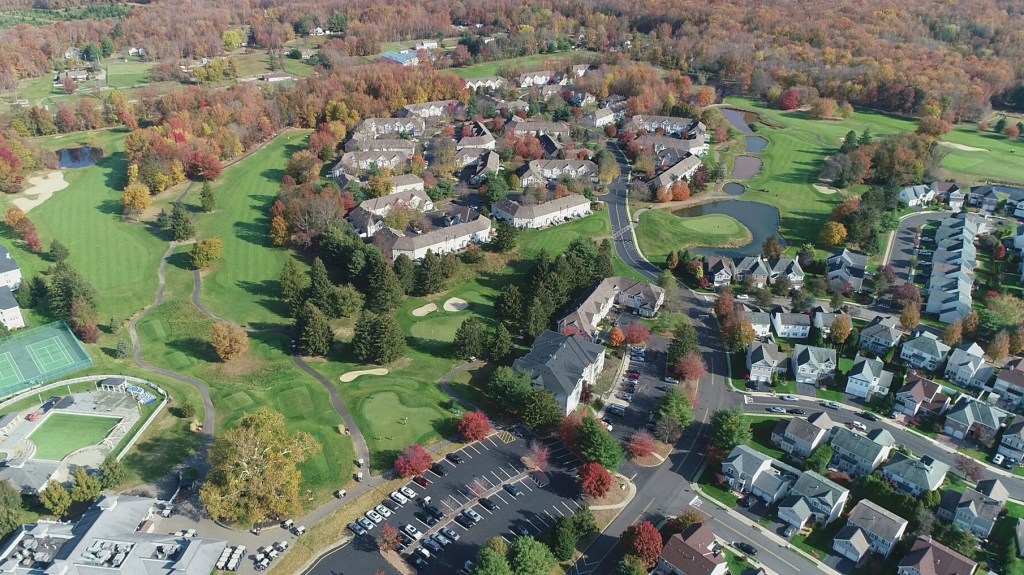
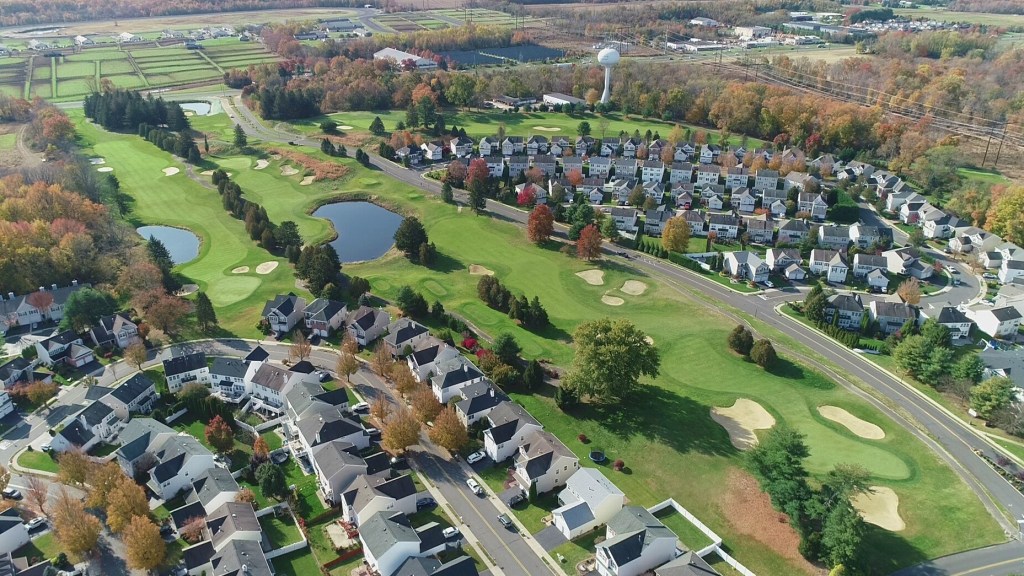
A satellite image showing the ghost of Stonybrook.

I barely have a recollection of the course. I remember almost being able to reach the green at the “par-4” 1st hole with a 3-iron (only 226 from the back tees). I’m relatively certain that the par-5 15th finished with a hard left into the green. Other than that, I see a few moments here and there from my round with my coworkers, one of which would be with me at Hyatt Hills later that year when I discovered I would be taking on this quest to play all the publics. But I would only play Stonybrook three times, and much like the course, any other recollection is now gone.
Numbers 6 through 9 (Heron Glen, Cream Ridge, Gambler Ridge, and Stonybrook)

Number 128 (Hominy Hill)

Date played: 12/12/2021

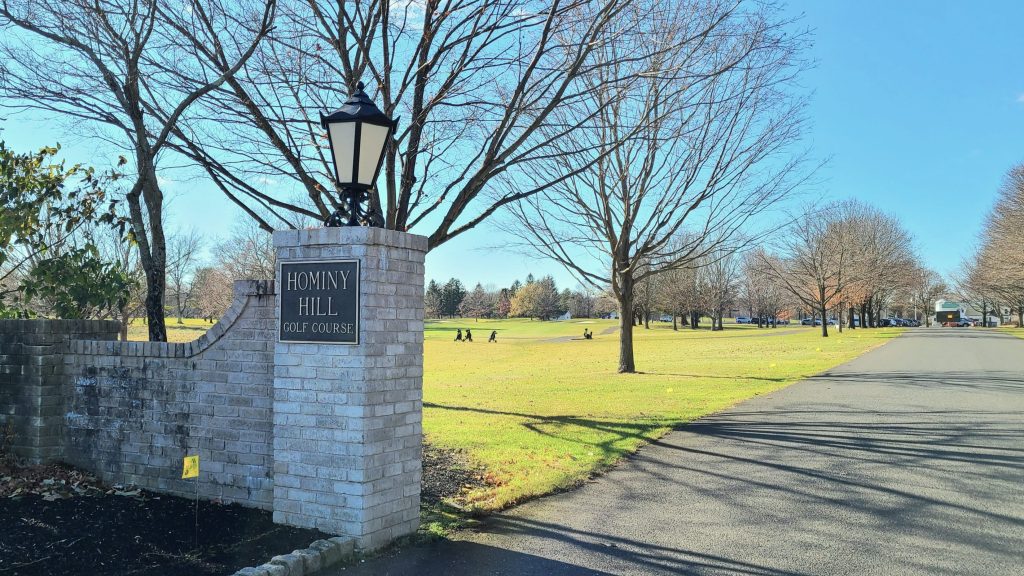
The gate at Hominy Hill.

I’ve met a number of people on my journey around the state through social media. While most of them are just golfers like me, some of them work in the turf industry, a vocation I have a deep appreciation for. One of those people is Mike Williams.

At the time we first spoke on Twitter, he was at Meadows at Middlesex. In 2020, he became the superintendent at Colts Neck. We had been chatting about getting together and playing, and at the end of 2021, we finally made that happen at Hominy Hill.

While we had to play a winter round to meet, we picked a pretty good day to do it. Reaching around 50 degrees in New Jersey in the middle of December was a blessing, and the course played wonderfully. If you’re looking for a challenging but really enjoyable round of golf, Hominy Hill Golf Course fits the bill. Located in Colts Neck, Hominy Hill is a beautiful 18-hole layout designed by Robert Trent Jones Sr. that plays over 7,000 yards from the back tees. It has even hosted the USGA National Amateur Public Links championship on more than one occasion.

While the “hominy” in its name has nothing to do with the food – as clarified in this Monmouth County Park Systems blog post – the “hill” correctly hints at what I would describe as the perfect amount of elevation changes throughout the routing of a course not set on a mountainside. The course winds through gently rolling hills in classic parkland style, but I would say that landing areas are more generous than most public courses. Some greens were challenging even at December speeds, so I can only imagine how well they roll in prime season.

This is a course that came with a good deal of hype and was relatively unknown to me. Unlike big name properties like the Crystal Springs Resort courses and Atlantic County courses like Twisted Dune and Seaview, the average golfer on the outskirts of New Jersey may not know about Hominy Hill. Before I cataloged all of the courses in the state, I was one of them. Yet, a few people over the years had let me know that it would be one to look forward to.

Even in December, the course lived up to the hype. From the conditions, to the variety of holes, to the fact that it’s actually a part of the Monmouth County system, I rate it among the best publics in the state and count it as one of my must-play recommendations.

Apart from being a day at a spectacular course, it was great to have met up with Mike at Hominy Hill. As with everyone that has joined me on my quest, it was great to walk the course and chat about his work. I’ve learned that everyone who dedicates their professional career to turf management puts in a ton of dedication and effort, and Mike is no exception. Not only is he another New Jersey golf enthusiast, but he’s also someone who actually brings this hobby and passion of ours to life.

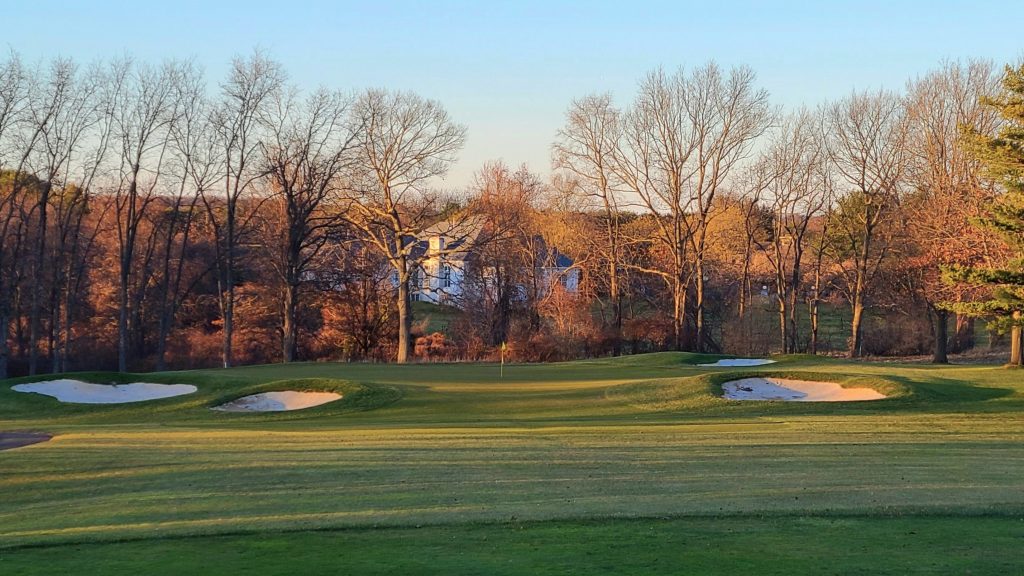
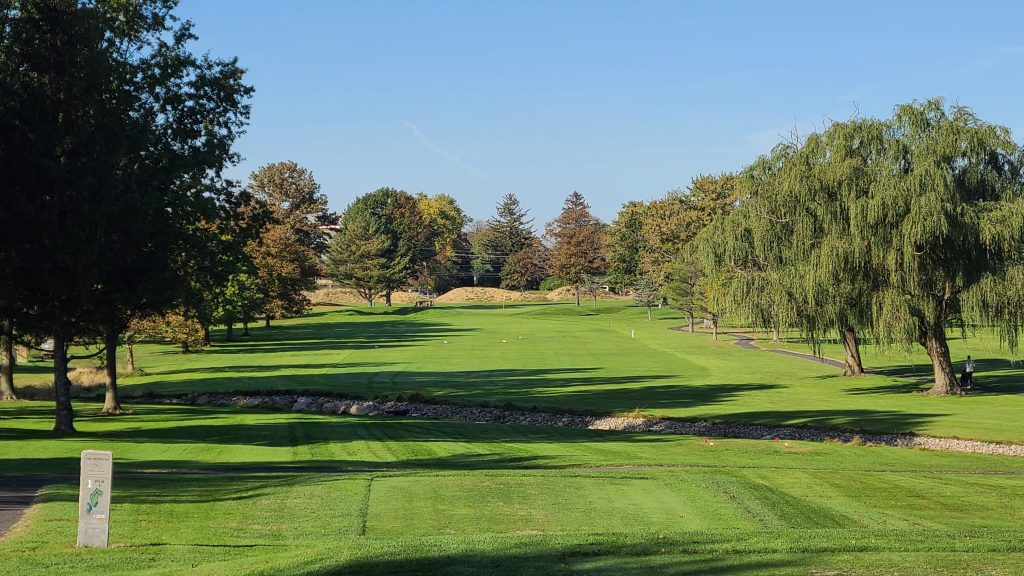
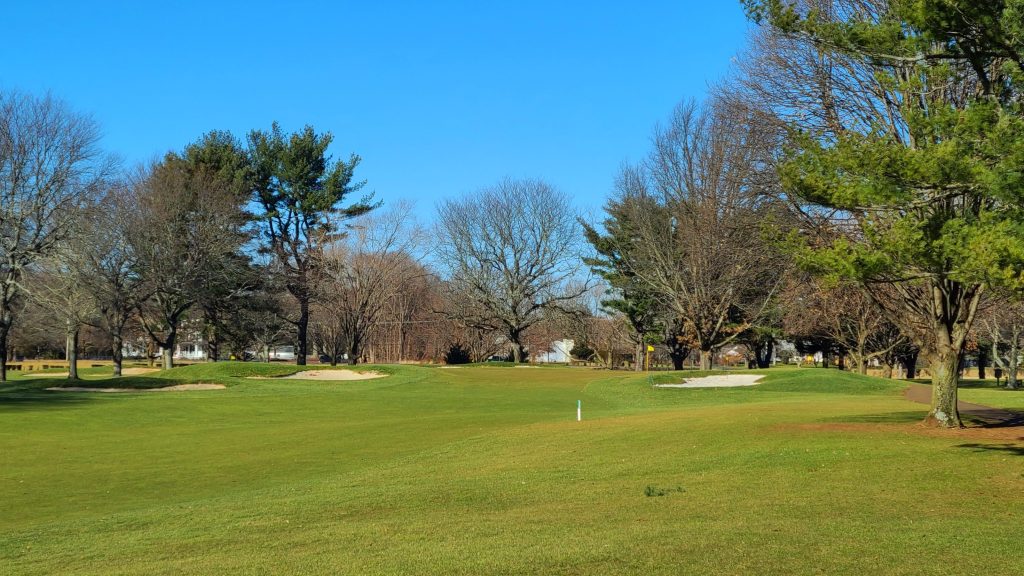
The approach at 1.
A look back at 8.
The uphill approach at 10.
11, a picturesque par 3.
Unabashedly proud of my drive at 13, a 370-yard par 4 from the white tees (… it may or may not have taken one or more hops on the cart path).
13 green.
The final approach at the par-5 14th must cross a creek to find the dance floor.
Looking back from behind 14 green, you can see how the hole plays downhill almost the whole way.
15 green.
16, another pretty, but long par 3 with a wide green complex.
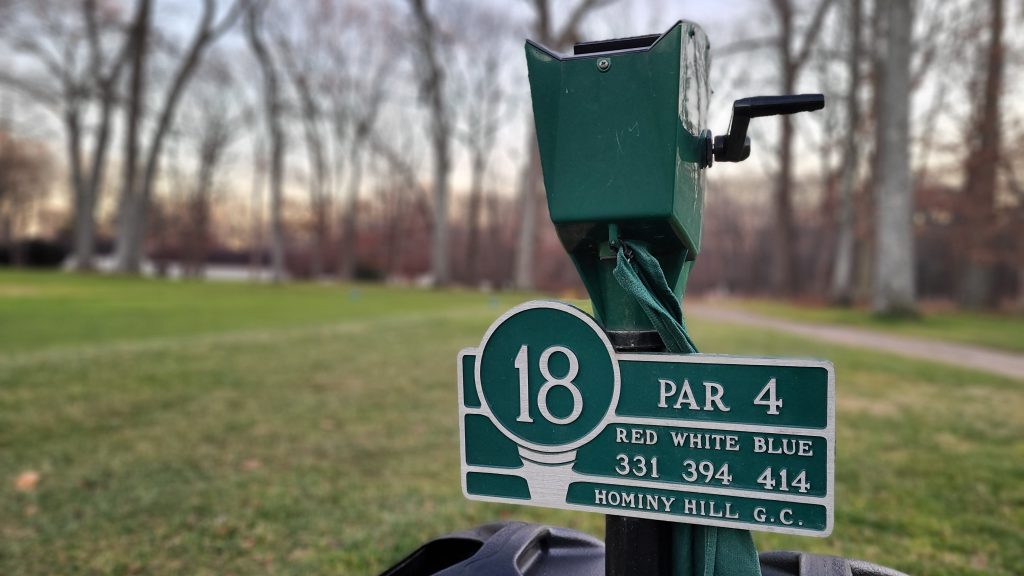
I love these hole markers.
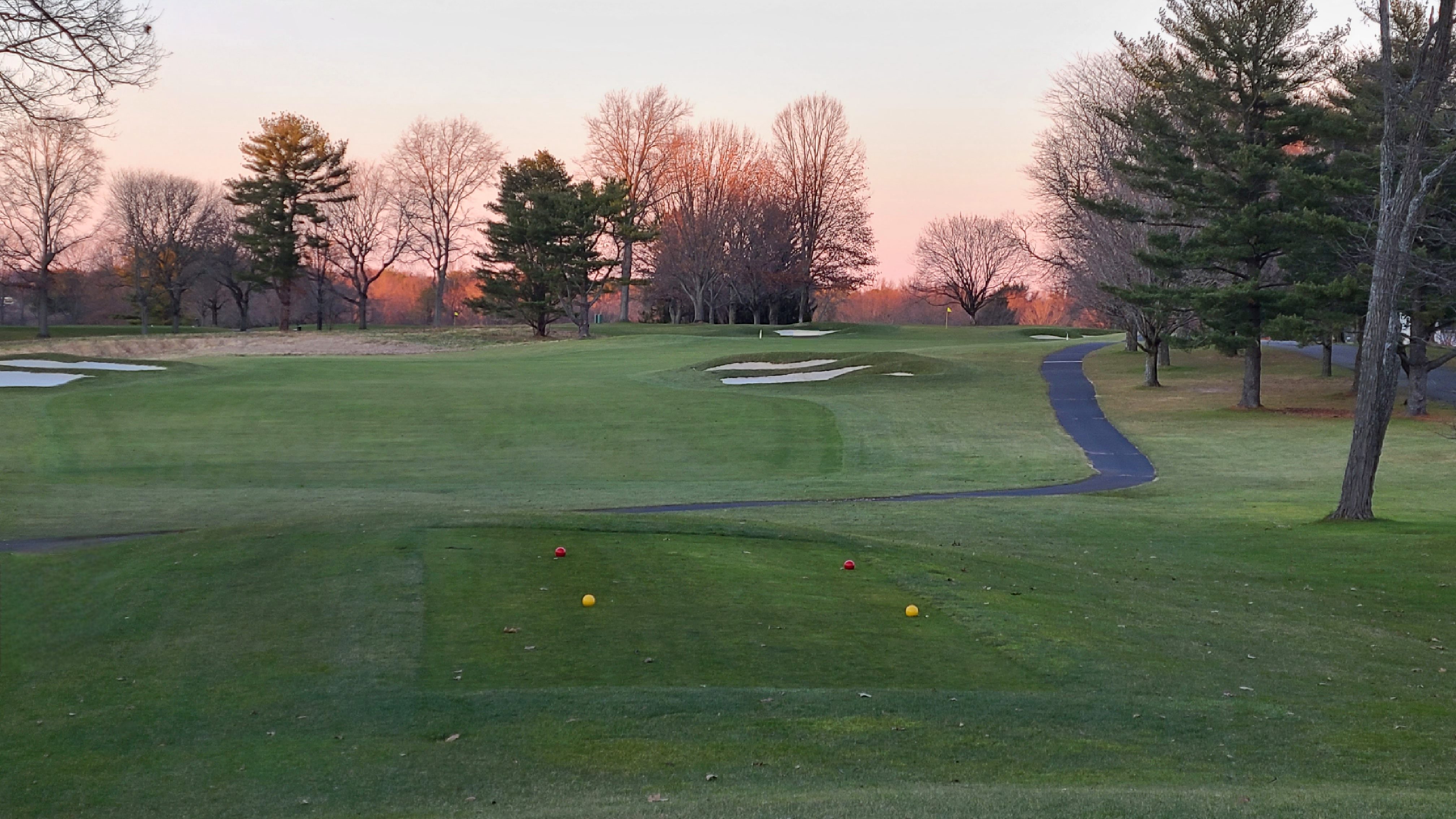
The finishing hole at Hominy Hill.
Number 128 (Hominy Hill)

Number 123 (Suneagles Golf Club)

Date played: 10/21/2021

“I maintain that the Suneagles Course ranks among the best of my creations.”

– A. W. Tillinghast

That quote can be found on the scorecard for Suneagles Golf Club, the 123rd stop on my quest. For those familiar with Tillinghast’s courses, that is really saying something. In New Jersey alone, he designed the layouts for renowned private clubs such as Ridgewood, Somerset Hills, and Baltusrol.

Whether or not he meant it, it’s always interesting to play a course designed by a famous architect. For the average golfer playing municipal courses and other daily-fee publics, it’s unlikely you’ll run into many of them. Oddly enough, Suneagles is about two miles from another Tillinghast design, Old Orchard Country Club. However, having the same designer is where the similarities end.

The quality of Suneagles is certainly above what I found at Old Orchard. Granted, while I played them at two very different times of the year – October versus February – the condition of tee boxes, greens, and bunkering at Suneagles were noticeably better. The bunkers in particular seemed brand new, just one example of an ongoing renovation effort.

With that renovation has come increased cost to golfers, which is certainly understandable. Peak season rates can reach over $100 to ride on weekends. Thankfully, I was able to walk the course on a weekday for $37. Apart from knowing that you’re playing a course with some history, I don’t know that I could justify $100 tee time to the average weekend golfer.

The course is in good enough shape, but there are some low-lying holes – like 8, 10, and 11 – that did hold some water which made conditioning difficult. At that price point, though, you’re approaching some of the best publics in the state, and most golfers will want to see that value all around the course.

Having said that, I liked my time at Suneagles. I chose to play from the 6,385-yard back tees and managed relatively well for my game. That is about the course length limit that I enjoy playing and none of the holes felt too long, with its yardage being distributed evenly among the par 3s, 4s, and 5s. One interesting note about the course is that the holes are each named, something which is almost an exoticism for public courses – at least in New Jersey – and that I can only remember seeing at Laguna Oaks. The par-3s, for instance, are named “Puck”, “Lake”, “Clipper”, and “Island”.

Whether you’d like to add Tillinghast to your list of architects whose courses you’ve played, or you’re just looking for another public golf option in Monmouth County, Suneagles is certainly worth a look at its cheaper rates. If you need to play on a weekend, I recommend walking in the afternoon. At the time of writing, that should get you a rate between $50 and $60, a price for which the course can certainly provide adequate value.

The opening tee shot on “First” at Suneagles. Until the 8th hole, all of the driver holes are pretty straight.
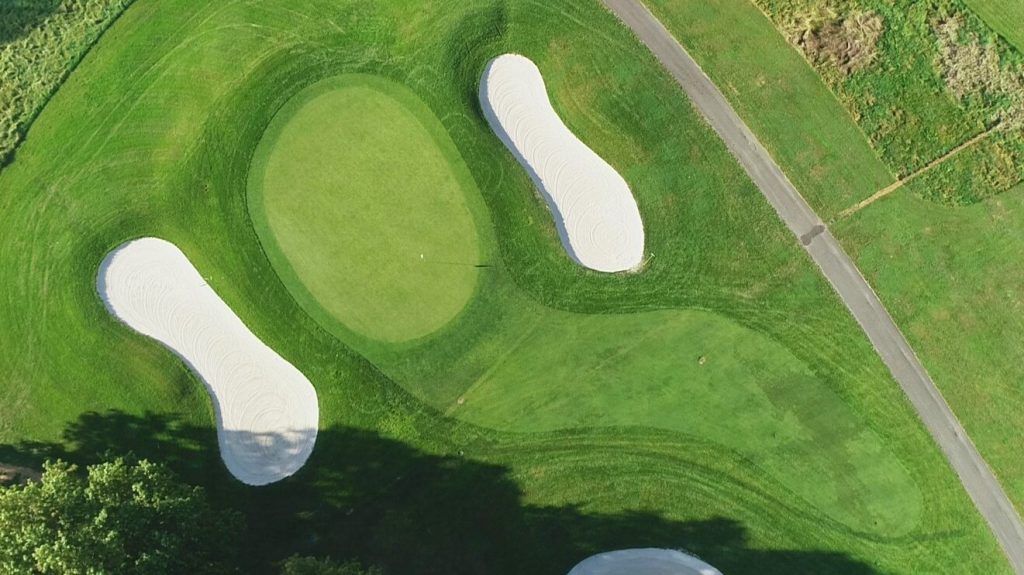
Bird’s-eye view of the green complex at the par-3 2nd, “Puck”. I thought it looked like an elephant, but some on Twitter cleverly noted that it resembles Edvard Munch’s “The Scream”.
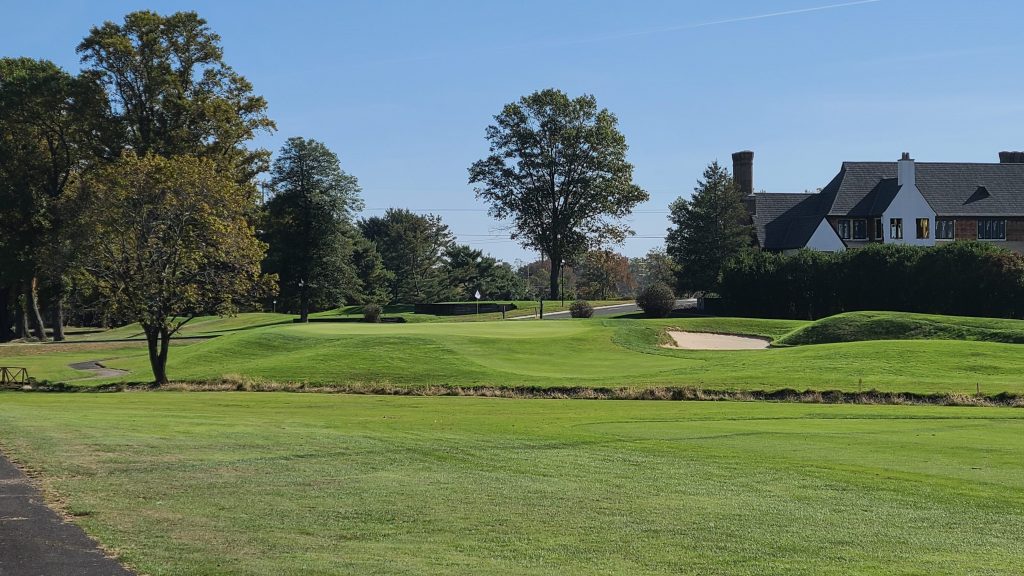
The approach into 6 (“Brook”) if you’re a little left of the fairway.
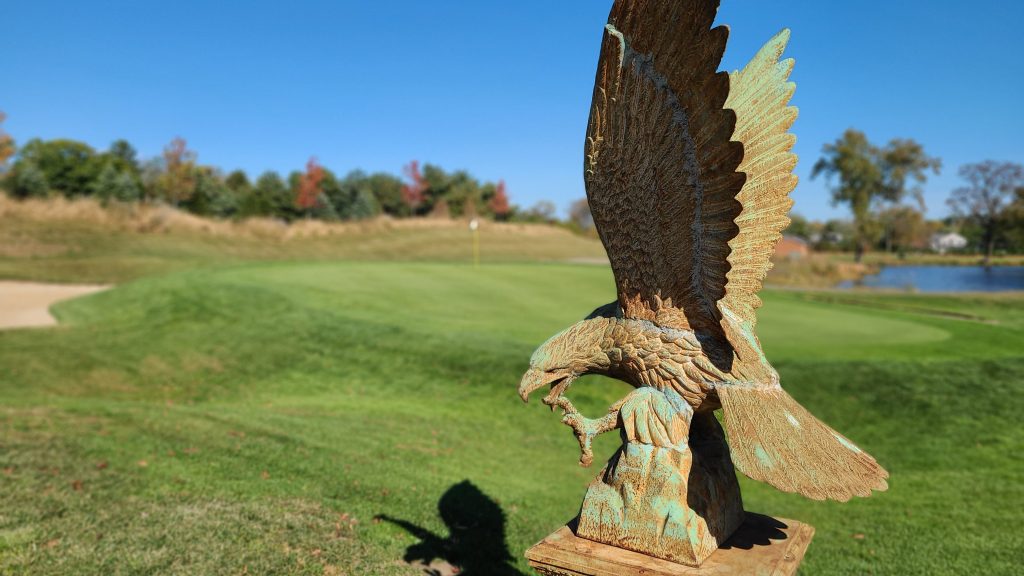
One of the two eagle statues that line the clubhouse drive, with the green of the par-3 7th in the background.
The 7th (“Lake”) from the tees.
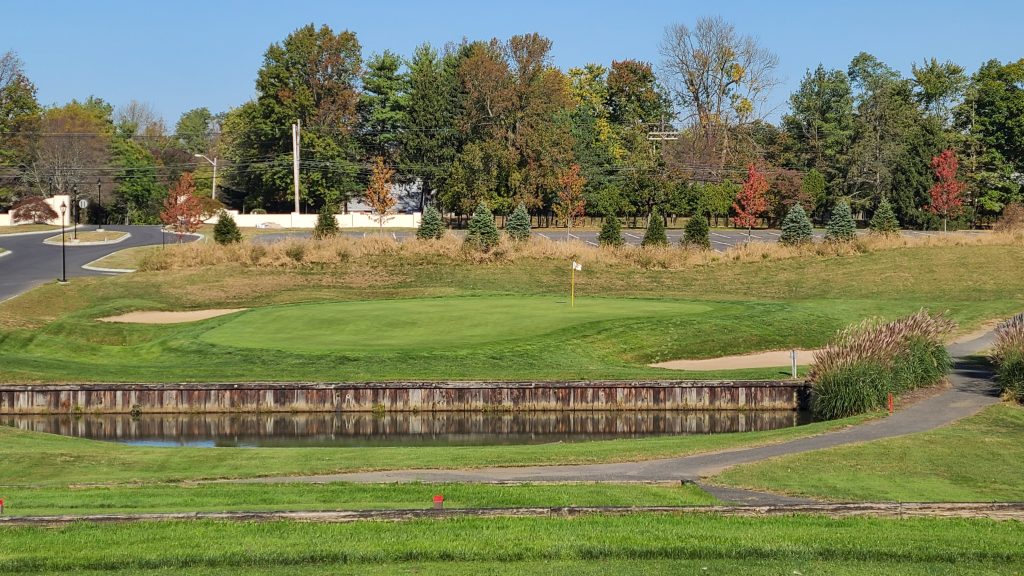
A look at the landing area, pond, and green at 10 (“Turn”).
A wild drive placed me on the wrong side of these trees to the right of the dog-leg-right fairway at 13.
Looking back at 13 (“Jonah”).
The green at 18 (“Home”).
Number 123 (Suneagles Golf Club)

Number 122 (Colts Neck Golf Club)

Date: 10/15/2021

After finishing up at Colonial Terrace, I headed over to Colts Neck Golf Club. Being a semi-private course, I had a short debate with myself about whether or not it should count on this journey. When posting about it on Twitter, most responded that it should, with sentiments like “if you can get on without an invite, it counts”. I’m not sure where I draw the line on what should be considered “public”, but ultimately, I felt like there were enough tee times available to the general public on a daily basis for it to count on the journey.

The course was an absolute treat to walk for $40 on a weekday in October. I’m not sure if that’s just a fall rate, but that is easily one of the best values in the state. I haven’t listed it as one of my “must play” publics – though, as I write this, I’m debating whether I should – but I do highly recommend it, especially if you can get that anything close to that price.

Hole 2, with a look at the farmhouse style clubhouse in the background.

The course has just the right amount of elevation change – particularly through the middle third – striking a great balance between a completely flat layout and a mountain golf course. The conditions are some of the best I’ve seen in the state, which perhaps should be expected, given its semi-private status. Were it a strictly daily-fee course, it would be among the very best in that category in New Jersey.

Some of the middle third of Colts Neck. The 5th plays off to the left of the frame. The par-5 6th runs from left to right in the backdrop. A short par-3 7th is in the distance in the top-right corner, with 8 coming back parallel to 6. The tees at 9 and the green at 11 straddle the pond.

I happened to play exceptionally well, scoring my best ever differential to par. While I did not make an eagle at either of the par-5s at Colonial Terrace, I did hole an 18-foot putt on 17 at Colts Neck for my third career eagle. (To be fair to the course, the tees were probably 60-80 yards up from where they should have been, so it was more like a birdie on a long par-4.)

Overall, I felt that most of the course sets up nicely for the average golfer and does well to provide variety in its 6,281 yards. A majority of driving holes have room to miss, a couple of the par-5s are reachable in two shots for long hitters, and there are six par-3s with a decent mix of yardages (as short as 133 to as long as 233).

If I had to pick one blemish at Colts Neck, it would have to be the approach shot at 13. The green is oddly guarded by two massive trees, making 2nd shot efforts like aiming for a railway tunnel. But as you can see from the rest of the pictures, that is me really looking for something to pick on. This Monmouth County course is absolutely worth a play.

The green and surround at 8.
The almost drivable par-4 9th. I ended up in the greenside bunker beyond the small trees.
The actual Colts Neck colt at 10! (OK… it’s just a statue.)
The par-3 10th.
The approach at 13, with its tall guardians. As it happens in great scoring rounds, I had my share of luck at Colts Neck. On this shot, I meant to play a bit of a low cut starting left of the center of the “entrance”. I ended up hitting a kind of bladed push that just skipped over the left roots of the tree on the right. Though it’s not all that visible in the picture, the pin is just beyond there at the front of the green. Better lucky than good!
A look back at 17.
18. The power and telephone lines distract a bit from its beauty, but this is a solid par-3 finishing hole.
Number 122 (Colts Neck Golf Club)

Number 121 (William F. Larkin Golf Course at Colonial Terrace)

Date: 10/15/2021

At 2,616 yards for its nine holes, Colonial Terrace was a short stop on the journey. Dedicated to William F. Larkin – long-time mayor of Ocean, NJ where the course is located – the course plays to a par of 35, which includes two par-5 holes.

The 4th and 7th holes are 415 and 430 yards respectively. If you’re still searching for your first eagle, this may be the place to do it.

The par-5 4th and 7th holes

Or is it?

The USGA states that in order for a hole to be considered a par-5, it must have a minimum yardage of 450 yards for men, and 370 yards for women. Which raises an interesting quandary: if you hole out in three shots on one of these holes, are you counting it as an eagle?

I say ‘yes’. To me, you can only play what’s presented to you. If the scorecard says it’s a par 5, then it’s a par 5.

The opening hole

The layout is entirely flat and plays generally open, where even the holes around the perimeter have some room to bail out towards the center of the course. The greens are small and will test your approach play.

Loved these bunkers on 9

Overall, I enjoyed my time at Colonial Terrace. For $13 to walk nine holes on a weekday, it’s tough to find a better place to practice. It’s about a mile from Asbury Park and would make for a great casual round on a beach weekend.

Colonial Terrace from above. The 4th hole is in the upper-left corner, its green being the furthest point from the clubhouse on the property. The 7th is in the top third at the center of the frame, coming back towards the bottom-right corner, where you can see the 9th green.
Number 121 (William F. Larkin Golf Course at Colonial Terrace)

Number 120 (Pebble Creek)

Date: 9/4/2021

As the summer closed out in 2021, my good friend Ed and I took a look at our schedules to see when we could meet up to play some golf. Everything lined up for us to get out on the Saturday of Labor Day weekend. We chose Pebble Creek, a Monmouth County course I still hadn’t gotten to.

Nice little clubhouse and pro shop. Dutch farmhouse style? I don’t know. I’m a golfer, not an architect.

As I waited for Ed to arrive, I spent time chipping and putting at the practice green. Ed had a long drive and was set to get to the course just in time, so I moved all my stuff onto the cart and queued up. When I saw his car pull in, I drove out to the parking lot and helped him get his bag set up so we could get back to the first tee as soon as possible. Thankfully, we made it without issue.

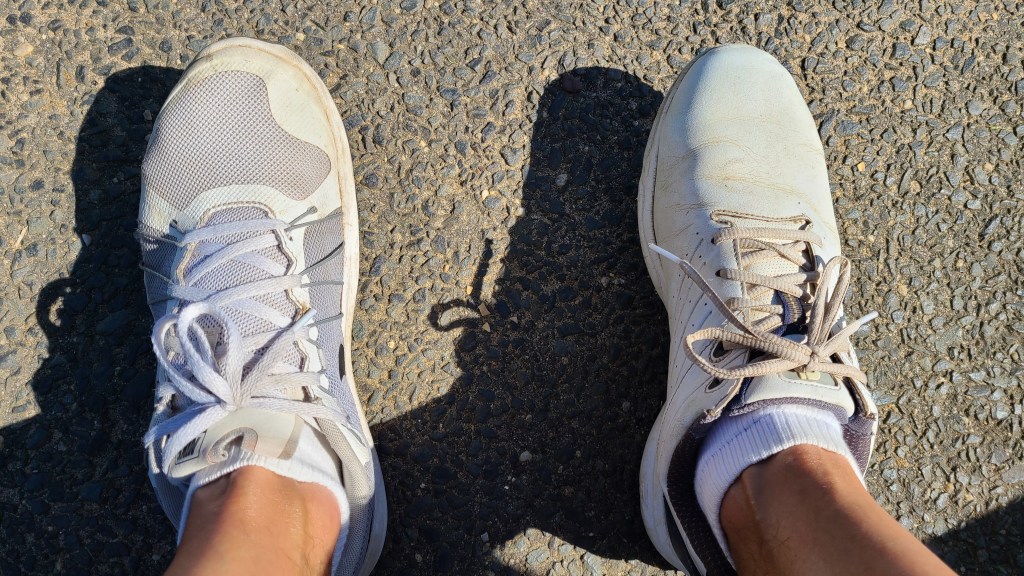
We teed off at the first, and after I hit a sweet little pull-hook, we were off. Once I played my recovery shot, we both hit our final approaches and made our way to the green. As I stood over my ball to putt, I noticed that something looked off.

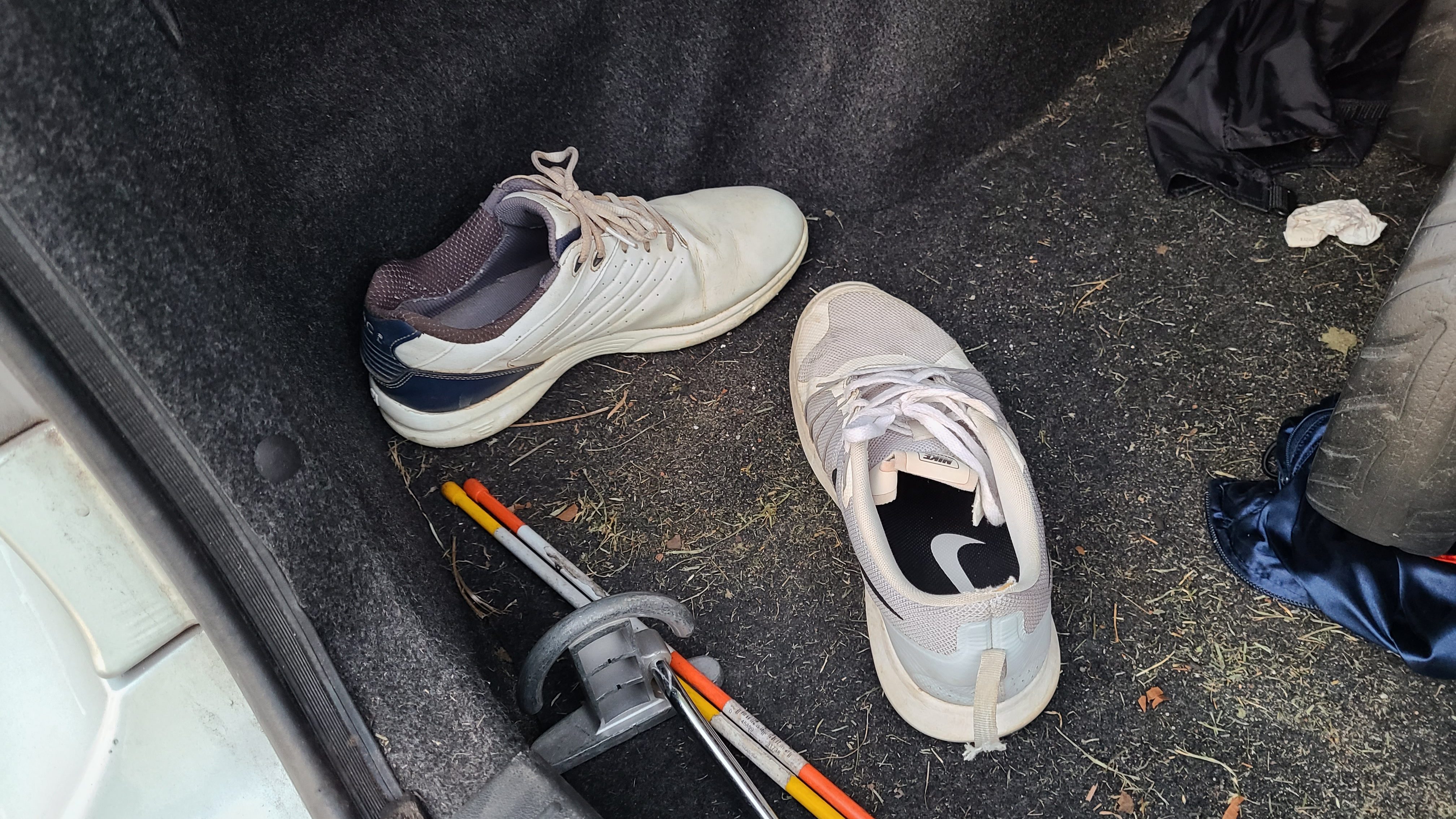
I was only wearing one golf shoe. On my right foot. My left foot still had my sneaker on it. We laughed about it and I rolled my 15-footer to save par. “I might wear one golf shoe all the time!” I joked.

Yep.

As we continued the round, I was impressed by the value the course offered for the cost. It was $55 to ride for a weekend round. In retrospect, I’m not sure if September marked the end of peak summer pricing for the course, but that is incredible value relative to other public courses in New Jersey. The condition of the greens, in particular, was fantastic at that price point.

Case in point: Fantastic green.

There are a number of memorable holes as well. 7 is a fun, drivable par 4 with a small but wonderfully shaped green. It’s guarded by a few small bunkers, though they’re relatively tame. 14 is a tough par 5, that starts to narrow out as the water encroaches onto the target landing area ahead of you. If you happen to hit a drive past this point, you can take a dangerous diagonal route over the water to reach the green in two. And 16 is another drivable par 4, albeit a 90-degree dog-leg right that would require an almost all-carry-over-water tee shot to get there.

The green at 7.

While not my favorite way to finish, Pebble Creek closes out on a par 3. Not sure what it is about par-3 closers, but it almost feels like an unresolved melody. My feelings about them aside, much like most of the rest of the course, 18 is another quality hole.

Again, I was very impressed by what this Monmouth County course had to offer. I’d probably stop short of a phrase like “hidden gem”, but it’s absolutely a strong competitor in a list of value courses. Definitely worth it if you’re in the area, and it wouldn’t be a bad course to travel to if you’re looking to mix it up.

P.S. BIG shout-out to the group that held onto my 4-iron after I left it at 7. Much appreciated!

14 green. That dangerous line I was talking about would be coming in from the lower right corner of the photo.
Gorgeous, wide green at 15.
Looking back at 16 in the fading light. You can just about see the water on the left side of the picture, center of the frame. Pretty sure I snapped this only after we drove back to look for my 4-iron.
The par-3 18th.
My left golf shoe… right where I left it.
Number 120 (Pebble Creek)

Number 109 (Knob Hill Golf Club)

A group of trees off to the side of 6 green.

Date played: 3/29/2021

My friend Matt and I wanted to get a round of golf in before an outing on Good Friday. We decided to take the Monday of that week off from work and head to Monmouth County to play Knob Hill.

A semi-private course situated on the westbound side of Route 33 in Manalapan, Knob Hill actually teases travelers with a peek at its 15th hole, which has its green placed just a partial wedge shot from the road. The course is a wonderful option for the golfing public, and I’ll try to cover some of its memorable features in a bit. But the story of my time at Knob Hill is really about its 7th hole.

It is a straightaway par 5 that plays with a good deal of width for about 300 yards. A good drive put me in the fairway and about 175 yards from the green with the wind blowing in and across a bit. I took a 5-iron for some extra club, and though the ball started on a good line left of the flag, it seemed to quickly fail in the wind. I honestly thought it would die short in the water.

Nevertheless, it carried, landed, and stopped safely on the lower tier on the front right side of the green. I was on in two.

The pre-eagle has landed.

Having never made an eagle before, I really wanted this putt to sink. At the same time, it was such a difficult putt that part of me just wanted to park it close for a birdie. I notoriously leave lag putts short, and at just over 30 feet, I was psychologically in lag putt territory. I didn’t want to be struggling for a three-putt par.

I was left with a 33-foot putt that moved right to left, with probably five feet of break. It was also a couple feet uphill. I had a putt on a preceding hole the rolled out almost 40 feet on a much more level green. Given the uphill lie, I decided that same putting stroke should be just about right for 33 feet on this green. With my speed decision made, I took a couple looks at the break again, put my head down over the ball and made as good of a putting stroke as I could to at least ensure that I started it on the line I saw.

The ball made its way onto the upper tier, and started banking left quickly. I started to doubt my line and speed, worried that it would miss on the low side. But about five feet from the hole, it seemed to maintain its pace and definitely had a chance. I shouted “go in!”

It went in! The ball rolled in perfectly! After 20 years of playing golf, I finally had my first eagle!

Elated, we moved on to the 8th hole, where I immediately gave those strokes back. I struggled with the water-surrounded green, and would make double bogey. That’s golf.

From left to right: 10, 1, 9, 8, 7, 6

As its name implies, Knob Hill plays with a good deal of elevation change on a number of holes. The clubhouse is the highest point on the course, and whether you start your round on 1 or 10, your tee shots into either of these par-4 dog-legs will play to a pretty severe drop.

15, under some repair at the time. Route 33 in the distance beyond the green.

Other downhill holes include 15 and 17. The 15th is a downhill par 3 where over-clubbing coupled with a tailwind might put your tee shot into the passenger seat of a passing car. The 17th is a picturesque, drivable par 4, playing with some width, unless you choose to drive the green.

The 17th green is inviting.

The 12th is a very short par 3 – only 125 yards from the back tees – but plays about 20 feet uphill. Also playing uphill is Knob Hill’s closing hole. Though it tees off from elevated boxes, the 18th plays into a valley and back up the hill towards the clubhouse.

I would leave the undulating terrain of Knob Hill with a couple notches in my golf belt – another course played on my journey, and my first eagle.

Looking back from behind 18 green.
The 7th green, perilously surrounded by water. Short, right, and long are all dead.
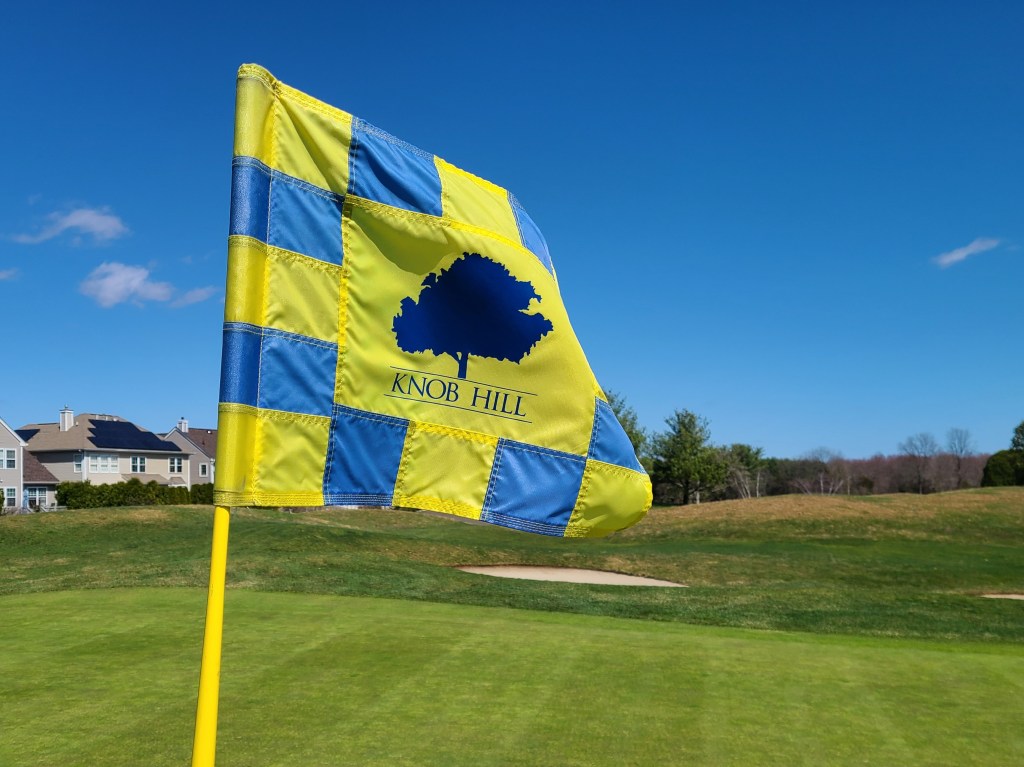
Bright and bold flags at Knob Hill.
A great closing stretch of holes. Coming in from the top right, the par-5 14th moves left toward the entrance road. On the left side of the frame in the distance is 15, with 16 being the left-most, coming back to the horizontal centerline of the photo. 17 turns back the other way, and then 18 returns to the bottom-right corner.
Number 109 (Knob Hill Golf Club)

Number 99 (Shark River)

Date played: 7/12/2020

A month after playing the South course at Charleston Springs, I met up with Walt again at Shark River. Located out in Neptune, the course is a couple miles from the ocean on the eastern edge of Monmouth County. Walt set us up with an early tee time, so I knew the drive would mean an early alarm, but I didn’t think anything of it.

Some people shy away from early morning tee times, but I have no trouble setting an alarm for 4:00 am and making a 2+ hour drive to make the first tee time of the day (like I did at Cape May National). I’ve played 5:30 am and 6:00 am rounds before a day at work. While it’s gotten difficult as I’ve gotten older, I enjoy being out with the dew-sweepers and still having the day ahead of me after a round of golf. So, when it comes to being on time for a round, I’m pretty reliably at the course before I need to be.

At Shark River, I was anything but on time for our 6:18 am. I would arrive at the course pretty much right at our tee time. I rushed to get the clubs and push cart out of the trunk as fast as I could. I threw on my shoes, and basically ran to the first tee. By the time I got there, everyone else in the group had teed off. I quickly got my driver, ball, and tee out of the bag.

I meant that quite literally.

This was as cold as you could be for the opening tee shot of a round. Nevertheless, not wanting to hold everyone up, I teed the ball up and swung. Somehow, the golf gods spared me embarrassment, and sent a low-flighted ball off the face of my driver and onto the fairway. Most of the round went generally smoothly as well.

Shark River would be my 12th public course played in Monmouth County, which has the most of any county with 19 total. The course is another example of quality golf in the area. I’ve often thought about which county should be deemed to have the best public golf courses, and while I have yet to submit a vote, I can tell you that Monmouth is definitely in the running.

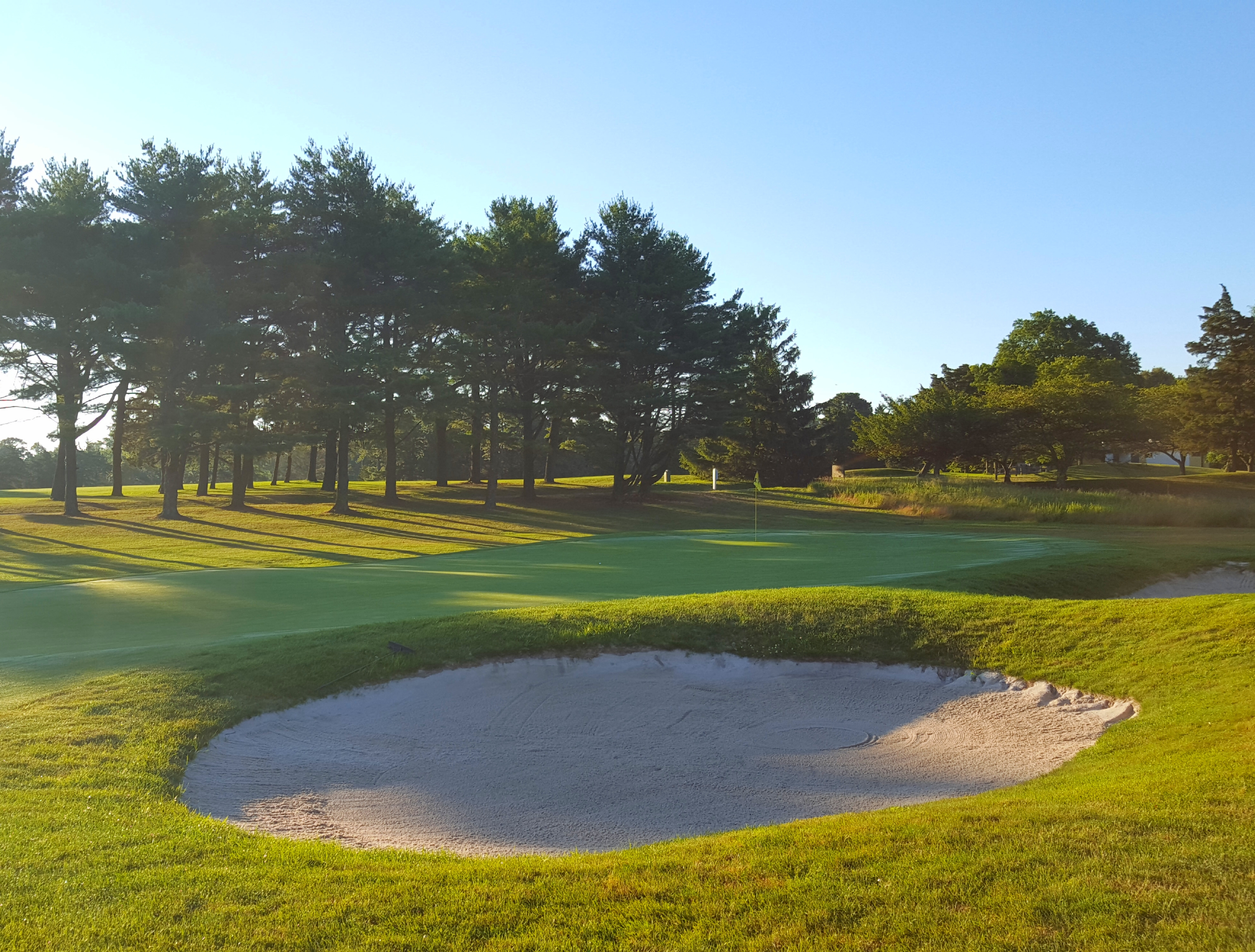
Here are a few shots from our early morning round.

Number 99 (Shark River)

Number 98 (Charleston Springs – South)

Date played: 6/7/2020

It took almost four years, but after playing the North course at Charleston Springs in November 2016, I finally made it back to play the South course. I was invited back by my Twitter golf buddy Walt Blasich who is quickly becoming my tour guide for the best public courses in Monmouth County!

Conditions were beautiful at the North, and the South is no departure. Both layouts are some of the most finely maintained public courses you’ll find in the state. You immediately get a sense of that as you walk off the back steps from the pro shop and look onto the flawless (and massive) putting green.

The putting green is big enough to accommodate all golfers waiting to tee off on both courses

If you love a good golf bridge, you’ll cross one on the long walk to the first tee, a great way opportunity to get your mind in the right place before the round. A short uphill walk through the woods after the bridge, and golfers are emptied out into the clearing that is the South course. Where the North is laid out in links style, forcing golfers to contend with many fescue-lined holes, the South is a sprawling parkland course. Although there are trees to deal with, the fairways are quite generous and there are a number of very open holes.

A walk across the bridge on the way to the 1st tee on the South course

From a design standpoint, the way the 6,377 yards (from the Gold tees) are spread across the 18 holes is done really well. The par 3s play as long as 195, but also as short as 115 on the 11th, something most courses shy away from. Of the twelve par 4s, there are four that play over 400 yards, but then there are also a couple that are drivable for long hitters, like the 294-yd 10th. You might be able to lodge a complaint about the par 5s as three of them are between 499 and 505 yards. But whether it’s differences in the way elevation or direction changes from tee to green, they are each truly unique.

A front pin location on the 11th, with the drivable, par-4 10th in the background

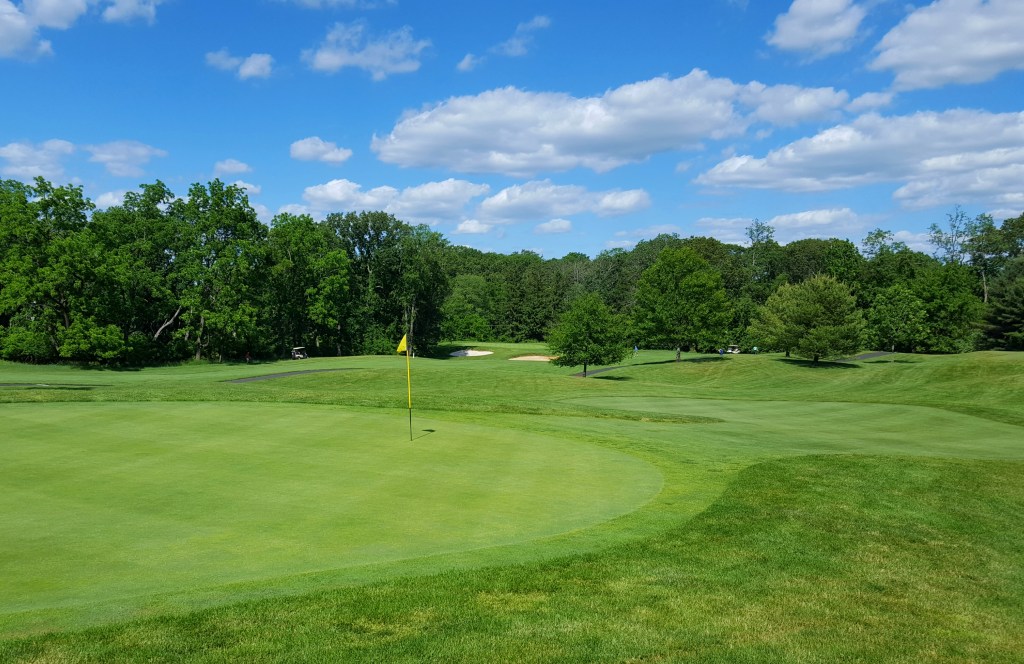
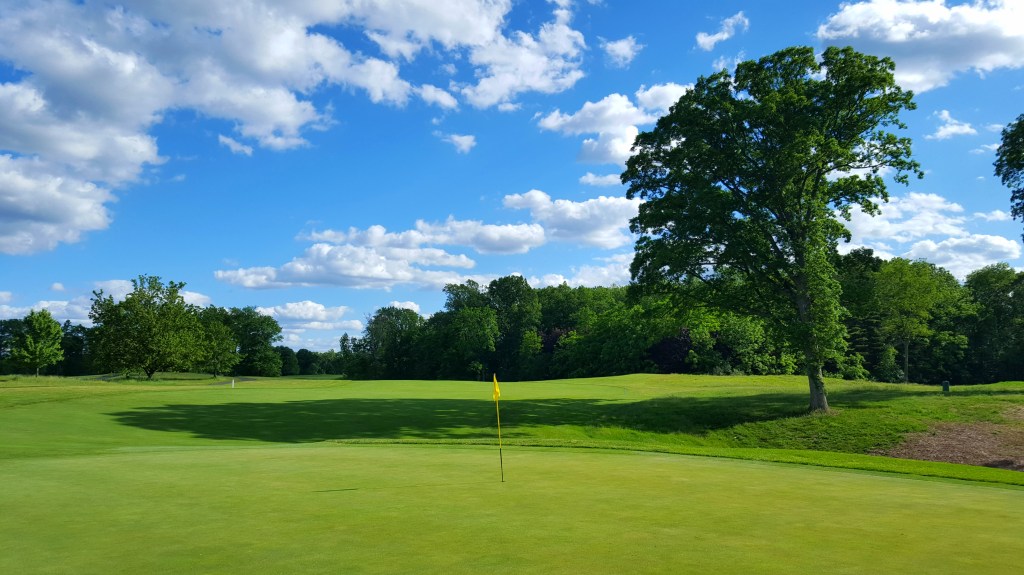
As I mentioned when writing about my time at the North course, Charleston Springs is definitely held in high regard. I don’t know that the South measures up to public resort-type courses (e.g. Ballyowen and Crystal Springs), but I think it would be unfair to put either of the two layouts in that category. Nonetheless, it certainly ranks highly in the very next tier and should be considered a great option for public golfers.

A look back at 18
Number 98 (Charleston Springs – South)

Number 80 (Cruz Golf Country Club)

20181023_164711

Date played: 10/23/2018

Some golf courses have stories. Almost any course that has hosted a professional tour event likely has at least one great tournament moment. At the very least, they have the fact they’ve been a tournament host. Older courses have their history. Other courses are known for being designed by renowned architects.

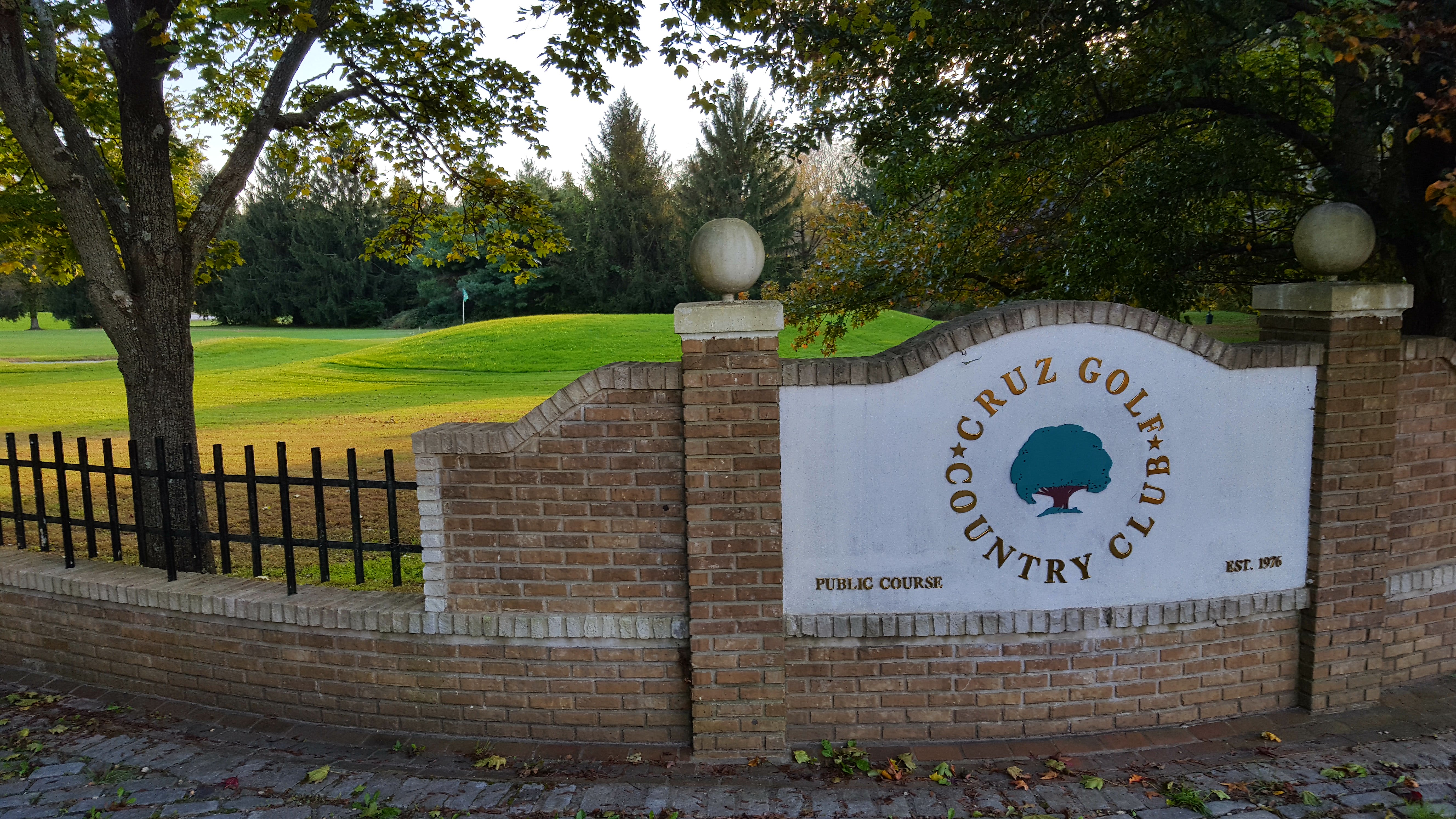
Accessible publics, on the other hand, are mostly just the storiless courses that people in the area happen to play. They’re the courses whose greens fees might be discounted with a county card. Number 80 on my journey to play all publics in NJ is different. Cruz Golf Country Club definitely has a story: the course was built by Evaristo Cruz.

If you’re wondering why you haven’t heard of this particular architect, it’s because he’s not one. Cruz emigrated from his native Portugal in 1946 and was not in golf course design by trade. He started a successful public works construction company in the early 1950s. Then, in 1976, with the help of his construction crew, he designed and built nine holes of golf on some of his own farm land. After adding an additional nine holes in the 1980s and opening it up to the public, it would eventually become Cruz Golf Country Club.
20181023_210255
Cruz’s craftsmanship can be seen in a few places around the clubhouse, like this water source near the practice green

One of the shorter 18-hole courses in NJ, Cruz plays at just over 5,000 yards from the back tees. While it may be deficient in distance, it has a number of quirky holes. The 4th is a short, 286-yard par 4 that would normally be drivable, if not for the 90-degree dog-leg around the surrounding woods to the right. Holes 6 and 13 have prominent trees in or hanging over the fairway, making tee shot decisions important. The 16th is a short par 3 whose front edge is only a pace-and-a-half from the water hazard before it.

20181023_210628_Crop
Fall colors starting to come in on 13

The course may not be anything special to a design aficionado, and its conditions generally won’t impress a seasoned golfer who has a number of gem-course notches on their belt. But, with its “no tee times” setup and only $26 to walk, I think it is more than deserving of a place in public golf.

There is a lot to be said about loving a game so much that you’d build a place to play it. It deeply resonates with the childlike spirit in each of us. It’s one thing to appropriate couch cushions and pillows for a “fort”, or to fashion a makeshift basketball hoop. Perhaps beyond that, one might build an actual tree house. But it is some serious love that would drive one to build a golf course.

I’m thankful that Evaristo Cruz had such a love for the game, and I believe I share that passion. Maybe I might build a golf hole or three in the future.

How I played…

Not bad, but at par 70 with a course rating of 64.3 and a slope of 114, this is a course where everyone should look to shoot a personal best relative to par.

Highlights: Once again, it would be enjoying the round with good company. It was a colleague from work that actually told me about the place, so it was good to finally get out there with them.

Lowlights: Nothing awful. Perhaps just not really capitalizing on scoring opportunities.

Number 80 (Cruz Golf Country Club)