Number 108 (Seaview Golf Club – Bay Course)

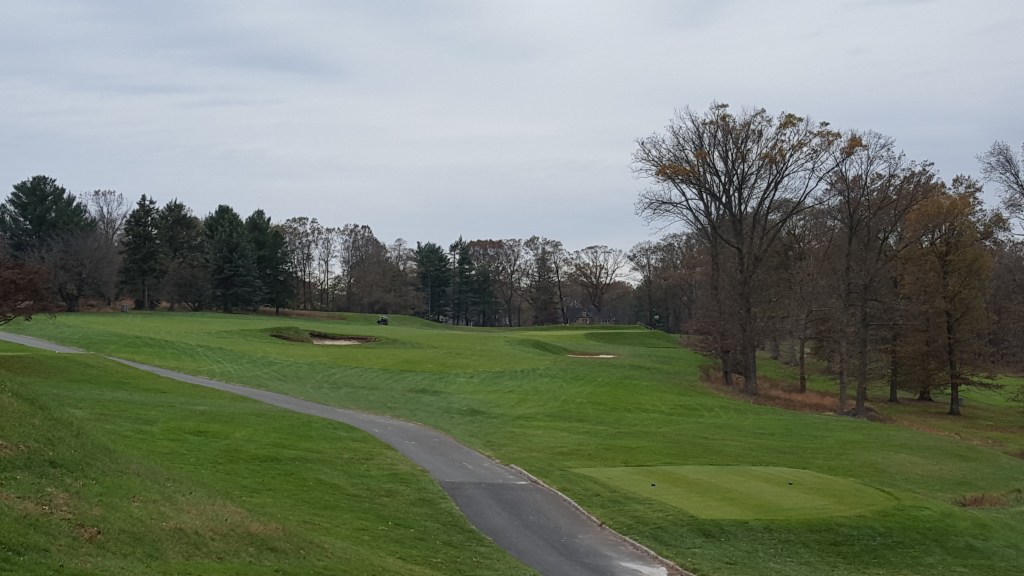
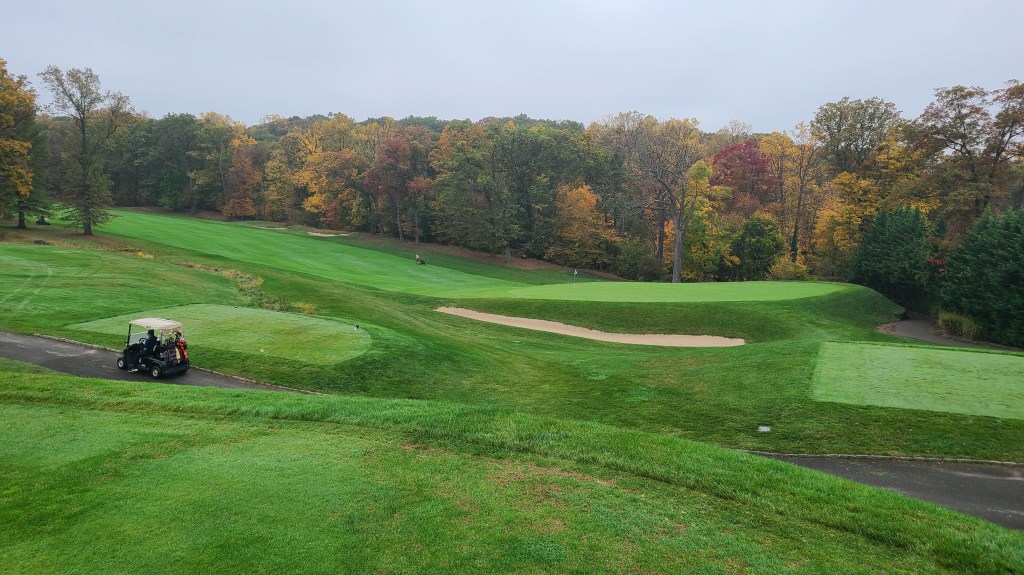
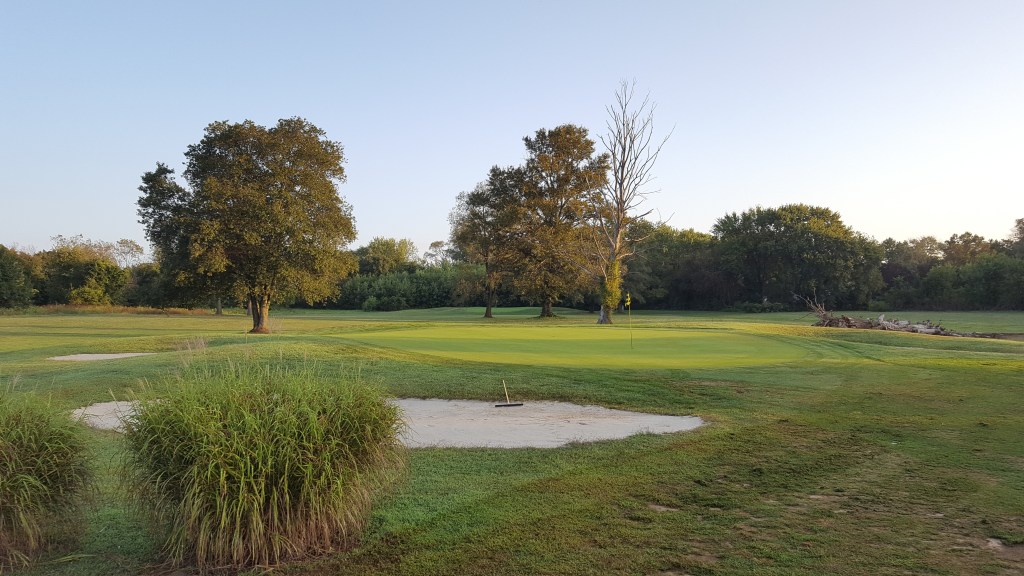
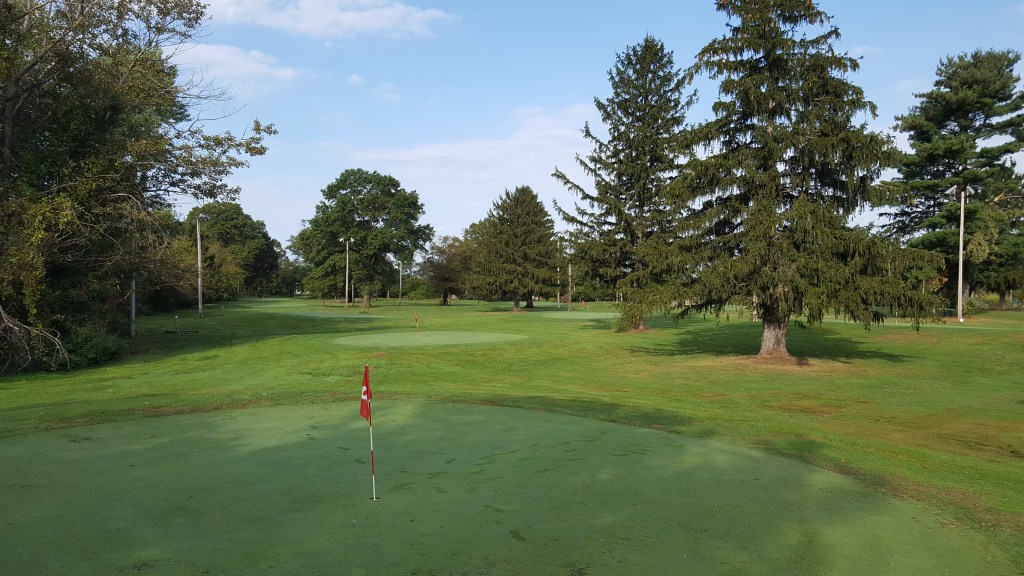
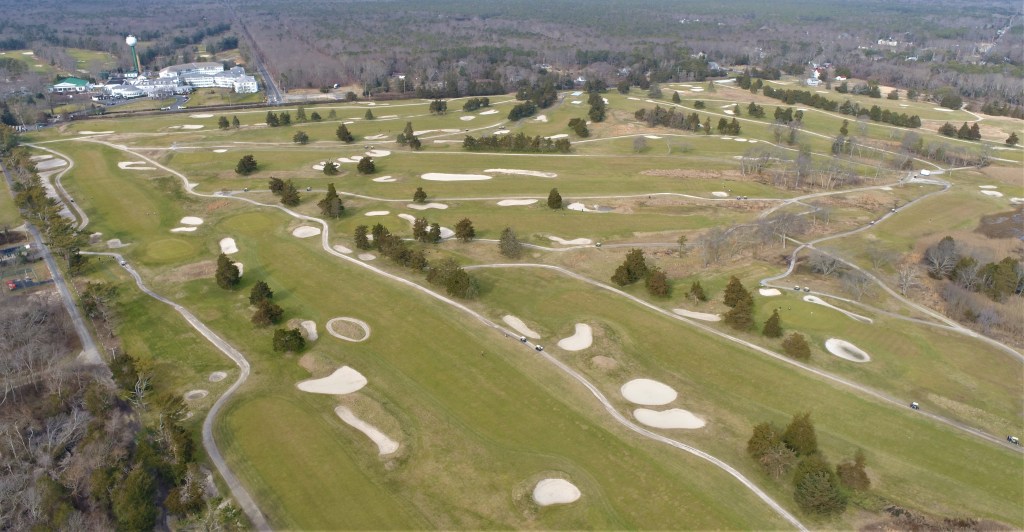
Seaview from the far corner over 2 green. You can see the resort and clubhouse in the background in the upper left.

Date played: 1/15/2021

Having carried over vacation days that I didn’t use during the COVID lockdown of 2020, I took the first forecast of warm weather in 2021 as an opportunity to take the day off and knock another course off the list. Heading to Atlantic County for only the second time on my journey, the Bay course at Seaview Golf Club would be my 108th destination.

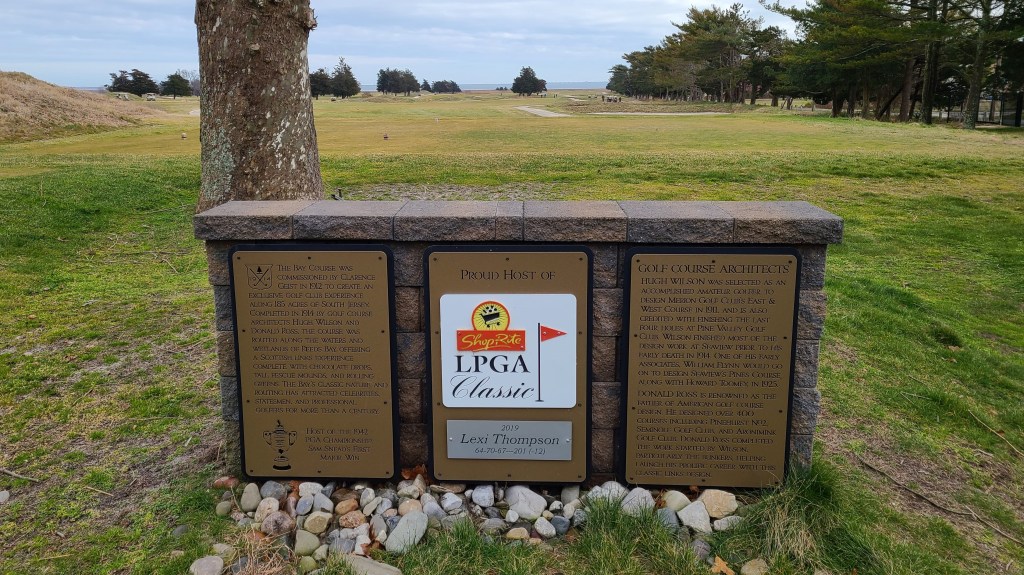
Built in 1914, the Seaview Bay course is known to LPGA fans as the venue for the Shoprite Classic. In 1942, it also provided half the holes – along with some of the resort’s Pines course – for the tournament setup of the PGA Championship, where Sam Snead won his first major. While Donald Ross receives top billing for designing the Bay course, it more accurately credits its design to Hugh Wilson, with only the bunker work being installed by Ross a few years after the course’s completion.
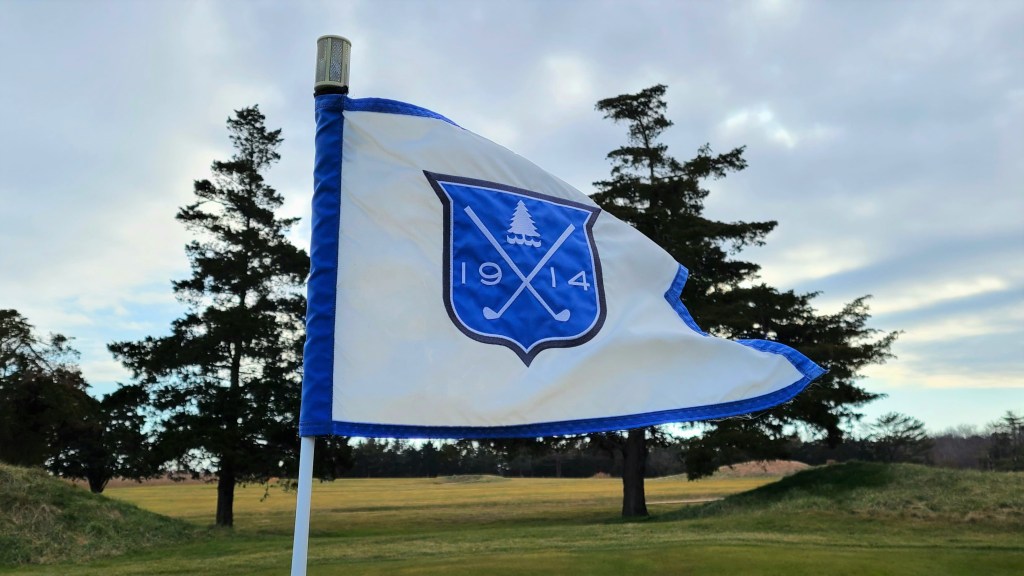
Quality flags reminding you how old this historic course is.

My first round of the new year was an extraordinary one with quite a few highlight memories. I started the round with a birdie and would go on to card the most I’ve ever made in a single round. One of those was a chip-in from 25 yards on the par-4 14th. On 16, after essentially shanking a low bullet off the tee towards OB on the right, I watched it hit a tree and carom left into the first fairway bunker. I successfully scrambled from there to make par. It was just one of those rounds where it felt like not much can go wrong.

I had a great time being paired up with three members, two of which have either worked at or caddied at the course. It was fun to listen to stories of how the Bay Course has changed over the years, having been a private club until the 1980s. It was described by the members as a course that used to be pristine.
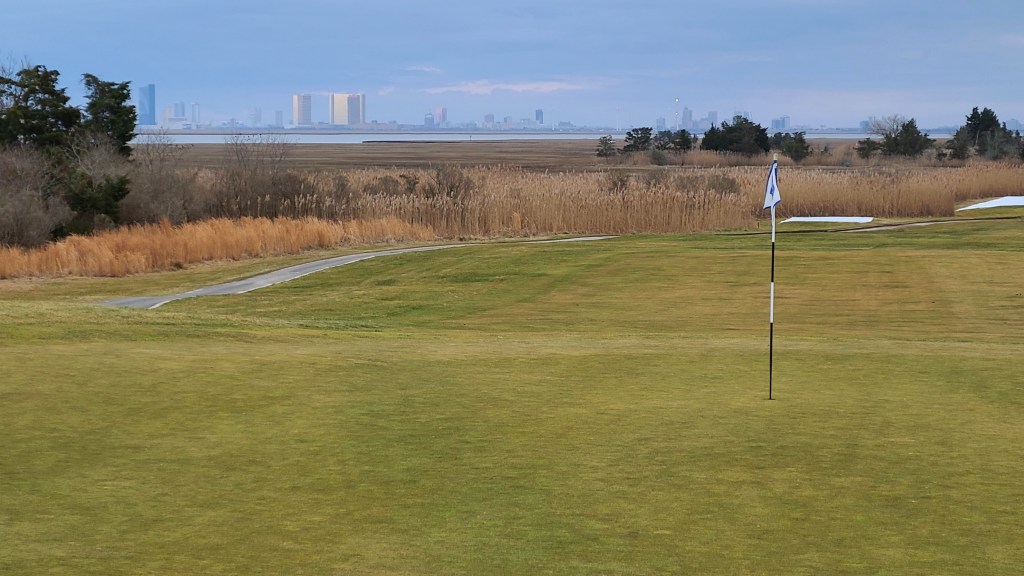
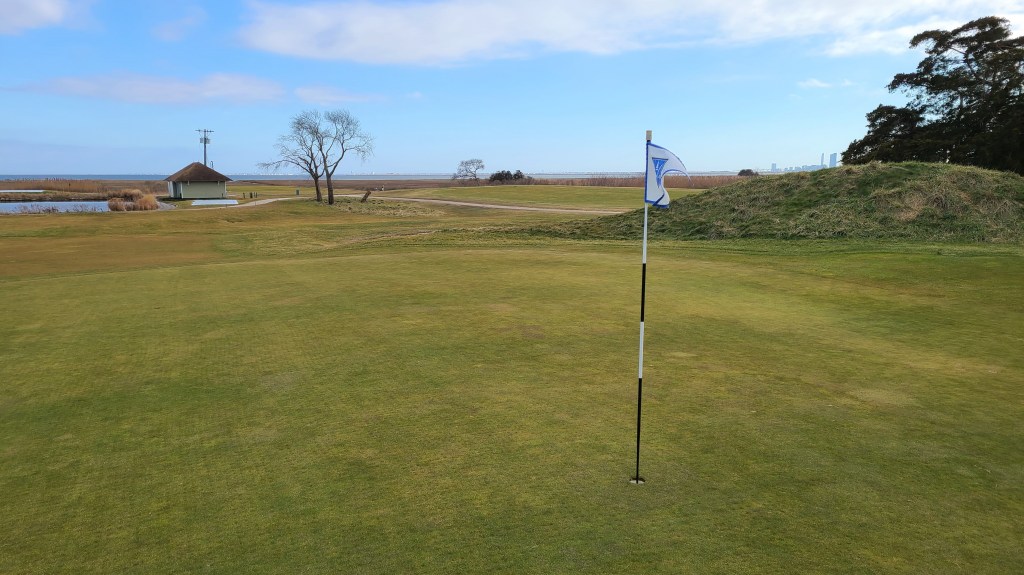
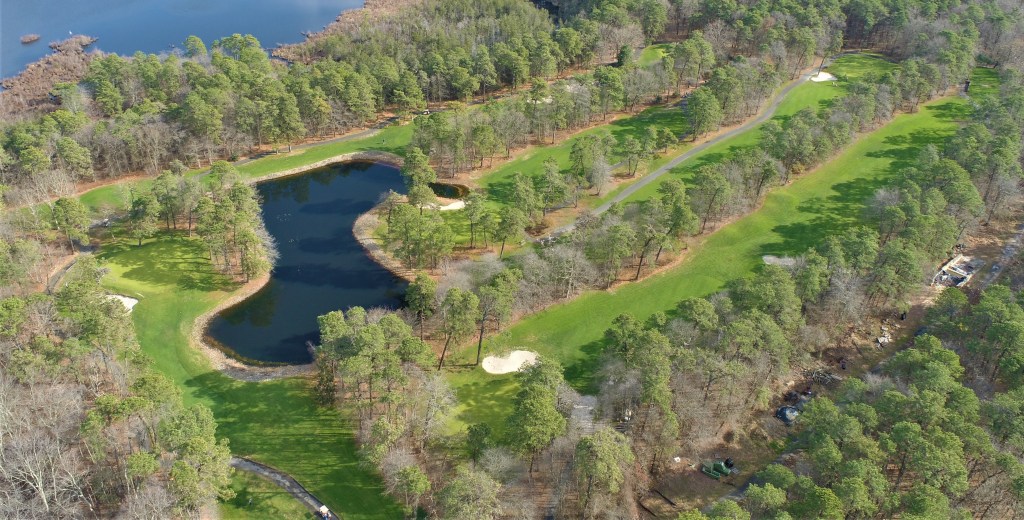
A look across the bay at Atlantic City.

Conditions have changed however, attributed in large part to increased traffic over the years since opening to the public. Among public courses though, it remains a beautiful layout and pretty well conditioned. Interesting views are always a bonus for a golf course, and you’ll get a number of peeks at Atlantic City from the holes just along the marsh area of Reeds Bay.

In trying to find a course to play, I debated whether it would be worth playing Seaview in winter conditions. Greens were recently punched, and – being a links-style course – the native grasses lining the lateral limits of many fairways were cut accommodatingly low. But $39 for a course that costs well north of $100 in prime season was too good to pass up. Overall, it was great value for a winter round and easy to see why this history-laden course should be a “must play” for any public golfer.
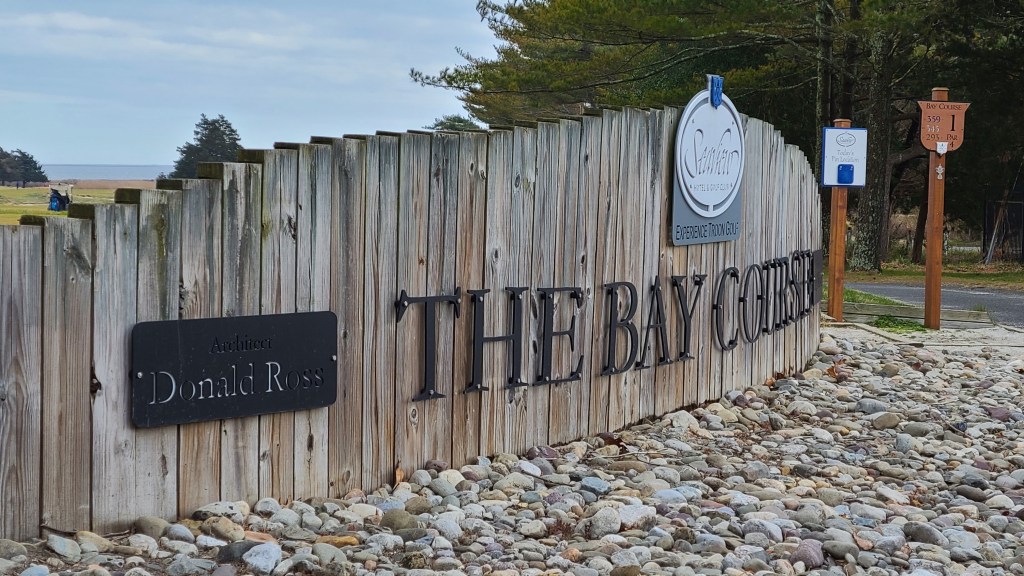
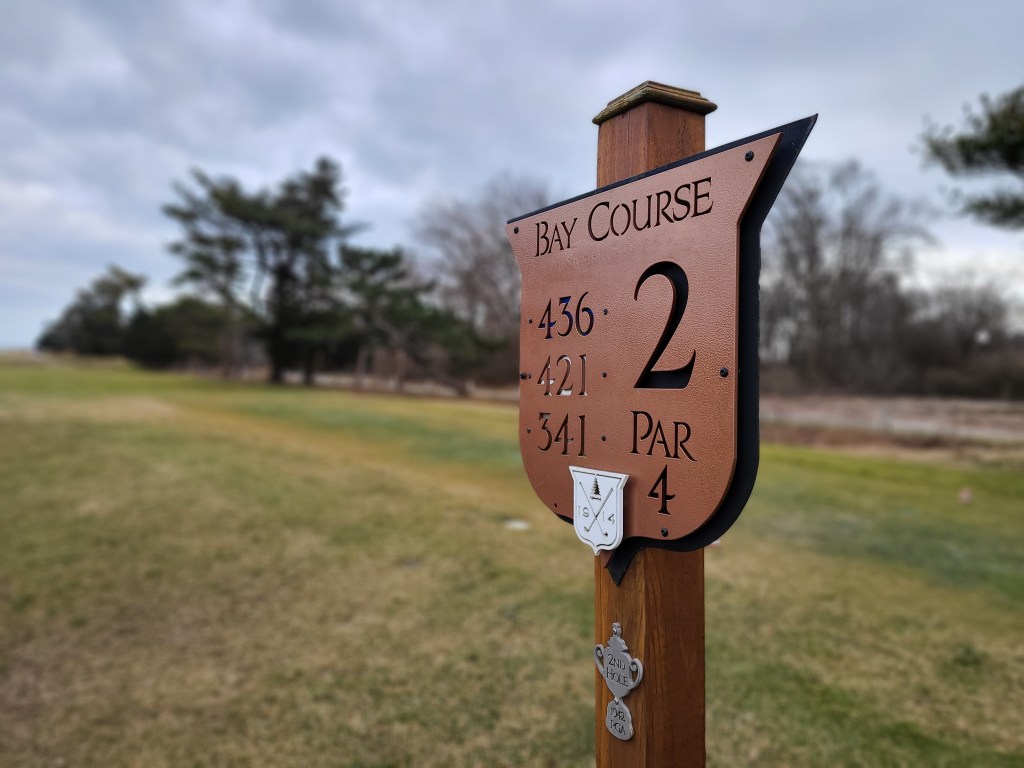
Boldly welcoming you to the Bay Course.
This helpful plaque explains everything.
Love everything about the signs here, especially the small plaques indicating whether the hole was a part of the composite layout for the 1942 PGA Championship.
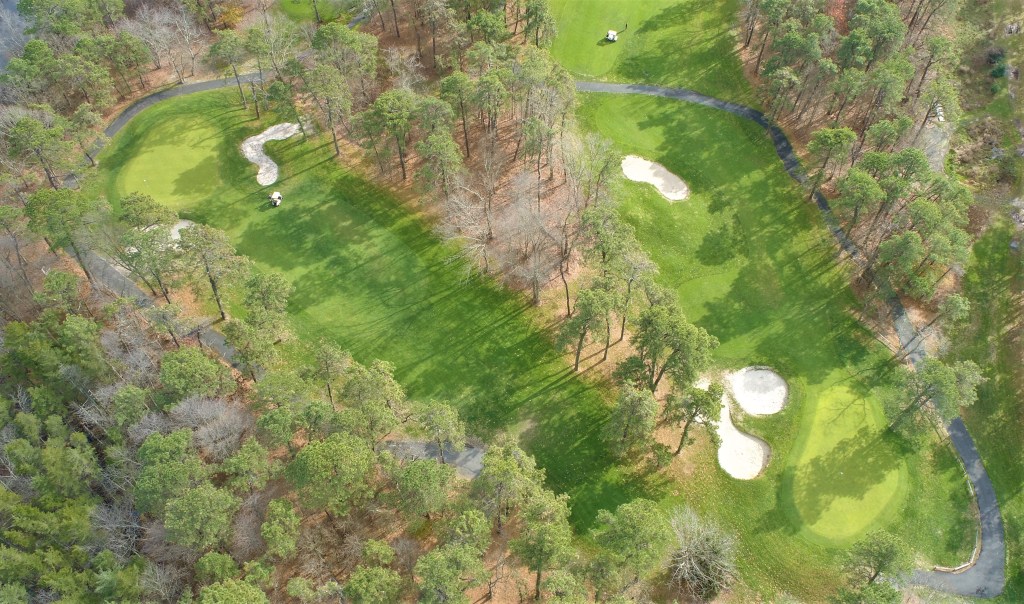
A look back at the first of the par-3s, the 7th. In the background, you can see the teeing grounds tarped off in preparation for the upcoming season.
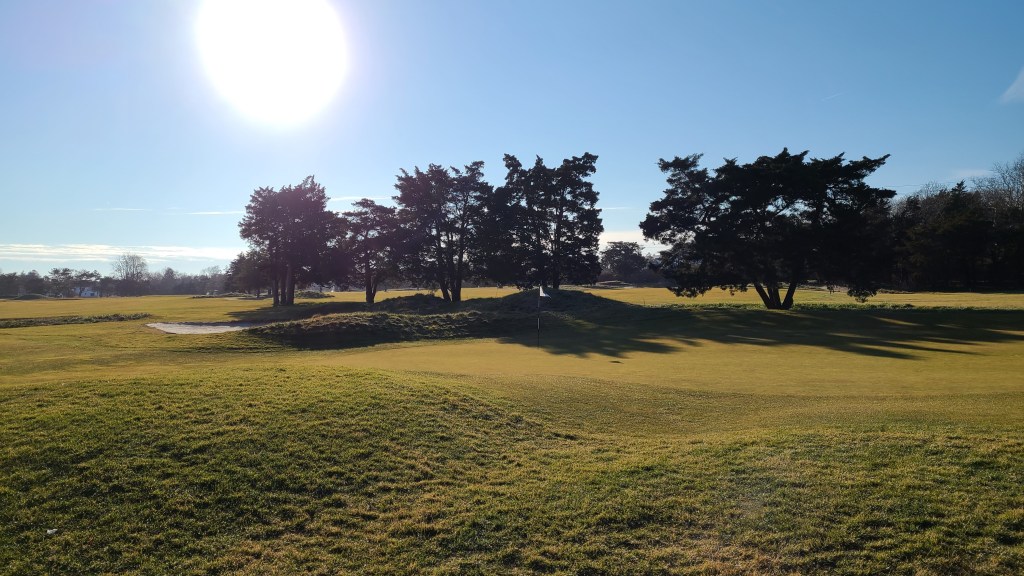
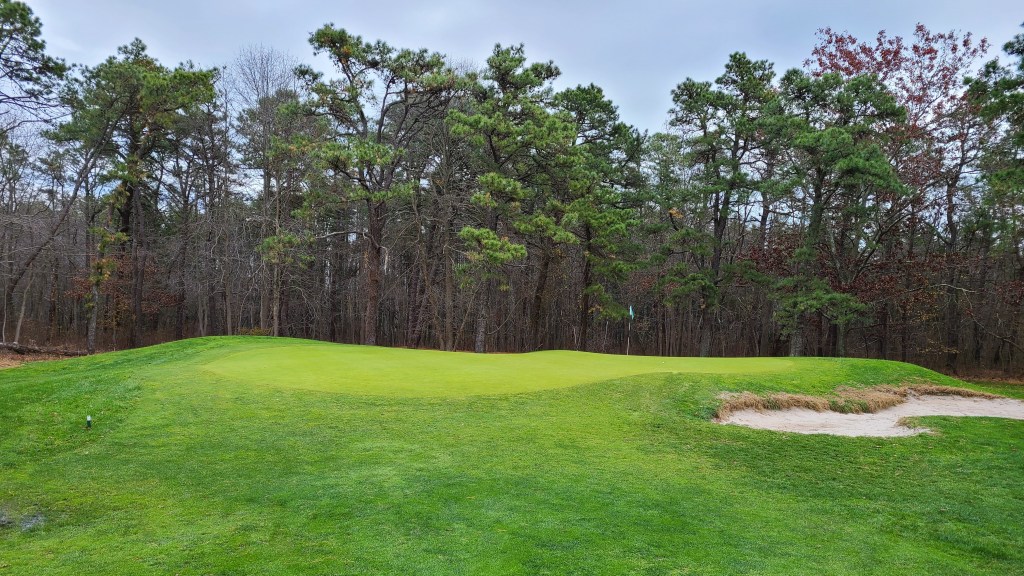
Staring into the sun, you can see the gentle contouring of the green at 10.
Number 108 (Seaview Golf Club – Bay Course)

Number 107 (Wedgwood Country Club)

Date played: 12/3/2020

Having wrapped up at 12:25 at Westwood, I raced over to Wedgwood Country Club to make my 1:00 tee time. I rushed to get my clubs and pushcart out of the trunk, ran into the pro shop to pay for the round, and was able to get onto the course right away. The sun was projected to set at roughly 4:30 that afternoon. While no one else was visible from the first tee, I wanted to make sure I kept good pace, not knowing if I would have enough daylight to finish.

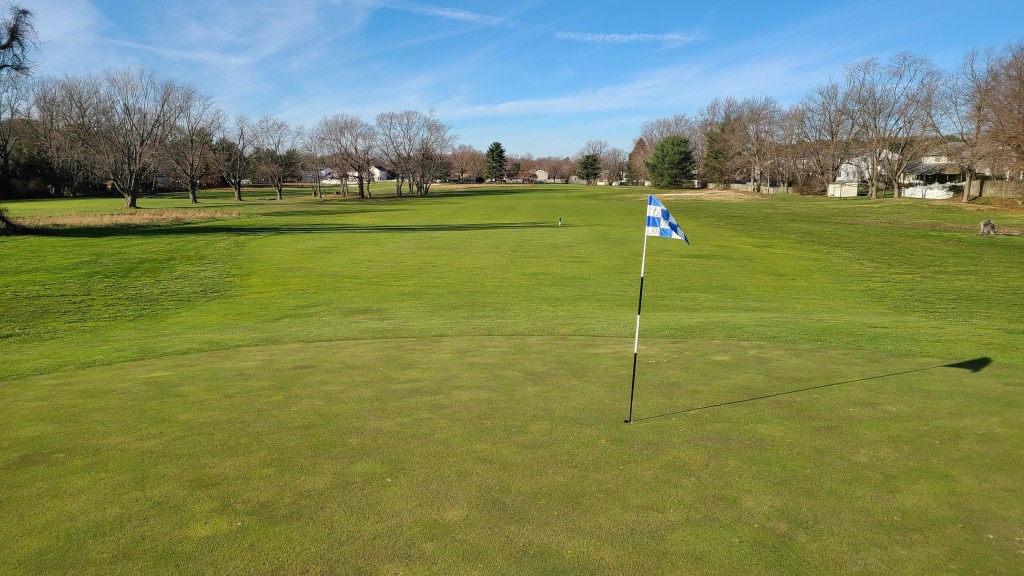
Wide open spaces.

The front nine at Wedgwood plays with a great deal of width. Most tee shots have generous landing areas and there are plenty of places where you can miss wildly and still be in play with a shot at the green. The highlight of the front nine to me is the 3rd hole. Unless you’re playing from the back tees, driver is not necessary on this par 4 and could even be a dangerous choice as water lies 50 yards short of the green all the way up to the front edge.

Is this the tunnel to the 7th at Wedgwood, or the entrance to hell?

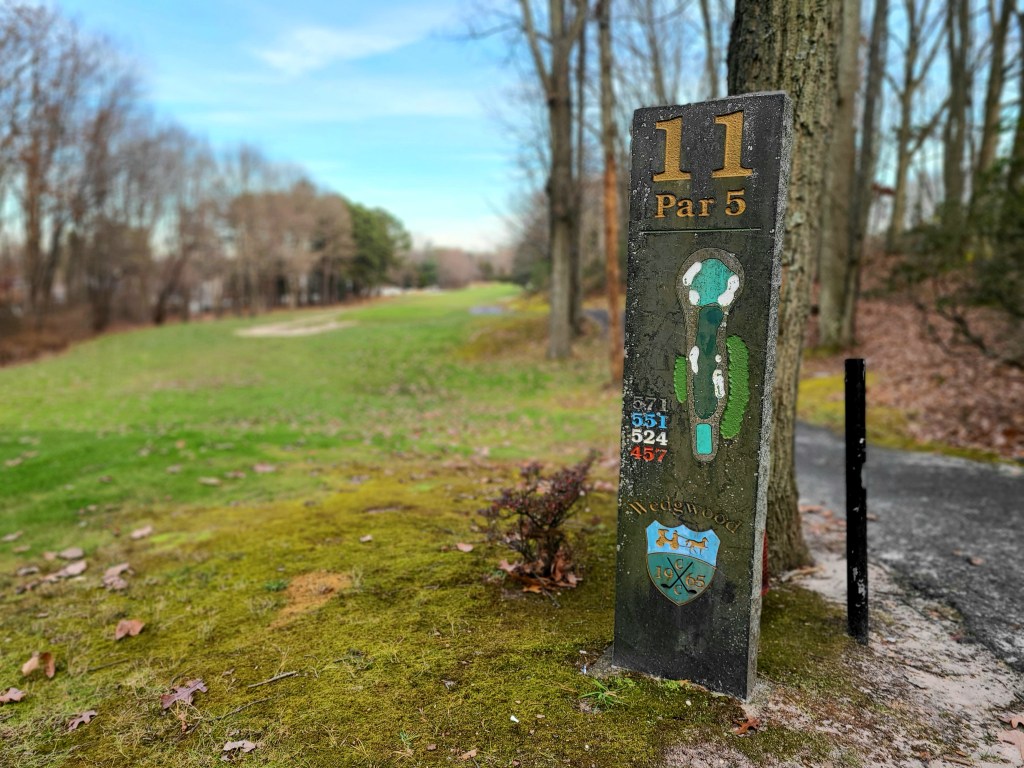
The graffiti on the arch of the tunnel on the way to the 7th hole says “Abandon all hope”, but this would’ve been a more appropriate warning at the entrance to the back nine. Where the front plays relatively open, the back nine plays far more tightly with a number of tree-lined holes. There is OB left on 10, 11, 17 and 18, and not much room to miss in that direction.

It’s mostly tight from here on in, but you catch a bit of a break in a bit.

The only semblance of reprieve on the back, apart from the par-3s, are 13 and 14 which do have some width. But even 13 is a beast of its own, a long par 4 with a forced long approach. Playing at 435 yards from the back with water in play from the tee, coming up short to avoid the water altogether will leave an approach shot of about 180 yards. If they could stretch the tee boxes back 75-100 yards, it would be a fun par 5. As it stood, it was another deeply black number on the scorecard.

Being a weekday, there were certainly fewer golfers than normal, even for a winter round. Nevertheless, I only caught up to groups ahead of me a few times, and they quickly kept moving. After being battered by the closing half of Wedgwood, I walked up 18 with enough light to finish. Thirty-six holes of golf completed, and two Gloucester County courses checked off the list.

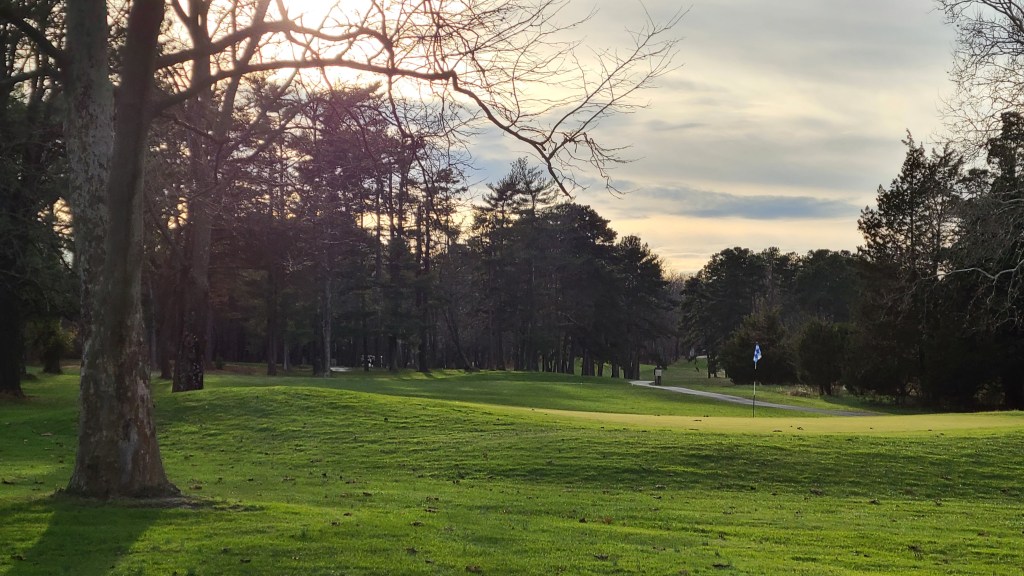
18, into the setting sun.
A look back at 7. Not sure what Dante was worried about. It was pretty tame.
11 green from 13 tee
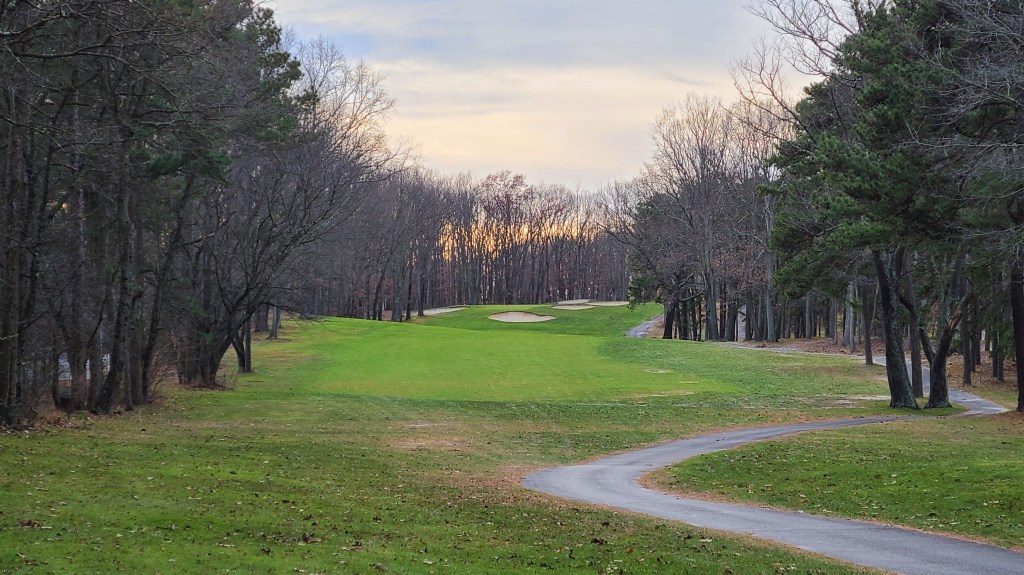
The 17th. Anyone else feeling claustrophobic?
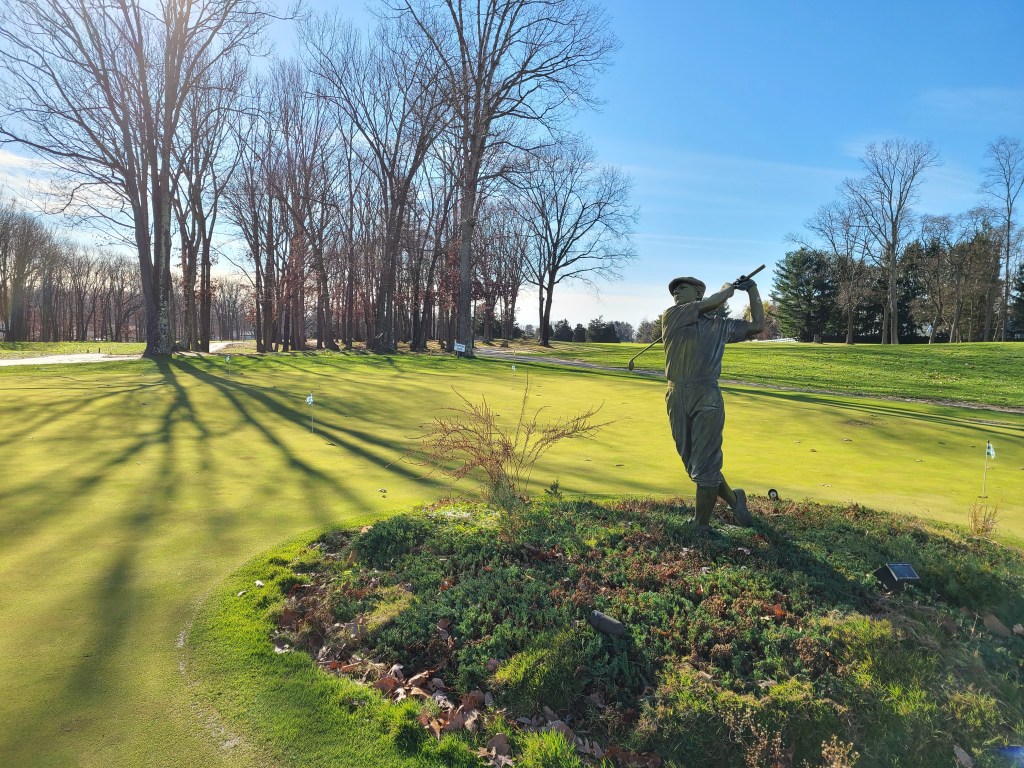
Legend has it the statue refused to move, so they just built the practice green around him.
Number 107 (Wedgwood Country Club)

Number 105 (Ocean County Golf Course at Forge Pond)

Date played: 11/27/2020

Like almost anywhere, a vast majority of the public courses in New Jersey are regulation length. It’s something I used to lament when my friends and I just started playing the game in the early 2000s. We picked up the game on a pitch-n-putt course and were only brave enough to work in a couple par-3 and executive courses to the rotation of courses we were willing to play. I had always wished for more short courses.

Fast forward 20+ years, I’m more than halfway through my quest to play all the publics in NJ. Not only have I found more of these courses, but there have even been a few times where I’ve played them either on the same day or in subsequent outings.

My 105th public course was another such outing. After playing the beautiful par-31 Minerals course in Sussex County a week earlier, I booked a Black Friday round at Forge Pond with my good friend Matt.

Listed formally as the Ocean County Golf Course at Forge Pond, the course is a par 60, comprising six par-4 holes and 12 par-3s. Not knowing anything but its par and length before playing, I expected very simple design elements, straightforward holes, and flat circles for greens. What I found instead were incredibly well-designed green complexes, great use of the overall yardage, and a few great tee-shot decisions to make on the par-4s.

The green at 2. There is a touch of a false front and a distinct shoulder in the back where this pin was placed.

The layout is separated into two sections, with holes 3 through 7 situated on the southeast corner of the property. From the green at 2, the walk to the tees at 3 is about 300 yards, and you’ll take the same path back when making your way from 7 to 8. Apart from that stretch, the course is very walkable.

I was excited at the prospect of playing another executive course. I thought of it as an opportunity to try to go low during the off season. Realizing on the practice green that I forgot my putter at home though, the air was taken out of my hopes. Matt suggested I putt with my 3-hybrid. Given that the pro shop didn’t have a putter to rent or borrow, I didn’t have much choice.

Golf is such a funny game. When you think your chances are gone, sometimes things go your way. Somehow, I chipped in once, made my way around in 31 putts with the hybrid for the other 17 holes, two of which were birdies, and played really well overall.

One of six par-4s at Forge Pond
Holes 3 through 7.
The greens at 11 and 14.
Number 105 (Ocean County Golf Course at Forge Pond)

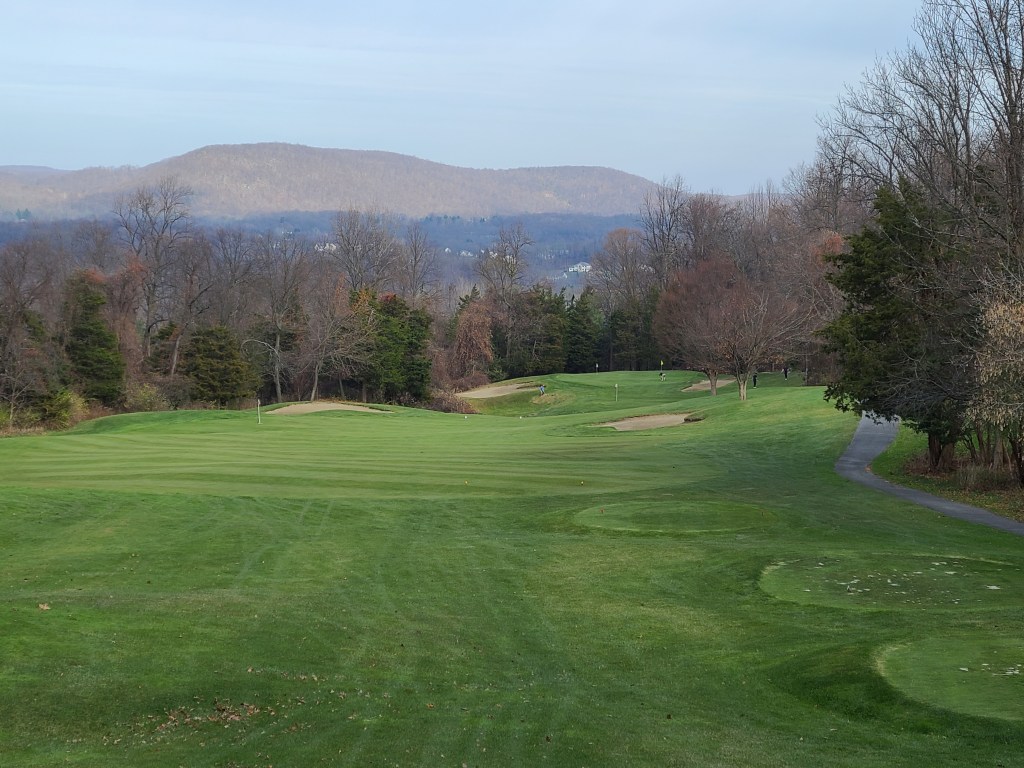
Numbers 104 (Minerals Golf Club)

Date played: 11/21/2020

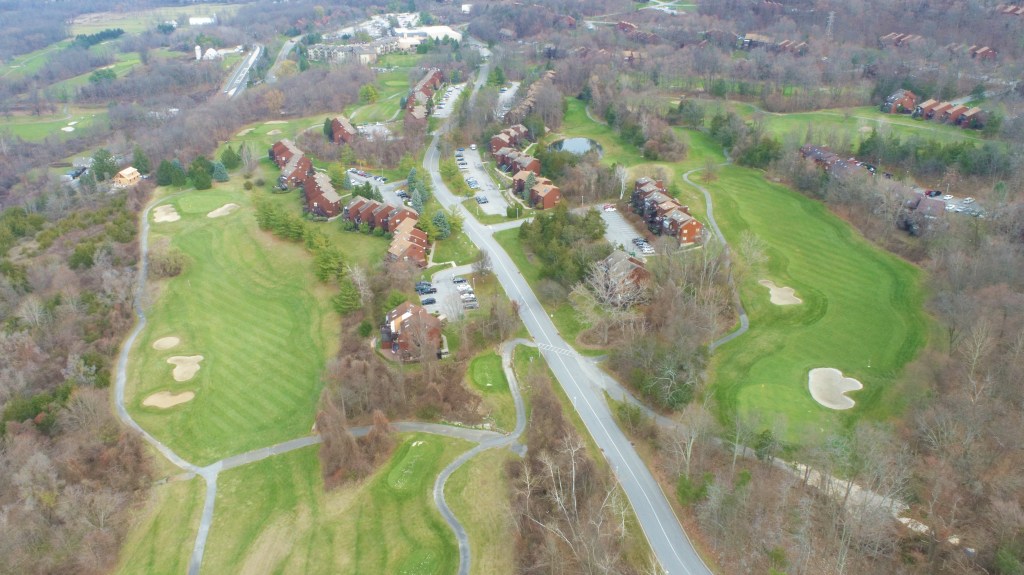
Designed by Robert Trent Jones, Minerals Golf Club is a nine-hole executive course that rolls along the side of the same mountains that compose the Mountain Creek ski resort. While set in a beautiful mountainside residential community, there aren’t many places where it feels that the homes encroach on the course, giving golfers the freedom to swing away.

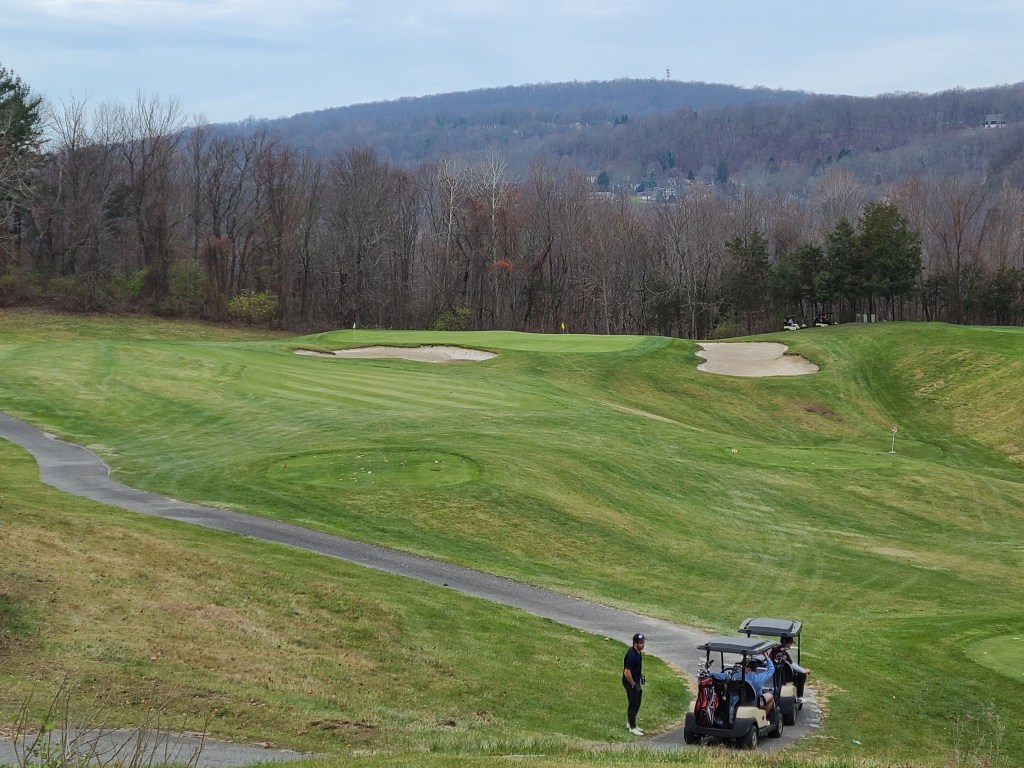
A look at the downhill 3rd, with some of Sussex County’s mountains as the backdrop

Billed as the family-friendly choice of the six courses in the Crystal Springs resort system, Minerals is a great place for learning the game that is a step up from pitch-n-putt or par-3 courses. Each of the greens include a second pin that has a larger, 8-inch cup for younger or beginner golfers. The course features four par-4 holes and five par 3s that include some truly picturesque holes, particularly the par-4 third and the long par-3 sixth.

The par-3 6th, from off to the side. At 230 yards from the back, this is a tough green to hit.

It was truly a joy to be out on a course like this. I’ve been playing golf for just over 20 years, the first four of which were played almost exclusively on par-3 and executive courses. Places like Twin Willows in Lincoln Park and – over the border in Rockland County, NY – the Rockland Lake executive course were the next-step training grounds for my golf game after leaving the comfort of the 50-yard pitch-n-putt where I learned to play.

Being at Minerals reminded me of those places, but with considerable improvement in course quality. Checking in on the list of places that remain on my journey, I can see that there are many nine-hole courses, a few of which are par-3 or executive-length. I can only hope to find more that are like Minerals.

The 7th and 5th, straddling the main thoroughfare through the community.
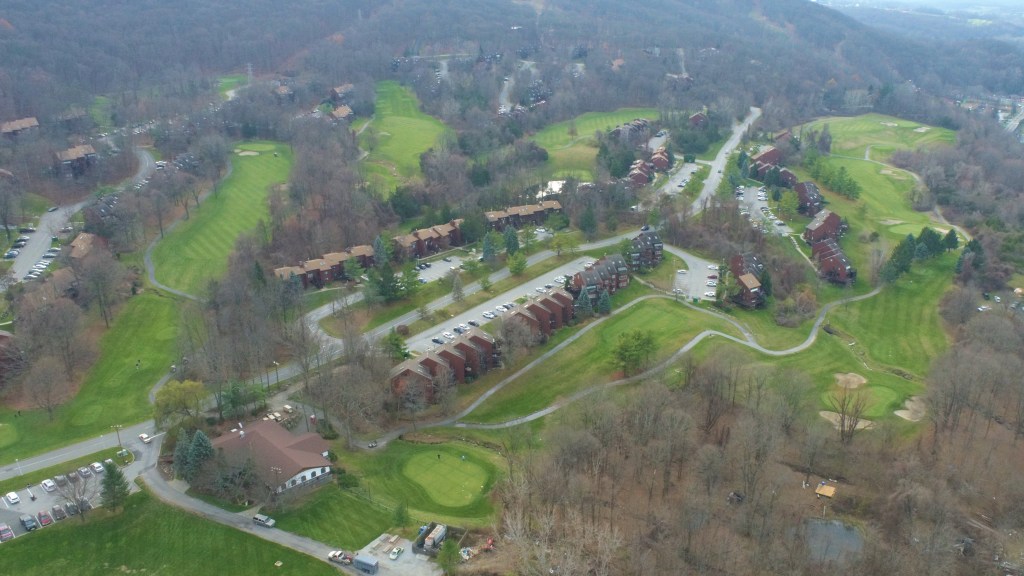
All nine holes from the foggy skies over Minerals
Numbers 104 (Minerals Golf Club)

Number 98 (Charleston Springs – South)

Date played: 6/7/2020

It took almost four years, but after playing the North course at Charleston Springs in November 2016, I finally made it back to play the South course. I was invited back by my Twitter golf buddy Walt Blasich who is quickly becoming my tour guide for the best public courses in Monmouth County!

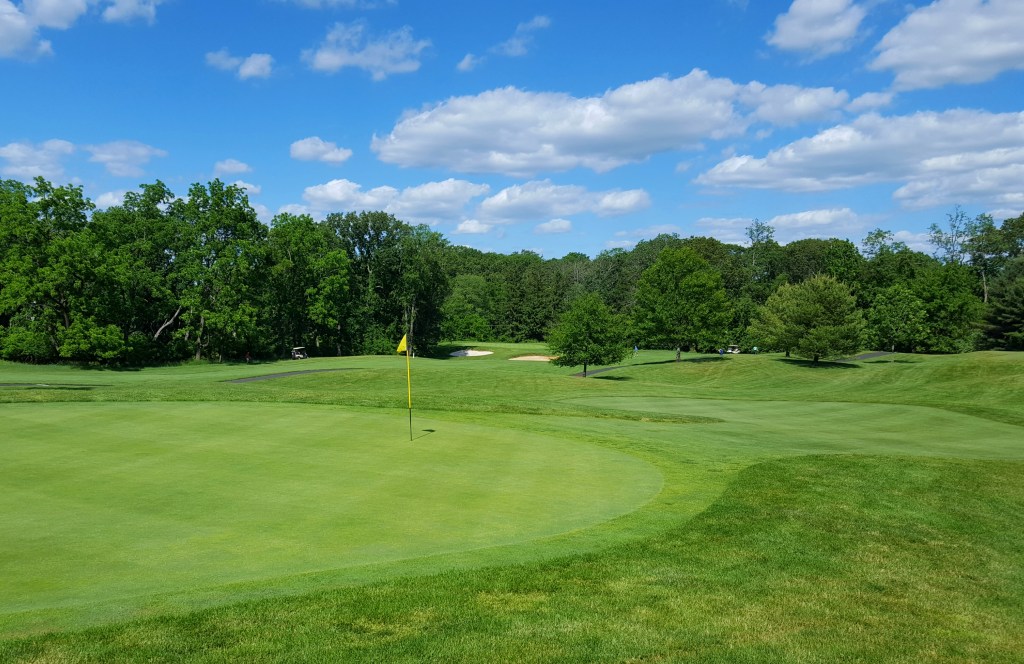
Conditions were beautiful at the North, and the South is no departure. Both layouts are some of the most finely maintained public courses you’ll find in the state. You immediately get a sense of that as you walk off the back steps from the pro shop and look onto the flawless (and massive) putting green.

The putting green is big enough to accommodate all golfers waiting to tee off on both courses

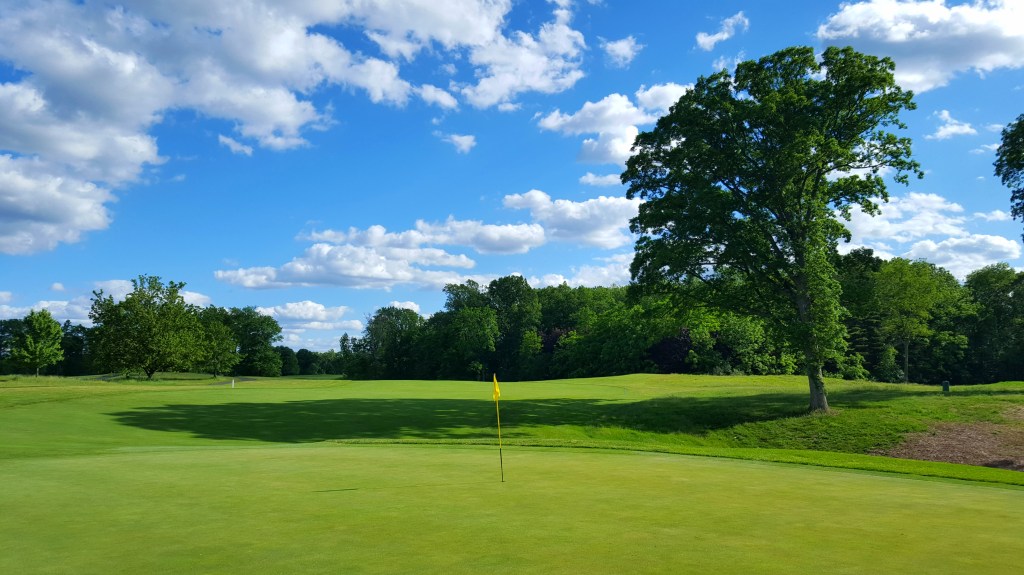
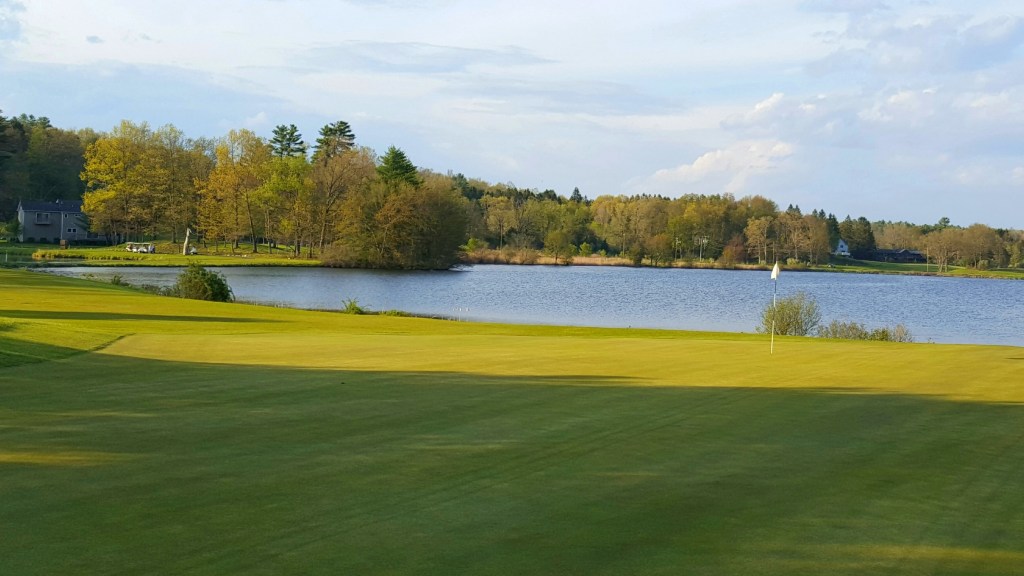
If you love a good golf bridge, you’ll cross one on the long walk to the first tee, a great way opportunity to get your mind in the right place before the round. A short uphill walk through the woods after the bridge, and golfers are emptied out into the clearing that is the South course. Where the North is laid out in links style, forcing golfers to contend with many fescue-lined holes, the South is a sprawling parkland course. Although there are trees to deal with, the fairways are quite generous and there are a number of very open holes.

A walk across the bridge on the way to the 1st tee on the South course

From a design standpoint, the way the 6,377 yards (from the Gold tees) are spread across the 18 holes is done really well. The par 3s play as long as 195, but also as short as 115 on the 11th, something most courses shy away from. Of the twelve par 4s, there are four that play over 400 yards, but then there are also a couple that are drivable for long hitters, like the 294-yd 10th. You might be able to lodge a complaint about the par 5s as three of them are between 499 and 505 yards. But whether it’s differences in the way elevation or direction changes from tee to green, they are each truly unique.

A front pin location on the 11th, with the drivable, par-4 10th in the background

As I mentioned when writing about my time at the North course, Charleston Springs is definitely held in high regard. I don’t know that the South measures up to public resort-type courses (e.g. Ballyowen and Crystal Springs), but I think it would be unfair to put either of the two layouts in that category. Nonetheless, it certainly ranks highly in the very next tier and should be considered a great option for public golfers.

A look back at 18
Number 98 (Charleston Springs – South)

Number 97 (High Point Golf Club)

Date played: 5/15/2020

Golf has a way of presenting you with moments which remind you that you never really have it all figured out. My round at High Point Golf Club would be that moment. While there is no way any of us can see such reminders coming, mine would happen at a time when the world was turned upside-down by something it couldn’t see either.

It was May 2020. The invisible terror that was the COVID-19 pandemic had spent the better part of six months tearing through the world. In New Jersey, the spread seemed to have peaked in early April. After the positive case average remained steady for the month, the numbers were finally dropping in May. Restrictions started to ease, and golf courses in the state began to re-open.

High Point Golf Club was a late addition to my list of courses. Though I started compiling the list in late 2015, I didn’t know High Point existed until sometime in 2019. Though it was surely online somewhere, I forget at this point where exactly I heard about it. Nevertheless, after a bit of research, I confirmed that it was in fact public and made sure to keep track of it. As we came out of the lockdown, it was one of the first courses to make tee times available, and I decided to book a round with my good friend Ed.

Protocols had changed. Out of caution, everything a golf course needed to facilitate public rounds of golf was still being managed outdoors. Golfers checked in with the starter to confirm their tee time and then needed to return to their cars until they were called. After a short wait, we got word that we could head to the first tee.

Hole 1 from the tee. Just waiting for the fairway to clear so I can overdraw one into the water.

The course is situated around a grouping of small lakes, and water features immediately on the opening tee shot. It’s a par 5 where you must land in a fairway area that runs out at about 260 yards. The largest of the lakes runs up the left side, and your approach must cross it to reach the second landing area or the green.
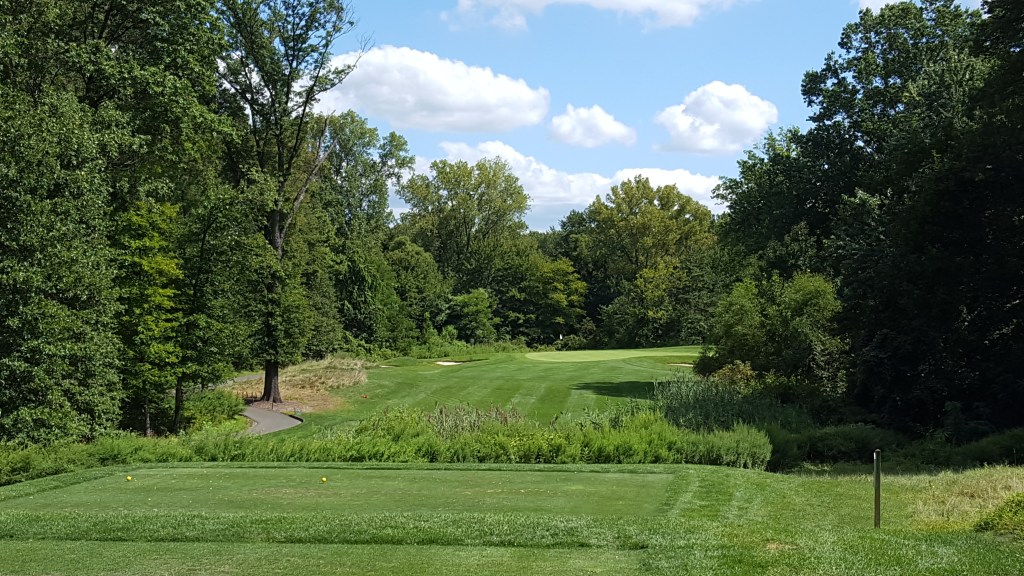
The routing continues from there to wind around and cross over the lakes, and water will realistically be a hazard on holes 4 through 8 on the front, and 10, 14, and 16 through 18 on the back.

The 16th is great drivable par 4. The view from the tee is deceptive, making it seem as though you must go for the green or bust. While the landing area looks perpendicular to the route from tee to green, it actually runs diagonally to provide some room, albeit narrow.

Hole 16, where you decide whether to drive the green, or pump one OB at that house on the right. I know what I’m picking.

The course finishes on two unusual notes and has a couple noteworthy distinctions. The 18th is a par 3 and the course plays to a total par of 73. Both are qualities I don’t remember having seen in other NJ publics to this point in my journey. High Point is also the northernmost public golf course in NJ. Tucked away in the northwest corner of the state in Sussex County, it’s just a couple miles east of the Delaware River and about five miles from the northern border to New York. It is also situated at the highest elevation of any golf course in the state.

As mentioned, my round at High Point would remind me that despite what I thought up to that point, I had not figured out golf. I would enter the round as a 10 handicap, and yet I would post a 106. I put five balls out of bounds, three in the water, and five times, I found a way to three-putt. It would be my highest score since 9/14/2014. “Golf is hard” is not just a hashtag. At times on this quest, it is a sobering slap in the mouth.

Number 97 (High Point Golf Club)

Number 96 (Rock Spring Golf Club)

Date played: 11/10/2019

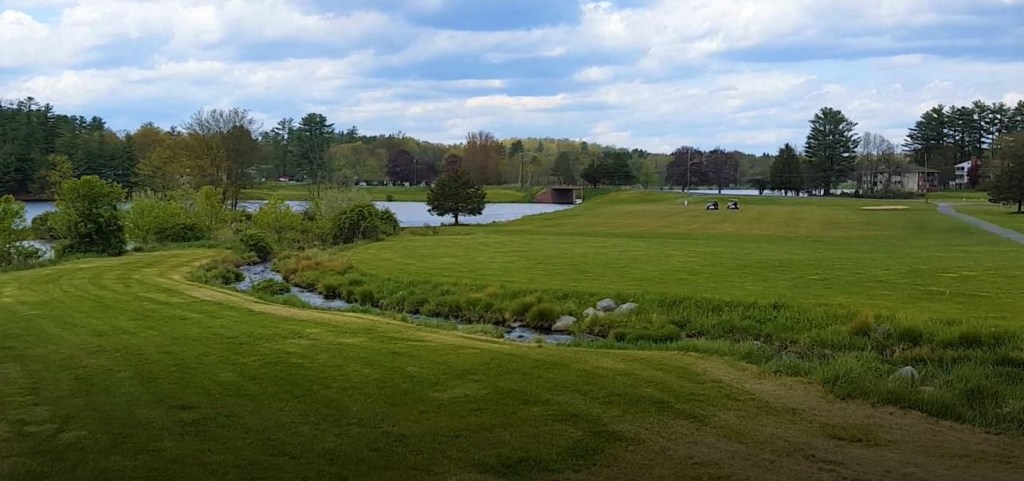
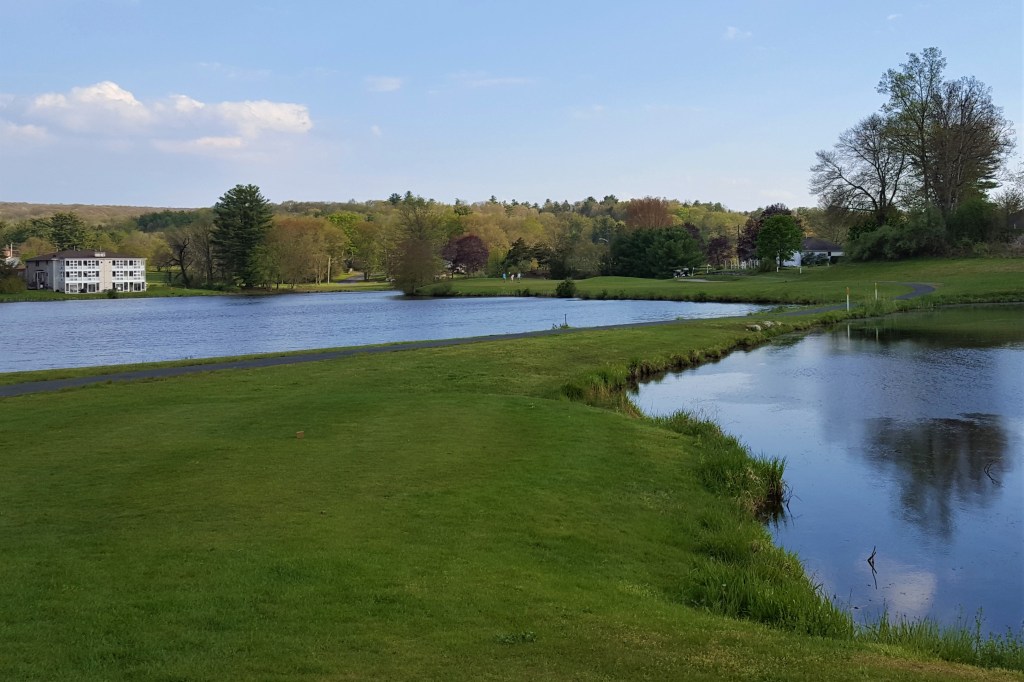
Where Cruz Golf Country Club has its uniqueness in the obscurity of its designer, Rock Spring Golf Club is the complete opposite. Designed by Seth Raynor and Charles Banks in 1927, it was born in in the heralded “golden age” of golf course architecture by very prominent names. Like most Raynor designs in America, Rock Spring was private for most of its existence. A mere 92 years after opening, it opened to the public in May 2019.

Hearing about Rock Spring was my first experience with the grapevine of the golfing world. Other than through social media, I don’t consider myself quite connected to the golf community yet. I don’t have any contacts who work at courses. I’m only just meeting teaching professionals. Given that I’m almost always at new courses, I only play with a couple people “regularly”.

But it seemed like one after another, I started to hear and see the same refrain: “You’ve gotta play Rock Spring”.

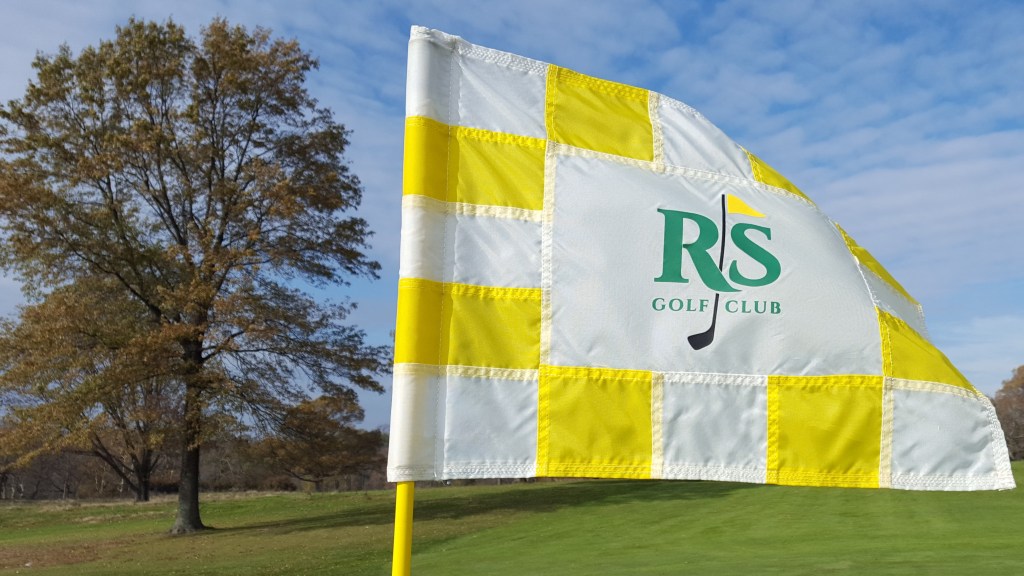
Quality flag game, but is it a “must play”?

A big part of this has to be attributed to the suddenly vanished exclusivity. If Pine Valley opened to the public, you can bet you’d hear about it immediately. That story would likely make any and all golf news outlets. So, the question for me was really, do you have to play Rock Spring?

I have to say, it took some time through the round, but it grew on me. At $89 on a weekend in November for a now-public golf course, it had to live up to that price. At that rate, you’re approaching the finest publics in the state (i.e. Neshanic Valley, the Crystal Springs resort courses, etc.). But I started to appreciate the design elements after a while. I began to see what the course would look like in prime conditions, without the leaves all over the place, and it is a quality course.

Hole 12

The greens had good speed, even for the middle of fall in cold conditions, and they are relatively large. There are plenty of changes in elevation from tee to green, and the holes that play along the side of a hill – like 12 and 15 – are actually some of the most striking.

15 green

Managed by Kemper Sports – the same company who oversees the beautiful Skyway Golf Course in Jersey City – Rock Spring is definitely in good hands. As for whether “you’ve gotta play it”, I’d say ‘yes’, but you’ll have to check it out for yourself!

P.S. If you get there early, and the place looks closed, it’s probably because you parked in the overflow lot. There is actually parking around the clubhouse, which is also where the bag drop is.

How I played…

I actually played pretty well, but putt poorly.

Highlights: Meeting up with new golfers in New Jersey! Shout out to John Boylan for joining me on a cold November morning. Also making the highlight reel are two approaches that I knocked to a foot-and-a-half. (Yes, I made the putts.)

Lowlights: Definitely putting. I felt good on the practice green, but it didn’t carry onto the course.

Number 96 (Rock Spring Golf Club)

Number 93 (Springfield Golf Center)

Date played: 9/14/2019

The 93rd stop on my adventure was the self-proclaimed “Most complete family golf center” in South Jersey. Located in Mount Holly, Springfield Golf Center features a driving range, a miniature golf course, a “chip-and-putt” course (not to be confused with pitch-and-putt, I guess), and a par-68 course. I have to say, if you’re looking to learn the game, it’s difficult to argue with the “complete golf center” billing.  

Strictly speaking, the par-68 is what is actually Number 93 on the quest. Since the scorecard for the chip-and-putt does not have yardages for each hole, it’s not counted on the journey. It’s one of the few arbitrary rules I have about what will count and what won’t, but I have to draw the line somewhere.

*whistles* Nice greens…

The course only plays about 5,000 yards from the back tees. Most holes are straightaway, with ample room to miss. A serious exception is the par-5 14th which plays to a narrow fairway with unplayable woods on the left and a lateral hazard to the right. The back tees on the par-4 16th are also awkwardly narrow, pinched between the net at the far end of the driving range and a couple trees with some overgrowth on them.

There’s tight, and then there’s the-tee-shot-on-16-at-Springfield-Golf-Center tight

To be somewhat critical, there are some areas of the course where it seems difficult to keep decent grass cover. I believe the aforementioned 14th is the lowest lying area of the course and it looked like it might have drainage issues. The fairway landing area was very sparse when I played, something I felt was out of place for a September round.

Judging the place as a family-friendly learning course, I think it’s a great example of using the maintenance budget appropriately, focusing on keeping well-manicured greens, particularly for the price point. It was $44 (including cart fees) on a weekend, which is probably right where it should be.

Springfield became the seventh Burlington County course I’ve visited, leaving only Indian Spring Country Club to complete the area.

First we chip… then we putt

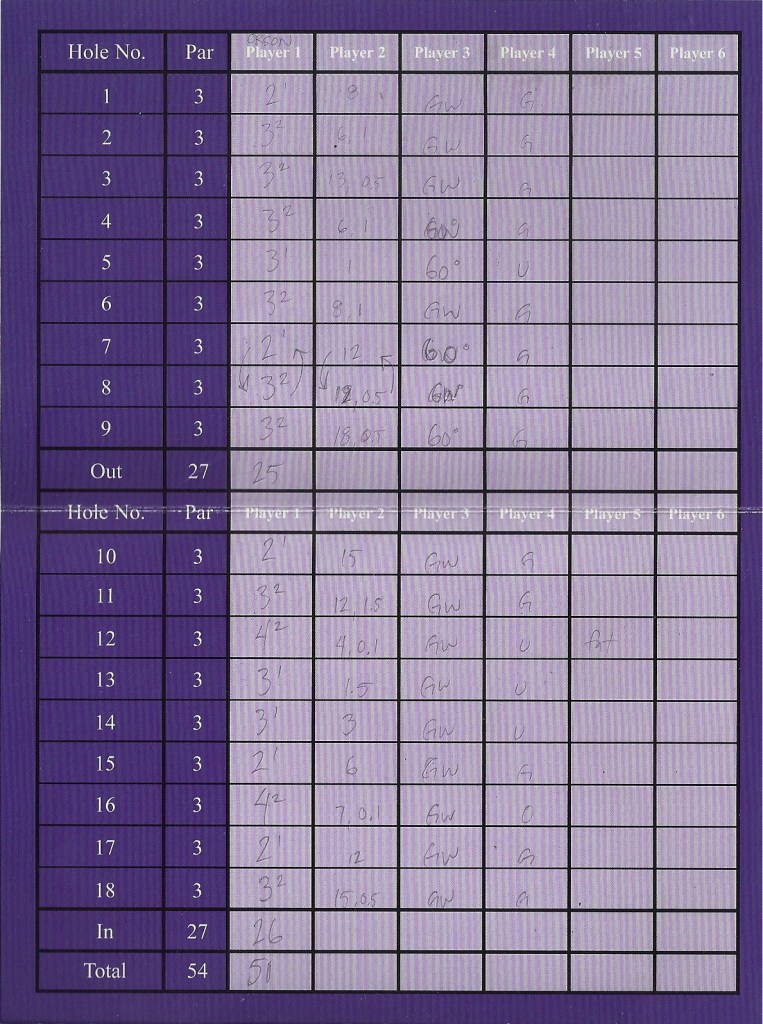
BONUS: After my round on the executive course, I decided to play the chip-and-putt while I was there. All holes are par-3s less than 50 yards with some probably as close as 25 yards. You can get around with a single wedge of your choosing, but I happened to play both my gap wedge and my 60-degree for practice. The putter was hot, and I made my way around with five birdies and two bogeys, en route to a three-under 51.

If only all of golf was that easy.

What could’ve been a sub-50 round
Number 93 (Springfield Golf Center)

Number 92 (Harbor Pines Golf Club)

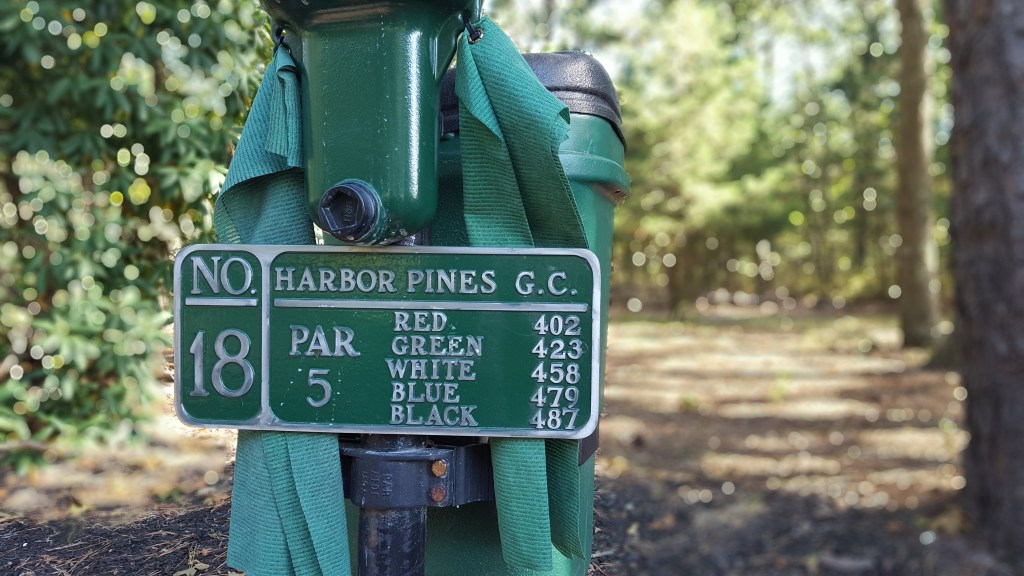
Great old school ball washers at Harbor Pines

Date played: 9/8/2019

My first trip to play a public golf course in Atlantic County required begrudgingly breaking my precious sleep schedule. An early morning tee time at Harbor Pines meant that I’d have to be on the road at 5:00 am.  I don’t mind waking up early – especially to play golf – but waking up before 5:00 is pushing the limit. Nevertheless, the journey called and I was on my way.

The course winds through a dense forest, with almost every hole lined on both sides by trees. With the possible exception of the 1st and the 18th, wayward tee shots won’t have a chance of finding the fairway of a neighboring hole. When a course is mostly a winding tunnel of hole after hole, I find it difficult to appreciate unless there is great variety, and a majority of the holes at Harbor Pines are straightaway.

That’s not to say that there aren’t areas of the course that are noteworthy. The 4th is a long par 4 with a 90-degree elbow. The greens across the course are in great shape, and many have clever undulations that make for great hole locations, with the complex on the 9th being a great example.

Shadows across 9 green

You start the back nine with a tough par 5 that requires a tee shot that needs to avoid water on the left. Water is a factor on multiple holes, but perhaps nowhere else more so than the 12th. It’s a daunting short par 4 where a tee shot needs to carry and navigate water for at least half the carry distance, only to find that water must be avoided to the right of the green on the approach.

At over $80 in prime season for a round with a cart, Harbor Pines measures itself among the nicer public courses in the state. Through that lens, it comes off as somewhat average. Having said that, it’s certainly worth a play and would be a good option in a line-up for a multiple-day trip of golf in Atlantic County.

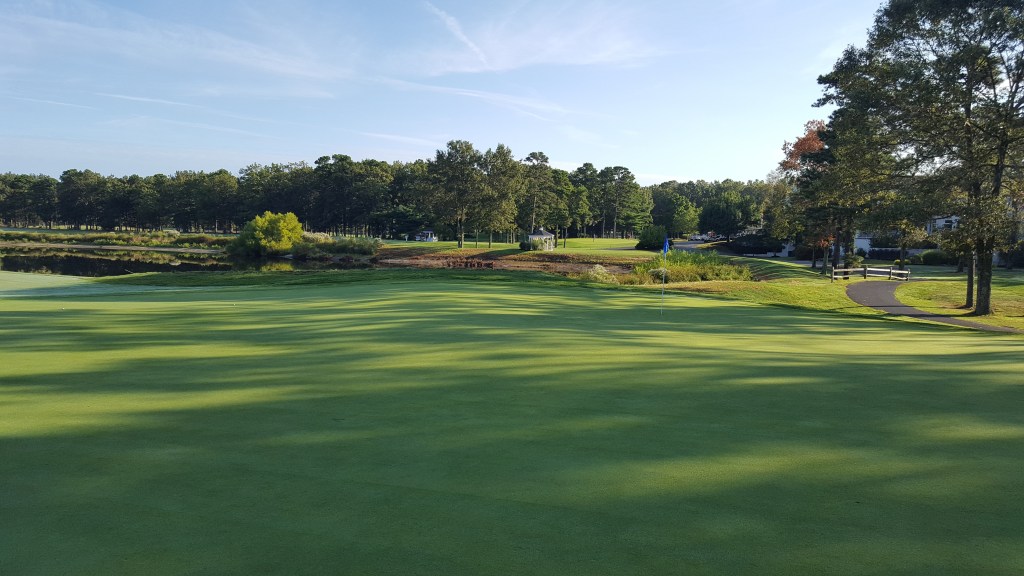
The par-5 18th
Number 92 (Harbor Pines Golf Club)

Number 91 (Orchard Hills Golf Course)

Date played: 8/24/2019

I had taken a Friday off work and traveled up to northern New Jersey to play a small private/community course with an old family friend. Afterwards, I also played the short par-3 course at Anchor Golf Center and decided to stay up in the area to try to play another new public course on Saturday. I was able to crash at my brother’s place and find a tee time at Orchard Hills.

Like most courses in New Jersey – but especially in Bergen County – Orchard Hills is tightly surrounded by suburbia. Situated adjacent to the Bergen Community College property and across the street from Paramus Catholic High School, it’s relatively easy to miss if you’re not looking for it. The course is nine holes and doesn’t even reach 2,800 yards from the tips, but as its name suggests, it does roll up and through the hills of the property.

Though it’s an easy course on paper, I somehow managed to play some pretty terrible golf. Looking back at pictures now, there is all the room in the world to land your tee shots on the six par-4s and the lone par-5. The course also features two par-3s that are a bit long on the scorecard, but certainly fair in reality.

Hole 4, the first of the course’s two long par 3s

While I carded a poor round, it was a good feeling to cross off another Bergen County course from the list. Orchard Hills was pretty well maintained and pace of play was decent for a busy golf course on a weekend. The course became my fourth public played in the county.

Number 91 (Orchard Hills Golf Course)