Date: 6/27/2021
Time: 4:35 am
My alarm goes off. Not wanting to make a long day even longer – especially in the early morning hours – I had set the alarm to give me only 15 minutes to start my travels. I quickly wash up, brush my teeth, and change into the clothes I set out the night before. I head downstairs, grab some water and protein bars, and jump in the car. Success. By 4:50 am, I’m on the road.
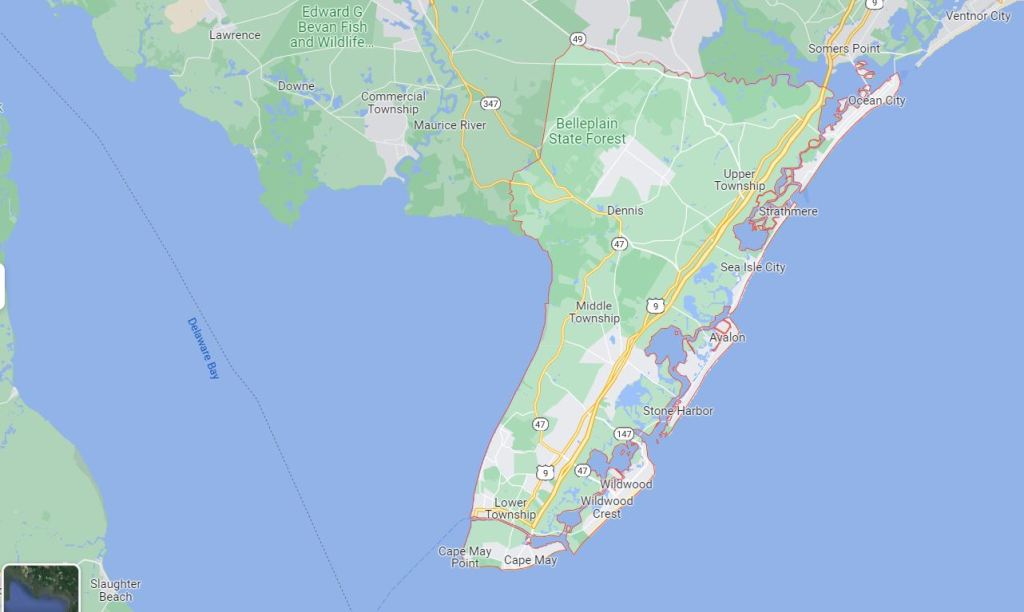
I’m headed back to Cape May County. For those unfamiliar with the geography of New Jersey, Cape May is the vestigial tail at the southernmost end of the state. It juts out into the Atlantic, effectively sheltering the Delaware Bay to its west. It’s a frequent tourist destination in the summer for both beachgoers and golfers alike.
Back in 2018, on the day after Christmas, I made my first trip there. With limited winter daylight, I was able to play both Cape May National (a course I consider a “must play”) and Avalon Golf Club. Remembering how long the drive was, I do not want to leave myself multiple trips back to the county as I look to close out my journey.
With six courses remaining, I’m looking to play three of them. That would allow me to make a third trip to complete the county in the future. Armed with plenty of daylight provided by a long summer day, it seems reasonable.
Time: 6:32 am
I arrive at The Pines at Clermont. My tee time is 6:38 am, so I hurry to get my clubs out of the trunk and head to the pro shop. The good news is that no one else is really here. There is one group that has already gone out, but the woman behind the counter lets me knows that there is no rush beyond that. That puts me at ease.
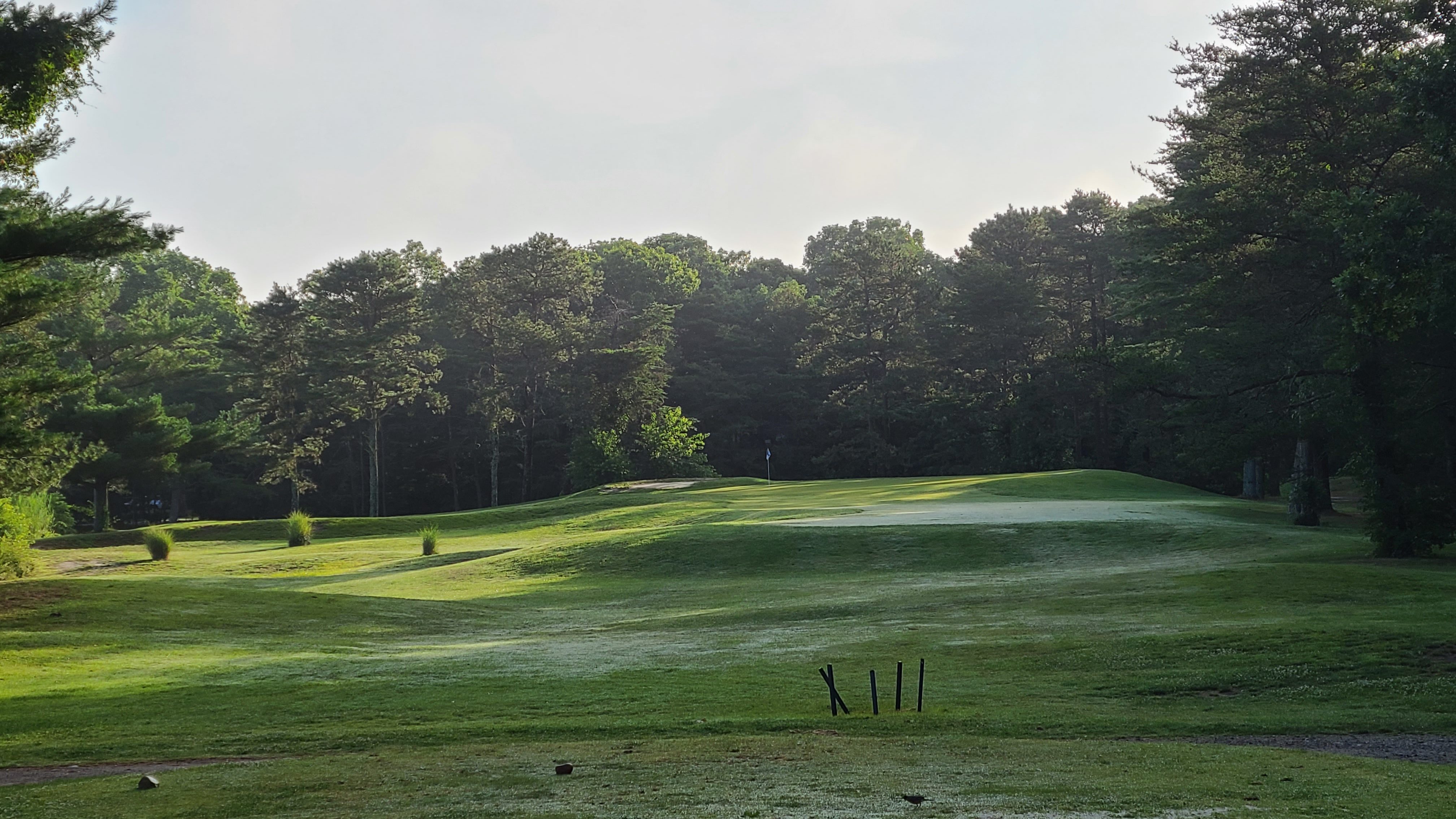
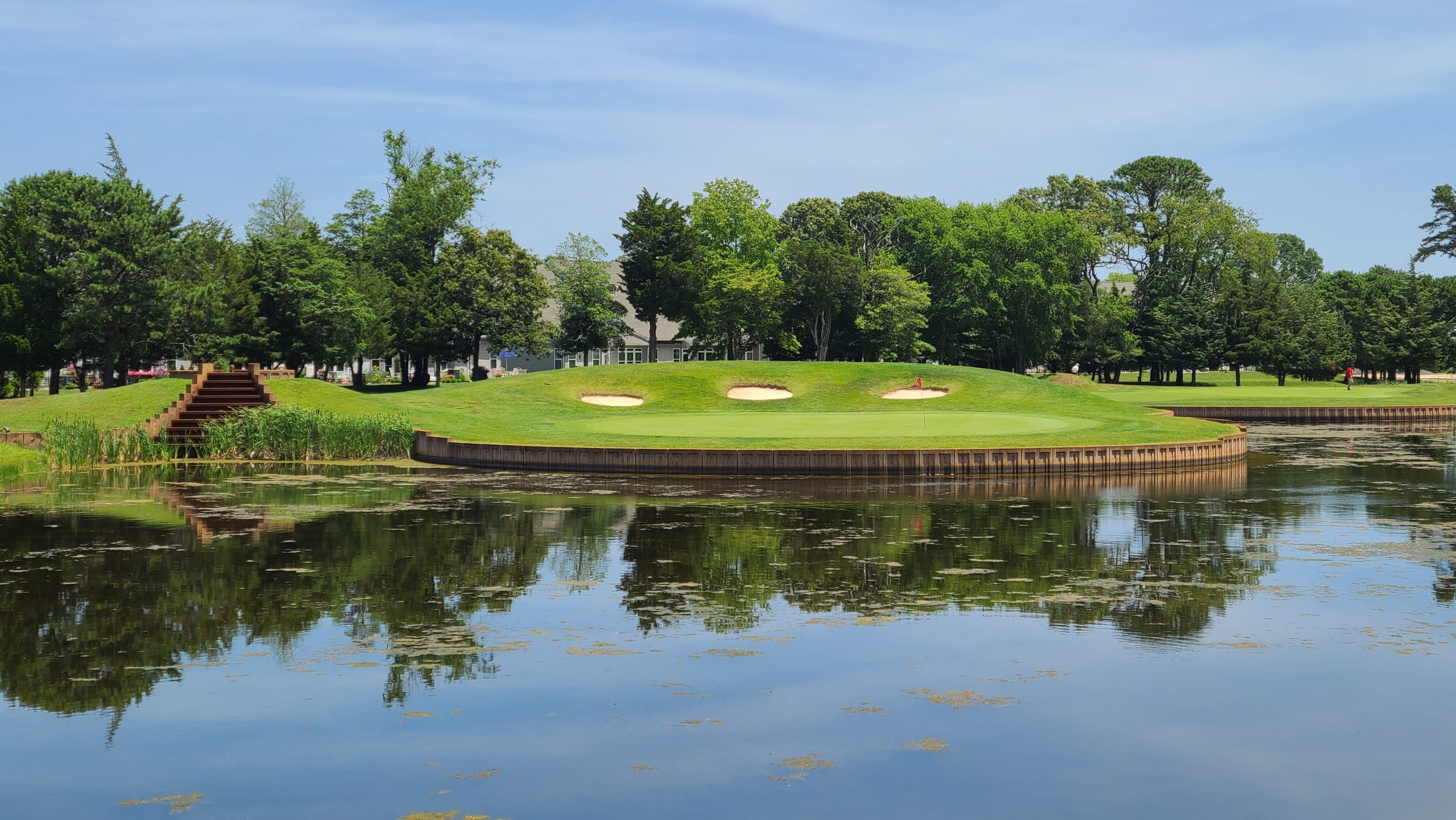
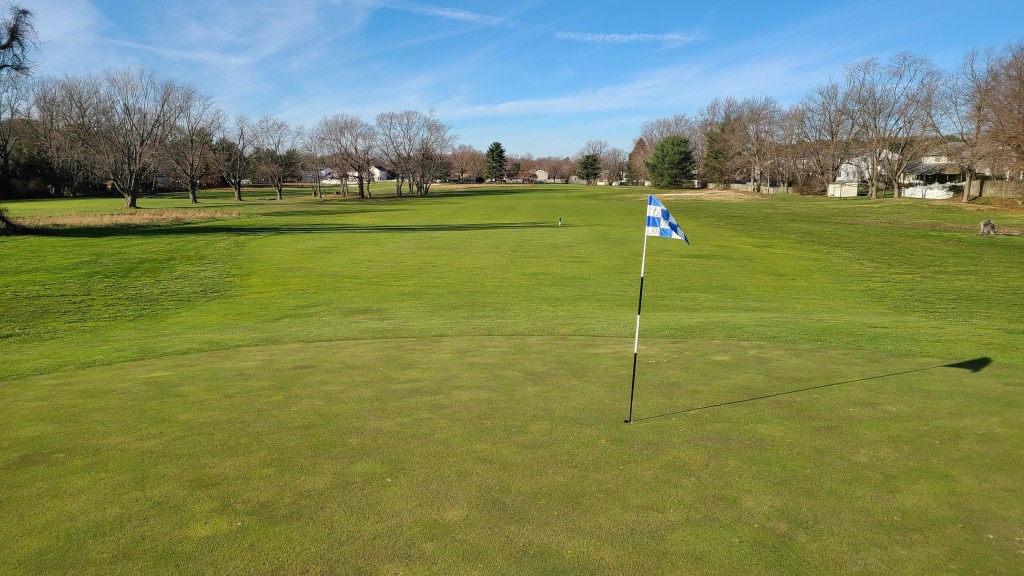
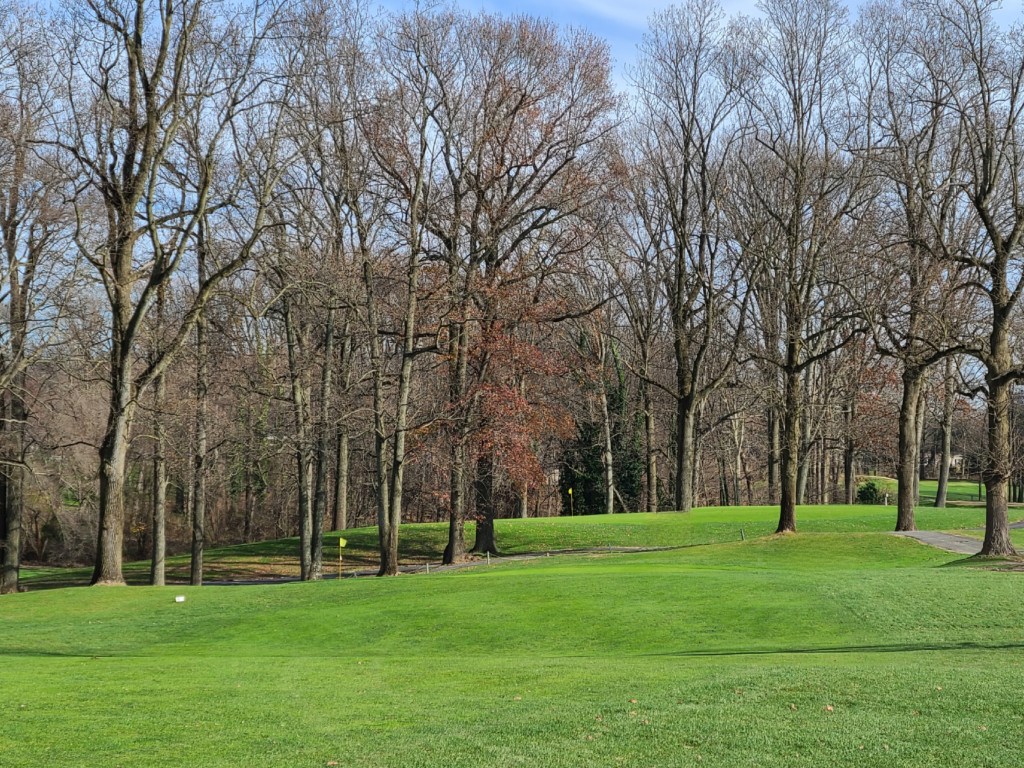
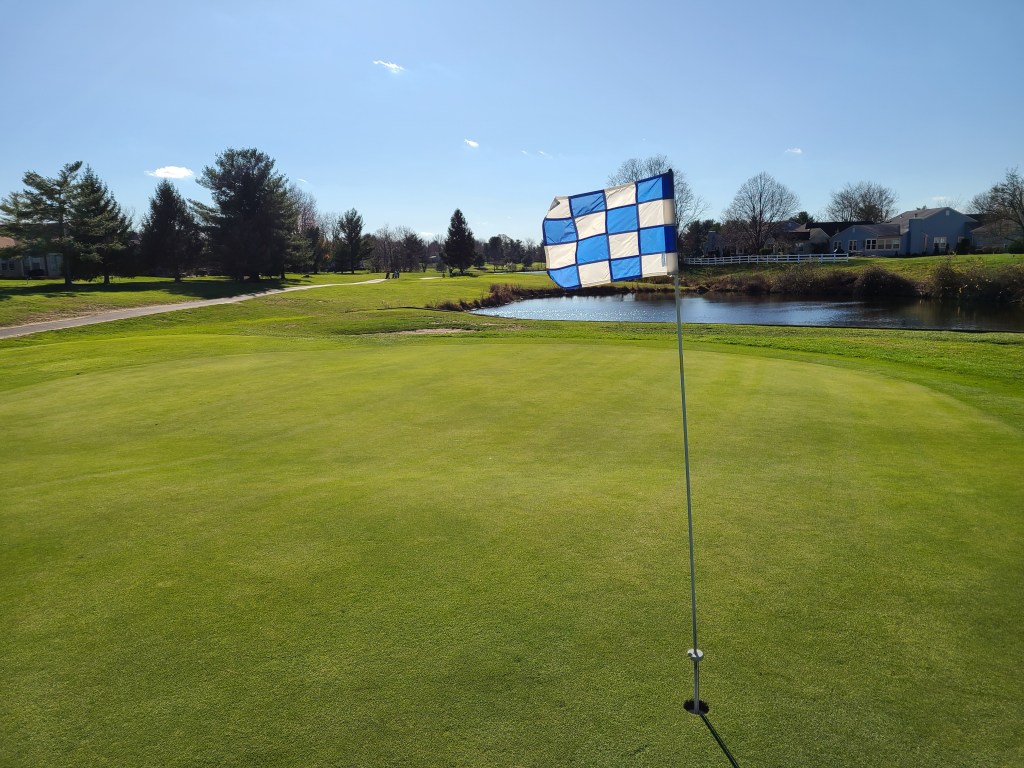
I get my clubs onto the cart, take a quick photo of the green to my left – presumably the last of the nine holes on this course – and make the short drive to the first tee.
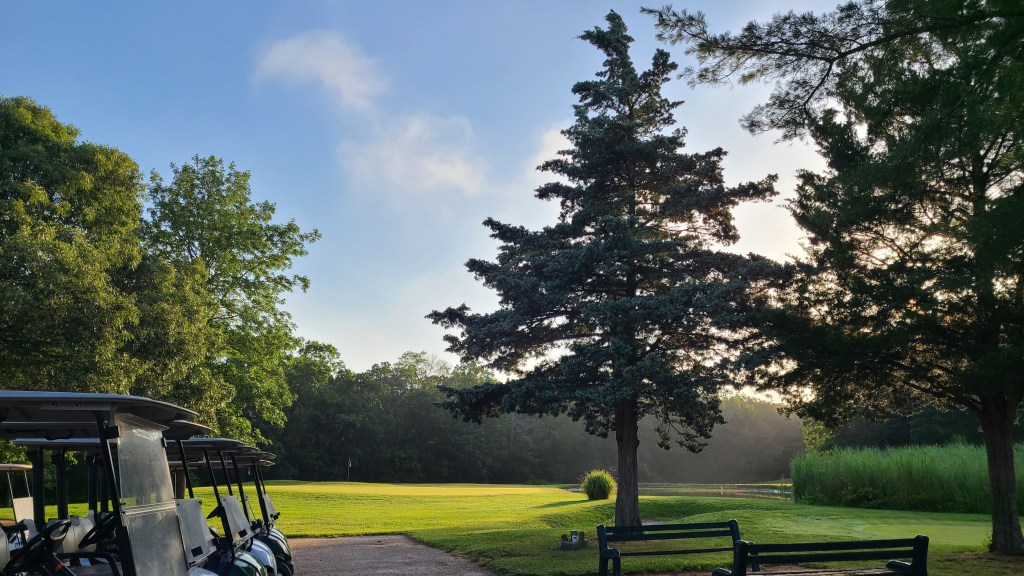
Pines at Clermont is a short course, playing at 2,202 yards from the back tees for a par of 31. There are four par-4s and five par-3s, with water potentially coming into play on a number of holes, most dangerously to the left of 7 and short of 9 green.
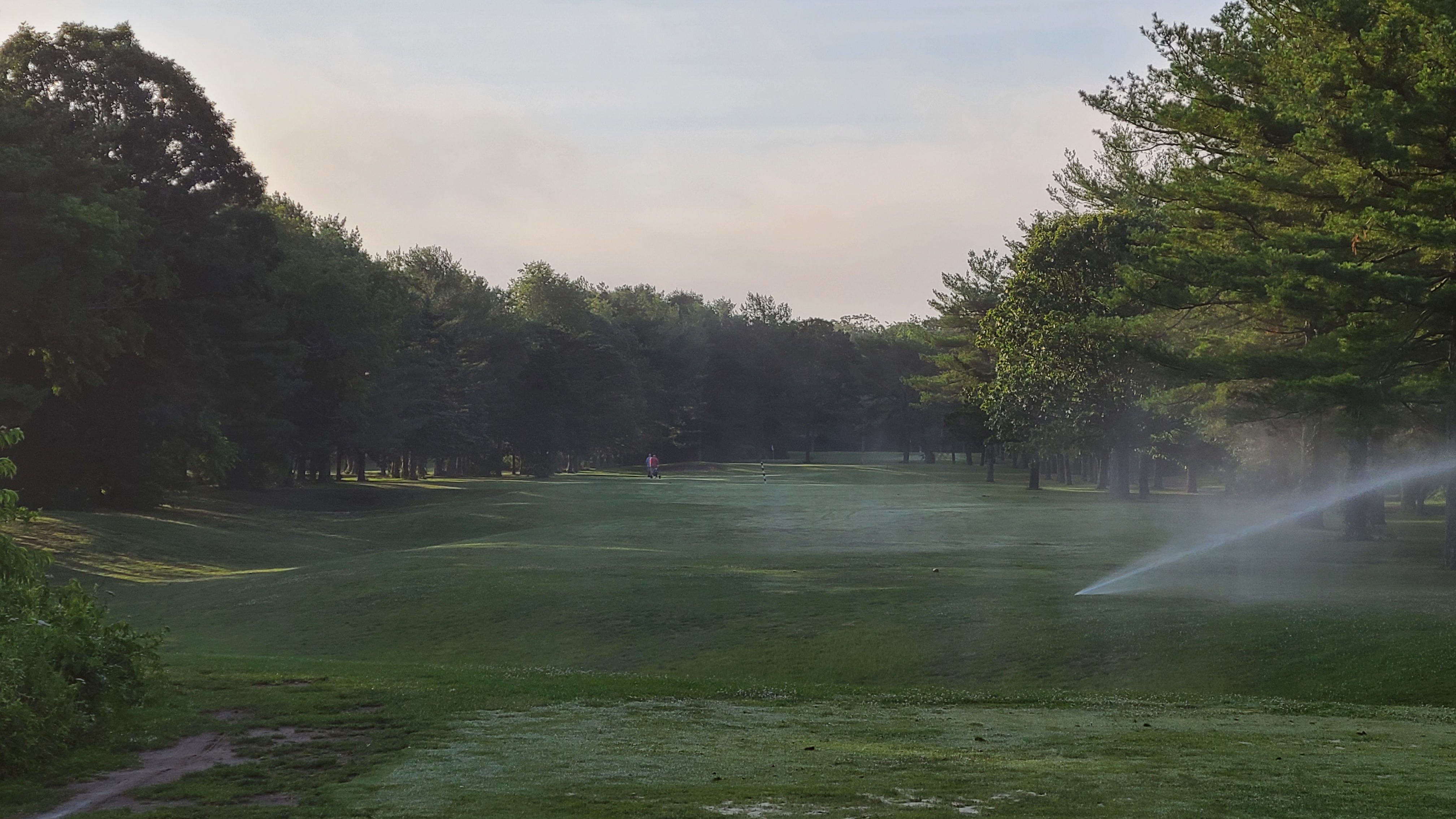
I tee off on 1 – the first of the par-4s – and chase the group ahead of me. The par-3 2nd – only 127 yards from the back – continues in the same direction. After hitting the green and cleaning up a straightforward par, I head to the next tee. I notice that the group I was chasing is no longer in front of me.
I figured that perhaps since they were walking, and I was riding as a single, they decided to play the holes out of order to end my pursuit of them. Not giving it much thought, I tee off on the par-3 in front of me, hit the green, and collect another par. I keep it moving to the next tee.
When I get to what I think is the 4th hole, I realize the sign says it’s actually the 7th. The group wasn’t playing out of order – I am.
I check the map and realize this presents an opportunity. After playing 7, I could actually play 5 and it would put me back by 3 tee. I get done at 7 and drive around the tee box at 8. I get on the path from 4 to 5, and thankfully, no one is at the tee. I tee off, hit another par-3 GIR, but only manage to three-putt for bogey. Nevertheless, no one is in front of me.
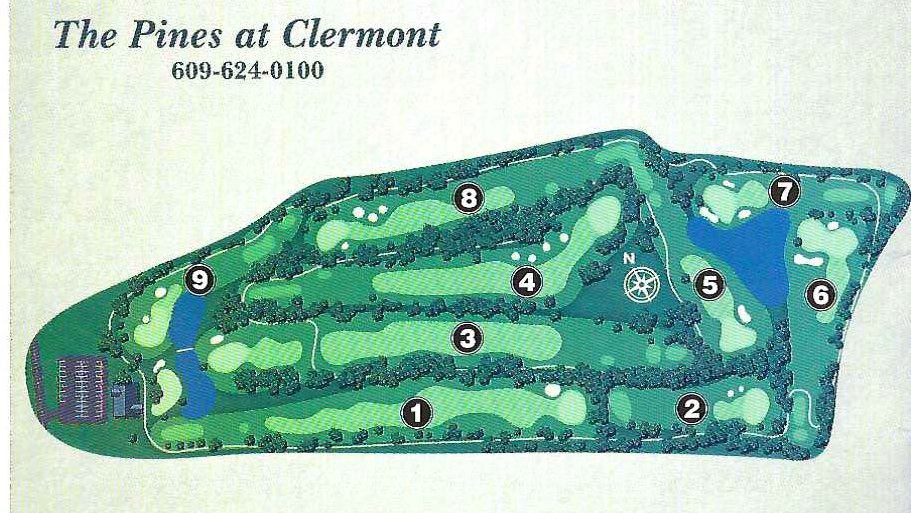
Having played the three par-3s at the far end of the course, I finish out the par-4 3rd, 4th, and 8th and after a short wait on some sprinklers at the tee 9, I’m able to complete the round in just over an hour.

I get back to my car and realize by completing the round quickly, I’ve just bought myself some more time for the day. While the Pines at Clermont was my only booked tee time, it was only 7:53 am and there was likely another 12 hours of daylight ahead of me. I push on.
Time: 8:25 am
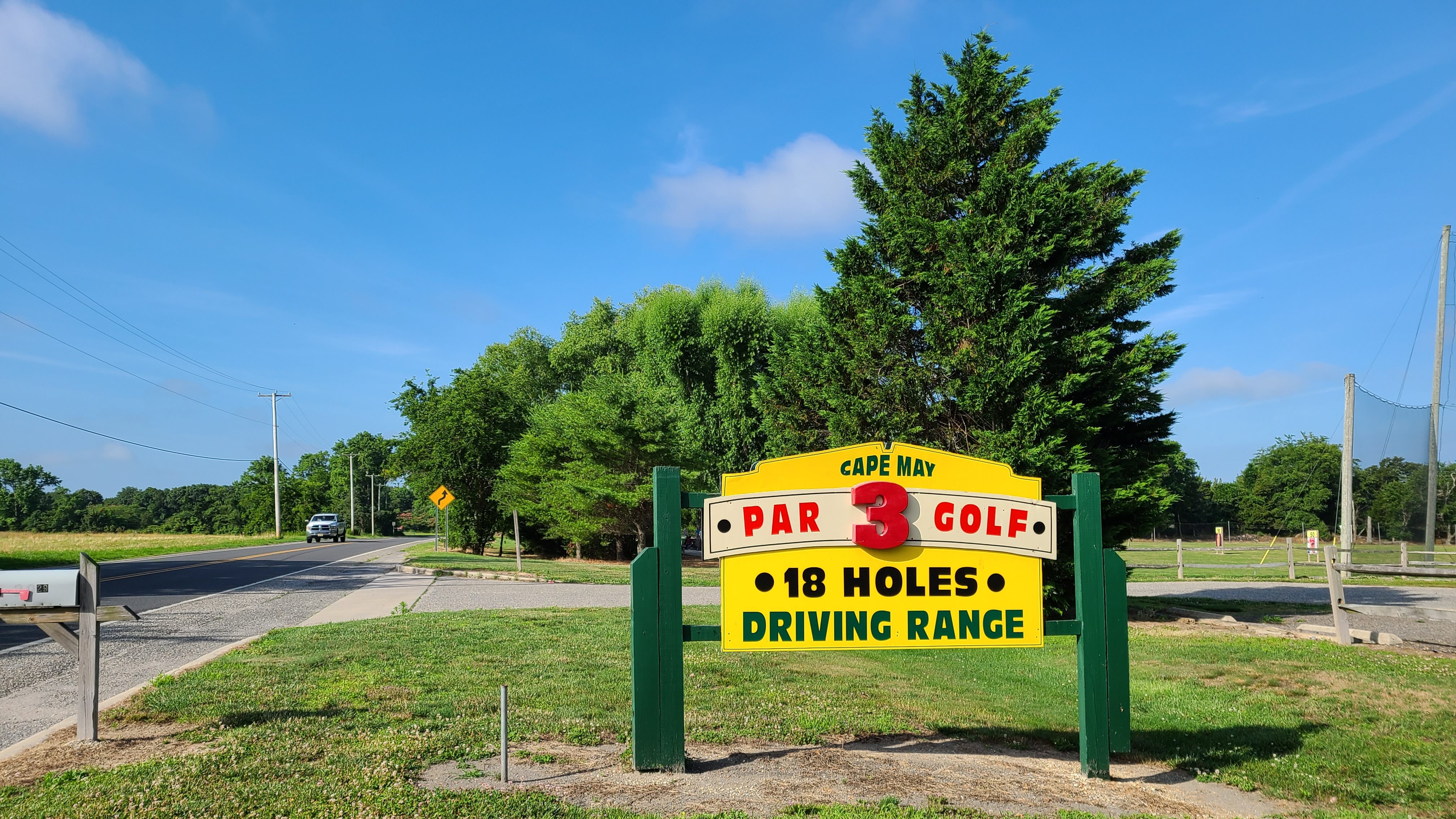
I pull into the parking lot at the Cape May Par 3, throw my clubs onto my pushcart, and head inside. After paying up, I head around back to the first tee where the starter tells me that I can skip a group of juniors and join the threesome that’s already on the green at 2.
I yell over to them to let them know that I was told I could join them. I’m not sure how much they heard, but they got the gist from the fact that I was getting their attention from the tee box, and they made just enough room for me to hit my shot while still remaining perilously in my dispersion circle. Thankfully, I hit the green and the ball just rolled onto the back fringe.
I walk up, thank them for letting me join them, and we make our introductions. They are Tom, Jimbo, and Stanley.
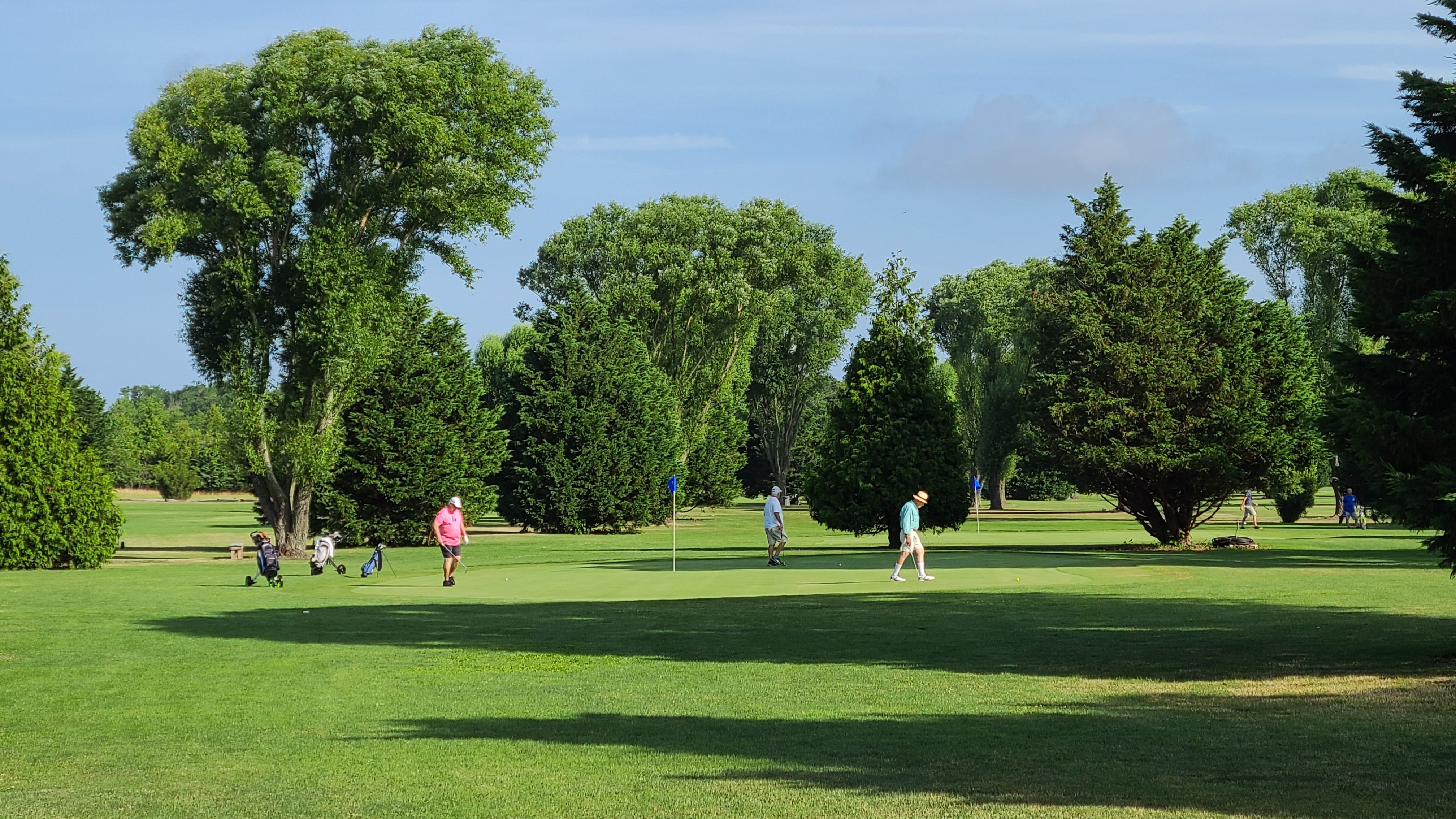
Not wanting to hold the group up, I make my way to my ball and look to get up and down for par. It’s about 20 feet from the hole. I hit the putt, and it drops. Birdie start.
We all head over to the 3rd tee and get chatting. I let them know about my journey as well as my plan to play a few courses in the area on the day. We hit our tee shots on this 80-yard hole, and I stick mine to 4 feet. Everyone putts out, and I hole mine as well. Two holes in, two under.
The group takes an interest in my quest and we talk about golf in the area. The guys are regulars here at the Cape May Par 3. As we continue from hole to hole, I note that the greens are extremely well kept for a course of this nature, and the group takes some local pride in that fact. We discuss some of the subtle breaks from green to green, as well as some of the details about the course.
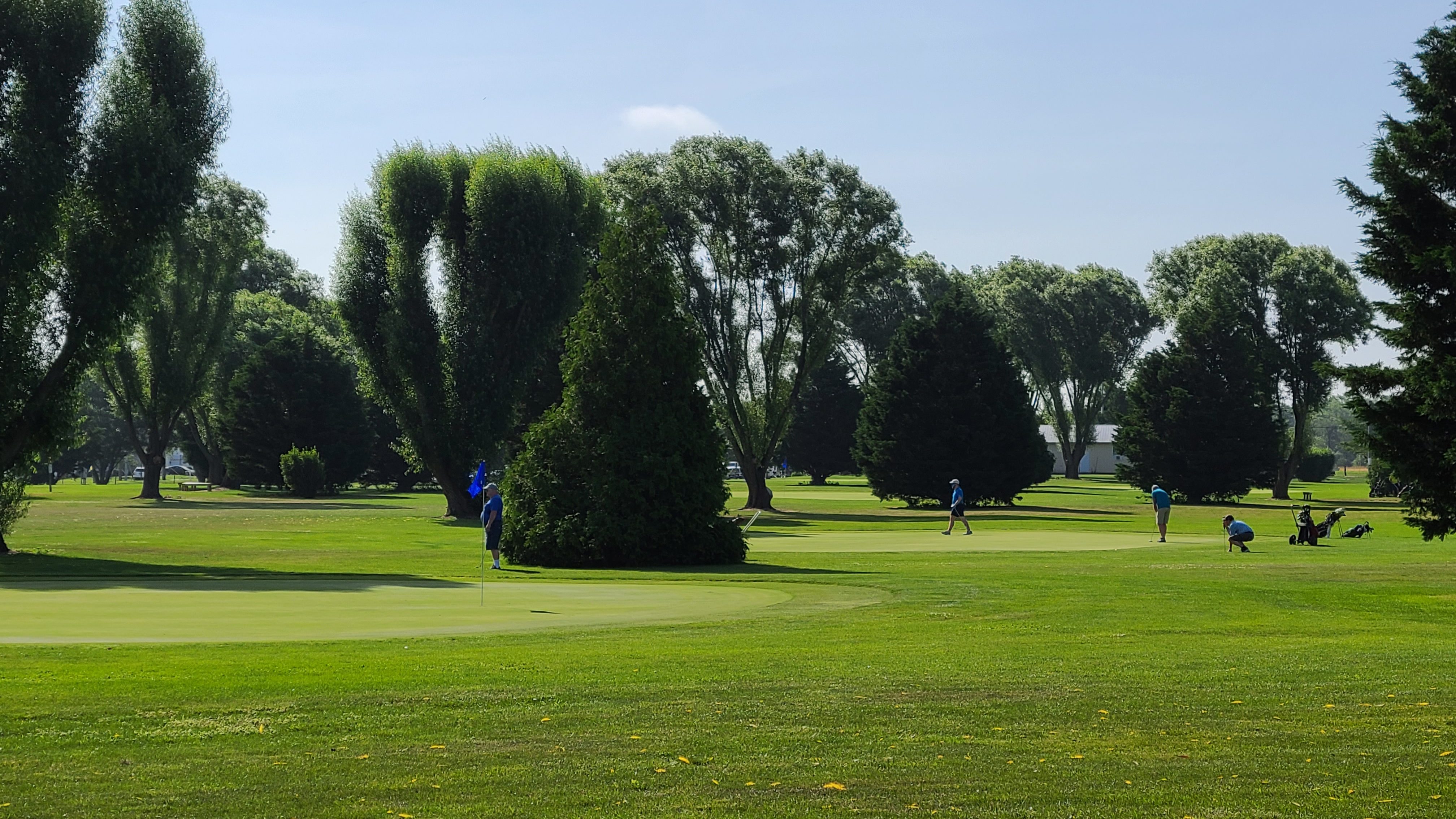
Tom and Jimbo let me know that the course used to be a vast area of asparagus field to one side, and a strawberry field in another area. It’s amazing to listen to the group describe the history of the area. As we continue our chat and close out the front nine, I break my streak of GIRs on both 8 and 9. While I got up and down on 9, I could only manage to two-putt on 8.
We make the turn and I realize that there is no one at the 1st. Given that the morning was aging, and not wanting to risk a long wait at the end of the round, I run over to make up my missing hole. I stick the tee shot and make an 8-footer. Jimbo sees this play out, and when I get back, he asks, “Another birdie?” I confirm that it was. I’m back to -2, with the card looking like I started birdie-birdie-birdie. At this point, I think I might frame it.
We continue on the back nine and I ask the group how I should map out the rest of my day. The guys let me know that traffic going out to Ocean City Municipal may be difficult, especially since it’s a Sunday. I make note of that and try to finish out a very nervy closing half to the round. My lightning start is now completely in my head.
Nerves notwithstanding, my excellent walk with Tom, Jimbo, and Stanley continues. I learn that Stanley was an admiral in the US Navy – “of a whole FLEET” as Jimbo put it – and that his service travels took him around the world. We also talk about how Arnold Palmer served in the Coast Guard and was stationed right here in the Cape May area.
After a lengthy lag putt on 18, I finish the back nine in even par. I hit every green except for the one on 14, but was I able to scramble for my 3 there. I shake hands with the guys and thank them for a truly memorable round. While the course is only 1,862 yards, I walk back to my car feeling good about my two-under 52. More than that though, I take a moment to appreciate the experience I just had with an excellent group of local golfers, something I’ve come to treasure on the journey.
It’s just after 11:00 am. At this point, I’m certain I’m playing four courses, not just three. It’s just a question of which two to play. I take Tom and Jimbo’s advice into account and get back on the road.
Time: 11:39 am

After a quick stop for a bite to eat, I arrive at Laguna Oaks before noon. The sign says it’s “a special par-3 layout”.
What makes it special?
Designed by Fred Langford, the course originally had 10 holes. It’s also the only course I’ve run into so far that has an Honor Box, allowing you to drop cash when no one’s around in exchange for an off-hours round of golf.
When I pay up, the gentleman in the pro shop lets me know that a couple holes have closed, but that work is being done to at least bring the routing back to nine holes.
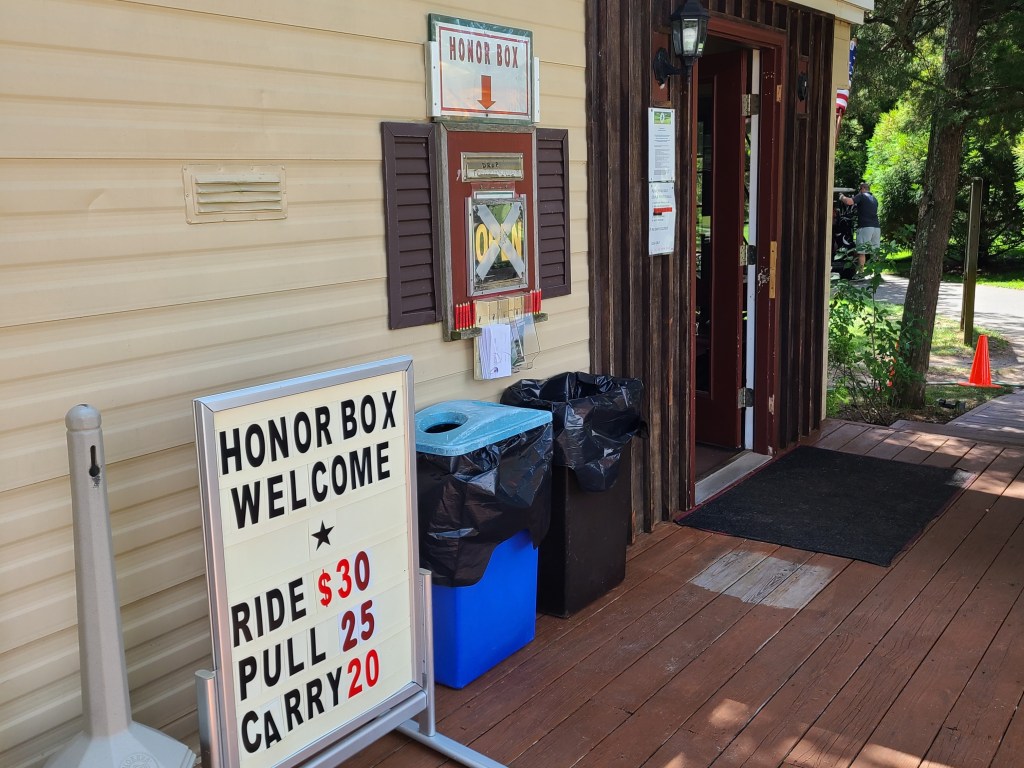
When I look at the scorecard, I see that the holes are numbered from 10 to 18 (with “11A” and 12 being the ones that are closed). I ask about it and the gentleman explains that there were plans at one point to make the course an 18-hole layout with a number of homes also being built on the property. Alas, some hard times hit, and the plans were never fulfilled.
I move to the 1st tee of this now 8-hole par-3 (hole number 10) with the wind picking up. While there are a few groups out on the course, I walk the entire round in solitude. The holes that remain in play at Laguna Oaks play anywhere from 120 to 170 yards from the back tees. Longer hitters could probably get around the course with just a few clubs. Nevertheless, I decide to push my entire bag around on my cart.
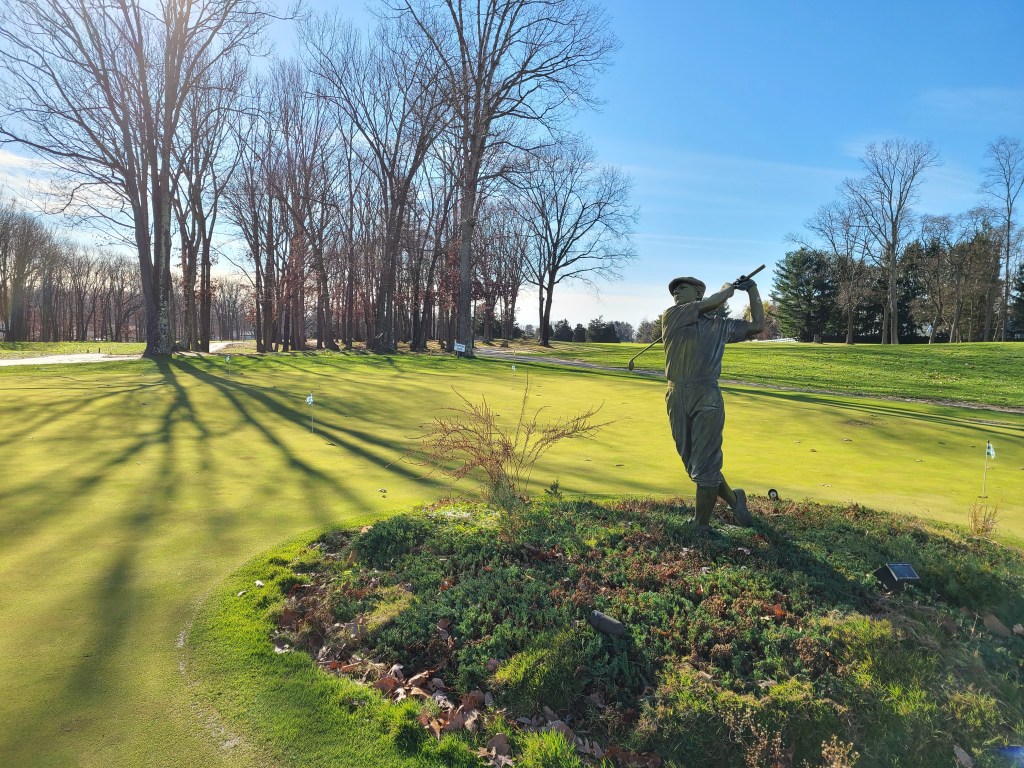
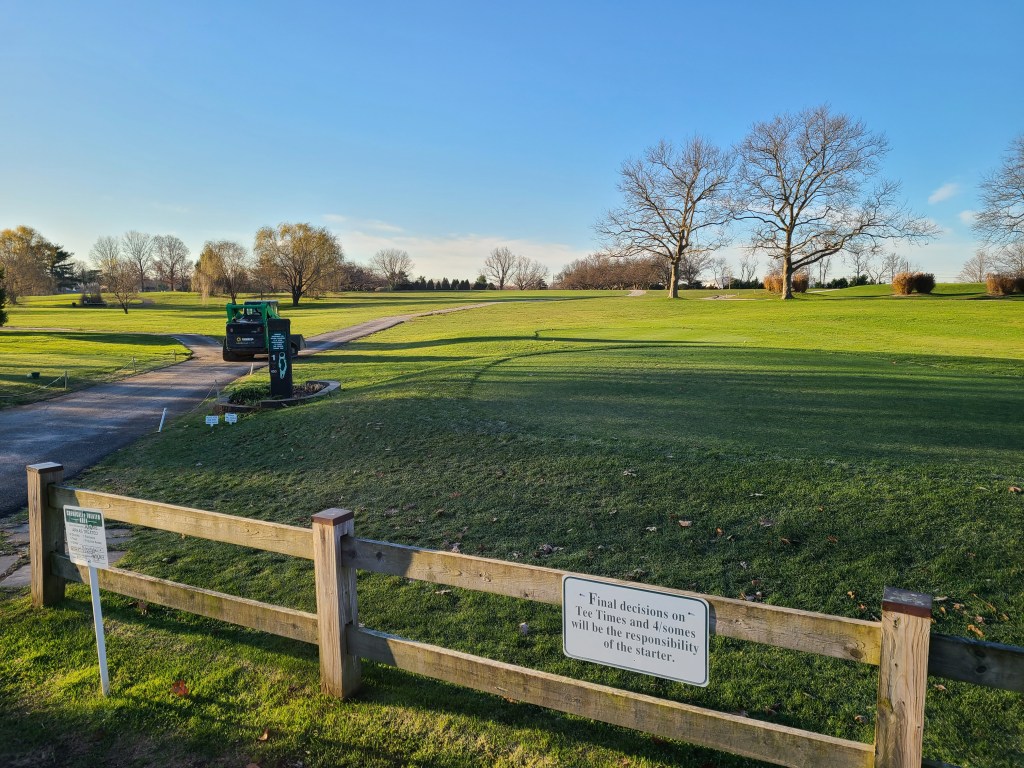
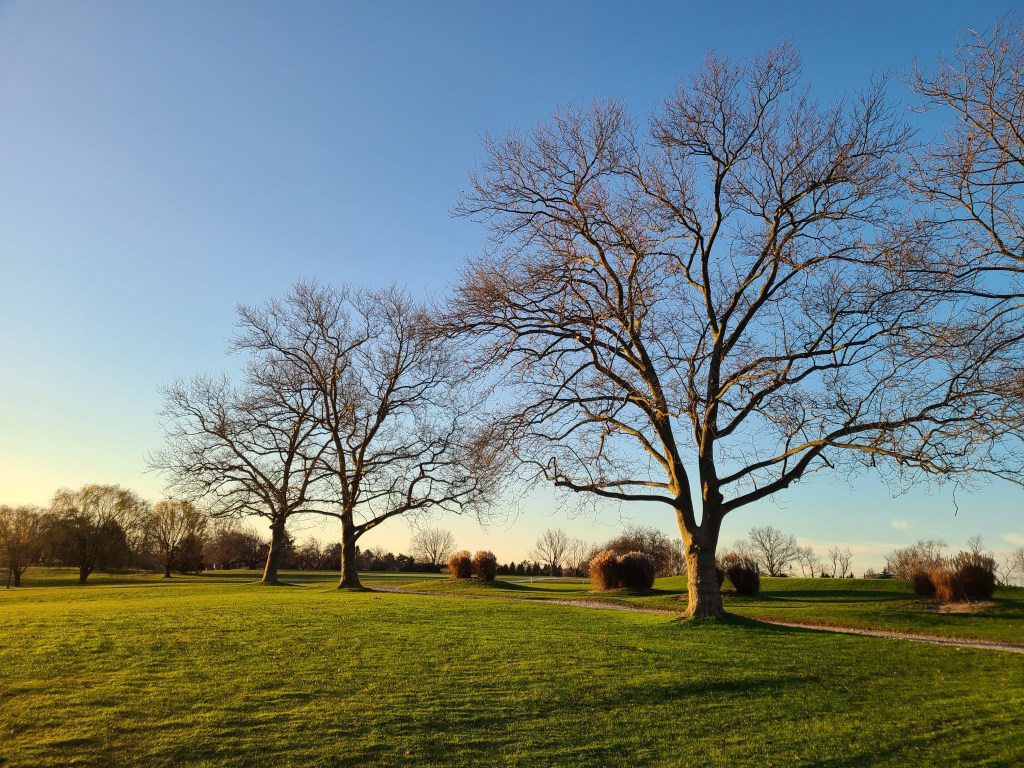
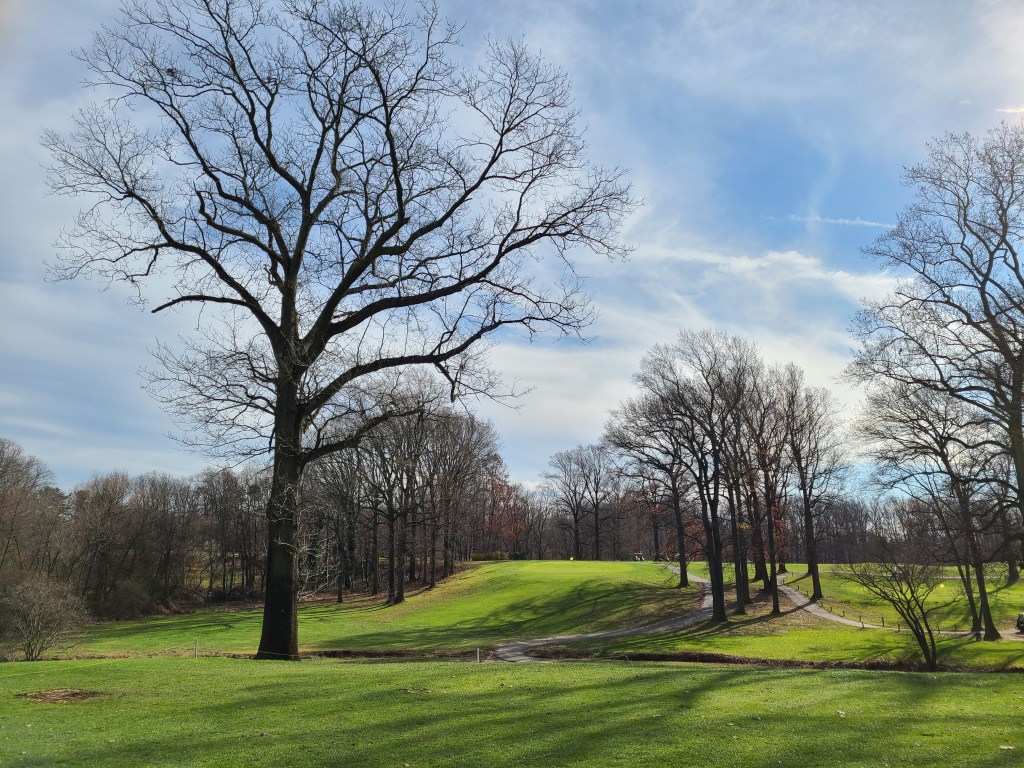
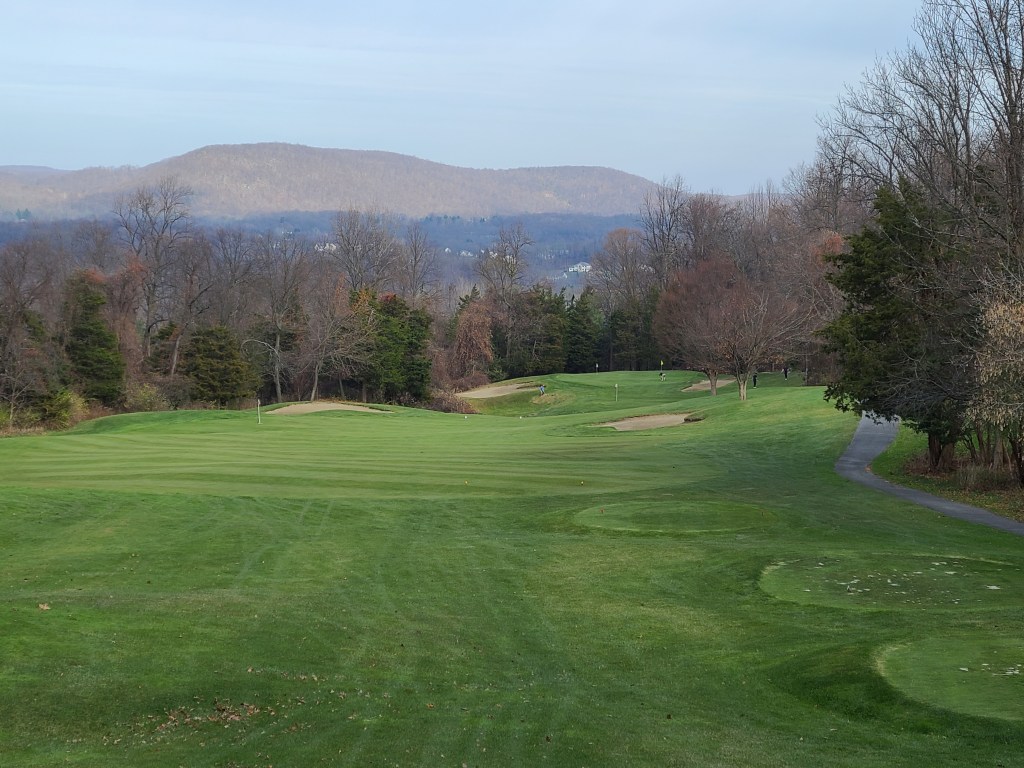
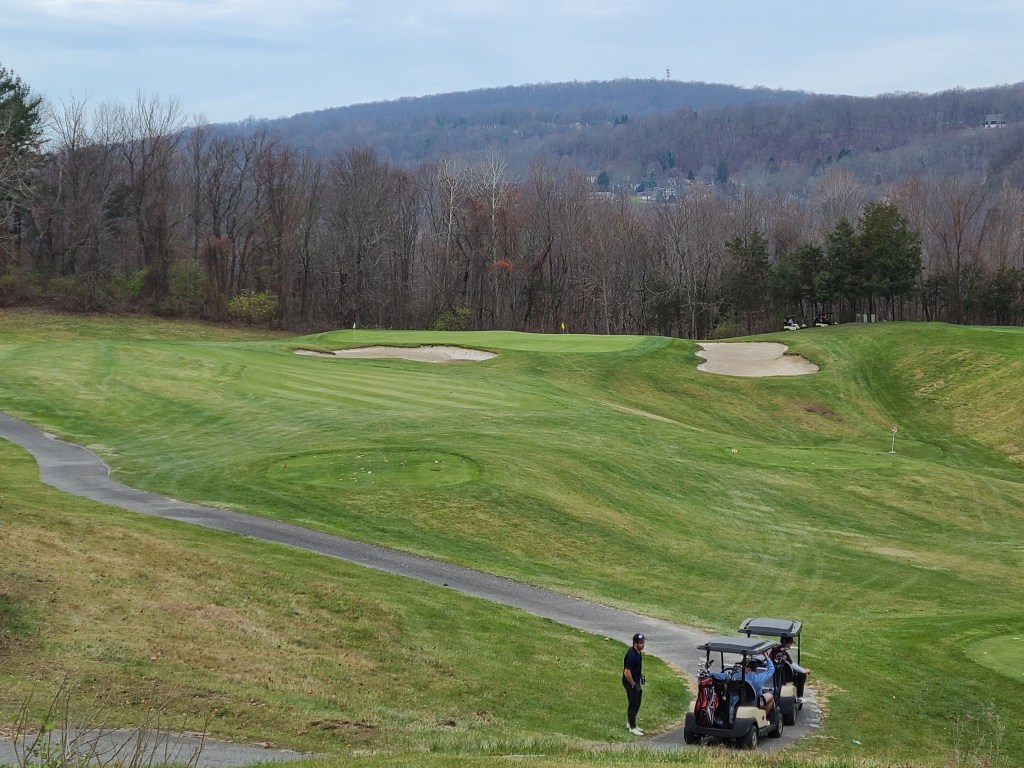
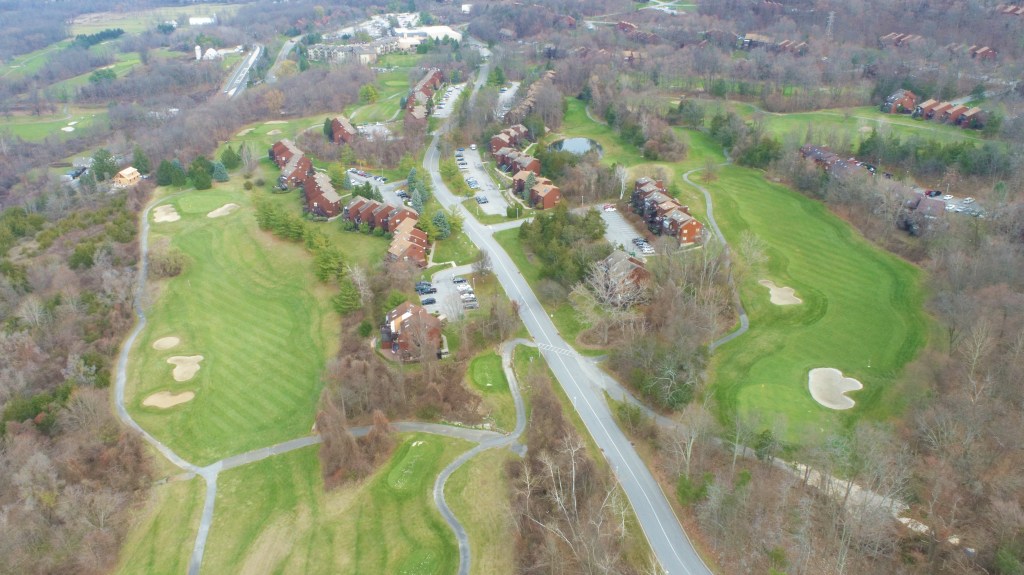
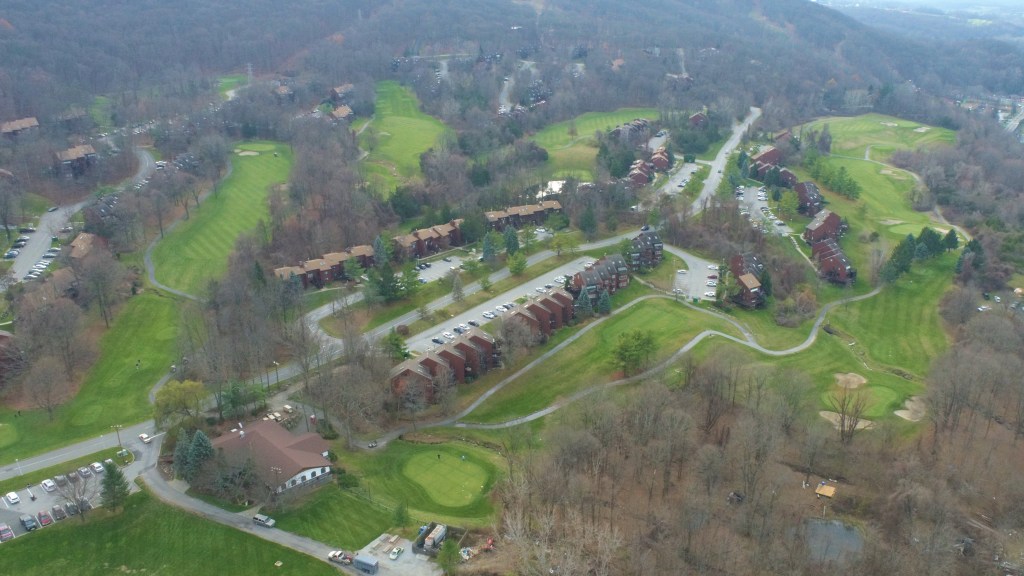
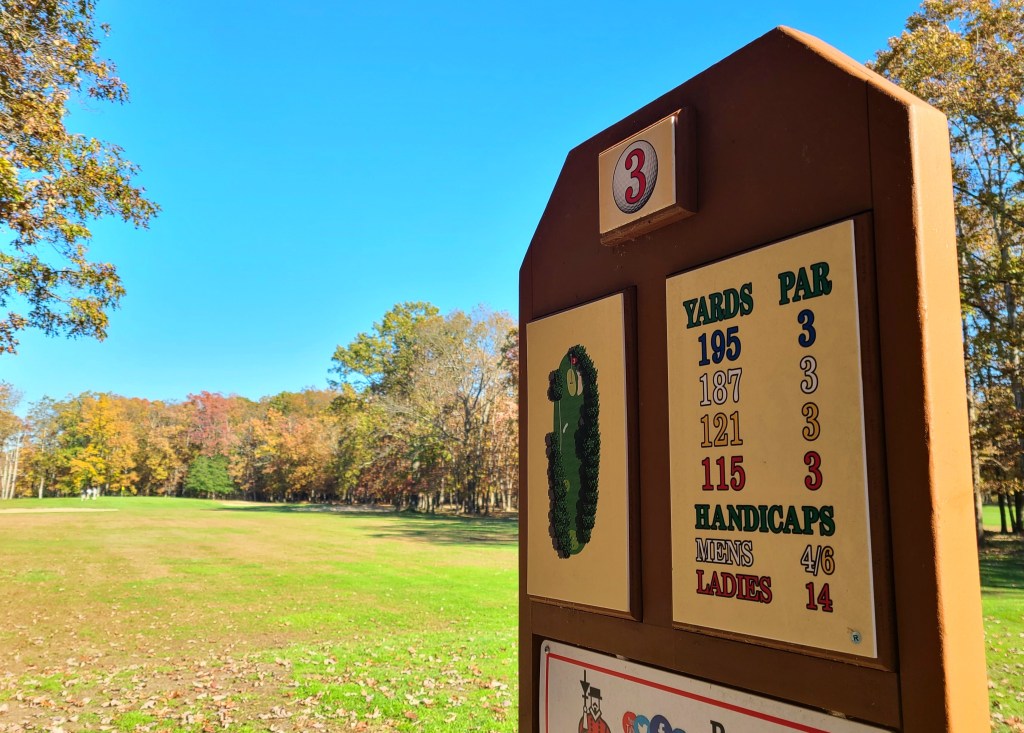
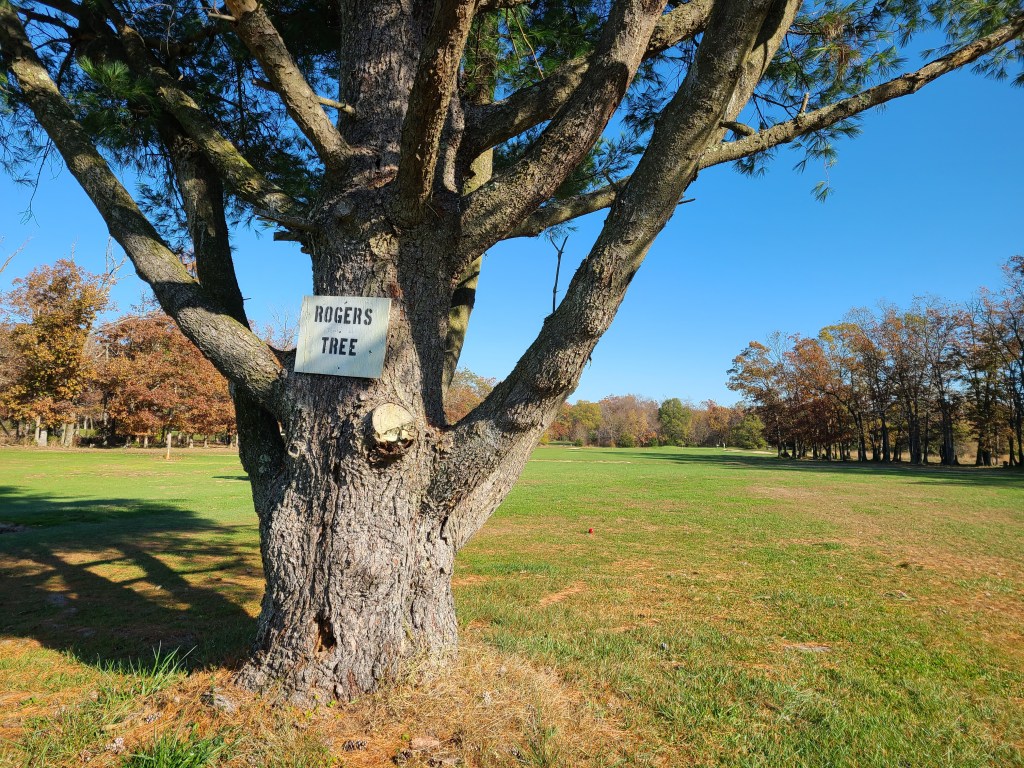
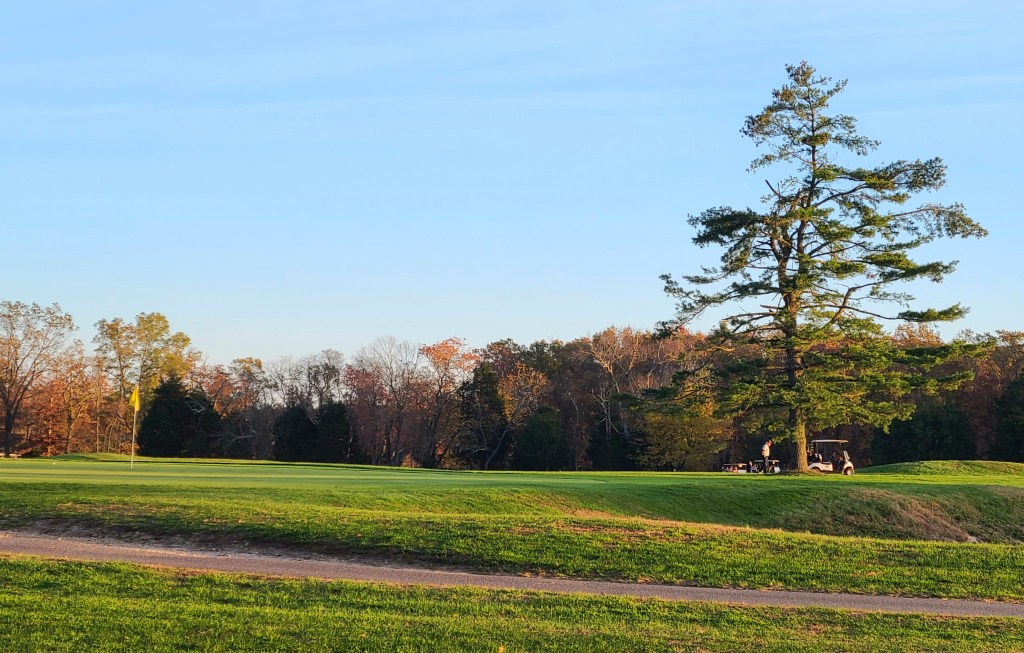
Here are pictures of a few of the holes, along with their names – as designated on the scorecard – another detail that makes this place special.
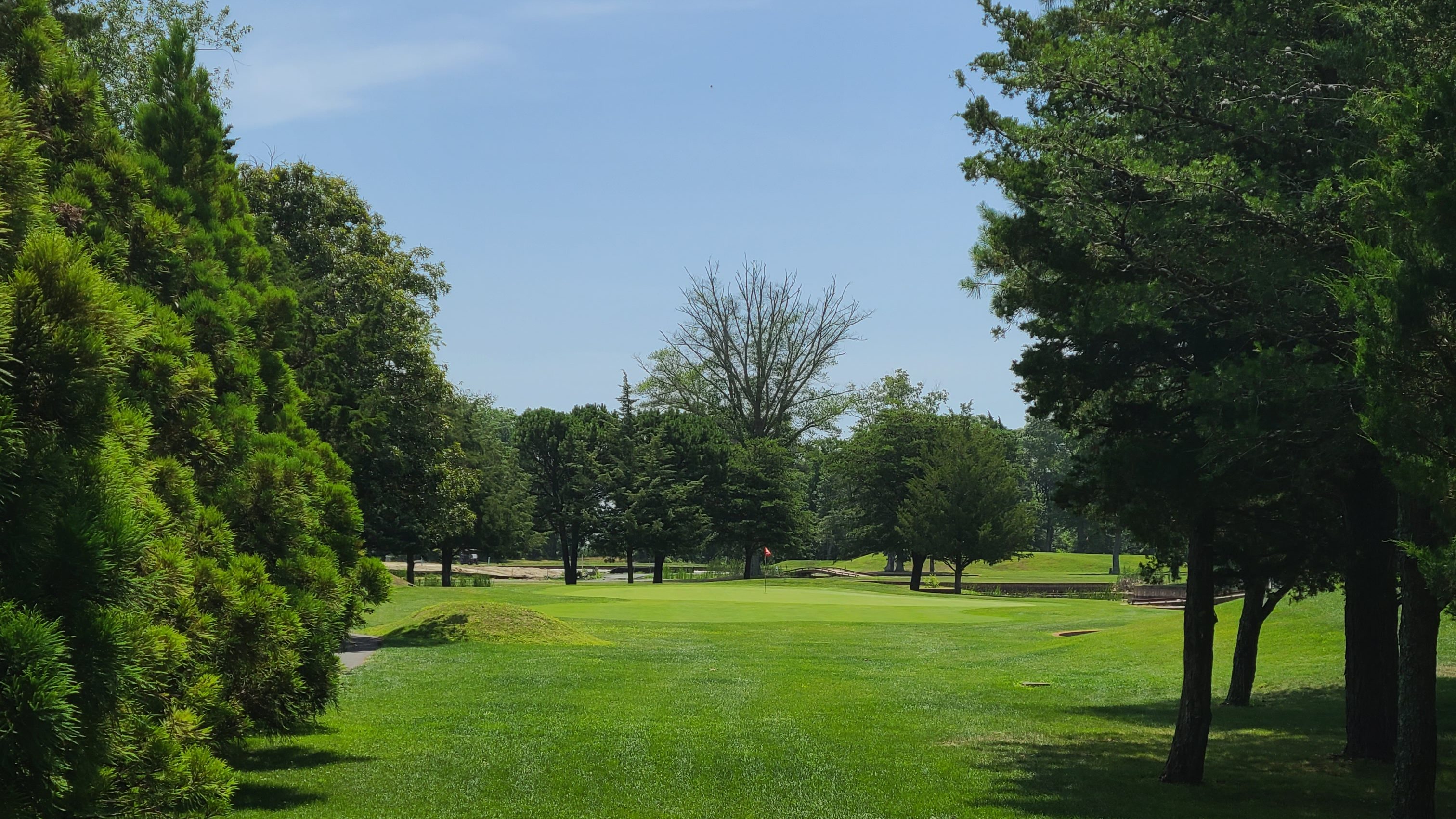
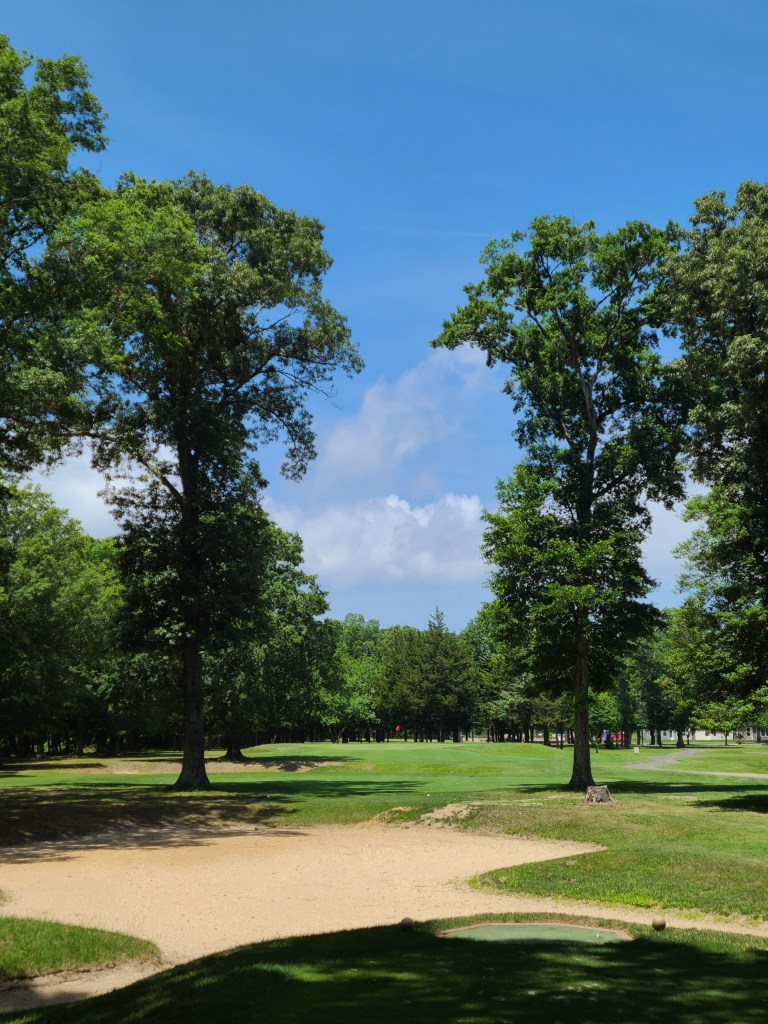

I wrap up “Peninsula Waterfall” – the last of the eight holes in operation – and walk back to the parking lot. It’s 1:00 pm. There are only three courses remaining for me to play in the county. Thinking of what Jimbo and Tom said about the traffic to and from Ocean City Municipal, I wonder whether to save that for another day. I get in my car and use my phone to start navigating to the three options. I make a decision.
Time: 1:20 pm
I arrive at my next destination. I take a moment to record my thoughts.
I arrive at Heritage Links. I decided that if I was going to deal with New Jersey shore traffic returning north on a Sunday, I may as well save Ocean City municipal for last. After navigating to each of the remaining three courses, I saw that Heritage Links was a 15-mile ride north back up the Parkway. Whether I decide to call it a day after this fourth round and head back home or play Ocean City afterwards – which I fully anticipate doing – it would work.

After walking at the Cape May Par 3 and Laguna Oaks, I decide to take a cart again. It’s been a few hours in the sun, and since it’s only 1:30 pm and I’m looking to play again after this round, I figure I can use a break for a couple hours.
As I make my way onto the course, I’m glad I chose to take a cart. I see that in contrast to the three very flat layouts I’ve played so far today, Heritage Links has some decent elevation change throughout.

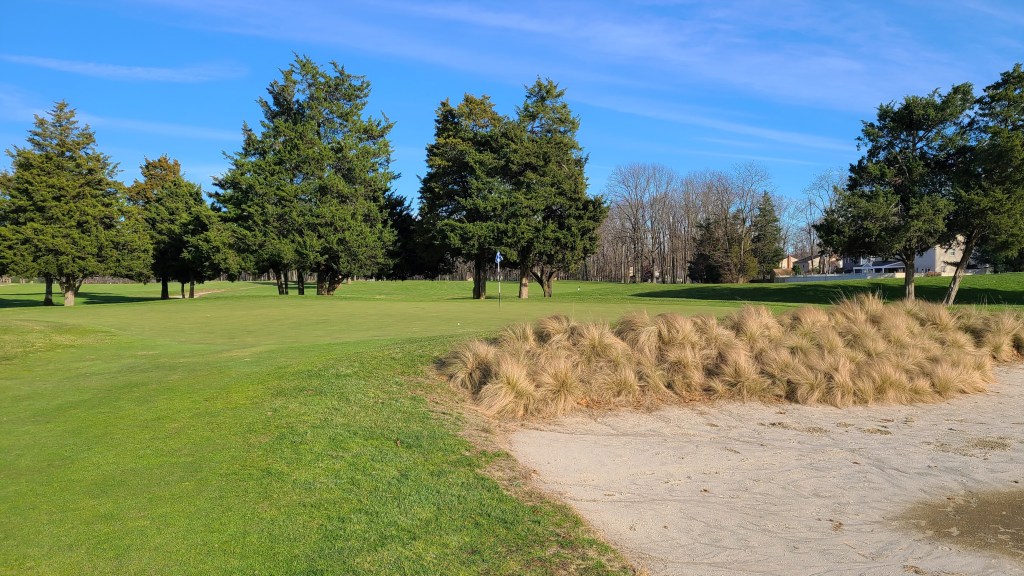
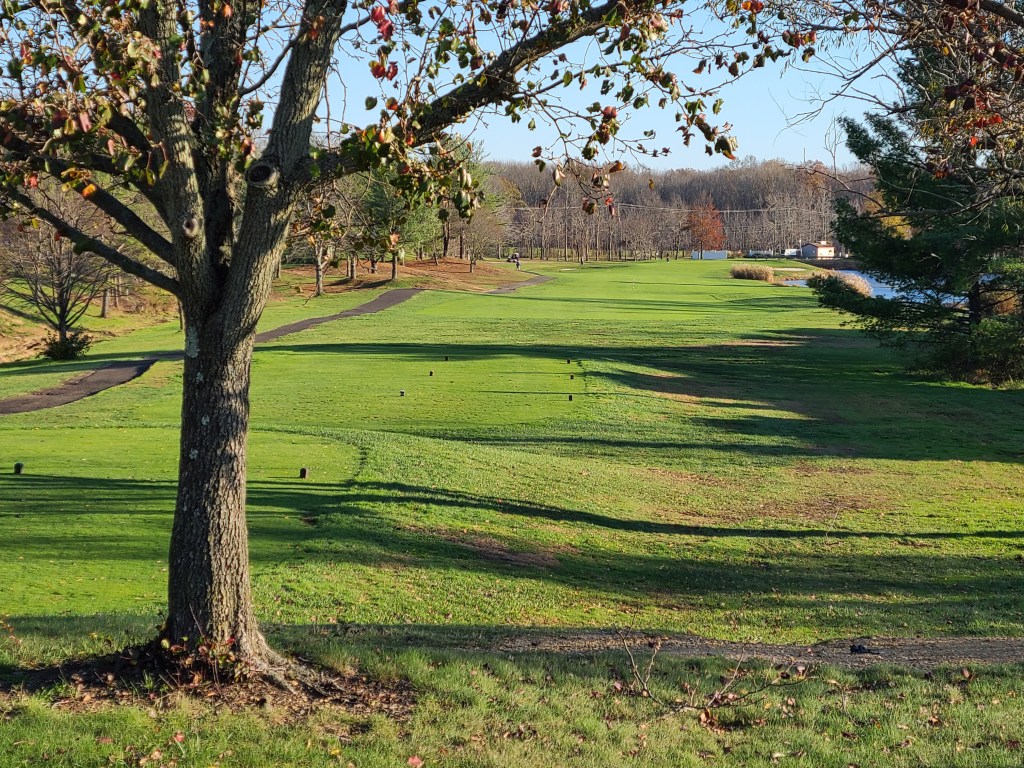
While there aren’t many trees running through the holes in the center of the course, there are other hazards to avoid, like bunkers lined with ornamental grasses, some holes with water, and a few native areas. The greens are beautifully shaped and contoured, but they roll amicably for the most part, stopping short of having any real teeth.
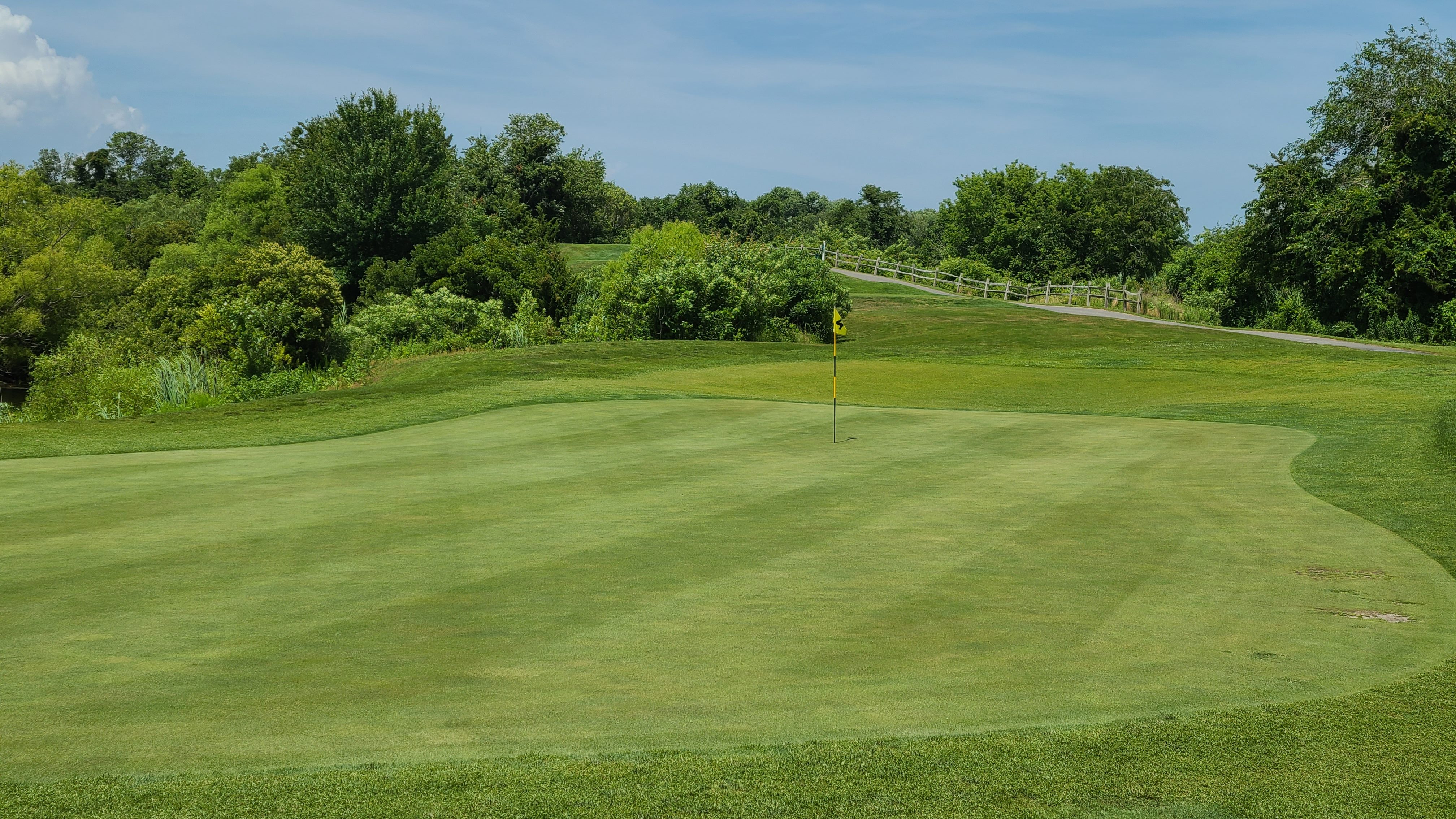
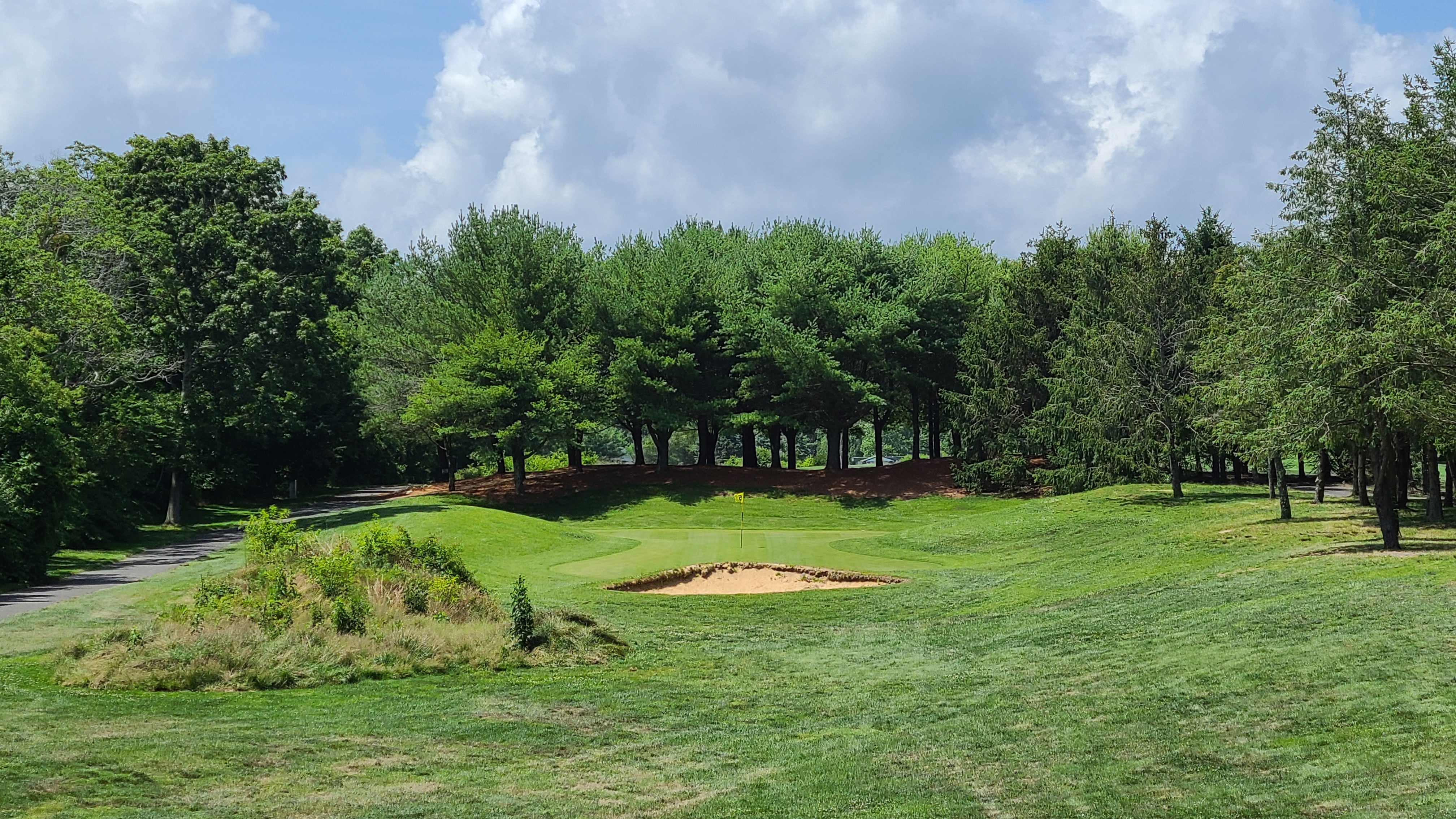
After squandering a driven green at the par-4 6th, and making bogey on the par-3 7th, I finish up with straightforward pars at 8 and 9. I feel good. Though they’re short courses – Heritage Links being a 1,900-yard par 30 – I feel incredibly accomplished knocking out four of the six I had left in Cape May County.
But it’s only 3:10 pm. I make the call to continue.
Time: 3:30 pm
After a shirt change, a protein bar, and a short drive that was thankfully void of the typical traffic Tom and Jimbo told me about, I arrive at Ocean City Golf Course. I make my quick stop in the pro shop to pay, and I head out to the first tee. I decide to walk again with my pushcart.
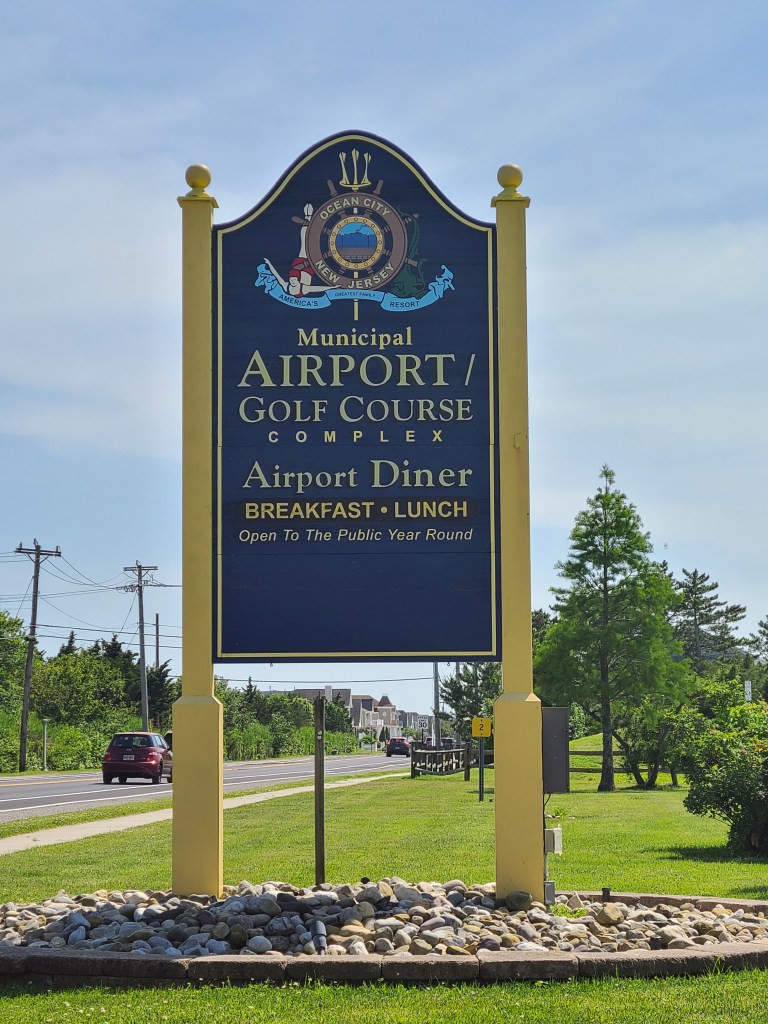
I make my way onto the first of the 12 holes. It’s the shortest of 11 par-3s at only 60 yards and sets the tone for most of them. The green is small and rolls very slowly, but this place isn’t about the conditions. It’s different. Ocean City is a beach town, and it’s clear that this a beach town golf course. The vibe is super casual. I see a couple people in t-shirts and sandals.
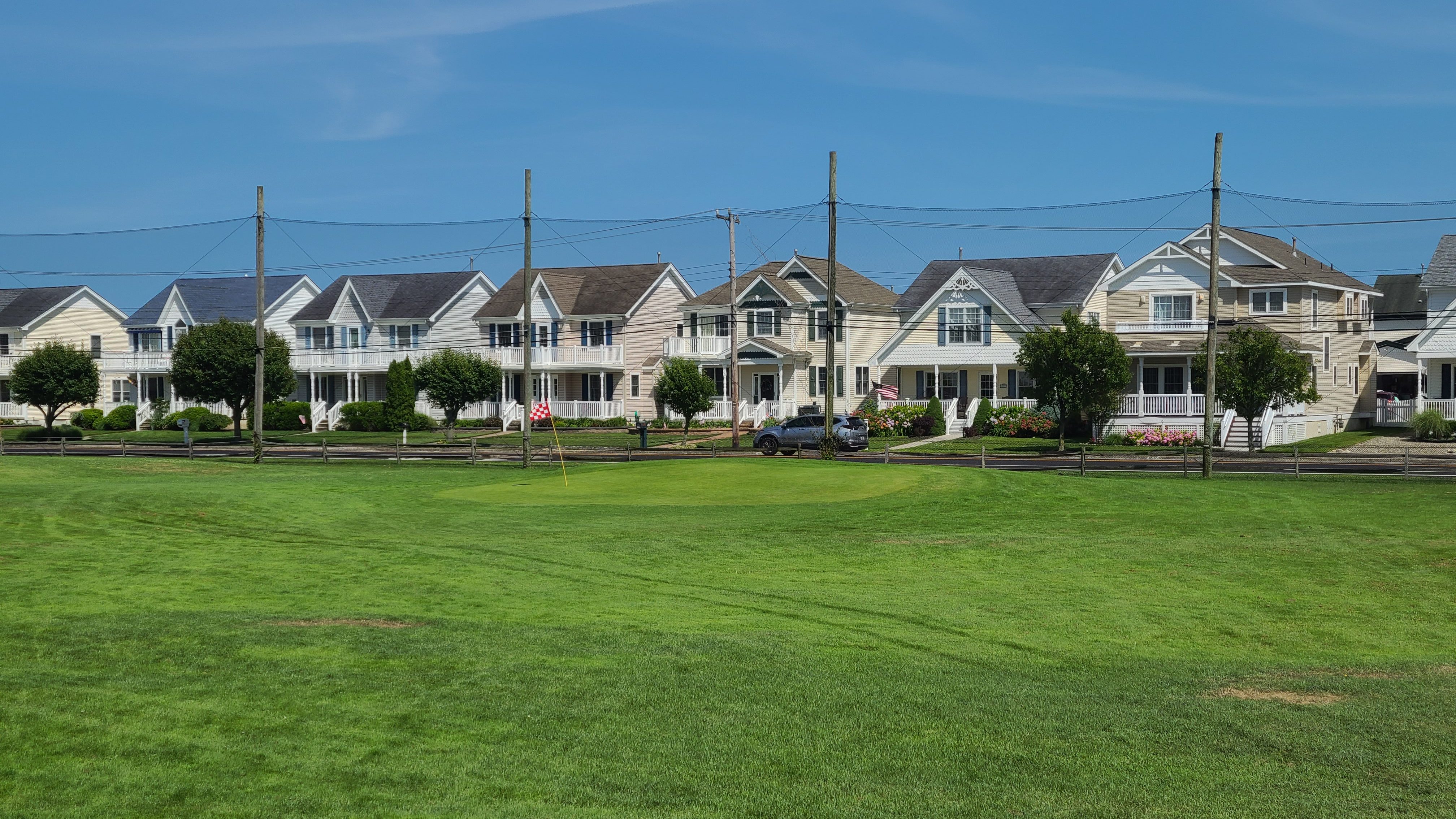
I make my way around the “front six” in +2, with bogeys on 2 and 6. I notice that while there were people here when I started, I essentially have the course to myself from here on out.
I make the turn and continue pushing on through the “back six”. Fatigue is starting to set in. Between Cape May Par 3, Laguna Oaks, and the holes at Ocean City so far, I’ve only walked a couple miles and change, and I’ve only taken about 120 swings. But, I’m feeling it. My walking is now labored. My swing is becoming stiff.
After making a routine par at 7, I put my tee shot on 8 into the adjacent water hazard. While the courses have all been casual/executive style with limited challenges, that’s my first penalty of the day. I take a moment to breathe and recover, and I press on. I hit my third onto the green and putt twice to hole out. That’s also my first double bogey of the day.
I close out as best I can. I make bogeys the remainder of the way, with the exception of the par-4 10th.
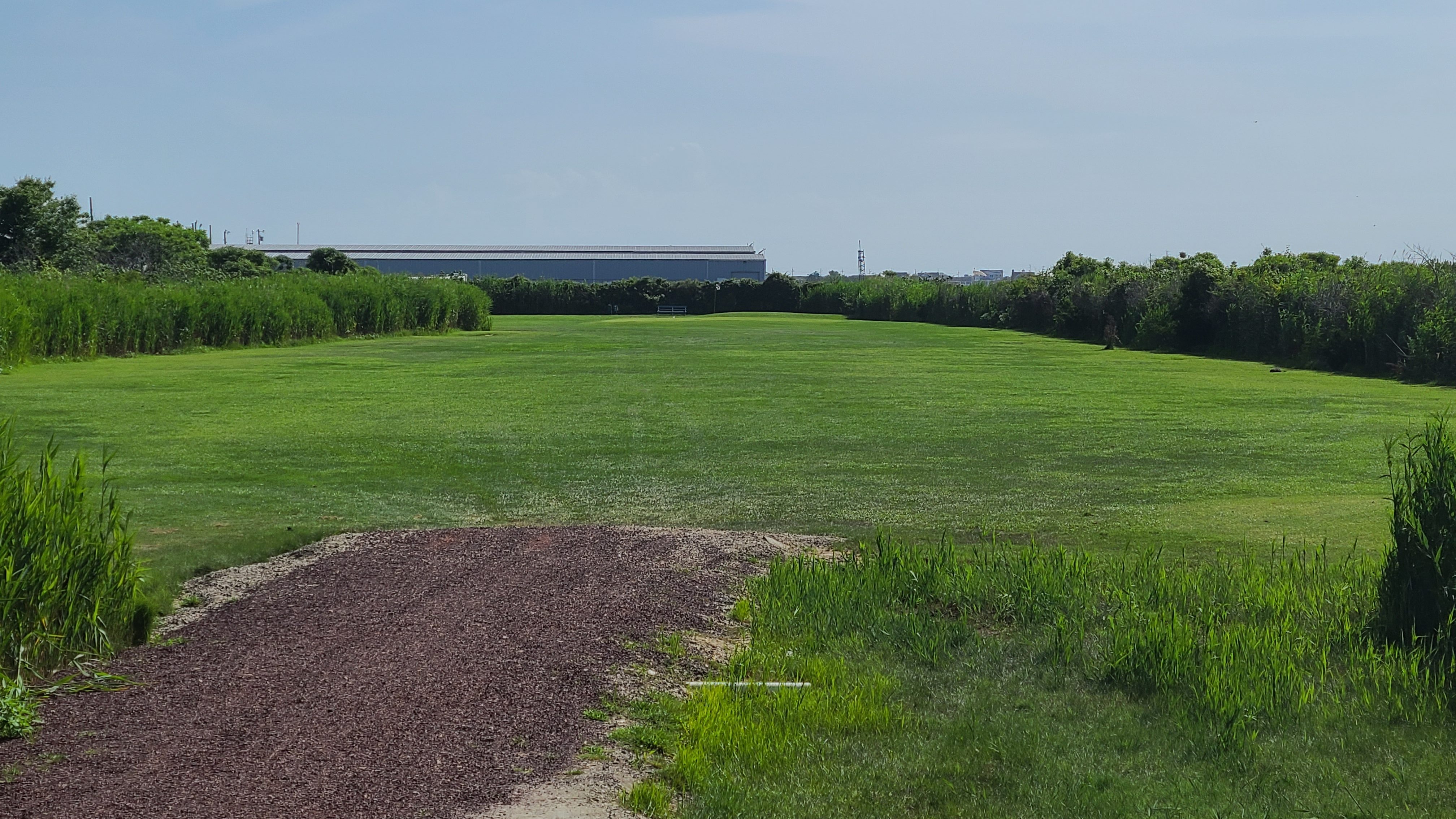
I get back to my car at around 4:45 pm. I’m exhausted. But there is probably another four hours of daylight, and only one course left for me to complete in Cape May County. The risk I run is either a) getting to the course with no available tee times, or b) the course only having a tee time that is too late to complete all 18 holes before sunset.
I would hate to start a round, not complete it, and have to drive back down on another day. Then again, if I head home now, I’m committing to a future trip back to Cape May County anyway.
I decide to go and take the chance.
Time: 5:12 pm
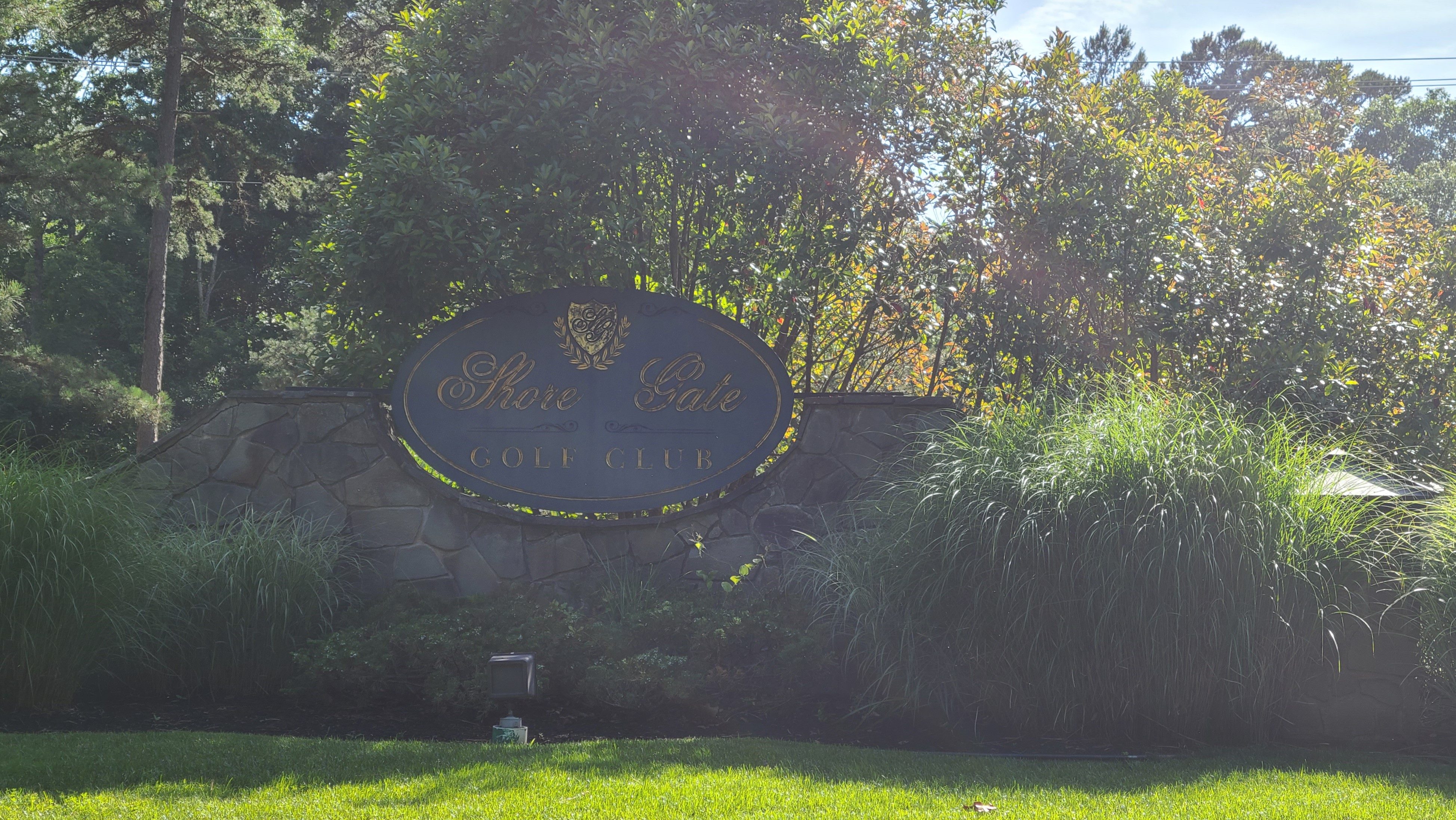
After a stop for a grab-and-go dinner from Wawa – an East Coast and New Jersey staple, for the uninitiated – I head back south, further into the county, and make it to Shore Gate. There are still just over three hours of daylight left and if there’s no traffic on the course, I’m confident I can finish. I head inside to get the verdict.
They got me out! The time of day dictated that I had to walk – since carts had to be in by 6:00 – but they got me out. The gentleman behind the counter let me know that I may run into a couple groups. My hope is that they’ll let me play through as a single.
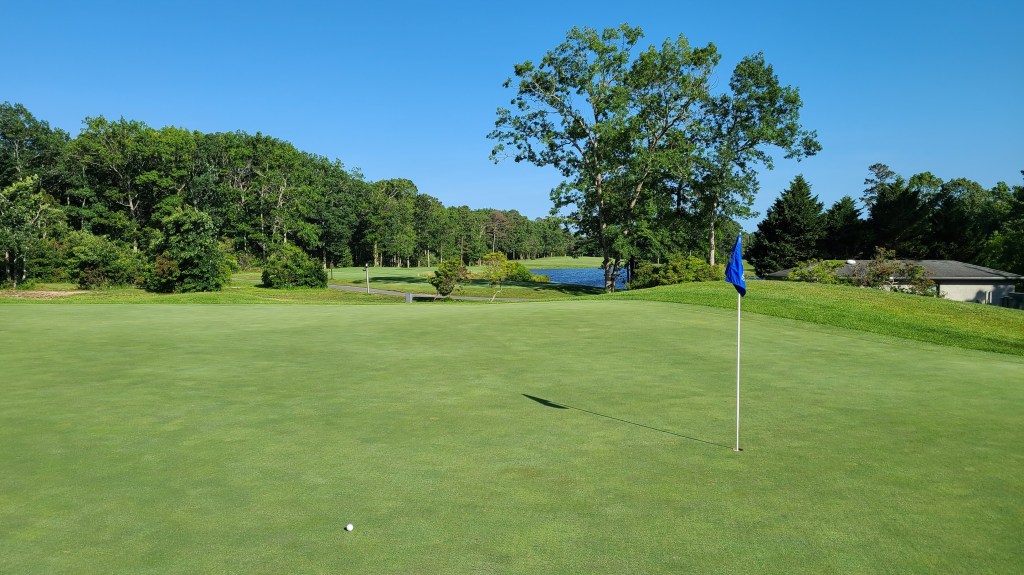
Sure enough, I run into a group on the 2nd hole. As they stand around the green, I wait over my ball, just left of the fairway. They wave me up. Ten hours of golf, multiple hours in the sun, and I have to hit an approach shot into a green with an audience. Not my favorite scenario, but I realize it means I get to play through and beat the sunset.
I hit the green. I put my PW back into the bag and head up as fast as I can, which is really just a brisk walk given my current state. After a couple “nice shot” remarks, I say “thank you”, try to get a quick read on my putt, and then address the ball. I see there’s a right-to-left break, and I commit to the line. I take the putter back and through. The ball drops. Birdie with an audience. Another sweet memory on this incredible day.
I jog with the pushcart to the 3rd tee and set up to hit my tee shot as quickly as I can, hoping to put some space between me and the group I just played through. I promptly snap-hook my drive out of bounds. Snap-hook with an audience. Not sweet, but another memory.
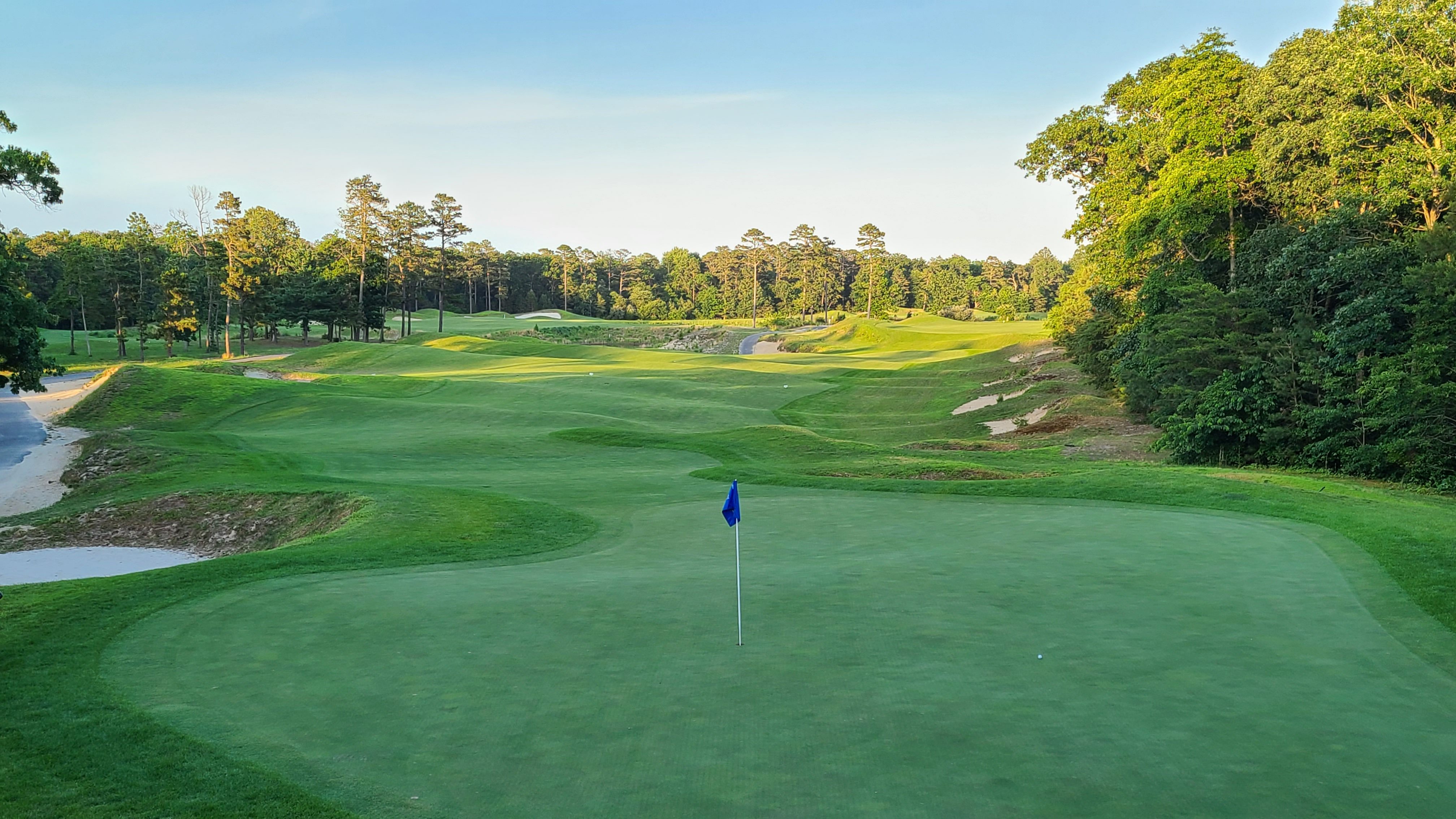
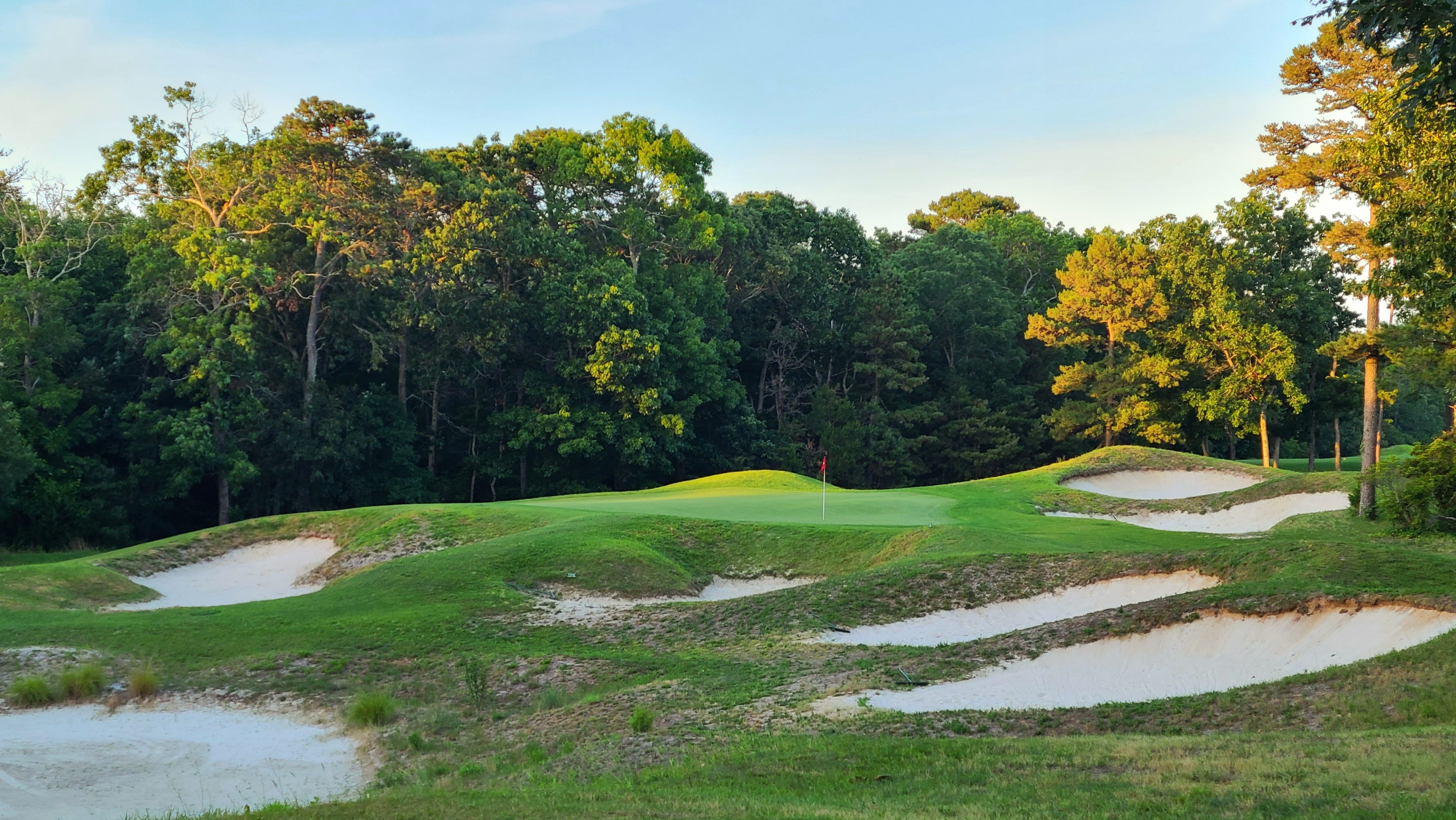
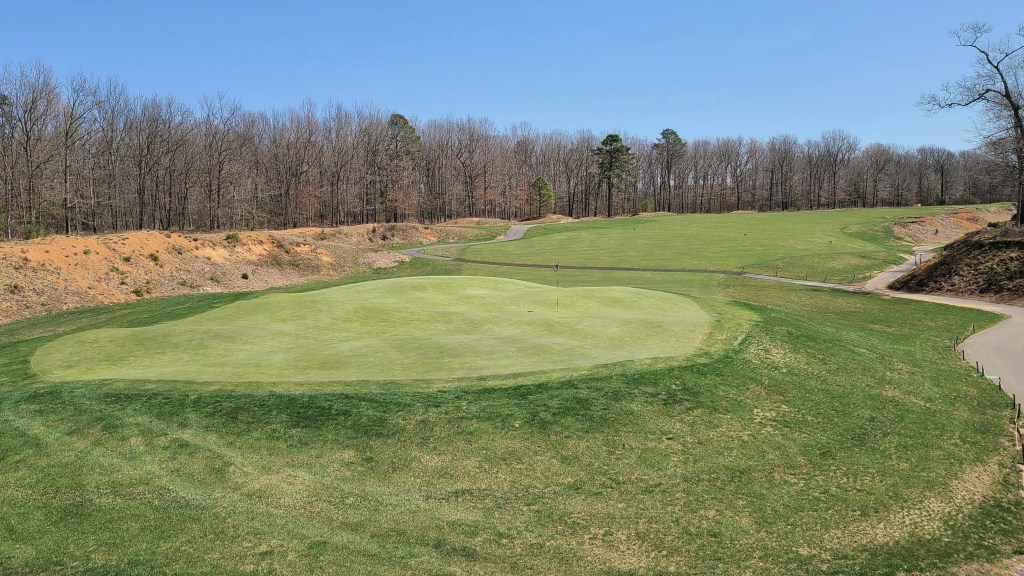
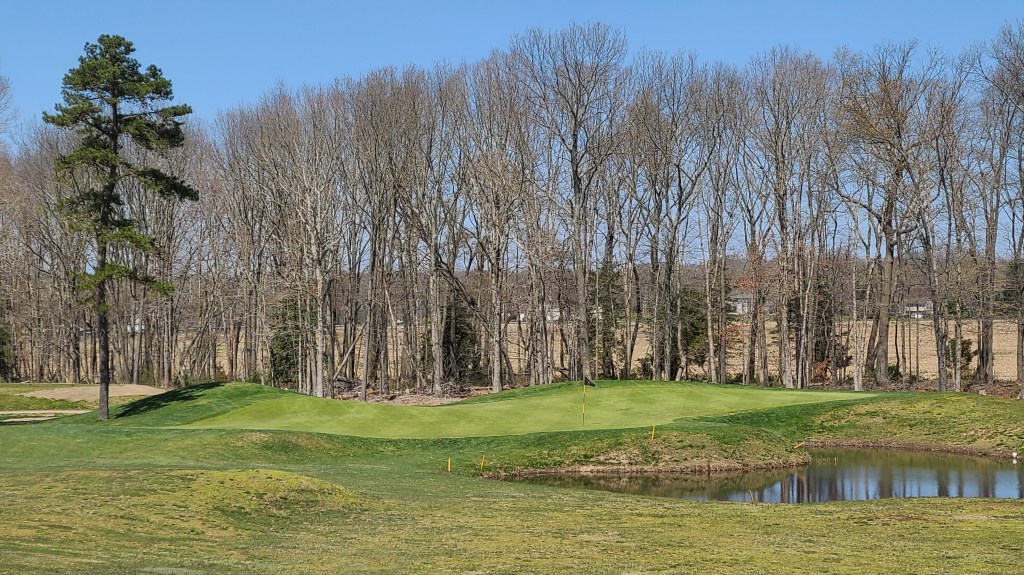
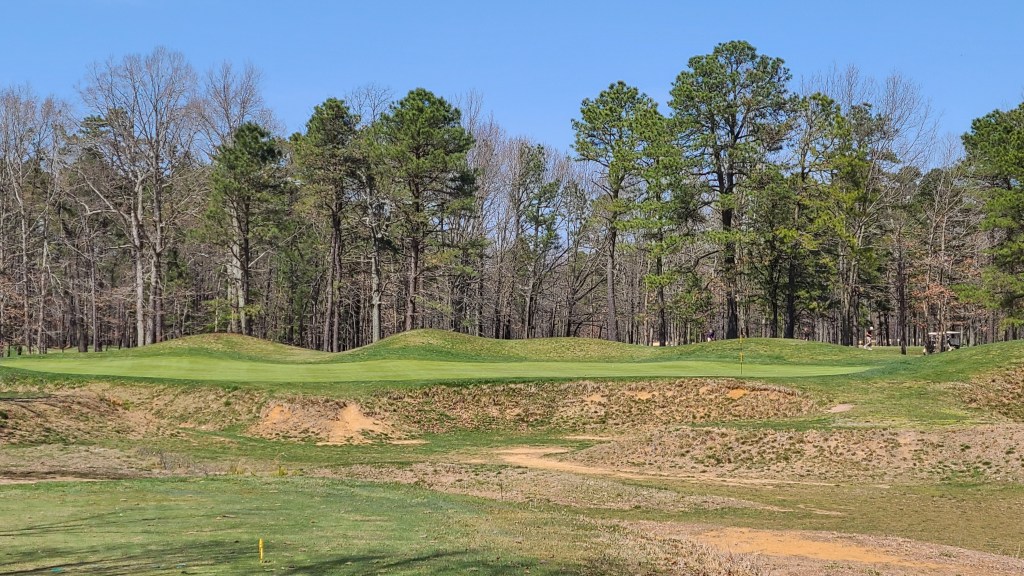
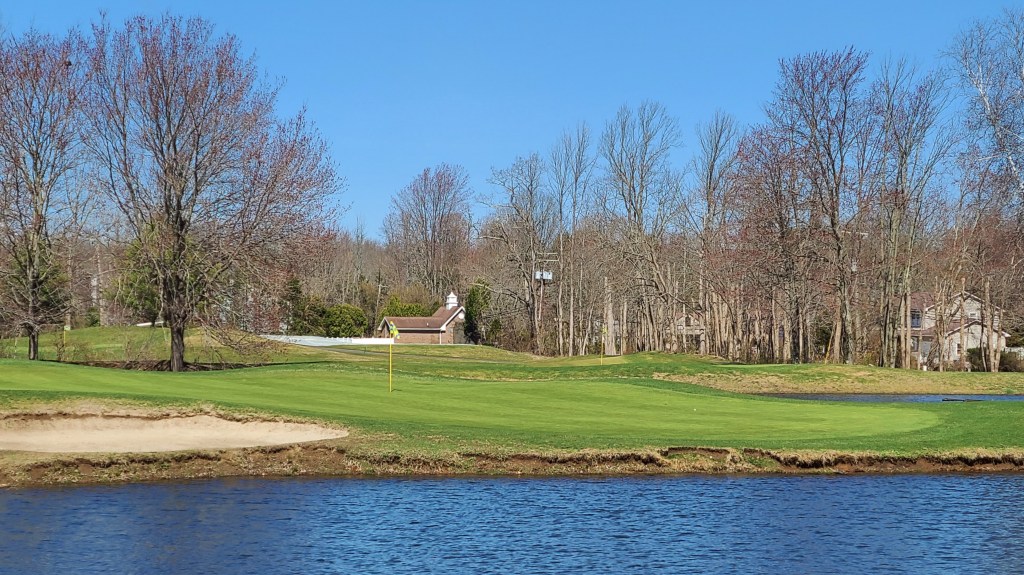
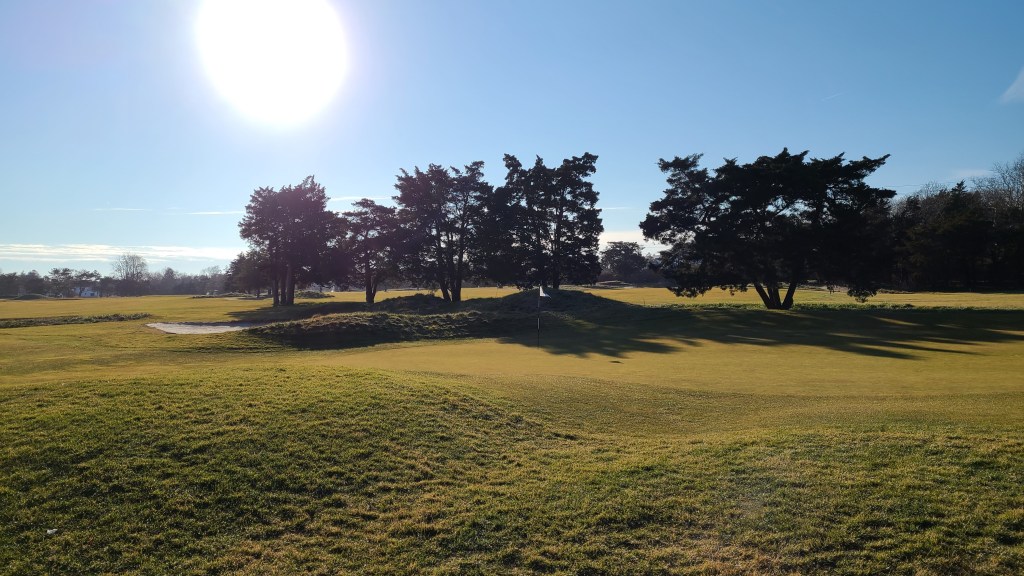
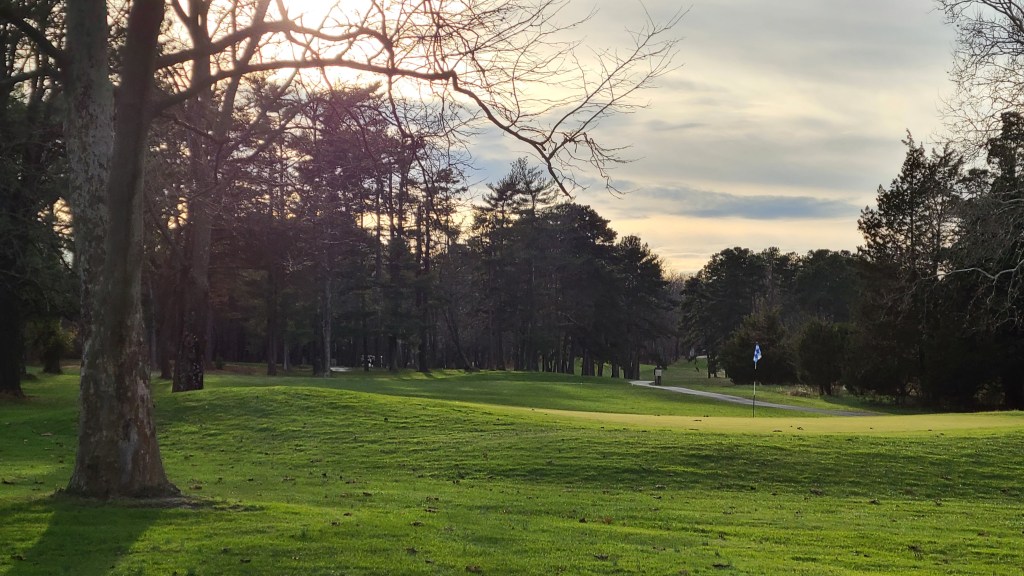
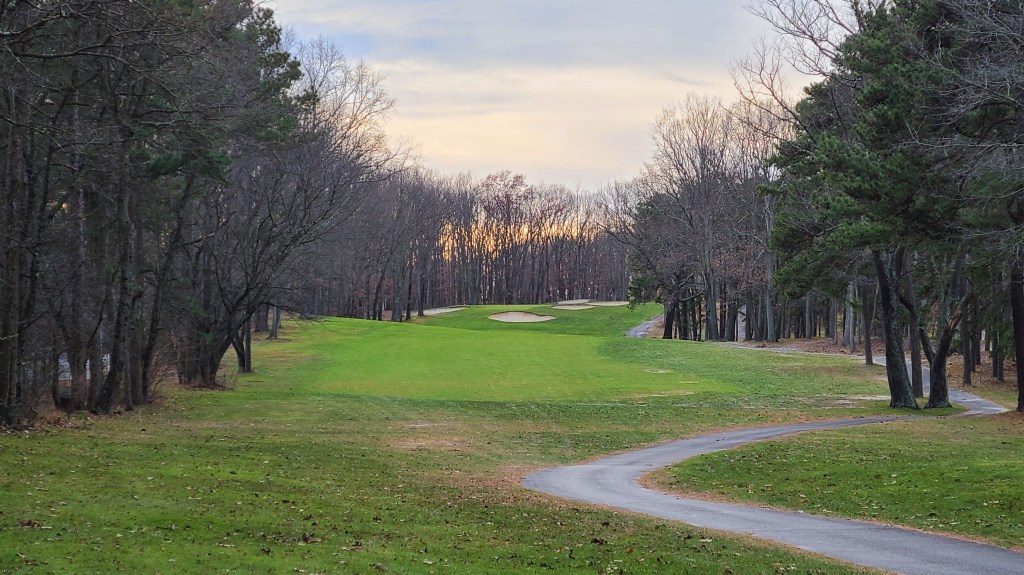
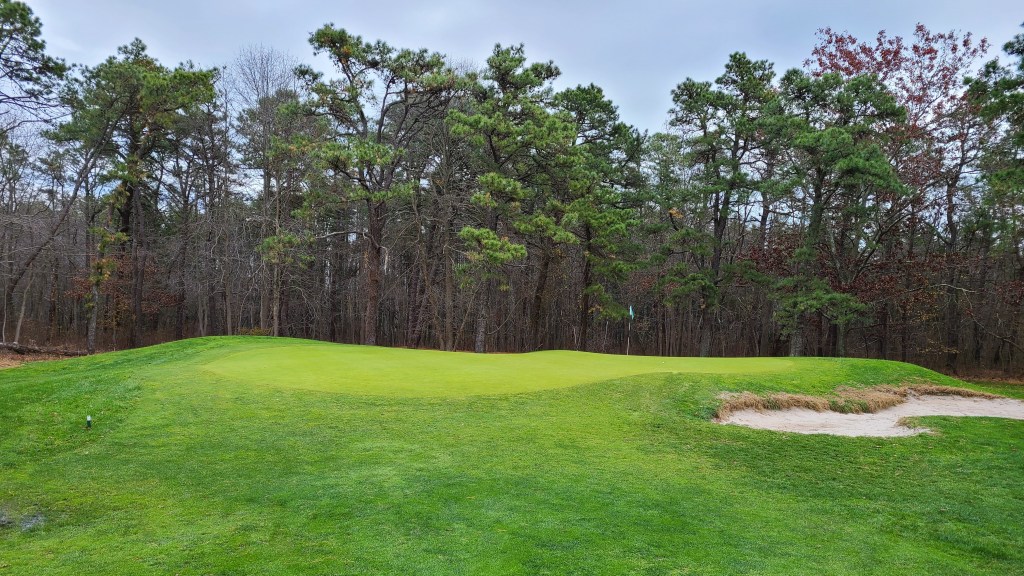
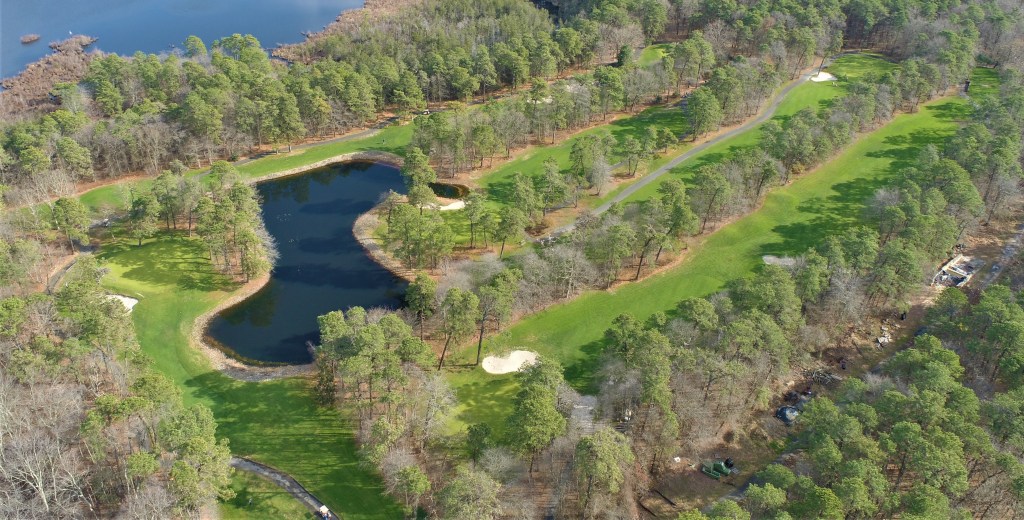
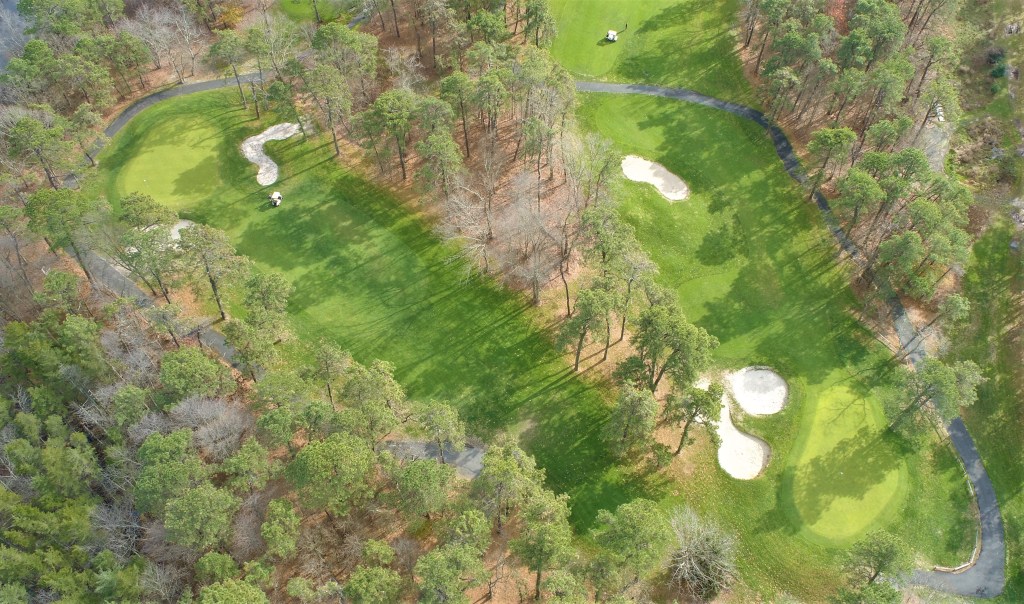
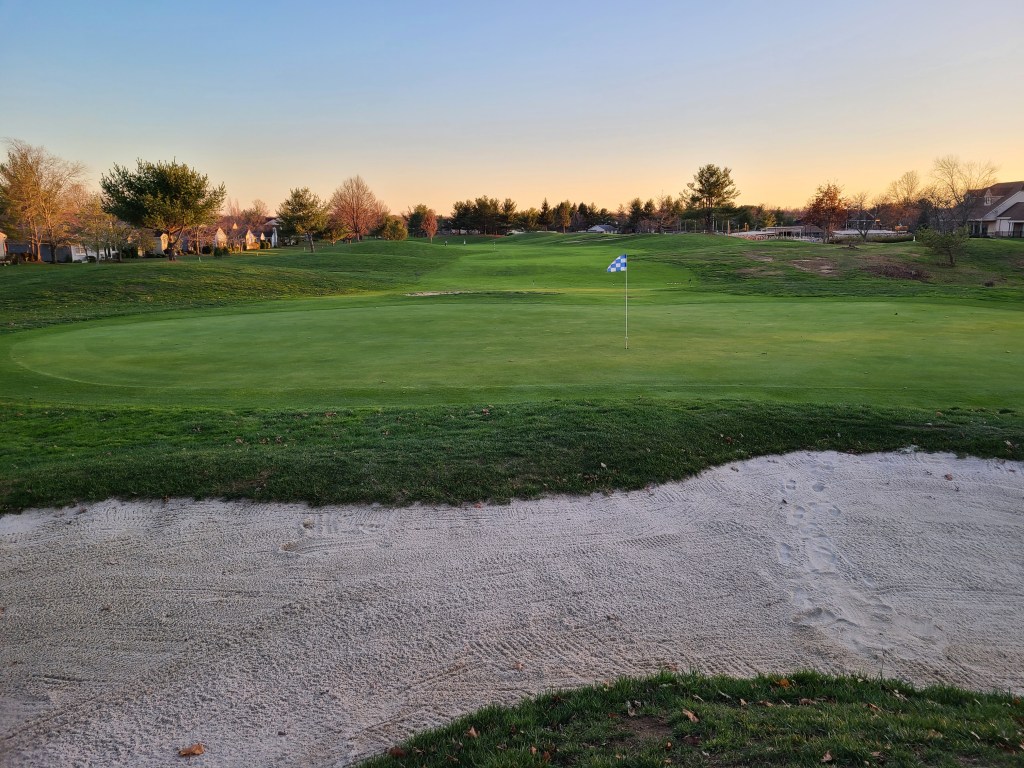
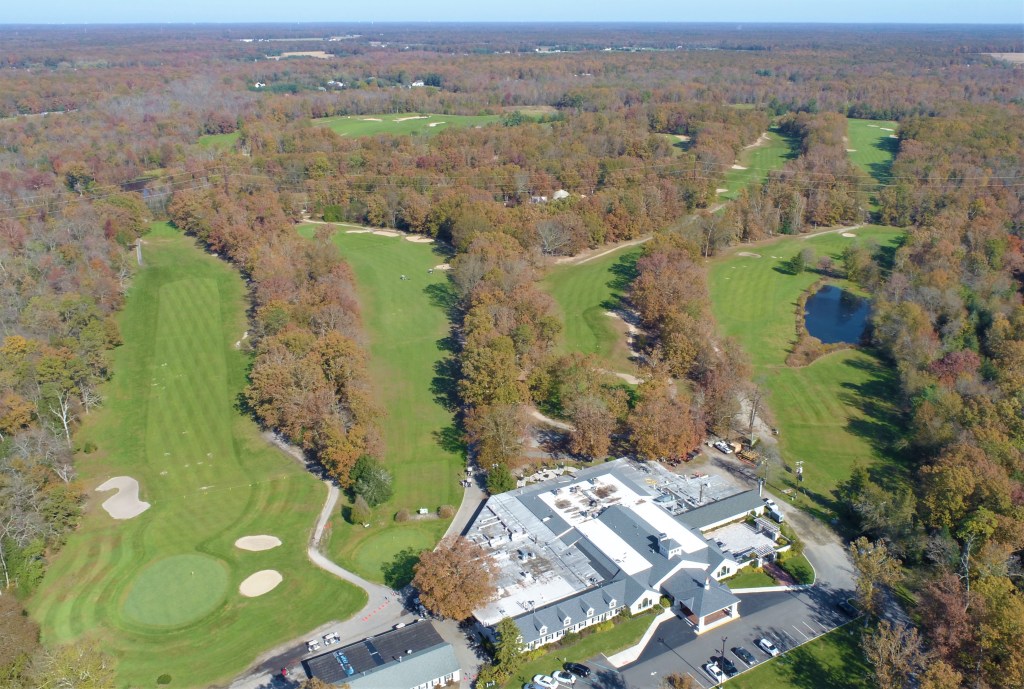
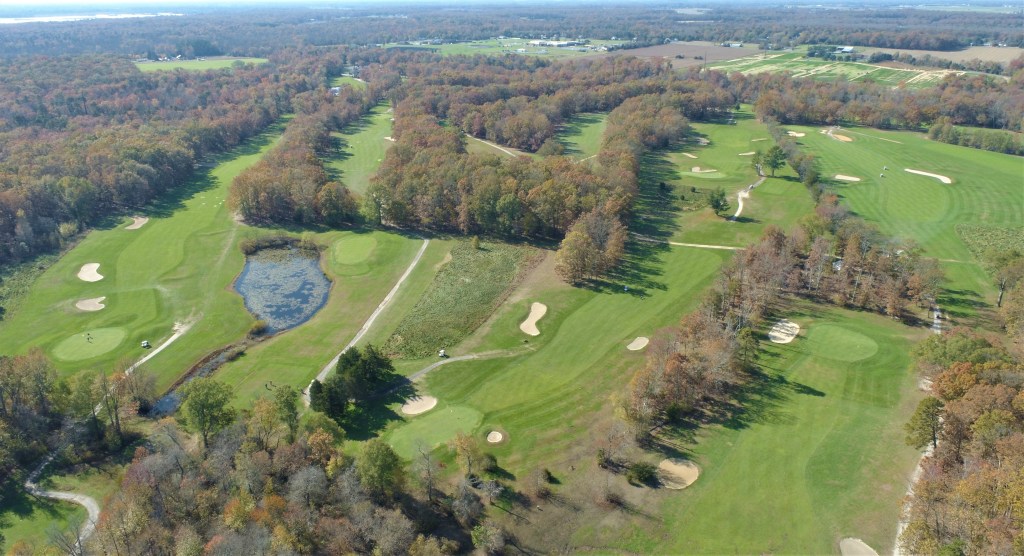
Too fatigued to truly be phased, I continue on and discover that Shore Gate is an absolute gem. My slightly-worse-than-average play does not distract from the course’s beauty. Hole after hole is littered with outstanding design. Incredible bunkering, some waste areas, and the pines of southern New Jersey all frame this perfectly manicured layout. At this point, I’m almost focused more on where I can get good pictures to capture the landscape than how I’m playing.
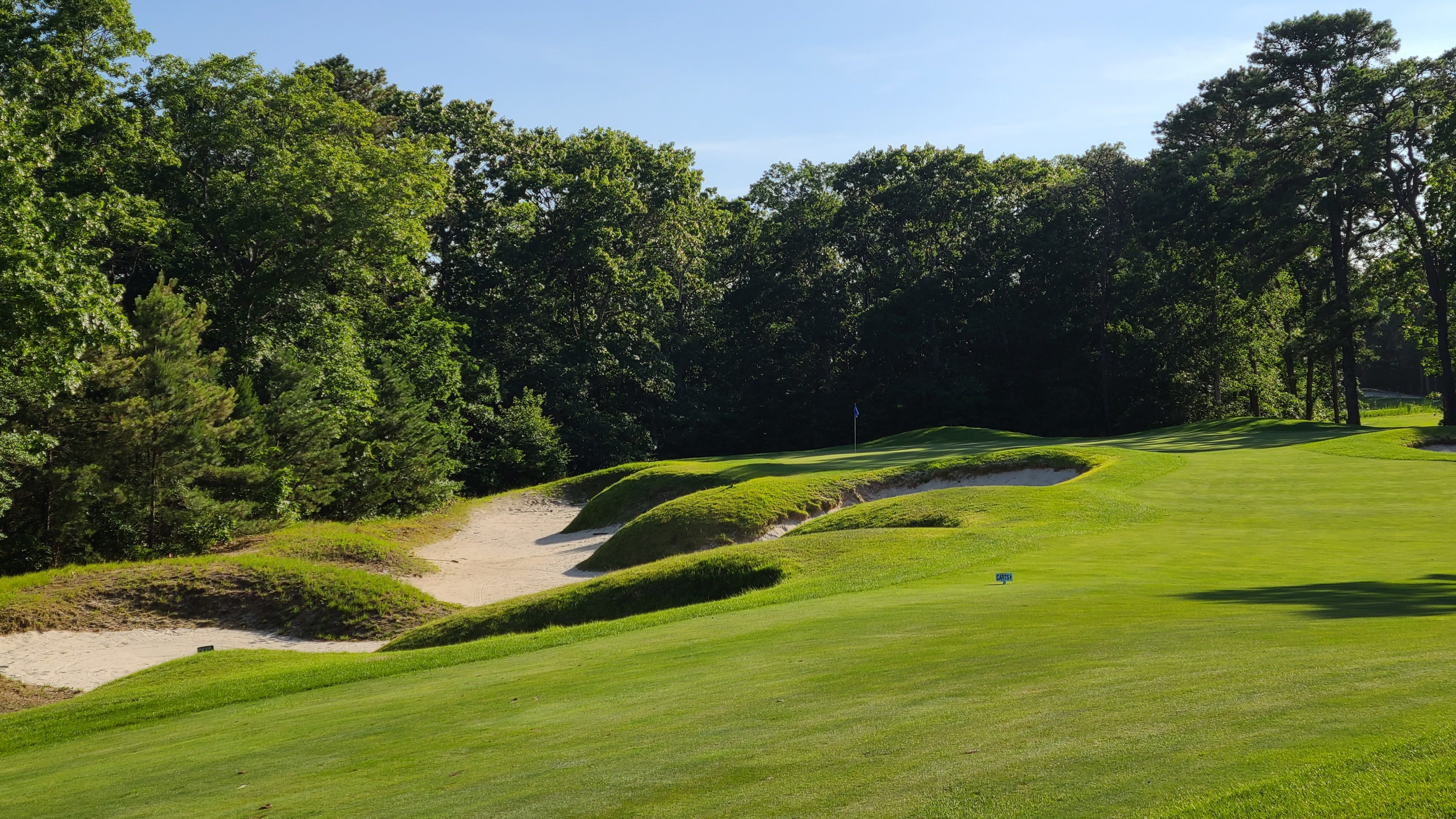
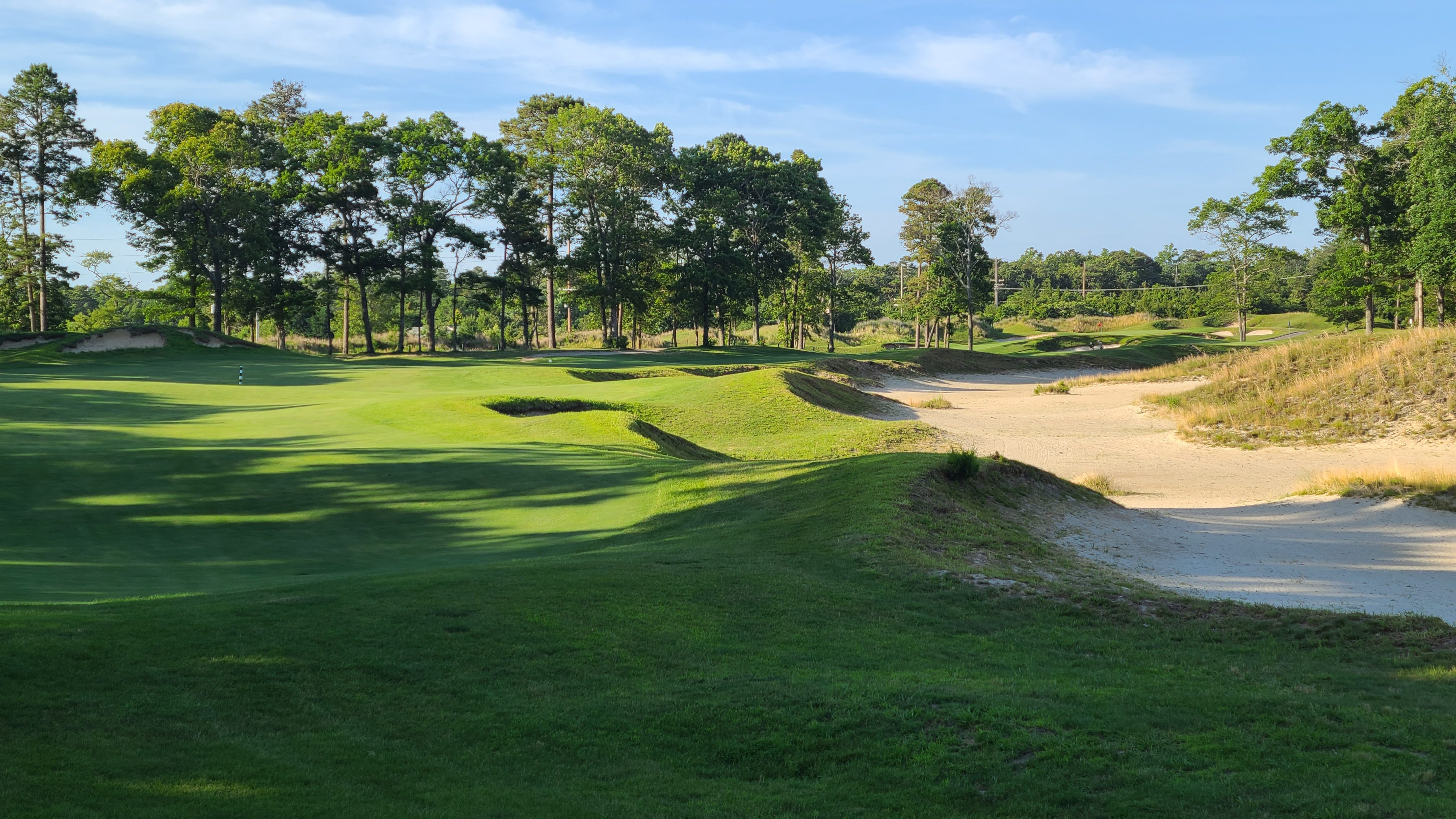
I make the turn at 7:00 pm. I realize that the light is fading, and my job isn’t done yet. Nine holes in an hour-and-a-half isn’t out of the question, but I can’t stop for long for any reason. My driver – the club I hadn’t used all day before this round – continues to be wayward. I tell myself that the score is irrelevant. I need to enjoy the course, keep the ball in front of me, and finish before it’s dark.
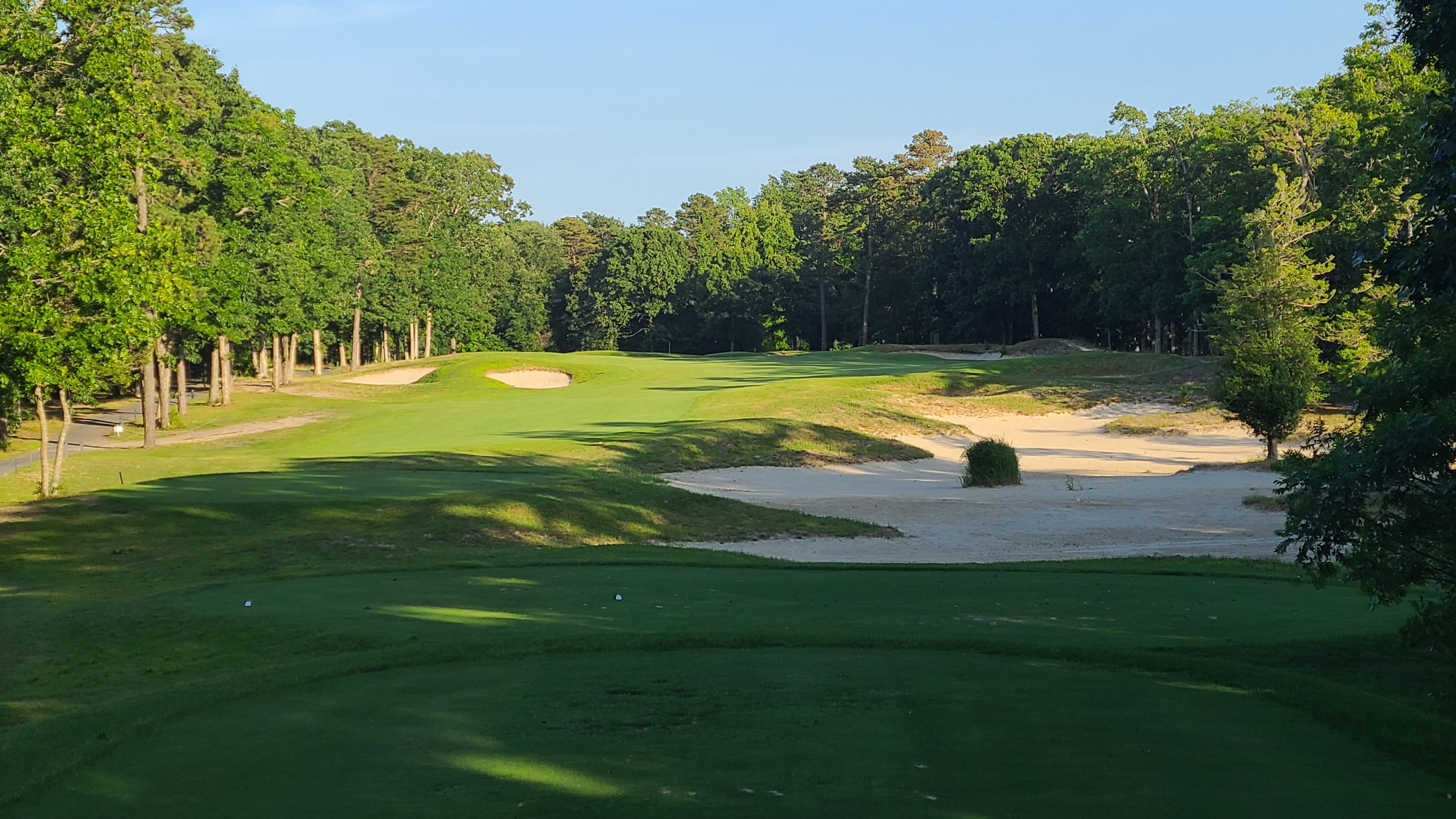
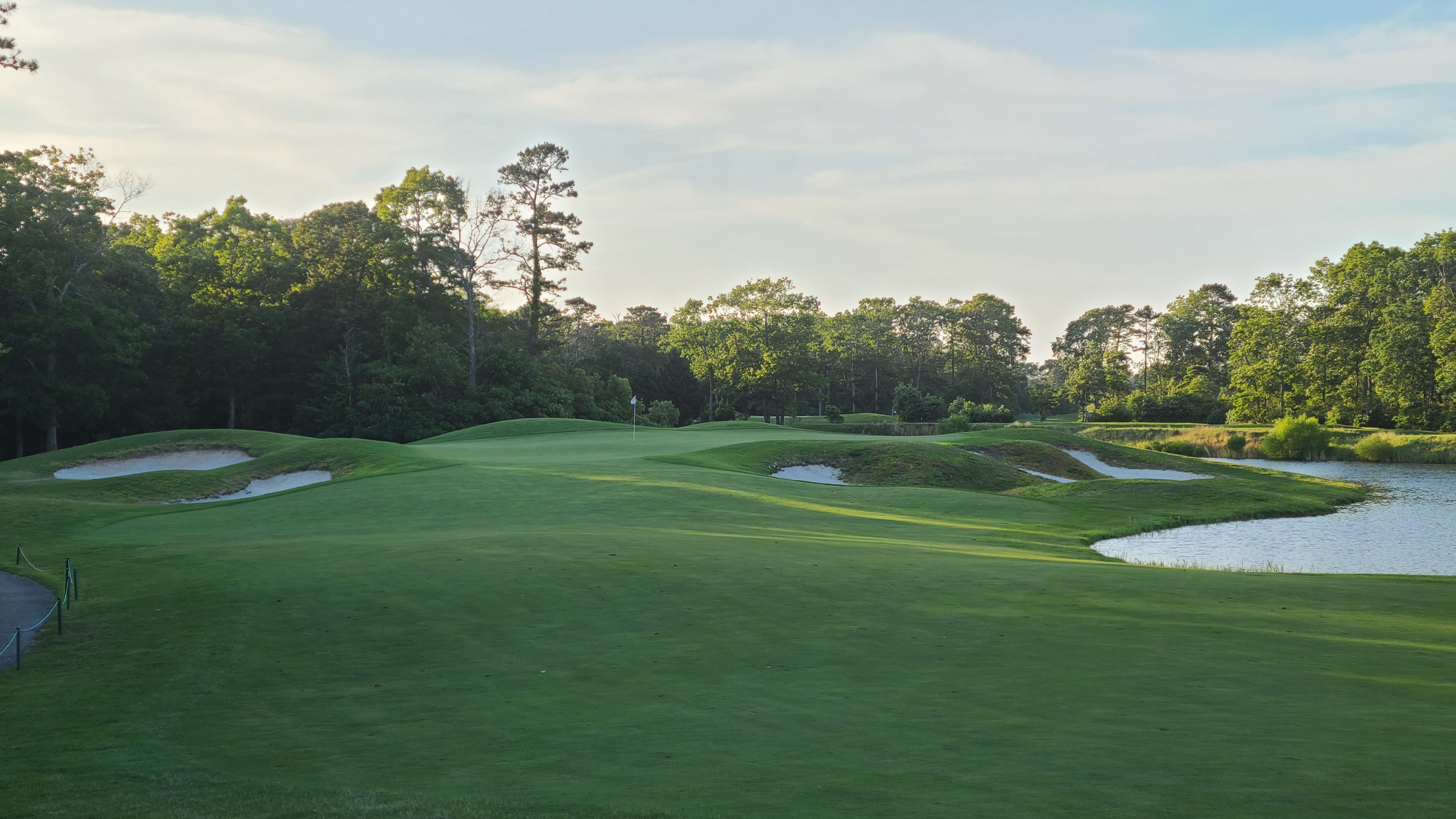
Time: 7:43 pm
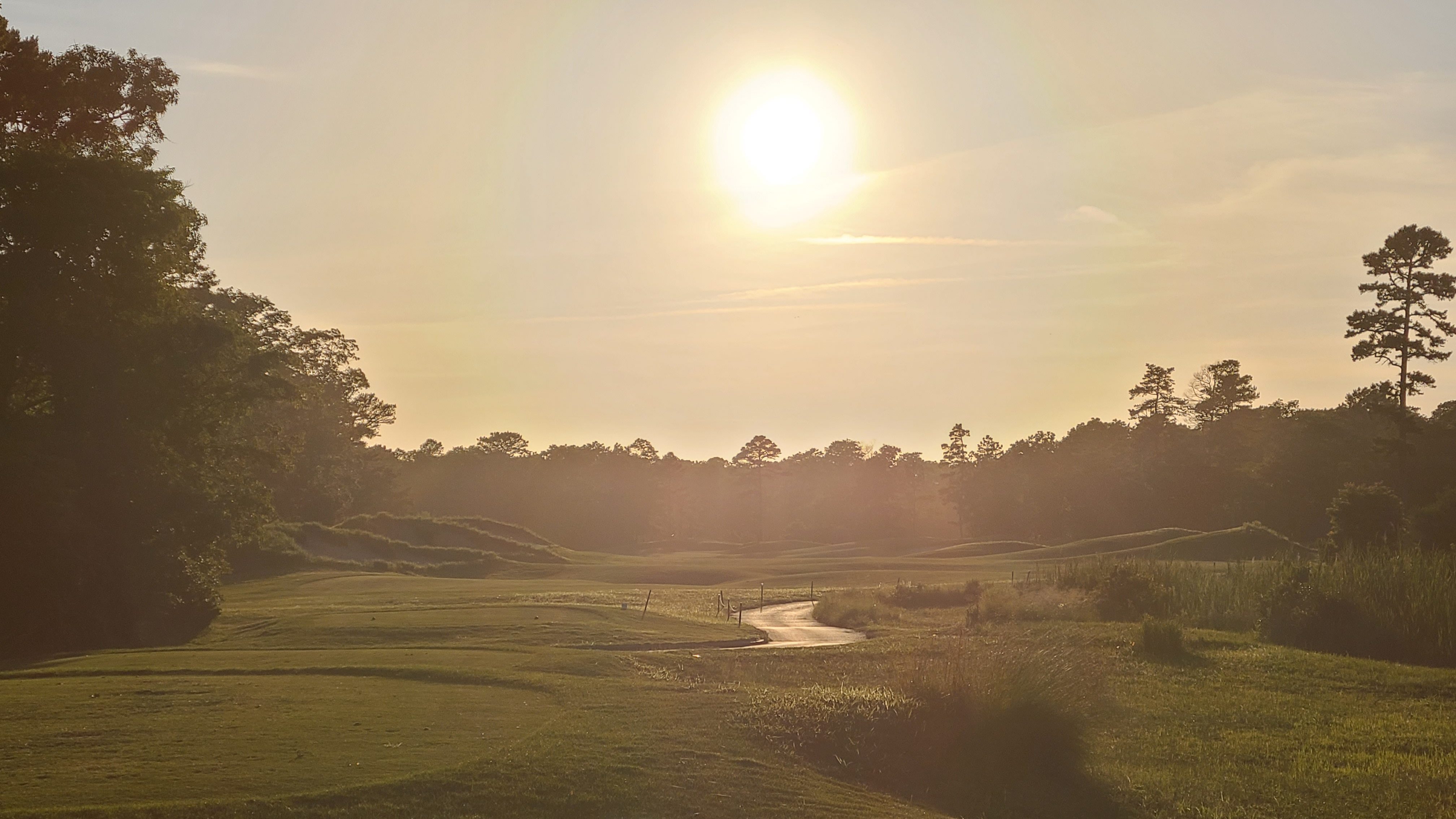
I get to 13, and I’m teeing off directly into the setting sun. Enough time has elapsed in this round where I would have finished any of the previous five courses I’ve played today. But Shore Gate isn’t an executive course. It’s a par-72 that plays over 7,200 yards from the back tees. I’m playing from the White tees, just shy of 6,400. It’s honestly my limit and I’m regretting not playing the 5,940-yard Gold tees.
However, I’ve only got about 1.25 miles left to walk over the remaining six holes. The end is (almost) in sight.
Time: 8:06 pm
I tee off at 15. With some luck, my ball manages to be in the fairway. But my swing is now being held together with some loose threads. I put my approach in the water. After a drop, I finish and move to the 16th tee where I do the same. My drive doesn’t even make it 200 yards, fails to reach the fairway, and ends up alongside some swimming turtles.
But it’s not about the score.
That 2+ miles I had walked up through the middle of my round at Ocean City was now about 6 miles total. The count of 120 swings of a golf club was now pushing 170. My burning quads and calves and my aching back notwithstanding, I keep moving.
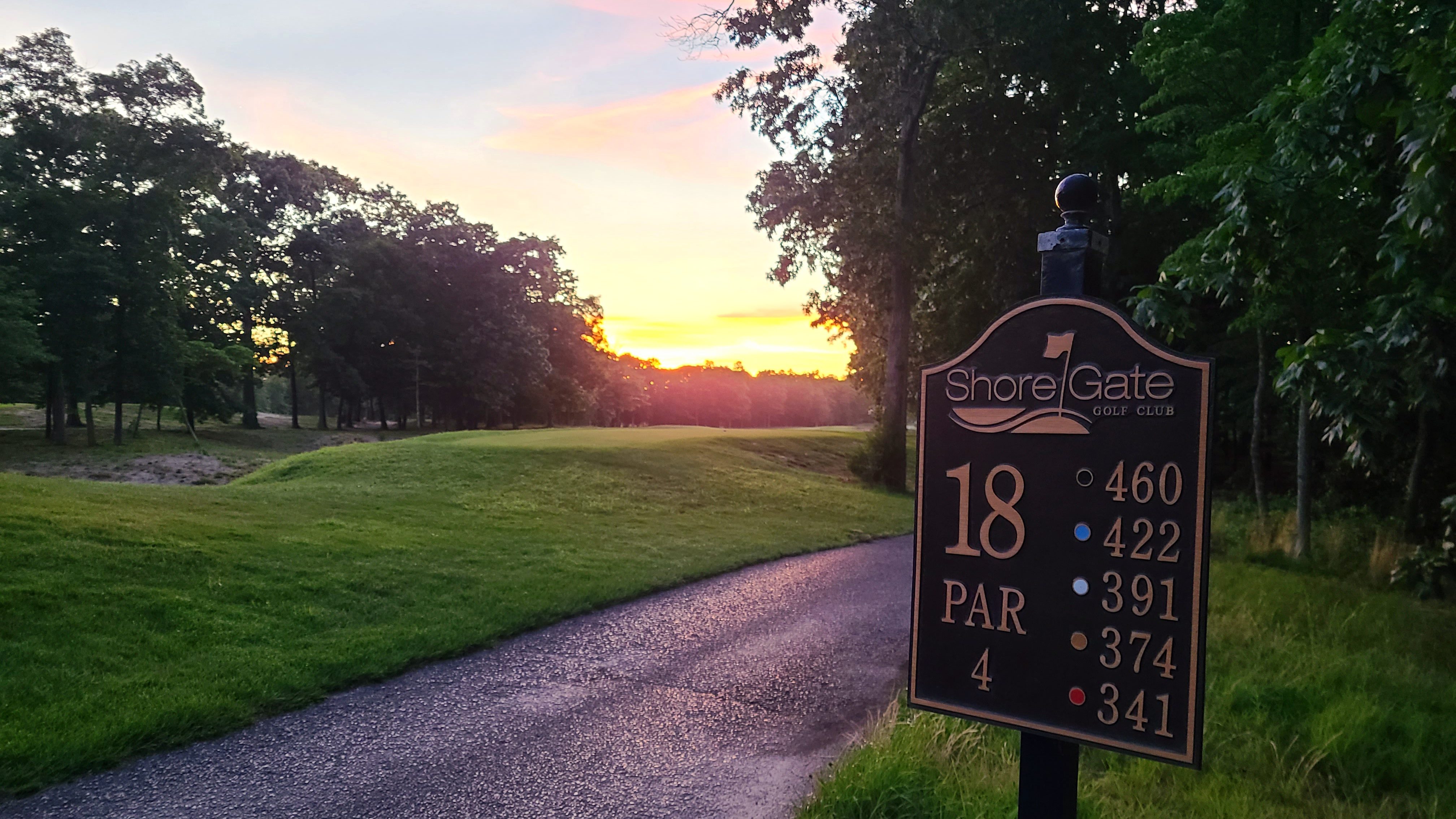
I walk onto the tee box at 18 with the sun now completely below the tree line. There is a large section of waste area and bunkers to the right of the fairway that is now directly overlapping the likely landing area for my absolutely bone-weary driver swing. Sure enough, I hit a heel cut that starts on a good line but is moving towards the sand. I put the cover back on my driver for the last time, slide it back into the bag, and start my walk out to the final fairway.
I spend about two minutes looking for my ball in the low-light environment, thinking that for sure it ended up in the sand somewhere. After walking in circles a few times, I realize the ball had stayed in the fairway. Though it’s safe, I hit my drive absolutely nowhere in terms of distance. I’m left with a 5-iron into the green. I address the ball and hit another sapped fade that heads to the greenside bunker.
I walk the 180 or so yards to the bunker, grab my sand wedge and stand over the ball. I successfully scoop it out and onto the green. I tuck the wedge back into the pushcart and grab the putter for the last time. With no interest in stressing about the read on this last hole, I just step up and hit it. It misses on the low side. I clean up for bogey, put my putter away, and grab my camera again.
Time: 9:00 pm
What an unforgettable day. What started out as a hope to play three Cape May County courses, turned into the reality of finishing all six that were unchecked when the day began. 74 holes played and roughly 7.5 miles walked. Five rounds solo, and one under-par round with an incredible group of regulars on a short par-3 course. A must-play gem discovered.
Cape May County is complete.




 Orson Rosas Golf