Number 98 (Charleston Springs – South)

Date played: 6/7/2020

It took almost four years, but after playing the North course at Charleston Springs in November 2016, I finally made it back to play the South course. I was invited back by my Twitter golf buddy Walt Blasich who is quickly becoming my tour guide for the best public courses in Monmouth County!

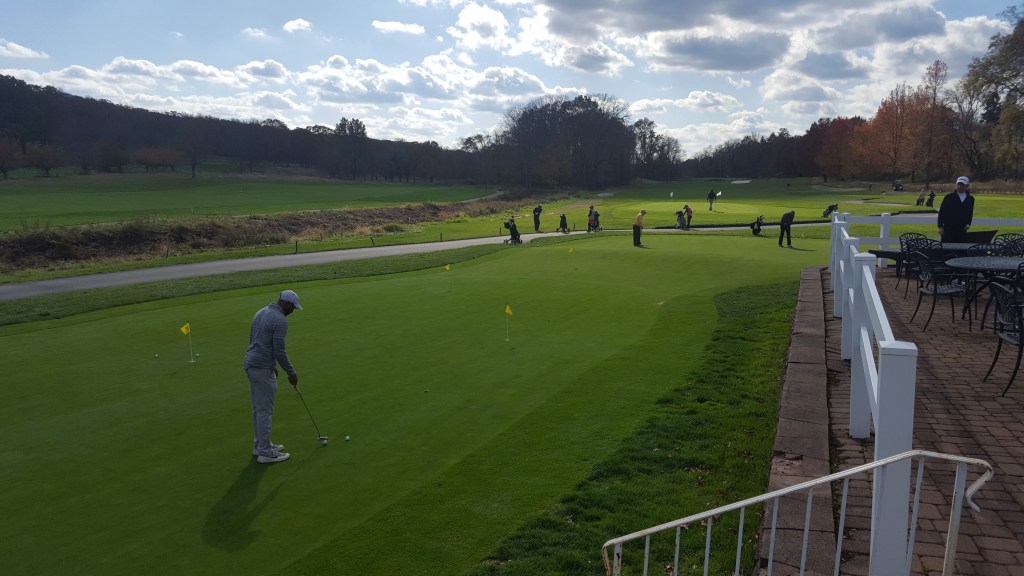
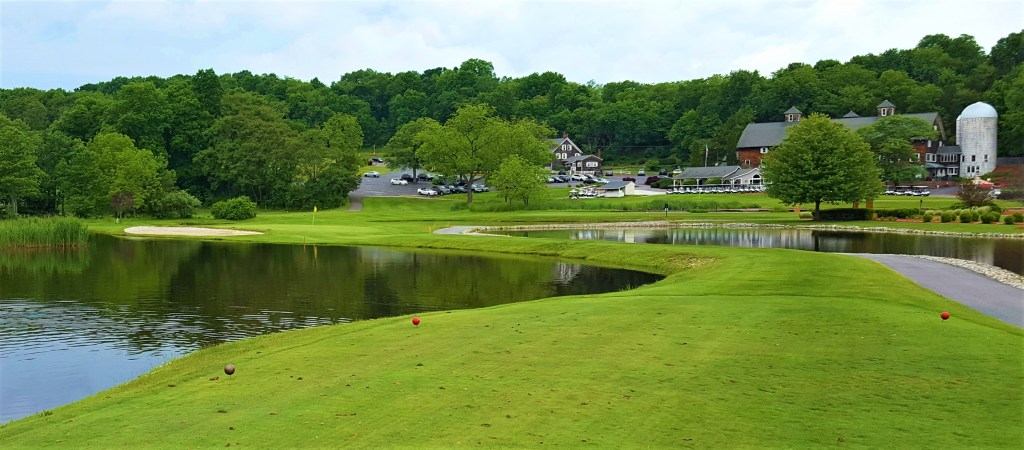
Conditions were beautiful at the North, and the South is no departure. Both layouts are some of the most finely maintained public courses you’ll find in the state. You immediately get a sense of that as you walk off the back steps from the pro shop and look onto the flawless (and massive) putting green.

The putting green is big enough to accommodate all golfers waiting to tee off on both courses

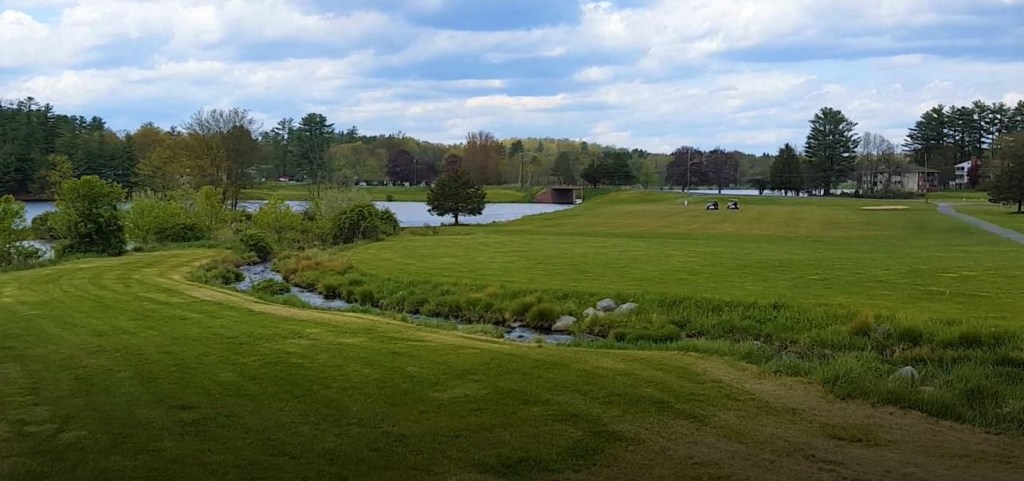
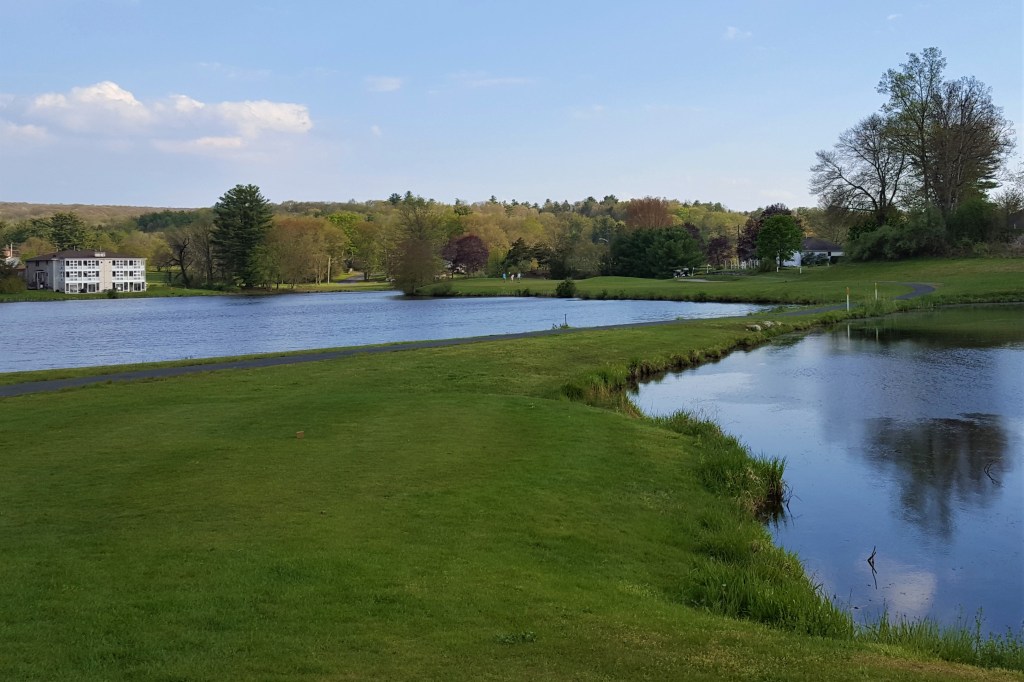
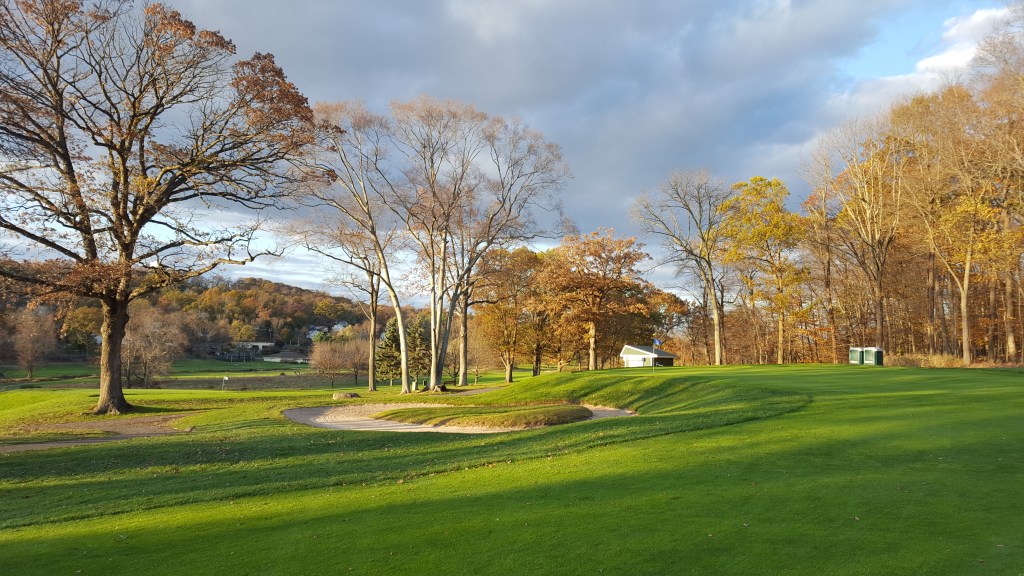
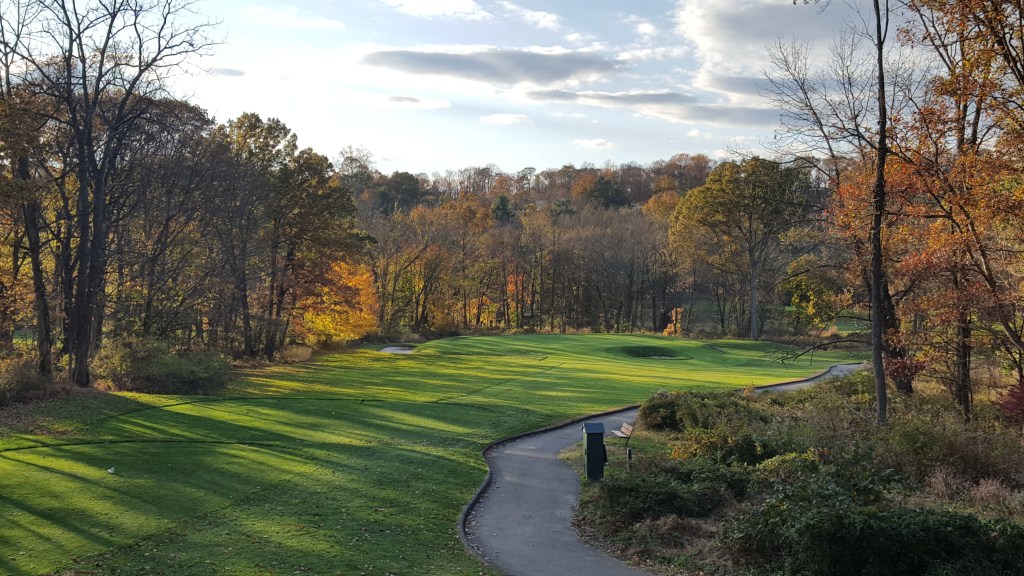
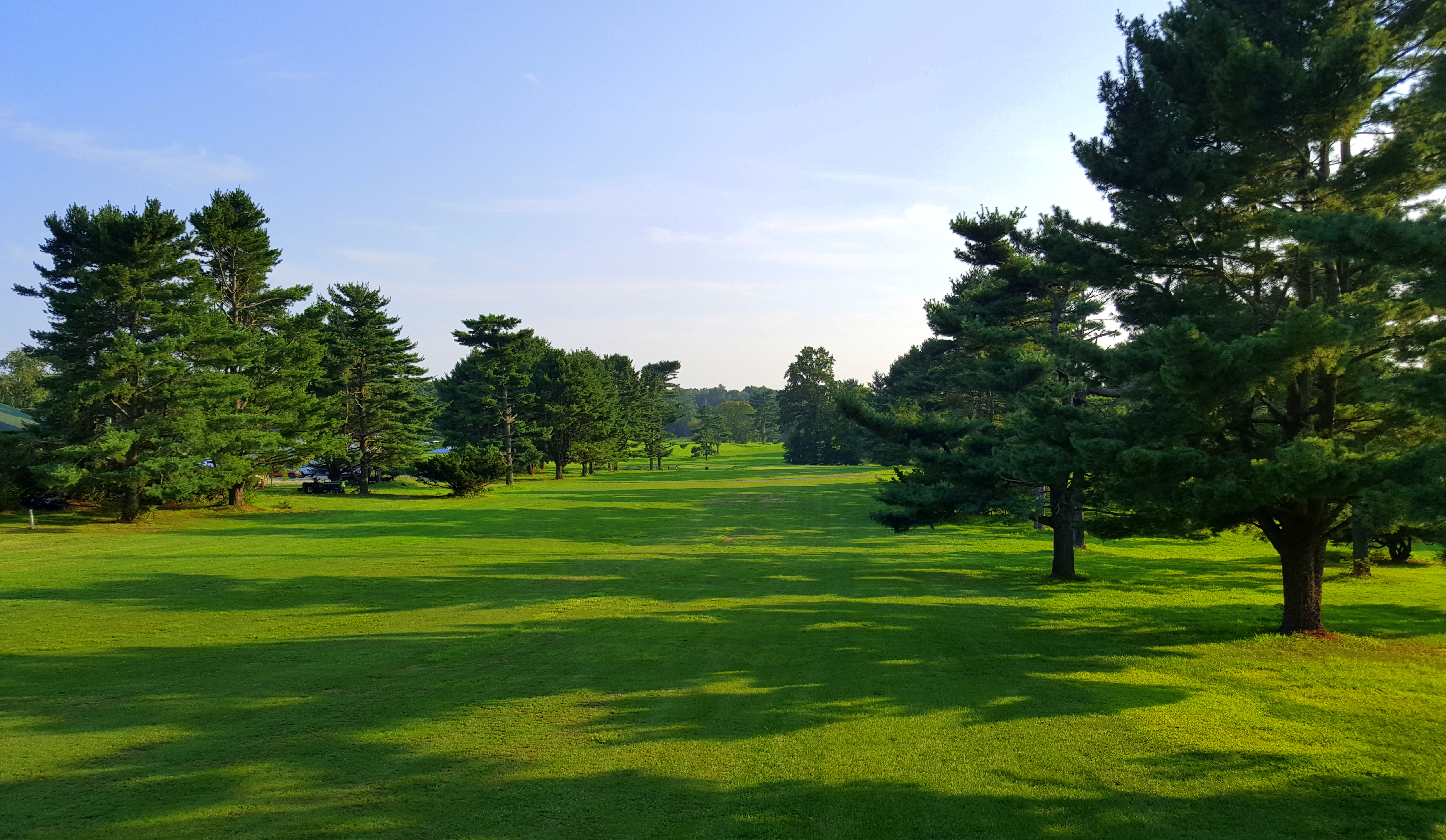
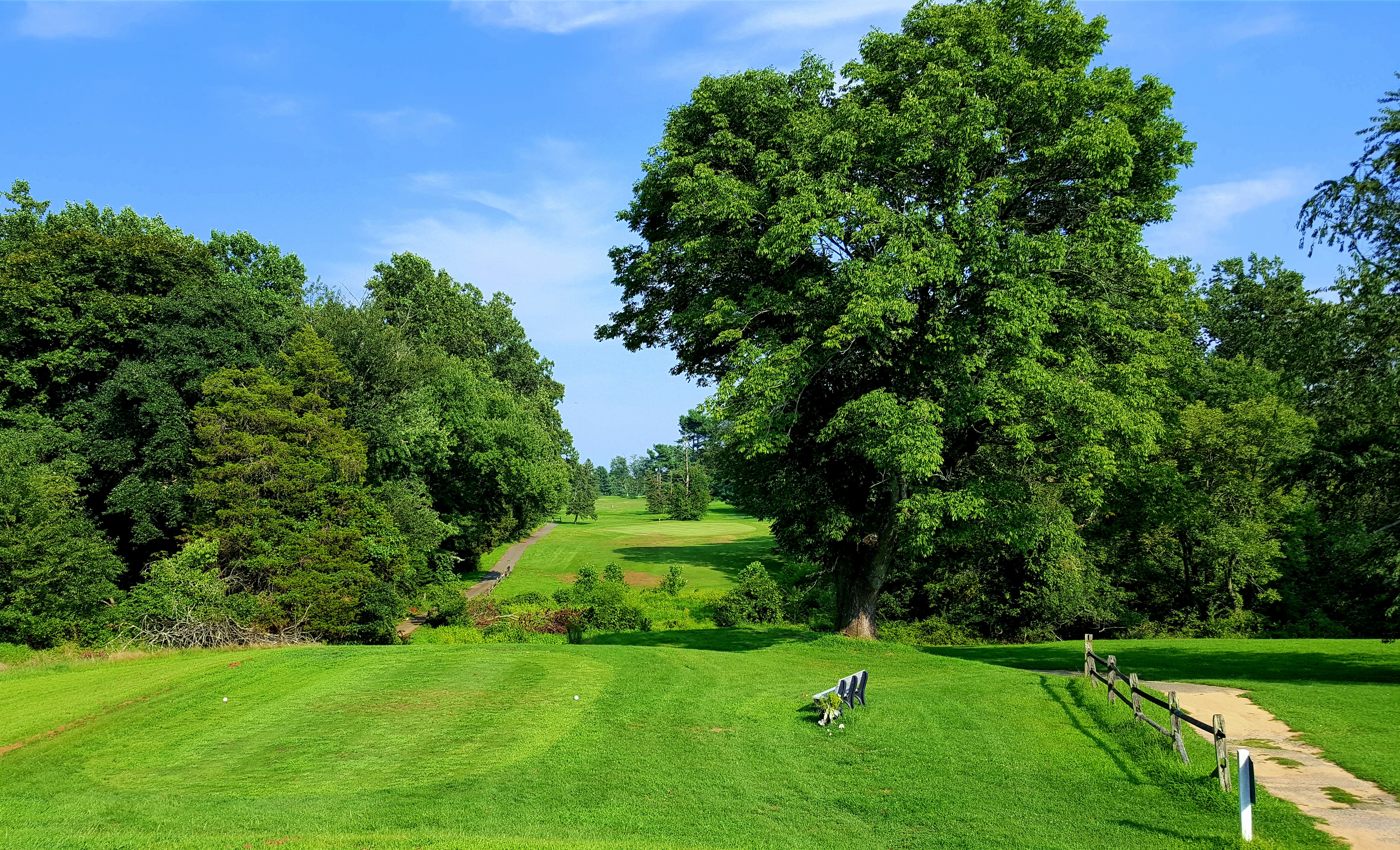
If you love a good golf bridge, you’ll cross one on the long walk to the first tee, a great way opportunity to get your mind in the right place before the round. A short uphill walk through the woods after the bridge, and golfers are emptied out into the clearing that is the South course. Where the North is laid out in links style, forcing golfers to contend with many fescue-lined holes, the South is a sprawling parkland course. Although there are trees to deal with, the fairways are quite generous and there are a number of very open holes.

A walk across the bridge on the way to the 1st tee on the South course

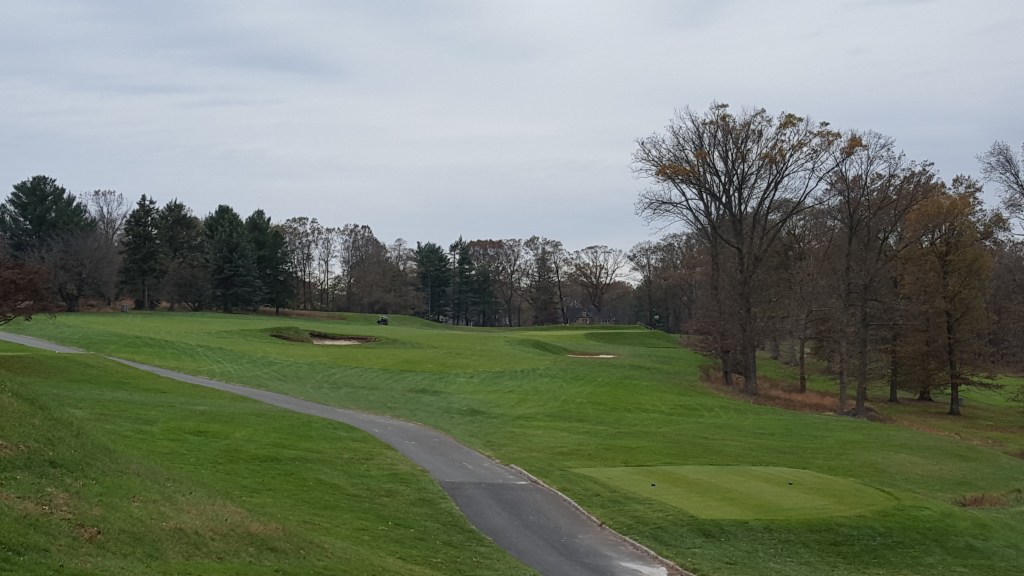
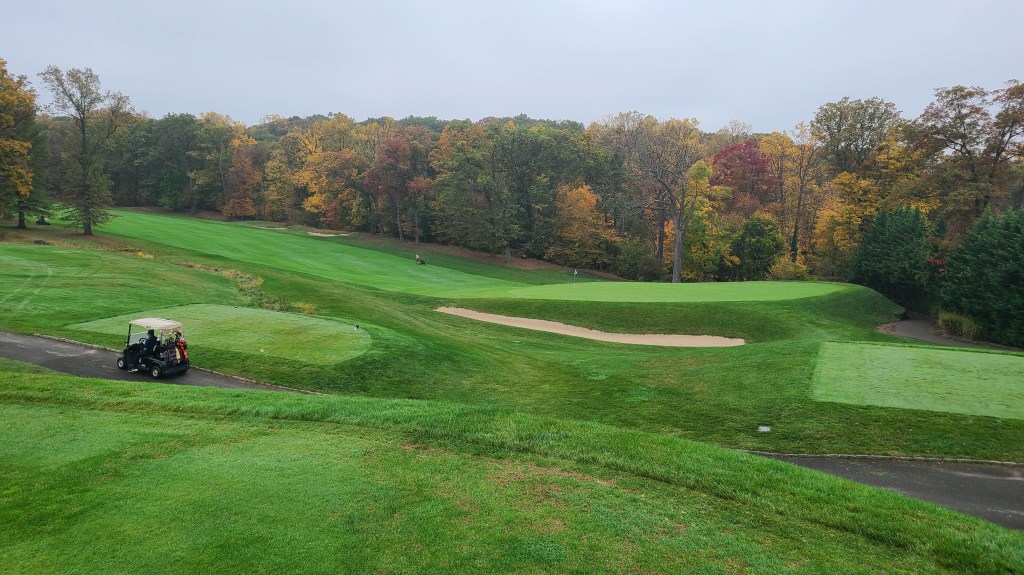
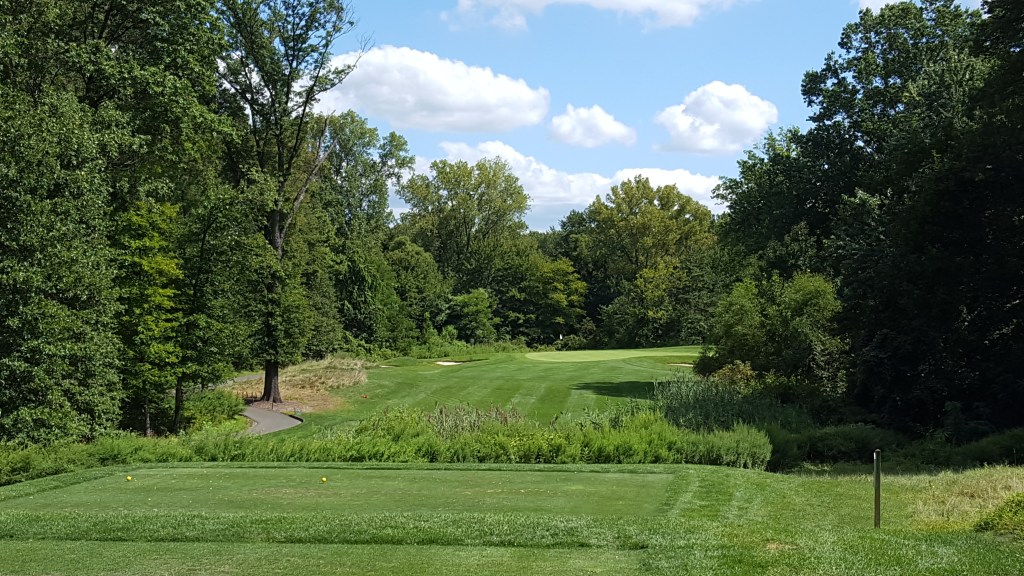
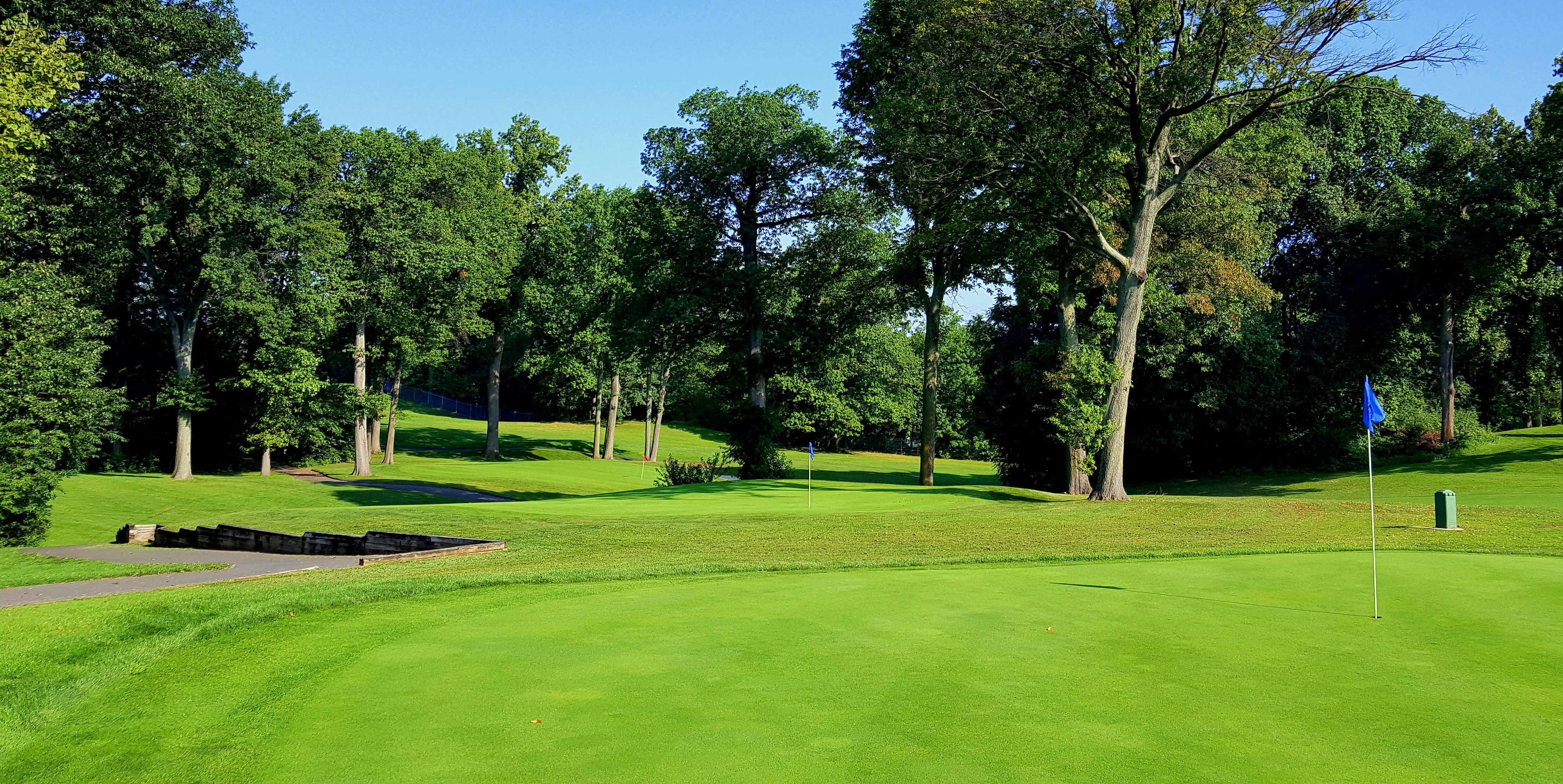
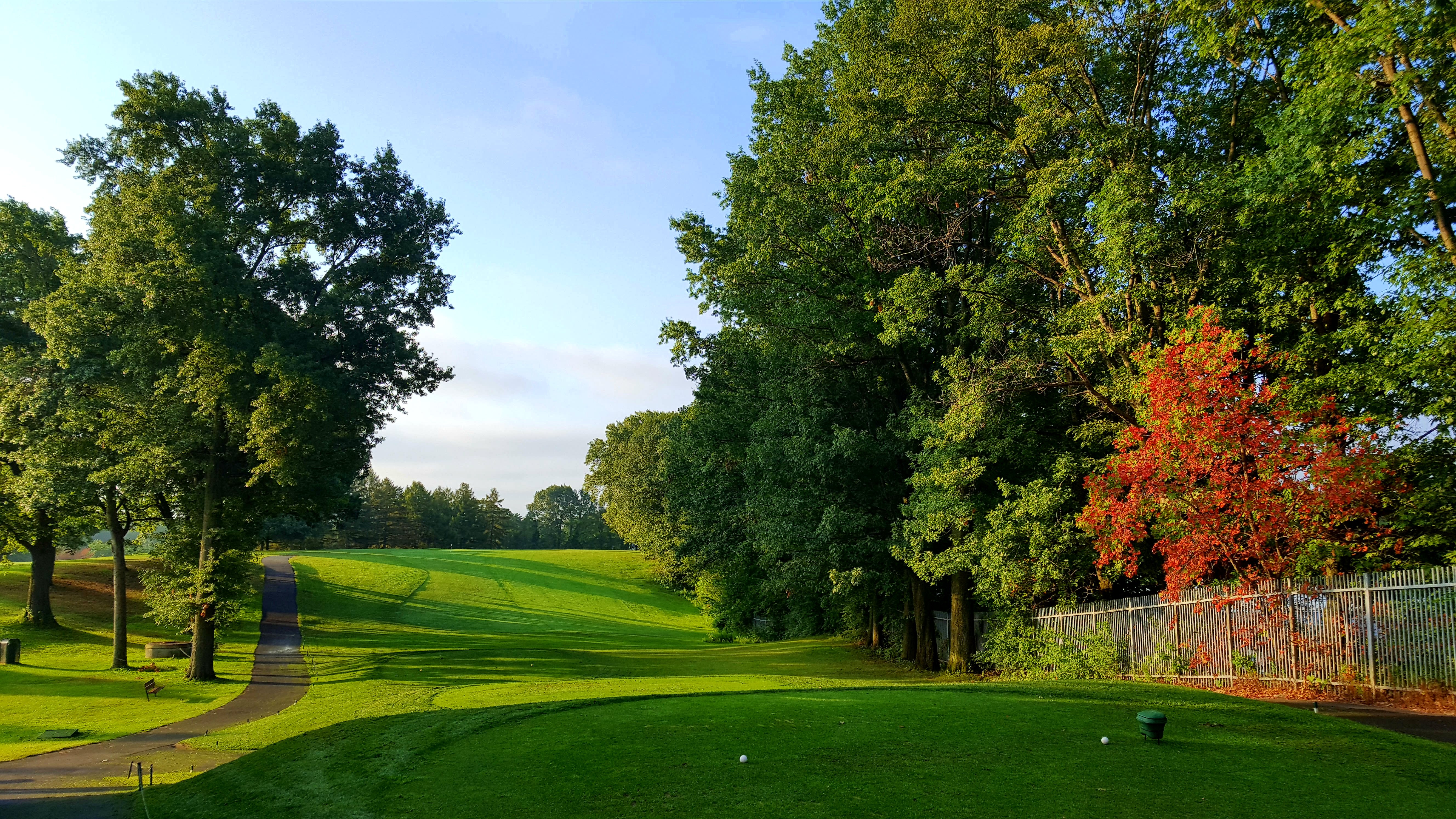
From a design standpoint, the way the 6,377 yards (from the Gold tees) are spread across the 18 holes is done really well. The par 3s play as long as 195, but also as short as 115 on the 11th, something most courses shy away from. Of the twelve par 4s, there are four that play over 400 yards, but then there are also a couple that are drivable for long hitters, like the 294-yd 10th. You might be able to lodge a complaint about the par 5s as three of them are between 499 and 505 yards. But whether it’s differences in the way elevation or direction changes from tee to green, they are each truly unique.
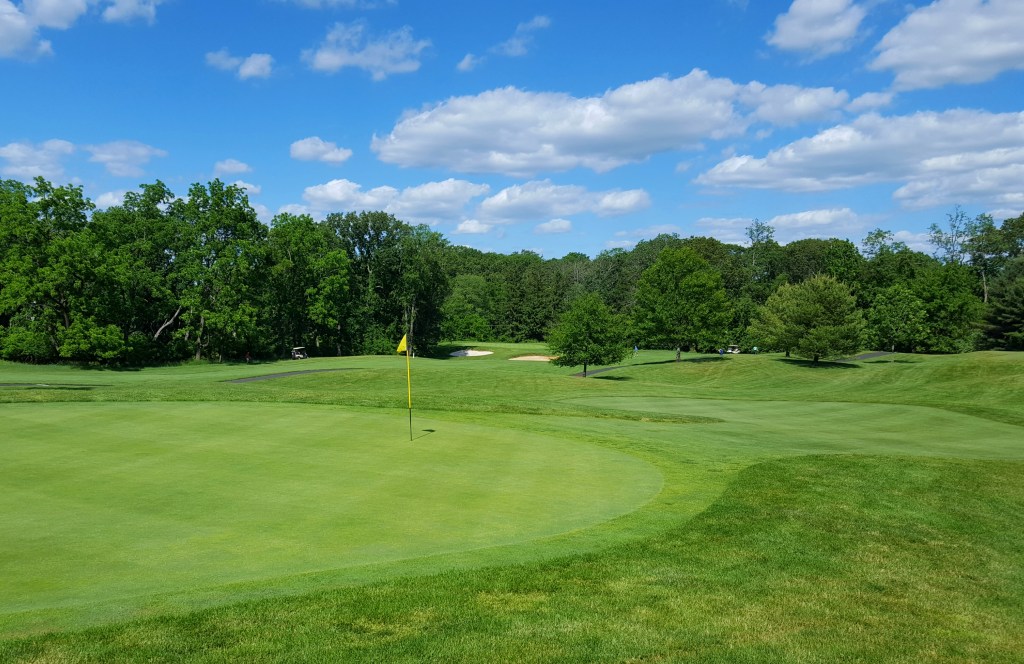
A front pin location on the 11th, with the drivable, par-4 10th in the background

As I mentioned when writing about my time at the North course, Charleston Springs is definitely held in high regard. I don’t know that the South measures up to public resort-type courses (e.g. Ballyowen and Crystal Springs), but I think it would be unfair to put either of the two layouts in that category. Nonetheless, it certainly ranks highly in the very next tier and should be considered a great option for public golfers.
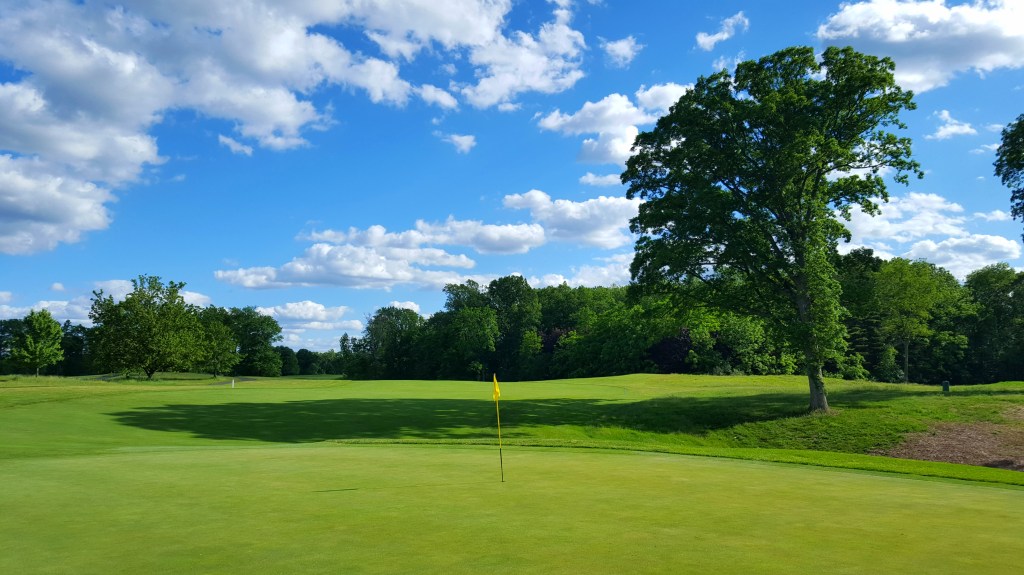
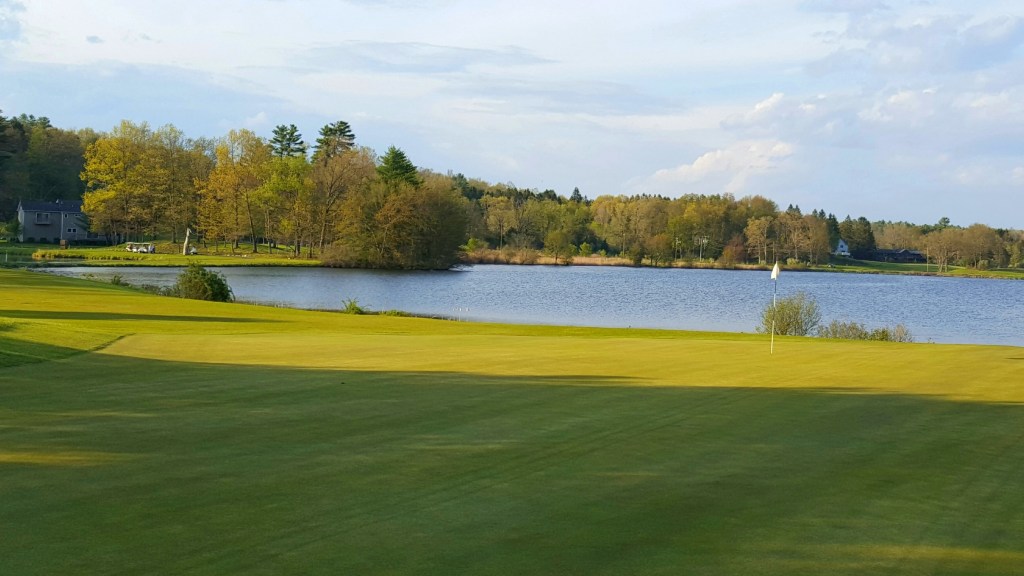
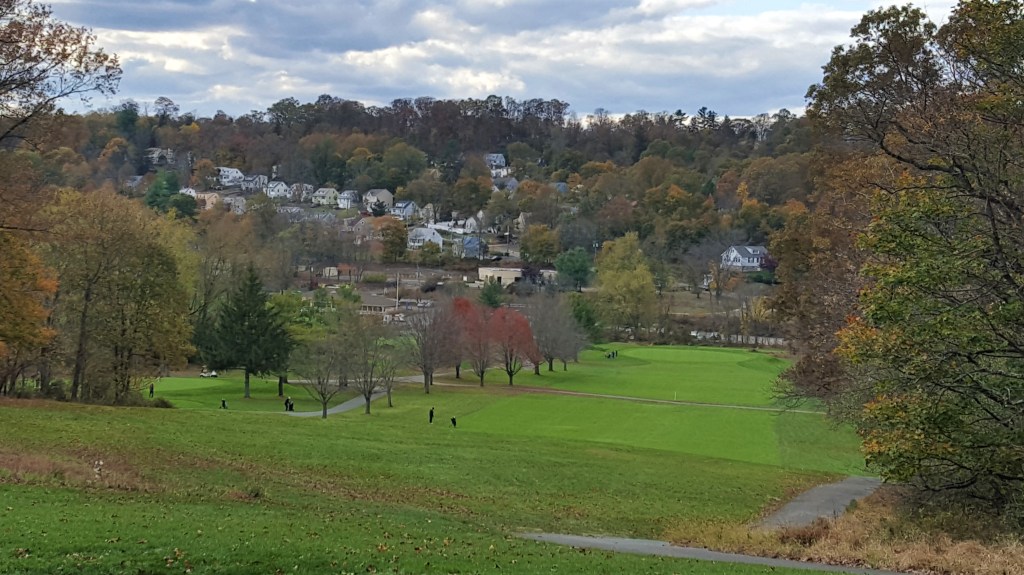
A look back at 18
Number 98 (Charleston Springs – South)

Number 97 (High Point Golf Club)

Date played: 5/15/2020

Golf has a way of presenting you with moments which remind you that you never really have it all figured out. My round at High Point Golf Club would be that moment. While there is no way any of us can see such reminders coming, mine would happen at a time when the world was turned upside-down by something it couldn’t see either.

It was May 2020. The invisible terror that was the COVID-19 pandemic had spent the better part of six months tearing through the world. In New Jersey, the spread seemed to have peaked in early April. After the positive case average remained steady for the month, the numbers were finally dropping in May. Restrictions started to ease, and golf courses in the state began to re-open.

High Point Golf Club was a late addition to my list of courses. Though I started compiling the list in late 2015, I didn’t know High Point existed until sometime in 2019. Though it was surely online somewhere, I forget at this point where exactly I heard about it. Nevertheless, after a bit of research, I confirmed that it was in fact public and made sure to keep track of it. As we came out of the lockdown, it was one of the first courses to make tee times available, and I decided to book a round with my good friend Ed.

Protocols had changed. Out of caution, everything a golf course needed to facilitate public rounds of golf was still being managed outdoors. Golfers checked in with the starter to confirm their tee time and then needed to return to their cars until they were called. After a short wait, we got word that we could head to the first tee.

Hole 1 from the tee. Just waiting for the fairway to clear so I can overdraw one into the water.

The course is situated around a grouping of small lakes, and water features immediately on the opening tee shot. It’s a par 5 where you must land in a fairway area that runs out at about 260 yards. The largest of the lakes runs up the left side, and your approach must cross it to reach the second landing area or the green.

The routing continues from there to wind around and cross over the lakes, and water will realistically be a hazard on holes 4 through 8 on the front, and 10, 14, and 16 through 18 on the back.

The 16th is great drivable par 4. The view from the tee is deceptive, making it seem as though you must go for the green or bust. While the landing area looks perpendicular to the route from tee to green, it actually runs diagonally to provide some room, albeit narrow.

Hole 16, where you decide whether to drive the green, or pump one OB at that house on the right. I know what I’m picking.

The course finishes on two unusual notes and has a couple noteworthy distinctions. The 18th is a par 3 and the course plays to a total par of 73. Both are qualities I don’t remember having seen in other NJ publics to this point in my journey. High Point is also the northernmost public golf course in NJ. Tucked away in the northwest corner of the state in Sussex County, it’s just a couple miles east of the Delaware River and about five miles from the northern border to New York. It is also situated at the highest elevation of any golf course in the state.

As mentioned, my round at High Point would remind me that despite what I thought up to that point, I had not figured out golf. I would enter the round as a 10 handicap, and yet I would post a 106. I put five balls out of bounds, three in the water, and five times, I found a way to three-putt. It would be my highest score since 9/14/2014. “Golf is hard” is not just a hashtag. At times on this quest, it is a sobering slap in the mouth.

Number 97 (High Point Golf Club)

Number 96 (Rock Spring Golf Club)

Date played: 11/10/2019

Where Cruz Golf Country Club has its uniqueness in the obscurity of its designer, Rock Spring Golf Club is the complete opposite. Designed by Seth Raynor and Charles Banks in 1927, it was born in in the heralded “golden age” of golf course architecture by very prominent names. Like most Raynor designs in America, Rock Spring was private for most of its existence. A mere 92 years after opening, it opened to the public in May 2019.

Hearing about Rock Spring was my first experience with the grapevine of the golfing world. Other than through social media, I don’t consider myself quite connected to the golf community yet. I don’t have any contacts who work at courses. I’m only just meeting teaching professionals. Given that I’m almost always at new courses, I only play with a couple people “regularly”.

But it seemed like one after another, I started to hear and see the same refrain: “You’ve gotta play Rock Spring”.

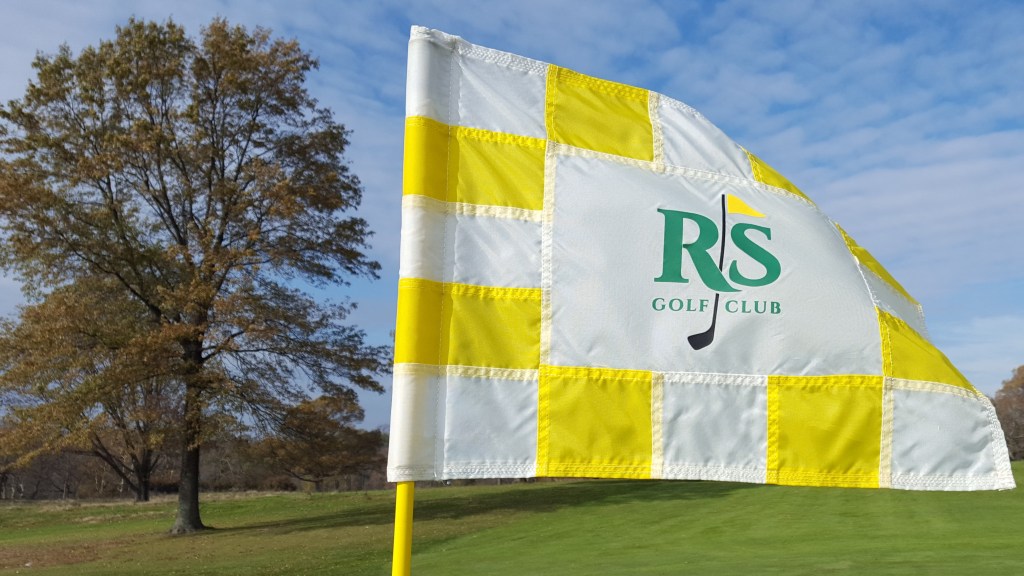
Quality flag game, but is it a “must play”?

A big part of this has to be attributed to the suddenly vanished exclusivity. If Pine Valley opened to the public, you can bet you’d hear about it immediately. That story would likely make any and all golf news outlets. So, the question for me was really, do you have to play Rock Spring?

I have to say, it took some time through the round, but it grew on me. At $89 on a weekend in November for a now-public golf course, it had to live up to that price. At that rate, you’re approaching the finest publics in the state (i.e. Neshanic Valley, the Crystal Springs resort courses, etc.). But I started to appreciate the design elements after a while. I began to see what the course would look like in prime conditions, without the leaves all over the place, and it is a quality course.

Hole 12

The greens had good speed, even for the middle of fall in cold conditions, and they are relatively large. There are plenty of changes in elevation from tee to green, and the holes that play along the side of a hill – like 12 and 15 – are actually some of the most striking.

15 green

Managed by Kemper Sports – the same company who oversees the beautiful Skyway Golf Course in Jersey City – Rock Spring is definitely in good hands. As for whether “you’ve gotta play it”, I’d say ‘yes’, but you’ll have to check it out for yourself!

P.S. If you get there early, and the place looks closed, it’s probably because you parked in the overflow lot. There is actually parking around the clubhouse, which is also where the bag drop is.

How I played…

I actually played pretty well, but putt poorly.

Highlights: Meeting up with new golfers in New Jersey! Shout out to John Boylan for joining me on a cold November morning. Also making the highlight reel are two approaches that I knocked to a foot-and-a-half. (Yes, I made the putts.)

Lowlights: Definitely putting. I felt good on the practice green, but it didn’t carry onto the course.

Number 96 (Rock Spring Golf Club)

Number 95 (Francis A. Byrne)

15 green with the sucker pin position

Date played: 11/3/2019

The 95th public course on my quest is 95 years old at the time of writing, and one that is rich with (somewhat verifiable) history. Francis A. Byrne Golf Course was built in 1926, and legendary architect Charles Banks is credited as being its designer. Some sources say the design was started by Raynor, while others leave this mention out entirely. Other information you can find about the course states that the original purpose of the Byrne course was an expansion of the neighboring, still-private Essex County Country Club, the oldest club (and possibly course) in New Jersey.

Whatever the history and origins of Francis A. Byrne truly are, it remains a great public option in northern NJ. Located a few miles from the Parkway and just off Route 280, the Byrne course is set in the rolling hills of Essex County just north of the South Mountain Reservation. The course is kept in great playing condition and has actually undergone several improvements – e.g. restoring a Biarritz green at the 2nd – since I’ve played it.

A look from the elevated tee box at 9 with the homes in the distance depicts how much the hills of Essex County come into play at Byrne

I made my way around Francis Byrne with my good friend, Ed, who likely is in the lead for “most rounds played together,” not just on my journey, but in my golf career overall. Ed and I started playing golf together over twenty years ago, and our golf games have progressed similarly. We both broke 100, 90, and 80 at around roughly the same times, and while we have different strengths – Ed is a longer hitter, I may be a better short-game player, Ed is the better putter – our handicaps remain very close to this day. It’s been great to have a close friend to not only share the game with, but also to encourage progress.

Ed actually warming up on the putting green instead of just taking pictures of it, which may explain why he’s the better putter

There are plenty of golfers who enjoy time on the course with friends, without really worrying about the quality of their collective play. I respect that, and I think that can be a lot of fun. Ed and I both approach the game with an ambition to become better players, and we push each other both directly and through each other’s accomplishments.

Another downhill tee shot to the par-3 14th

Our fall afternoon round at this historic New Jersey public was relatively average for both of us. My poor play off the tee was offset by some very good scrambling and putting. I would putt only 24 times for the round, by far my lowest total. We walked off the 18th green at dusk, content with our rounds, and satisfied in having tackled another NJ course together.

Though a rare feat, I had the additional satisfaction of having outdriven Ed on that last hole.

Number 95 (Francis A. Byrne)

Number 91 (Orchard Hills Golf Course)

Date played: 8/24/2019

I had taken a Friday off work and traveled up to northern New Jersey to play a small private/community course with an old family friend. Afterwards, I also played the short par-3 course at Anchor Golf Center and decided to stay up in the area to try to play another new public course on Saturday. I was able to crash at my brother’s place and find a tee time at Orchard Hills.

Like most courses in New Jersey – but especially in Bergen County – Orchard Hills is tightly surrounded by suburbia. Situated adjacent to the Bergen Community College property and across the street from Paramus Catholic High School, it’s relatively easy to miss if you’re not looking for it. The course is nine holes and doesn’t even reach 2,800 yards from the tips, but as its name suggests, it does roll up and through the hills of the property.

Though it’s an easy course on paper, I somehow managed to play some pretty terrible golf. Looking back at pictures now, there is all the room in the world to land your tee shots on the six par-4s and the lone par-5. The course also features two par-3s that are a bit long on the scorecard, but certainly fair in reality.

Hole 4, the first of the course’s two long par 3s

While I carded a poor round, it was a good feeling to cross off another Bergen County course from the list. Orchard Hills was pretty well maintained and pace of play was decent for a busy golf course on a weekend. The course became my fourth public played in the county.

Number 91 (Orchard Hills Golf Course)

Number 90 (Anchor Golf Center – Par 3)

Date played: 8/23/2019

If I had to guess, I’d say the 90th public course I played in NJ is one whose legitimacy in my list is questionable to many. It’s something between a pitch-n-putt course and a par-3 course. There are mats for tee boxes, it “tips out” at under 800 yards, and the greens are a mix of clover and other weed growth. You could probably install cups and flagsticks in your backyard, set the lawnmower to the lowest mow height possible, and you’d get similar results.

Having said that, I count the Par 3 course at Anchor Golf Center on Route 10 in Whippany for three simple reasons.

  1. It’s a place to play at least nine holes of golf
  2. It has a scorecard with yardages for each hole
  3. It’s completely open to the public as a daily fee course

Apart from the greens, there are a couple other items of note about the course. Following an extended period of rain, the course was soggy, especially at the back of the driving range on holes 5 and 6. There were also a couple tee shots (on holes 4 and 7) that were at least partially obstructed by trees, which may trouble the beginner but add an element of challenge for an experienced player.

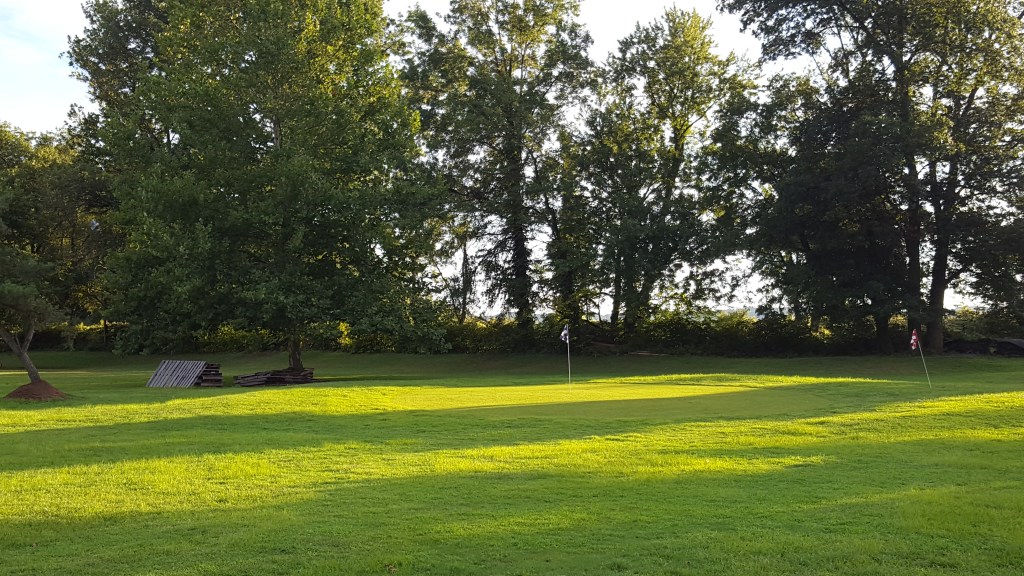
Pretty sure this is a Raynor template. The pallets under the tree give it away.

At the time of writing – November 2020 in the midst of the COVID-19 pandemic – the Anchor Golf Center website says that the Par 3 course is “closed until further notice”. It’s unclear if that means closed for the winter season or closed for good, but it would be a shame to lose a place like this.

In my opinion, these short courses – suboptimal conditions and all – deserve a place in the golfing world. They’re places to learn the game. The easiest way to make the transition from driving range to regulation course is by using these short courses as an intermediate step.

While I’m counting them all, and my criteria may seem loose to some, I’m curious what you think. Would you count a place like this on a list of public courses? If not, how would you define your criteria for such a list?

Number 90 (Anchor Golf Center – Par 3)

Numbers 86, 87, and 88 (Farmstead Golf and Country Club – Clubview, Valleyview, and Lakeview)

Date played: 5/30/2019

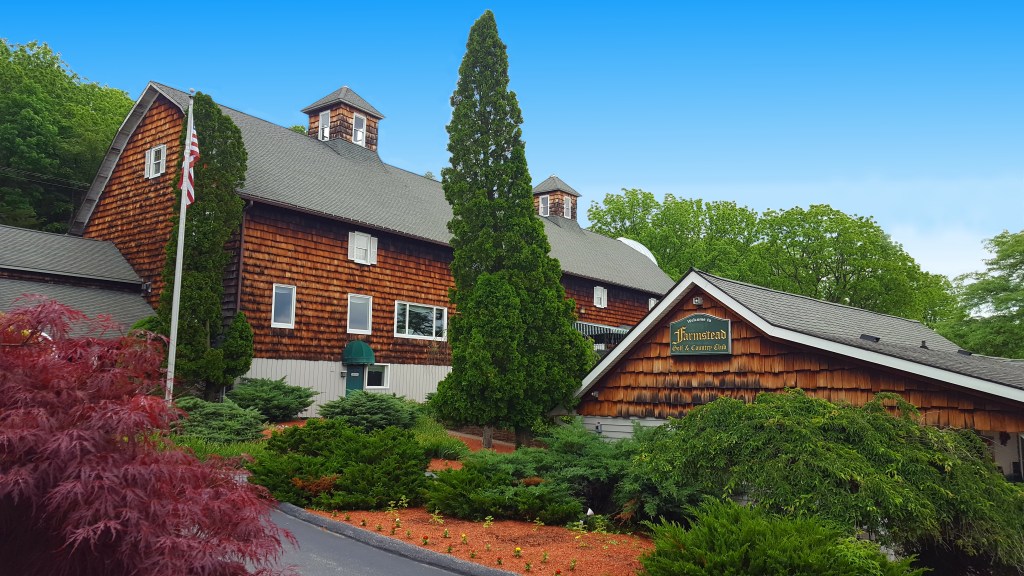
The Farmstead clubhouse (foreground, right) and restaurant (background)

Set in the quiet Sussex County town of Lafayette, Farmstead Golf and Country Club is a set of three nines: Clubview, Valleyview, and Lakeview. Having only booked 18 holes, my friend Ed and I were hoping to be able to play nine afterwards to complete the 27, so as not to have to make the long trek back to the northwestern corner of the state.

After speaking to the starter, he let us know that the Valleyview nine was extremely wet after days of rain, and he wasn’t sure if we’d be able to get out there. I let him know about my journey to play all the public courses in NJ, and he said he would see what he could do. He sent us out on Clubview and told us to check back in to see which nine would follow.

Clubview (86)

The Clubview nine sprawls away from and returns to the clubhouse in an L-shape. Apart from the first few holes along the perimeter of the course property, it is generally open and provides some room to miss. Water will feature prominently on the par-5 fifth and the par-3 ninth holes, as well as the approach into the sixth.

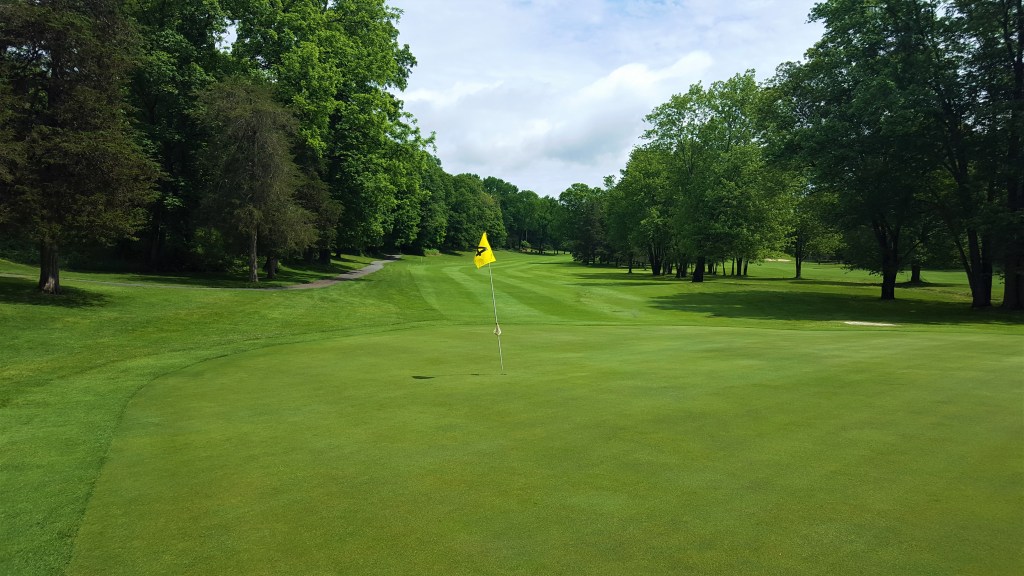
Clubview 1

Valleyview (87)

Returning to the starter after nine holes on Clubview, he let us go out on Valleyview. These nine holes have a much tighter setup than Clubview, and you work your way back up into some elevation to the first tee which also gives it a mountain golf feel. With the exception of turning back for the par-3 third and fifth holes, the routing essentially runs away from the clubhouse along one line and comes straight back, covering a relatively narrow footprint. It is also significantly shorter than the other two nines, playing at under 2,900 yards from the back tees.

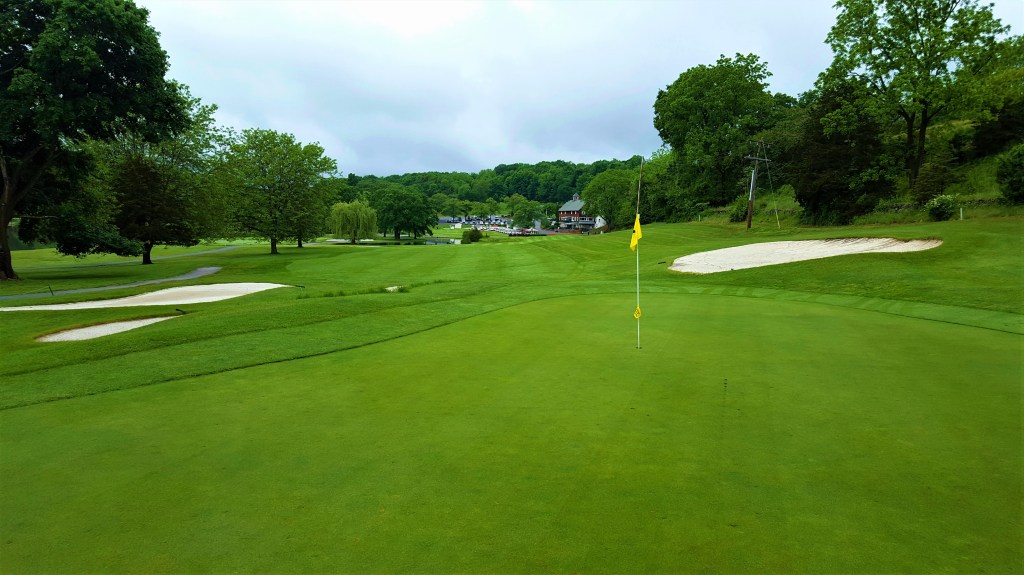
The sixth hole is a fantastic downhill, dogleg left par-4. For longer hitters, it’s drivable for if you can match the shape of the hole and carry the water in front of the green. The par-5 seventh is also fun, playing at only 430 yards from the back tees, with your final approach playing to an elevated green.

I owe a debt of gratitude to Farmstead for letting us out to see this nine. The course was indeed very wet, so much so that there were areas on the fourth fairway that were like walking on a waterbed. Other than playing our shots, we were extra cautious to not disturb any of the course.

Valleyview 4

Lakeview (88)

If I remember correctly, there was a slight chance of rain in the forecast, but thankfully it hadn’t rained a drop all morning. We would finish the last of the nines in dry weather as well. While named for the lake that it’s set along, I’d argue that water is really only a factor on holes two, four, and nine, which is a fantastic par-3 set on an isthmus that runs through the lake. On nine, there is a vast difference between the back tees playing at 201 yards and the one-ups at 124, but it’s intimidating from any tee box with water on both sides the whole way.

Lakeview 9

Overall, I found the courses at Farmstead to be charming, something I think was encapsulated perfectly in the old farmhouse that has been converted to the course’s restaurant. For first-timers set to play 18 holes, I highly recommend trying to arrange that Valleyview be one of the nines if possible. It will provide the best variety on the day when compared to Clubview or Lakeview, which play somewhat similarly.

Of course, you could just commit to trying to play all 27 on the day!

Numbers 86, 87, and 88 (Farmstead Golf and Country Club – Clubview, Valleyview, and Lakeview)

Number 80 (Cruz Golf Country Club)

20181023_164711

Date played: 10/23/2018

Some golf courses have stories. Almost any course that has hosted a professional tour event likely has at least one great tournament moment. At the very least, they have the fact they’ve been a tournament host. Older courses have their history. Other courses are known for being designed by renowned architects.

Accessible publics, on the other hand, are mostly just the storiless courses that people in the area happen to play. They’re the courses whose greens fees might be discounted with a county card. Number 80 on my journey to play all publics in NJ is different. Cruz Golf Country Club definitely has a story: the course was built by Evaristo Cruz.

If you’re wondering why you haven’t heard of this particular architect, it’s because he’s not one. Cruz emigrated from his native Portugal in 1946 and was not in golf course design by trade. He started a successful public works construction company in the early 1950s. Then, in 1976, with the help of his construction crew, he designed and built nine holes of golf on some of his own farm land. After adding an additional nine holes in the 1980s and opening it up to the public, it would eventually become Cruz Golf Country Club.

20181023_210255
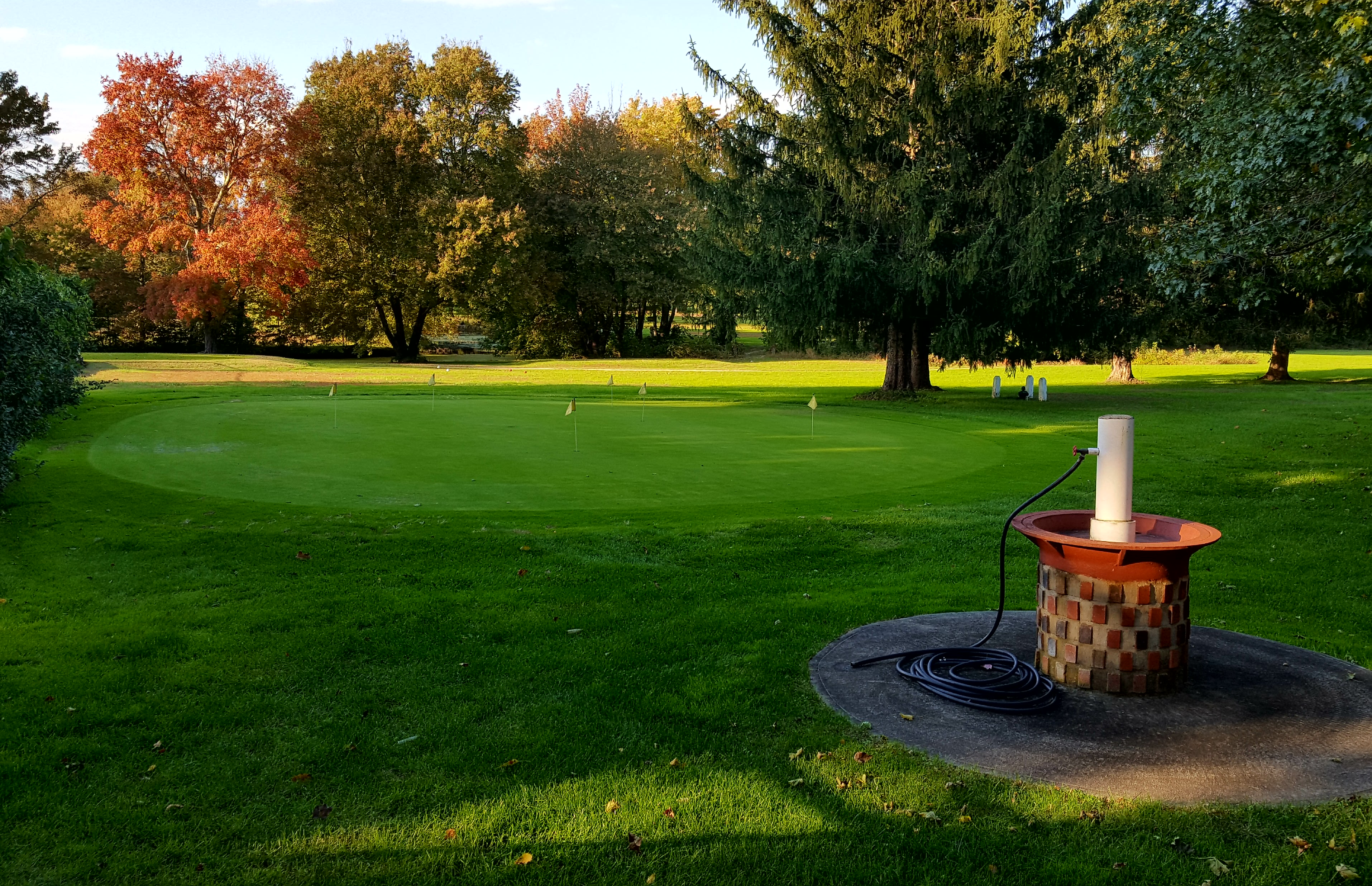
Cruz’s craftsmanship can be seen in a few places around the clubhouse, like this water source near the practice green

One of the shorter 18-hole courses in NJ, Cruz plays at just over 5,000 yards from the back tees. While it may be deficient in distance, it has a number of quirky holes. The 4th is a short, 286-yard par 4 that would normally be drivable, if not for the 90-degree dog-leg around the surrounding woods to the right. Holes 6 and 13 have prominent trees in or hanging over the fairway, making tee shot decisions important. The 16th is a short par 3 whose front edge is only a pace-and-a-half from the water hazard before it.

20181023_210628_Crop
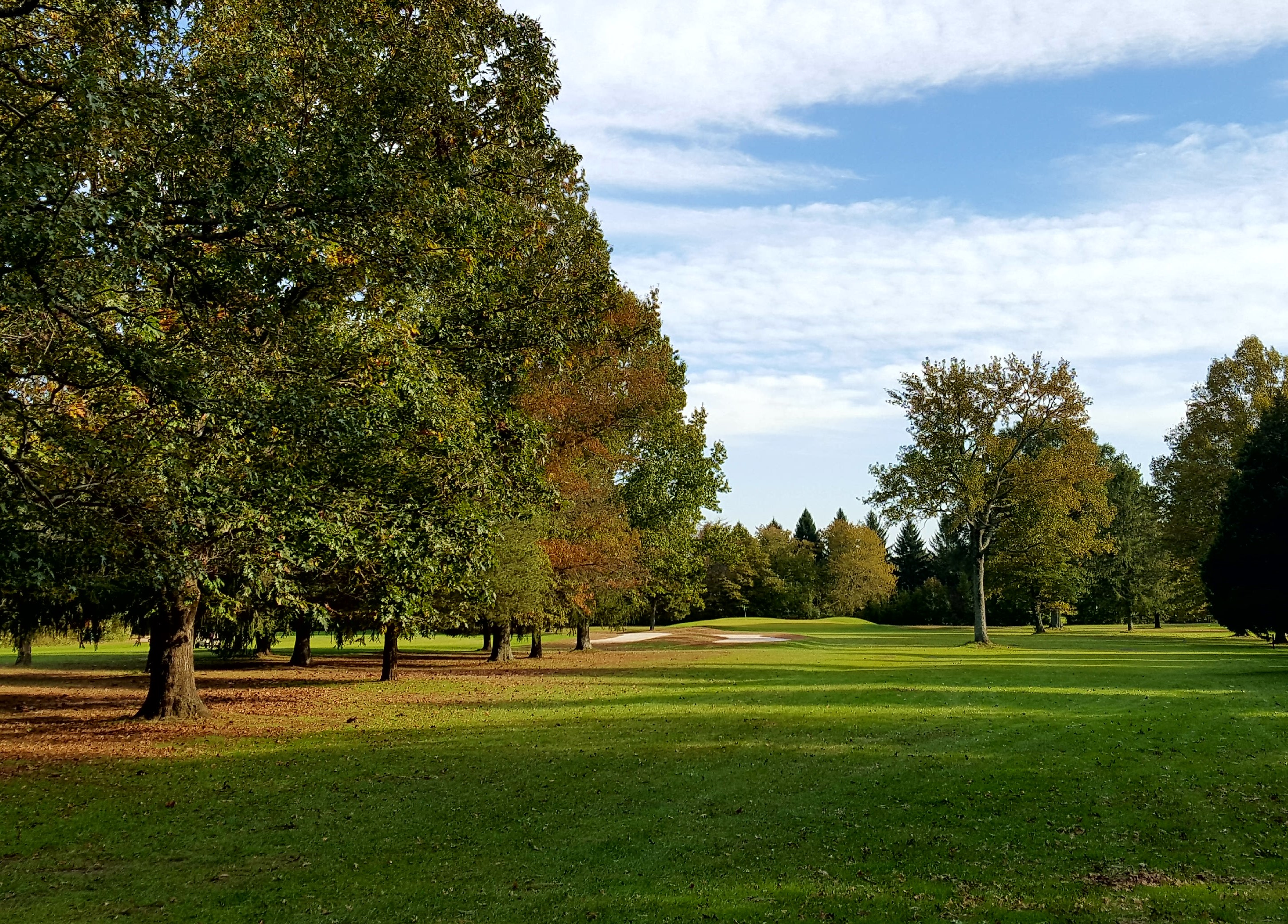
Fall colors starting to come in on 13

The course may not be anything special to a design aficionado, and its conditions generally won’t impress a seasoned golfer who has a number of gem-course notches on their belt. But, with its “no tee times” setup and only $26 to walk, I think it is more than deserving of a place in public golf.

There is a lot to be said about loving a game so much that you’d build a place to play it. It deeply resonates with the childlike spirit in each of us. It’s one thing to appropriate couch cushions and pillows for a “fort”, or to fashion a makeshift basketball hoop. Perhaps beyond that, one might build an actual tree house. But it is some serious love that would drive one to build a golf course.

I’m thankful that Evaristo Cruz had such a love for the game, and I believe I share that passion. Maybe I might build a golf hole or three in the future.

How I played…

Not bad, but at par 70 with a course rating of 64.3 and a slope of 114, this is a course where everyone should look to shoot a personal best relative to par.

Highlights: Once again, it would be enjoying the round with good company. It was a colleague from work that actually told me about the place, so it was good to finally get out there with them.

Lowlights: Nothing awful. Perhaps just not really capitalizing on scoring opportunities.

Number 80 (Cruz Golf Country Club)

Number 79 (Weequahic Golf Course)

Date played: 9/3/2018

The 79th course on my journey has been called “a hidden gem” by Matt Ginella of the Golf Channel, and it even made his “ladder of value golf courses”. It’s hard to argue with that.

Located in Newark, NJ, and just four miles from Newark Airport, you might be able to play Weequahic Golf Course during a long layover between flights. Designed in 1913, it’s one of the older public courses in the state, but its length doesn’t match its age. It’s also one of the shortest for its par, playing as a 5,700-yard par 70 from the back tees.

You can absolutely get around this course without your driver, the only possible exception being the 16th, which plays as a 401-yard par 4. Having said that, the course can be a challenge for first-timers as it plays tightly. Its close-knit layout does make for some interesting views on the course, like being able to see the 17th and 16th greens while standing on the green at 7.

20180903_092819
On 7 green, looking out at 17 and 16 greens. A “threen” view.

Walking might be a challenge for some, as the course rolls over a number of hills and changes in elevation, but as I’ve said before, it makes for beautiful golf. You immediately get a feel for the sinusoidal layout playing a par 4 straight uphill on 1 and then right back downhill on 2, a short par 3.

20180903_073627
Up, up, and away on the 1st tee.

As I mentioned when writing about Skyway, there is something really special about courses in a city setting. It’s very much why Central Park is so magical to so many. Were it not in the middle of Manhattan, it probably wouldn’t be as special. But it is, and so it’s adored.

The same goes for Weequahic. It’s a beautiful stretch of well-maintained grass, precisely mown to different heights in a place called “Brick City”. So, for about $50 to walk on weekends, you should absolutely check it out – before you have to catch the second leg of your connecting flight, of course.

How I played…

I should’ve left the driver in the bag. Let’s leave it at that.

Highlights: Enjoying the round with a good friend of mine. Other than that, it would be almost driving the short par-4 15th, chipping to three feet and making birdie. (Still should’ve left driver in the bag.)

Lowlights: Too many to choose from. Looking at the yardage of the course, I think my eyes went black like a Great White Shark about to enjoy a meal. I did no such thing. Play smart, people. Play smart.

Number 79 (Weequahic Golf Course)

Number 78 (Beckett Golf Club)

Date played: 8/16/2018

I’ve reached something of a somber moment in my journey in writing this post about my time at Beckett Golf Club. While there will be more stories like it to come, this marks the first time that I get to talk about a course that has since permanently closed.

Located in Woolwich Township in southwestern New Jersey, Beckett was the first Gloucester County course I played. Built in 1977, it was originally a 27-hole layout with Red, White, and Blue nines. What remained when I played was an 18-hole course straddling Kings Highway, and an actual 19th hole – a vestigial remnant of the abandoned nine.

20180816_181516
You actually needed to play the 19th to get back to the clubhouse.

While there were plenty of signs of the course being neglected and possibly headed for closure – bare tee boxes, some burnt out greens, and areas of poor drainage – I want to focus on the positives and imagine the course in its heyday.

With fairways cut in a centerline mow pattern and lined mostly with beautiful evergreen trees, Beckett was a classic parkland course. A majority of holes played over level terrain, but there were a number that had some character.

20180816_162240
In position for a good approach into 8.

The 8th was a short par 4 where your approach played over a valley of overgrowth. The 15th was a long par 3 that could be visually intimidating, with a large deciduous tree overhanging and possibly blocking potential tee shot trajectories. The landing area for your tee shot on the par-5 16th was blind, just over the top of a hill. Pepper in some dog-legs, some interestingly sloped greens, and there was decent variety for this 6,025-yard course.

20180816_165111
A bench at 15 tee offered a seat upon which to contemplate navigating that massive tree.

It’s disheartening for me to think about any course shuttering for good, but the truth is this course was nowhere near halcyon days when I played it. Demand was almost certainly non-existent. I imagine some may even be muttering “good riddance” at the thought of its passing. I only wish I could have seen it in better times.

20180816_181749
The sun sets on Beckett Golf Club.

Though the 18-hole course at Beckett joins the already defunct nine, my journey continues. I look forward to seeing what the remaining public courses in Gloucester County have in store.

Number 78 (Beckett Golf Club)