Number 62 (Beaver Brook Country Club)

20170728_153632 - Copy

Date played: 7/28/2017

Have you ever booked a tee time, and then realize that you had other commitments on the same day? Ever still try to make both happen? My story of the 62nd course on my quest went something like that.

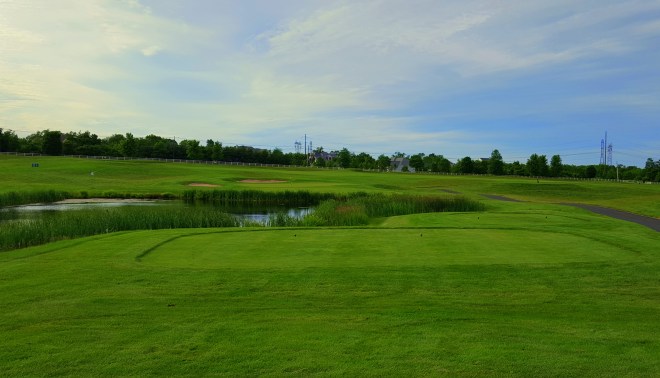
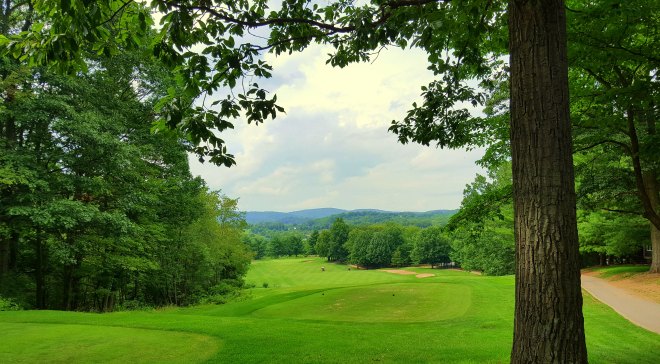
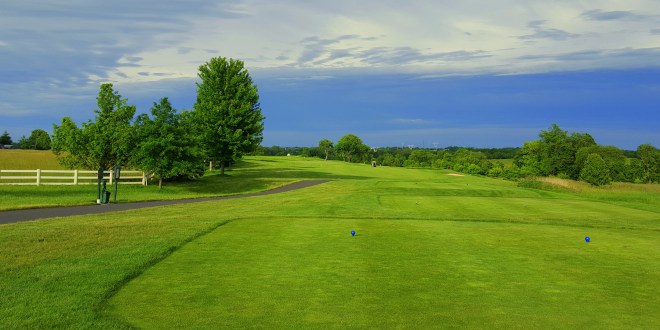
Located in Annandale, NJ, Beaver Brook Country Club is a beautiful 18-hole layout that almost has a bit of everything. You could argue that it could use more water to contend with (if you’re a sadist), or perhaps some more forced carries (definitely sadist).

But, there ARE a couple forced carries, as well as a creek to deal with on a number of holes. There are a few good dog-legs, a drivable par 4, and a par 5 you can get to in two (if you’re a long hitter). There’s a par 3 where you can tuck the ball in REALLY close (more on that in a bit). There are narrow fairways, changes in elevation, and some approach shot-making decisions into well-placed pins on contoured greens. On top of all that, there is great service and the place is maintained wonderfully.

One of my closest friends let me know that he had won a certificate for a free foursome at Beaver Brook after winning a contest at an outing there last year. A free round for a new course on my journey was like a godsend. The tee time he booked was 2:18 pm. As I mentioned earlier, I had an obligation I forgot about, and that was at 6:30 pm. Only realizing this the day before the tee time, I needed a plan.

The issue was primarily the course being over an hour’s drive from home. Unsure of pace of play, I figured I would need to shoot for finishing about nine holes from the tee time and then heading out for my commitment. That meant I would just have to show up early and play nine beforehand. I would leave work early after a half-day, and finish the back nine just as we’d be called to the 1st tee by the starter.

Not quite.

It turns out that Beaver Brook doesn’t offer a nine-hole rate. I would guess that may be in part due to its interesting routing. The ninth hole actually finishes in a stretch across the clubhouse road and you don’t “make the turn” until the 13th green.

After talking to the staff in the pro shop and the starter a few times (shout out to Pam and Ed), they agreed to get me out for the going rate ($45 w/ cart). Figuring that it was a long way from home and – if I didn’t finish on that day – I’d have to come back anyway, this was as good as I could do. Alas, my free round became a normal round.

The starter (Ed) took me out to the 15th. I was able to play back to the clubhouse with no issue, and almost no wait. Only discovering at that point that the 10th tee was nowhere in sight, I decided to jump onto the par-3 14th, with the approaching foursome’s permission of course.

Having played 14-18, I figured a 2:18 tee time would be good enough to play the first 13 holes and get me home on time. After waiting for the rest of my group to show, we would be on our way at around 2:30. (Tardiness is next to godliness, am I right?)

Whether it was the anxiety of not getting out on time or the fact that I was playing with an injured hand/wrist, a great round eventually went bad. I played my first ten holes (15 to 18, then 14, then 1-5, if you lost track) in +5, which included missing an ace on the par-3 4th by an inch. I then played the remaining eight holes in +10, which included three straight double-bogeys (8th to the 10th) and four straight three-putts (8th to the 11th).

I took a lot away from my round at Beaver Brook CC. Averaging about six GIR per round, I hit 10 that day. I had the great memory of an almost-ace. I discovered that I have a strong opinion that finishing a layout with two par 5s is an AMAZING design choice. Finishing Beaver Brook meant that I had now played all three courses in Hunterdon County. I also realized that my wrist was seriously injured, and that playing before it healed was probably a dumb idea.

But most of all, I found another public course that I would highly recommend to anyone.
Number 62 (Beaver Brook Country Club)

Number 58 (Cedar Creek Golf Course)

Date played: 6/17/2017

Thirteen.

I’d love to tell you that ‘13’ was the number of pars I made during my round at Cedar Creek Golf Course, or even the number of fairways or greens that I hit in regulation; maybe even the number of Pro V1’s I found. Unfortunately, ‘13’ was my score on the 18th hole. I’ll get there in a bit.

Cedar Creek became the 58th public course I’d played in New Jersey when a golf buddy at work let me know he found a coupon for discounted greens fees. Always one for new courses and discounts, I was definitely game. The course would also be my second in Ocean County, after Lakewood Country Club.

Coincidentally, the drive up to the clubhouse at Cedar Creek is interestingly similar to that of Lakewood CC. Both are set behind recreational parks, with the clubhouse roads lined with baseball fields. Unlike Lakewood though, Cedar Creek holds itself out as a municipal course.

The round started in a bit of light rain and damp conditions, but absolutely playable. There was nothing much to complain about in my front nine. I only hit two fairways, but managed to play to +7 at the turn, and that included a triple-bogey on the par-4 6th. While I started the back nine with another triple-bogey on the 10th, I played 11 through 15 in +3, which meant I was +6 through six on the back. Not ideal, but I wasn’t complaining either.

The 16th plays downhill, and a really well-struck drive left me only 20 yards from the green. I was only able to get my approach to 15 feet, but it was certainly a makeable birdie. Leaving the putt about a foot short, I walked up to tap it in as my playing partner was squaring up over his putt.

I missed.

I missed the one-footer. I didn’t just lip out or burn the edge. I completely ******* missed about a cup right. My buddy’s head, focused on his putt, just slowly turned up towards me, acknowledging the horror he too had just witnessed. After successfully knocking in the second one-footer, I just said, “yep, that’s bogey”.

I would bogey the par-3 17th, which means I’m sitting at 82 with one hole to go. Despite a couple triple-bogeys and a miserable three-putt on 16, I saw a respectable score in my future
… and then we go to the 18th.

There’s always a disturbing finality on the 18th tee box. You realize that your round has come to an end. If you’re having the round of your life, you’re probably just focused on “bringing it home”. If you’ve played poorly, it dawns on you that this is your last chance at a decent memory from the round.

Here’s how my 18th at Cedar Creek went:

1st shot: OB right
Tee up again…
3: OB left
Tee up again…
5: Stays in play, ends up in the right rough
6: Lost/unplayable to the right
Drop
8: Ends up about 15-20 yards right of the green
9: Doesn’t quite make it to the green
10: Still not there…
11: We’re finally on
12: From six feet, the putt takes a tour around the back of the cup, makes a U-turn and spits back out at me, to about an inch
13: I drilled the one-inch putt

The ‘13’ would leave me at +23 for the day. That would be right up there with my worst score for the year, a +24 at Lakewood CC. Ocean County seems to have it in for me.

Despite the horrendous finish, I enjoyed the round at Cedar Creek. At $40 for a weekend round with a cart, it is certainly affordable golf. The condition is not great, but it’s not terrible either. There are a few burnt-out greens, but a majority of them roll well. There is a nice change of elevation throughout the course, especially on the back nine. The 11th is a nice long par-3 that plays uphill, and 12, 13, and 14 alternate going up and down this hill as well. The 15th is a real climb from about 130 yards in, and the 16th – as mentioned – plays well downhill.

Oh, and the 18th is downhill as well. Just don’t make ’13’ there.

Number 58 (Cedar Creek Golf Course)

Number 57 (Neshanic Valley – Academy Course)

20170608_183646 - Copy

Date played: 6/8/2017

The Academy Course at Neshanic Valley is something of an unusual bird to me. As its name implies, it’s meant to be a learning facility, apart from the Meadow, Lake, and Ridge nines that offer championship golf. It plays at par 32 through its nine holes, with only par 3’s and 4’s on the card. From the longest tees, it’s just over 2,000 yards. Other than Galloping Hill’s Learning Center 9 – which I have not yet played at the time of writing – I haven’t seen or heard of any other courses like it.

In keeping with the spirit of the spontaneity of my 56th course, I also happened to make the Academy course the 57th on a whim. I was wrapping up my day at work, realized I would have time on that late-spring evening, and decided I would drive out there immediately after I had “clocked out”. It was the continuation of a great week for me, as I had just seen Iron Maiden in concert for the first time at the Prudential Center the night before.

Unlike my round at Town & Country Golf Links, where I was just hoping for decent golf and ended up playing some of my best golf, at the Academy Course I was hoping for some of my best golf… but only ended up playing decently. It was slightly breezy, but nothing unmanageable. I played poorly off the tee, only hitting one of five fairways and none of the par-3 greens. Still, I managed to make par on the 5th, 8th, and 9th and finished +7.

As with the championship layouts, the Academy Course is in impeccable condition. I have recently taken to walking courses more often; partly for cheaper greens fees and partly because I haven’t really been getting any other exercise. As short as the course is, I would strongly suggest walking it. From most of the Academy course, you have great views of some of the Meadow nine, and the course itself is beautiful. The walk down the hill on the 9th was particularly picturesque, with the sun setting in the distance to the left. Other notable features are the 2nd, which is a 166-yard par 3 that plays slightly over water, and the 8th which – at the back tees and depending on your strategy – has a tee shot that may need to be played through a window of natural overgrowth.

20170608_184928 - Copy
The par-3 2nd… what water?

Overall, the Academy Course holds its own in adding value to the experience of golf that is on offer at Neshanic Valley. Yet another reason it remains, for the time being, my favorite public course in New Jersey.

Number 57 (Neshanic Valley – Academy Course)

Number 56 (Town & Country Golf Links)

My stop for the 56th course on my journey was incredibly spontaneous and a lot of fun. I had just spent a week with my dad in North Carolina, where we got to enjoy a practice round as well as the exciting finish of the 2017 Wells Fargo Championship at Eagle Point Golf Club. I also got to play golf with my dad, which was amazing given it was his first time on a regulation-length course. Even though I played miserably (from the senior tees, no less) I got to witness my dad’s first legitimate bogey, which is a moment I’ll never forget.

I started my drive back to New Jersey late on Sunday, and stayed the night in Virginia. I resumed my drive on Monday morning, and under strict orders from my wife not to return home without Krispy Kreme donuts, I stopped in Maryland to get a dozen. As I continued my drive at around noon, I thought I could definitely get a round of golf – and another NJ public golf course – in before getting home. I would be in New Jersey around 2:00 pm, and with a four or 4.5-hour round, I would be home in the early evening.

I started calling a few places while I was in Delaware. I maintain a list of all NJ courses on my phone, so I just had to find contact information and see what would make the most sense. Coming back into the state over the Delaware Memorial Bridge, I was trying to find places that wouldn’t be too far off the NJ Turnpike. Salem or Gloucester County courses would be best. After a few calls I discovered that Holly Hills (Alloway) was no longer operational, and that Town & Country Golf Links in Woodstown had a 2:20 tee time available.

After playing awfully in North Carolina, I arrived at Town & Country  (my first Salem County course) with the desire to play some decent golf. It was pretty windy, so I committed to playing smooth, low drives. From the first ball, I just felt like I could hit anything. It was an incredible change from the prior week. I went out in 39 (+4) and came back in at 41 (+5), and that included a triple-bogey with a lost ball, which was caused by a departure from the game plan of smooth, low drives. That +9 round matched some of my best golf ever, and it felt like redemption for all the bad golf I had been playing, including my round at Lakewood CC.

It’s hard to be critical of a course when you’ve played well there, at least for me. Noteworthy features are the peninsula/island green on the par-3 13th, and a nice change from mostly links-style to some parkland-style chutes on holes 15 through 17. If I had any complaints, it would be that there aren’t any real elevation changes, but that is just characteristic of the low-lying, level farmland of the area overall. Architecturally, it seems they did try to compensate for this with a raised tee box here and there, like on the par-3 7th, or the raised green on the par-3 16th, but it is level for the most part.

Apart from the even-planed nature of the layout, it is beautifully maintained and has some very friendly service. It’s quite a hike from my Mercer County home, but it ranks highly for me among the public courses I’ve played so far. I would gladly recommend Town & Country Golf Links to anyone in the area, or even if you’re just passing through, trying to get a round in as you head back north.

Number 56 (Town & Country Golf Links)

Number 55 (Lakewood Country Club)

There are bound to be some awful rounds in my quest to play all the public golf courses in New Jersey. My day at Lakewood Country Club was one such round. My first Ocean County course, I played Lakewood CC on an early spring day. I’d love to be able to blame the wind or course conditions, but neither is a legitimate excuse for the round I had.

I’ll spare you the gory details that I normally give you in a hole-by-hole replay, but here’s a summarized look at my +24 round of 96.

Aces: Didn’t even threaten a par-3 pin.

Albatrosses: Not even close.

Eagles: Nope.

Birdies: (*sigh*) Unfortunately not.

Pars: 5

Bogeys: 5

Double-bogeys: 5

Triple-bogeys: 3

Quadruple-bogeys: (*whew*…)

Lakewood is an average public course, but it has a few characteristics worth noting.

  • The signature 12th hole has an elevated tee box that looks down on “bunkers” that make the letters ‘LCC’.
  • You have to avoid the two C bunkers in the ‘LCC’ when you’re coming back on the par-3 15th. (I didn’t.)
  • Unless you’re incredibly long off the tee with a lot of shape-at-will, the 16th hole is basically C-shaped and is guaranteed to be a three-shot par 5.
  • The course was opened in 1896.

Regarding that last note, one of the players I was paired with told me that he knew Lakewood CC to be the “oldest course in America”.

It’s not.

I wasn’t able to find that out until later, which turned out to be interesting research (thank you, internet). Here is a list of older American courses – both public and private – that I pulled from Wikipedia’s Timeline of golf history (1851-1945) and elsewhere. Enjoy!

1884 – Edgewood Club (Tivoli, NY).

1887 – The Quogue Field Club (Quogue, NY). The Foxburg Country Club (Foxburg, PA). Essex County Country Club (West Orange, NJ).

1888 – Kebo Valley Golf Club (Bar Harbor, ME). The Town & Country Club (St. Paul, MN). St. Andrew’s Golf Club (Yonkers, NY).

1891 – Shinnecock Hills Golf Club (Southampton, NY).

1892 – Oakhurst Golf Club (White Sulphur Springs, WV). Palmetto Golf Club (Aiken, SC). Glen Arven Country Club (Thomasville, GA).

1893 – Chicago Golf Club (Downers Grove, IL, site of the present-day Downers Grove Golf Course, now in Wheaton, IL as of 1895). Segregansett Country Club (Taunton, MA). Newport Country Club (Newport, RI). The Country Club (Brookline, MA).

1894 – Richmond County Country Club (Staten Island, NY). Otsego Golf Club (Springfield Center, NY). Tacoma Golf Club (Lakewood, WA – not NJ).

1895 – Brooklawn Country Club (Bridgeport, CT, then Fairfield, CT after borders changed). Van Cortlandt Park Golf Course (Bronx, NY). Cherokee Golf Course (Louisville, KY).

Number 55 (Lakewood Country Club)

Number 54 (Hanover Golf Club)

The northernmost public golf course in Burlington County, Hanover Golf Club was the 54th stop on my journey. Hanover holds itself out as “one of New Jersey’s finest daily fee courses”. I thought this was an interesting way to advertise itself as open to the public, presumably as opposed to a required annual membership fee.

A windy February day, with breezes blowing between 10 and 20 mph, I probably needed to bring my best golf to score well, and I came up short. Tee boxes seemed to be limited for the winter, with some holes only playing from Forward boxes. I took the liberty of teeing off as close to the White tee boxes as possible on a number of holes, especially on the back nine.

The first hole was played from 339-yard Forward/Red box, and I striped a 3-wood to leave an approach of 117 yards. Seemed like a fantastic start. Unfortunately, I overshot the green with a 9-iron, landing just at the back of the green, but bouncing off the firm ground. A poor chip left me with 27 feet, and I two-putt for bogey. The 2nd and 3rd were a par 4 and 5 respectively, both right in front of you. The fairways aren’t wide, but they certainly aren’t narrow either. Errant tee shots on both, and fat third shot on the par 5 meant I would card bogey for both. Then came the fourth hole.

The fourth is on the card as 128 yards from the White tees, playing as the third-easiest hole. That day, however, it only played about 95 yards from the Forward box. Though short, it’s a well-designed, downhill par 3. There’s a tree hanging over the left and some water to be avoided short and right of the green. I missed the green, got back on, and then inexcusably three-putted from 10 feet. I missed a two-footer. (There, I said it. Happy?)

I made the turn in better form, going +2 through the next five holes. The highlight of those five holes was making the par-5 8th green in two. The lowlight was three-putting for par (this time, from 45 feet).

Coming in, the wheels were coming off my game. An interesting stretch of five straight par 4 holes, 10-14 should be ones to score on. The 11th is an uphill, but drivable hole, playing at 276 yards from the White tees. I managed to pull it left under a small tree in some deep junk, take four more strokes to get on the green, and two-putt for 7. The 12th takes you all the way back down the hill. The White tees were well up, so I opted to play from the 399-yard blues.  Hitting the green in regulation, I three-putt for bogey. Finally, on the 14th, I managed to make my first par of the back nine.

The 15th, 16th, and 17th, are pars 3, 4, and 3 respectively. The only notable part of this stretch is that there is a massive difference between the Blue and White tee boxes on the 15th, with the Whites playing at 116 yards to the Blue’s 185.

Then, there’s the 18th

Playing at par 5, it can arguably be a par 6 for the average golfer. While the scorecard says 614 yards, the website advertises its “monster” finishing hole as 621 yards from the tips. The White tees are marked at 496, but I decided to finish from the Blue tees at 583 yards. Although it’s straight, it’s a beautiful hole. Downhill for most of the way, you’re probably level with the green at about 200-225 yards. The bottom of the fairway is a pond running perpendicular to the hole sitting across the entire width. The last 100-125 yards or so play back uphill. I hit a very good drive to the left side, but shanked my second shot. I managed to hit my third shot well, across the pond and 40 yards short of the hole. My approach from here left me at 13 feet below the hole, which was a gift, as it slopes severely from back to front. Unfortunately, my par putt lipped out, and I had to settle for a bogey finish to end the day at +18.

It’s difficult to judge the condition of a course during a winter round. I’ve since seen pictures of the course both on Hanover’s website and elsewhere. It seems to be kept in great shape during peak season, and if prices are comparable to my winter round ($34 with cart), it’s certainly worth a visit. If for nothing else, just to play the “monster”.

Number 54 (Hanover Golf Club)

Number 50 (Flanders Valley Blue)

Coming off the White after recovering my lost phone, I began the Blue (Number 50) at Flanders Valley with a quick change of shirt and hat, which I luckily had in my car. Thankfully, in addition to soaking my clothes and drowning my phone, the rain had also washed away any would-be golfers for the rest of the afternoon. My Good Samaritan playing partner and I were able to play on unimpeded. Some lighter rain would continue, but fortunately I was also able to grab my umbrella from my car.

We played out to the end of the peacock’s tail and back. I was able to hit five fairways and five GIR on the Blue, but my putting left much to be desired. I missed two 3-footers, and hit a poor lag on another to wind up with three 3-putts in nine holes. The highlight on the blue was the 6th hole, where – hitting both the fairway and green in regulation – I was able to card my second birdie of the day from five feet.

My new golf buddy was just along for the ride at this point, and after the 7th hole he took the cart back in as daylight was just about gone. I played out the 8th in twilight and finished the 9th in darkness. It cost me a ball on my approach, because while I struck it well, I had no idea how far it went. I dropped a ball, hit just short of the green, chipped on, and was able to two-putt for double-bogey to end my epic 36-hole adventure. Bogey golf on the White and +6 on the Blue meant I would finish +15 through 18 holes.

Last one off the course, and fifty courses completed on my journey.

Number 50 (Flanders Valley Blue)

Numbers 47 and 48 (Flanders Valley Gold and Flanders Valley Red)

My day at Flanders Valley was only the second time on my journey that I had played 36 holes in a day. Playing the Gold & Red with a good friend of mine, I had something of a tale-of-two-nines round.

The Gold (Number 47) is the hilliest of the nines, and playing it feels like you’re traversing the side of a mountain. Fairways are relatively narrow for the most part, and there is a decent amount of elevation change within holes, with a few semi-blind shots.

I had a miserable start to the day on the Gold. The first hole is a beautiful, uphill-all-the-way-to-the-green par 5. My drive and lay-up weren’t terrible, but from 102 yards, my third shot managed to come up short of the green by committing the amateur mistake of failing to account for the elevation. An awful chip placed me 28 feet beyond the hole – and above it – which I rolled down the hill, 26 feet PAST the hole.  I was able to lag this one a bit closer (2 feet) and holed out at double bogey.

Some more of the lowlights from the Gold were 4-putting the 2nd, losing a ball on both the 5th and 7th, and putting a total of 21 times, for a score of 49 (+13). Scared to death of the greens, I was now worried that I could possibly shoot over 100, something I hadn’t done in two years.

On the other side of the course premises, and something of the Gold’s opposite, The Red (Number 48) is the flattest of the nines. I wouldn’t describe it as a links layout, but its lack of elevation change and relative openness (at least for the first three holes) are definitely a stark contrast to what was experienced on the Gold. I played well here.

Coming off two pars on the Gold 8th and 9th, I was able to salvage an 18-hole score, continuing at even par by going bogey-birdie-par through the first three on the Red. A string of bogeys with a par on the par-5 6th meant I finished the Red in +5, for an 18-hole score of +18.

If you play Flanders Valley, I highly recommend playing the Gold & Red combination first. The contrast between the two nines makes for a nice experience. You essentially have to play two different types of golf to score well overall.

Playing in late October before Daylight Saving Time had ended meant there was still a decent amount of light left. I decided that I should try to get all four nines in by continuing onto the Blue & White. The weather looked questionable, but it was a long drive home, and I was already at the course. To seal the deal, they offered a great replay rate, and so I couldn’t refuse.

Numbers 47 and 48 (Flanders Valley Gold and Flanders Valley Red)

Number 49 (Flanders Valley White)

I parted ways with my good friend, Ed – who packed it in after the Gold & Red – walked onto the White (Number 49) with two other golfers, and I was on my way. Excited about 36 holes in a day, I took my phone out to snap a picture on the 1st fairway.

Whatever I had going for me on the Red, I couldn’t keep going on the White. Nothing was terrible, but errant tee shots had me working for bogeys, and I made double on the 1st and 4th. Bogeys followed on the 5th, 6th, and 7th. Having made par on the 2nd and I was hoping to at least finish the nine in “bogey golf”, so I needed at least one more.

The weather worsened and the sky absolutely opened up. Luckily, we were just coming off the 7th green, and there was a rain shelter before the 8th tee. As it poured all around us, I went to my bag to find my phone out to check the weather and tweet about my adventure.

No phone.

The main pocket zipper on my golf bag was open, and the phone was nowhere to be found. Between bouts of cursing myself out for being an absent-minded idiot, I tried to think of where it could be on the course while we waited for the rain to subside. Other than taking a picture on the 1st, I couldn’t think of any place else it could be.

Determined to finish the round, we saw an opening in the weather and decided to continue play. I would worry about the phone later. I would par the 8th and bogey the 9th. Bogey golf achieved. The White was finished in +9.

Running back into the clubhouse, I told the staff my missing phone plight and they let me take a cart out. One of my new playing partners even offered to help look, which I thought was incredible. With some good fortune, we were able to find it about 40 yards short of the 1st green, where I had pulled my approach shot. It was drenched and out of battery. Once again, I would need to worry about my phone later.

The Blue was calling me.

Number 49 (Flanders Valley White)

Numbers 47 through 50 (Flanders Valley Golf Course)

You may be thinking “how does a single course count as four?” I’ll try to explain.

Flanders Valley Golf Course, located n Flanders as its name suggests, was only my second Morris County course after Pinch Brook. It features four 9-hole layouts that fan out something like a peacock’s tail; Gold, Red, Blue, and White. The scorecards treat these as two courses.

The Gold & Red Course would be the outermost “feathers” on the tail. If positioned with your back to the clubhouse, looking out onto the courses, the Gold nine is laid out to the far right, and the Red nine is laid out to the far left. Flanked by the Gold & Red, the Blue & White course is the center of the peacock’s tail, with the 5th tee on the Blue nine being the absolute tip, furthest from the clubhouse.

Sounds like two courses.

Struggling how to count these on my list of public NJ courses for my journey, I kept looking for details in the scorecards. For the Gold & Red, the Red nine is listed as holes 10-18, even on the course map. The same goes for the White nine on the Blue & White.

The Gold & Red list a total yardage of 6,770 from the back tees, and the Blue & White also has a combined yardage, marked as 6,765 from the tips.

Still just two courses. But, then I noticed how they handicapped the holes:

Gold: 2, 8, 3, 1, 6, 7, 4, 5, 9

Red: 4, 5, 2, 6, 9, 3, 1, 8, 7

Hmmm…

Blue: 5, 1, 8, 2, 4, 7, 6, 9, 3

White: 3, 7, 8, 4, 5, 2, 9, 1, 6

Why handicap them separately if these were supposed to be two 18-hole courses?

It made me think of other courses in the state that are only nine holes (e.g. Skyway in Jersey City, Hudson County) as well as some 27-hole layouts (e.g. Neshanic Valley in Branchburg, Somerset County). In these set-ups, all nine-hole layouts are handicapped separately. For 27-hole layouts, even though you can play any combination (i.e. 1-2, 2-3, 3-1), you’ll find them handicapped as individual nine-hole tracks.

That makes Flanders Valley four distinct nine-hole layouts, and four courses on the list.

I’ll touch on some of the differences between the four nines in the following posts when I talk about my rounds, but overall Flanders Valley is a beautiful place. If you play all 36 in a day (as I did) you’ll experience a great variety of holes and be challenged with shot-making decisions. The greens roll exceptionally well for a public course – something I had trouble with – especially on the Gold. If I had to guess, I would say they roll about a foot farther/faster on the stimp than your average public in New Jersey.

Bonus GolfingNJ (and Footgolf) Fact: Flanders Valley also has the distinction on my journey as being the only course where I’ve played footgolf before I’ve played golf. The 18-hole footgolf course is laid out on the White nine.

Numbers 47 through 50 (Flanders Valley Golf Course)