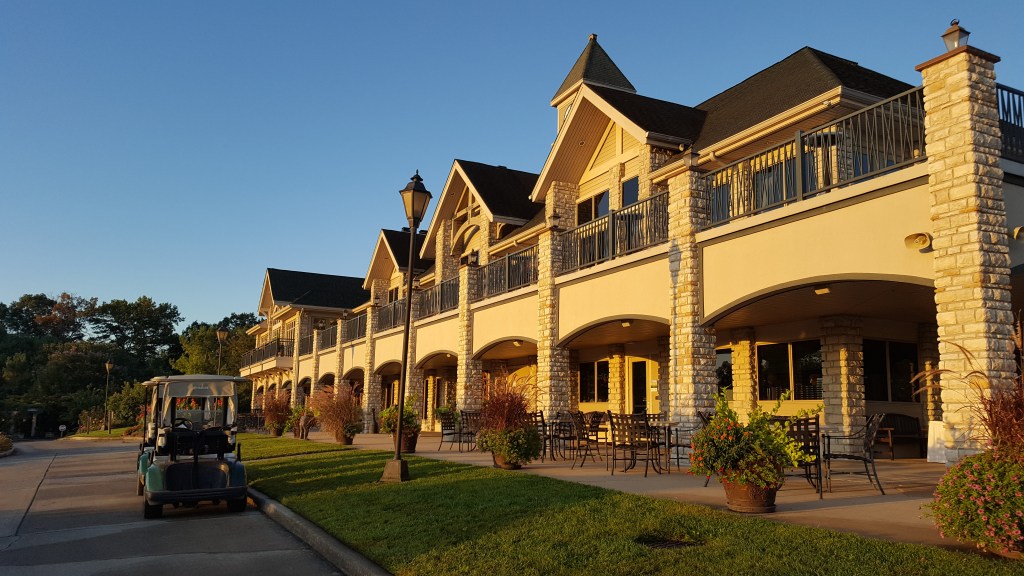
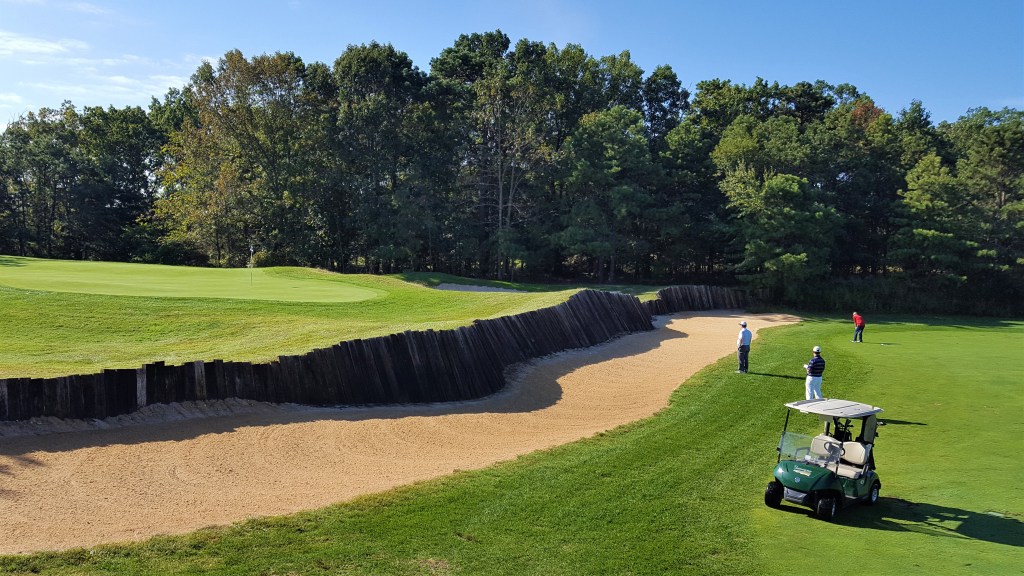
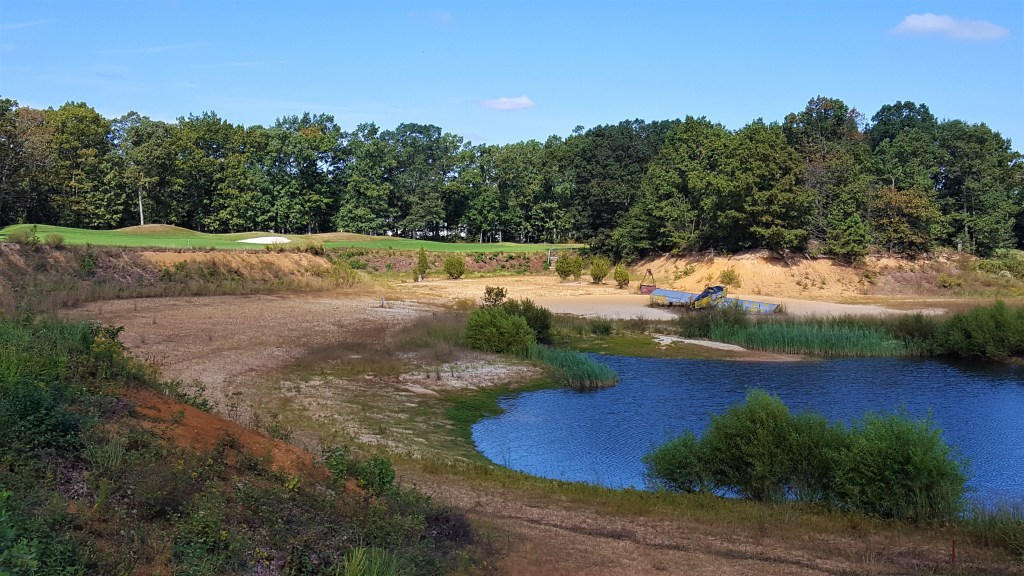
A Trip Back to Cape May County

Date: 6/27/2021

Time: 4:35 am

My alarm goes off. Not wanting to make a long day even longer – especially in the early morning hours – I had set the alarm to give me only 15 minutes to start my travels. I quickly wash up, brush my teeth, and change into the clothes I set out the night before. I head downstairs, grab some water and protein bars, and jump in the car. Success. By 4:50 am, I’m on the road.
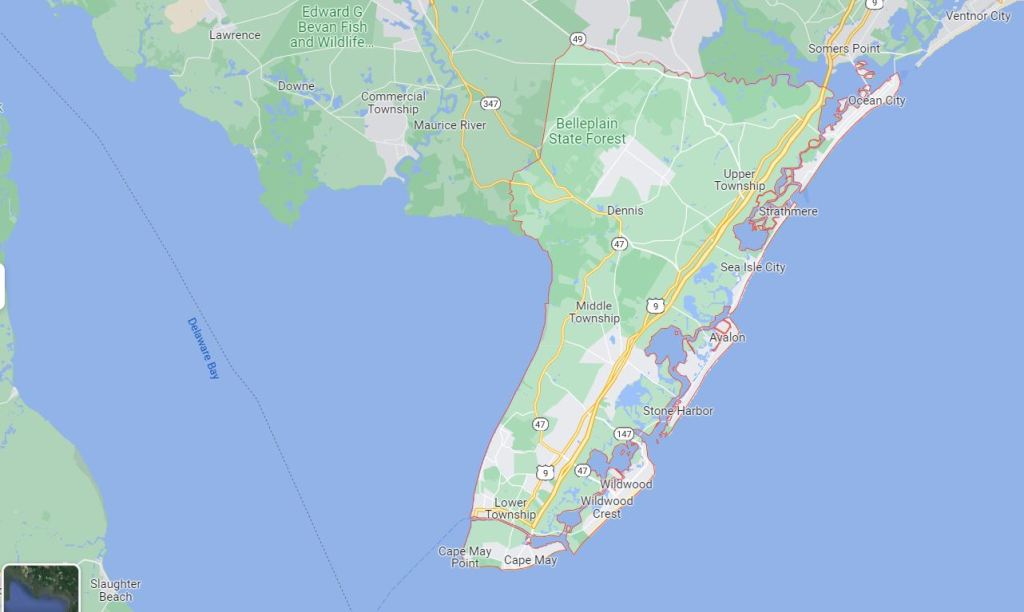
My destination for the day.

I’m headed back to Cape May County. For those unfamiliar with the geography of New Jersey, Cape May is the vestigial tail at the southernmost end of the state. It juts out into the Atlantic, effectively sheltering the Delaware Bay to its west. It’s a frequent tourist destination in the summer for both beachgoers and golfers alike.

Back in 2018, on the day after Christmas, I made my first trip there. With limited winter daylight, I was able to play both Cape May National (a course I consider a “must play”) and Avalon Golf Club. Remembering how long the drive was, I do not want to leave myself multiple trips back to the county as I look to close out my journey.

With six courses remaining, I’m looking to play three of them. That would allow me to make a third trip to complete the county in the future. Armed with plenty of daylight provided by a long summer day, it seems reasonable.

Time: 6:32 am
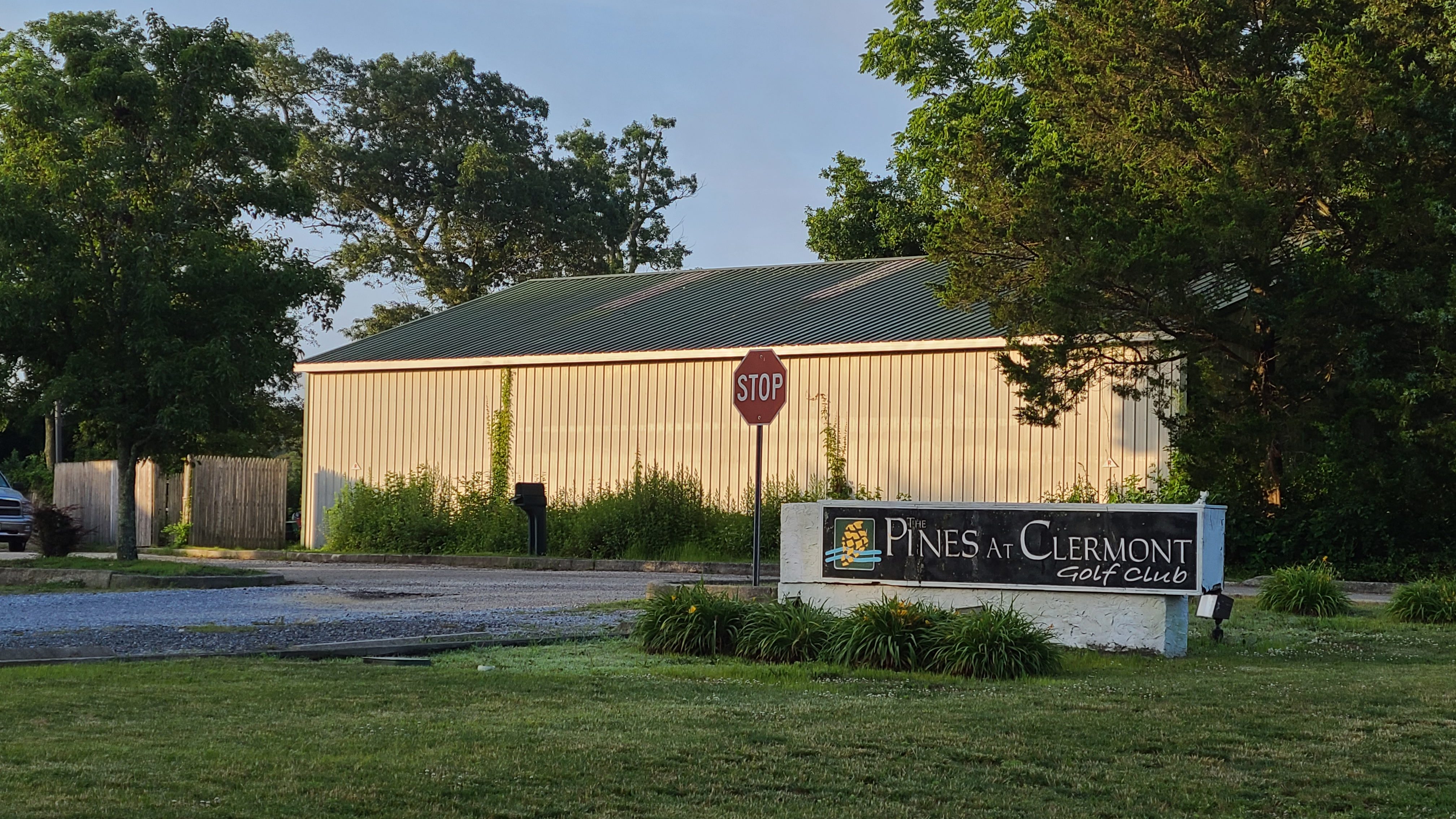
First stop of the day, Number 111.

I arrive at The Pines at Clermont. My tee time is 6:38 am, so I hurry to get my clubs out of the trunk and head to the pro shop. The good news is that no one else is really here. There is one group that has already gone out, but the woman behind the counter lets me knows that there is no rush beyond that. That puts me at ease.

I get my clubs onto the cart, take a quick photo of the green to my left – presumably the last of the nine holes on this course – and make the short drive to the first tee.
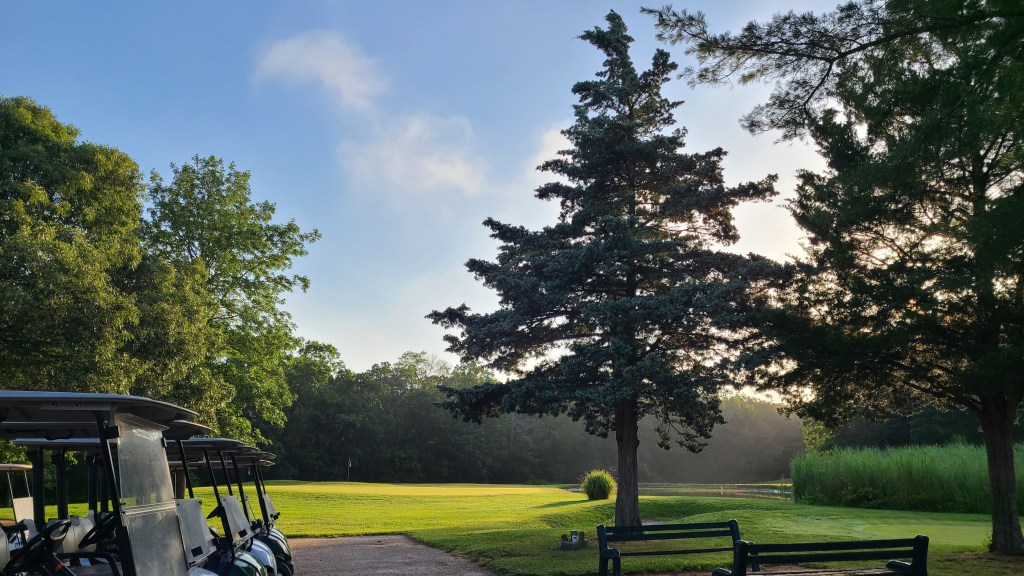
The sun still rising over the course, lighting up the green at 9.

Pines at Clermont is a short course, playing at 2,202 yards from the back tees for a par of 31. There are four par-4s and five par-3s, with water potentially coming into play on a number of holes, most dangerously to the left of 7 and short of 9 green.
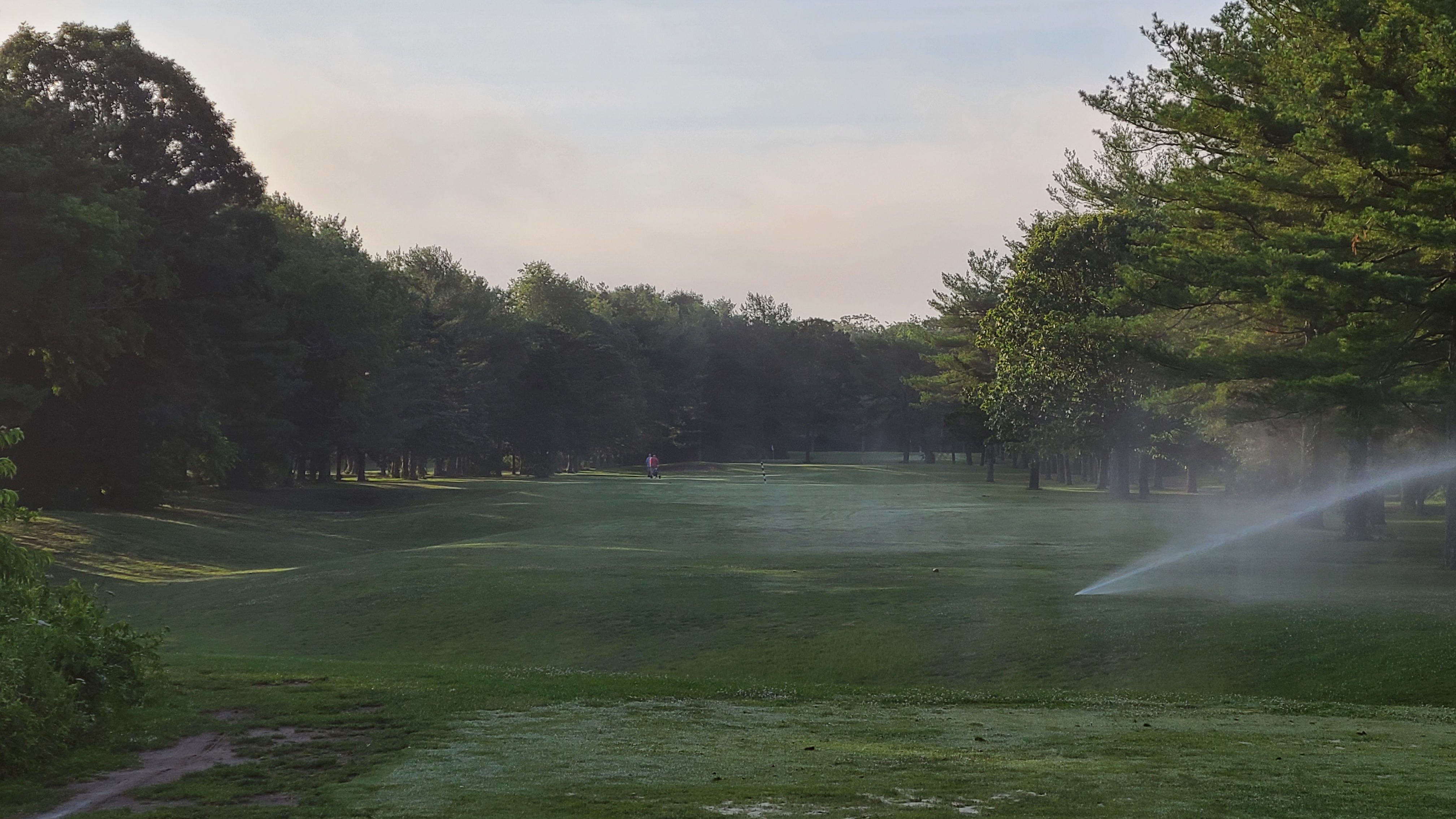
With the sprinklers still on, I get ready to follow the walkers.

I tee off on 1 – the first of the par-4s – and chase the group ahead of me. The par-3 2nd – only 127 yards from the back – continues in the same direction. After hitting the green and cleaning up a straightforward par, I head to the next tee. I notice that the group I was chasing is no longer in front of me.

I figured that perhaps since they were walking, and I was riding as a single, they decided to play the holes out of order to end my pursuit of them. Not giving it much thought, I tee off on the par-3 in front of me, hit the green, and collect another par. I keep it moving to the next tee.

When I get to what I think is the 4th hole, I realize the sign says it’s actually the 7th. The group wasn’t playing out of order – I am.
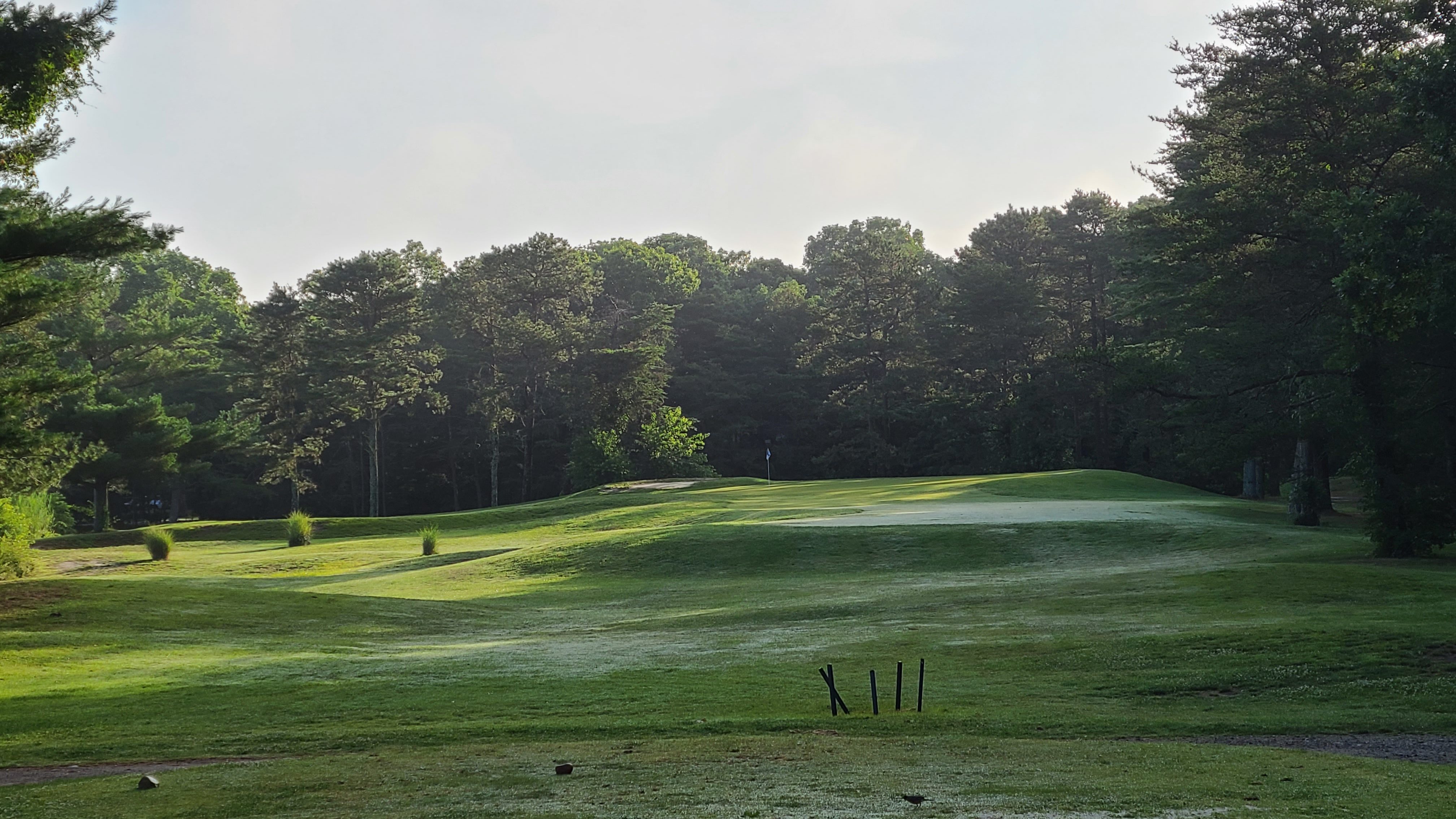
What I thought was the 3rd hole was actually the 6th.

I check the map and realize this presents an opportunity. After playing 7, I could actually play 5 and it would put me back by 3 tee. I get done at 7 and drive around the tee box at 8. I get on the path from 4 to 5, and thankfully, no one is at the tee. I tee off, hit another par-3 GIR, but only manage to three-putt for bogey. Nevertheless, no one is in front of me.
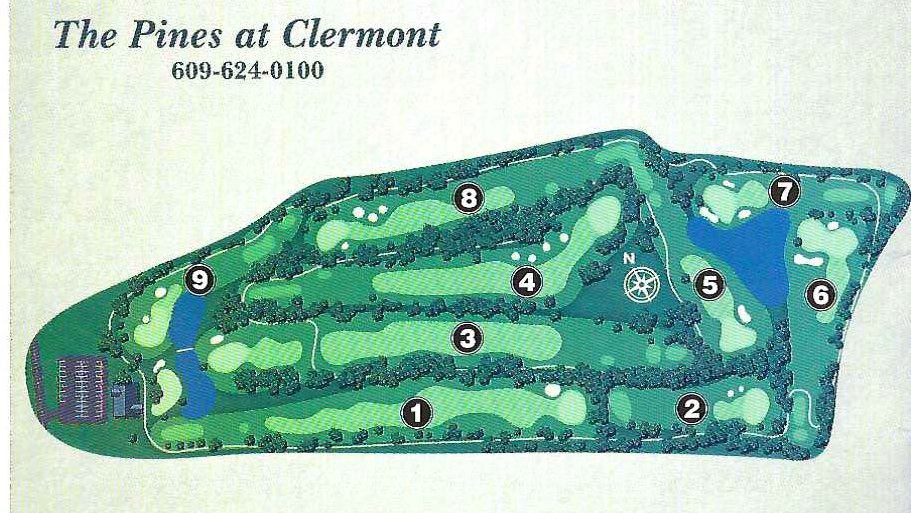
The routing at Pines at Clermont allowed me to play 1, 2, 6, 7, 5, 3, 4, 8, 9, skipping the group ahead of me.

Having played the three par-3s at the far end of the course, I finish out the par-4 3rd, 4th, and 8th and after a short wait on some sprinklers at the tee 9, I’m able to complete the round in just over an hour.
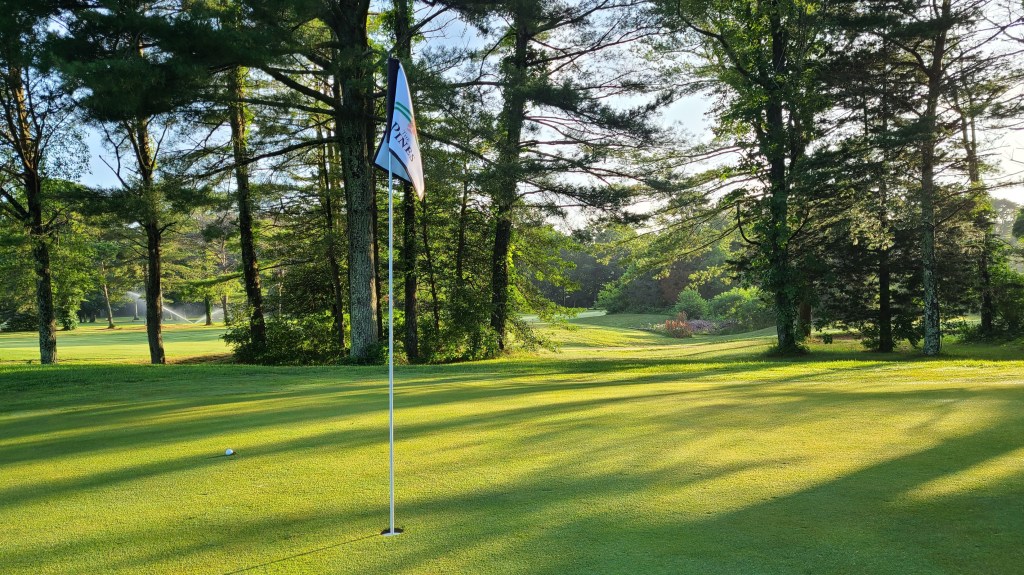
A look from 1 green, across the fairway of the actual 3rd hole.

I get back to my car and realize by completing the round quickly, I’ve just bought myself some more time for the day. While the Pines at Clermont was my only booked tee time, it was only 7:53 am and there was likely another 12 hours of daylight ahead of me. I push on.

Time: 8:25 am
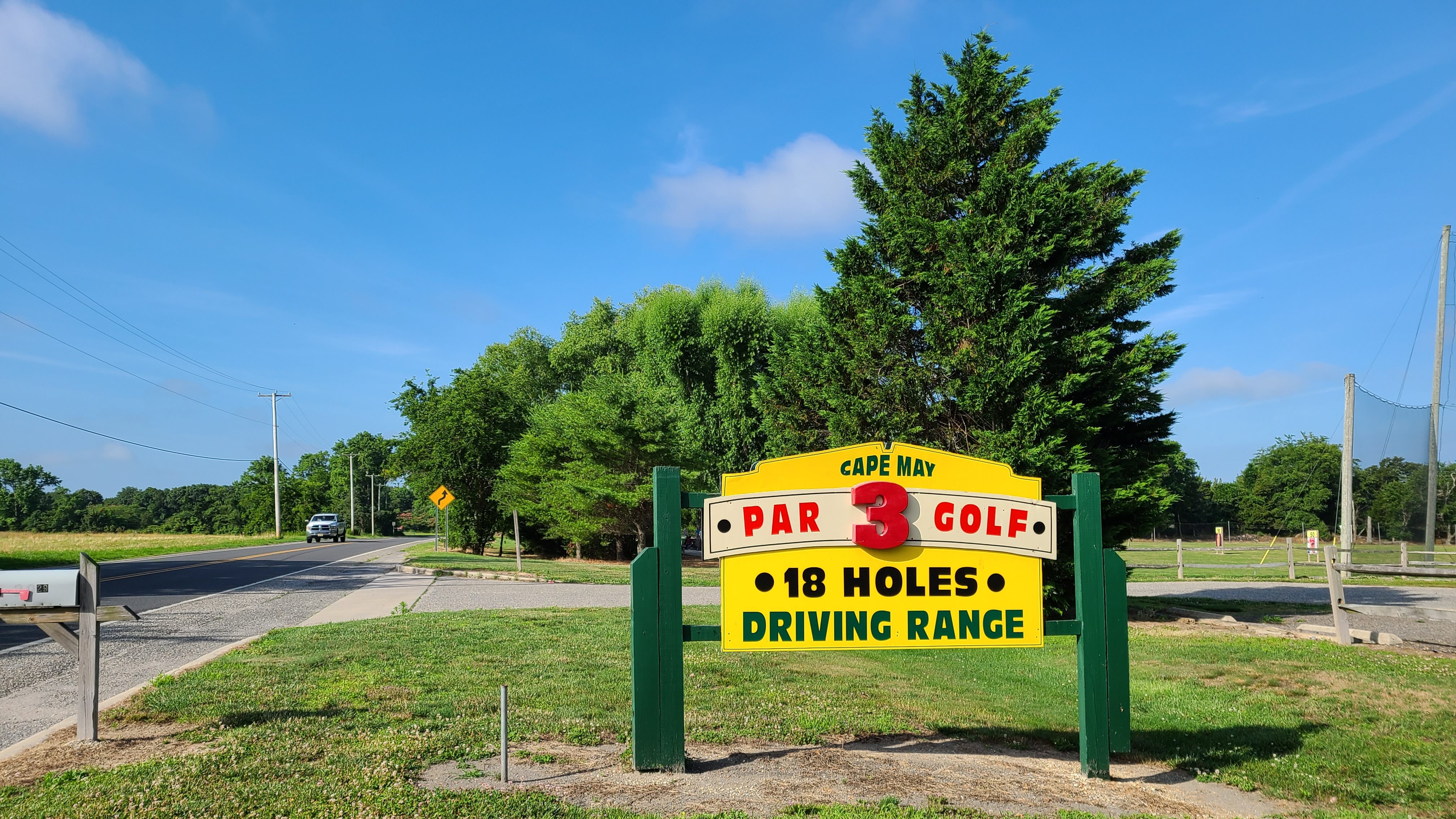
Number 112.

I pull into the parking lot at the Cape May Par 3, throw my clubs onto my pushcart, and head inside. After paying up, I head around back to the first tee where the starter tells me that I can skip a group of juniors and join the threesome that’s already on the green at 2.

I yell over to them to let them know that I was told I could join them. I’m not sure how much they heard, but they got the gist from the fact that I was getting their attention from the tee box, and they made just enough room for me to hit my shot while still remaining perilously in my dispersion circle. Thankfully, I hit the green and the ball just rolled onto the back fringe.

I walk up, thank them for letting me join them, and we make our introductions. They are Tom, Jimbo, and Stanley.
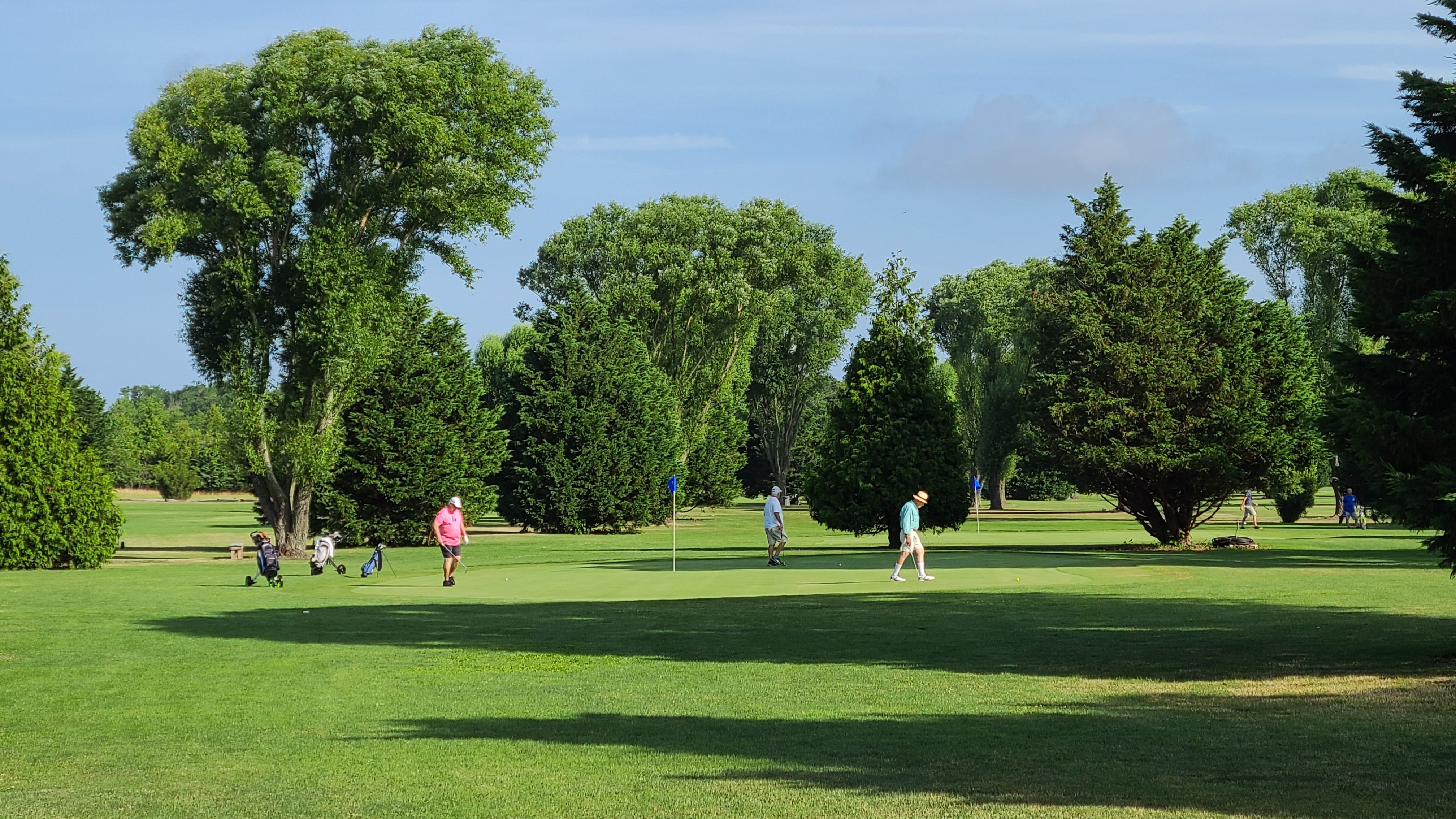
From left to right, that’s Jimbo, Tom, and Stanley on 2 green.

Not wanting to hold the group up, I make my way to my ball and look to get up and down for par. It’s about 20 feet from the hole. I hit the putt, and it drops. Birdie start.

We all head over to the 3rd tee and get chatting. I let them know about my journey as well as my plan to play a few courses in the area on the day. We hit our tee shots on this 80-yard hole, and I stick mine to 4 feet. Everyone putts out, and I hole mine as well. Two holes in, two under.

The group takes an interest in my quest and we talk about golf in the area. The guys are regulars here at the Cape May Par 3. As we continue from hole to hole, I note that the greens are extremely well kept for a course of this nature, and the group takes some local pride in that fact. We discuss some of the subtle breaks from green to green, as well as some of the details about the course.
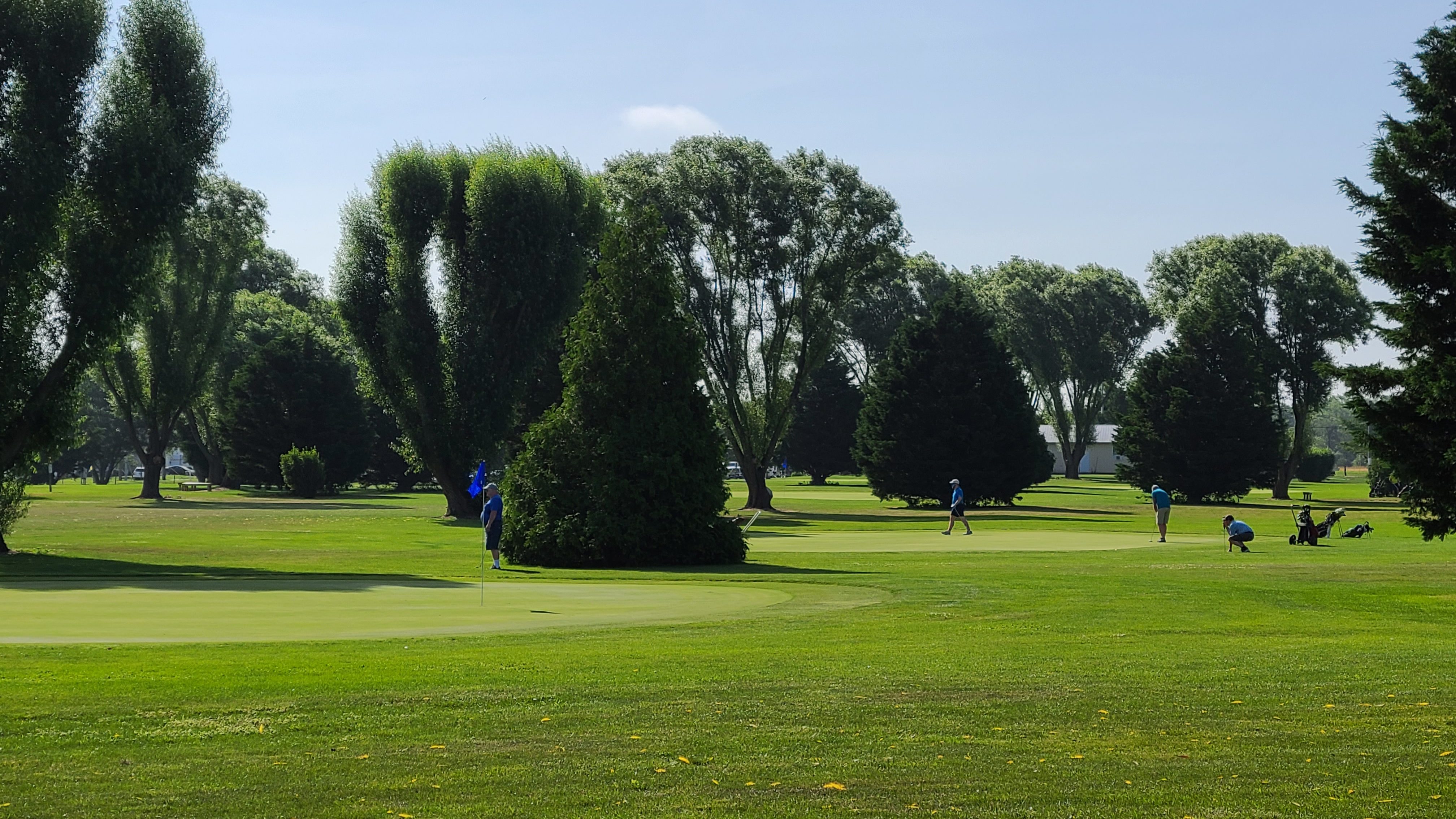
The Cape May Par 3 has a number of trees, but it’s generally an open field. Though the greens may look like flat circles, they are maintained well enough where there are breaks and reads to learn and take into account.

Tom and Jimbo let me know that the course used to be a vast area of asparagus field to one side, and a strawberry field in another area. It’s amazing to listen to the group describe the history of the area. As we continue our chat and close out the front nine, I break my streak of GIRs on both 8 and 9. While I got up and down on 9, I could only manage to two-putt on 8.

We make the turn and I realize that there is no one at the 1st. Given that the morning was aging, and not wanting to risk a long wait at the end of the round, I run over to make up my missing hole. I stick the tee shot and make an 8-footer. Jimbo sees this play out, and when I get back, he asks, “Another birdie?” I confirm that it was. I’m back to -2, with the card looking like I started birdie-birdie-birdie. At this point, I think I might frame it.

We continue on the back nine and I ask the group how I should map out the rest of my day. The guys let me know that traffic going out to Ocean City Municipal may be difficult, especially since it’s a Sunday. I make note of that and try to finish out a very nervy closing half to the round. My lightning start is now completely in my head.

Nerves notwithstanding, my excellent walk with Tom, Jimbo, and Stanley continues. I learn that Stanley was an admiral in the US Navy – “of a whole FLEET” as Jimbo put it – and that his service travels took him around the world. We also talk about how Arnold Palmer served in the Coast Guard and was stationed right here in the Cape May area.

After a lengthy lag putt on 18, I finish the back nine in even par. I hit every green except for the one on 14, but was I able to scramble for my 3 there. I shake hands with the guys and thank them for a truly memorable round. While the course is only 1,862 yards, I walk back to my car feeling good about my two-under 52. More than that though, I take a moment to appreciate the experience I just had with an excellent group of local golfers, something I’ve come to treasure on the journey.

It’s just after 11:00 am. At this point, I’m certain I’m playing four courses, not just three. It’s just a question of which two to play. I take Tom and Jimbo’s advice into account and get back on the road.

Time: 11:39 am
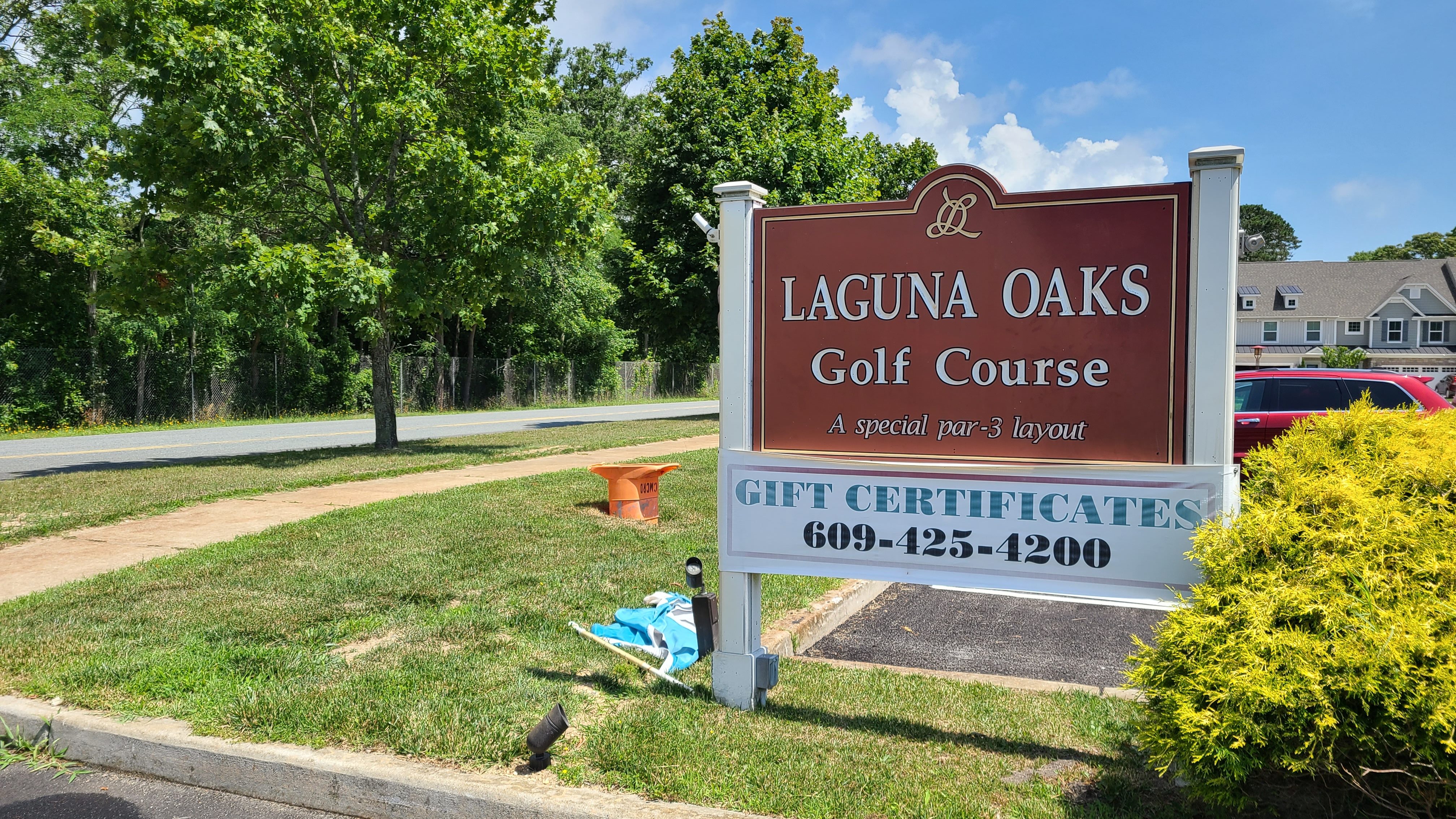
Stop number 3 on the day, and Number 113 on the journey.

After a quick stop for a bite to eat, I arrive at Laguna Oaks before noon. The sign says it’s “a special par-3 layout”.

What makes it special?

Designed by Fred Langford, the course originally had 10 holes. It’s also the only course I’ve run into so far that has an Honor Box, allowing you to drop cash when no one’s around in exchange for an off-hours round of golf.

When I pay up, the gentleman in the pro shop lets me know that a couple holes have closed, but that work is being done to at least bring the routing back to nine holes.
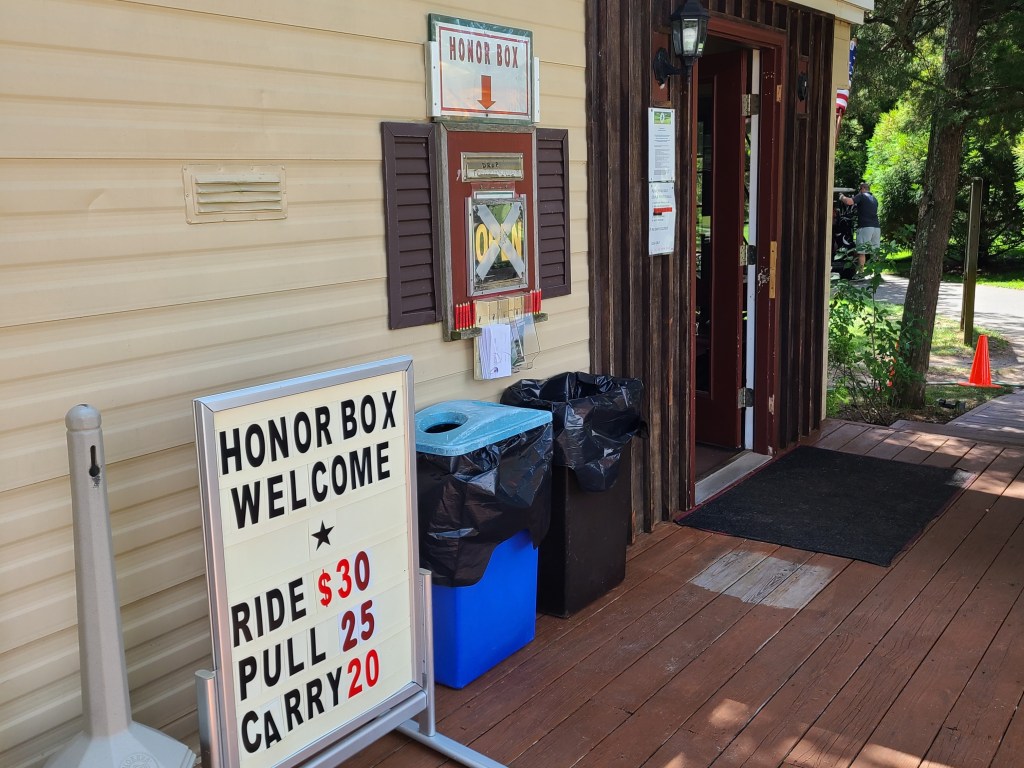
The pro shop at Laguna Oaks, with the honor box prominently displayed.

When I look at the scorecard, I see that the holes are numbered from 10 to 18 (with “11A” and 12 being the ones that are closed). I ask about it and the gentleman explains that there were plans at one point to make the course an 18-hole layout with a number of homes also being built on the property. Alas, some hard times hit, and the plans were never fulfilled.

I move to the 1st tee of this now 8-hole par-3 (hole number 10) with the wind picking up. While there are a few groups out on the course, I walk the entire round in solitude. The holes that remain in play at Laguna Oaks play anywhere from 120 to 170 yards from the back tees. Longer hitters could probably get around the course with just a few clubs. Nevertheless, I decide to push my entire bag around on my cart.

Here are pictures of a few of the holes, along with their names – as designated on the scorecard – another detail that makes this place special.
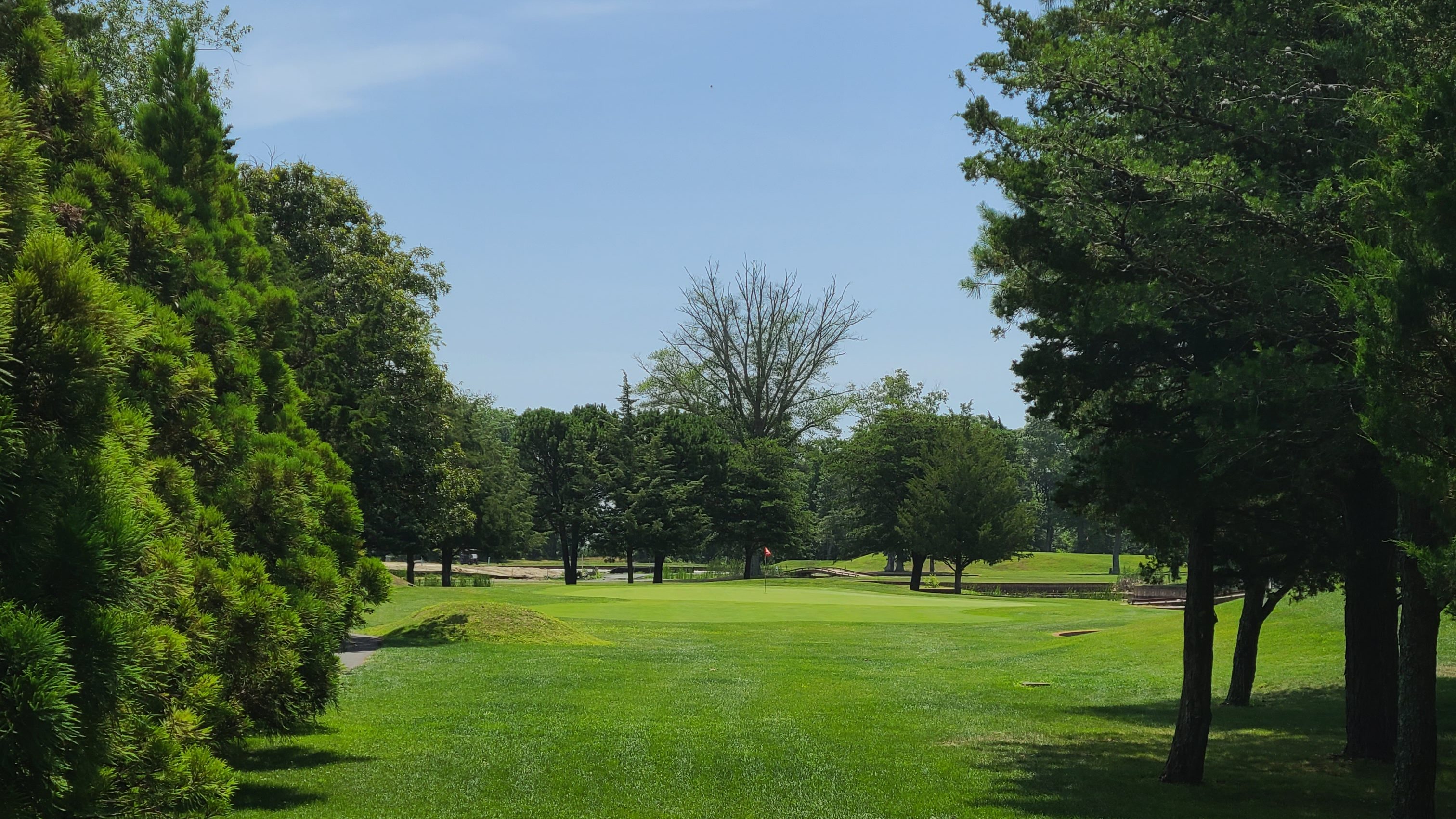
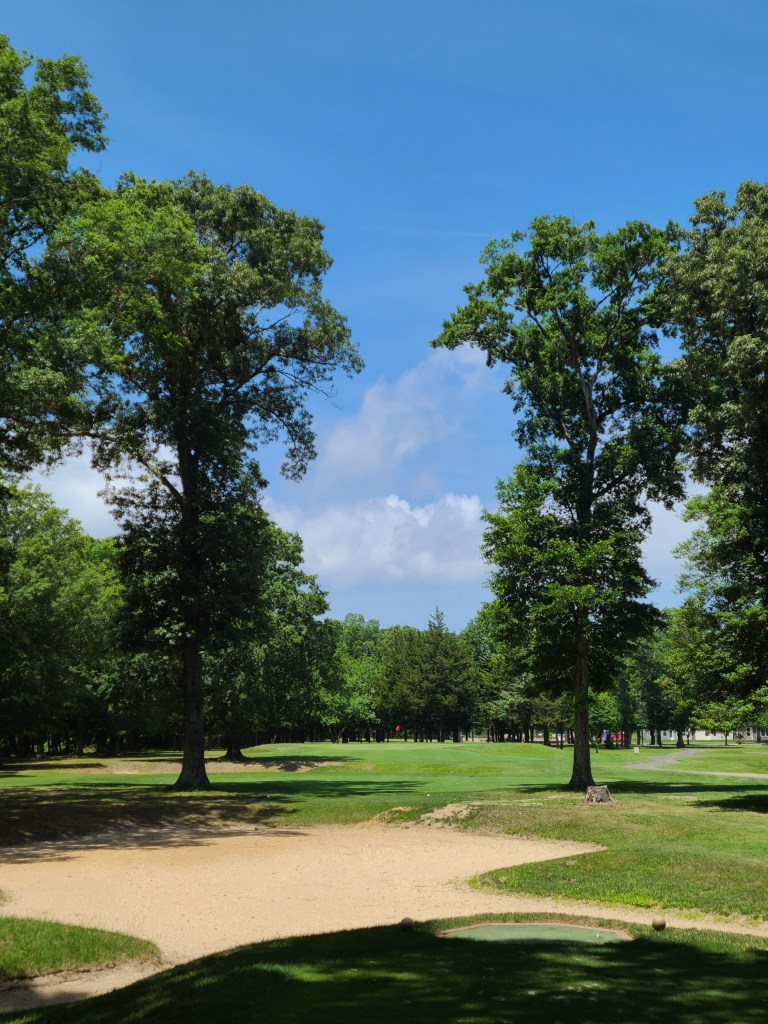
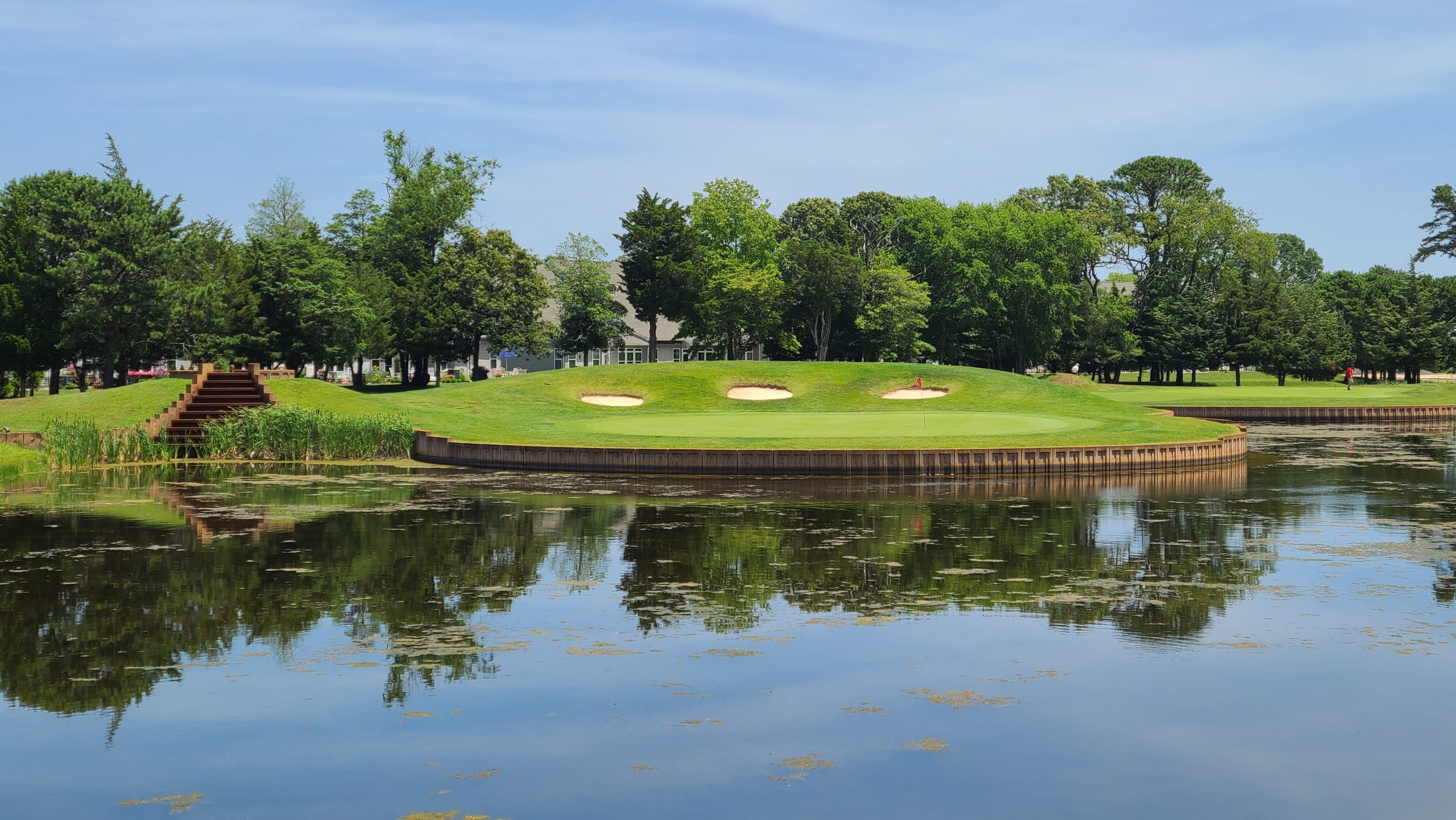
10 – “Off Shore Dunes”
15 – “Sahara Field Goal”
16 – “Island Green”
18 – “Peninsula Waterfall”

I wrap up “Peninsula Waterfall” – the last of the eight holes in operation – and walk back to the parking lot. It’s 1:00 pm. There are only three courses remaining for me to play in the county. Thinking of what Jimbo and Tom said about the traffic to and from Ocean City Municipal, I wonder whether to save that for another day. I get in my car and use my phone to start navigating to the three options. I make a decision.

Time: 1:20 pm

I arrive at my next destination. I take a moment to record my thoughts.

I arrive at Heritage Links. I decided that if I was going to deal with New Jersey shore traffic returning north on a Sunday, I may as well save Ocean City municipal for last. After navigating to each of the remaining three courses, I saw that Heritage Links was a 15-mile ride north back up the Parkway. Whether I decide to call it a day after this fourth round and head back home or play Ocean City afterwards – which I fully anticipate doing – it would work.

Number 114, Heritage Links Golf Club… apparently also known as Heritage Golf Links.

After walking at the Cape May Par 3 and Laguna Oaks, I decide to take a cart again. It’s been a few hours in the sun, and since it’s only 1:30 pm and I’m looking to play again after this round, I figure I can use a break for a couple hours.

As I make my way onto the course, I’m glad I chose to take a cart. I see that in contrast to the three very flat layouts I’ve played so far today, Heritage Links has some decent elevation change throughout.

The gentle climb uphill starts at the 3rd hole, a par-3.

While there aren’t many trees running through the holes in the center of the course, there are other hazards to avoid, like bunkers lined with ornamental grasses, some holes with water, and a few native areas. The greens are beautifully shaped and contoured, but they roll amicably for the most part, stopping short of having any real teeth.
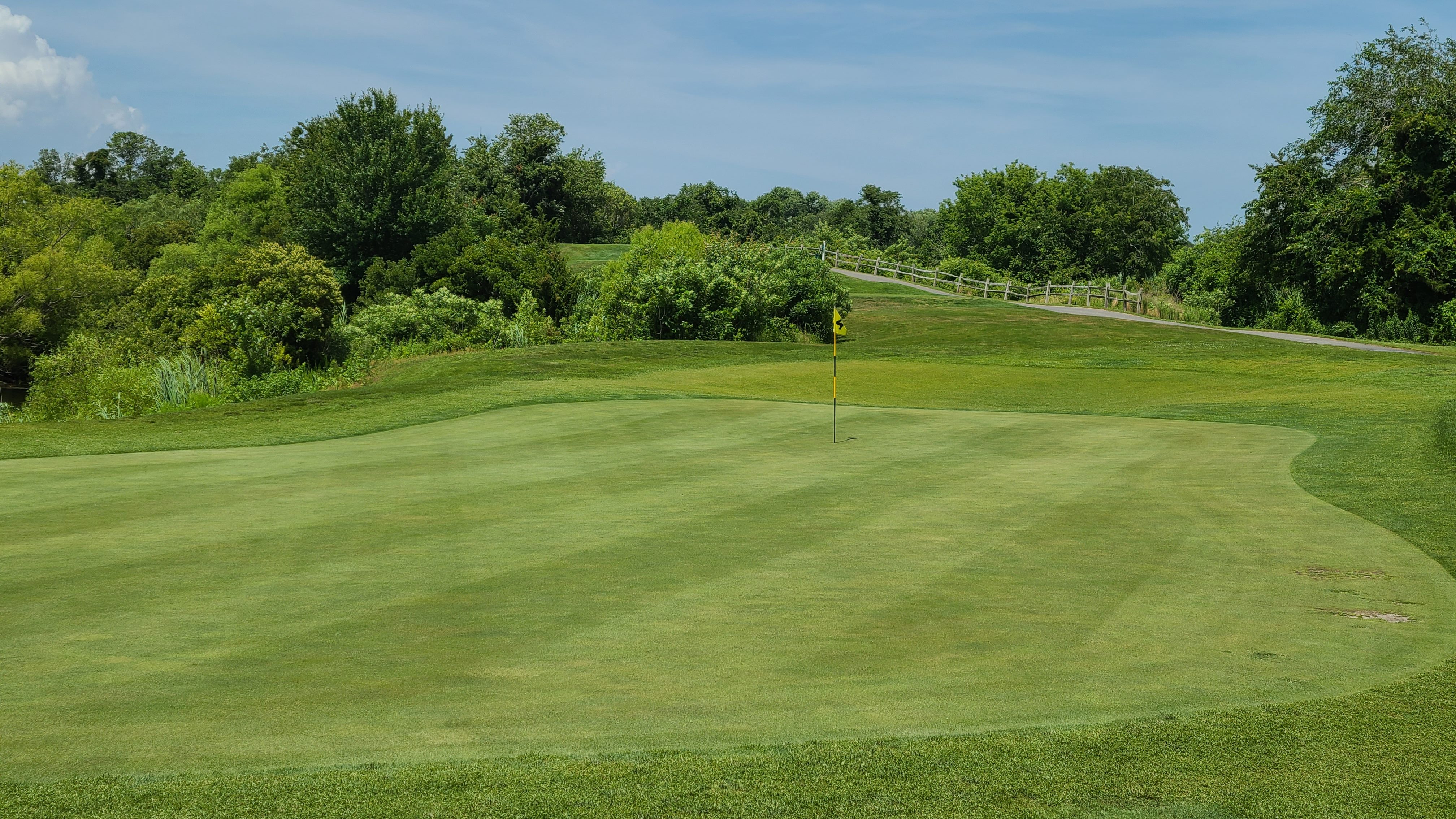
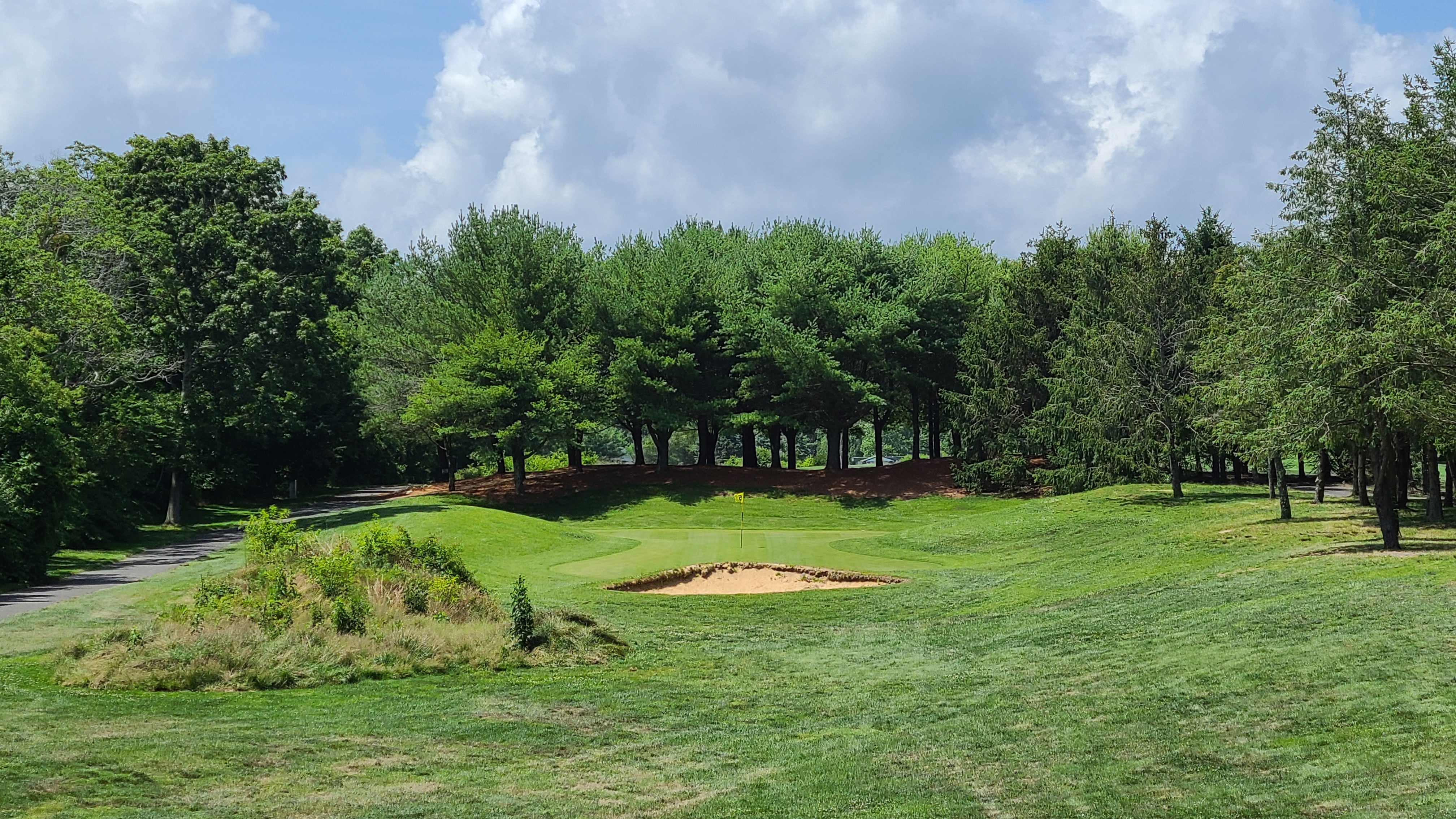
Back downhill on 4.
The green at 5, possibly my favorite on the course. I can see them never changing the hole location.

After squandering a driven green at the par-4 6th, and making bogey on the par-3 7th, I finish up with straightforward pars at 8 and 9. I feel good. Though they’re short courses – Heritage Links being a 1,900-yard par 30 – I feel incredibly accomplished knocking out four of the six I had left in Cape May County.

But it’s only 3:10 pm. I make the call to continue.

Time: 3:30 pm

After a shirt change, a protein bar, and a short drive that was thankfully void of the typical traffic Tom and Jimbo told me about, I arrive at Ocean City Golf Course. I make my quick stop in the pro shop to pay, and I head out to the first tee. I decide to walk again with my pushcart.
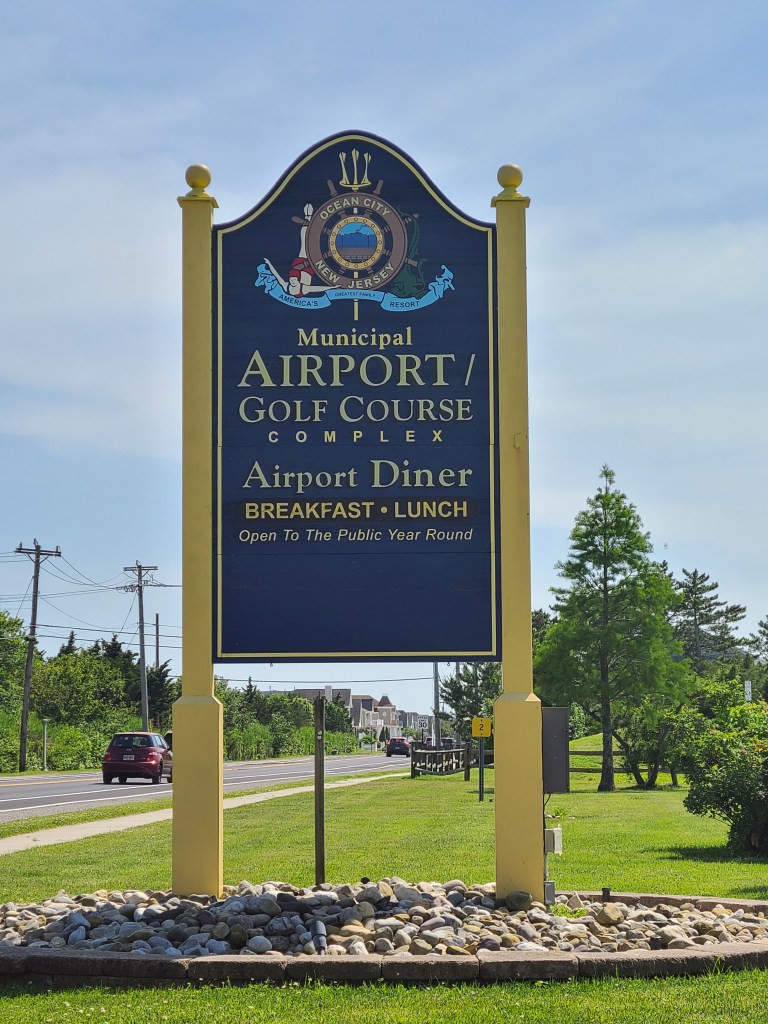
Number 115. It’s an airport AND a golf course. What could go wrong?

I make my way onto the first of the 12 holes. It’s the shortest of 11 par-3s at only 60 yards and sets the tone for most of them. The green is small and rolls very slowly, but this place isn’t about the conditions. It’s different. Ocean City is a beach town, and it’s clear that this a beach town golf course. The vibe is super casual. I see a couple people in t-shirts and sandals.
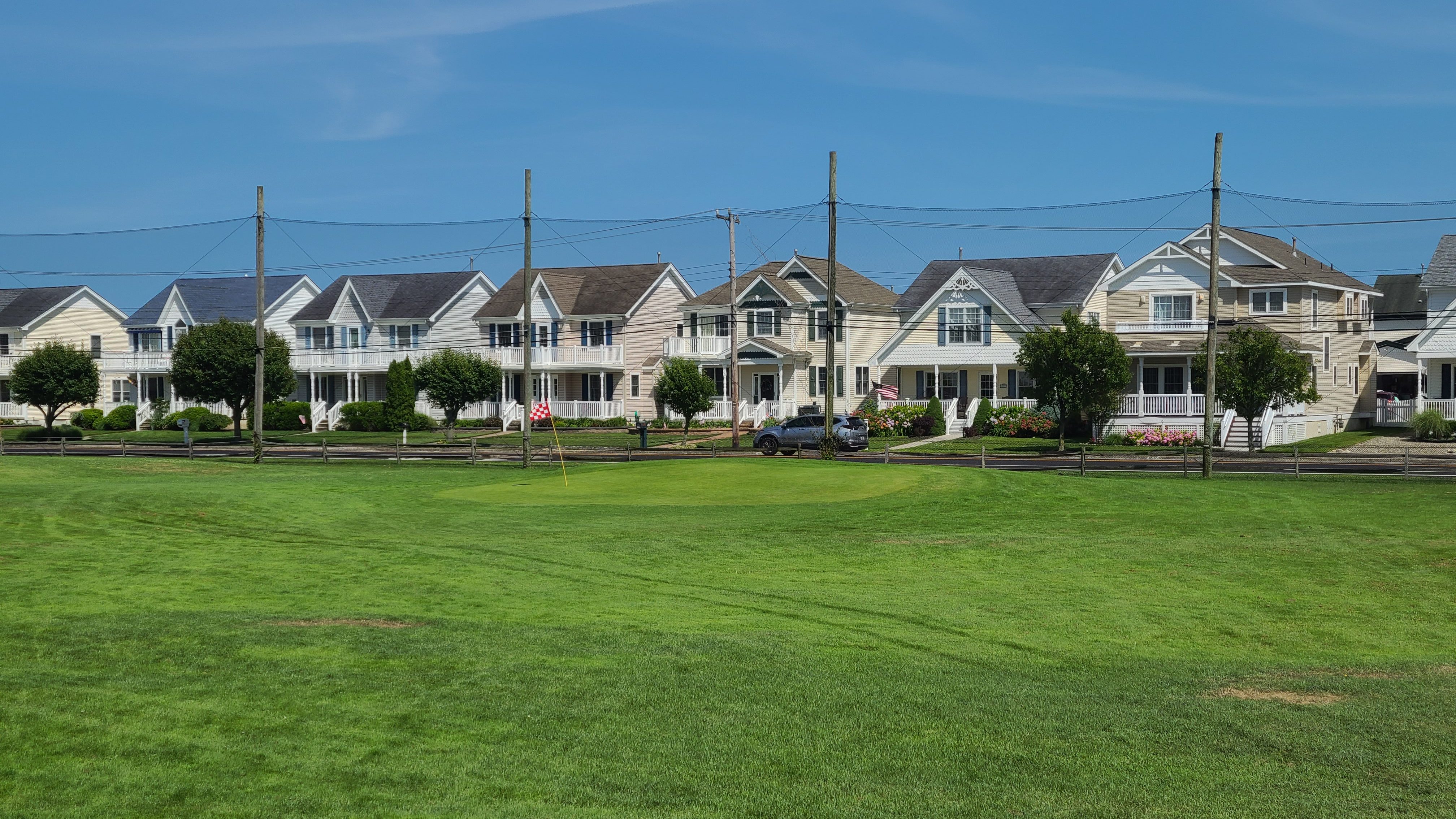
The wind bends the flagstick at the very short 1st hole.

I make my way around the “front six” in +2, with bogeys on 2 and 6. I notice that while there were people here when I started, I essentially have the course to myself from here on out.

I make the turn and continue pushing on through the “back six”. Fatigue is starting to set in. Between Cape May Par 3, Laguna Oaks, and the holes at Ocean City so far, I’ve only walked a couple miles and change, and I’ve only taken about 120 swings. But, I’m feeling it. My walking is now labored. My swing is becoming stiff.

After making a routine par at 7, I put my tee shot on 8 into the adjacent water hazard. While the courses have all been casual/executive style with limited challenges, that’s my first penalty of the day. I take a moment to breathe and recover, and I press on. I hit my third onto the green and putt twice to hole out. That’s also my first double bogey of the day.

I close out as best I can. I make bogeys the remainder of the way, with the exception of the par-4 10th.
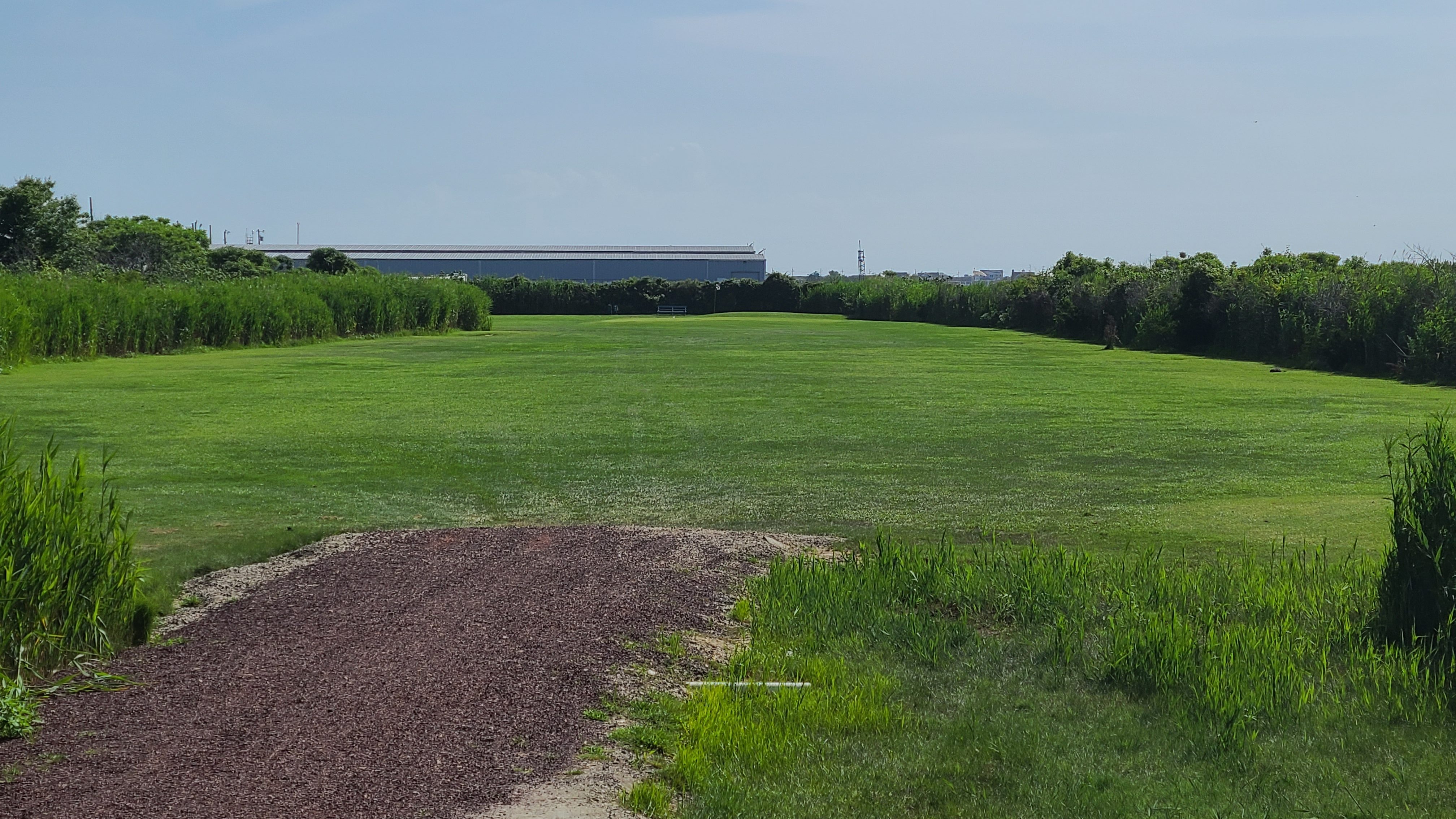
Straightaway on the 10th. If not for the wind and the 9.5 hours of golf I’ve played up to this point, I would’ve taken driver or 3-wood on this 235-yard hole. As it was, I hit 6-iron, GW.

I get back to my car at around 4:45 pm. I’m exhausted. But there is probably another four hours of daylight, and only one course left for me to complete in Cape May County. The risk I run is either a) getting to the course with no available tee times, or b) the course only having a tee time that is too late to complete all 18 holes before sunset.

I would hate to start a round, not complete it, and have to drive back down on another day. Then again, if I head home now, I’m committing to a future trip back to Cape May County anyway.

I decide to go and take the chance.

Time: 5:12 pm
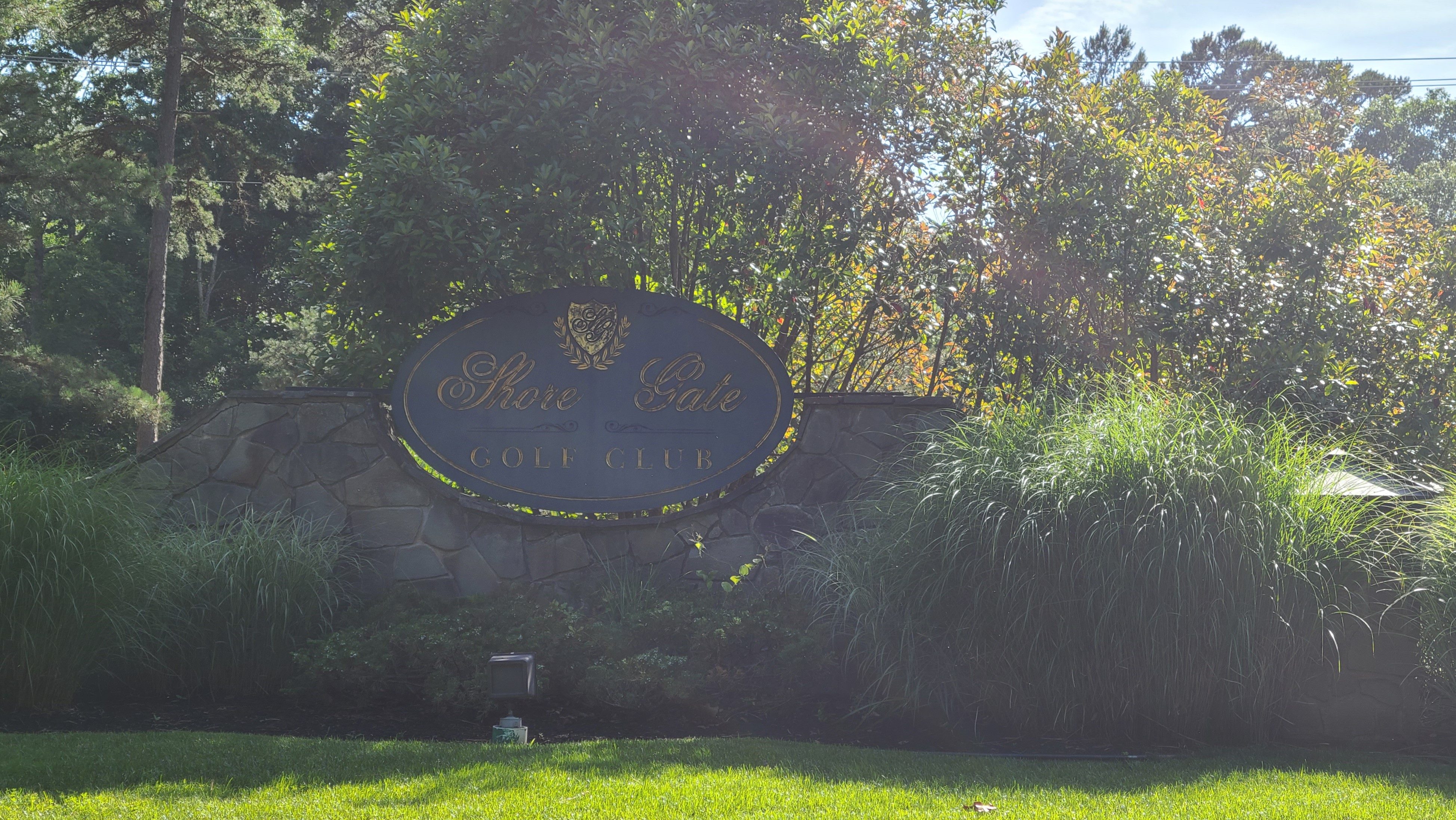
Though it’s a bit over-exposed by the sun in this shot, this is easily the best-looking entrance sign I’ve seen all day.

After a stop for a grab-and-go dinner from Wawa – an East Coast and New Jersey staple, for the uninitiated – I head back south, further into the county, and make it to Shore Gate. There are still just over three hours of daylight left and if there’s no traffic on the course, I’m confident I can finish. I head inside to get the verdict.

They got me out! The time of day dictated that I had to walk – since carts had to be in by 6:00 – but they got me out. The gentleman behind the counter let me know that I may run into a couple groups. My hope is that they’ll let me play through as a single.
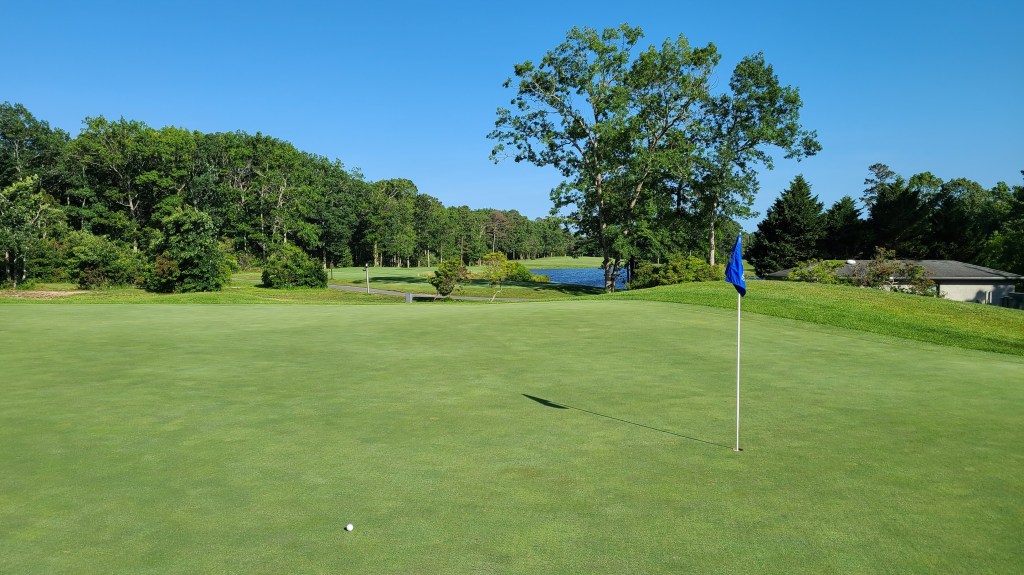
Standing on the green at 1, the overall quality of Shore Gate is immediately evident.

Sure enough, I run into a group on the 2nd hole. As they stand around the green, I wait over my ball, just left of the fairway. They wave me up. Ten hours of golf, multiple hours in the sun, and I have to hit an approach shot into a green with an audience. Not my favorite scenario, but I realize it means I get to play through and beat the sunset.

I hit the green. I put my PW back into the bag and head up as fast as I can, which is really just a brisk walk given my current state. After a couple “nice shot” remarks, I say “thank you”, try to get a quick read on my putt, and then address the ball. I see there’s a right-to-left break, and I commit to the line. I take the putter back and through. The ball drops. Birdie with an audience. Another sweet memory on this incredible day.

I jog with the pushcart to the 3rd tee and set up to hit my tee shot as quickly as I can, hoping to put some space between me and the group I just played through. I promptly snap-hook my drive out of bounds. Snap-hook with an audience. Not sweet, but another memory.

Too fatigued to truly be phased, I continue on and discover that Shore Gate is an absolute gem. My slightly-worse-than-average play does not distract from the course’s beauty. Hole after hole is littered with outstanding design. Incredible bunkering, some waste areas, and the pines of southern New Jersey all frame this perfectly manicured layout. At this point, I’m almost focused more on where I can get good pictures to capture the landscape than how I’m playing.
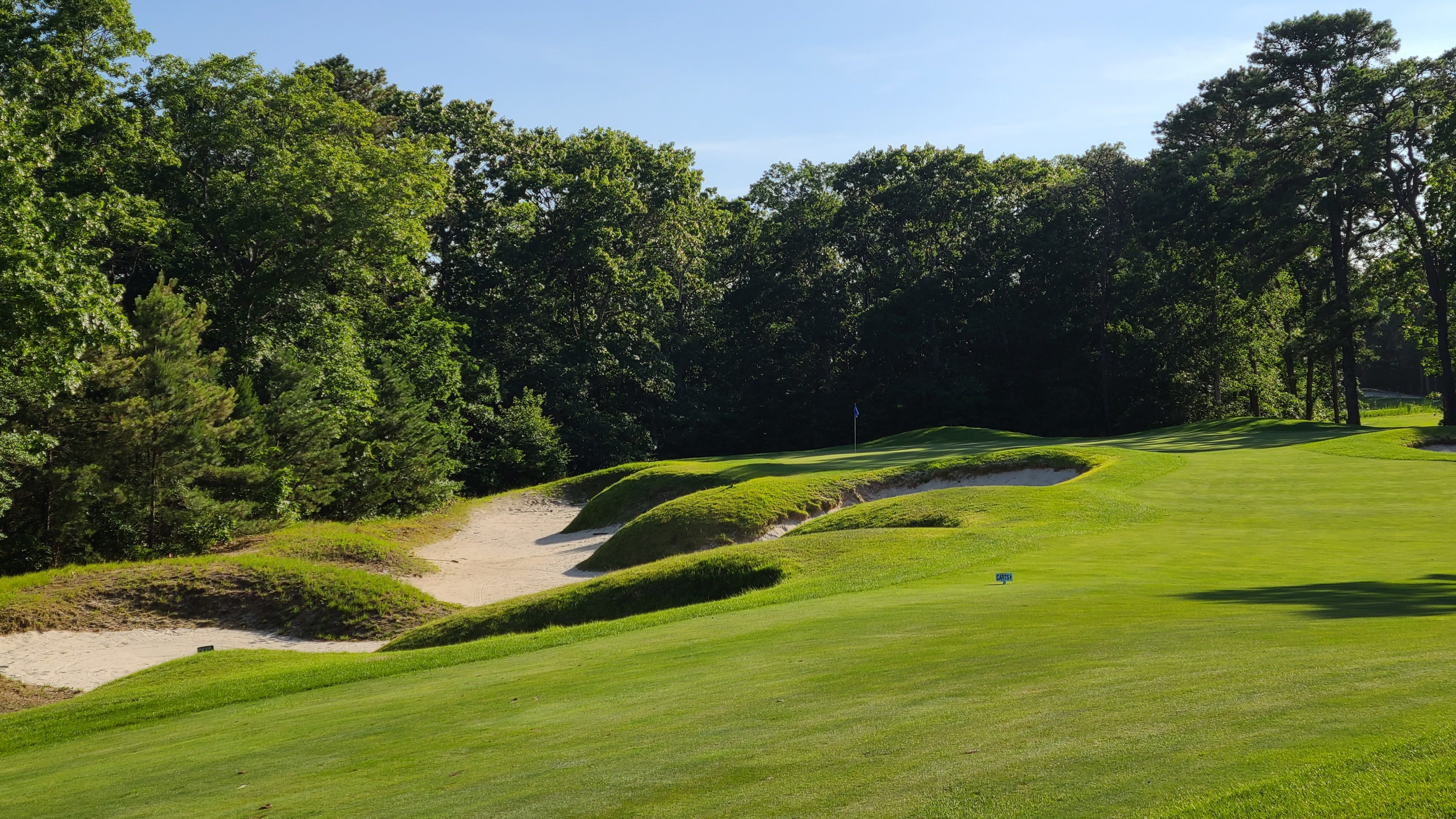
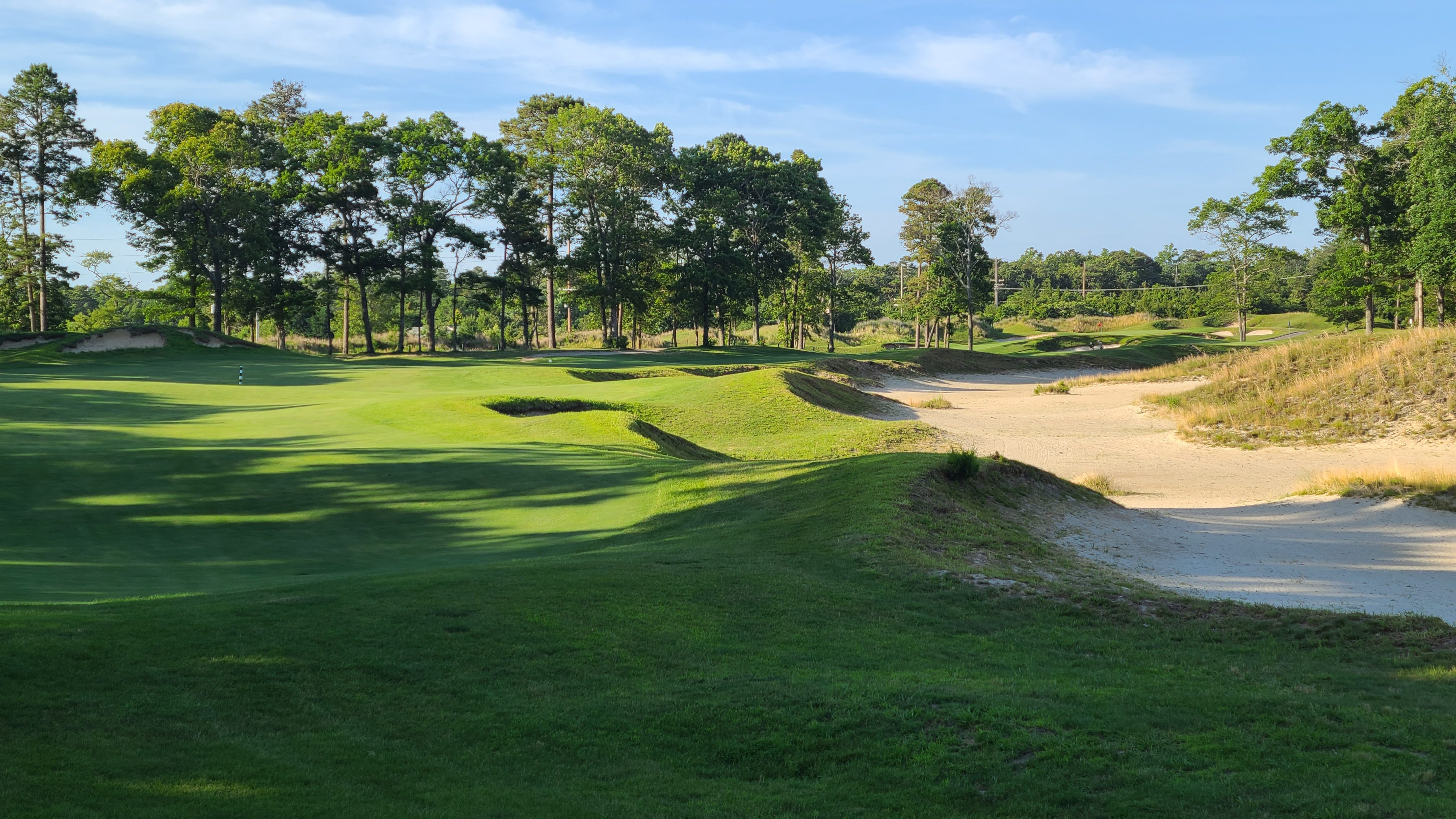
The approach at 4.
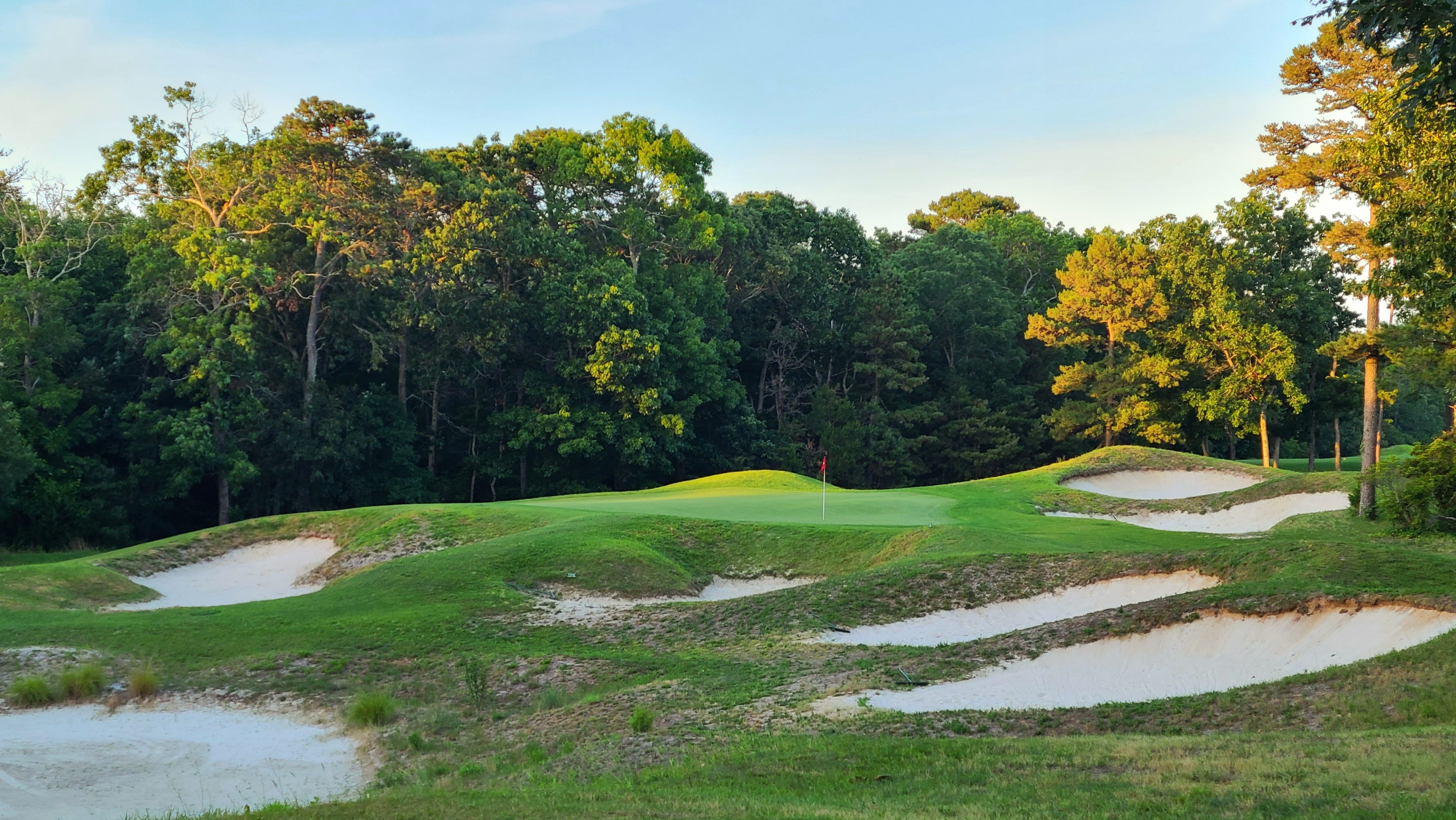
7 is just gorgeous. Dog-leg right around a waste area. The green and pin are visible just over the furry dunes.

I make the turn at 7:00 pm. I realize that the light is fading, and my job isn’t done yet. Nine holes in an hour-and-a-half isn’t out of the question, but I can’t stop for long for any reason. My driver – the club I hadn’t used all day before this round – continues to be wayward. I tell myself that the score is irrelevant. I need to enjoy the course, keep the ball in front of me, and finish before it’s dark.
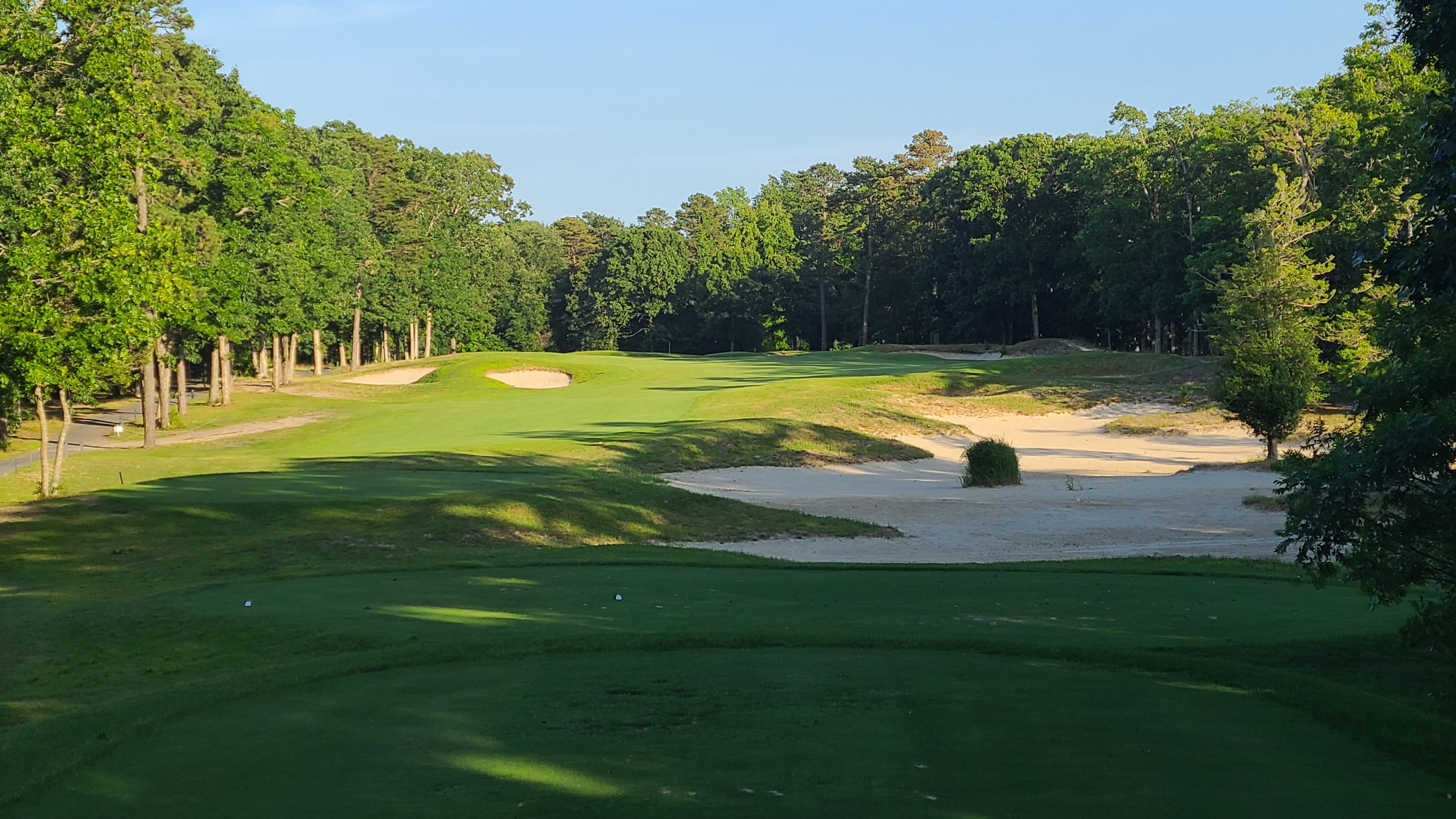
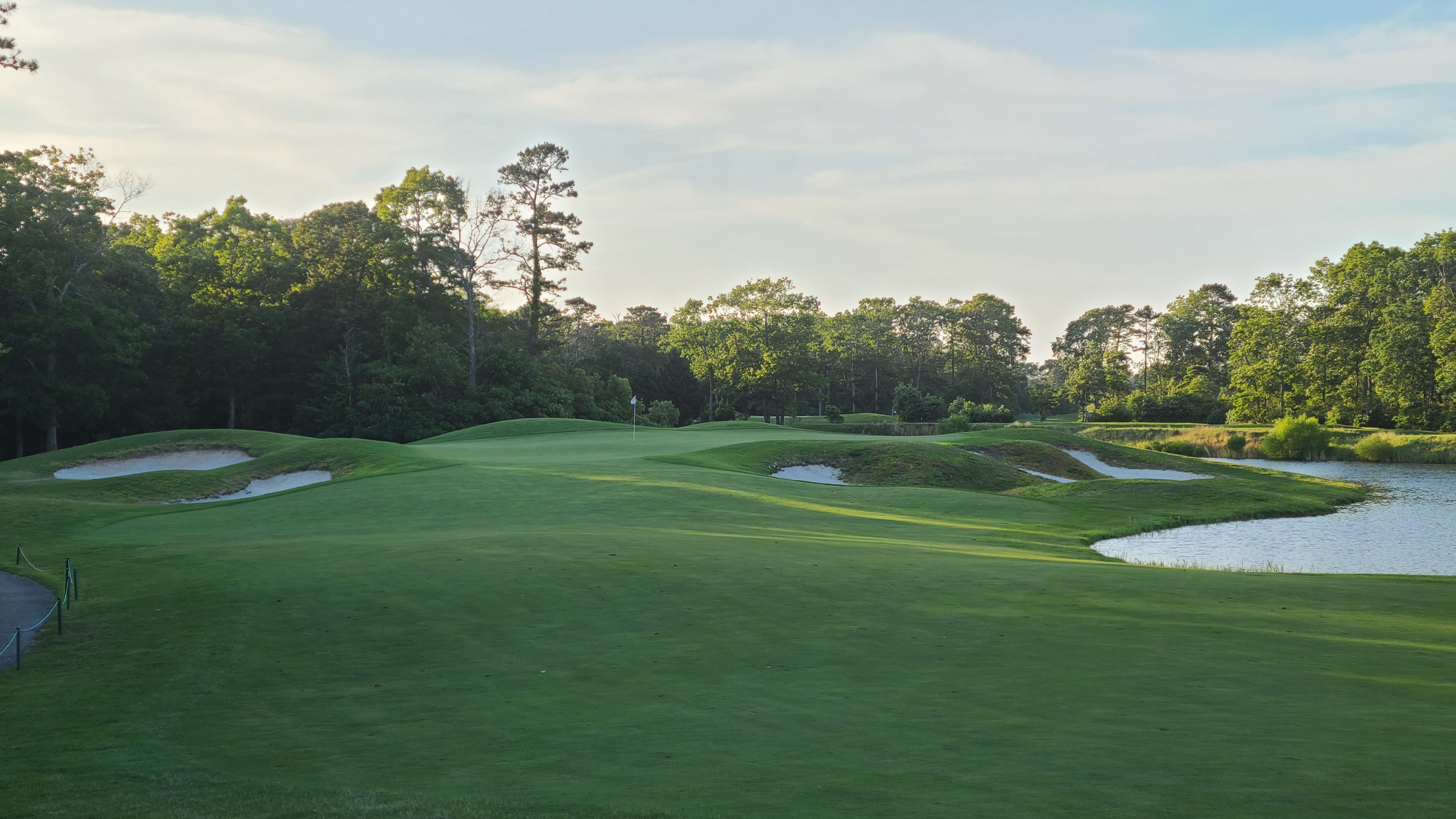
10th hole. I can’t stop, and neither can the beauty of Shore Gate.
Stunning surround at the protected green at 12.

Time: 7:43 pm

I get to 13, and I’m teeing off directly into the setting sun. Enough time has elapsed in this round where I would have finished any of the previous five courses I’ve played today. But Shore Gate isn’t an executive course. It’s a par-72 that plays over 7,200 yards from the back tees. I’m playing from the White tees, just shy of 6,400. It’s honestly my limit and I’m regretting not playing the 5,940-yard Gold tees.

However, I’ve only got about 1.25 miles left to walk over the remaining six holes. The end is (almost) in sight.
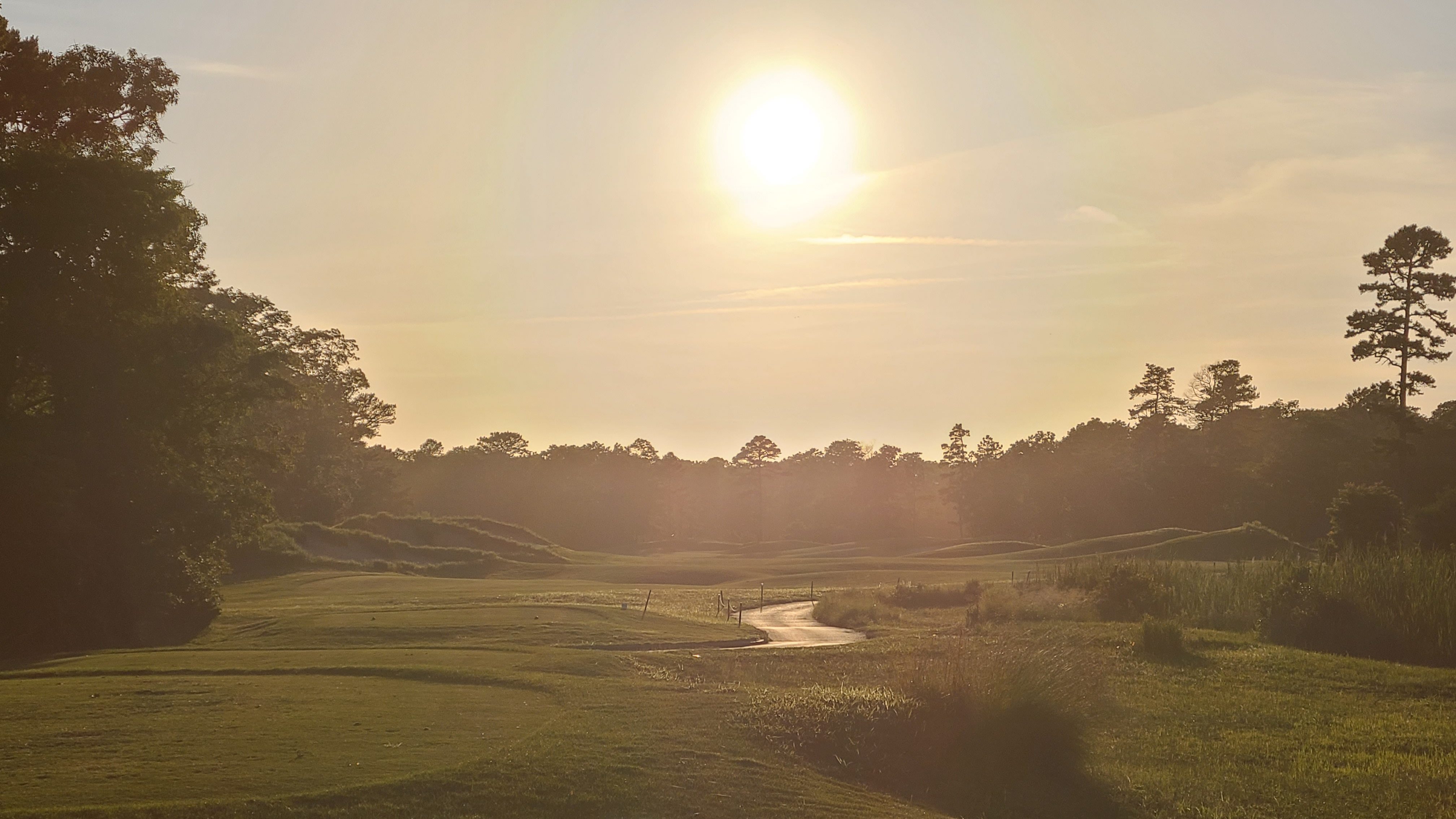
Standing at the tee boxes at 13. My line is that giant, flaming ball of gas in the sky.
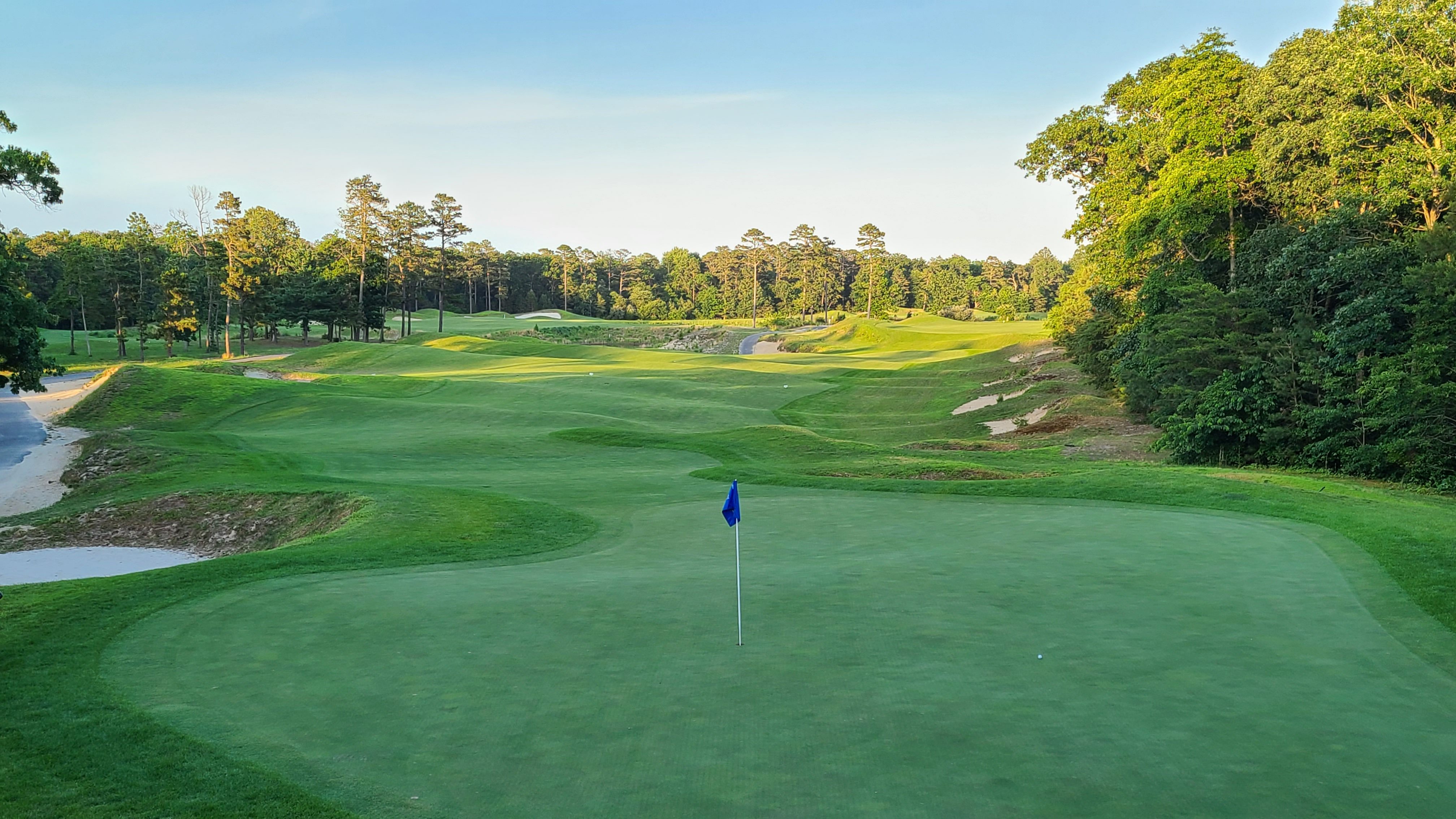
Fun photography tip: Unless you’re going for something “artistic”, try to avoid taking pictures where the sun is in front of you. This is the same hole (13), but instead of blaring directly into my camera lens, the sun is gently caressing the rolling characteristics of the fairway.
14. How good is this little par 3?

Time: 8:06 pm

I tee off at 15. With some luck, my ball manages to be in the fairway. But my swing is now being held together with some loose threads. I put my approach in the water. After a drop, I finish and move to the 16th tee where I do the same. My drive doesn’t even make it 200 yards, fails to reach the fairway, and ends up alongside some swimming turtles.

But it’s not about the score.

That 2+ miles I had walked up through the middle of my round at Ocean City was now about 6 miles total. The count of 120 swings of a golf club was now pushing 170. My burning quads and calves and my aching back notwithstanding, I keep moving.
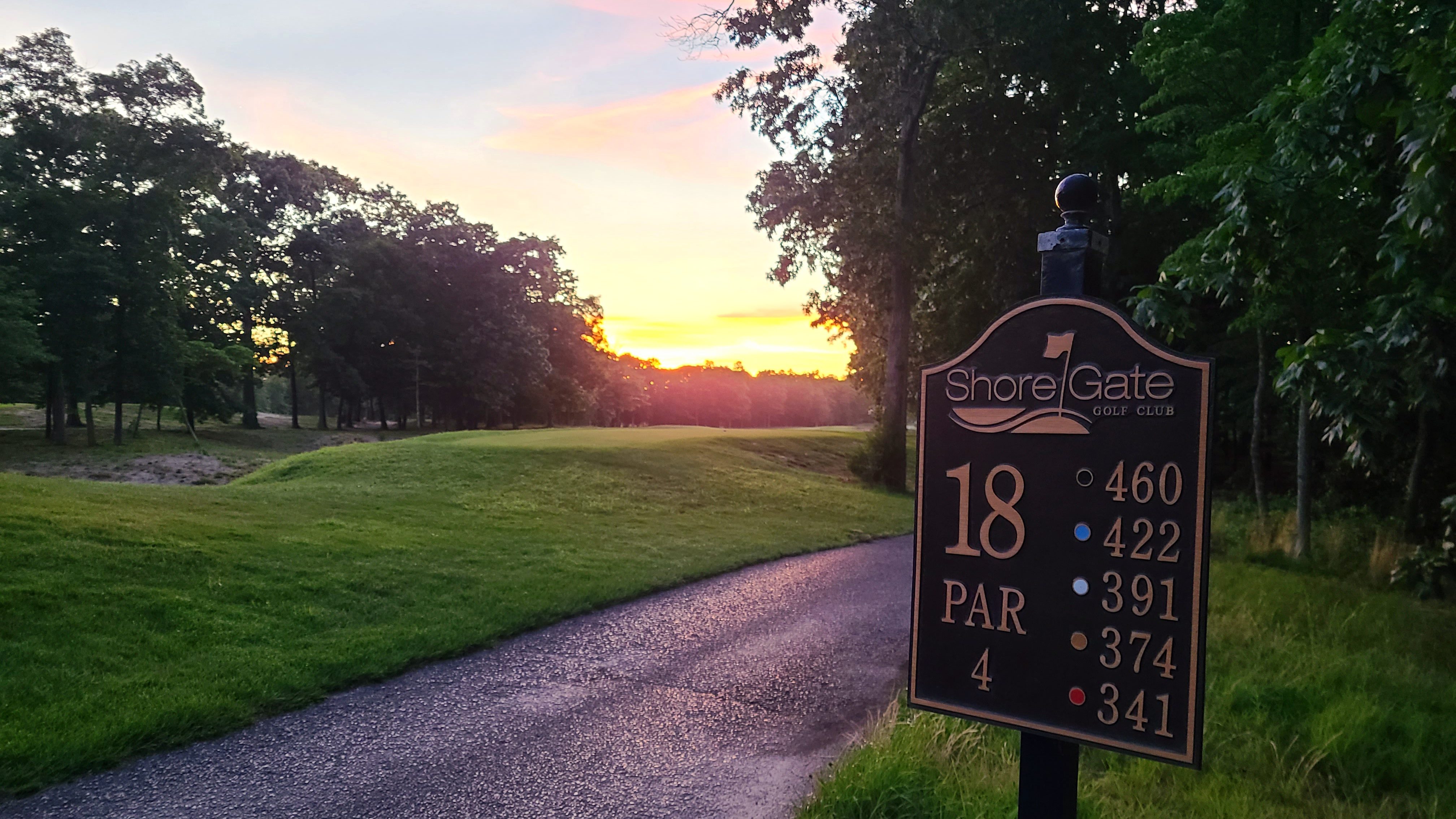
Last hole.

I walk onto the tee box at 18 with the sun now completely below the tree line. There is a large section of waste area and bunkers to the right of the fairway that is now directly overlapping the likely landing area for my absolutely bone-weary driver swing. Sure enough, I hit a heel cut that starts on a good line but is moving towards the sand. I put the cover back on my driver for the last time, slide it back into the bag, and start my walk out to the final fairway.

I spend about two minutes looking for my ball in the low-light environment, thinking that for sure it ended up in the sand somewhere. After walking in circles a few times, I realize the ball had stayed in the fairway. Though it’s safe, I hit my drive absolutely nowhere in terms of distance. I’m left with a 5-iron into the green. I address the ball and hit another sapped fade that heads to the greenside bunker.

I walk the 180 or so yards to the bunker, grab my sand wedge and stand over the ball. I successfully scoop it out and onto the green. I tuck the wedge back into the pushcart and grab the putter for the last time. With no interest in stressing about the read on this last hole, I just step up and hit it. It misses on the low side. I clean up for bogey, put my putter away, and grab my camera again.

Time: 9:00 pm

Number 116 is in the books.

What an unforgettable day. What started out as a hope to play three Cape May County courses, turned into the reality of finishing all six that were unchecked when the day began. 74 holes played and roughly 7.5 miles walked. Five rounds solo, and one under-par round with an incredible group of regulars on a short par-3 course. A must-play gem discovered.

Cape May County is complete.
A Trip Back to Cape May County

Number 110 (Running Deer Golf Club)

Date played: 4/6/2021

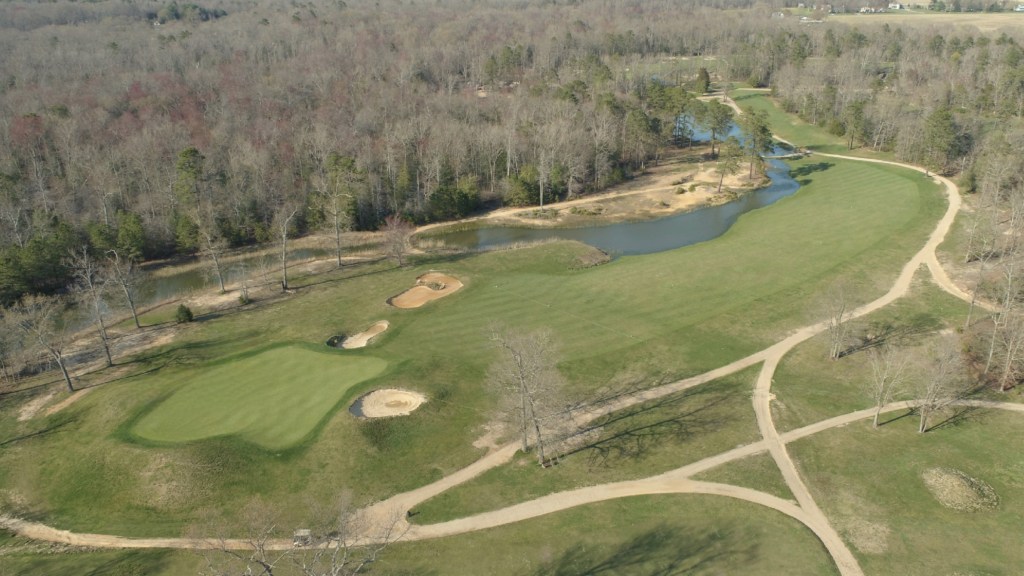
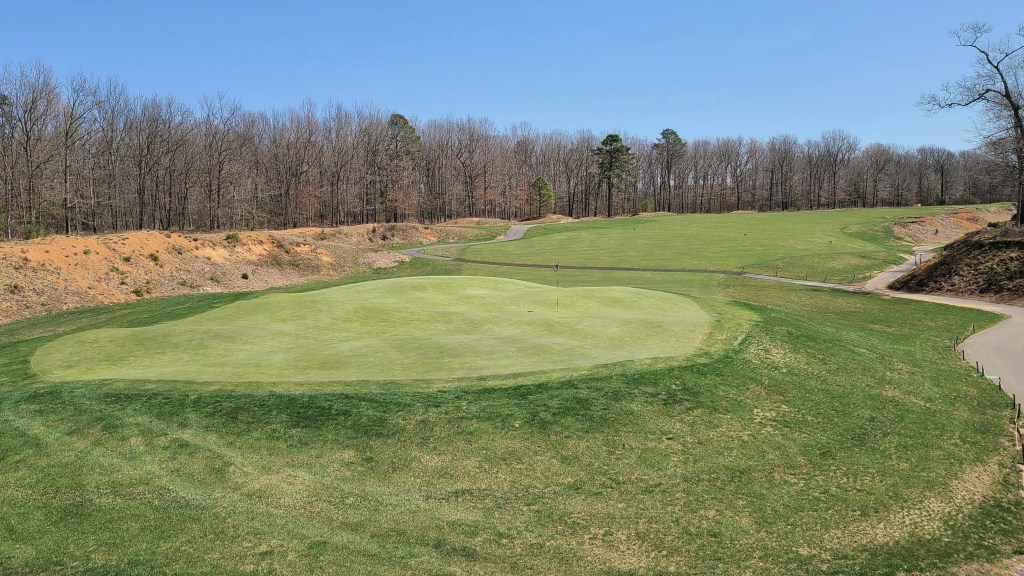
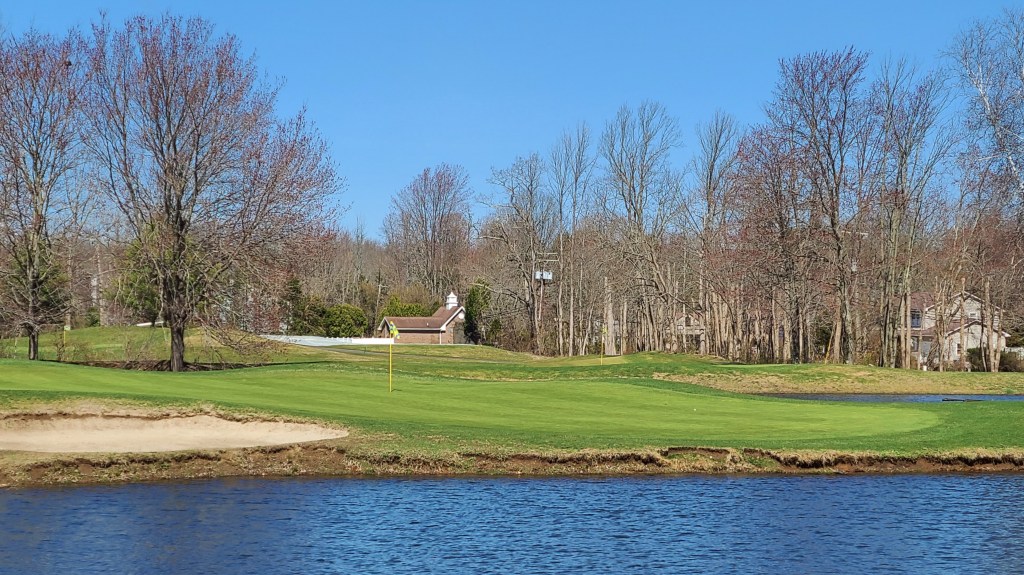
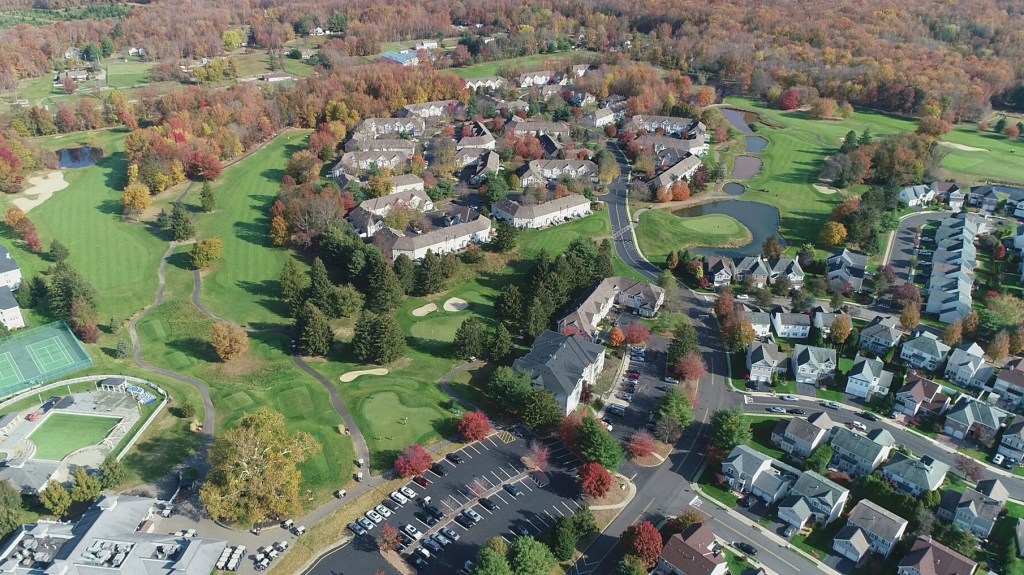
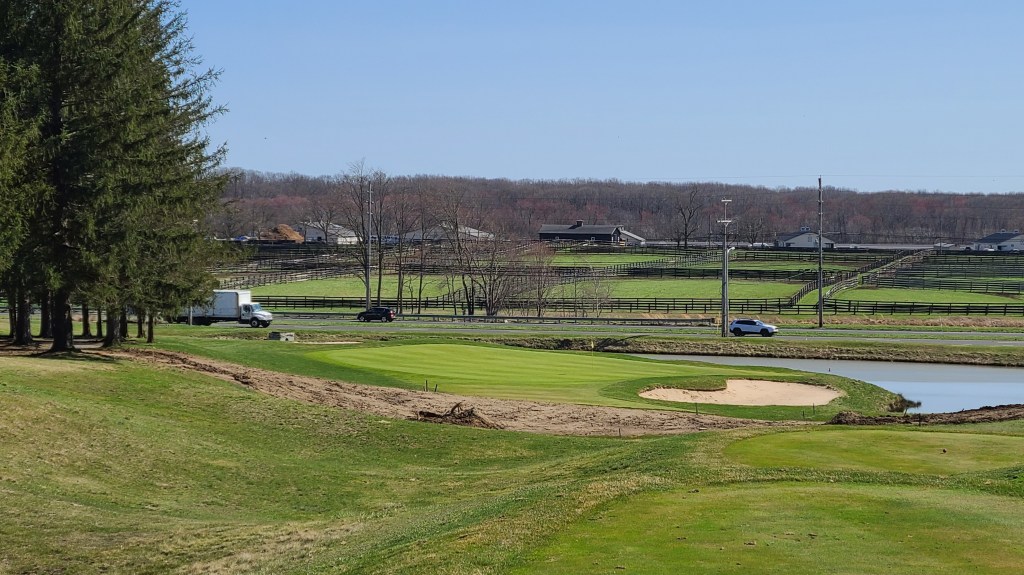
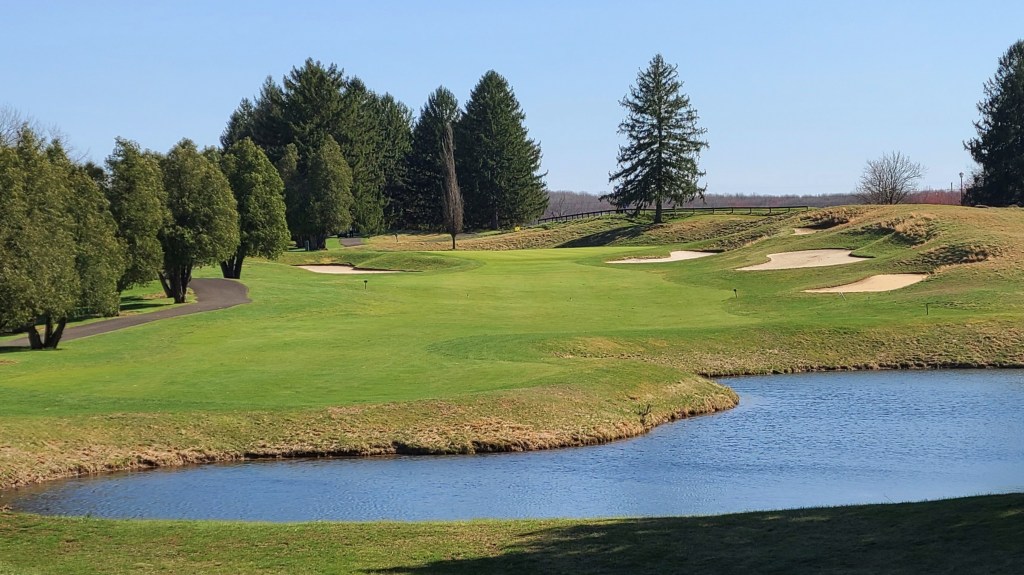
I was invited out for a weekday round at Running Deer by Chuck Wanamaker, who also had me out at Scotland Run in 2019. The course is just a 3.5-mile drive from Centerton Golf Club. In fact, if you walked off the 12th green at Running Deer and headed west-northwest through the forest, it’s only about a third of a mile to reach the 11th green at Centerton. As close as they are geographically, these two Salem County courses are worlds apart in terms of quality.

One thing about this journey that I’m not ready to burden myself with is ranking the courses I’ve played. For one thing, there are 169 public courses (as I’ve defined them) in New Jersey. I couldn’t possibly tell you the difference between what might rank a course 38th as opposed to 37th, let alone 138th as opposed to 137th. The gradations over 169 courses would become extremely fine.

Having said that, what I am comfortable doing is maintaining an unranked list of “must plays”. These are courses that immediately come to mind when I think about my journey. Running Deer absolutely makes that list with an indelible first impression. One of a handful of Ron Jaworski golf properties in New Jersey, it is far and away the best of the ones I’ve played to date.
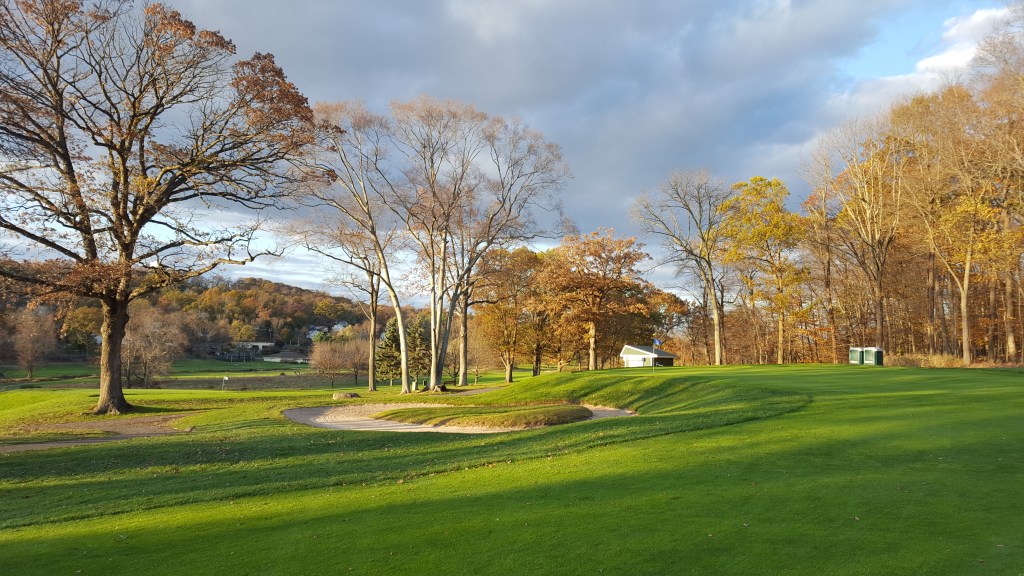
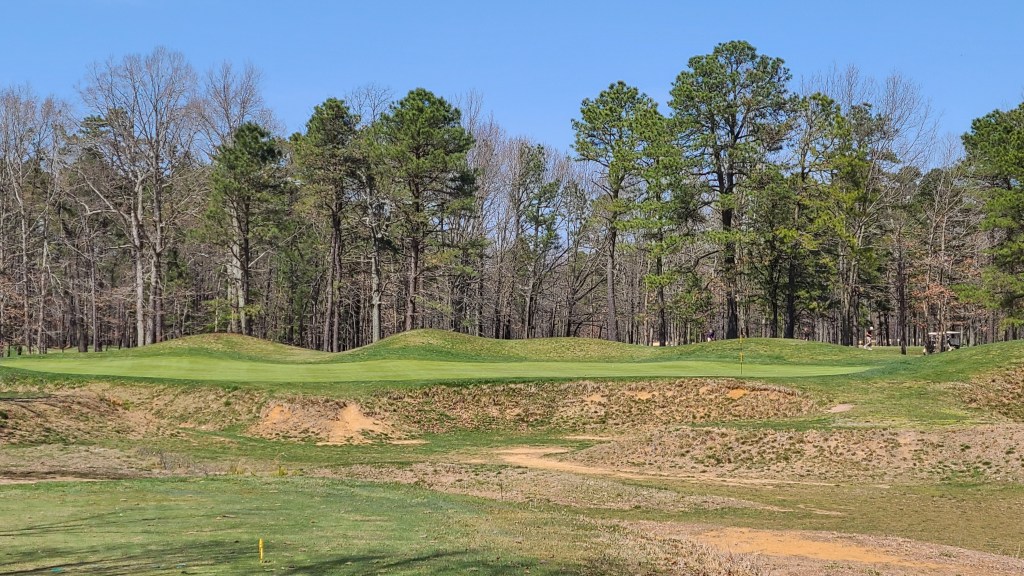
Many public courses suffer from a lack of variety. Whether it’s multiple adjacent holes that just run back and forth like the line for an amusement park ride, or flat, unappealing terrain, you sometimes feel like you’ve seen the hole already. At Running Deer, you may not be able to find two visuals on the course that are similar.

There are short par 4s, forced carries for par 3s, water featuring in a number of places to make you tentative, and par 5s that are reachable in two but require excellent approaches. Whether natural or not, the end result of the terrain gives every hole a unique look. The bunkering alone really allows for even the straightaway holes – like 4, 6, 8, and 10 – to appear incredibly different.

The stretch from 9 to 12 are some of the most memorable in the state. Here’s a look:
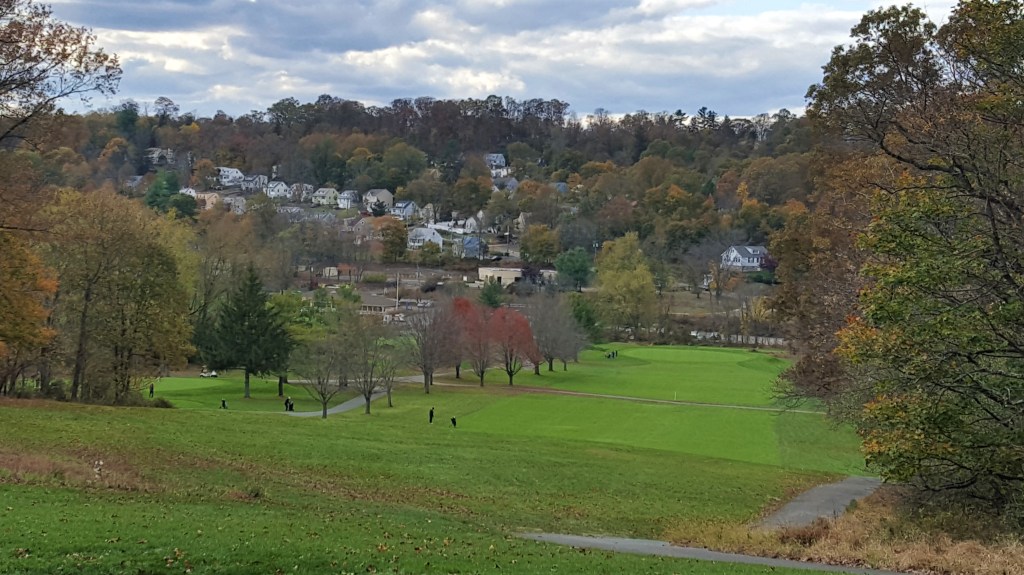
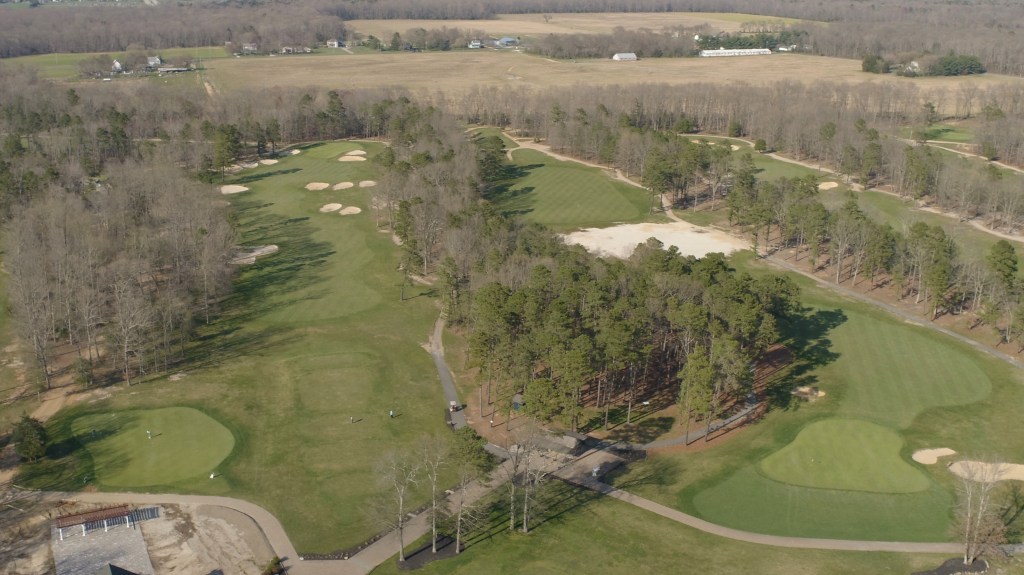
10 – a short par 4 – going out on the left, the par-5 9th – with its massive waste area – coming back on the right, and the remote openness of the farmlands of Salem County in the distance.
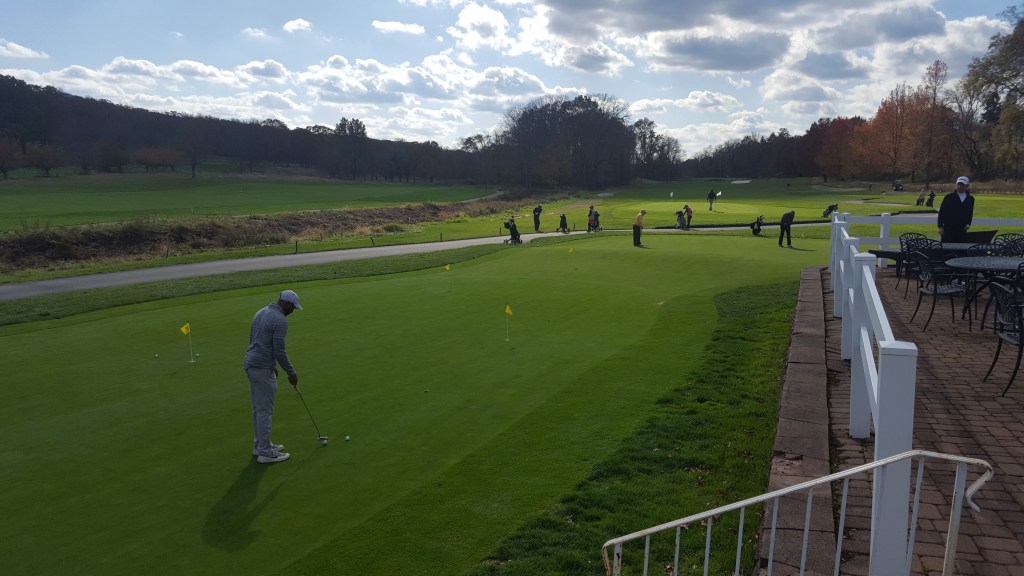
Looking back at the green at 11, surrounded by hazards.
12 is a beast of a par-4 with a serious risk/reward decision off the tee. You can cut across the corner on the other side of the creek, but your ball must navigate a few pines.

To top it off, the green complexes are incredible. Many of the putting surfaces have significant undulations, some funnel-esque slopes, backstops, and tiers. Surrounding them are excellent bunkers and run-off areas. They’re also likely to be some of the biggest you’ve seen on a public course that isn’t a resort. Even if Running Deer were as flat and open as a parking lot, the greens alone would make it a great course.

If I haven’t made it clear already, let me be explicit: I highly recommend this course.

It’s not often you can see undulations on camera in afternoon sun, but I think it’s pretty clear on this green at 3.
Some video of the wavy character of 3 green.
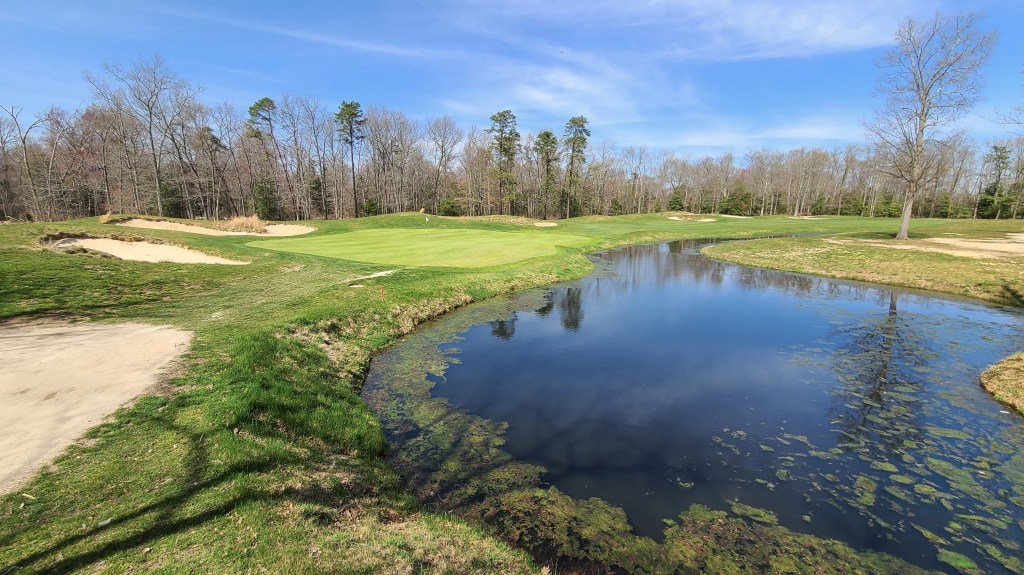
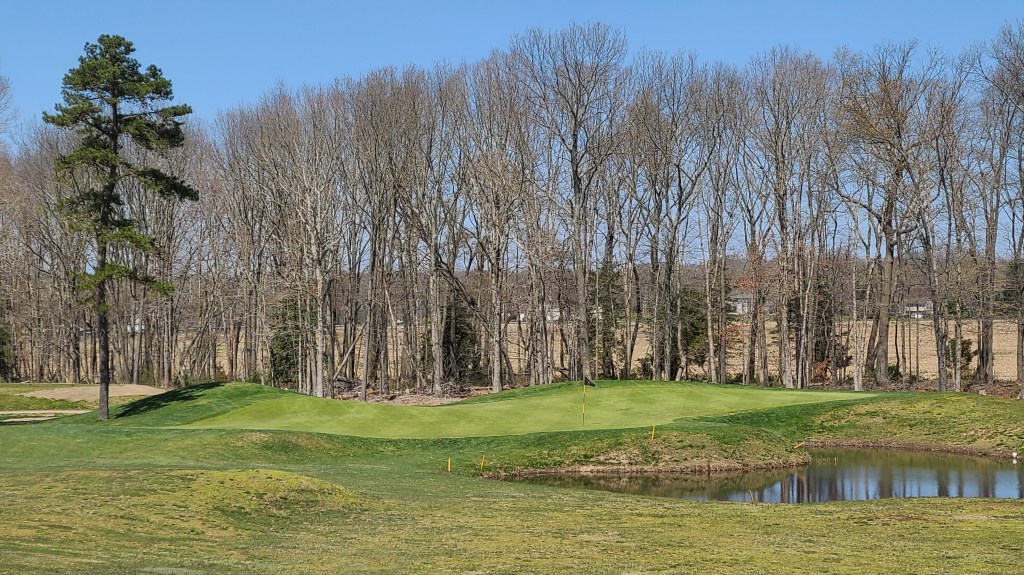
The par-3 5th, set up with a sucker pin to tempt you into the pond.
The green at 7 is massive, measuring over 50 yards wide.
More waves on the green at 8.

Number 110 (Running Deer Golf Club)

Number 109 (Knob Hill Golf Club)

A group of trees off to the side of 6 green.

Date played: 3/29/2021

My friend Matt and I wanted to get a round of golf in before an outing on Good Friday. We decided to take the Monday of that week off from work and head to Monmouth County to play Knob Hill.

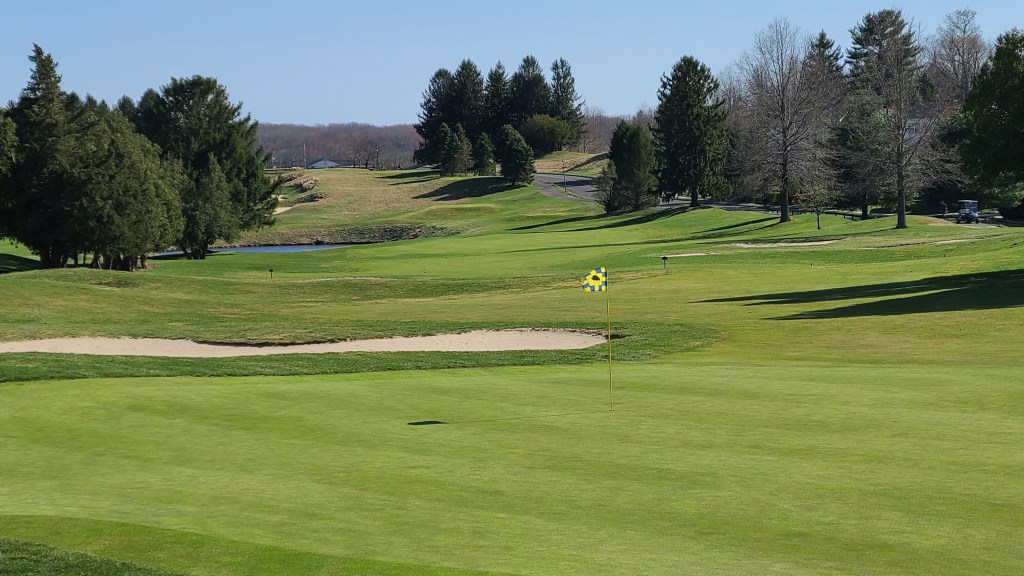
A semi-private course situated on the westbound side of Route 33 in Manalapan, Knob Hill actually teases travelers with a peek at its 15th hole, which has its green placed just a partial wedge shot from the road. The course is a wonderful option for the golfing public, and I’ll try to cover some of its memorable features in a bit. But the story of my time at Knob Hill is really about its 7th hole.

It is a straightaway par 5 that plays with a good deal of width for about 300 yards. A good drive put me in the fairway and about 175 yards from the green with the wind blowing in and across a bit. I took a 5-iron for some extra club, and though the ball started on a good line left of the flag, it seemed to quickly fail in the wind. I honestly thought it would die short in the water.

Nevertheless, it carried, landed, and stopped safely on the lower tier on the front right side of the green. I was on in two.

The pre-eagle has landed.

Having never made an eagle before, I really wanted this putt to sink. At the same time, it was such a difficult putt that part of me just wanted to park it close for a birdie. I notoriously leave lag putts short, and at just over 30 feet, I was psychologically in lag putt territory. I didn’t want to be struggling for a three-putt par.

I was left with a 33-foot putt that moved right to left, with probably five feet of break. It was also a couple feet uphill. I had a putt on a preceding hole the rolled out almost 40 feet on a much more level green. Given the uphill lie, I decided that same putting stroke should be just about right for 33 feet on this green. With my speed decision made, I took a couple looks at the break again, put my head down over the ball and made as good of a putting stroke as I could to at least ensure that I started it on the line I saw.

The ball made its way onto the upper tier, and started banking left quickly. I started to doubt my line and speed, worried that it would miss on the low side. But about five feet from the hole, it seemed to maintain its pace and definitely had a chance. I shouted “go in!”

It went in! The ball rolled in perfectly! After 20 years of playing golf, I finally had my first eagle!

Elated, we moved on to the 8th hole, where I immediately gave those strokes back. I struggled with the water-surrounded green, and would make double bogey. That’s golf.

From left to right: 10, 1, 9, 8, 7, 6

As its name implies, Knob Hill plays with a good deal of elevation change on a number of holes. The clubhouse is the highest point on the course, and whether you start your round on 1 or 10, your tee shots into either of these par-4 dog-legs will play to a pretty severe drop.

15, under some repair at the time. Route 33 in the distance beyond the green.

Other downhill holes include 15 and 17. The 15th is a downhill par 3 where over-clubbing coupled with a tailwind might put your tee shot into the passenger seat of a passing car. The 17th is a picturesque, drivable par 4, playing with some width, unless you choose to drive the green.

The 17th green is inviting.

The 12th is a very short par 3 – only 125 yards from the back tees – but plays about 20 feet uphill. Also playing uphill is Knob Hill’s closing hole. Though it tees off from elevated boxes, the 18th plays into a valley and back up the hill towards the clubhouse.

I would leave the undulating terrain of Knob Hill with a couple notches in my golf belt – another course played on my journey, and my first eagle.

Looking back from behind 18 green.
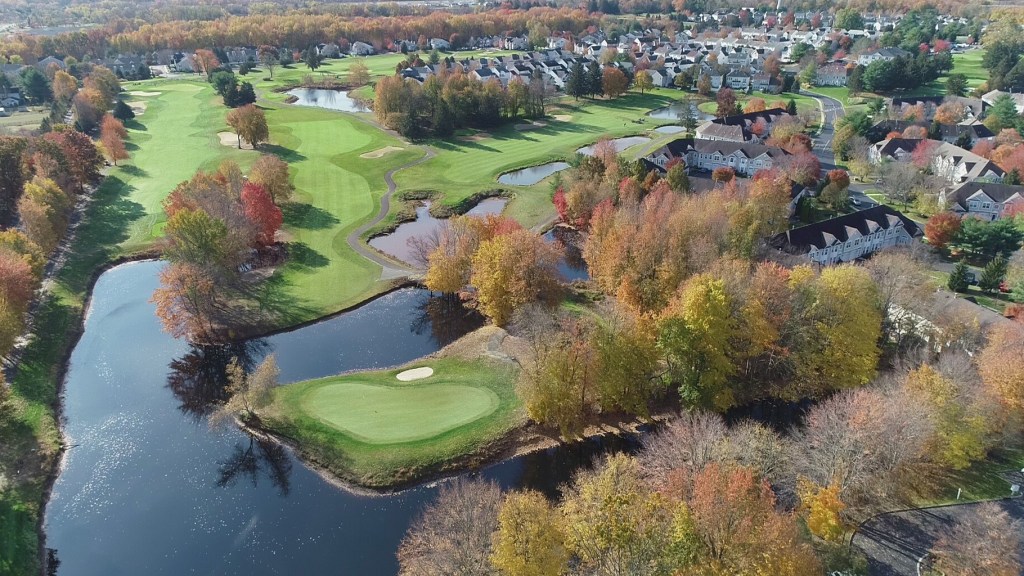
The 7th green, perilously surrounded by water. Short, right, and long are all dead.
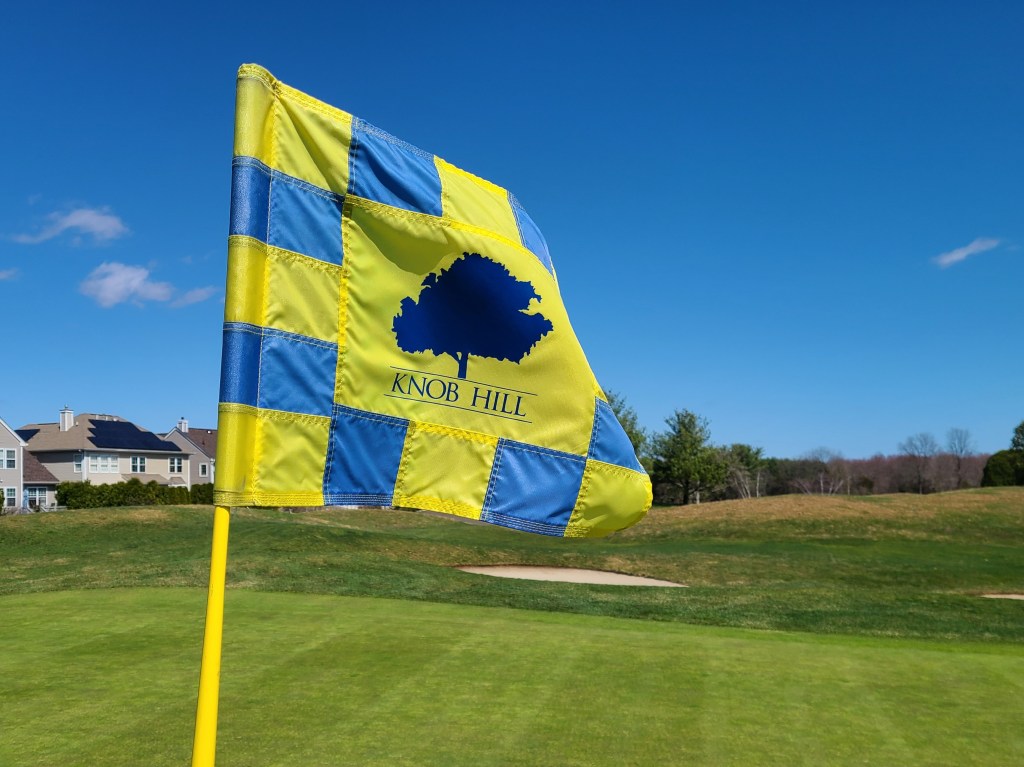
Bright and bold flags at Knob Hill.
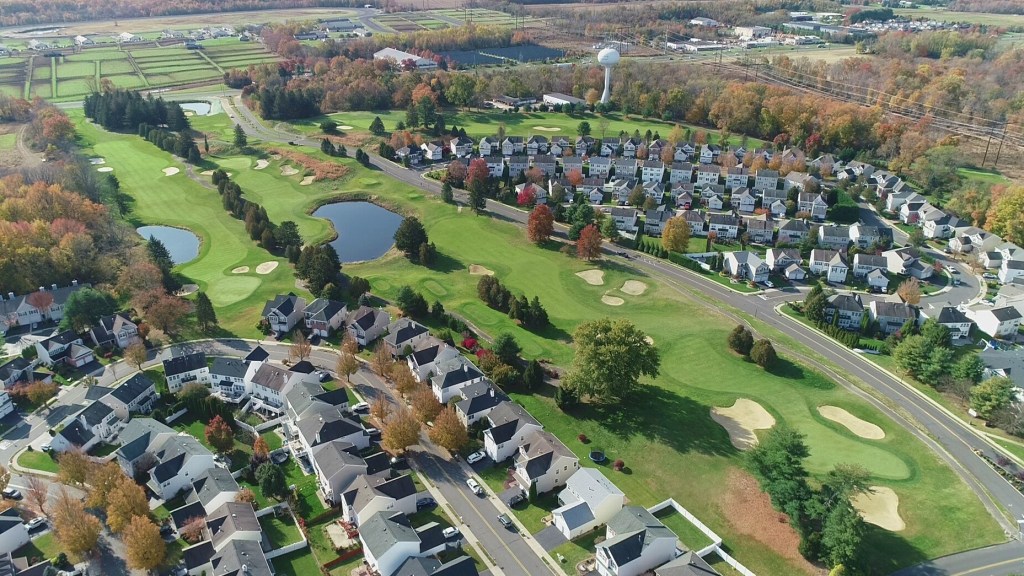
A great closing stretch of holes. Coming in from the top right, the par-5 14th moves left toward the entrance road. On the left side of the frame in the distance is 15, with 16 being the left-most, coming back to the horizontal centerline of the photo. 17 turns back the other way, and then 18 returns to the bottom-right corner.
Number 109 (Knob Hill Golf Club)

Number 106 (Westwood Golf Club)

Date played: 12/3/2020

With paid time-off left to burn before the end of the year and a close eye on the weather as we entered December, I spotted a Thursday where it would be around 50° F. I quickly jumped at the opportunity and booked the day. Doing my best to plan for a potential frost delay and limited daylight, I tried to come up with a plan to play two new courses on my list.

With only nine and a half hours of daylight to work with, I knew I needed courses relatively close to one another. I was able to find good candidates in Wedgwood Country Club and Westwood Golf Club, which are only about nine miles apart. With the earlier tee times available at Westwood, that would be my first stop at 7:45 am.

Multiple groups waited at the first tee and there was a buzz about the course in different conversations with the starter. There was talk of plenty of work having been done in recent months, including the removal of trees and the installation of cart paths, something the course apparently had been without in years past.

All quiet into the distance on the first hole, but chatter and buzz were behind the camera.

After about a 40-minute frost delay, I was sent off in a group of three. The first four holes is a fantastic stretch. The round opens with a short par 5 followed by a drivable par 4. The 3rd is a zig-zagging par 5 and although the chicane is subtle, it will likely still demand three shots. The 4th is another drivable par 4, but only if you’re brave enough to take your tee shot over a significant plot of trees that would leave you in jail should you fail to carry them.

The remainder of the course presents its challenges in different ways. The 6th is a beast of a par 4, stretched out to 430 yards with a significantly uphill tee shot. While relatively short overall at roughly 6,200 from the back tees, the 9th, 11th, and 13th are par-3s that all play over 190 yards. The 15th is a short par 4 with a tree in the middle of the landing area that plays a role somewhere between target and nuisance. The greens are a challenge all around the course and the old adage of “stay below the hole” is absolutely true at Westwood.

As we made our way to the 17th tee, I checked the time and saw that it was a few minutes after noon. I had booked a 1:00 tee time at Wedgwood, and I’d have to account for a 20-minute drive and time to get started. Thankfully, pace of play had been great all morning, and we finished the last two holes by 12:25, giving me just enough time to run straight from the 18th green straight to the car and start my 9-mile sprint over to Wedgwood.

Hospitality Note: The gentleman named Matt at the pro shop who checked me in could not have been nicer. He immediately made me feel welcome as a first-timer and made sure I was situated with everything I would need to know. It amazes me that more courses don’t realize how much of a difference this can make in the experience of golfers and Westwood nails it.

Trees behind 9 green, which is in the background right
The approach at the 90° dog-leg-right 15th. The tree in the foreground left must be considered off the tee.
17 green, with 15 green behind it
Number 106 (Westwood Golf Club)

Number 103 (Concordia Golf Club)

Date played: 11/16/2020

At the end of 2017, I thought I had played all of the public courses in Middlesex County after my trip to the Plainfield West 9 course. At the time, that was true.

But, as I’ve written before, this journey is ever-so-slightly amorphous. From the time I began tracking my travels in earnest, the list of public courses in New Jersey has seen some close (see: Beckett Golf Club) and some new ones open (like Skyway). Occasionally, a formerly private course decides to become fully open to public play. That was the case with my 103rd course, Concordia Golf Club.

Located in Monroe, the previously private course is set in a senior-living community. While the routing doesn’t quite follow it, the course is laid out in something of a figure-8 around two large portions of the neighborhood, with most holes flanked by homes. Depending on how wayward your shots can be, water is a factor on at least seven holes, which is a nice feature for a community course.

Behind the teeing grounds at 13, the first water-lined hole on the lengthy back nine.

At just under 6,300 yards from the back tees, the course has a deceptive façade of not seeming long on the scorecard. It’s misleading because while the front will play short at under 2,900 yards, the back nine stretches to almost 3,400. I was lulled into a sense of ease by the front nine, not realizing what was in store on the way back in.

There is also a great variety of holes overall. There are drivable par-4s in holes 3, 5, and 10. Some holes play to immensely wide fairways – like 6 and 8 – while many will challenge your driving accuracy with much narrower targets. My only criticism is that the par 3s were all relatively the same yardages from the back tees (186, 194, 194, 176).

The green at 4, the first of the par 3s. The COVID pins were still in use!

While the conditions of the greens were a bit inconsistent, they were great overall. The fairways could use a little TLC, but the rates are very reasonable (I paid $30 to walk on a weekday). Overall, I really enjoyed my experience here and would recommend it for a first-time visit. I’m glad I got to play it and complete all of the Middlesex County public courses… again.

A look back at my final hole of Middlesex County… again.
Number 103 (Concordia Golf Club)

Number 102 (Centerton Golf Club)

Date played: 11/6/2020

My 102nd course came about as another great instance of what social media has added to my journey. Tim Casale is a south Jersey resident who initially reached out on Twitter to ask which courses I had yet to play down his way. I let him know that I still had many to go in a number of southern counties and cited some of the specifics in the counties closest to him.

A couple months later, Tim mentioned that he’d be taking a weekday off to play some golf and asked if I wanted to join and check another course off my list. It was a no-brainer for me, and with time-off-work to burn in the calendar year, I confirmed I would join. Tim looked to find tee times at some courses. We thought we might have something at Indian Spring and then Pitman, but both fell through.

After an exercise in synchronized booking through GolfNow, we were set for a Friday round. Eventually, we landed on a round at Centerton.

Seven years into my journey, this would be only my second trip to Salem County, and three years after the first, which was a 2017 impromptu stop at Town and Country Golf Links. Located in Pittsgrove, it’s only about 20 miles from the Delaware River border at the Turnpike/I-295 crossing. It was a bit of a hike from the middle of the NJ where I’m located, but having played just about everything in the middle third of the state, most of the remaining courses are.

From left to right, 18, 1, 9, and 10 at Centerton

We arrived at the course and made our acquaintances. Tim’s brother and father would also join us, and it was nice to meet them and feel like I was part of a regular group. After chipping and putting on the practice green for a bit, we made our way to the first tee.

While I could not have started the first hole any better – piping my drive down the center of the fairway and making a routine par – it was pretty shaky from there on. I snap-hooked and pulled my tee shots on 2 and 3 respectively, and though I recovered well from 4 through 7, I fought those misses around the remainder of the course.

The first par 3 is a long one. I probably missed this green a cool 30 yards left.

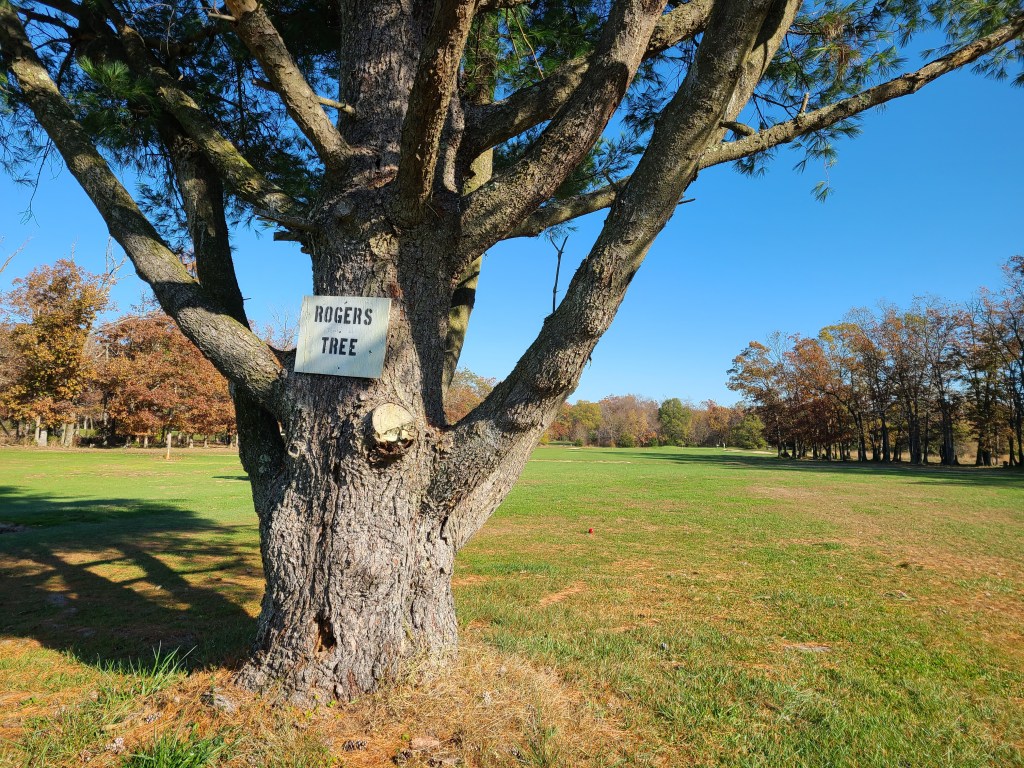
The course is very flat and walkable. There is room to miss, but I wouldn’t necessarily call it a second-shot course. Some tee shots do require attention, like the drives on 2 (which is narrower than most) and 10 (which is a dog-leg right that will require a placement decision). Then, there is the 6th, where a poorly struck tee shot may have you stuck behind Roger’s Tree.

Depending on the tees you play, Roger’s Tree is located anywhere between 80 to 110 yards from the teeing grounds on this straightaway par 4. (OK… so it would have to be a really bad tee shot.) I don’t know why, but I was intrigued by the idea of such a tree.

Roger’s Tree. Or is it The Rogers Tree?

Presumably, it’s a memorial. I’ve seen benches and in-ground plaques that are tributes to those who have passed away or even just member donors. But this one has a relatively crudely thrown together piece of plywood, painted white, with “ROGERS TREE” in black lettering. I’d love to know the story behind it. Who is/was Roger? Did he plant the tree? Was he always hitting it off the tee? If so, did his buddies put the sign up as a joke?

Whatever its history is, I’m glad to have avoided it. I’m also glad to have met up with Tim and his family as I continued my journey.

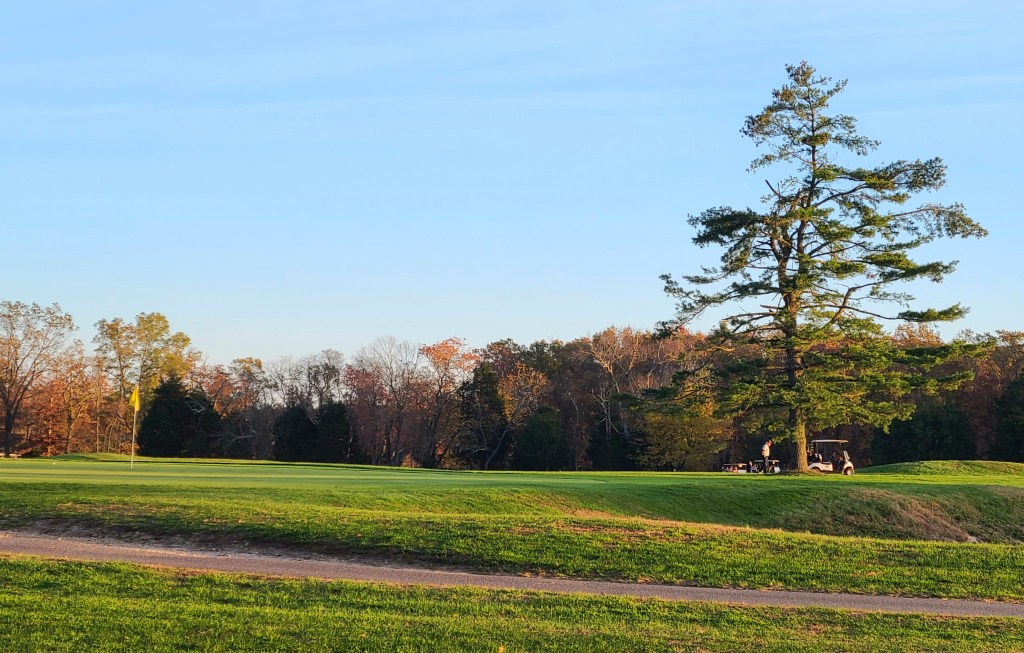
15 green, watched over by a tree that is not Roger’s
Can you spot Roger’s Tree on the 6th?
Number 102 (Centerton Golf Club)

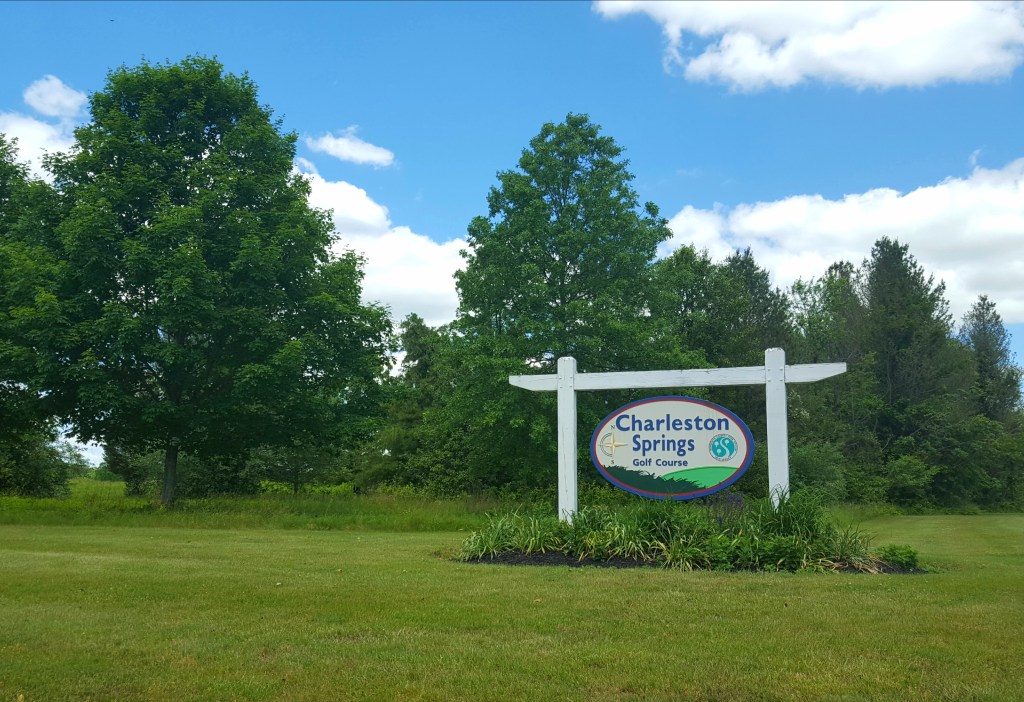
Number 98 (Charleston Springs – South)

Date played: 6/7/2020

It took almost four years, but after playing the North course at Charleston Springs in November 2016, I finally made it back to play the South course. I was invited back by my Twitter golf buddy Walt Blasich who is quickly becoming my tour guide for the best public courses in Monmouth County!

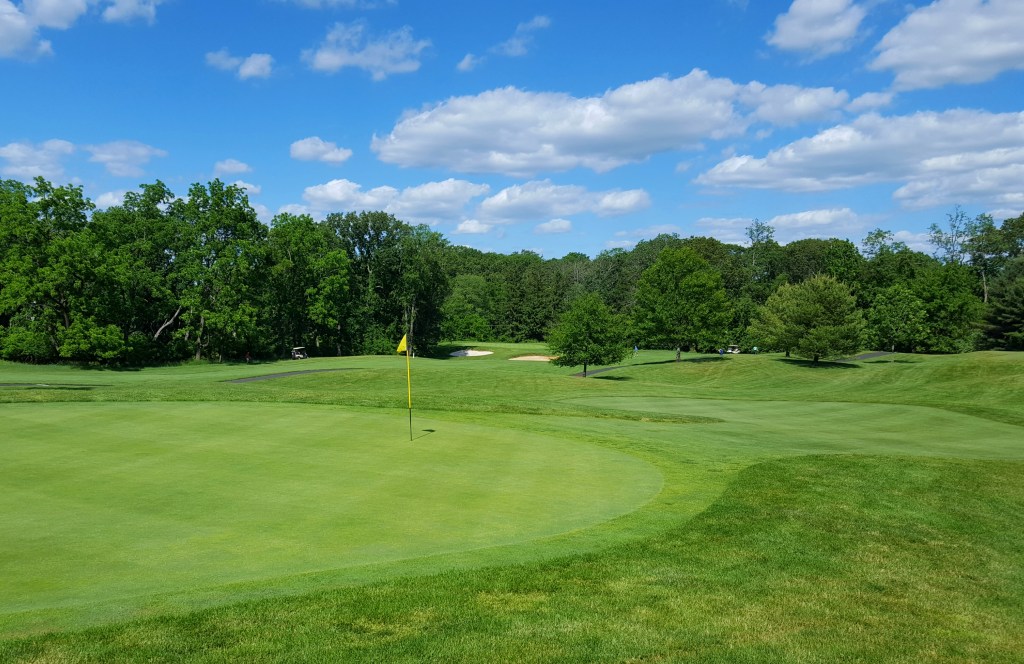
Conditions were beautiful at the North, and the South is no departure. Both layouts are some of the most finely maintained public courses you’ll find in the state. You immediately get a sense of that as you walk off the back steps from the pro shop and look onto the flawless (and massive) putting green.

The putting green is big enough to accommodate all golfers waiting to tee off on both courses

If you love a good golf bridge, you’ll cross one on the long walk to the first tee, a great way opportunity to get your mind in the right place before the round. A short uphill walk through the woods after the bridge, and golfers are emptied out into the clearing that is the South course. Where the North is laid out in links style, forcing golfers to contend with many fescue-lined holes, the South is a sprawling parkland course. Although there are trees to deal with, the fairways are quite generous and there are a number of very open holes.

A walk across the bridge on the way to the 1st tee on the South course

From a design standpoint, the way the 6,377 yards (from the Gold tees) are spread across the 18 holes is done really well. The par 3s play as long as 195, but also as short as 115 on the 11th, something most courses shy away from. Of the twelve par 4s, there are four that play over 400 yards, but then there are also a couple that are drivable for long hitters, like the 294-yd 10th. You might be able to lodge a complaint about the par 5s as three of them are between 499 and 505 yards. But whether it’s differences in the way elevation or direction changes from tee to green, they are each truly unique.

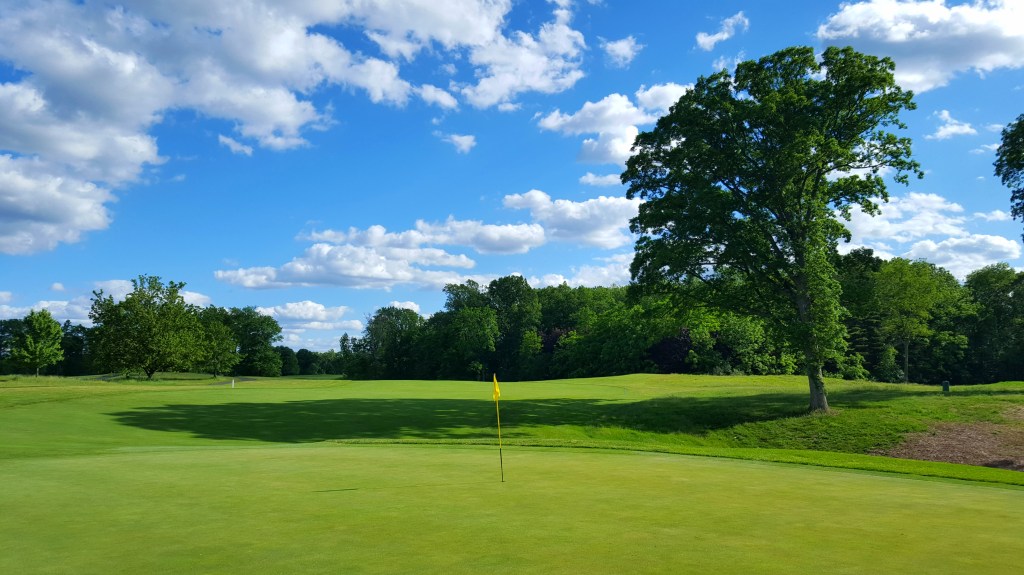
A front pin location on the 11th, with the drivable, par-4 10th in the background

As I mentioned when writing about my time at the North course, Charleston Springs is definitely held in high regard. I don’t know that the South measures up to public resort-type courses (e.g. Ballyowen and Crystal Springs), but I think it would be unfair to put either of the two layouts in that category. Nonetheless, it certainly ranks highly in the very next tier and should be considered a great option for public golfers.

A look back at 18
Number 98 (Charleston Springs – South)

Number 96 (Rock Spring Golf Club)

Date played: 11/10/2019

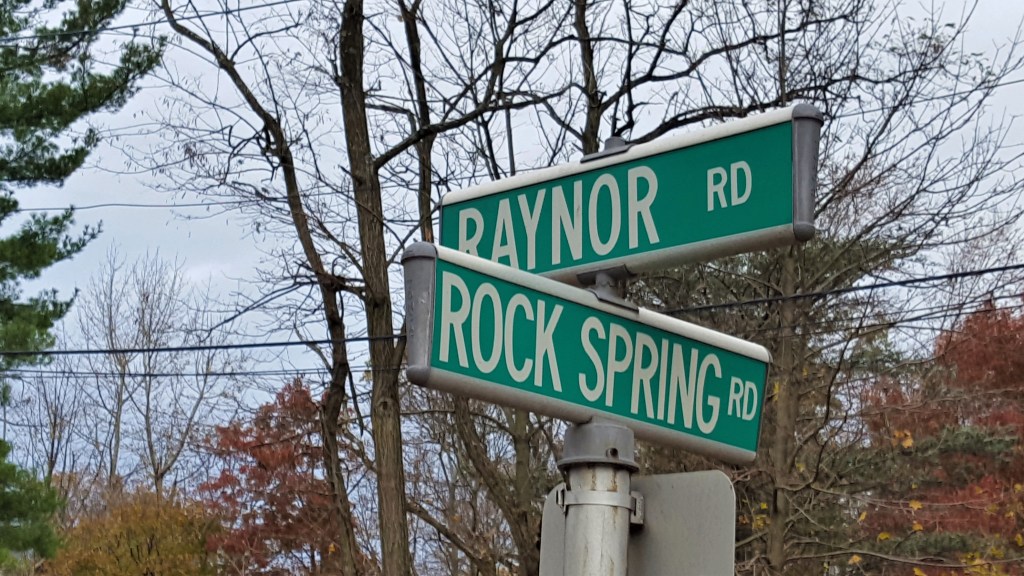
Where Cruz Golf Country Club has its uniqueness in the obscurity of its designer, Rock Spring Golf Club is the complete opposite. Designed by Seth Raynor and Charles Banks in 1927, it was born in in the heralded “golden age” of golf course architecture by very prominent names. Like most Raynor designs in America, Rock Spring was private for most of its existence. A mere 92 years after opening, it opened to the public in May 2019.

Hearing about Rock Spring was my first experience with the grapevine of the golfing world. Other than through social media, I don’t consider myself quite connected to the golf community yet. I don’t have any contacts who work at courses. I’m only just meeting teaching professionals. Given that I’m almost always at new courses, I only play with a couple people “regularly”.

But it seemed like one after another, I started to hear and see the same refrain: “You’ve gotta play Rock Spring”.

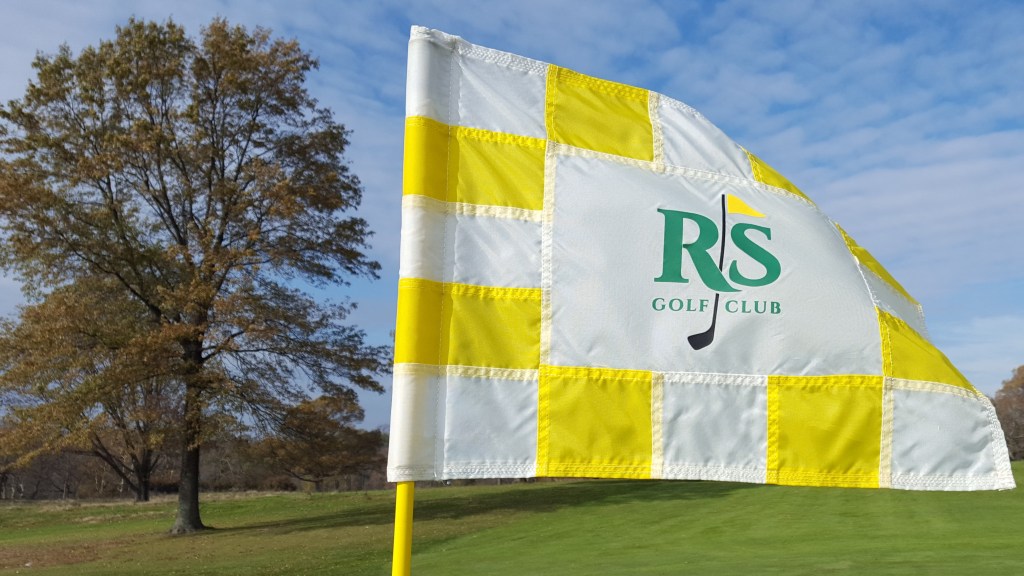
Quality flag game, but is it a “must play”?

A big part of this has to be attributed to the suddenly vanished exclusivity. If Pine Valley opened to the public, you can bet you’d hear about it immediately. That story would likely make any and all golf news outlets. So, the question for me was really, do you have to play Rock Spring?

I have to say, it took some time through the round, but it grew on me. At $89 on a weekend in November for a now-public golf course, it had to live up to that price. At that rate, you’re approaching the finest publics in the state (i.e. Neshanic Valley, the Crystal Springs resort courses, etc.). But I started to appreciate the design elements after a while. I began to see what the course would look like in prime conditions, without the leaves all over the place, and it is a quality course.

Hole 12

The greens had good speed, even for the middle of fall in cold conditions, and they are relatively large. There are plenty of changes in elevation from tee to green, and the holes that play along the side of a hill – like 12 and 15 – are actually some of the most striking.

15 green

Managed by Kemper Sports – the same company who oversees the beautiful Skyway Golf Course in Jersey City – Rock Spring is definitely in good hands. As for whether “you’ve gotta play it”, I’d say ‘yes’, but you’ll have to check it out for yourself!

P.S. If you get there early, and the place looks closed, it’s probably because you parked in the overflow lot. There is actually parking around the clubhouse, which is also where the bag drop is.

How I played…

I actually played pretty well, but putt poorly.

Highlights: Meeting up with new golfers in New Jersey! Shout out to John Boylan for joining me on a cold November morning. Also making the highlight reel are two approaches that I knocked to a foot-and-a-half. (Yes, I made the putts.)

Lowlights: Definitely putting. I felt good on the practice green, but it didn’t carry onto the course.

Number 96 (Rock Spring Golf Club)

Number 95 (Francis A. Byrne)

15 green with the sucker pin position

Date played: 11/3/2019

The 95th public course on my quest is 95 years old at the time of writing, and one that is rich with (somewhat verifiable) history. Francis A. Byrne Golf Course was built in 1926, and legendary architect Charles Banks is credited as being its designer. Some sources say the design was started by Raynor, while others leave this mention out entirely. Other information you can find about the course states that the original purpose of the Byrne course was an expansion of the neighboring, still-private Essex County Country Club, the oldest club (and possibly course) in New Jersey.

Whatever the history and origins of Francis A. Byrne truly are, it remains a great public option in northern NJ. Located a few miles from the Parkway and just off Route 280, the Byrne course is set in the rolling hills of Essex County just north of the South Mountain Reservation. The course is kept in great playing condition and has actually undergone several improvements – e.g. restoring a Biarritz green at the 2nd – since I’ve played it.

A look from the elevated tee box at 9 with the homes in the distance depicts how much the hills of Essex County come into play at Byrne

I made my way around Francis Byrne with my good friend, Ed, who likely is in the lead for “most rounds played together,” not just on my journey, but in my golf career overall. Ed and I started playing golf together over twenty years ago, and our golf games have progressed similarly. We both broke 100, 90, and 80 at around roughly the same times, and while we have different strengths – Ed is a longer hitter, I may be a better short-game player, Ed is the better putter – our handicaps remain very close to this day. It’s been great to have a close friend to not only share the game with, but also to encourage progress.

Ed actually warming up on the putting green instead of just taking pictures of it, which may explain why he’s the better putter

There are plenty of golfers who enjoy time on the course with friends, without really worrying about the quality of their collective play. I respect that, and I think that can be a lot of fun. Ed and I both approach the game with an ambition to become better players, and we push each other both directly and through each other’s accomplishments.

Another downhill tee shot to the par-3 14th

Our fall afternoon round at this historic New Jersey public was relatively average for both of us. My poor play off the tee was offset by some very good scrambling and putting. I would putt only 24 times for the round, by far my lowest total. We walked off the 18th green at dusk, content with our rounds, and satisfied in having tackled another NJ course together.

Though a rare feat, I had the additional satisfaction of having outdriven Ed on that last hole.

Number 95 (Francis A. Byrne)

Number 94 (Scotland Run)

Date played: 9/19/2019

My third visit to Gloucester County for golf was courtesy of an invitation to the 2019 Grint Tour Championship by Chuck Wanamaker. The GTC is an outing of users of The Grint – a score-and-stats-tracking and GPS app – held at a South Jersey public course. In 2019, the venue was Scotland Run.

Situated just a couple miles east of Rowan University, Scotland Run is a gorgeous layout set on sandy terrain. While sights from the clubhouse will evoke a links-style feel, the course has a great mix of holes, especially around the perimeter.

Plenty of contoured greens at Scotland Run, like the 9th here.

As we waited to tee off for our early morning round, the sun drenched the clubhouse in gold. Views of the ninth green and the first fairway were equally stunning, the quality of their design and condition highlighted by the sun’s rays. Though the front nine has a number of bright spots, I found the back nine at Scotland Run to be the better half.

The 10th is a wide, straightaway par 5 that can be reached in two. However, those that opt to do so should make sure they can carry their approach to the raised green complex. It’s guarded by wood pilings that will ricochet short shots in unpredictable directions, as well as a “warning track” bunker, both of which span the width of the fairway.

If you’re gonna lay up on 10, make sure you’re laying up. Otherwise, you deal with the warning track.

The 11th is a short par 4 that has a fairway that’s split by a waste area just as you reach the green, which will force a club choice decision on the tee. The 12th and 13th both bring water into play as they round a large pond, with 13 being a medium-length par 3 that is almost all carry. But the real memories of Scotland Run will be made in the finishing stretch, which is one of the best in public golf in New Jersey.

The 16th can easily be called Scotland Run’s signature hole. You’re presented with a tee shot that looks almost perpendicular to the fairway landing area, positioned at the other side of a wide gully to cross. As if your focus isn’t shaken enough by the visuals of the hole, at the bottom of the waste area, you’ll also see a plane. That’s right, an actual plane!

“Look, boss! It’s the 16th at Scotland Run!”

Moving on to the 17th, you’re confronted with a long par 4, playing at 421 yds from the white tees (two up from the back). The finishing hole is an uphill par 5 with water right that threatens your tee shot, and a snaking fairway from there to the green.

I had as many strokes in the last three holes as I did in the 15 that preceded them and wouldn’t fare well in the outing because of the poor finish. Nevertheless, Scotland Run was etched in my memory as a “must play” public in New Jersey and I highly recommend it.

Number 94 (Scotland Run)