I’ve met a number of people on my journey around the state through social media. While most of them are just golfers like me, some of them work in the turf industry, a vocation I have a deep appreciation for. One of those people is Mike Williams.
At the time we first spoke on Twitter, he was at Meadows at Middlesex. In 2020, he became the superintendent at Colts Neck. We had been chatting about getting together and playing, and at the end of 2021, we finally made that happen at Hominy Hill.
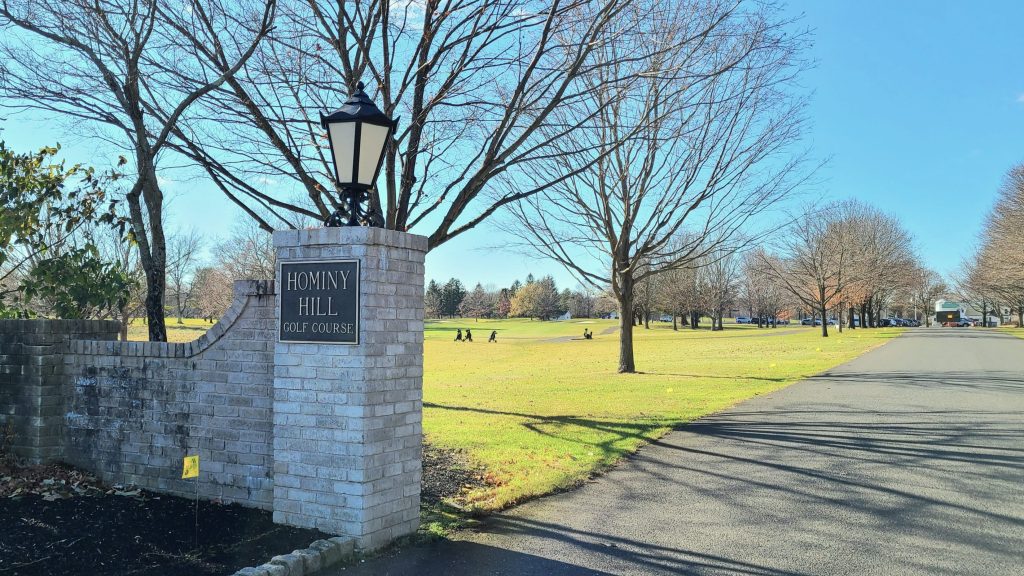
While we had to play a winter round to meet, we picked a pretty good day to do it. Reaching around 50 degrees in New Jersey in the middle of December was a blessing, and the course played wonderfully. If you’re looking for a challenging but really enjoyable round of golf, Hominy Hill Golf Course fits the bill. Located in Colts Neck, Hominy Hill is a beautiful 18-hole layout designed by Robert Trent Jones Sr. that plays over 7,000 yards from the back tees. It has even hosted the USGA National Amateur Public Links championship on more than one occasion.
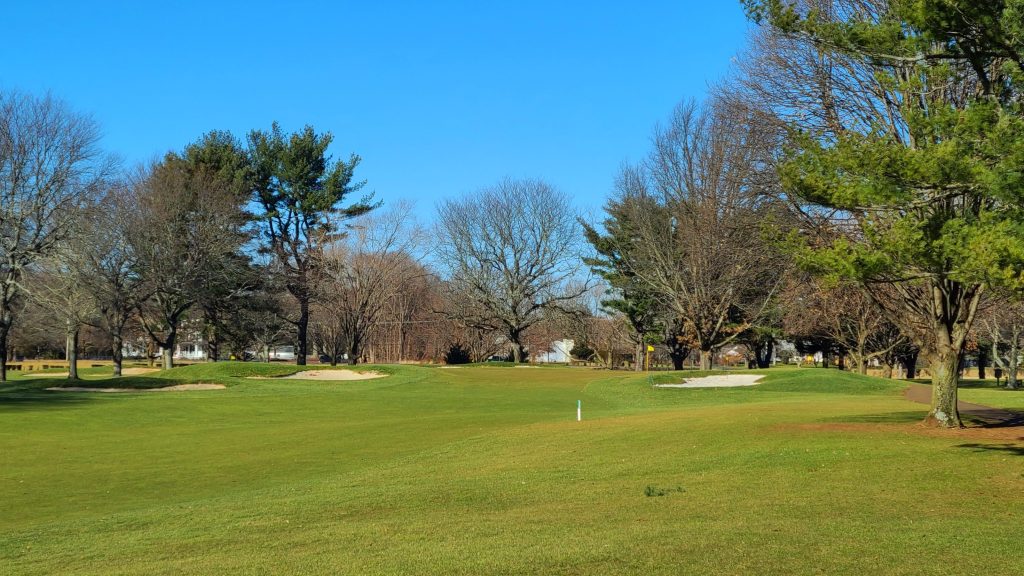
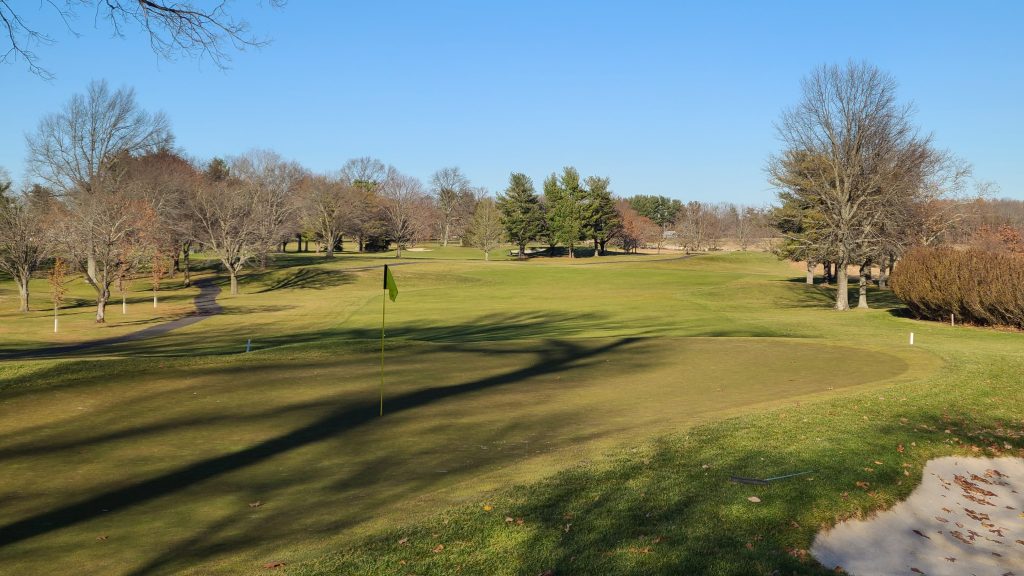
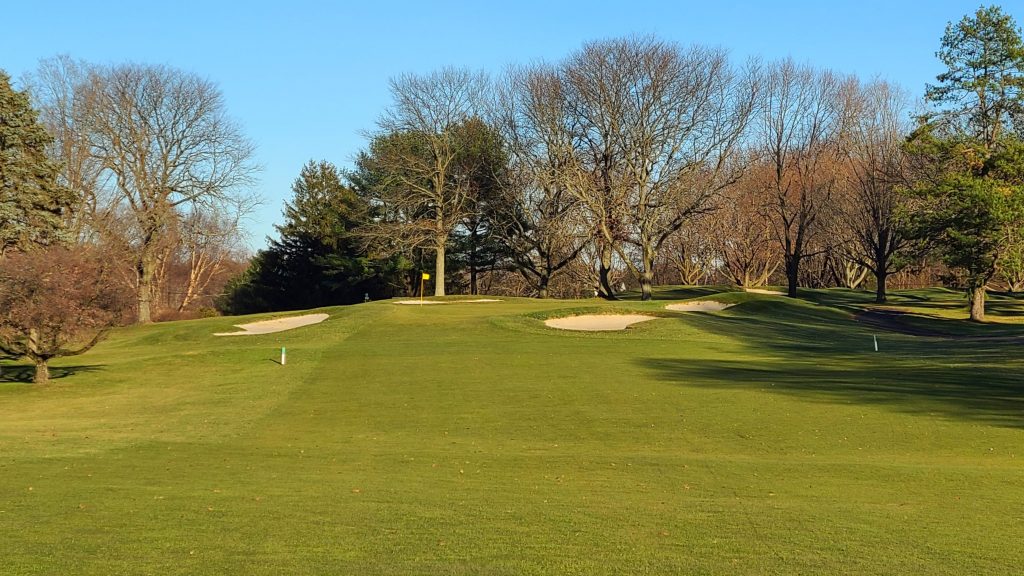
While the “hominy” in its name has nothing to do with the food – as clarified in this Monmouth County Park Systems blog post – the “hill” correctly hints at what I would describe as the perfect amount of elevation changes throughout the routing of a course not set on a mountainside. The course winds through gently rolling hills in classic parkland style, but I would say that landing areas are more generous than most public courses. Some greens were challenging even at December speeds, so I can only imagine how well they roll in prime season.
This is a course that came with a good deal of hype and was relatively unknown to me. Unlike big name properties like the Crystal Springs Resort courses and Atlantic County courses like Twisted Dune and Seaview, the average golfer on the outskirts of New Jersey may not know about Hominy Hill. Before I cataloged all of the courses in the state, I was one of them. Yet, a few people over the years had let me know that it would be one to look forward to.
Even in December, the course lived up to the hype. From the conditions, to the variety of holes, to the fact that it’s actually a part of the Monmouth County system, I rate it among the best publics in the state and count it as one of my must-play recommendations.
Apart from being a day at a spectacular course, it was great to have met up with Mike at Hominy Hill. As with everyone that has joined me on my quest, it was great to walk the course and chat about his work. I’ve learned that everyone who dedicates their professional career to turf management puts in a ton of dedication and effort, and Mike is no exception. Not only is he another New Jersey golf enthusiast, but he’s also someone who actually brings this hobby and passion of ours to life.
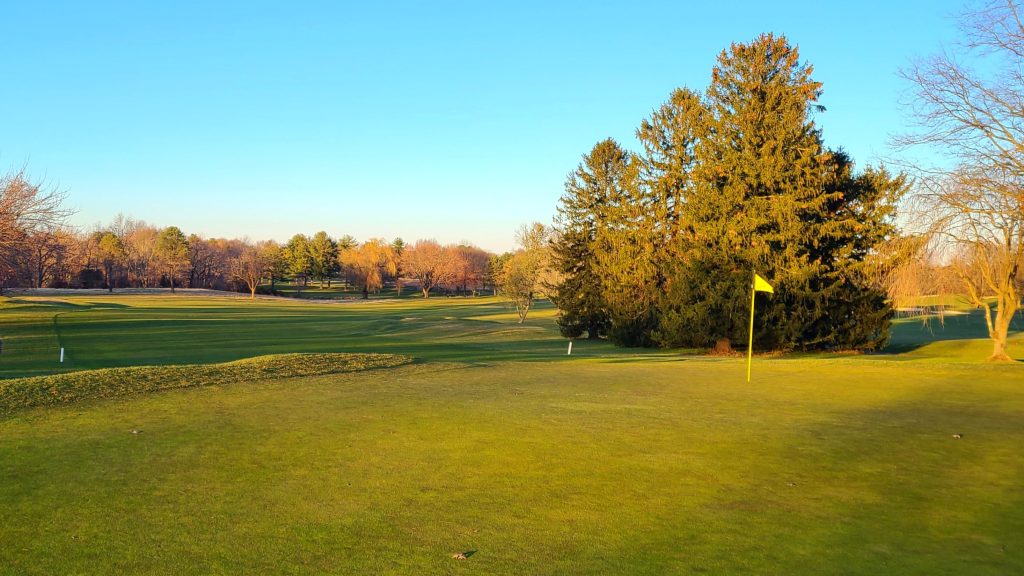
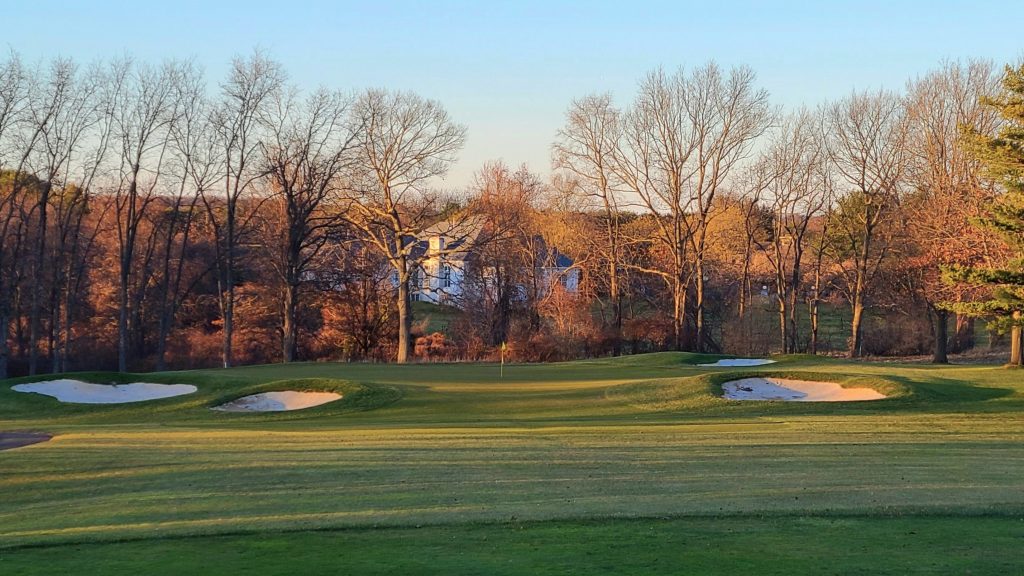
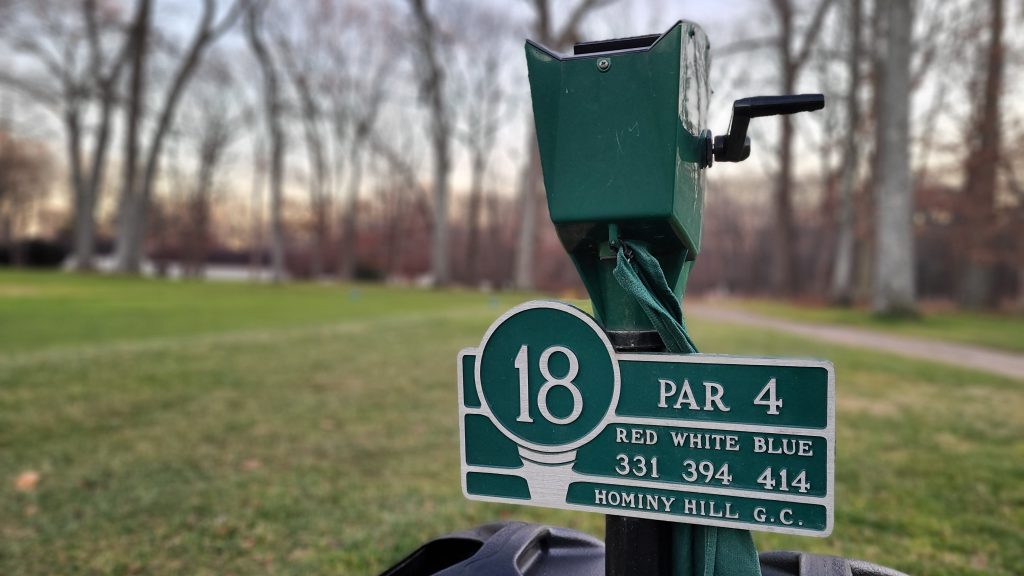
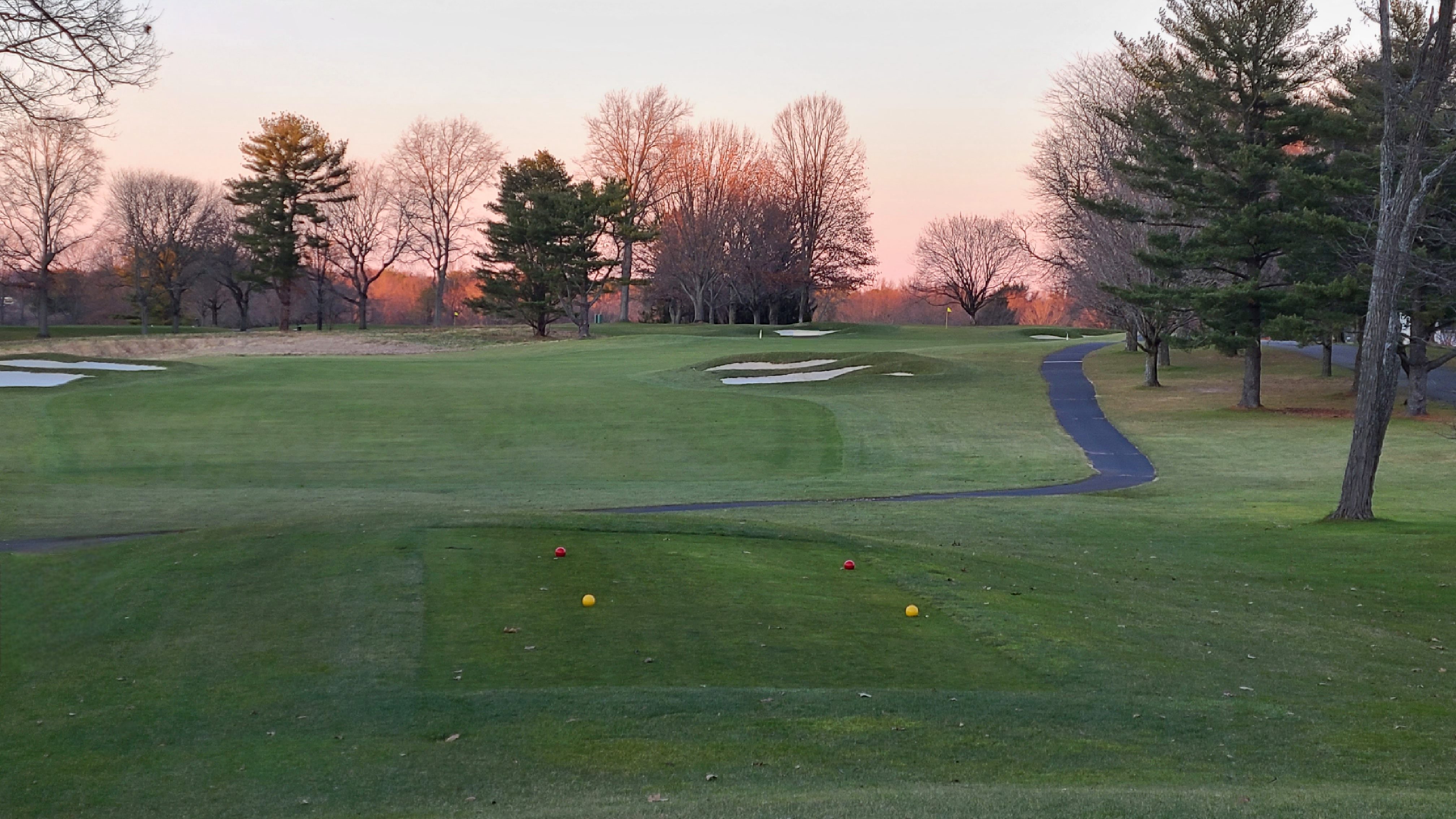
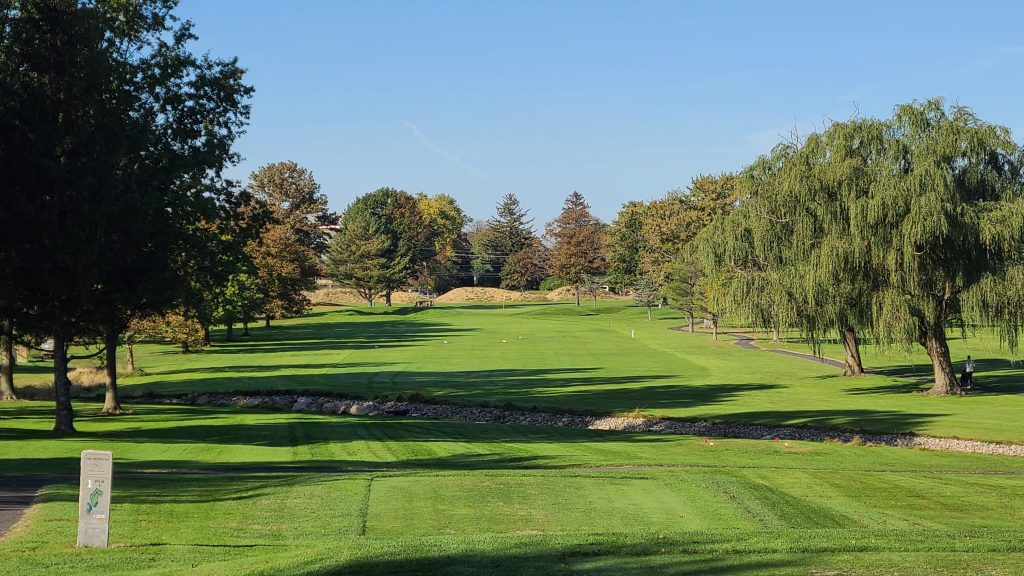
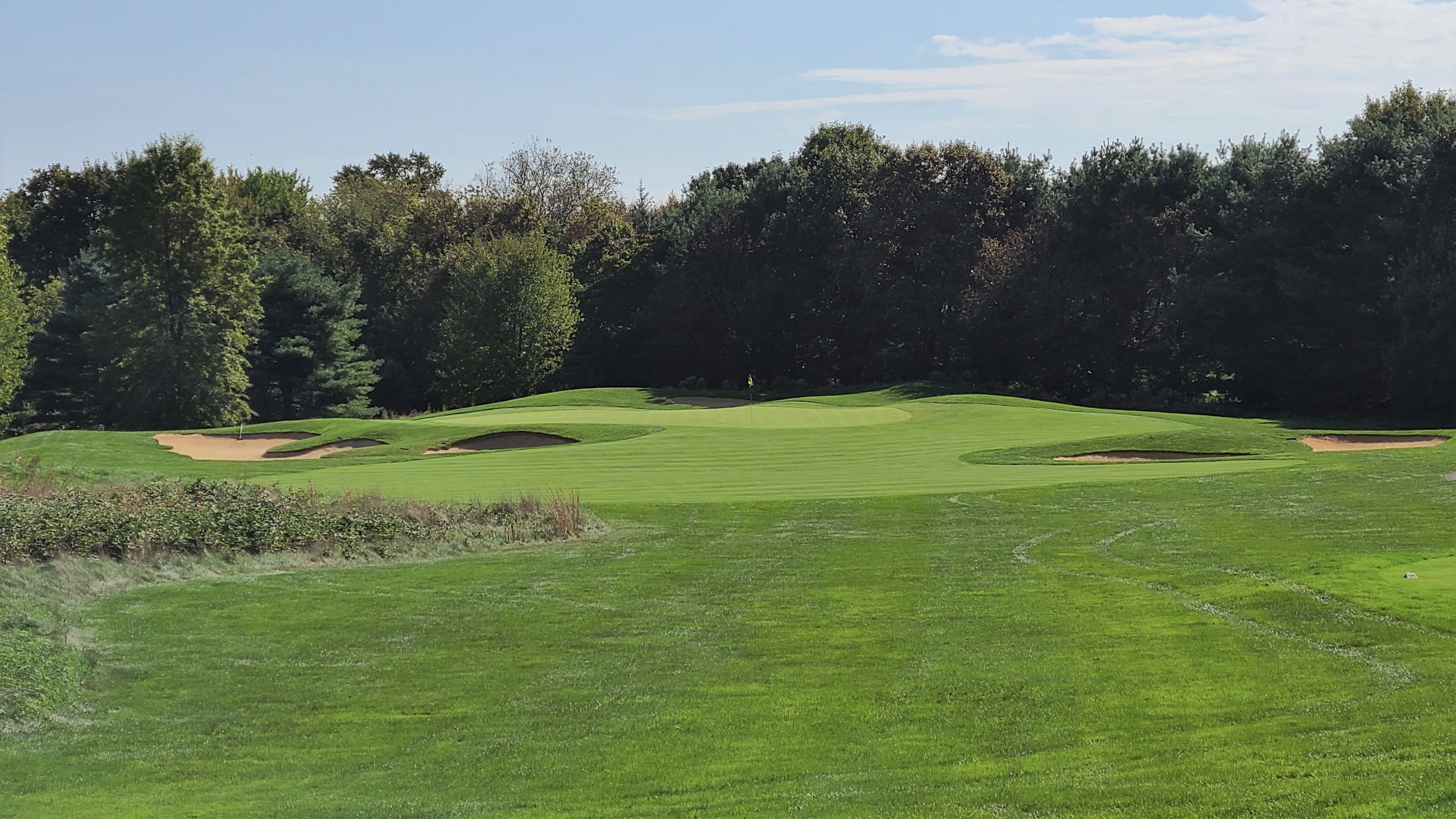
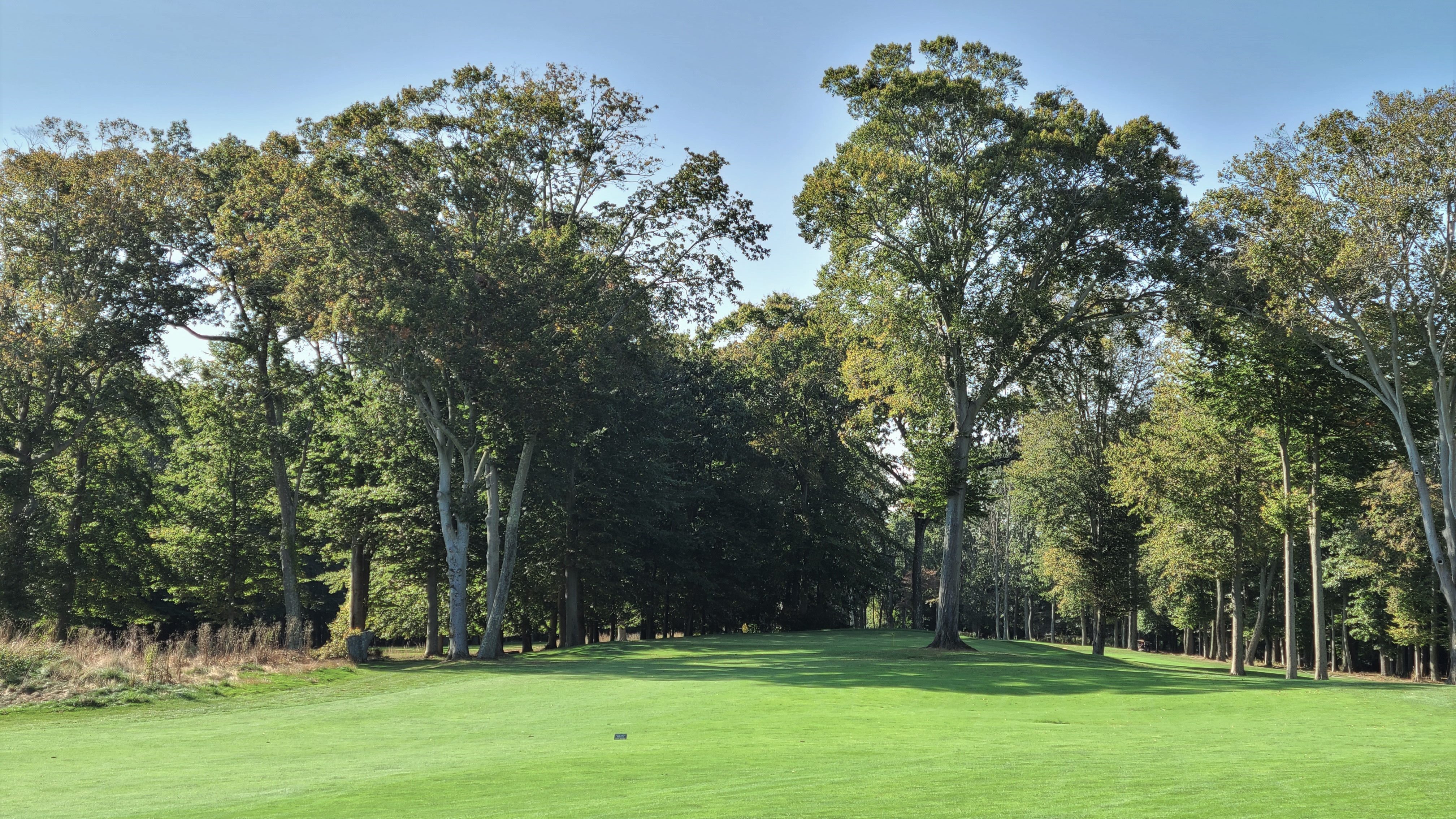
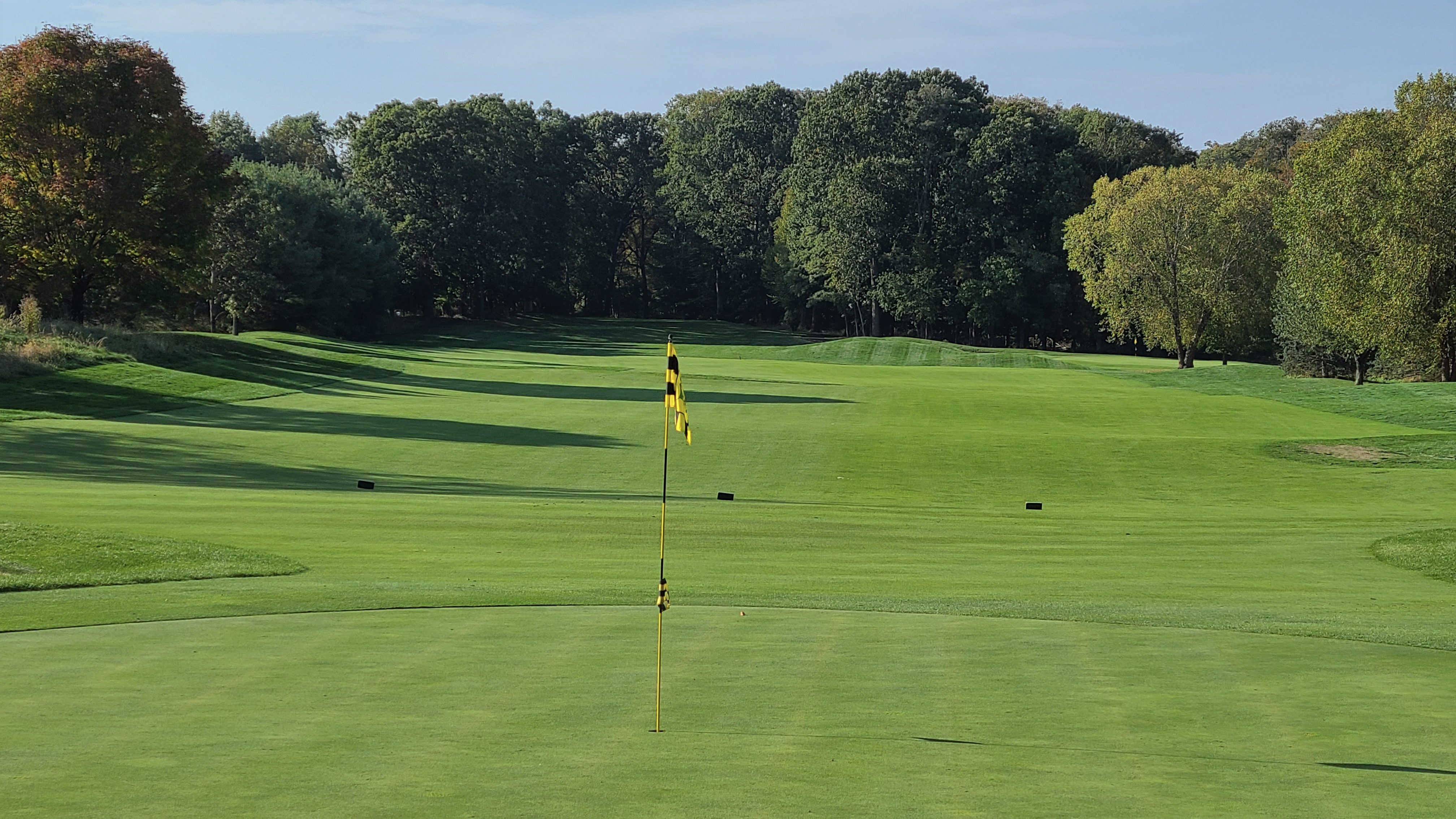
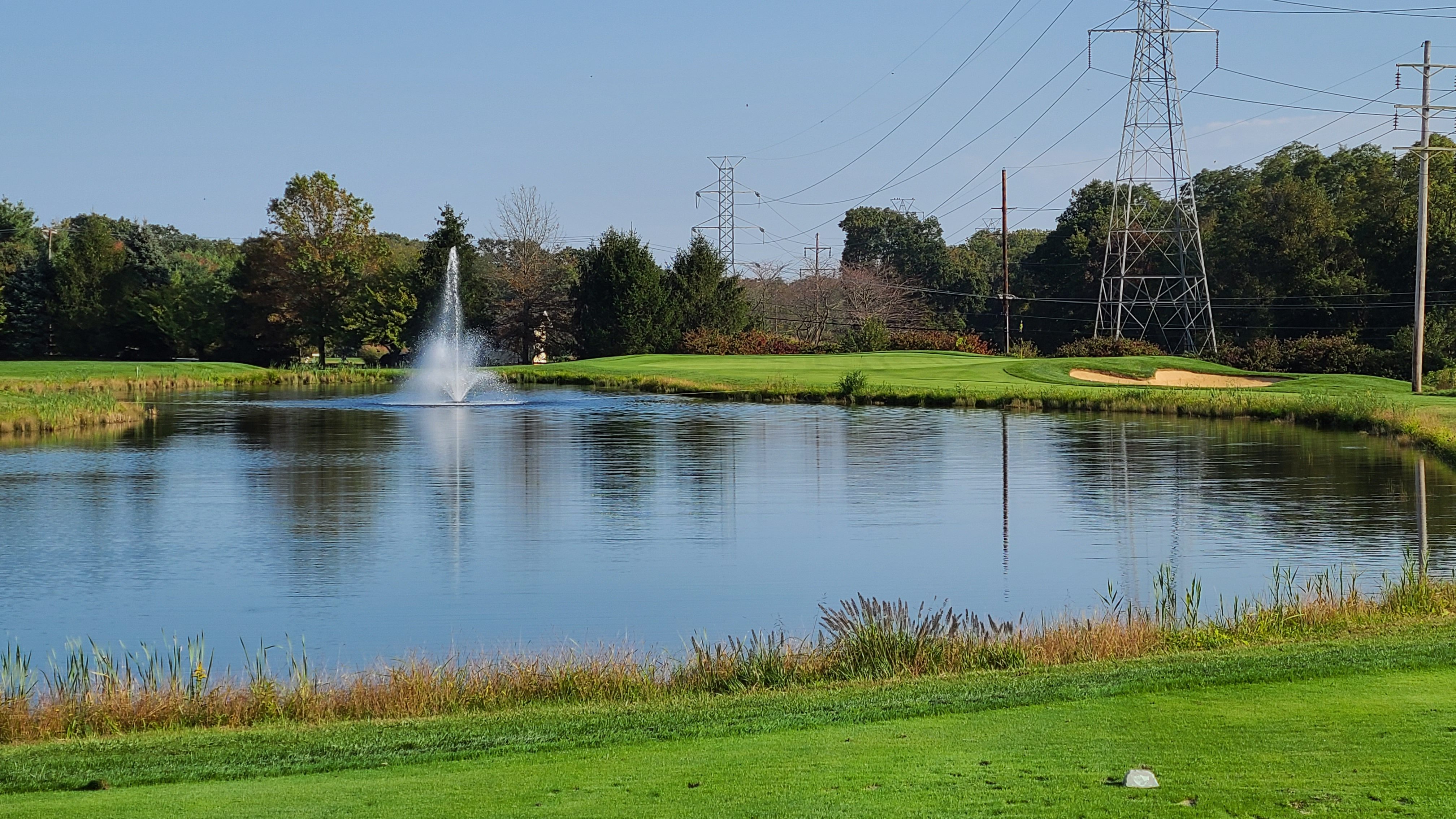
The approach at 1.A look back at 8.The uphill approach at 10.11, a picturesque par 3.Unabashedly proud of my drive at 13, a 370-yard par 4 from the white tees (… it may or may not have taken one or more hops on the cart path).13 green.The final approach at the par-5 14th must cross a creek to find the dance floor.Looking back from behind 14 green, you can see how the hole plays downhill almost the whole way.15 green.16, another pretty, but long par 3 with a wide green complex.I love these hole markers.The finishing hole at Hominy Hill.
Apart from the occasional wayward hurricane, New Jersey is not a state known for extreme weather events. On Tuesday, February 21, that changed for a terrifying hour when a very rare tornado hit Mercer County.
In its path was the West course at Mercer Oaks. By all accounts so far, and likely thanks to a sufficient tornado warning via an alert by the National Weather Service, no one was hurt on the golf course or anywhere else the tornado made contact.
The course will remain closed for some time as they work to clean up the damage.
With the temperature projected to be right around 50 degrees F on an early December Friday, I decided to take the day off to continue the journey in Gloucester County.
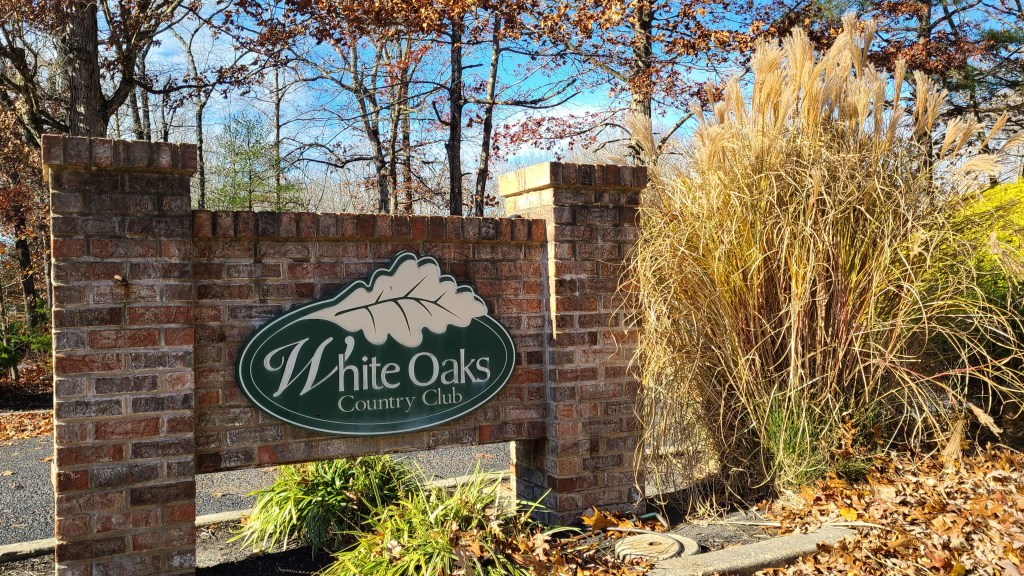
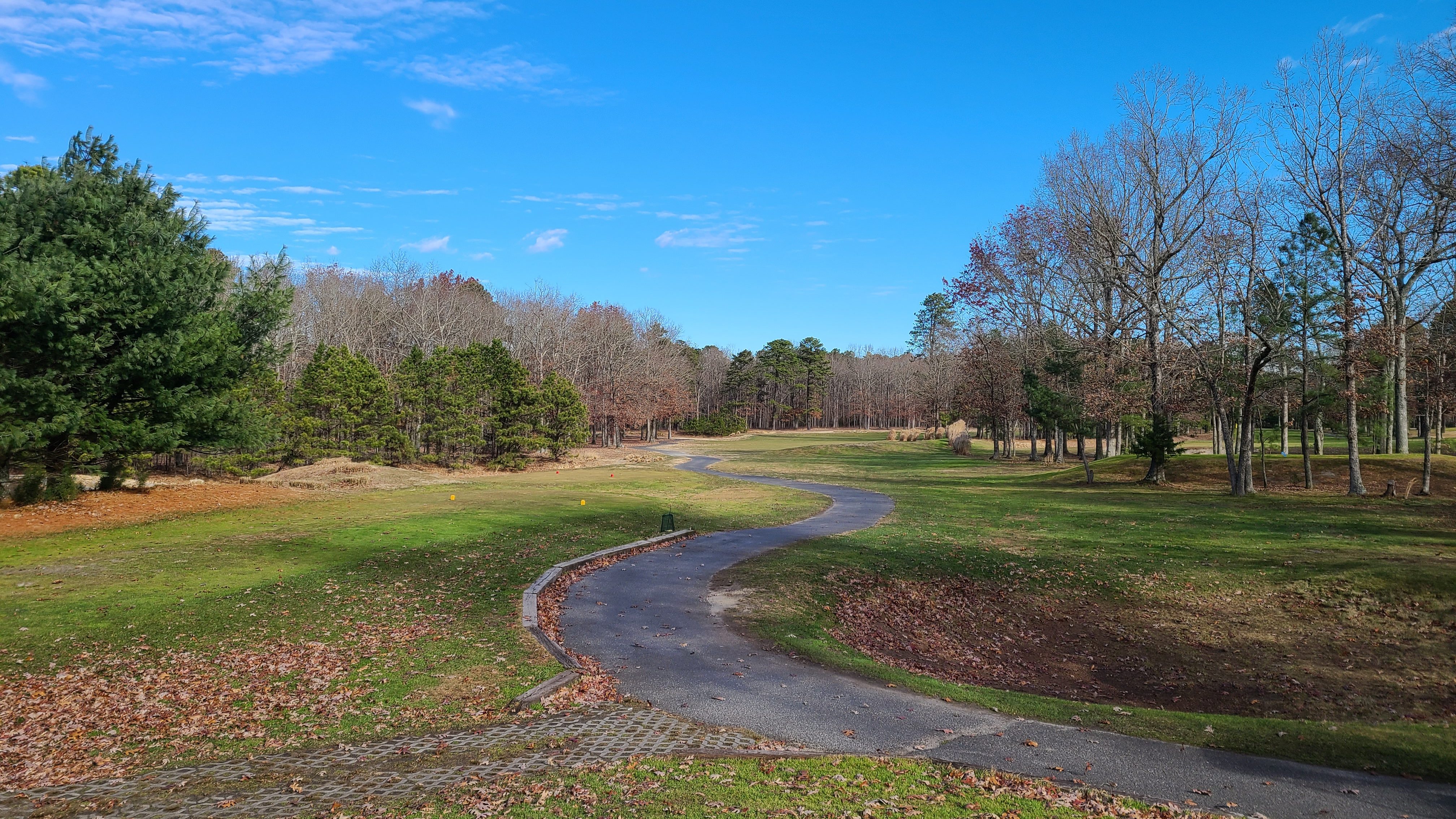
White Oaks Country Club, set in the (presumably White Oak) woods of Newfield, NJ, would be the 127th stop on my quest. The wind was up a bit and leaves were all over the place. However, being a weekday morning in the very late fall, it was beautiful to have the course almost entirely to myself. While I failed to play anything remotely resembling my best golf, I had a good time knocking another course off the list.
I typically prefer to play tees that are anywhere between 6,000 and 6,300 yards, and the white tees at White Oaks are perfectly in that range at 6,130. For some reason though, I thought it would be fun to play from the back (blue) tees at 6,532 yards. I have the length to make it manageable, but I was reminded that golf is more than distance off the tee. There is, of course, accuracy, and then everything else that follows in the game (approach play, skill around the green, and putting).
White Oaks has a nice mix of the challenge of some narrow holes, but it does offer width off the tee on others. Built in 2000, it is among the newest golf courses in the state that are available for play to the public. The green complexes offer somewhat lenient protection by bunkers, but the surfaces have great contour to them. The layout is almost entirely flat, so it is extremely walkable. The most memorable hole on the property is without a doubt the 17th, a 240-yard par 3 from the back tees!
Playing golf courses in the off-season – as my journey has often demanded – always makes me wonder what conditions are like in prime season, but I’m confident that White Oaks offers good value for its price. My weekday December round was only $24, which included a cart. Very difficult to beat that for public golf in New Jersey.
Finishing up at White Oaks meant that I completed five of the seven Gloucester County courses (not including Beckett Golf Club, which had closed since I played it). Here’s a look at some of the holes.
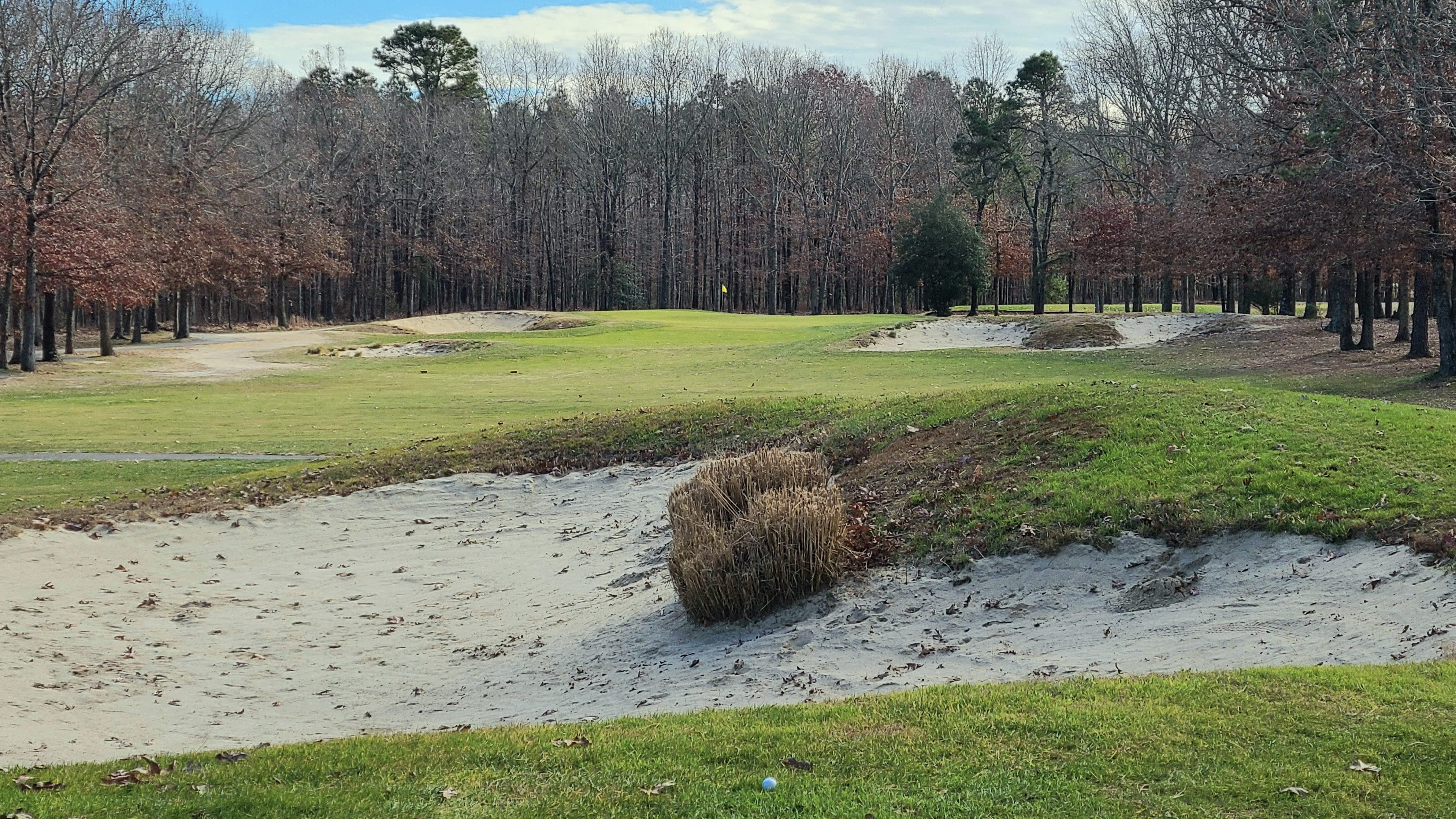
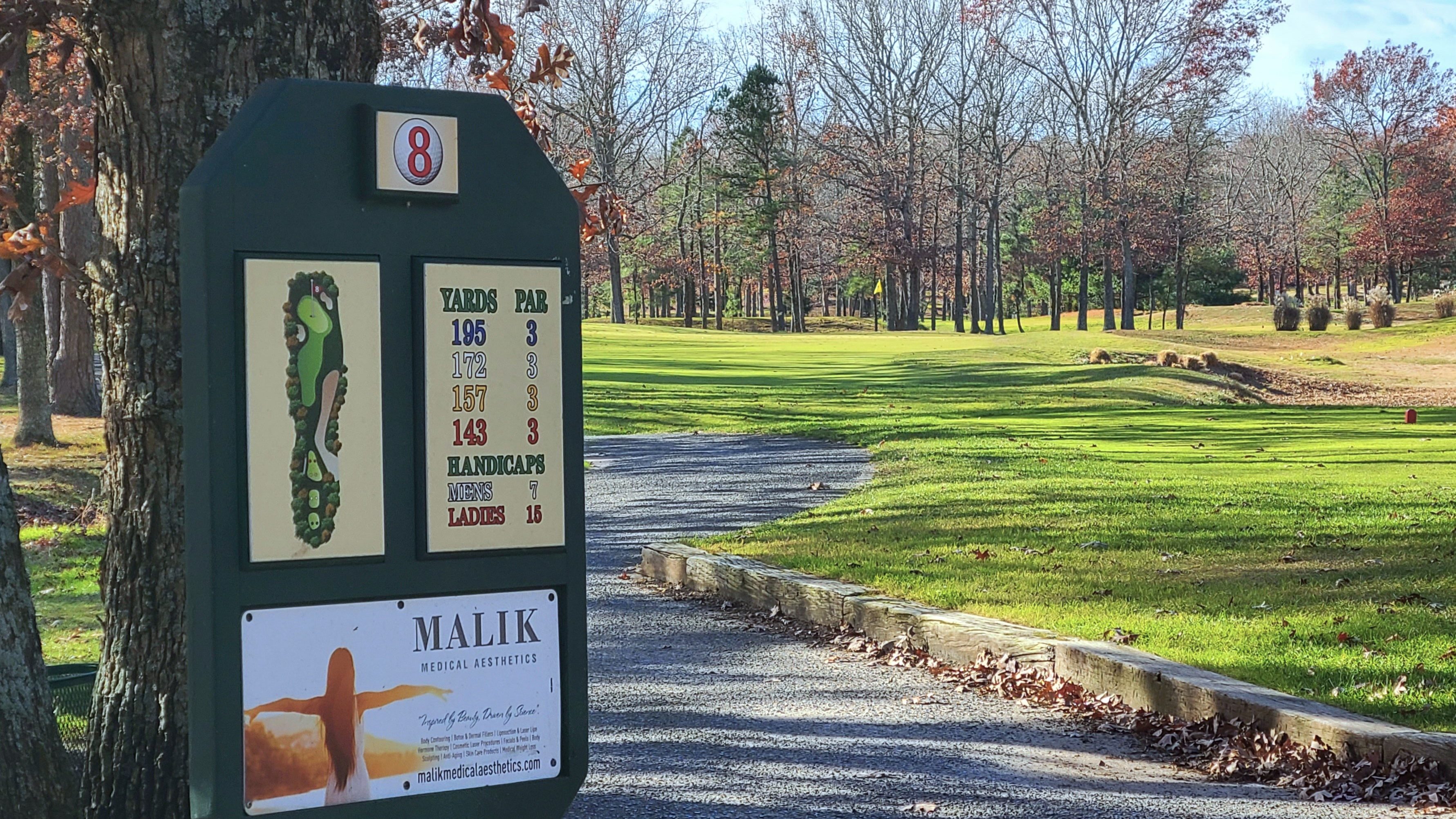
View from the tee on 2. Roughly 260 yards to run out of fairway at the dog-leg, there is also a pond to the left of the fairway at the corner. You will need at least 220 yards to get into the corner in order to see the green without being blocked by the trees on the right.My look at the green on the par-5 3rd hole. Having hit one of my longest drives, I stretched this dog-leg left almost to the limit of the corner. However, I failed to capitalize on this 205-yard approach and would only manage to make par.The second of two par-3 holes on the front nine, the 8th plays long from the back but to a very large green with little protection.Looking back from 8 green, you can appreciate the size of the target. While difficult to see in this photo, you can just make out that the green is tiered, with the hole location here on the lower level.
A look at my play on the 11th hole at White Oaks.If you’re riding and playing the blue tees, you’ll have to park your carthere on 12 and cross the entrance road to get to the tee box. The view from the blue tees on 12. Already a moderately difficult par-3 at 175 yards, your trajectory – especially if playing a left-to-right ball flight – will be obstructed by the trees on the left.Looking back at 13. While a straightaway par-4, it does play 401 yards from the back tees, with a bit of water to navigate on the approach on the right side of the fairway.Long is the safer play, with quite a few yards beyond the green to be able to play back on.17. While it plays downhill, hitting a par-3 green from 240 yards is always a challenge. Add to that the waste area on the left, a bunker right, and it’s an absolute beast.
How are a men’s lifestyle/entertainment multimedia empire and public golf in New Jersey related? The answer lies on a piece of land in the northwest corner of the state in Sussex County.
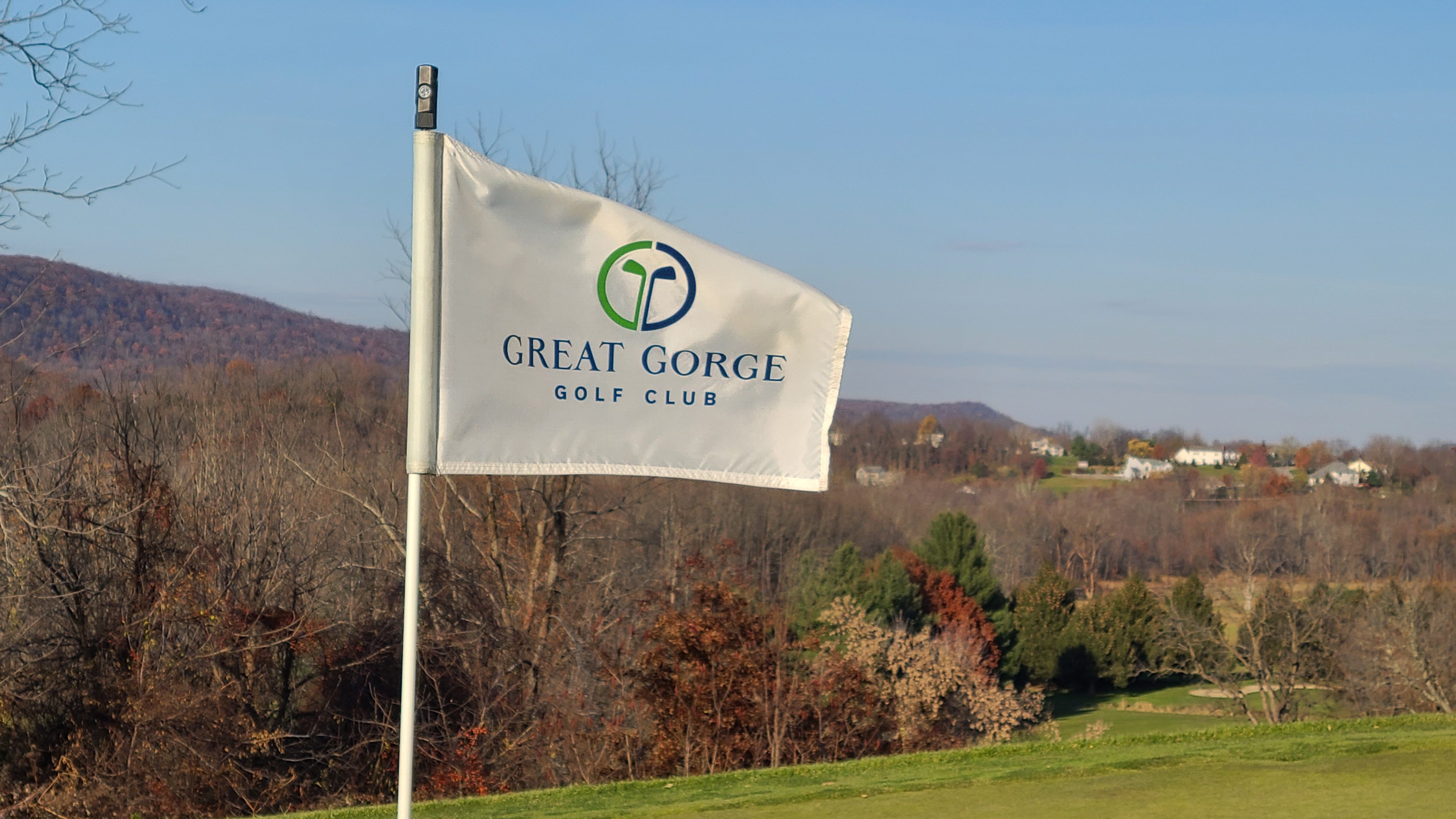
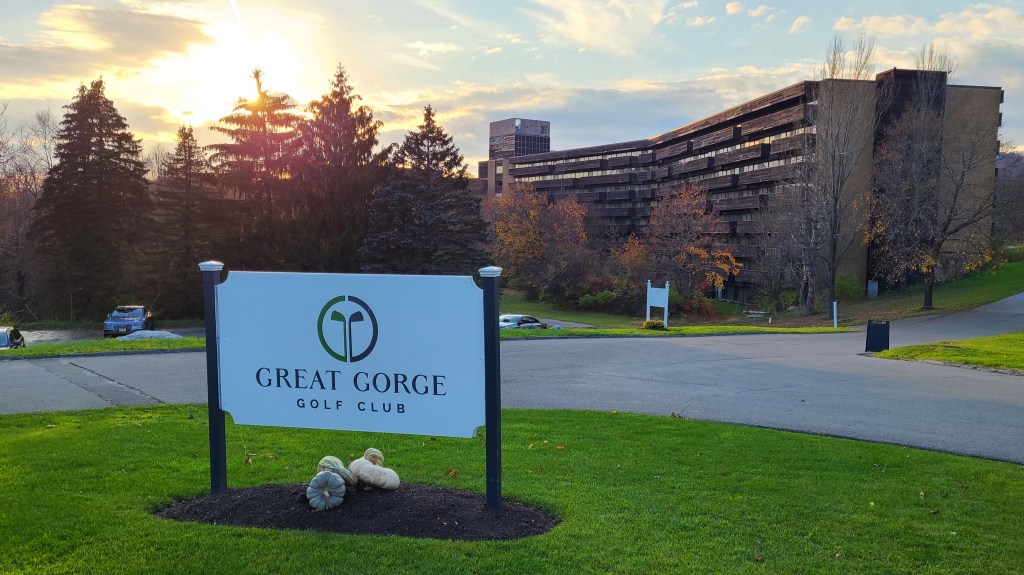
Before there was OnlyFans, there was Playboy, and in 1970 the Great Gorge Golf Club was built in Vernon and opened as the Playboy Club. While most of the appeal lied in the Playboy-branded hotel with numerous activities and amenities, the club also featured 27 holes of championship golf designed by George Fazio.
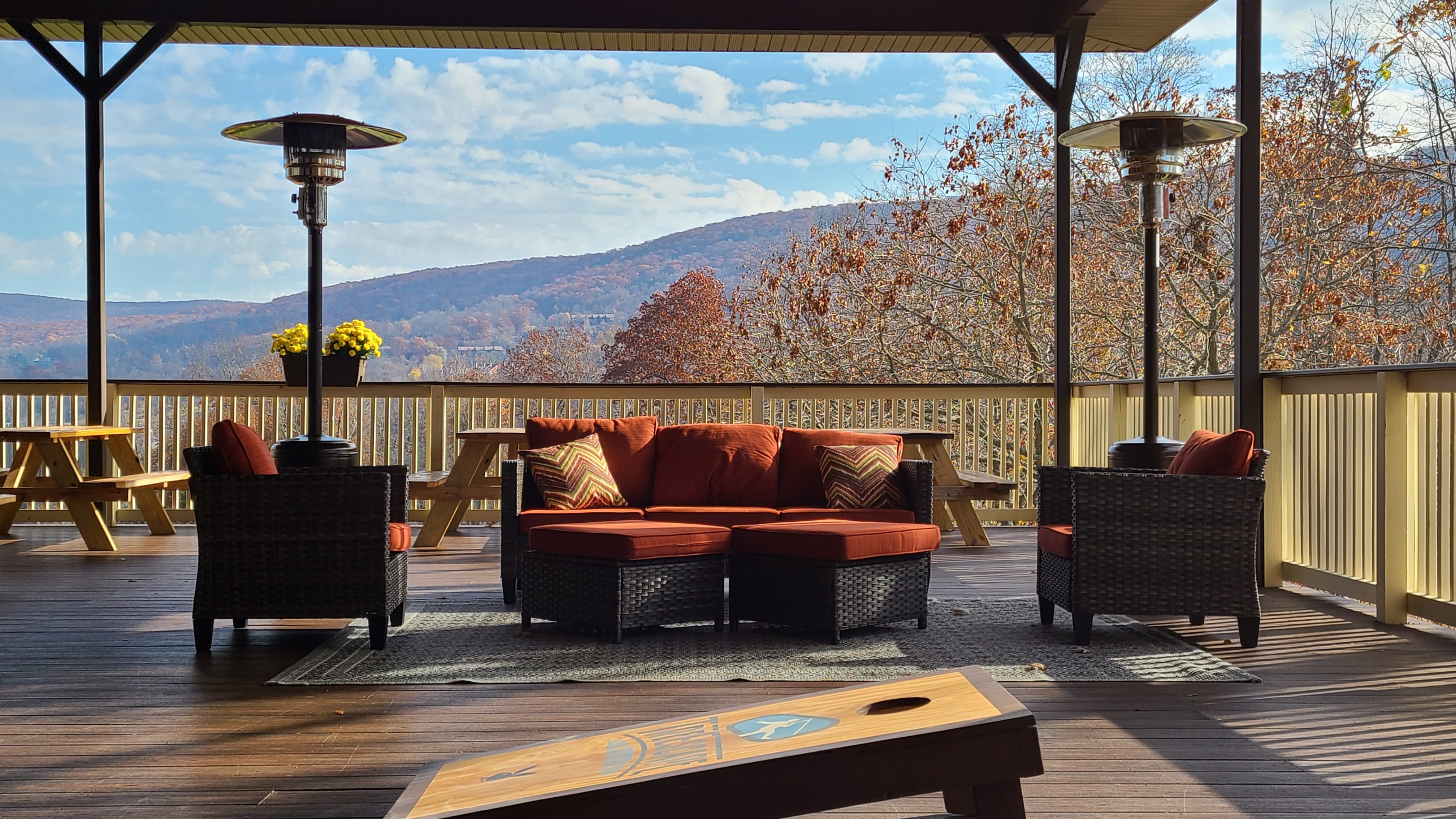
The clubhouse at Great Gorge has a bar and restaurant, as well as a deck overlooking the course and the Mountain Creek ski area in the background.
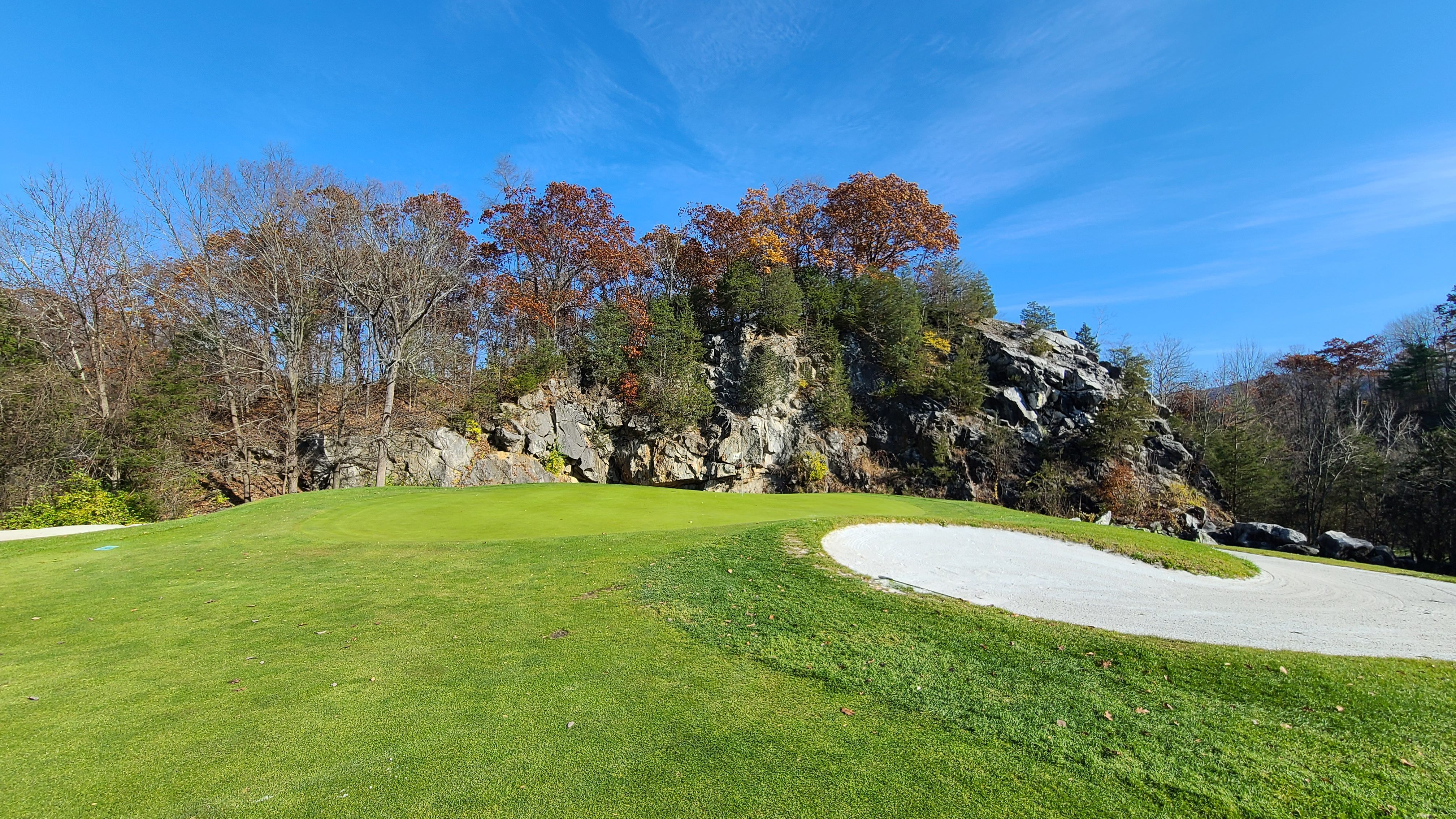
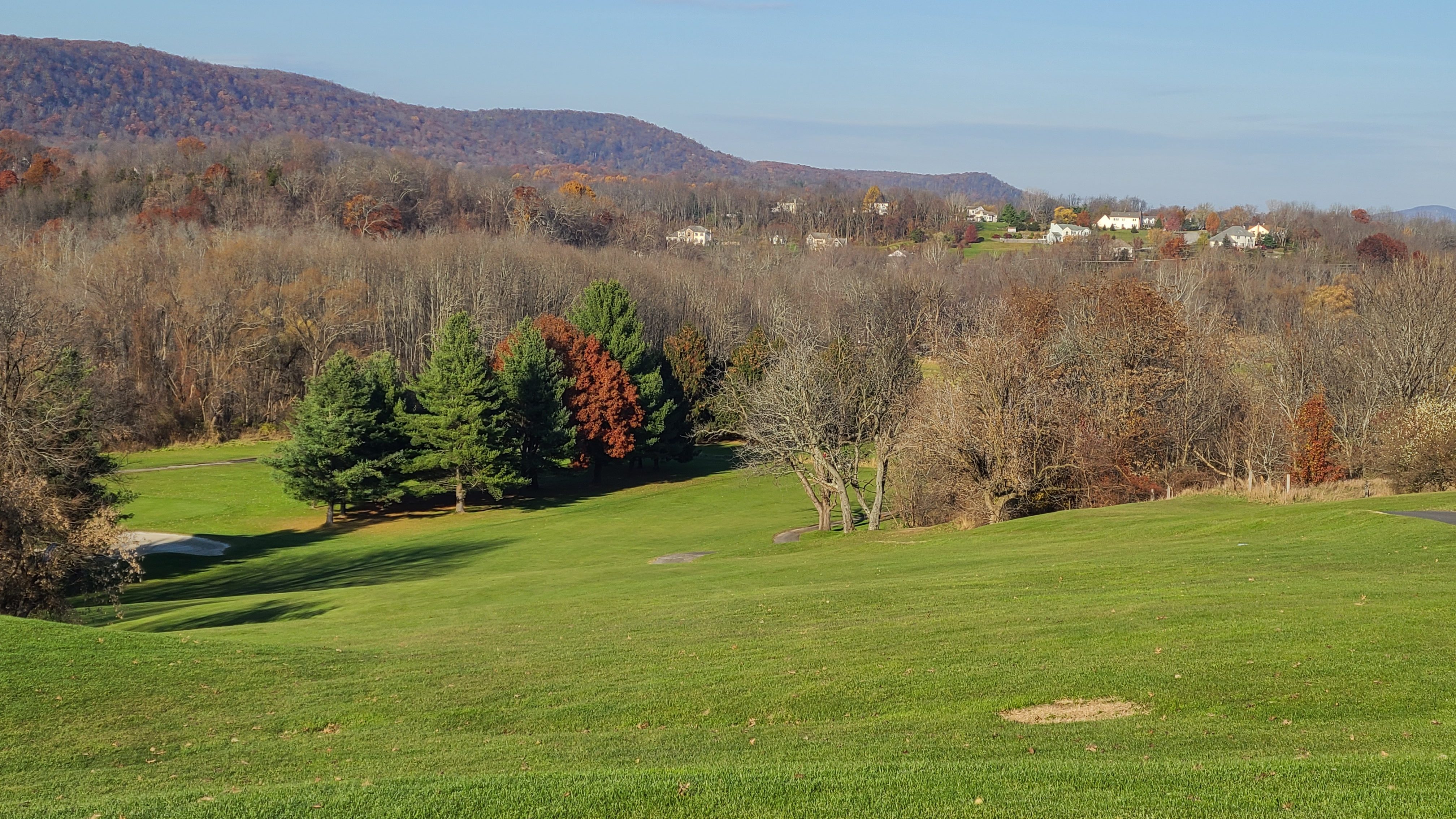
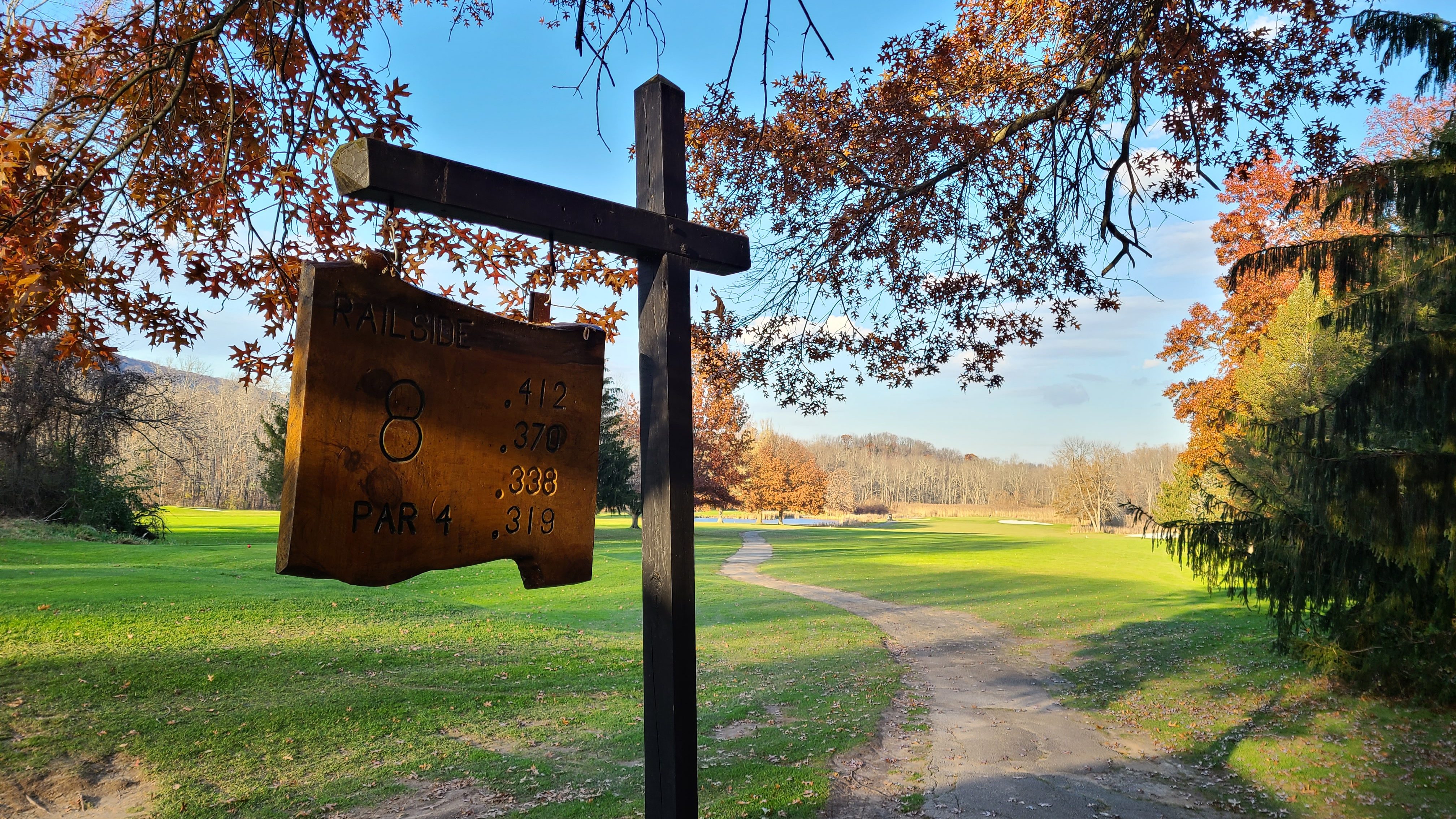
Great Gorge comprises three nine-hole courses, each named for a prominent feature. The Quarryside nine has multiple holes that play through an area carved out of the mountainous rock forms. The Lakeside nine will feature the most water hazards of the three nines. Lastly, the Railside nine plays on either side of the still-active railroad track. I headed up to Great Gorge in the late fall where I would play the Quarry and Rail nines.
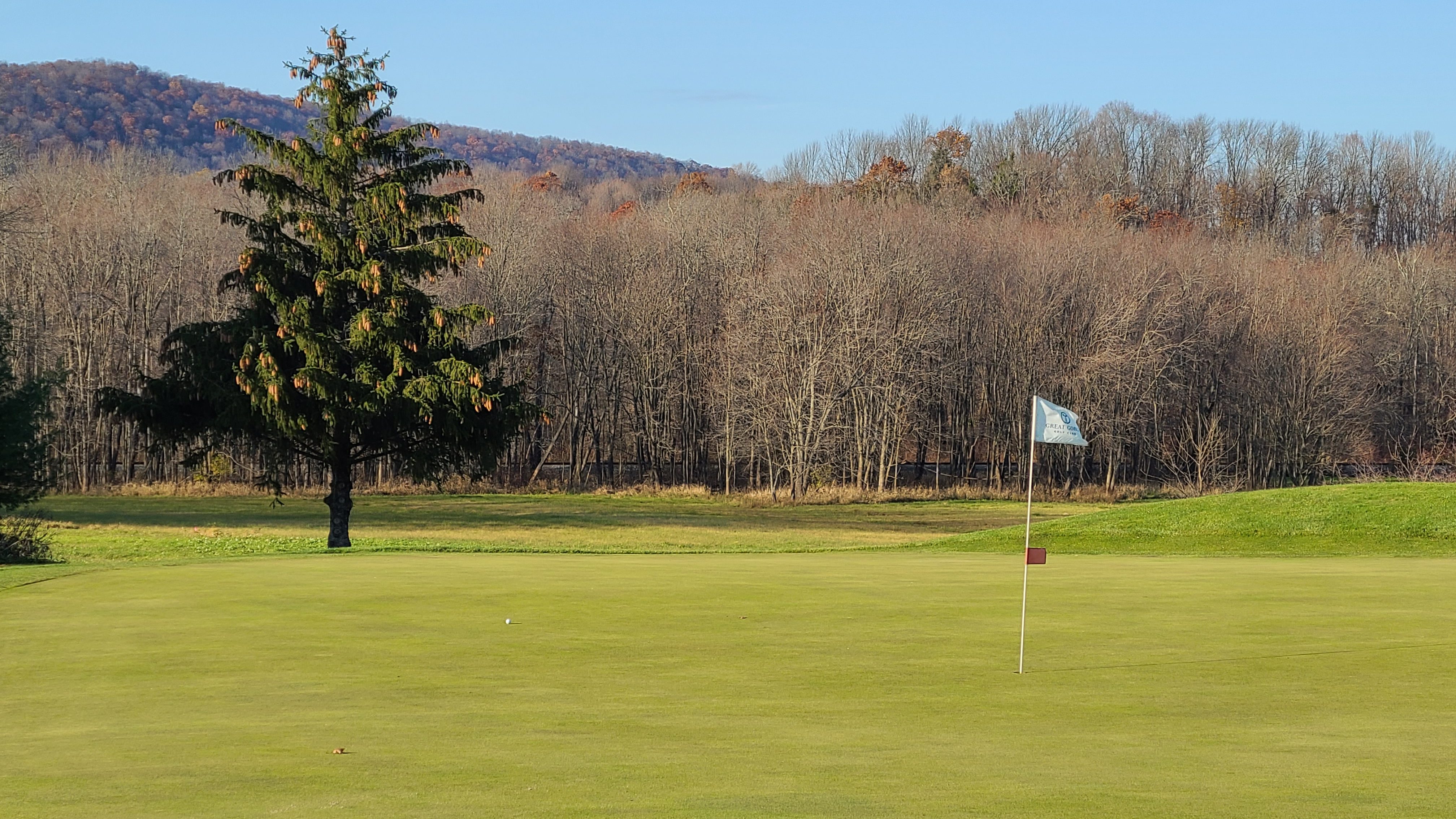
While there are distinctions between the nines that can be noticed in the holes that feature their signature namesakes, there is also enough consistency that made playing both the Quarry and Rail sides feel as one continuous, 18-hole course. The green complexes offer mostly simple bunkering, but the surfaces they protect are well-contoured and can roll at relatively serious speeds for public golf.
Number 125 – Quarryside
The only starting hole of the three nines that is not a downhill par 4, the 1st at the Quarry is a relatively straightforward, mid-length par 3. From there, it carves its way through a few elevation changes.
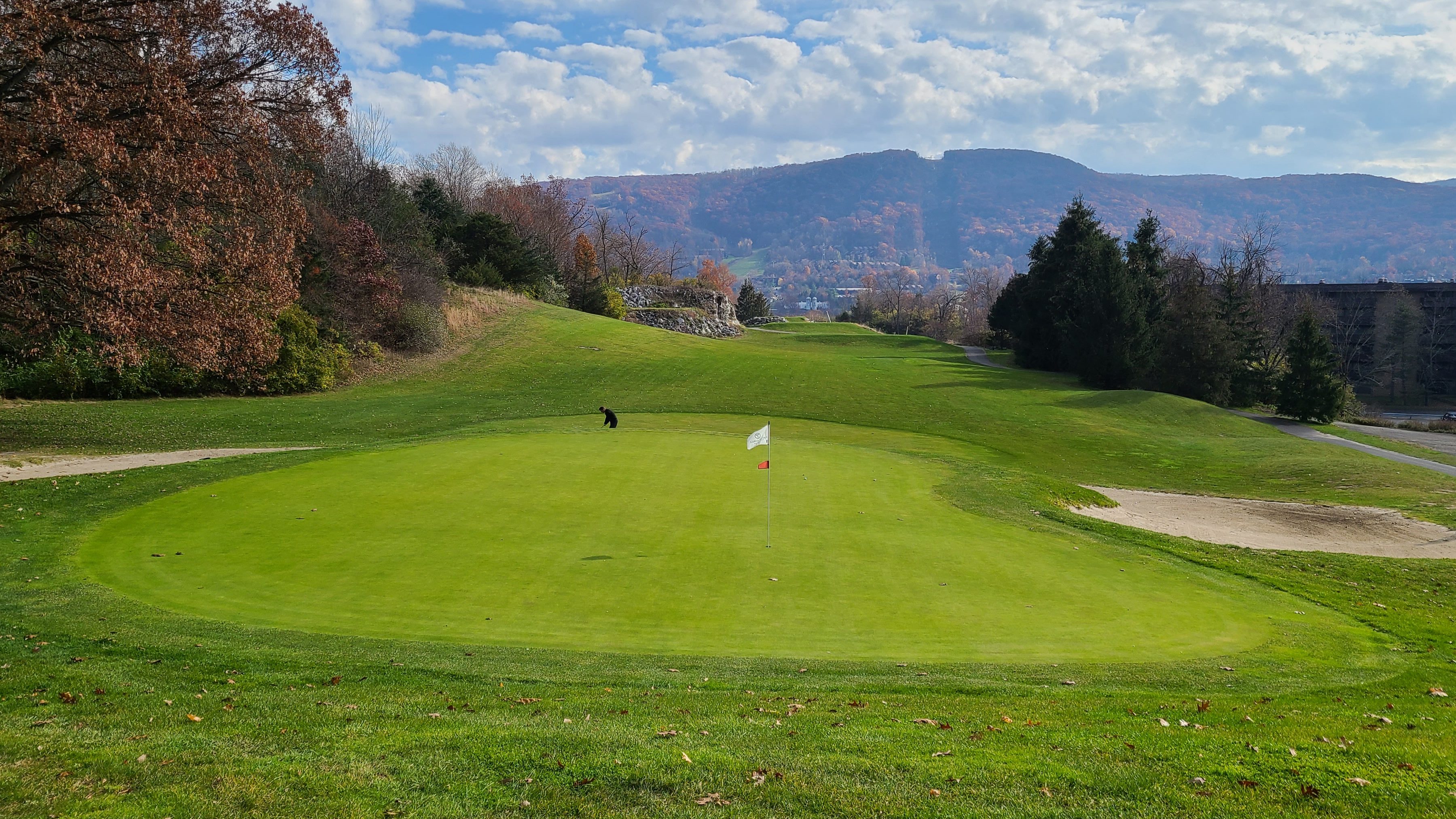
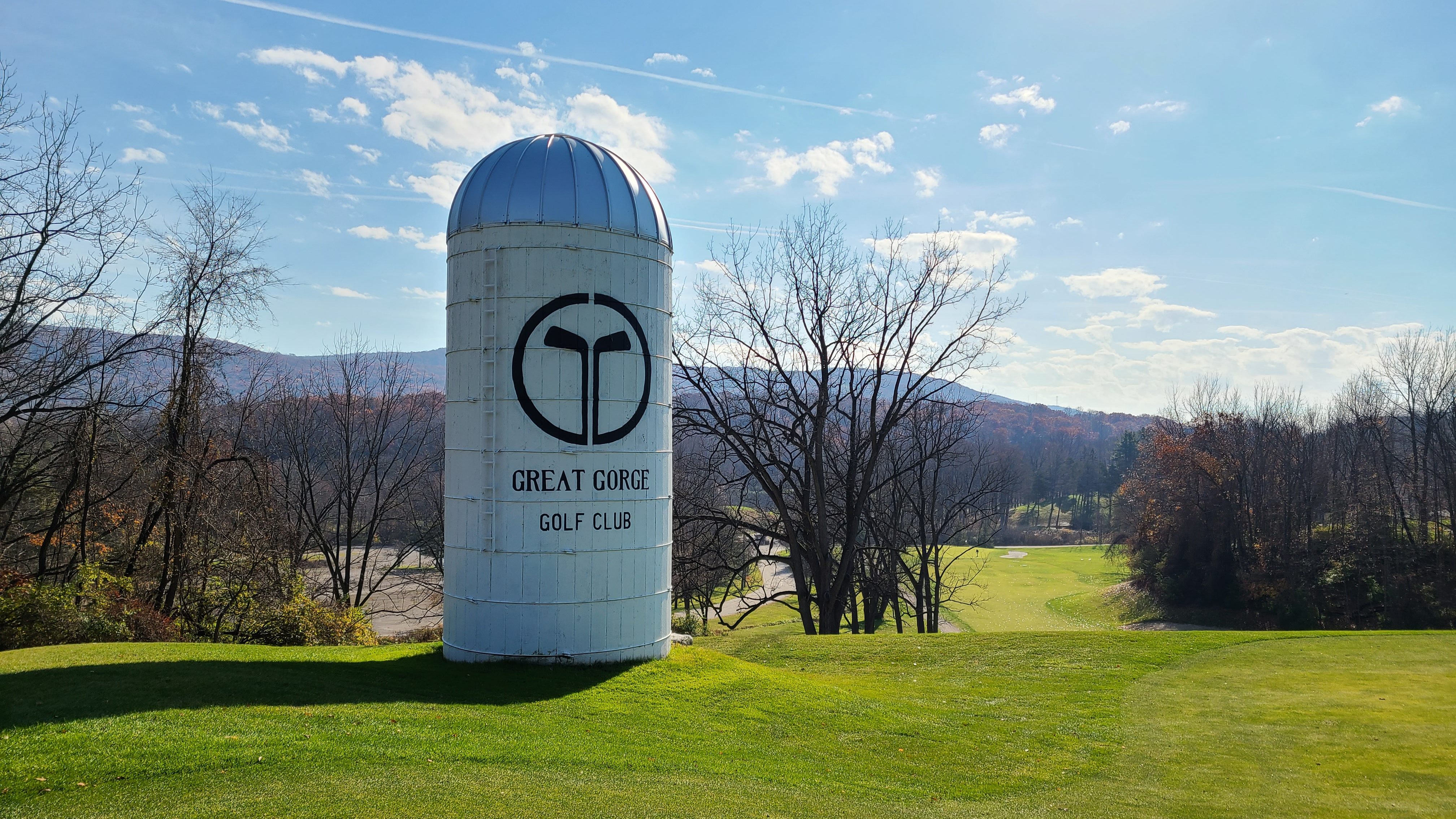
Hole 1, par 3. The signs at Great Gorge are a nice touch.The silo on 2. The tees are back towards where the silo’s shadow points. Golfers must hit to the landing area in the bottom right of the frame before turning their attention leftwards toward the green in the distance on this par 5. A wide-angle look at the green at 4, with some of the rock formations behind it.The approach at 5. This picture isn’t quite wide enough to show it, but your shot into the green will be through an area pinched by flanking rock walls. You can just see the beveled areas on either side where the foot of these walls meets ground level.Hole 6, par 3. A challenging all-water carry from the tees.Hole 7, par 4. A straightaway hole whose defense lies in the water hazard running the entire length on the left, as well as OB right.Hole 9, par 4. The approach plays significantly uphill into this two-tiered green.
Number 126 – Railside
After returning up the hill from hole 9 on the Quarryside, the Railside 9 starts with a beautiful downhill tee shot into a very wide landing area. Once you’ve holed out on the first, the course then crosses the railroad tracks for which its named.
The green at 1 on the Railside is in the center of the frame, though the tees you see are actually for the 1st hole on the Lakeside, which play off to the left. The paths are narrow and indeed steep. This is not the place to test-drive the carts.The tracks splitting the Railside from some of the Quarryside. On the left is the green at 6 and the par-4 7th of the Quarry. To the right of the tracks is the 2nd on the Rail at the top of the frame, and the Rail’s signature 3rd hole in the center-right. You can see the trestle supports that remain of where the railroad used to run. From there playing to the top right corner of the picture is hole 4, a dog-leg right par 4. Hole 5, par 3. Easily the most diabolical green on the property, at least of what I played between the Quarry and the Rail nines.Uphill and only 156 yards from the back tees, it’s easy enough to hit as a target. But its severe slope requires some deadly accuracy – and perhaps some luck – to be able to hold in a position for birdie.Having missed the green at 5 in one of the invisible bunkers to its right, a decent shot out at the pin had me roll all the way down here, completely off the green. This ground-level pic shows why, with the hole sitting 2-3 feet above where this fringe is.Solid flags.Hole 6, par 5. 566 yards from the Green tees and playing well downhill as seen here.Plenty of room to miss left. This is a must-send tee shot.Being an off-season round – and having played pretty miserably up to this point – I decided to go for the green in two from about 230 yards. The risk was topping my 3-wood into a reeded creek that runs across the fairway about 150 yardsfrom the green. The reward was this 18-footer for an eagle, which I holed for the 4th of my career.Sunlight faintly streaking across the sign at 8. This par-4 really narrows out in the landing area of a driver, with water to the left.The sun sets over the derelict hotel on the Great Gorge property, now nothing more than a memory of a bygone era.
Just six miles from Baltusrol, nestled between Routes 22 and 28 is without a doubt the most historic stop on my journey through New Jersey.
In 1921, the Shady Rest Golf and Country Club was formed as the first black-owned golf club in the United States. From 1932 to 1964, John Shippen – the first American-born golf professional – called the club his home, offering his services as head pro and clubmaker.
The svelte-looking Scotch Hills CC with the 5th green in the foreground and the clubhouse in the distance.
A nine-hole course set on a narrow piece of property, Scotch Hills runs uphill towards the back of the course at the 5th green and then turns back down the hill towards the clubhouse. While the opening and finishing holes are on relatively level ground, there is a fun test of elevation changes from holes 2 through 8. The course offers small greens as targets, so if your approach play is off, you’ll need to make sure you have your short game on hand in order to score.
The course opens with a straightaway par 4. Anything wildly left or right will have room to land, but will only offer an obstructed approach shot as two sets of in-play trees line the fairway within 100 yards of the green.
The first hole.
The 2nd – which I would consider the course’s signature hole – is a par 4 which plays through a tight chute off the tee and slightly uphill. Most of the fairway sits on a very rounded mound which will deflect balls off to the left. Approach shots from the downhill collection area will be playing to a green 10-20 feet above the lie.
The view from the tees at 2.
Flyover from the opening tee shot, through the chute at the 2nd tee, and up past the greens at 2 and 6.Looking back from the green at 2, you can see the pronounced mound in the fairway.
The 3rd hole is a downhill par 3, where anything long is potentially dead in the woods.
The 3rd.
The 4th hole has you back on the some of the lowest lying area on the course, teeing off uphill. Approaches on this par 4 will be to a green that slopes away from you and is at the end of the foothill. Players will have to decide whether to carry a lofted club to the green with spin or try to land short of it and allow the ball to trundle down the hill and onto the putting surface. A bunker further down the hill and beyond the green awaits any approaches that are sent too far.
The green at 4 in the foreground, with the 5th fairway running up the hill on the left with the green in the distance.
A significantly uphill par 4, the 5th hole is drivable. However, driver may be too much club for many players. After playing a 4-iron safely to the fairway, I played a second ball for fun with a 3-wood, and the ball went through the green and was just kept in play by some stray branches on the ground. If you’re going for the green, err on the short side based on your club yardages.
A look back at the green at 4, showing the downhill approach and a view of the collection bunkers.
The 6th is a VERY short par 4, playing only 220 yards from the back tees. There is ample room to take on the green, but players need to carry a bunker in front that is about 15 yards short of it.
At the par-3 7th, players are faced with another downhill tee shot to a slightly tricky target. It slopes downhill to the left, so the best tee shots will be ones that are fortunate enough to play right of center on the green.
The 7th. From the tees, while you can’t see the green, you’re almost given a hint as to its right-to-left downhill contourbased on the crest of the hillbefore it.
The 8th hole is the course’s longest par 4 at 380 yards from the back tees. On the tee box, it feels very narrow with the trees lining OB from the road on the left. The fairway is cut to favor this side with almost no rough on the left before your lie could be obstructed by the overhanging trees. There is much more room on the right, but there is a significantly wider rough area before a penalizing patch of trees. Any long (and straight) hitters should be careful not to drive the ball through the fairway as there is a water runoff collection area where finding a ball may prove difficult. The green slopes right-to-left and back-to-front.
The approach into 8. Beyond the hill that crests across the front of the green in this shot is the water runoff area that should be avoided. If a poor drive finds you too far to reach the green, your second shot should be played out to the right, towards the greenside bunker.
The finishing hole is a long par 3 – roughly 190 yards when we played – and ever so slightly uphill, albeit to a generous green.
The green at 9, with a view of the green at 1 in the distance on the right.
My good friend Ed and I walked the course on a quiet Saturday. Some rain had fallen before we went off and seemed to threaten to start up again, but thankfully, we remained relatively dry throughout the round. Neither one of us had our “A” game with us but we always have a good time regardless, and playing Scotch Hills to complete all the courses in Union County was no exception.
“I maintain that the Suneagles Course ranks among the best of my creations.”
– A. W. Tillinghast
That quote can be found on the scorecard for Suneagles Golf Club, the 123rd stop on my quest. For those familiar with Tillinghast’s courses, that is really saying something. In New Jersey alone, he designed the layouts for renowned private clubs such as Ridgewood, Somerset Hills, and Baltusrol.
Whether or not he meant it, it’s always interesting to play a course designed by a famous architect. For the average golfer playing municipal courses and other daily-fee publics, it’s unlikely you’ll run into many of them. Oddly enough, Suneagles is about two miles from another Tillinghast design, Old Orchard Country Club. However, having the same designer is where the similarities end.
The quality of Suneagles is certainly above what I found at Old Orchard. Granted, while I played them at two very different times of the year – October versus February – the condition of tee boxes, greens, and bunkering at Suneagles were noticeably better. The bunkers in particular seemed brand new, just one example of an ongoing renovation effort.
With that renovation has come increased cost to golfers, which is certainly understandable. Peak season rates can reach over $100 to ride on weekends. Thankfully, I was able to walk the course on a weekday for $37. Apart from knowing that you’re playing a course with some history, I don’t know that I could justify $100 tee time to the average weekend golfer.
The course is in good enough shape, but there are some low-lying holes – like 8, 10, and 11 – that did hold some water which made conditioning difficult. At that price point, though, you’re approaching some of the best publics in the state, and most golfers will want to see that value all around the course.
Having said that, I liked my time at Suneagles. I chose to play from the 6,385-yard back tees and managed relatively well for my game. That is about the course length limit that I enjoy playing and none of the holes felt too long, with its yardage being distributed evenly among the par 3s, 4s, and 5s. One interesting note about the course is that the holes are each named, something which is almost an exoticism for public courses – at least in New Jersey – and that I can only remember seeing at Laguna Oaks. The par-3s, for instance, are named “Puck”, “Lake”, “Clipper”, and “Island”.
Whether you’d like to add Tillinghast to your list of architects whose courses you’ve played, or you’re just looking for another public golf option in Monmouth County, Suneagles is certainly worth a look at its cheaper rates. If you need to play on a weekend, I recommend walking in the afternoon. At the time of writing, that should get you a rate between $50 and $60, a price for which the course can certainly provide adequate value.
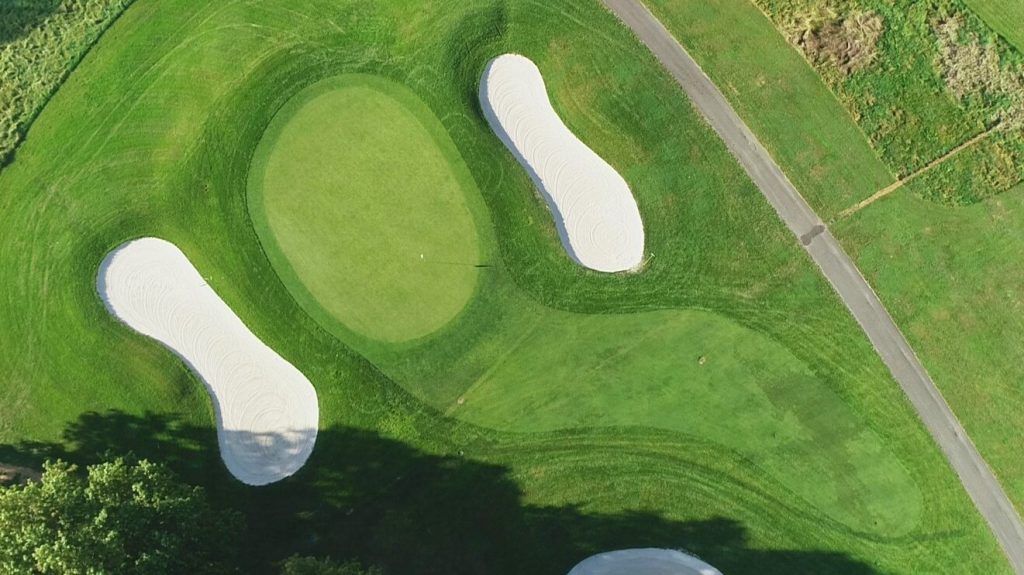
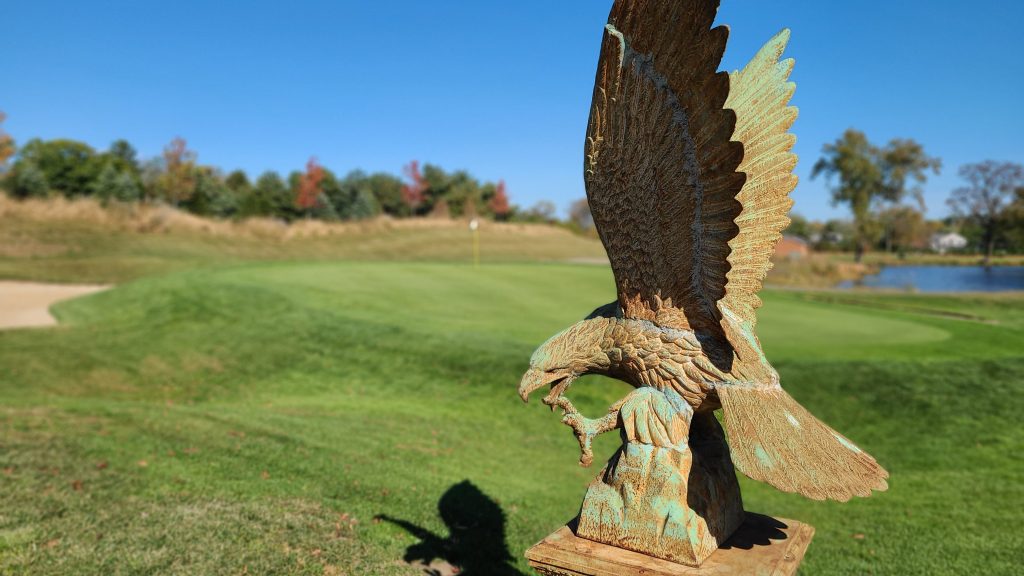
The opening tee shot on “First” at Suneagles. Until the 8th hole, all of the driver holes are pretty straight.Bird’s-eye view of the green complex at the par-3 2nd, “Puck”. I thought it looked like an elephant, but some on Twitter cleverly noted that it resembles Edvard Munch’s “The Scream”.The approach into 6 (“Brook”) if you’re a little left of the fairway.One of the two eagle statues that line the clubhouse drive, with the greenof the par-3 7th in the background.The 7th (“Lake”) from the tees.A look at the landing area, pond, and green at 10 (“Turn”).A wild drive placed me on the wrong side of these trees to the right of the dog-leg-right fairway at 13. Looking back at 13 (“Jonah”).The green at 18 (“Home”).
After finishing up at Colonial Terrace, I headed over to Colts Neck Golf Club. Being a semi-private course, I had a short debate with myself about whether or not it should count on this journey. When posting about it on Twitter, most responded that it should, with sentiments like “if you can get on without an invite, it counts”. I’m not sure where I draw the line on what should be considered “public”, but ultimately, I felt like there were enough tee times available to the general public on a daily basis for it to count on the journey.
The course was an absolute treat to walk for $40 on a weekday in October. I’m not sure if that’s just a fall rate, but that is easily one of the best values in the state. I haven’t listed it as one of my “must play” publics – though, as I write this, I’m debating whether I should – but I do highly recommend it, especially if you can get that anything close to that price.
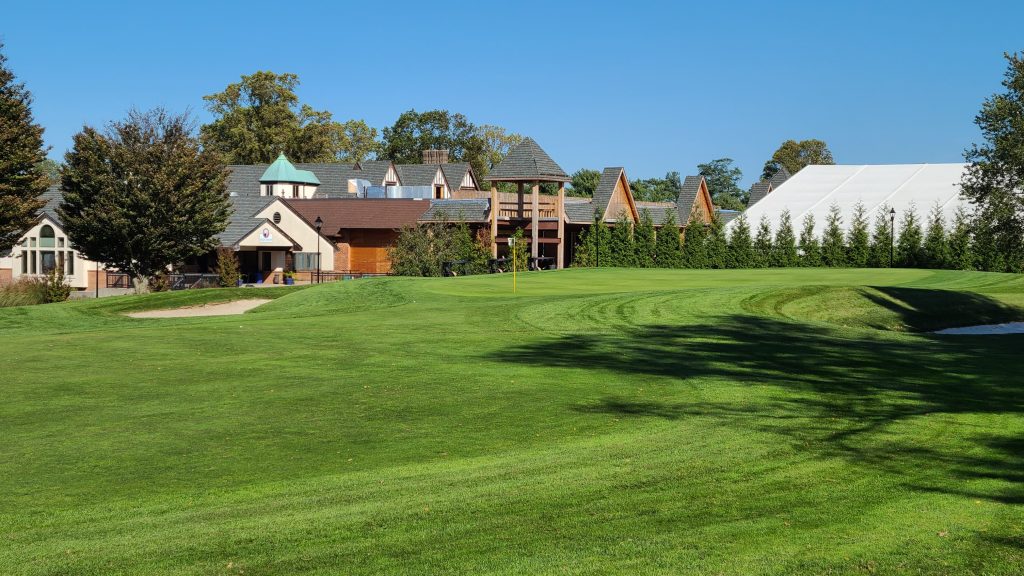
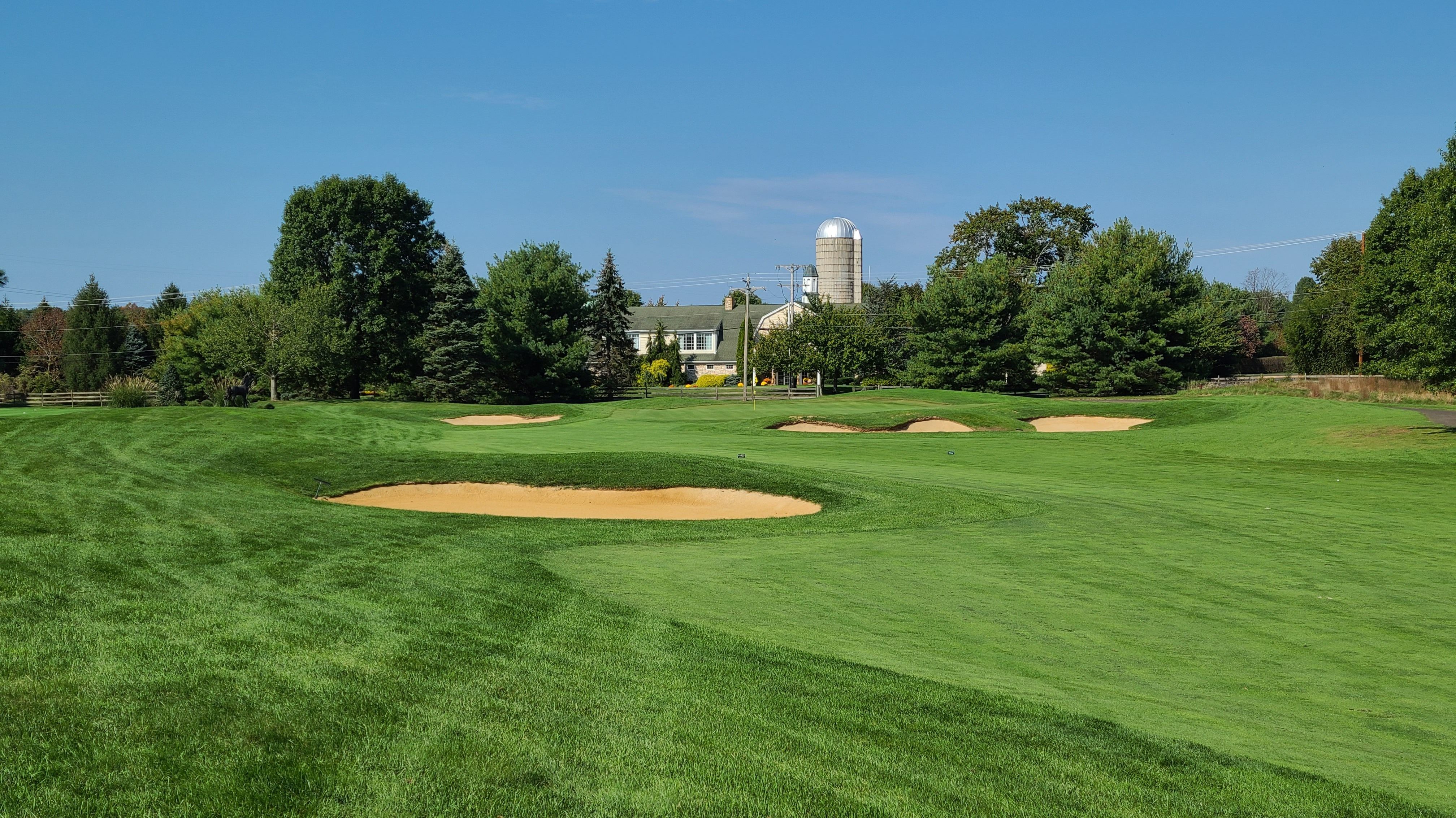
Hole 2, with a look at the farmhouse style clubhouse in the background.
The course has just the right amount of elevation change – particularly through the middle third – striking a great balance between a completely flat layout and a mountain golf course. The conditions are some of the best I’ve seen in the state, which perhaps should be expected, given its semi-private status. Were it a strictly daily-fee course, it would be among the very best in that category in New Jersey.
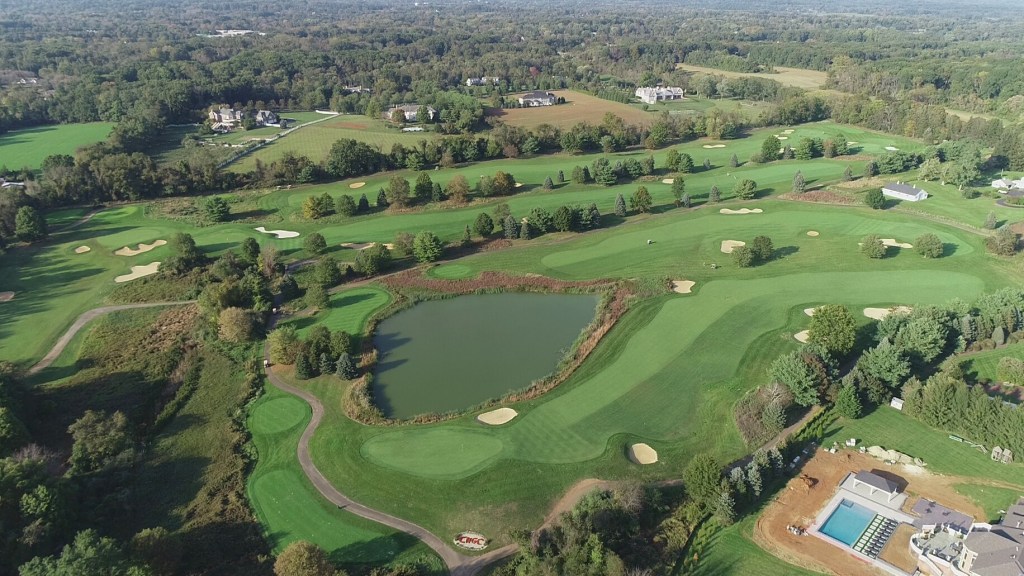
Some of the middle third of Colts Neck. The 5th plays off to the left of the frame. The par-5 6th runs from left to right in the backdrop. A short par-3 7th is in the distance in the top-right corner, with 8 coming back parallel to 6. The tees at 9 and the green at 11 straddle the pond.
I happened to play exceptionally well, scoring my best ever differential to par. While I did not make an eagle at either of the par-5s at Colonial Terrace, I did hole an 18-foot putt on 17 at Colts Neck for my third career eagle. (To be fair to the course, the tees were probably 60-80 yards up from where they should have been, so it was more like a birdie on a long par-4.)
Overall, I felt that most of the course sets up nicely for the average golfer and does well to provide variety in its 6,281 yards. A majority of driving holes have room to miss, a couple of the par-5s are reachable in two shots for long hitters, and there are six par-3s with a decent mix of yardages (as short as 133 to as long as 233).
If I had to pick one blemish at Colts Neck, it would have to be the approach shot at 13. The green is oddly guarded by two massive trees, making 2nd shot efforts like aiming for a railway tunnel. But as you can see from the rest of the pictures, that is me really looking for something to pick on. This Monmouth County course is absolutely worth a play.
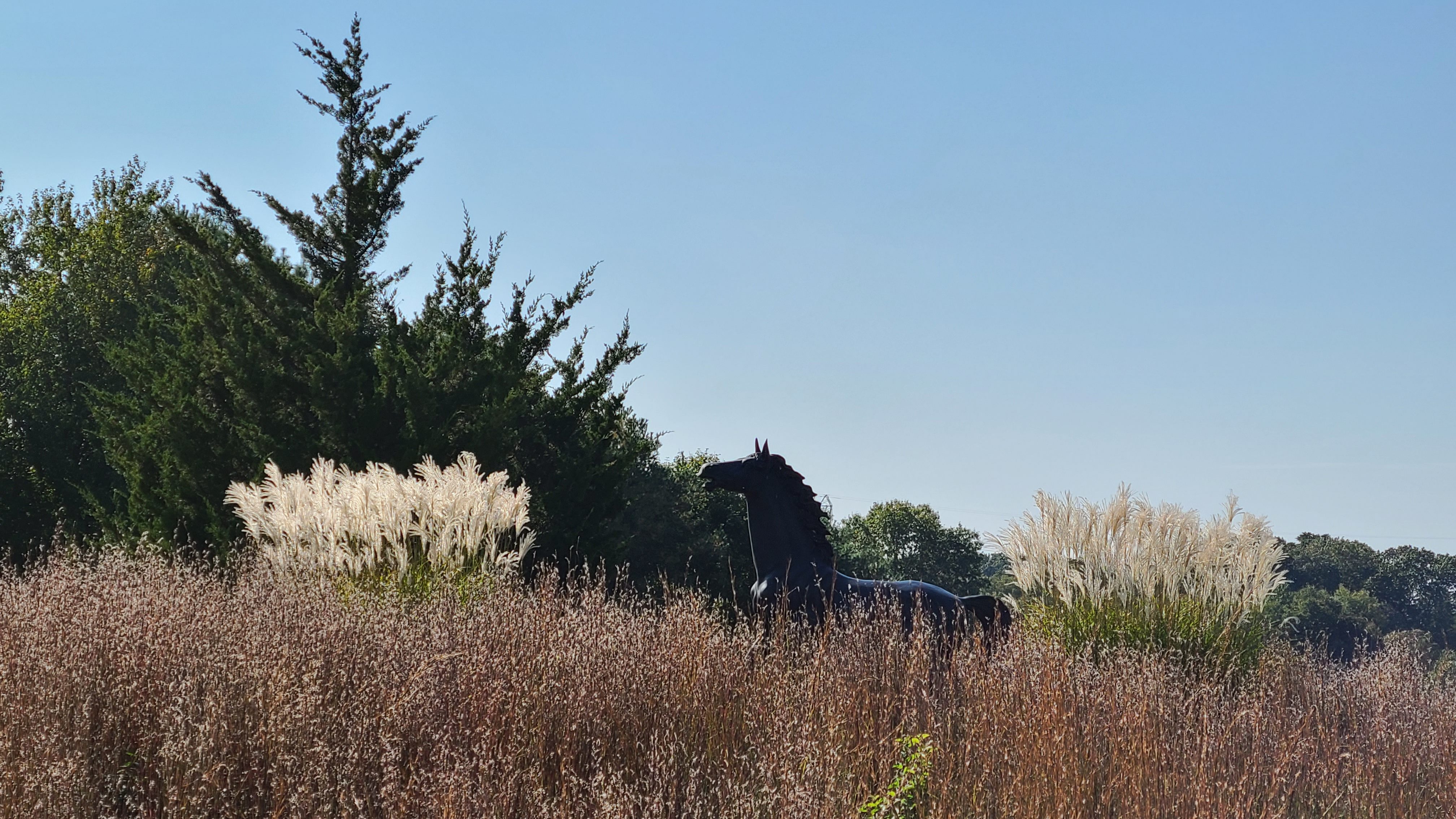
The green and surround at 8.The almost drivable par-4 9th. I ended up in the greenside bunker beyond the small trees.The actual Colts Neck colt at 10! (OK… it’s just a statue.)The par-3 10th.The approach at 13, with its tall guardians. As it happens in great scoring rounds, I had my share of luck at Colts Neck. On this shot, I meant to play a bit of a low cut starting left of the center of the “entrance”. I ended up hitting a kind of bladed push that just skipped over the left roots of the tree on the right. Though it’s not all that visible in the picture, the pin is just beyond there at the front of the green. Better lucky than good!A look back at 17.18. The power and telephone lines distract a bit from its beauty, but this is a solid par-3 finishing hole.
At 2,616 yards for its nine holes, Colonial Terrace was a short stop on the journey. Dedicated to William F. Larkin – long-time mayor of Ocean, NJ where the course is located – the course plays to a par of 35, which includes two par-5 holes.
The 4th and 7th holes are 415 and 430 yards respectively. If you’re still searching for your first eagle, this may be the place to do it.
The par-5 4th and 7th holes
Or is it?
The USGA states that in order for a hole to be considered a par-5, it must have a minimum yardage of 450 yards for men, and 370 yards for women. Which raises an interesting quandary: if you hole out in three shots on one of these holes, are you counting it as an eagle?
I say ‘yes’. To me, you can only play what’s presented to you. If the scorecard says it’s a par 5, then it’s a par 5.
The opening hole
The layout is entirely flat and plays generally open, where even the holes around the perimeter have some room to bail out towards the center of the course. The greens are small and will test your approach play.
Loved these bunkers on 9
Overall, I enjoyed my time at Colonial Terrace. For $13 to walk nine holes on a weekday, it’s tough to find a better place to practice. It’s about a mile from Asbury Park and would make for a great casual round on a beach weekend.
Colonial Terrace from above. The 4th hole is in the upper-left corner, its green being the furthest point from the clubhouse on the property. The 7th is in the top third at the center of the frame, coming back towards the bottom-right corner, where you can see the 9th green.
As the summer closed out in 2021, my good friend Ed and I took a look at our schedules to see when we could meet up to play some golf. Everything lined up for us to get out on the Saturday of Labor Day weekend. We chose Pebble Creek, a Monmouth County course I still hadn’t gotten to.
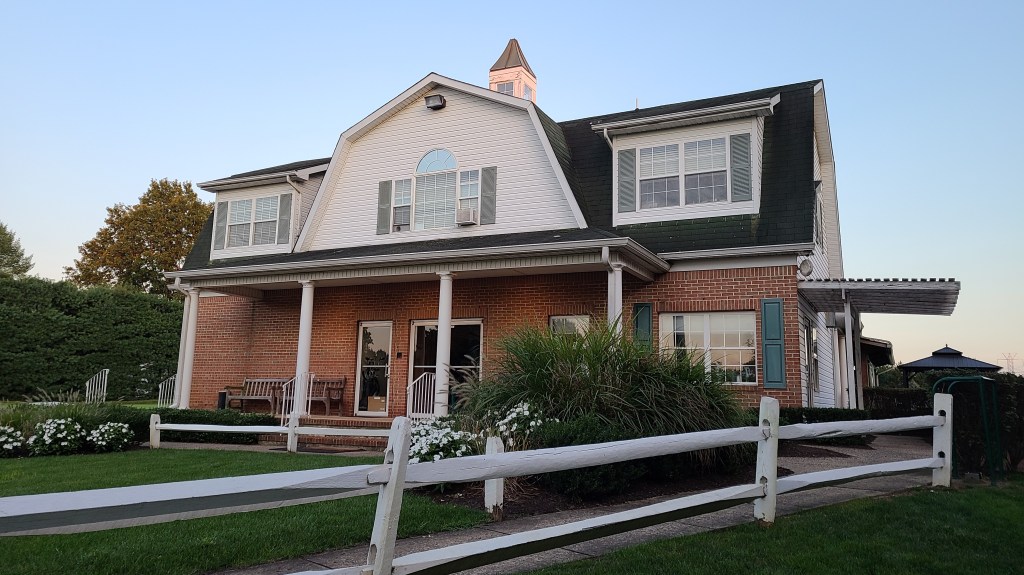
Nice little clubhouse and pro shop. Dutch farmhouse style? I don’t know. I’m a golfer, not an architect.
As I waited for Ed to arrive, I spent time chipping and putting at the practice green. Ed had a long drive and was set to get to the course just in time, so I moved all my stuff onto the cart and queued up. When I saw his car pull in, I drove out to the parking lot and helped him get his bag set up so we could get back to the first tee as soon as possible. Thankfully, we made it without issue.
We teed off at the first, and after I hit a sweet little pull-hook, we were off. Once I played my recovery shot, we both hit our final approaches and made our way to the green. As I stood over my ball to putt, I noticed that something looked off.
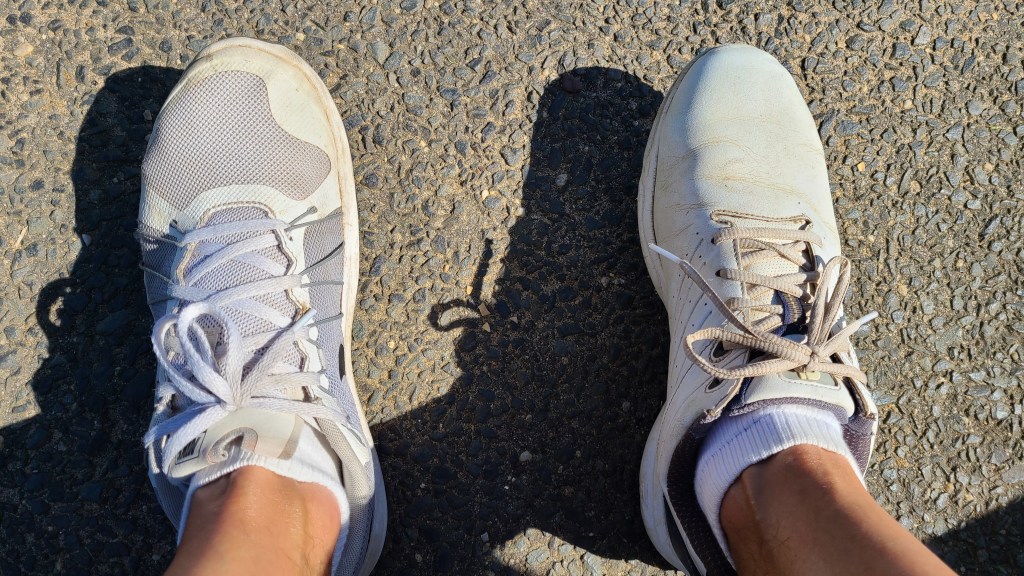
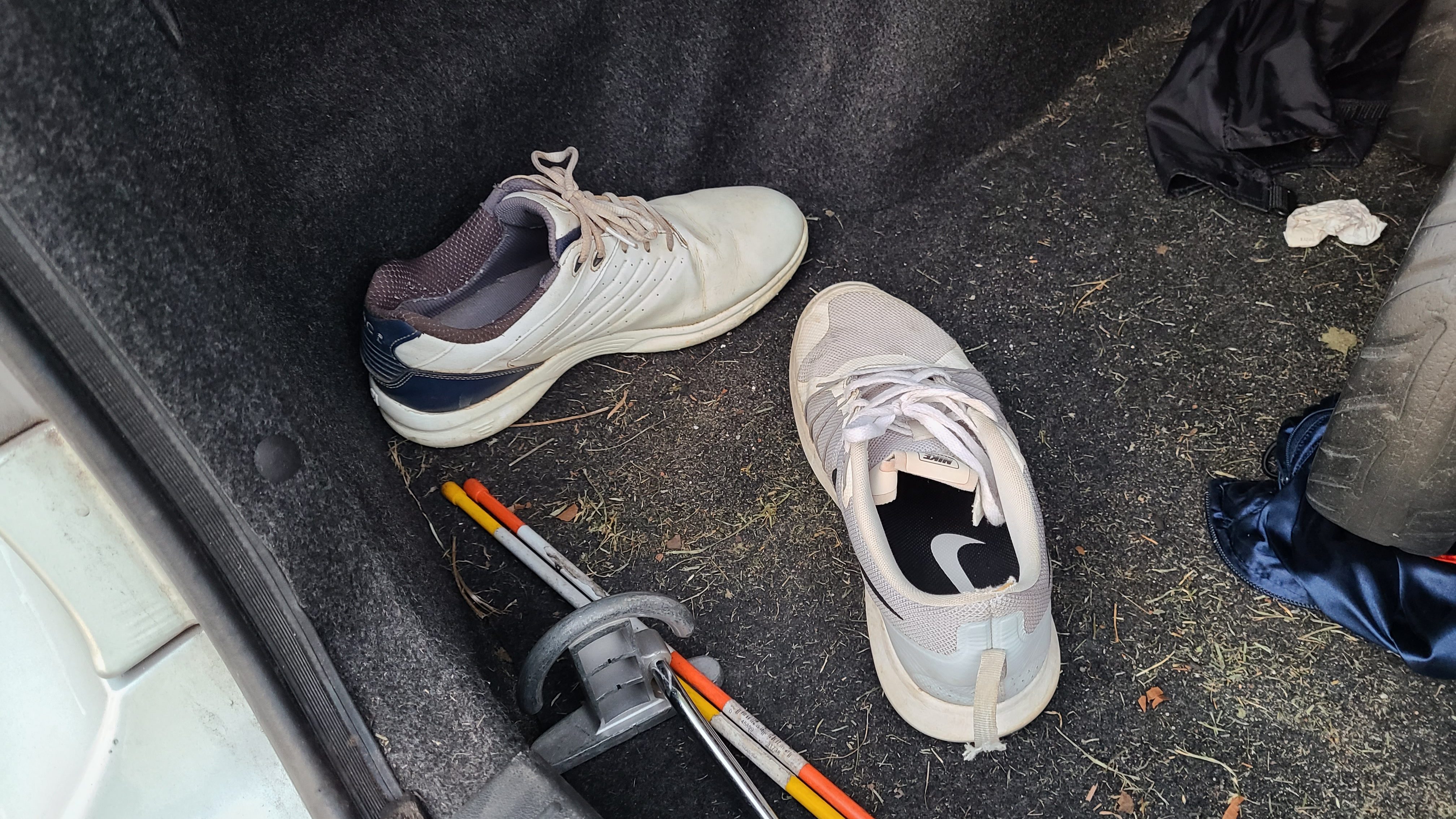
I was only wearing one golf shoe. On my right foot. My left foot still had my sneaker on it. We laughed about it and I rolled my 15-footer to save par. “I might wear one golf shoe all the time!” I joked.
Yep.
As we continued the round, I was impressed by the value the course offered for the cost. It was $55 to ride for a weekend round. In retrospect, I’m not sure if September marked the end of peak summer pricing for the course, but that is incredible value relative to other public courses in New Jersey. The condition of the greens, in particular, was fantastic at that price point.
Case in point: Fantastic green.
There are a number of memorable holes as well. 7 is a fun, drivable par 4 with a small but wonderfully shaped green. It’s guarded by a few small bunkers, though they’re relatively tame. 14 is a tough par 5, that starts to narrow out as the water encroaches onto the target landing area ahead of you. If you happen to hit a drive past this point, you can take a dangerous diagonal route over the water to reach the green in two. And 16 is another drivable par 4, albeit a 90-degree dog-leg right that would require an almost all-carry-over-water tee shot to get there.
The green at 7.
While not my favorite way to finish, Pebble Creek closes out on a par 3. Not sure what it is about par-3 closers, but it almost feels like an unresolved melody. My feelings about them aside, much like most of the rest of the course, 18 is another quality hole.
Again, I was very impressed by what this Monmouth County course had to offer. I’d probably stop short of a phrase like “hidden gem”, but it’s absolutely a strong competitor in a list of value courses. Definitely worth it if you’re in the area, and it wouldn’t be a bad course to travel to if you’re looking to mix it up.
P.S. BIG shout-out to the group that held onto my 4-iron after I left it at 7. Much appreciated!
14 green. That dangerous line I was talking about would be coming in from the lower right corner of the photo.Gorgeous, wide green at 15.Looking back at 16 in the fading light. You can just about see the water on the left side of the picture, center of the frame.Pretty sure I snapped this only after we drove back to look for my 4-iron.The par-3 18th.My left golf shoe… right where I left it.
It took a bit of planning and matching up our schedules, but a couple months after said trip, we were able to find a Wednesday in August where we could both take the day off from work to knock out a few courses.
While there were still 50+ courses left to choose from, I knew I wanted to target Atlantic County. At the time, I still had 15 courses there that remained unvisited, and a number of them were relatively close together. There were also a few that I knew had reputations as great or well-liked courses. After a short look at Google Maps, we decided to book times at Twisted Dune and McCullough’s.
Twisted Dune
We arrived at Twisted Dune at 6:00 am, in advance of our 6:30 tee time. A light fog was still sitting over the course, but just from what we could see on our walk to the clubhouse, you could tell the course was special.
This view from the Twisted Dune clubhouse veranda shows some of the wild look you’ll see around the course.
Once you’re on the course, it can seem visually daunting in places. But in truth, there is room to score. Players will likely be psychologically put off by some of the traps, waste areas, and tall grasses, but if you’re playing from the correct tee box for your game, they should be little more than distractions.
The sun still rising and lighting up the green at 2.
There were a couple things about the course that really hit me in terms of making an impression. The first is that its overall look is (relatively) unique. The second was the almost-disbelief that this was a place in New Jersey.
The green at 4, looking across the tee boxes on 5, onto 6 and 7, whose green is visible in the distance on the right.
When you’ve played 100+ courses in the state, there is a lot of overlap in terms of style and feel. Generally, there are parkland courses and links-style courses. I don’t think Twisted Dune fits into either of those categories. It’s heavier on heathland surroundings, and there’s almost a hint of what Tobacco Road would feel like if it were tamed and had less tall pines around. Not that it should be tamed of course, but that version would be as close as I could come to accurately describing Twisted Dune.
A look at the first few holes at Twisted Dune.
In addition to the sand and overgrown areas that might steal a ball or two, there are water hazards on the course in a couple places. You’ll have to contend it with it on 9 and 10, and then again on 13 and 14.
Looking out onto the par-5 9th at Twisted Dune before the round.
Between the views, the uniqueness, and the playability, Twisted Dune is just a great course overall. I highly recommend it, and I’ve included in my list of must-play public courses in NJ.
McCullough’s Emerald Golf Links
There are a few places in New Jersey in which you could stand anywhere, throw a stone, and hit a golf course. This is probably most true of Atlantic County, where there are 17 public courses, and a number of which are in very close proximity. McCullough’s Emerald Golf Links happens to be 1.3 miles down the road from Twisted Dune.
I have to say that after being thoroughly impressed by our morning venue, McCullough’s did not live up to expectations. There have been a number of places that have been brought to my attention on my journey, and McCullough’s was one of them. Called the “Emerald Golf Links”, it’s a Stephen Kay design that is inspired by holes from a number of famous Irish and Scottish golf venues, like Royal Portrush, Prestwick, and even the Old Course at St. Andrews.
The 8th, which is meant to be a tribute to the 10th at Turnberry. It’s difficult to tell from this shot, but the bunker seen in the distance at the end of the cart path is in the same ring/island bunker style.
It’s not a bad course by any stretch of the imagination, but unless you are deeply familiar with those places, it’s tough to appreciate. This also may be odd, but I think one of my complaints about McCullough’s is that there is so much green color throughout the course. I never thought this would bother me, but visually, everything seemed to just blend together in a lot of places.
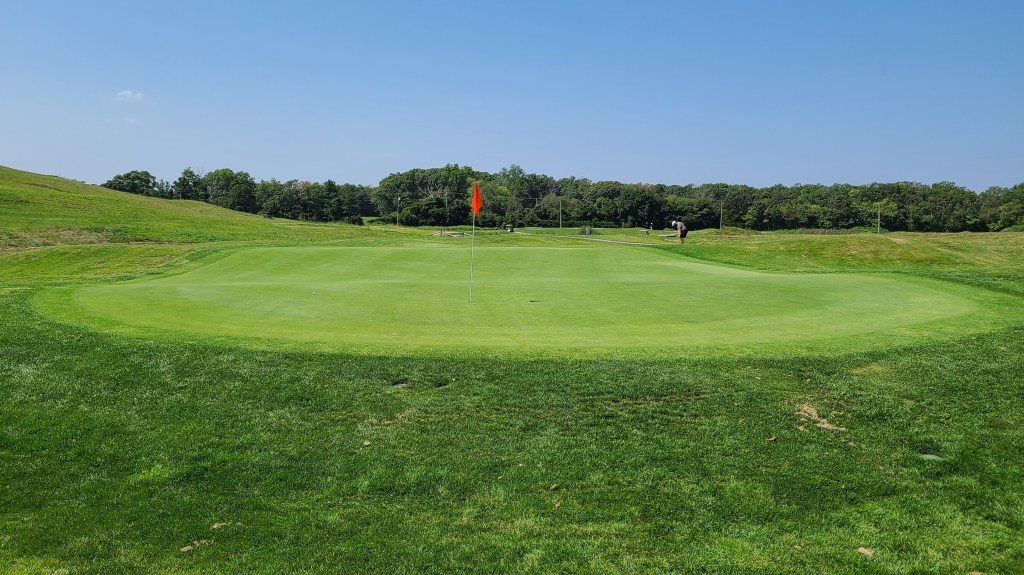
Matt chipping on at 2, which is meant to be a Biarritz hole. There is undulation, but I think the swale/valley is too subtle to be called a Biarritz in my opinion.
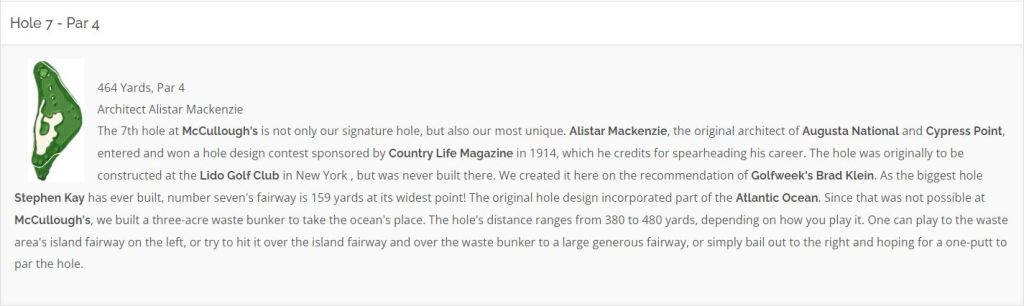
My gripe about the aesthetics aside, the course does play well. It is very open to wind, which can make for some challenging holes around the course. Water will make tee shots a challenge at 8, 13, and 18, and there is some elevation change on 3 and 11. The most notable hole though is the signature 7th, which is inspired by a Mackenzie design that was meant to go in the Lido Club.
From the Course Tour on the McCullough’s site
Again, this is a course that comes up a lot in conversations about golf in Atlantic County, and while I prefer Stephen Kay’s Scotland Run to his design at McCullough’s, it may very well be one that makes your list of favorites.
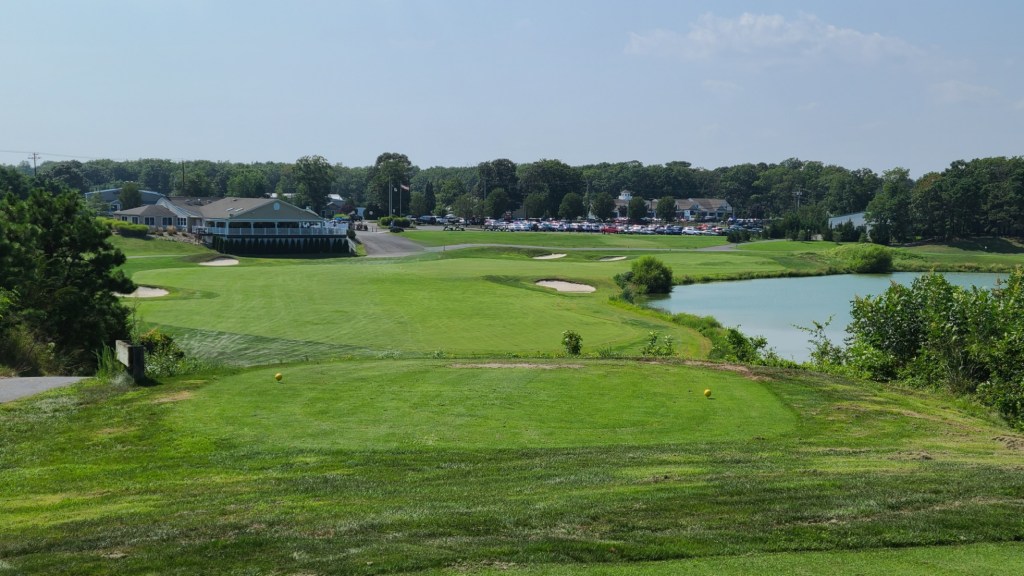
18 at McCullough’s. What you can’t see here is the sound of bagpipes that are played over a PA system that will definitely be audible from this vantage point.
Hamilton Trails
After finishing up at McCullough’s and stopping for something to eat, we played a third and final round at Hamilton Trails. With its logo featuring what appears to be a soldier from the American Revolution in a ring of stars, the course is almost undoubtedly named after Alexander Hamilton. Nevertheless, I can’t find any history on the name and what it means to the area.
A look at 1 green in the background as you turn the corner onto Harbor Ave.
A 9-hole course that doesn’t seem imposing as you pull into the parking lot, it actually measures 3,265 from the back tees, providing decent length to the average golfer. The course looked almost completely flat, so Matt and I closed out the day walking the round.
Walking the 1st fairway, you get a peak at the green at 3 coming back in this direction.
The first hole is the most exciting on the property, an almost-90-degree dog-leg left par 4. From there though, it’s relatively plain. There are creeks that cross – or run alongside of – almost every hole, but they likely won’t threaten a mid-handicapper. The biggest hazard that a body of water will pose will be the small pond that is short and left of the par-3 green at the 9th hole.
At $30 to walk nine holes, it’s probably punching above its weight at that price. But, it’s an area of more expensive courses, so it’s relatively in line with the local market. Plus, it was a fine way to end another long day of golf on the journey. Forty-five holes played, and three courses knocked off the list.
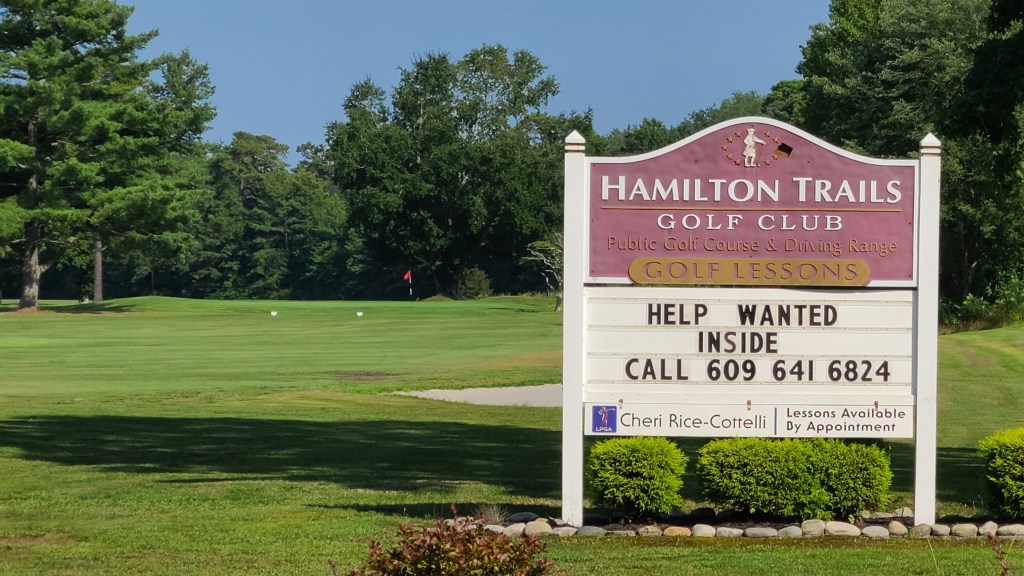
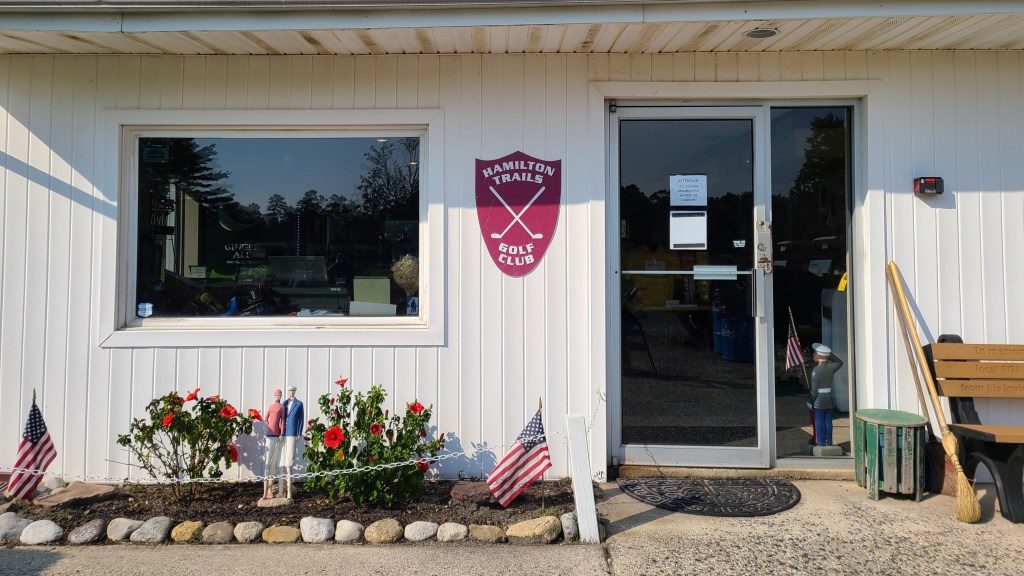
The pro shop at Hamilton Trails, my 119th course on the quest.













 Orson Rosas Golf