Number 16 (Hyatt Hills Golf Complex)

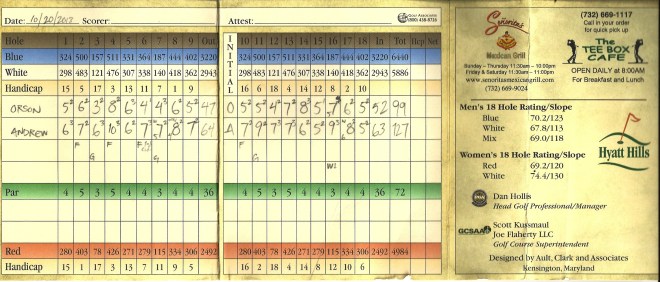
Golf scorecard dated October 10, 2022, showing scores for players Orson and Andrew across different holes and tees, along with par and handicap information.

Date played: 10/20/2013

If you’ve been reading this blog from the very beginning, you’ve already been to Hyatt Hills with me. It’s where, on October 15, 2015, a pair of Manhattan commuters asked to join my group on the 6th hole, and one of them – a man named Kermit – told me he and his wife were trying to play every public course in New Jersey. That conversation is the reason this site exists.

But that wasn’t my first trip to Clark. Five days after a random Tuesday round at Cranbury, I played Hyatt Hills for the first time on October 20, 2013, with the same coworker who joined me at Stonybrook earlier that year. That same coworker would be with me again two years later, the day Kermit played up on us. At the time, though, neither of us had any idea we were standing on the spot where the whole thing would start. It was just a new nine-hole course in Union County.

I wish I had more to tell you about that first round. Truthfully, I don’t remember much of it, and the scorecard doesn’t help – nothing on it stands out. Luckily, the place itself has a better story than my round did.

The course

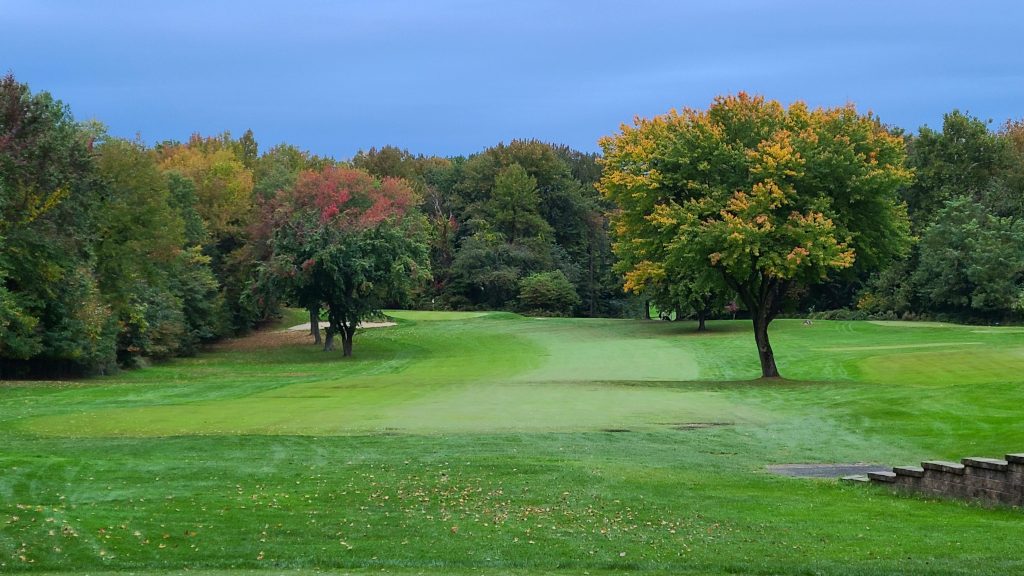
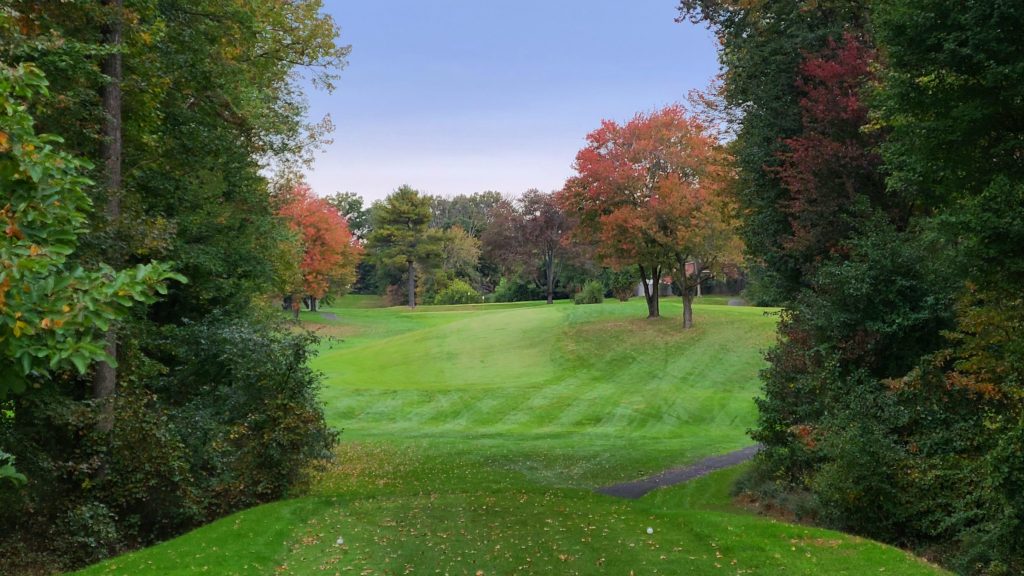
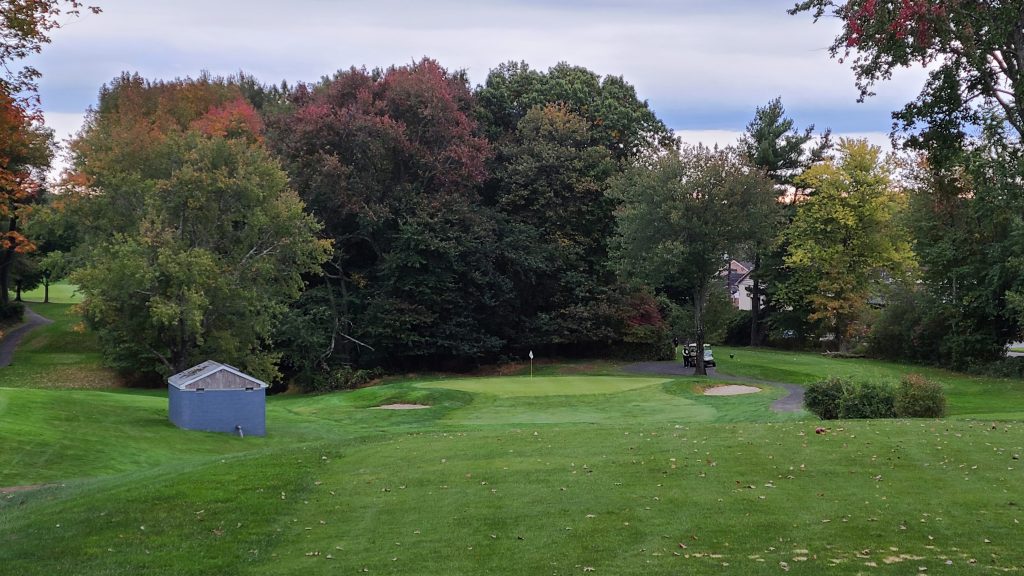
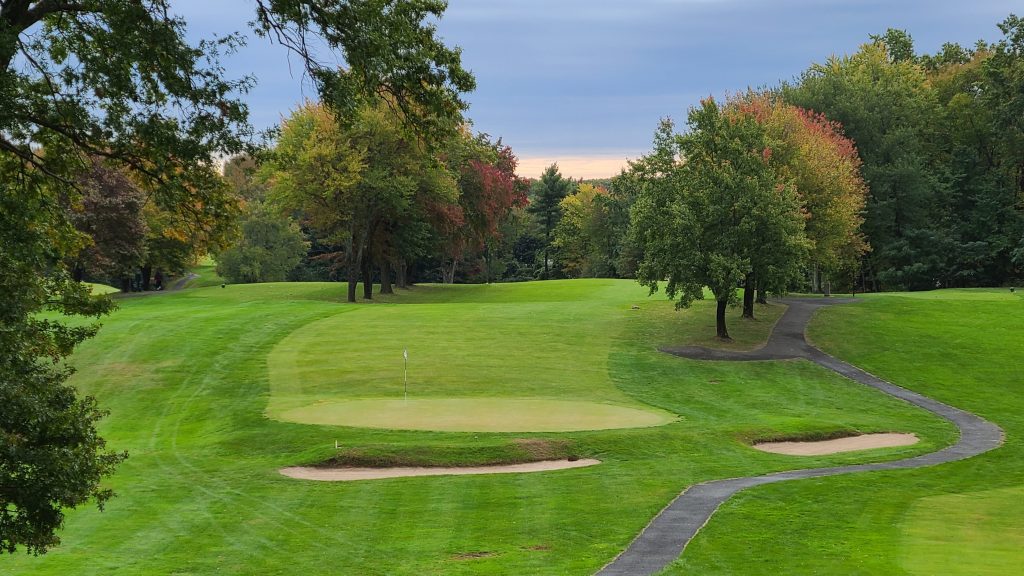
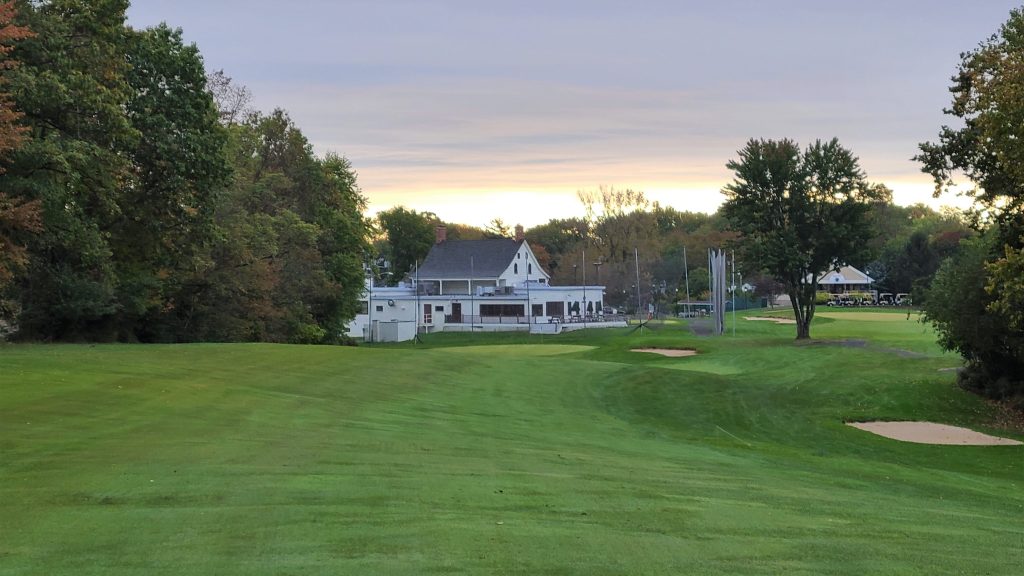
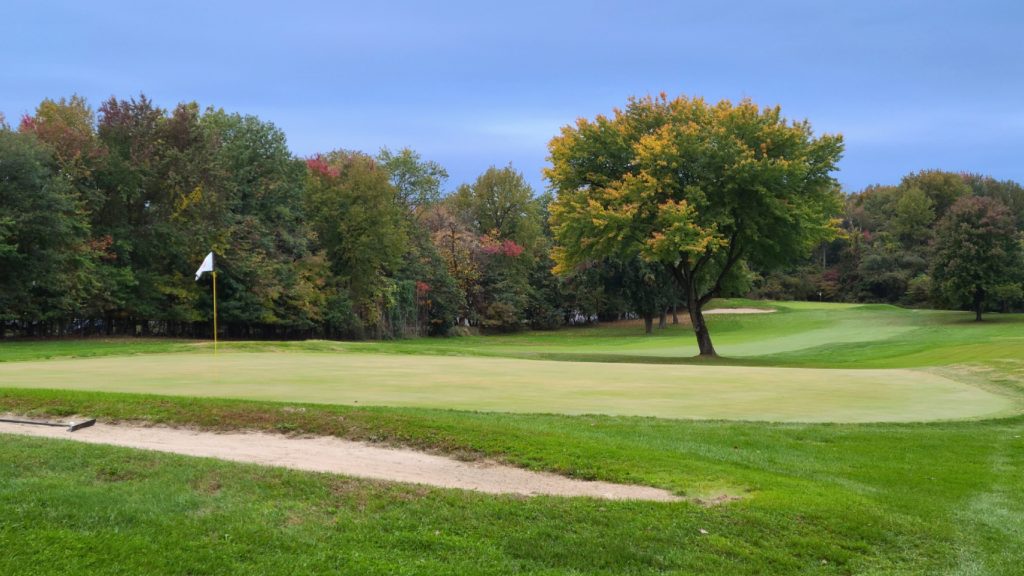
Hyatt Hills is a nine-hole, par-36 layout that plays 3,220 yards from the back tees, with two par-3s, five par-4s, and two par-5s. The interesting part is how it handles an 18-hole round. Plenty of nine-hole courses send you around a second time from a different set of tees. At Hyatt Hills, on both of my visits, every green had two flags – one in each of two distinct holes – so the second nine played to different targets. I haven’t seen that setup anywhere else on the journey. It’s also why the 6th hole was the 15th on the day I met Kermit.

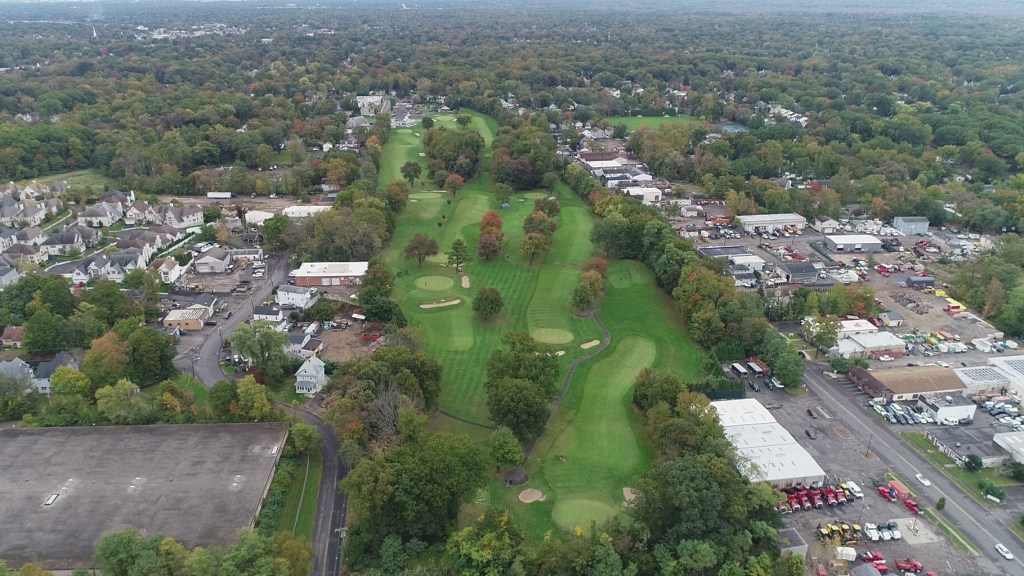
The heart of the course is holes 6 through 8, with the latter two playing alongside a large pond. Elsewhere, the 2nd is a roughly 500-yard par-5 and the #1 handicap hole, while the par-3 3rd is the shortest on the card at 157 yards from the tips.

Everything else

Hyatt Hills bills itself a golf “complex,” and it earns the name. There’s a 50-station driving range (11 bays covered and heated, now with Toptracer), a putting and chipping area, an 18-hole miniature golf course called Mt. Hyatt with waterfalls and streams, and Oh’ Brian’s, a pub with a long craft-beer list.

Back to where it started

As for where it ranks: I’ve only played Hyatt Hills twice, in 2013 and 2015, and I haven’t been back since. On golf alone, it’s a middle-of-the-road public – a solid nine that isn’t likely to blow you away. But no course on my list holds a bigger place in the story of this blog.

When I walked off the 9th green in October 2013, I filed Hyatt Hills away as a decent nine-hole course and moved on. Two years later I’d come back with the same coworker, a twosome would play up on us on the 6th, and everything would change. In that very first post, I wrote that I might even run into a man named Kermit again. The closest I’ve come was at Ramblewood, where my playing partner told me they knew Kermit through an amateur golf tour. All these years later, I’m still waiting.

Number 16 (Hyatt Hills Golf Complex)

Number 124 (Scotch Hills Country Club)

Date: 10/23/2021

Just six miles from Baltusrol, nestled between Routes 22 and 28 is without a doubt the most historic stop on my journey through New Jersey.

In 1921, the Shady Rest Golf and Country Club was formed as the first black-owned golf club in the United States. From 1932 to 1964, John Shippen – the first American-born golf professional – called the club his home, offering his services as head pro and clubmaker.

Today, we know the course as Scotch Hills Country Club.

The svelte-looking Scotch Hills CC with the 5th green in the foreground and the clubhouse in the distance.

A nine-hole course set on a narrow piece of property, Scotch Hills runs uphill towards the back of the course at the 5th green and then turns back down the hill towards the clubhouse. While the opening and finishing holes are on relatively level ground, there is a fun test of elevation changes from holes 2 through 8. The course offers small greens as targets, so if your approach play is off, you’ll need to make sure you have your short game on hand in order to score.

The course opens with a straightaway par 4. Anything wildly left or right will have room to land, but will only offer an obstructed approach shot as two sets of in-play trees line the fairway within 100 yards of the green.

The first hole.

The 2nd – which I would consider the course’s signature hole – is a par 4 which plays through a tight chute off the tee and slightly uphill. Most of the fairway sits on a very rounded mound which will deflect balls off to the left. Approach shots from the downhill collection area will be playing to a green 10-20 feet above the lie.

The view from the tees at 2.
Flyover from the opening tee shot, through the chute at the 2nd tee, and up past the greens at 2 and 6.
Looking back from the green at 2, you can see the pronounced mound in the fairway.

The 3rd hole is a downhill par 3, where anything long is potentially dead in the woods.

The 3rd.

The 4th hole has you back on the some of the lowest lying area on the course, teeing off uphill. Approaches on this par 4 will be to a green that slopes away from you and is at the end of the foothill. Players will have to decide whether to carry a lofted club to the green with spin or try to land short of it and allow the ball to trundle down the hill and onto the putting surface. A bunker further down the hill and beyond the green awaits any approaches that are sent too far.

The green at 4 in the foreground, with the 5th fairway running up the hill on the left with the green in the distance.

A significantly uphill par 4, the 5th hole is drivable. However, driver may be too much club for many players. After playing a 4-iron safely to the fairway, I played a second ball for fun with a 3-wood, and the ball went through the green and was just kept in play by some stray branches on the ground. If you’re going for the green, err on the short side based on your club yardages.

A look back at the green at 4, showing the downhill approach and a view of the collection bunkers.

The 6th is a VERY short par 4, playing only 220 yards from the back tees. There is ample room to take on the green, but players need to carry a bunker in front that is about 15 yards short of it.

At the par-3 7th, players are faced with another downhill tee shot to a slightly tricky target. It slopes downhill to the left, so the best tee shots will be ones that are fortunate enough to play right of center on the green.

The 7th. From the tees, while you can’t see the green, you’re almost given a hint as to its right-to-left downhill contour based on the crest of the hill before it.

The 8th hole is the course’s longest par 4 at 380 yards from the back tees. On the tee box, it feels very narrow with the trees lining OB from the road on the left. The fairway is cut to favor this side with almost no rough on the left before your lie could be obstructed by the overhanging trees. There is much more room on the right, but there is a significantly wider rough area before a penalizing patch of trees. Any long (and straight) hitters should be careful not to drive the ball through the fairway as there is a water runoff collection area where finding a ball may prove difficult. The green slopes right-to-left and back-to-front.

The approach into 8. Beyond the hill that crests across the front of the green in this shot is the water runoff area that should be avoided. If a poor drive finds you too far to reach the green, your second shot should be played out to the right, towards the greenside bunker.

The finishing hole is a long par 3 – roughly 190 yards when we played – and ever so slightly uphill, albeit to a generous green.

The green at 9, with a view of the green at 1 in the distance on the right.

My good friend Ed and I walked the course on a quiet Saturday. Some rain had fallen before we went off and seemed to threaten to start up again, but thankfully, we remained relatively dry throughout the round. Neither one of us had our “A” game with us but we always have a good time regardless, and playing Scotch Hills to complete all the courses in Union County was no exception.

For more information on this significant piece of golf history, please visit the Preserve the Shady Rest Golf & Country Club site!

Number 124 (Scotch Hills Country Club)